Were We Ever Meant to Be?
Were We Ever Meant to Be? is a provocative love story told as a novelette—a story of unfinished love, renewed desire, marital commitment, and the difficult choice between what the heart wants and what one believes is right.
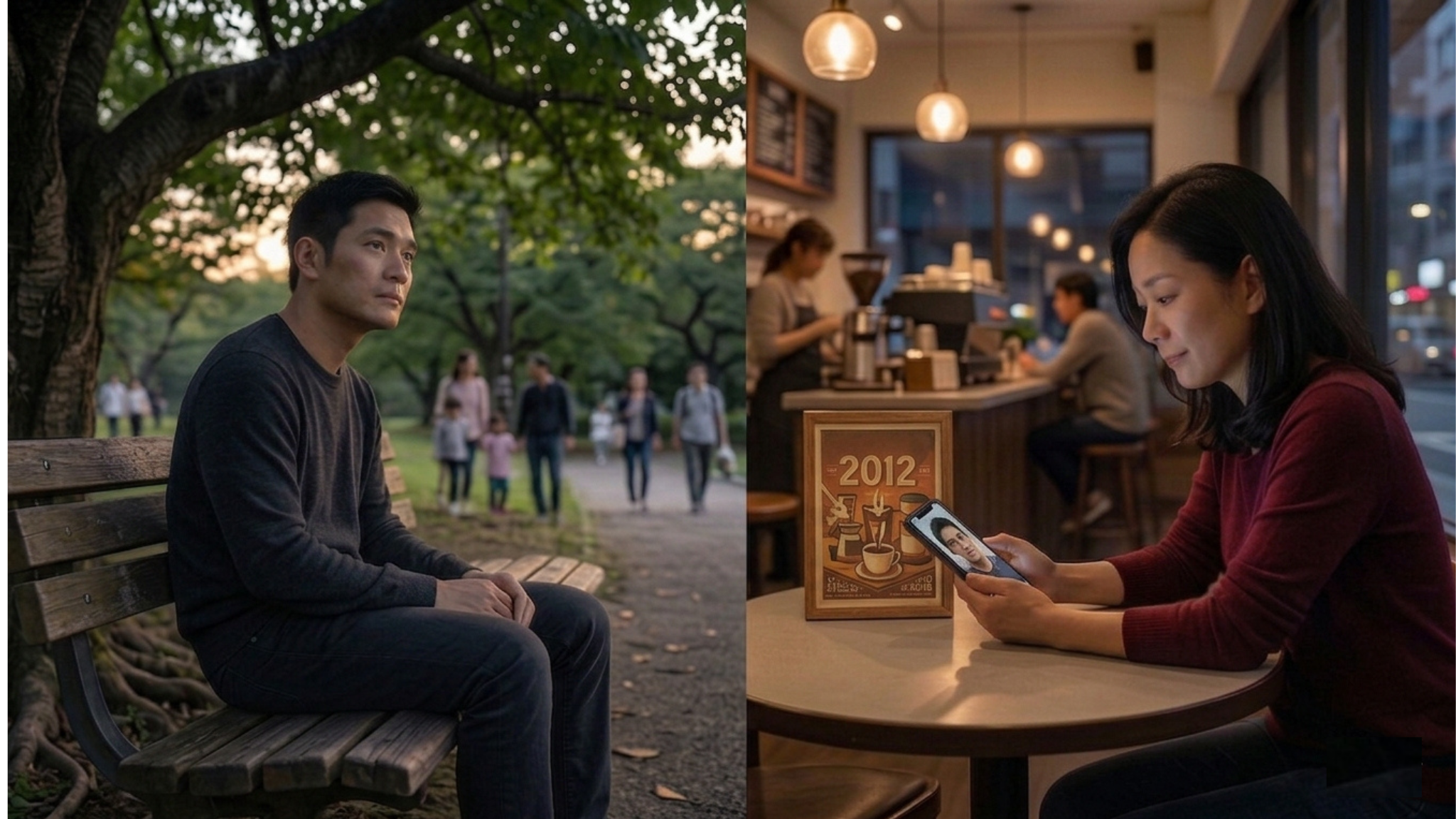
Story Preview
Living alone in South Korea during the COVID-19 pandemic, Marco sends a simple birthday greeting to Katherine, a woman he has not seen in eight years. What begins as a friendly exchange soon reopens a past they had carefully buried—and feelings neither of them has completely forgotten. But Marco and Kath are no longer the people they once were: both are married, both have children, and both have lives that could unravel if they allow an unfinished love to begin again. As distance disappears through their screens and old questions demand new answers, they must confront a dangerous possibility: perhaps some loves survive because they are meant to be—or perhaps surviving is precisely what makes them hardest to resist.

Part One – A Message After Eight Years
After finishing my third movie of the day, I finally switched off my desktop computer. I would open my laptop later when I felt like browsing the internet.
That was how my days usually passed whenever I had no work—Netflix, the internet, and, when inspiration visited, writing a story, poem, or essay for my website. When I did not feel like watching, browsing, or writing, I read. Whatever I chose, I remained inside my apartment.
I had no desire to go out. COVID was still spreading, and because it was the weekend, I knew the streets and public places would be crowded. Koreans loved going out whenever they were free. Besides, winter was not quite over, and the evening was cold.
I had promised myself I wouldn’t touch anything work-related all weekend. I needed a break from the stress. The report my boss had requested could wait until I returned to the office.
I stepped onto the terrace of my two-bedroom apartment to stretch and breathe some fresh air. It was already past eight, and darkness had settled over the neighborhood.
The terrace was small, with just enough room for a chair and a little table. I sat there whenever I wanted some air, some morning sunlight, or a quiet place to read. Sometimes I drank coffee there. Sometimes beer.
I did not stay long that evening. Hunger drove me back into the kitchen. I had started watching movies after lunch and had not eaten since. I reheated the leftover chicken and pizza in the microwave and cooked a packet of ramen so I would have something warm to sip in the cold weather.
Carrying my food, I returned to the second bedroom, which I had converted into a study and miniature theater. It had also served as my workplace when the rising number of COVID cases forced our company to send its employees home. We had only recently been required to return to the office.
I opened my laptop while I ate. As always, Facebook was my first stop. I messaged Anna, my wife, to ask if she was feeling better. We hadn’t chatted all day because she had told me that morning that she was unwell.
She appeared to be offline. The green dot beside her name was gone.
I tried video-calling our son, Kenneth, but he did not answer. He was probably asleep—or too absorbed in Mobile Legends to notice my call.
I scrolled through my feed instead, then checked the profiles of several close friends and relatives. From thousands of kilometers away, Facebook was the easiest way to know what was happening in their lives back in the Philippines. If I saw something that made me miss someone, I messaged them.
That evening, one of them was celebrating her birthday.
Katherine.
I opened Kath’s profile, found an attractive birthday image on Google, and sent it to her through Messenger, along with a brief greeting and a question about how she had been.
Then I moved on to ESPN to check the day’s NBA results and watched the game highlights on YouTube. By the time I finished, it was already eleven. My food was gone, and I was tired of browsing.
I decided to watch another movie, but first I made myself a cup of coffee.
Before closing the laptop, I checked Facebook one last time. Kath’s profile was still open. I looked at the message I had sent her.
Not yet seen.
She was probably asleep. She would see it in the morning.
For no particular reason—or perhaps for one I did not want to admit—I opened our conversation history and began scrolling upward.
We had not had a real conversation since I moved to South Korea. Every year, I greeted her on her birthday. She thanked me, we exchanged a few questions about how life was treating us, and then we said goodbye. I often wanted to keep talking, but I could never tell whether she wanted the same.
I scrolled down again.
The year before, when I had been preparing to visit the Philippines, we had talked about meeting. Friends often promised to have coffee with me whenever I came home, but most of those plans remained exactly that—plans. Perhaps Kath and I would have met if COVID hadn’t disrupted everything.
I knew I would not have wasted the opportunity to see her.
I simply did not know whether she felt the same way.
I was about to close Facebook when the status beneath my message suddenly changed.
Seen.
Kath was online.
A moment later, the three moving dots appeared. She was typing.
“Sirrr!!!”
I smiled.
Even after all these years, she still called me Sir. She had once been an intern at the travel and recruitment agency owned by my uncle, where Anna and I had both worked before I was assigned to Korea. I had headed the human resources office, and my uncle had placed Kath directly under my supervision.
She had been a fresh graduate then. The arrangement was that she would complete a one-month paid internship, after which my recommendation would determine whether she would be hired as a regular employee.
“How are you, sir?” she added.
“What is this, Kath? First you call me Sir, and now you’re being formal with me. Just call me Marco.”
“All right. Let me try again. How are you, Marco?”
“Still beautiful.”
“Wow. Same here—and I’m more beautiful than you.”
We exchanged laughing emojis.
“Thank you for remembering my birthday,” she wrote.
“How could I forget? You’re on my annual list of people I’m required to greet.”
“Oh, really? Well, thank you for including me on your precious list.”
She reacted to my message with a heart.
“What have you been doing lately?” I asked.
That simple question began the longest conversation we had shared since I left the Philippines. Before that night, we rarely exchanged more than three or four messages before one of us found a reason to leave.
I asked about her family.
“Jay and I are happy together,” she replied. “We’ve been blessed as a couple.”
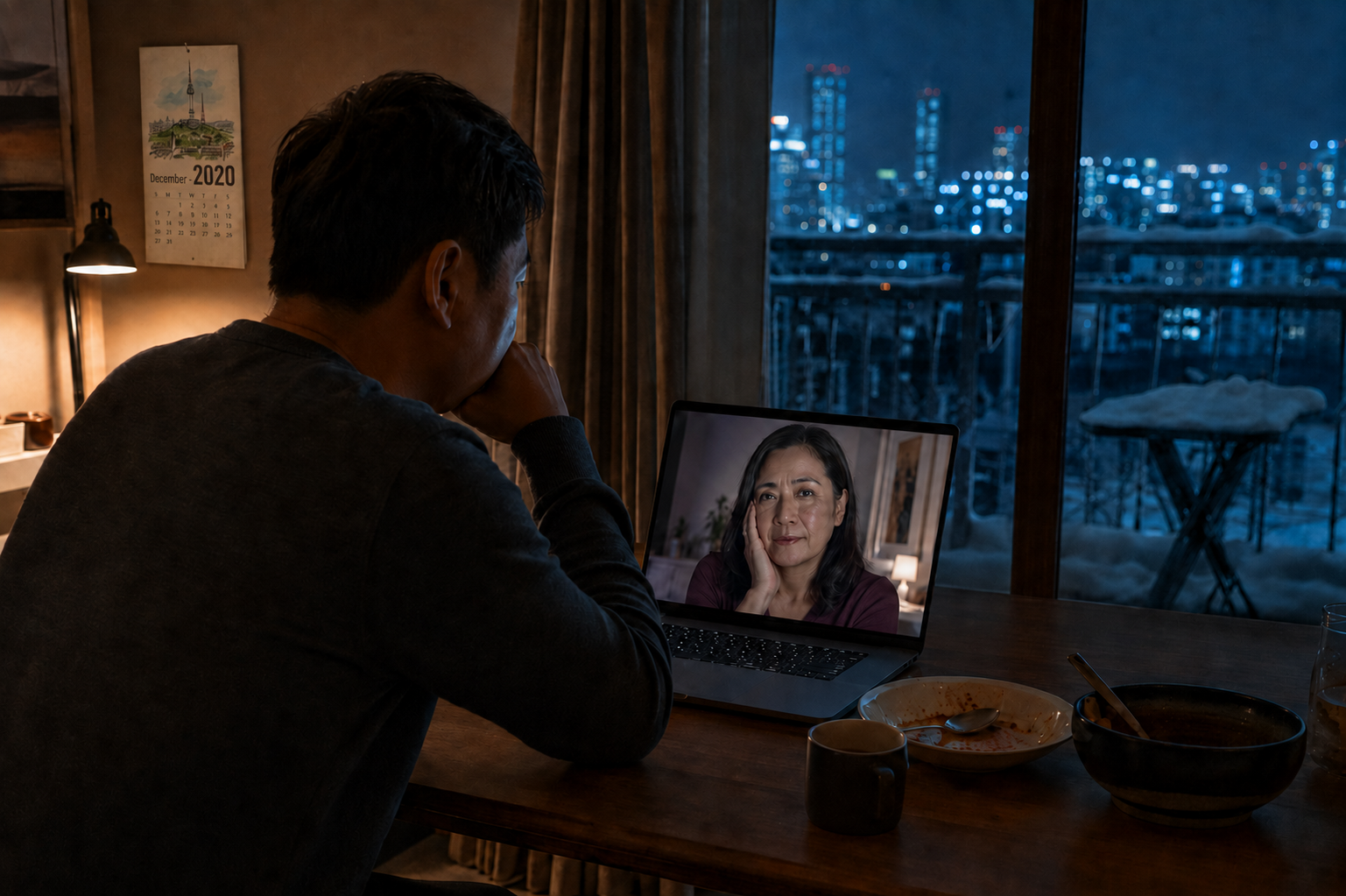
I had meant her whole family. To be honest, her husband had not even entered my mind when I asked. But since she had brought him into the conversation, I asked whether he was home.
I knew Jay was a seafarer. Kath said he was currently aboard a ship operating in South America.
“How about you and Anna?” she asked.
My fingers remained above the keyboard for a long time.
How were Anna and I?
“We’re okay,” I finally typed.
Kath replied almost immediately.
“Wow. It took you that long to answer, and all you can say is that you’re okay?”
I had intended to add more. I had pressed Enter too soon.
“Things became more peaceful between us when I stopped expecting her to meet my standards.”
“Has she changed?”
Again, I hesitated.
“Anna is Anna,” I wrote. “She is who she is. I’ve learned to accept that.”
Kath sent a thumbs-up.
Her question stirred memories I had kept untouched for years. Whenever Anna and I fought back then, Kath had been the person who listened to me. If she entered my office and found me unusually quiet, she immediately knew that something had happened between my wife and me. She would make me coffee, sit nearby, and tell me I did not have to keep everything to myself.
I thought the thumbs-up would end our conversation. Instead, she sent a sad emoji.
“I’m all right, Kath,” I assured her.
She reacted with a heart.
I turned the question toward her.
“How are things between you and Jay? Have you completely repaired your relationship? Are you back to the way you used to be?”
“Yes. We worked through our problems. We both realized that perhaps we needed to experience what happened—just as you and Anna needed to go through your own difficulties. You know we’re both Christians. We chose to remain together and allowed God to guide us through the healing process.”
I sent her a thumbs-up.
“I think we’re more mature now in the way we handle our problems,” she added.
Shortly before I moved to Korea, Kath and I had met because she and Jay were going through a serious marital crisis. She had needed someone to talk to, and I had listened. At the time, she believed their problems might end their marriage. I asked what caused the conflict, but she was reluctant to tell me.
Her problems had seemed so heavy that I never found the opportunity to tell her about mine. I had been going through a crisis severe enough for a doctor to prescribe antidepressants. I had not even told her that I would soon be leaving for South Korea.
“You suddenly went quiet,” she wrote. “Are you busy?”
“No. I was just remembering the last time we saw each other. We watched a movie that day, didn’t we?”
“Which part are you remembering—the movie, or the way you pretended to comfort me so you could steal a kiss on my cheek?”
“That isn’t true,” I protested. “I was genuinely trying to comfort you. If I had wanted anything else, then I would have—”
“Stop it, Marco.”
“All right. But I really didn’t have any hidden intention that day.”
“If you say so.”
I sent her smiling emojis.
She sent back three hearts.
“I miss you, Kath,” I typed. “I really do.”
The words had escaped before I could decide whether they were appropriate. Something familiar had risen inside me—a feeling I knew too well whenever it concerned her.
The message had already been delivered when I realized she might take it the wrong way.
“Oh, Marco,” she replied. “It’s getting late. I should say good night.”
Perhaps I had offended her.
“I’m sorry, Kath.”
“Sorry? What are you sorry for?”
I stared at the screen, unable to type a single word.
“Marco, I asked what you’re apologizing for.”
I do not know how long I sat there. Memories I had spent years avoiding began returning one after another.
Finally, I typed, “It’s nothing. You said it’s time to sleep, so good night. Thank you for talking to me.”
A series of angry emojis appeared.
“Fine, Marco. Leave me hanging again. I should be used to that by now.”
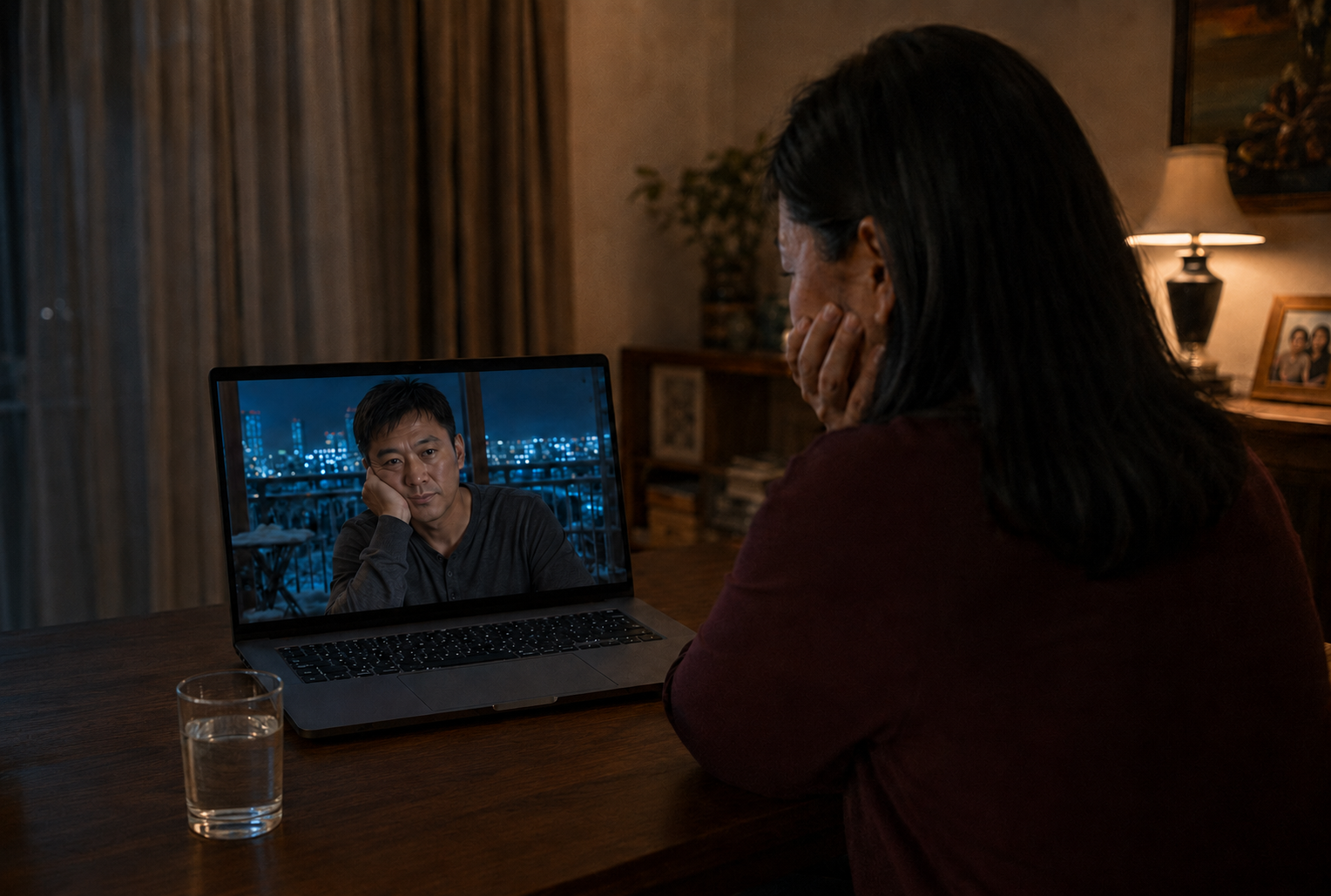
I pressed my palm against my forehead.
This was why I kept my distance even when I wanted to speak to her. Perhaps it was also why she kept hers. Neither of us wanted to uncover what we had spent years burying.
Instead of replying, I tried to video-call her.
She rejected the call.
I tried again.
Rejected.
“Please answer,” I wrote. “My hands are tired from typing.”
I called a third time.
At last, she answered—but her camera was off.
“Please turn on your camera,” I typed.
“Why?”
“I want to see you.”
It took her a while, but eventually the screen flickered and her face appeared.
I looked at Kath. She seemed to be studying me in the same way. Almost eight years had passed since we last saw each other, yet she looked scarcely changed.
“Have you been crying?” I asked.
“You’re infuriating, Marco. Why did we have to make this a video call?”
“My fingers were beginning to hurt from typing. And besides…”
I stopped.
“Besides what?”
I drew a breath. “I miss you, Kath.”
“I can never tell whether you’re telling the truth or merely charming me.”
“Is that really what you think of me?”
“Yes. It has been—for a long time. Since the day you failed to show up.”
I had no answer.
Whenever our conversations came dangerously close to what had once existed between us, she returned to that day—the meeting I had missed and the explanation I had never given.
“Marco, I want to ask you something,” she said. “And for once in your life, please answer me honestly. Just this once.”
Her words hurt. They made me sound like a man who had lied about everything.
“All right. I promise I’ll be honest. What do you want to know?”
She stared at me through the screen.
I tried to guess what she was about to ask.
Was it why I had not shown up that day when we were supposed to visit my mother in the hospital? Was it why my uncle had transferred her to another branch after she had worked in my office for six months? She had resigned two months after the transfer. Perhaps she wanted to know why I had not tried to stop her.
Or why I had seemed unaffected when she told me that she and Jay were getting married.
Perhaps she wanted to know why I had left for Korea without telling her—or why I had made so little effort to remain part of her life afterward.
Which of those questions had she carried all these years?
She took so long to speak that I wondered whether she had changed her mind.
“Never mind,” she finally said. “It’s embarrassing.”
“What are you—a teenager?”
“That’s enough, Marco.”
“All right. Ask me.”
“I said forget it.”
I sighed.
Perhaps I already knew what she had wanted to ask.
“Fine,” I said. “Then I’ll ask the question.”
“Go ahead. Just don’t ask me anything about mathematics. You know that’s my weakness.”
I smiled. Her humor had not changed.
“Kath…”
“Yes?”
“Did you really love me back then?”
She closed her eyes and released a long, unsteady breath.
Part 2 – What We Left Unsaid

Posted on August 29, 2026, in Creative Writing, Faith, Fiction, Infidelity, Marriage, Moral Choice, Novelette, Prose and Poetry, Romantic Noveletter and tagged Creative writing, Faith, Fiction, Infidelity, Literature, Love, Moral Choice, Novelette, Prose and Poetry, Romantic Novelette. Bookmark the permalink. Leave a comment.


Leave a comment
Comments 0