Blog Archives
The Hardest Choice
(Were We Ever Meant to Be – Part 7)
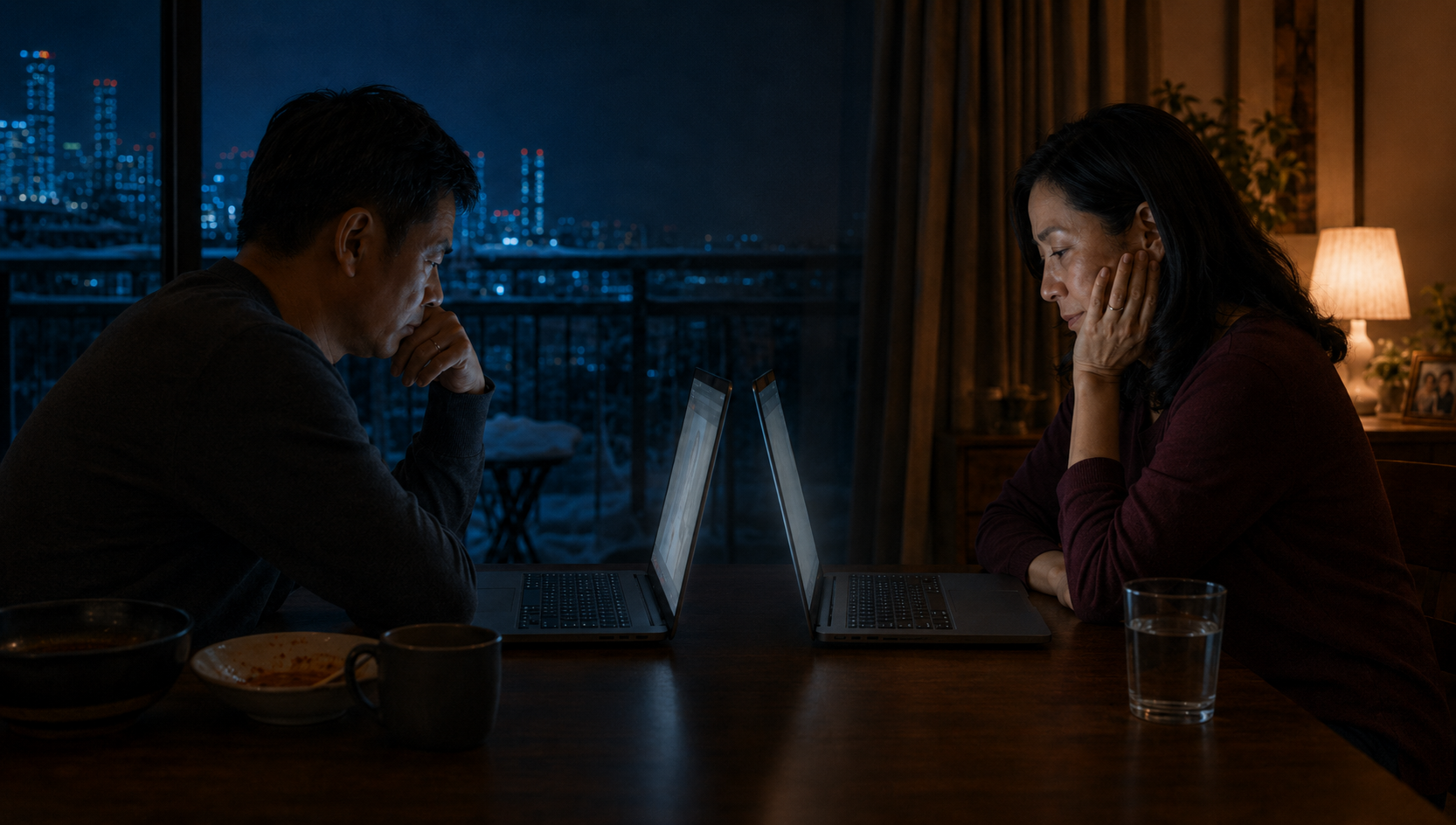
Two days later, Kath asked that we not speak over the weekend. Her church had an important Sunday activity, and she needed time alone to think.
I gave her the silence she asked for, but filled it with visions of the life I believed we would finally claim. By then, I understood that Jay was not the greatest obstacle between us. Something far more powerful had already begun calling her back.
Kath called on Sunday night. Her eyes were swollen.
Her laptop was on the study table again, not on the bed. The change was small but deliberate. She had moved our conversation away from the place where we had surrendered to desire, as though furniture and distance could help her recover the boundary we had erased.
“I’m not all right,” she said. “The sermon struck me again.”
She told me that every service since our affair became serious had felt directed at her. Every time we undressed for each other, every time she chose my call over Jay’s, she felt the distance between her desire and her faith widening.
Her Christianity was not a convenient device she discovered at the end of our affair. It had shaped the marriage she chose to repair, the community in which she served, and the understanding of herself she wanted to preserve. Loving me had not erased those commitments. It had divided her against them.
“Doesn’t what we’re doing trouble you?” she asked.
I believed in God, though I was not devout in the way she was. I had asked for forgiveness and understanding, but desire had thrown my conscience aside. All I wanted was Kath.
“We love each other,” I said. “That is what matters.”
“Stop using love to make this right. It isn’t right. Are we supposed to live permanently in sin?”
“Would it be less sinful to remain with people we do not love?”
Kath wiped her eyes. “You keep speaking as if Anna and Jay are merely mistakes standing between two rightful lovers. They are people, Marco. We made promises to them. Our children did not choose this. Love does not make them disappear.”
I had no answer that did not return to what I wanted.
Even as I said it, I heard the convenience in my reasoning.
“It has to end,” she said. “Before Jay, Anna, or anyone else discovers us.”
“Kath—”
“I am not choosing between you and Jay. I am choosing between what is right and what is wrong.”
The sentence was not a denial of her feelings. That was why it hurt. If she had stopped loving me, I could have blamed time or distance. Instead, she was refusing precisely because the love remained powerful enough to destroy what she believed she was called to protect.
There it was: the rival I could not charm, outwait, or defeat.
“We can still be friends,” she continued. “We can exchange messages occasionally, but no more calls.”
“Let me call sometimes.”
“We both know what will happen. If you call, I will block you. If you use your phone, I will block your number. Please help me do this. I have grown used to your presence, and you know how weak I am when it comes to you.”
I had pushed against every boundary she had drawn because I believed persistence was proof of love. Now the only loving act left to me was the one I least wanted to perform: allow the boundary to remain.
“Jay will call soon,” she said. “I asked him to. Instead of talking to you, I should be talking to my husband.”
The words hurt more than I expected.
“Is there anything else you want to say?”
I shook my head.
“Then let me say this one last time. I love you, Marco. But I have to learn to forget you. I hope you understand why.”
“I love you too, Kath.”
“Goodbye. Please try to love Anna. I wish both of you well.”
The screen went dark.
For several minutes, my own reflection remained on the screen. The apartment was unchanged: the cup beside me, the winter lights outside, the empty room waiting for another film or another sleepless night. Yet the space felt altered because I had allowed Kath’s presence to occupy it so completely.
I thought of Anna, who had forgiven betrayals I would have struggled to forgive and still remembered to ask whether I had eaten. I thought of Kenneth, whose failure to answer my call I had dismissed so easily, without considering how much of his life I had already missed. I thought of Jay at sea, trusting that his wife would be there when he called. For the first time since Kath’s birthday, I understood that what we had called our private story had never belonged only to us. We had made it private by pushing everyone else beyond its borders, even though they would have borne the consequences of every choice we made.
I had spent all that time thinking of Jay as my rival. But I had not lost Kath to him. In the end, she had not chosen one man over another.
She had chosen her faith—and the person she still wanted to be.
It was difficult to compete with God.
Against Him, I never had a chance.
Perhaps Kath had been right all along.
Perhaps we were never meant to be.
— END —
It Has Always Been You
(Were We Ever Meant to Be – Part 5)
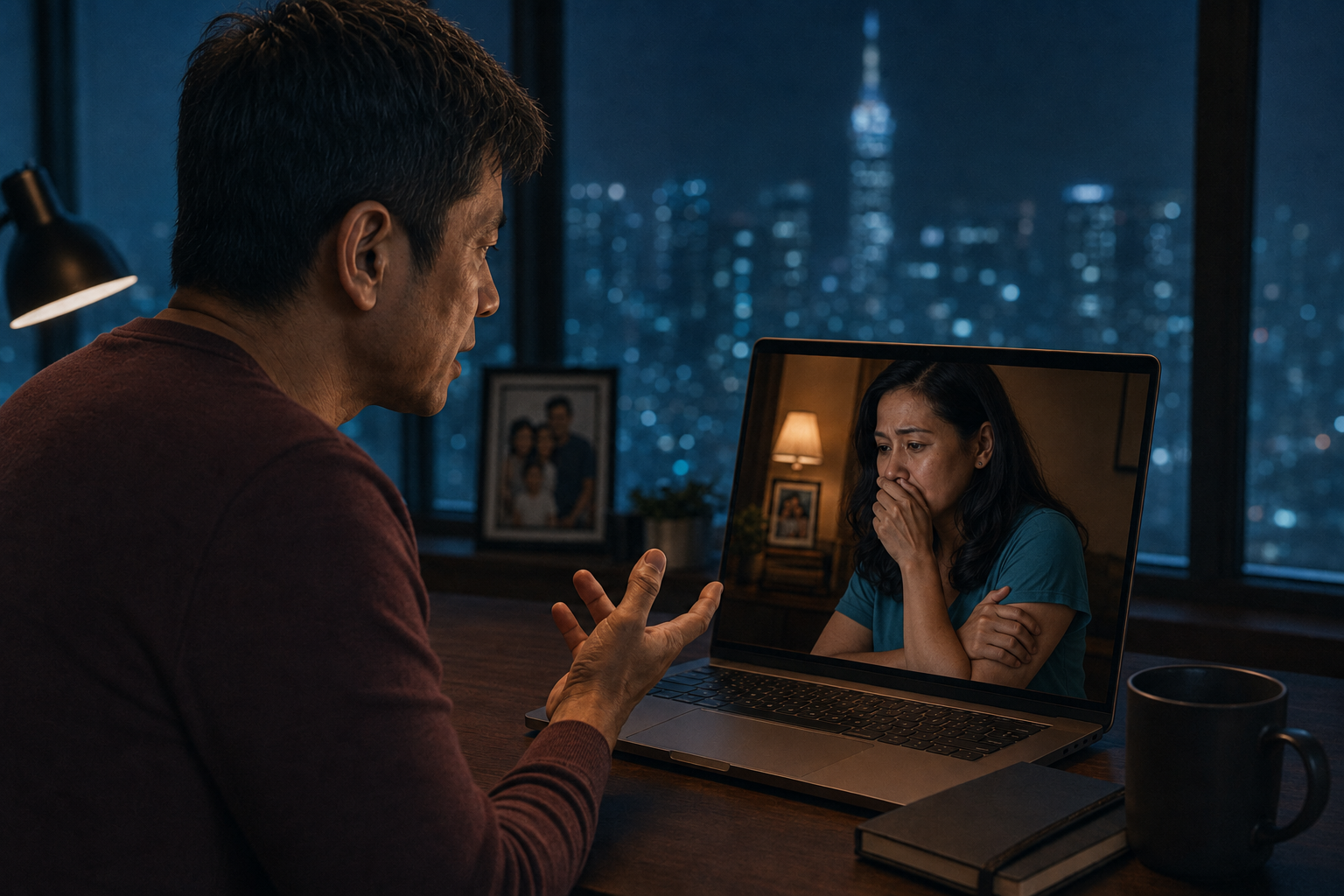
“It’s you, Kath. It has always been you.”
“Stop, Marco.”
“I should have waited. I should never have rushed into marriage with Anna. I should not have listened to my mother. I should have taken you to Cebu.”
“I said stop.”
“I stayed with Anna because there was nowhere else to go. There was no Kath waiting for me. If I ever love someone again, it can only be you. I never stopped loving you.”
Kath stood and moved away from the laptop. When she returned, she looked shaken.
“Do you know what you are doing?”
“I’m being honest.”
“No. You are disturbing my peaceful life. You did it before, and you are doing it again.”
She ended the call.
For a moment, clarity pierced my certainty. She had entered my office years ago wanting nothing more than to begin a career. I had allowed her feelings to deepen while knowing I was married and held authority over her future. Now, after she had built a family and repaired her marriage, I had returned carrying the same disruption.
Kath had not been innocent, but neither was she merely an equal reflection of me. I sent the birthday greeting, insisted on the first video call, revived the old questions, and pushed every answer toward the conclusion I wanted. Each time she said friendship, I searched for a way to make the word contain romance. Each time she asked me to stop, I treated the request as fear to overcome rather than a decision to honor.
Yet even as I recognized the harm, part of me wondered only whether I had moved too quickly. Perhaps I should have revealed my feelings gradually. Perhaps I had frightened her by forcing the issue.
Near midnight, I sent an apology. I promised that I would never call again.
Kath called.
For a long time, neither of us spoke.
“I’m sorry,” I said. “I never intended to disturb your life.”
“But you did. You disturbed my mind.”
I wanted to ask why, but I believed I already knew.
“All I wanted was to reconnect,” I said. “To talk to you again.”
“Can’t you talk to Anna?”
“I can. But I don’t merely want conversation from you. I long for your presence. I want to see you.”
She shook her head. “Why can’t you leave me alone? Forget me.”
“I tried. God knows I tried. I failed.”
“I cannot control what you feel. But expect nothing from me. We are married. We have children. What we can have is friendship.”
“Then let me call once a week.”
She sighed. “Once a week.”
“Thank you. I love you.”
“We are friends, Marco.”
“Friends can say ‘I love you.’”
“Always a loophole.”
“Say it.”
She looked into the camera. “I love you too, my friend.”
The word friend should have ended the matter. Instead, it became permission.
Over the next two weeks, our weekly call became twice a week, sometimes three times. We told each other what had happened during the eight years apart. Kath spoke about her Christian community and the worship services she attended with Jay whenever he was home. I told her that I had begun taking my writing seriously and had created a website.
We also spoke about ordinary things—the children’s classes, groceries, weather, books, films, and the inconveniences of pandemic life. Those conversations were perhaps more dangerous than the declarations. They allowed us to rehearse companionship. We began imagining not only kisses and escape but breakfast, errands, shared jokes, and growing old within reach of each other. Desire entered through nostalgia; domestic fantasy persuaded it to stay.
“I know,” she admitted. “I read your stories and poems.”
“Then you know some are about you.”
“I didn’t want to assume.”
“Whenever I need to write love, joy, longing, or pain, I think of our memories. I think of the us that never happened.”
She asked about the white rose in one of my poems.
“You,” I said. “Obviously.”
“You must have prepared that speech to make me fall in love with you again.”
“Again? Are you saying you aren’t in love now?”
“Friends, Marco. Nothing more, nothing less.”
But soon she began calling me during the day. She knew the hour of my coffee break and the days I left work early. Once, when she noticed a woman behind me in a café, jealousy sharpened her voice.
At home, Kath waited until her children had gone to their rooms before answering my calls. Sometimes one of them knocked, and her entire expression changed as she turned away from the screen and became their mother. Those brief interruptions should have restored perspective. Instead, I waited impatiently for her to return, as though her family were intruding upon time that belonged to me.
“Make sure she isn’t with you.”
“No, baby. I don’t even know her.”
“Baby?”
“May I call you that?”
“Do whatever you want.”
I treated her refusal to refuse as consent.
That night, however, she did not answer my messages. At midnight, I called.
“Are you all right?”
She shook her head. “We have to stop this.”
“Why?”
“The pastor’s sermon struck me hard tonight. I realized that I long for your presence more than I long for Jay’s. I used to talk to him almost every night. Now I would rather talk to you.”
Jay was somewhere at sea, trusting the wife who had told him years earlier about me and had chosen to rebuild their marriage. I knew that history, yet I regarded his absence as an opening. Because Kath and I shared language, humor, and emotional intimacy, I treated compatibility as a superior claim. I rarely asked what promises Jay had kept during the years when I had been absent from her life.
Her confession filled me with joy even as I watched it frighten her.
“Why are you doing this to me again?” she cried. “I had become peaceful. I could have ended our first conversation, but I stayed. I answered your calls. When it comes to you, I am so weak.”
“I love you, baby.”
She looked directly into the camera.
“I love you too, Marco. May God forgive me, but I love you.”
PART 6 – Beyond the Screen
The Line Between Us
(Were We Ever Meant to Be – Part 4)
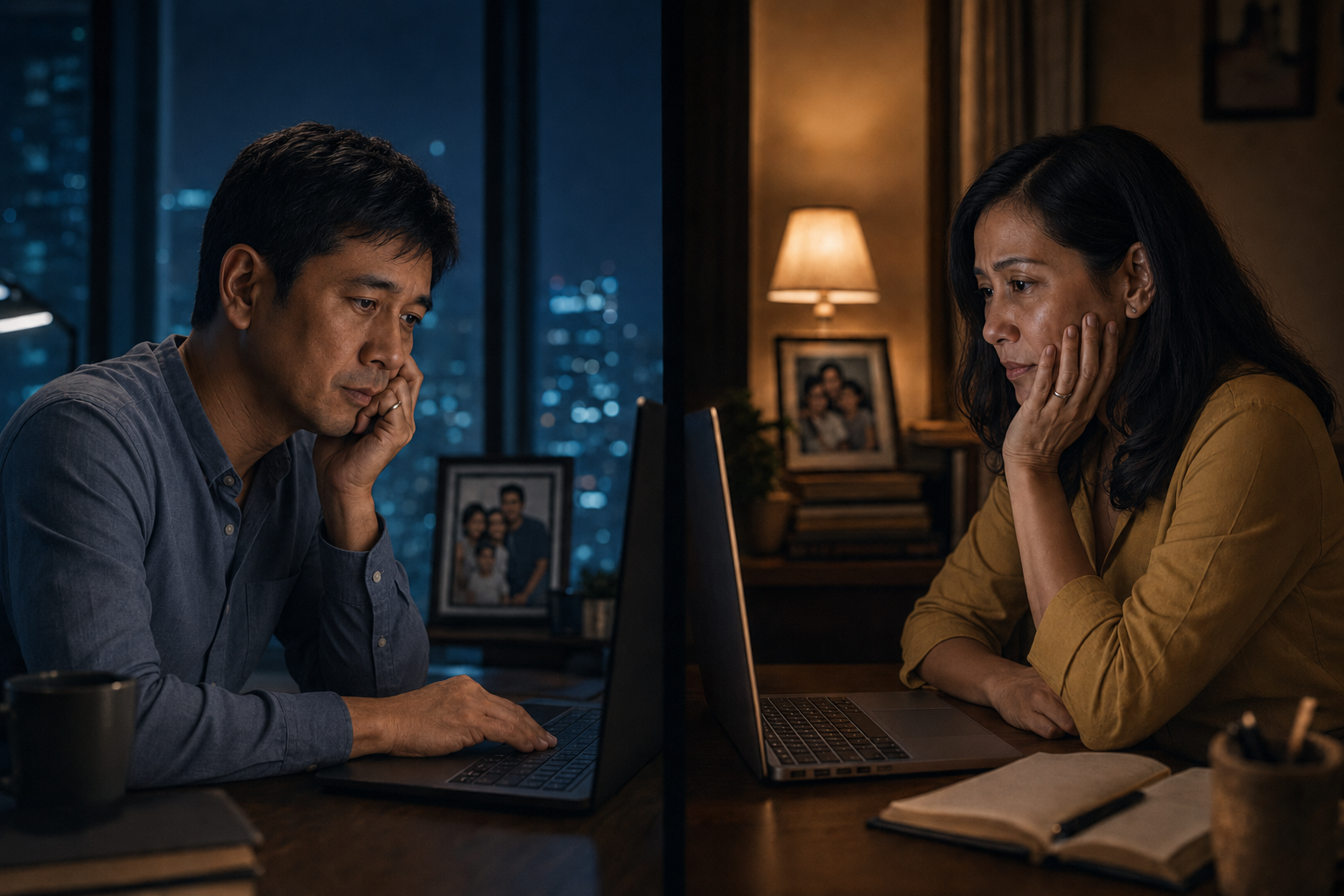
Two days later, I opened Kath’s profile again. I looked through her photographs until restraint felt more dishonest than desire.
That was the explanation I gave myself: restraint was dishonesty. I did not call my silence respect for her boundary or loyalty to my wife. I called it denial. By changing the name of the act, I made surrender sound courageous.
“Hello, Kath. Busy?”
“Not really. Just reading to kill time.”
“Can I call?”
“Why? Didn’t we discuss everything two nights ago?”
“Please. Just for a few minutes.”
“Why, Marco?”
I told her the truth. “I miss you. I only want to see you again.”
The message remained marked Seen for several minutes. Then she called me.
“Thank you,” I said as her face appeared.
“Don’t thank me. You are still impossible to refuse.”
She was wearing a sleeveless shirt and shorts. When she noticed where my gaze had settled, she adjusted the camera.
“I’m looking at your face,” I protested.
“Of course you are.”
I asked whether she missed me. She tried to evade the question, then surrendered.
“Yes. I miss you too. Are you happy now?”
“Very.”
Her expression grew serious. “Let me make something clear. We are both married. We both have children. I am talking to you because we are friends and because we shared a past. Nothing more, nothing less.”
“Loud and clear.”
She told me it would be our last video call. I asked for one call a week. She refused, and I knew—or convinced myself—that she would answer the next time anyway.
When she mentioned that Jay might not return until the following year, I asked when she expected me to visit the Philippines.
“You must miss Anna,” she said.
“I miss everyone I love.”
“Including your wife?”
“Why do you always bring her into our conversation?”
“Who should I mention—Mayette?”
Her teasing turned coarse. She asked whether I missed the sex I had had with Mayette. Irritated, I blurted out that I had not slept with anyone in Korea—not once in eight years.
She laughed. “Do you expect me to believe that?”
“It’s the truth.”
“Marco, you have needs. Are you telling me that in eight years, you never once paid a woman there for one night of sex?”
“Never.”
“That’s impossible.”
“I would never pay a woman for sex.”
“And why should I believe that?”
“Because if I ever sleep with a woman, I want it to happen because we both want it—not because I paid her. There should be desire on both sides and something real between us, even if neither of us knows where it will lead.”
Kath gave a short, disbelieving laugh. “That sounds very principled for someone with your history.”
“What is that supposed to mean?”
“Where was all that concern about what a woman wanted when you kissed me in your office and then—”
She stopped, leaving the rest suspended between us.
“And afterward?” she continued. “When you went home to Anna, did you kiss her too?”
“Kath—”
“Did you hold her the way you had just held me? Did you tell her you loved her?”
“It wasn’t like that.”
“Of course not. It never is when you are the one explaining it.”
I could have reminded her that I stopped when she pulled away. I could have insisted that what happened between us had never been entirely one-sided. But neither answer would erase the truth beneath her questions: I had wanted honesty from her while living dishonestly with both women.
“Believe whatever you want.”
“And Anna? What happens when you go home?”
I told her that Anna and I had not had sex since Kenneth was born. Diabetes had diminished her desire, and intercourse had become painful for her. We did not even share a bedroom during my visits.
“I’m sorry,” Kath said quietly.
“We found an arrangement that preserves our marriage and gives both of us peace.”
The arrangement was difficult to explain. Anna and I had forgiven many things without becoming truly compatible. The distance created by my work in Korea had probably saved us from the daily disagreements that once exhausted us.
Kenneth gave us another reason to remain a family, although I rarely admitted how much of the emotional labor of raising him Anna carried while I lived abroad. I called from Korea, sent money, came home when my schedule allowed, and told myself that provision was presence. The unanswered video call earlier that evening should have reminded me of the distance between my son and me. Instead, I had spent the night trying to erase the distance between Kath and me.
“Then why stay?” Kath asked.
“What else should I have done—find another Mayette?”
“I don’t know.”
“In Korea, I finally understood who I should have married. If I ever begin another relationship, I want it with only one person. If I cannot have her, I would rather have no one.”
The declaration sounded noble in my own ears. It converted years of infidelity into evidence of constancy: I had betrayed Anna with other women, yet because none of them mattered as Kath did, I could still imagine myself faithful to one great love. I did not ask whether devotion to an idealized woman could excuse disloyalty to the real woman I had married.
Kath turned partly away. “Who is she?”
“You know.”
“Say it.”
PART 5 – It Has Always Been You
What We Left Unsaid
(Were We Ever Meant to Be – Part 2)
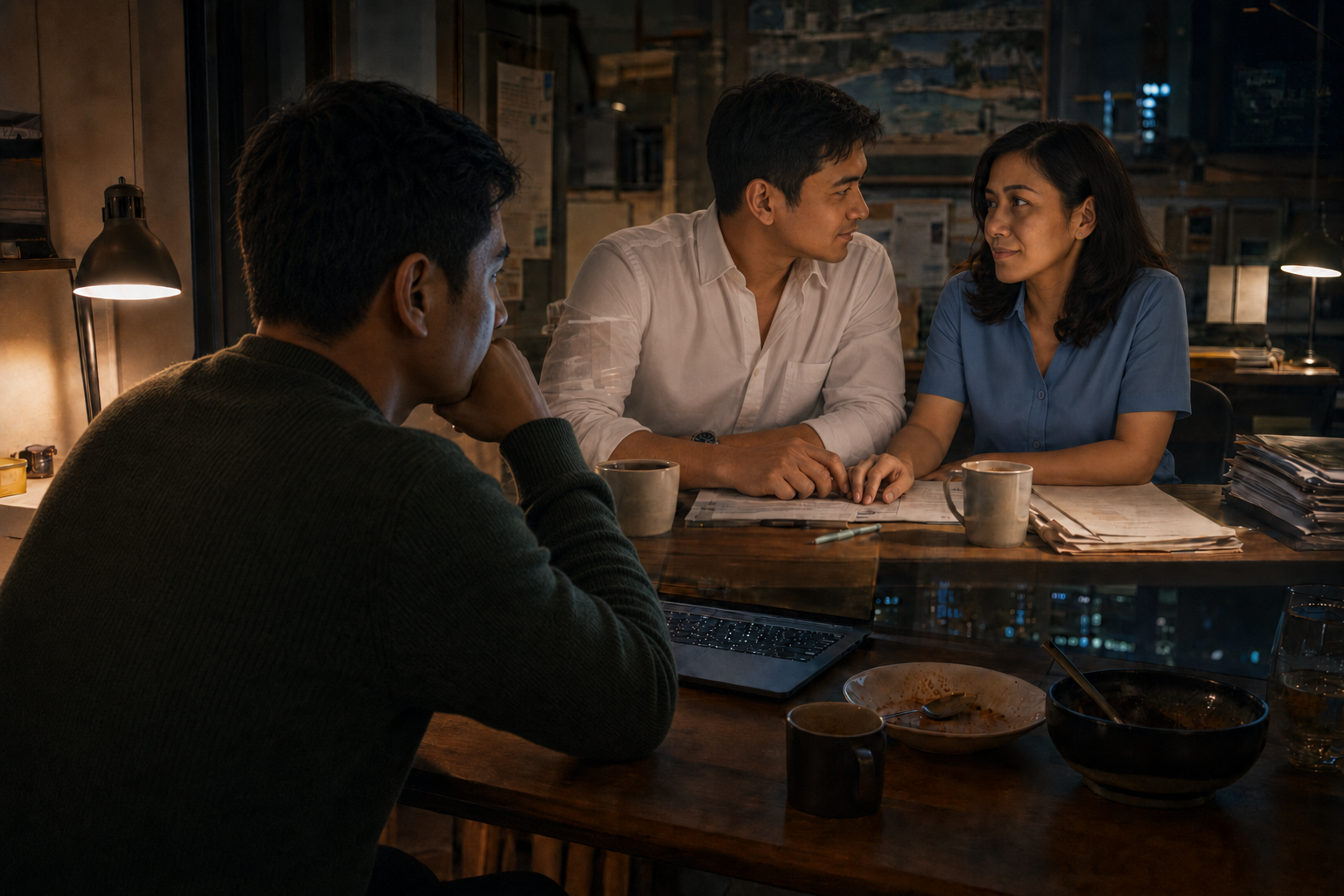
“Do you really need to ask me that?”
“You can refuse to answer.”
“Why are you asking?”
Why was I? What difference would the answer make now? What if she admitted that she had loved me—or that she still did?
“Because there are things we never clarified,” I said. “Every time we met after you resigned, we avoided them. Maybe we were afraid. Maybe we knew nothing good could come from talking about them.”
She lowered her eyes.
“Perhaps I was wrong,” I added. “Perhaps I only imagined that something important had happened between us.”
“What was your question again?”
“Did you really love me?”
“Of course I do—I mean, I did. Did.”
I could not suppress a smile.
“What are you grinning at?”
“So it’s did, not do.”
“You heard me.”
“Meaning you don’t love me anymore?”
“You are unbelievable, Marco. Some questions are better left unanswered.”
I let the silence answer for her.
“I’m happy when I see photographs of you and Anna,” she said. “You look happy together.”
“So you check my Facebook page.”
“Don’t you check mine?”
I admitted that I did. Then I asked what she had wanted to ask me.
“You already know,” she said. “But I want an honest answer.”
“Which question—did I love you then, or do I still love you now?”
She smiled. “Both.”
“Do you really need to ask me that?”
She laughed at hearing her own words returned to her.
“I loved you then, Kath.”
“And now?”
“Some questions are better left unanswered.”
“I can read between the lines, Marco.”
“So can I.”
When she left briefly to use the bathroom, memories crowded into the silence. We had once spent nearly every working day together. At first, while she was my intern, we had been strictly professional. Then our conversations became personal. I told her about my difficulties with Anna; she told me about Jay, who was then still courting her.
One night, while we were working overtime, I held her hand and kissed her. The kiss lasted longer than either of us could excuse. After that, affection became part of our secret routine. Sometimes a kiss welcomed one of us into the office. Sometimes I whispered that I missed her or loved her. At night, behind a closed door, we kissed until restraint was the only thing keeping us from going further.
Kath never allowed us to cross that final boundary. She never once said she loved me. And because Anna worked in the next office, we made certain no colleague noticed anything unusual.
Kath returned to the call and settled on a sofa. She wore shorts and a thin shirt, and when she reclined I had to remind myself not to stare.
The years had altered her less than I expected. There were faint lines around her eyes now, but they made her beauty feel lived in rather than diminished. She had become a mother, a wife, and a woman who spoke with greater certainty than the young intern I remembered. Yet when she smiled at something foolish I said, I could still see the twenty-something woman who used to enter my office carrying two cups of coffee and pretend not to notice that I had been waiting for her.
The memory pleased me, but it also carried a fact I preferred not to examine: back then I had been her supervisor. My recommendation had helped determine whether she would be hired. I had told myself that her affection was freely given—and perhaps it was—but I had never asked what my authority might have meant to a young woman beginning her career. It was easier to remember the kisses than the imbalance surrounding them.
“Careful, Marco. Your eyes might fall out.”
“You’ve attracted me for a long time.”
“There goes the charmer again.”
“You’re still very attractive.”
“I know.”
We laughed, but the ease did not last.
“I have another question,” she said. “Do you know someone named Mayette?”
PART 3 – THE TRUTH ABOUT THEM
Were We Ever Meant to Be?
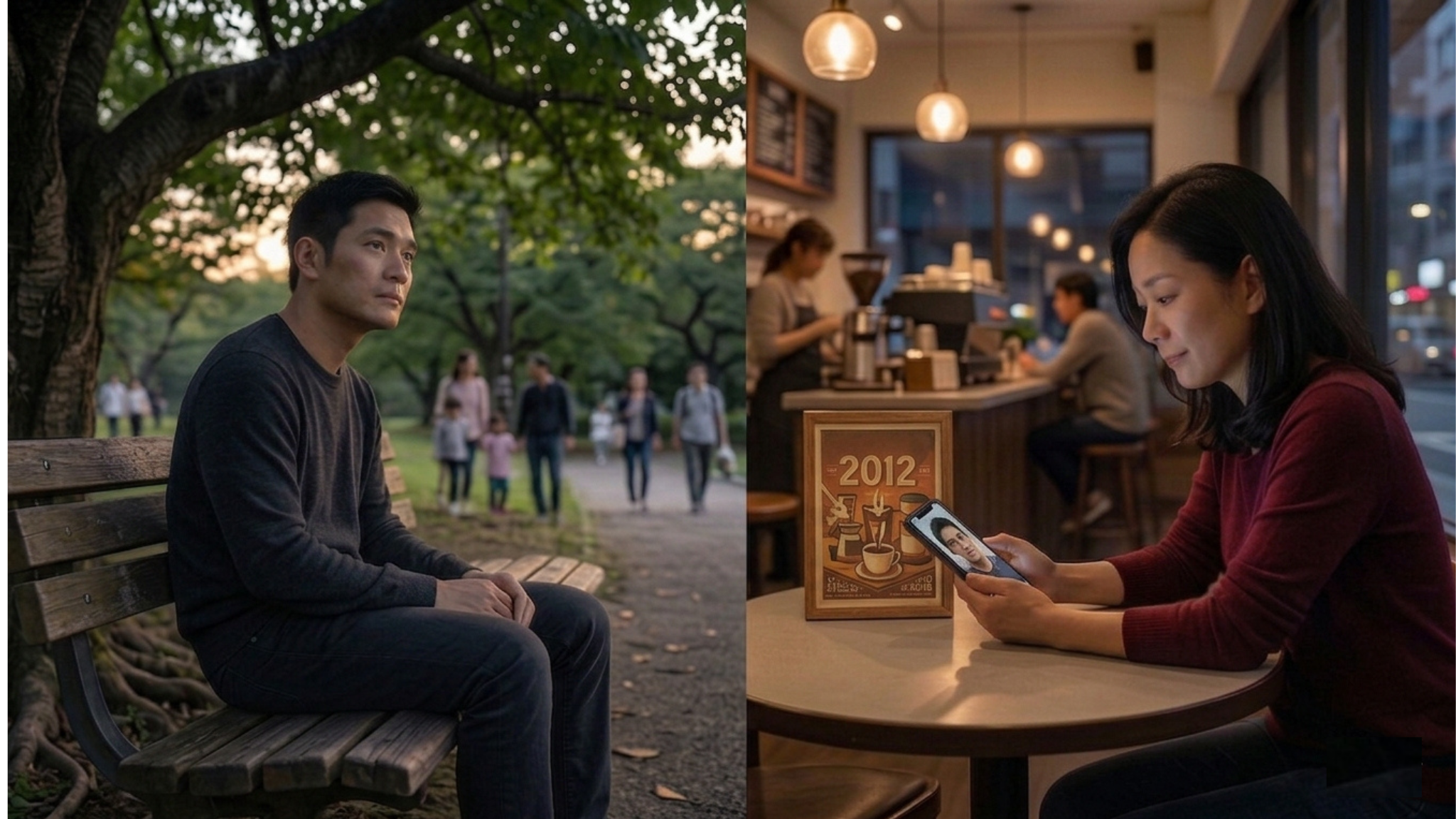
Were We Ever Meant to Be? is a provocative love story told as a novelette—a story of unfinished love, renewed desire, marital commitment, and the difficult choice between what the heart wants and what one believes is right.
Story Preview
Living alone in South Korea during the COVID-19 pandemic, Marco sends a simple birthday greeting to Katherine, a woman he has not seen in eight years. What begins as a friendly exchange soon reopens a past they had carefully buried—and feelings neither of them has completely forgotten. But Marco and Kath are no longer the people they once were: both are married, both have children, and both have lives that could unravel if they allow an unfinished love to begin again. As distance disappears through their screens and old questions demand new answers, they must confront a dangerous possibility: perhaps some loves survive because they are meant to be—or perhaps surviving is precisely what makes them hardest to resist.

Part One – A Message After Eight Years
After finishing my third movie of the day, I finally switched off my desktop computer. I would open my laptop later when I felt like browsing the internet.
That was how my days usually passed whenever I had no work—Netflix, the internet, and, when inspiration visited, writing a story, poem, or essay for my website. When I did not feel like watching, browsing, or writing, I read. Whatever I chose, I remained inside my apartment.
I had no desire to go out. COVID was still spreading, and because it was the weekend, I knew the streets and public places would be crowded. Koreans loved going out whenever they were free. Besides, winter was not quite over, and the evening was cold.
I had promised myself I wouldn’t touch anything work-related all weekend. I needed a break from the stress. The report my boss had requested could wait until I returned to the office.
I stepped onto the terrace of my two-bedroom apartment to stretch and breathe some fresh air. It was already past eight, and darkness had settled over the neighborhood.
The terrace was small, with just enough room for a chair and a little table. I sat there whenever I wanted some air, some morning sunlight, or a quiet place to read. Sometimes I drank coffee there. Sometimes beer.
I did not stay long that evening. Hunger drove me back into the kitchen. I had started watching movies after lunch and had not eaten since. I reheated the leftover chicken and pizza in the microwave and cooked a packet of ramen so I would have something warm to sip in the cold weather.
Carrying my food, I returned to the second bedroom, which I had converted into a study and miniature theater. It had also served as my workplace when the rising number of COVID cases forced our company to send its employees home. We had only recently been required to return to the office.
I opened my laptop while I ate. As always, Facebook was my first stop. I messaged Anna, my wife, to ask if she was feeling better. We hadn’t chatted all day because she had told me that morning that she was unwell.
She appeared to be offline. The green dot beside her name was gone.
I tried video-calling our son, Kenneth, but he did not answer. He was probably asleep—or too absorbed in Mobile Legends to notice my call.
I scrolled through my feed instead, then checked the profiles of several close friends and relatives. From thousands of kilometers away, Facebook was the easiest way to know what was happening in their lives back in the Philippines. If I saw something that made me miss someone, I messaged them.
That evening, one of them was celebrating her birthday.
Katherine.
I opened Kath’s profile, found an attractive birthday image on Google, and sent it to her through Messenger, along with a brief greeting and a question about how she had been.
Then I moved on to ESPN to check the day’s NBA results and watched the game highlights on YouTube. By the time I finished, it was already eleven. My food was gone, and I was tired of browsing.
I decided to watch another movie, but first I made myself a cup of coffee.
Before closing the laptop, I checked Facebook one last time. Kath’s profile was still open. I looked at the message I had sent her.
Not yet seen.
She was probably asleep. She would see it in the morning.
For no particular reason—or perhaps for one I did not want to admit—I opened our conversation history and began scrolling upward.
We had not had a real conversation since I moved to South Korea. Every year, I greeted her on her birthday. She thanked me, we exchanged a few questions about how life was treating us, and then we said goodbye. I often wanted to keep talking, but I could never tell whether she wanted the same.
I scrolled down again.
The year before, when I had been preparing to visit the Philippines, we had talked about meeting. Friends often promised to have coffee with me whenever I came home, but most of those plans remained exactly that—plans. Perhaps Kath and I would have met if COVID hadn’t disrupted everything.
I knew I would not have wasted the opportunity to see her.
I simply did not know whether she felt the same way.
I was about to close Facebook when the status beneath my message suddenly changed.
Seen.
Kath was online.
A moment later, the three moving dots appeared. She was typing.
“Sirrr!!!”
I smiled.
Even after all these years, she still called me Sir. She had once been an intern at the travel and recruitment agency owned by my uncle, where Anna and I had both worked before I was assigned to Korea. I had headed the human resources office, and my uncle had placed Kath directly under my supervision.
She had been a fresh graduate then. The arrangement was that she would complete a one-month paid internship, after which my recommendation would determine whether she would be hired as a regular employee.
“How are you, sir?” she added.
“What is this, Kath? First you call me Sir, and now you’re being formal with me. Just call me Marco.”
“All right. Let me try again. How are you, Marco?”
“Still beautiful.”
“Wow. Same here—and I’m more beautiful than you.”
We exchanged laughing emojis.
“Thank you for remembering my birthday,” she wrote.
“How could I forget? You’re on my annual list of people I’m required to greet.”
“Oh, really? Well, thank you for including me on your precious list.”
She reacted to my message with a heart.
“What have you been doing lately?” I asked.
That simple question began the longest conversation we had shared since I left the Philippines. Before that night, we rarely exchanged more than three or four messages before one of us found a reason to leave.
I asked about her family.
“Jay and I are happy together,” she replied. “We’ve been blessed as a couple.”
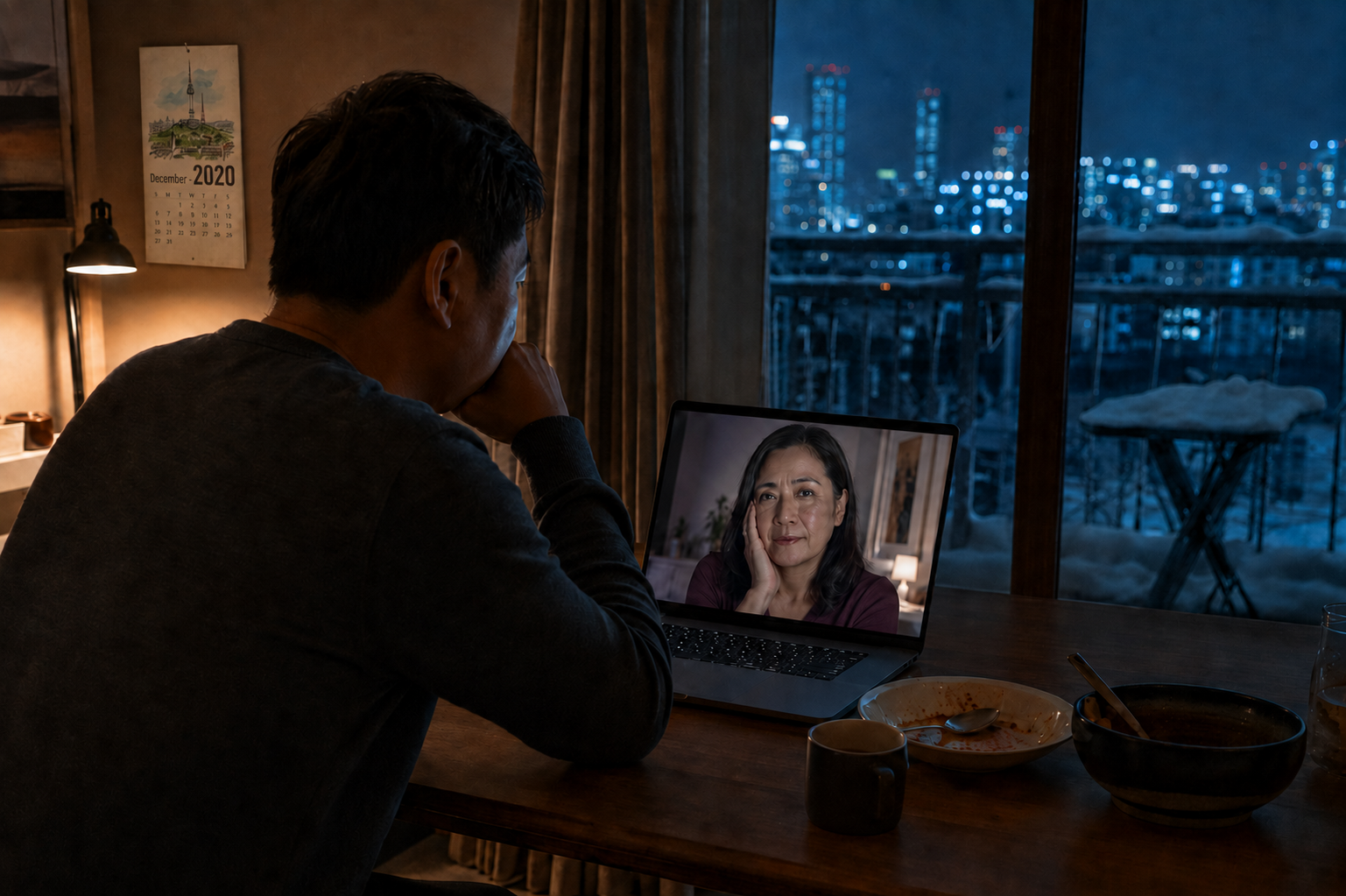
I had meant her whole family. To be honest, her husband had not even entered my mind when I asked. But since she had brought him into the conversation, I asked whether he was home.
I knew Jay was a seafarer. Kath said he was currently aboard a ship operating in South America.
“How about you and Anna?” she asked.
My fingers remained above the keyboard for a long time.
How were Anna and I?
“We’re okay,” I finally typed.
Kath replied almost immediately.
“Wow. It took you that long to answer, and all you can say is that you’re okay?”
I had intended to add more. I had pressed Enter too soon.
“Things became more peaceful between us when I stopped expecting her to meet my standards.”
“Has she changed?”
Again, I hesitated.
“Anna is Anna,” I wrote. “She is who she is. I’ve learned to accept that.”
Kath sent a thumbs-up.
Her question stirred memories I had kept untouched for years. Whenever Anna and I fought back then, Kath had been the person who listened to me. If she entered my office and found me unusually quiet, she immediately knew that something had happened between my wife and me. She would make me coffee, sit nearby, and tell me I did not have to keep everything to myself.
I thought the thumbs-up would end our conversation. Instead, she sent a sad emoji.
“I’m all right, Kath,” I assured her.
She reacted with a heart.
I turned the question toward her.
“How are things between you and Jay? Have you completely repaired your relationship? Are you back to the way you used to be?”
“Yes. We worked through our problems. We both realized that perhaps we needed to experience what happened—just as you and Anna needed to go through your own difficulties. You know we’re both Christians. We chose to remain together and allowed God to guide us through the healing process.”
I sent her a thumbs-up.
“I think we’re more mature now in the way we handle our problems,” she added.
Shortly before I moved to Korea, Kath and I had met because she and Jay were going through a serious marital crisis. She had needed someone to talk to, and I had listened. At the time, she believed their problems might end their marriage. I asked what caused the conflict, but she was reluctant to tell me.
Her problems had seemed so heavy that I never found the opportunity to tell her about mine. I had been going through a crisis severe enough for a doctor to prescribe antidepressants. I had not even told her that I would soon be leaving for South Korea.
“You suddenly went quiet,” she wrote. “Are you busy?”
“No. I was just remembering the last time we saw each other. We watched a movie that day, didn’t we?”
“Which part are you remembering—the movie, or the way you pretended to comfort me so you could steal a kiss on my cheek?”
“That isn’t true,” I protested. “I was genuinely trying to comfort you. If I had wanted anything else, then I would have—”
“Stop it, Marco.”
“All right. But I really didn’t have any hidden intention that day.”
“If you say so.”
I sent her smiling emojis.
She sent back three hearts.
“I miss you, Kath,” I typed. “I really do.”
The words had escaped before I could decide whether they were appropriate. Something familiar had risen inside me—a feeling I knew too well whenever it concerned her.
The message had already been delivered when I realized she might take it the wrong way.
“Oh, Marco,” she replied. “It’s getting late. I should say good night.”
Perhaps I had offended her.
“I’m sorry, Kath.”
“Sorry? What are you sorry for?”
I stared at the screen, unable to type a single word.
“Marco, I asked what you’re apologizing for.”
I do not know how long I sat there. Memories I had spent years avoiding began returning one after another.
Finally, I typed, “It’s nothing. You said it’s time to sleep, so good night. Thank you for talking to me.”
A series of angry emojis appeared.
“Fine, Marco. Leave me hanging again. I should be used to that by now.”
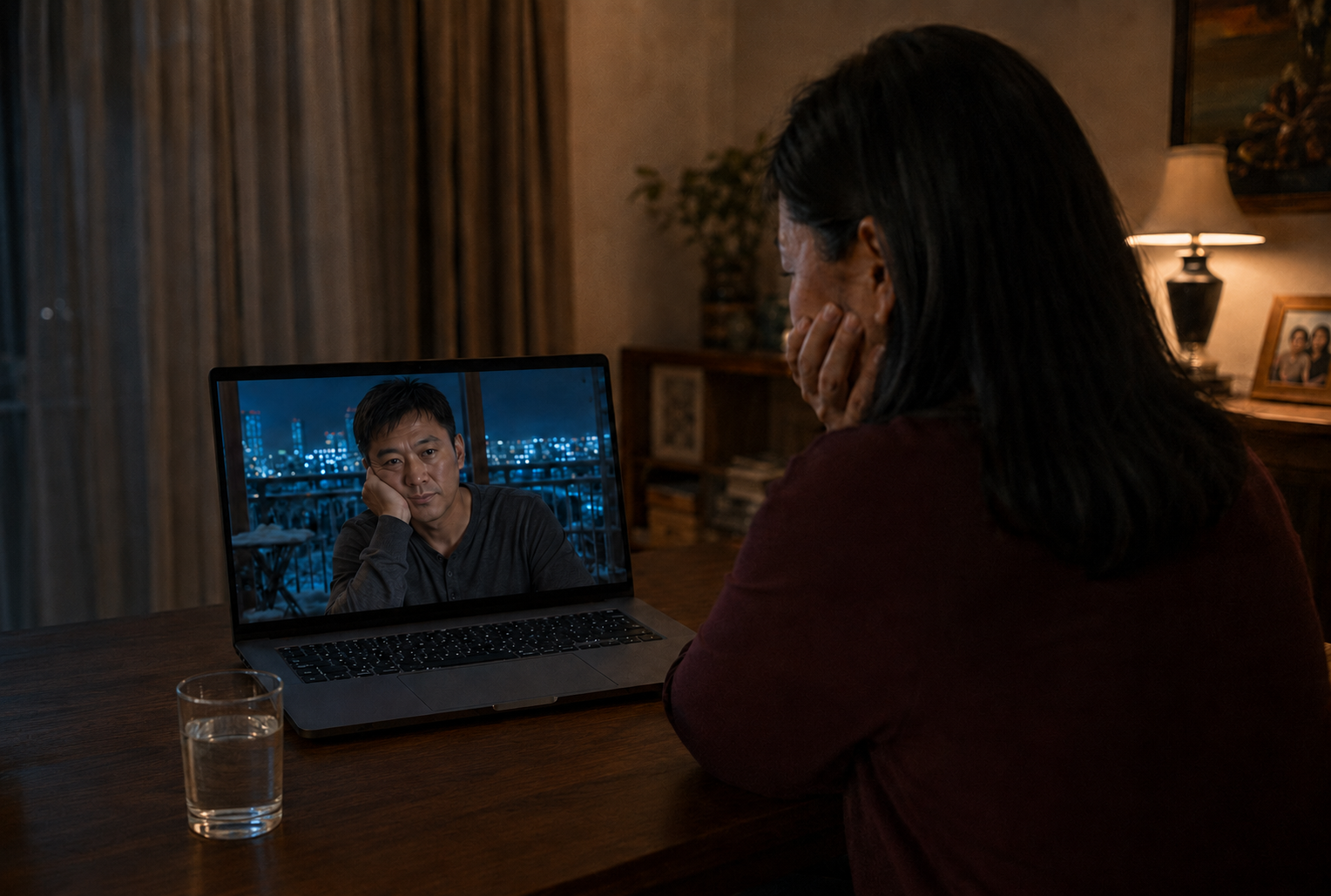
I pressed my palm against my forehead.
This was why I kept my distance even when I wanted to speak to her. Perhaps it was also why she kept hers. Neither of us wanted to uncover what we had spent years burying.
Instead of replying, I tried to video-call her.
She rejected the call.
I tried again.
Rejected.
“Please answer,” I wrote. “My hands are tired from typing.”
I called a third time.
At last, she answered—but her camera was off.
“Please turn on your camera,” I typed.
“Why?”
“I want to see you.”
It took her a while, but eventually the screen flickered and her face appeared.
I looked at Kath. She seemed to be studying me in the same way. Almost eight years had passed since we last saw each other, yet she looked scarcely changed.
“Have you been crying?” I asked.
“You’re infuriating, Marco. Why did we have to make this a video call?”
“My fingers were beginning to hurt from typing. And besides…”
I stopped.
“Besides what?”
I drew a breath. “I miss you, Kath.”
“I can never tell whether you’re telling the truth or merely charming me.”
“Is that really what you think of me?”
“Yes. It has been—for a long time. Since the day you failed to show up.”
I had no answer.
Whenever our conversations came dangerously close to what had once existed between us, she returned to that day—the meeting I had missed and the explanation I had never given.
“Marco, I want to ask you something,” she said. “And for once in your life, please answer me honestly. Just this once.”
Her words hurt. They made me sound like a man who had lied about everything.
“All right. I promise I’ll be honest. What do you want to know?”
She stared at me through the screen.
I tried to guess what she was about to ask.
Was it why I had not shown up that day when we were supposed to visit my mother in the hospital? Was it why my uncle had transferred her to another branch after she had worked in my office for six months? She had resigned two months after the transfer. Perhaps she wanted to know why I had not tried to stop her.
Or why I had seemed unaffected when she told me that she and Jay were getting married.
Perhaps she wanted to know why I had left for Korea without telling her—or why I had made so little effort to remain part of her life afterward.
Which of those questions had she carried all these years?
She took so long to speak that I wondered whether she had changed her mind.
“Never mind,” she finally said. “It’s embarrassing.”
“What are you—a teenager?”
“That’s enough, Marco.”
“All right. Ask me.”
“I said forget it.”
I sighed.
Perhaps I already knew what she had wanted to ask.
“Fine,” I said. “Then I’ll ask the question.”
“Go ahead. Just don’t ask me anything about mathematics. You know that’s my weakness.”
I smiled. Her humor had not changed.
“Kath…”
“Yes?”
“Did you really love me back then?”
She closed her eyes and released a long, unsteady breath.
Part 2 – What We Left Unsaid
Edge of the Fall (Part 4)

(A Short Novel)
Light greeted my waking. It hurt my eyes. I closed them again. I felt my body aching all over. When I breathed, there was pain around my ribs.
I turned to my side and opened my eyes again, slowly.
I’m still alive. I’m not in heaven or hell, not in that mountain. I’m in a hospital room.
Two needles were stuck in my hand. Those are for the IV fluids that were hanging over the bed. I had an oxygen mask on, and it made me feel uneasy. I lifted it to check if I still needed it. When I realized I could breathe comfortably without it, I decided to take it off.
My arms were covered in bruises, and I was pretty sure my body and legs were too.
When I looked toward my feet, I noticed a woman with her head resting on the bed where I lay. It seemed she was watching over me. I wondered who it could be.
I tried to sit up, but my ribs hurt a lot. Could one or two of them be broken?
My movements awoke the woman.. She stood up and looked at me.
I knew the woman. I couldn’t be mistaken. She was the woman from the mountain. Without any hesitation, she hugged me. I was surprised, especially when she started crying unabashedly. It was awkward. I didn’t know whether to push her away or hug her back.
She was the reason I got beaten. She put me in harm’s way. Should I blame her?
Her hug tightened. At that moment, I suddenly remembered my sister. She would hug me tightly and cry, the way a woman does, whenever I confronted her about her wrong decisions.
“Dangsin-i sal-a gyesim-eul gamsadeulibnida.”
She thanked God that I was still alive. Should I also thank her for having survived the beating I got from her compatriots? Or blame her for being unable to push through with my plans.
“Jeongmal mianhae. Geugeos-eun modu nae jalmos-ieossda.”
The woman apologized, admitting that what had happened was her fault.
If you think about it, who was to blame for the beating I got? Could I blame the men who hit me, thinking I was assaulting their fellow citizen and a woman? If I had stumbled upon such a scene—a woman screaming, desperately trying to escape a man holding her tightly as they wrestled on the ground—what would I have done?
But is it my fault that it all happened because I stopped the woman from jumping? Was it right for me to try to stop her from taking her own life? The questions swirl inside me like a bitter winter wind, numbing any clarity I might have had. Yet, beneath the cold, like a hesitant bud breaking through the frost, I wonder if there’s any chance for warmth—if I did the right thing or if I’ve just trapped us both in an endless winter. Because of what I did, we continue to live. But does that mean we’ll also continue to feel the pain caused by those who neglected their promise to love us?
“How stupid of me. I put you in danger.”
She could speak English.
“Okay… okay… Just wait a moment! Let go of me first. I can’t breathe.”
She broke free from the hug. To my surprise, she knelt.
“Please forgive me.”
“Wait… wait… Please stand up. Don’t do that.”
The woman didn’t move. Her knees remained glued to the floor as she held my thigh.
I tried to stand. My legs and joints were in pain, but I managed. I placed my hands on her shoulders and gently lifted her.
“I am not blaming you for what happened to me.”
She stood up and hugged me again.
“Thank you. Thank you. But I’m sorry.”
After saying that, she gently sat me back down on the bed.
“Just sit down. You’re still weak. You are badly injured.”
I heeded her advice. I sat back on the edge of the bed.
“You might want to know. The doctors said all you have are bruises and contusions. None of your bones are broken.”
She pulled a chair and sat right in front of me. I couldn’t help but notice how comfortable she seemed doing all those things, as if we had known each other for a long time.
“By the way, I’m Su Jin.”
“Oh, and I’m…”
“Joseph! You’re Joseph. You’re from the Philippines. I’m sorry. I opened your wallet. I had to get information about you when I brought you here.”
I paused for a moment.
“Well, I think you had no choice but to do that. It’s okay.”
She took my cell phone and wallet from her bag and handed them to me.
“Here. Oh… I have your other personal belongings in my car.”
“Thanks. By the way, how long have I been here?”
“This is the second night.”
“How were you able to bring me to this hospital… from the mountain?”
“Those men helped me. I explained to them what happened. They’re very sorry. They were drunk at that time.”
Then I remember how I almost died in the hands of those men.
Ah, by the way, they’re paying for your hospitalization. They’re hoping you would not sue them and settle things amicably.”
Should I file a lawsuit? It doesn’t seem like it. If I were in their position, I might have done the same. It’s enough that they helped bring me to the hospital.
“I told them that they should pay you also for damages, especially if you decide not to work for some time because of what happened. They agreed. I’ll call them later so they can come and talk to you.”
It’s nice to think that she seems to have arranged everything. And she speaks English well. That’s not common among them. Unlike most of her countrymen, she must have graduated from university overseas or studied English seriously.
“How come you can speak English so well?”
“I studied in the US for almost 10 years. I just completed my Master’s there recently.”
That explains it.
“I was also able to contact your family in the Philippines.”
“Really? How?”
“Through your embassy. Your sister is coming to pick you up. She said you need to go home and take a break. By the way, Joseph…”
“Yeah?”
Su Jin hesitated. She seemed to want to say something, but was shy about it.
“Ah… Your sister told me your story.”
“What do you mean?”
“I know what happened.”
I didn’t know whether to be upset or not. My sister was so nosy.
“Is that so?”
She nodded and said, “We’re on the same boat.”
When I heard that, I couldn’t help but laugh a little. Su Jin laughed too. I don’t know why remembering what Jinky and my brother did to me didn’t bring any more bitterness.
Then she added, “They broke our hearts.”
I nodded, then said, “You wouldn’t believe this.”
“What?” Su Jin asked.
“I was on that mountain that afternoon to commit suicide.”
Su Jin froze.
“You want me to believe that!”
“But that’s the truth. Believe it or not.”
“Stop it, Joseph! I don’t believe you. You didn’t go there to die. You were there to save me. And you did.”
I just kept silent and listened to what she said. Who would believe that I went there to commit suicide? But instead of death, I found a new lease of life. But who was there for whom? Me for her or her for me. Perhaps we were there for each other. We were there to put an end to the harsh winter we experienced. We provided each other a spring of hope.
She took my hand. Her palms were so soft. She smiled and looked at me. Then, I realized how beautiful and sweet her face was, like the first bloom of spring pushing through the stubborn frost.
“”I owe you my life. You saved me. You are a very good man.”
I gently squeezed her hands in response, not knowing what to say. After all, was she the only one saved when I stopped her from jumping? I got saved as well.
“Thank you, too, Su Jin.”
She nodded and smiled and slowly bowed her head.
I don’t believe in fate. Everything that happens in a person’s life is the product of their collective decisions. But before I established my own belief system, informed by the things I learned and experienced, as well as the ideas I read and decided to embrace, my father told me when I was a boy that there are times when God intervenes in human affairs. Subconsciously, I sometimes revert to what my father said, rather than clinging to my new belief about fate. Additionally, he stated that everything happens for a reason.
So, how should I put it? Was it the will of God that I climbed the mountain that day to prevent Su Jin from jumping? But who prevented whom from jumping? It’s hard to believe that God would will Jinky and my brother to commit that treachery against me so that I would go to the mountain and eventually meet Su Jin. I think I met her on the mountain because we both decided to go there for personal reasons. But whatever it may be, it’s no longer important.
“By the way, aren’t you hungry?” That was Sujin breaking the silence as she let go of my hands.
“I brought some food.” She pointed to the table.
“Yeah, actually, I’m starving. Is there coffee available?”
“I’m afraid not, but there’s a café nearby. I’ll buy us coffee. What do you want?”
“Is it okay?”
“Of course!”
“Can you get me a caramel macchiato, please?”
“Sure! I’ll be back in a few minutes.”
“Wait!” I opened my wallet.
“No please. It’s on me.”
Before she left the room, Su Jin looked back at me. She smiled again.
“Don’t go anywhere, okay? Don’t run away from me.”
I laughed at what she said. Su Jin had a sense of humor.
I thought about her words before she left. It was funny, but honestly, I’d feel regret and sadness if she didn’t come back. It felt like she was filling some gap in my life at that moment. Did she feel the same way?
After a while, the door opened.
“Oh, you’re still here. I am glad you didn’t try to escape.” She said as she handed me the coffee.
“You’re funny.”
“Am I?”
She took a piece of bread from the table and gave it to me.
“By the way, your sister invited me to visit the Philippines. I’d like to. May I go with you and your sister? PLEASE. I need a little break.”
I looked at her and smiled.
“Chincha?”
I asked if she was serious. She looked like she was.
“Ne!.. Boo ta kam ni da!”
She retook my hands. She squeezed them tightly. It felt like she was warning me that if I disagreed, she’d twist my hands.
When I nodded, I saw how her face lit up with happiness.
“Yes! Gomabseubnida!”
Su Jin thanked me, and in her joy, she hugged me again. I hugged her back and rested my head on her shoulder. She allowed it. In that moment, the warmth of her embrace felt like the first rays of spring breaking through my heart’s long, harsh winter, offering a glimpse of renewal I hadn’t dared to hope for.
As for my mother, elder brother, and Jinky, I think I would eventually learn to forgive and forget, like the last snow of winter thawing and finally giving way to the soft bloom of spring.
Edge of the Fall (Part 3)

(A SHORT NOVEL)
I was about to start eating when someone arrived.
A woman.
I felt disappointed. Somebody had seen me. Our eyes met for a few seconds when she looked in my direction. It was the last thing I wanted to happen, for I didn’t want to leave even the slightest hint of my impending disappearance. She could possibly see my photo as a missing person when I finally hide lifeless at the bottom of this mountain. She could potentially provide a clue to my whereabouts.
I just hoped she’d leave quickly so I could dive into the ocean of rocks at the bottom of the mountain after I eat and finish my drink.
The woman was alone. I did not see anybody following her. Her brow was furrowed, her face set in a frown, and her eyebrows knitted together. Yet, even beneath the frown, her beauty remained undeniable, like the first flowers of spring pushing through the frost, fragile yet full of life.
She walked right past me, ignoring my presence. She was dressed in baggy jeans and a red hoodie, the vibrant color accentuating her fair skin. The soft breeze seemed to carry a hint of spring with it, the scent of blooming flowers—though the chill of winter still lingered in the air.
I followed her with my eyes. She stopped and sat on top of a rock. She had her back to me. She held her cell phone up to her ear. I wasn’t sure if she was receiving a call or making one. All I knew was that she was talking to someone and sounded like she was arguing with them.
Instead of eating, I watched her, hoping she’d leave quickly. Inadvertently, I eavesdropped on their conversation. Admittedly, she succeeded in distracting me from the very reason I was there.
The woman took the cell phone away from her ear, and it seemed like the conversation was over. I was startled when the woman suddenly screamed.
“Neohui dul-eun jiog-e gal su-iss-eo.”
I didn’t catch everything she said, just the words ‘hell’ and ‘two.’ Maybe she was telling the person she was talking to and anyone else involved to go to hell.
Then she stood up and repeatedly slammed the cell phone against the nearest pine tree to me.
Smash!
Some pieces of the broken cell phone even landed at my feet.
The woman sat down on the ground, sulking. She looked like a child who had been robbed of a toy.
“Salanghae! Geuleona wae?”
Apparently, her boyfriend had left her. She was crying. She sobbed like a child. Did I do the same? What a shame that the answer is yes. I cried a river upon learning that the woman I was about to marry was impregnated by no less than my brother.
I felt pity for her, understood her, and could relate. I stood up to give her a tissue.
As the saying goes, “Misery loves company.”
I slowly approached her. Just as I was about to hand her the tissue, she suddenly stood up and stepped over the rope blocking the way. She stopped right at the edge of the mountain. One wrong step, and death awaited her.
It seemed like she wanted to jump to her death… just like me. The difference is mine is planned, hers was a spontanneous decision.
I stepped over the rope, too.
She turned to look at me. Her eyes looked furious.
“Deo isang dagaoji mal-ayo.”
I understood what she said. She didn’t want me to approach her.
I stopped. But as she was about to jump, I quickly grabbed her arm.
She struggled to break free as I pulled her from the mountain’s edge. I was like winter, holding her back. Like the spring desperately trying to emerge but unable to break my frozen grip on her. When she kicked me in the thigh, I let go of her, but she didn’t manage to jump. Instead, I hugged her tightly from behind and lifted her away from the edge, keeping her from the precipice, like the last bit of warmth trying to push through the bitter cold.
“Naleul noh-ajwo!!!”
She wants me to let her go, but I didn’t. She was screaming and struggling until we both fell and rolled down the ground, luckily away from the edge of the mountain. She elbowed me several times. Cursed at me.
Then suddenly I heard something.
“GEUNYEOLEUL NAEBEOLYEODWO!”
That was a man’s voice.
It seemed like there was someone else.
And there was… and not only one.
A group of men suddenly arrived and saw us in that state.
They ran towards us. One pulled the woman away from my grip, and the others grabbed me. Three of them were holding me. They were reeking of liquor.
Everything happened so fast. A pair of slaps landed on my cheeks. Followed by a powerful punch in the stomach that put me to my knees.
I gagged from the pain.
They took turns slapping me. One of them was even pulling my hair. My ears rang from the force of the slaps that hit me.
While I was kneeling, I looked up at the men surrounding me. I held onto one of their knees.
“Please…”
“Dakcho!!! Shibalnoma!”
One of them cursed and even spat on my face.
“Let me explain,” I said in broken Korean.
But they wouldn’t let me. I received an endless barrage of punches and kicks… to my face… to my stomach… to my thighs.
I think my eyes were the only parts of my body that didn’t get hit.
While I tried in vain to parry the punches and kicks of my assailants, I managed to gaze at the woman still being held by the man who had pulled her away. She said something to the men, but I couldn’t understand her words. She was desperately trying to break free from the man’s hold.
Blood was dripping from the wounds they inflicted on me, but they wouldn’t stop. Their punches and kicks were like the unforgiving chill of winter—cold, relentless, and numbing, cutting through my body just as the frost cuts through the warmth of spring. One cut me off when I ran toward the mountain’s edge, hoping to jump and still achieve what I came here for. I fell to my knees again.
It wasn’t jumping off the mountain that was going to kill me; it was the merciless beating from these men. I didn’t intend to go that way
I regret not jumping as soon as I got there. I should not have planned to have a last supper. Instead of the food I brought, I ate painful punches and kicks and had their swearing and cursing as my side dishes. Should I’ve just let the woman do as she wished and followed her to the bottom of the mountain? It would’ve been just a flash of pain. Maybe I wouldn’t even feel it. Unlike the beating from these men, which was slowly killing me with pain, like the bitter cold of winter, it was relentless. I thought of spring—of the warmth and the possibility of change—but it felt as distant as a dream I couldn’t reach. I couldn’t even imagine it, not when I was trapped in this frozen moment, slowly succumbing to the cruelty of my assailants.”
Before I lost consciousness, I saw the woman managing to free herself from the clutches of the man who had grabbed her earlier. She ran toward me. She was trying to stop the men from beating me. I felt her body pressing against mine, her warmth a brief, fleeting contrast to the cold fury of the men beating me. As she tried to shield me from the relentless anger of her countrymen, it felt like the first sign of spring pushing through a long, unyielding winter. But it was too brief, too fragile, just like the hope I barely dared to feel. I struggled to stay awake, but my eyes just shut. Everything went dark.
To be continued…


 M.A.D. L I G A Y A