Blog Archives
It Has Always Been You
(Were We Ever Meant to Be – Part 5)
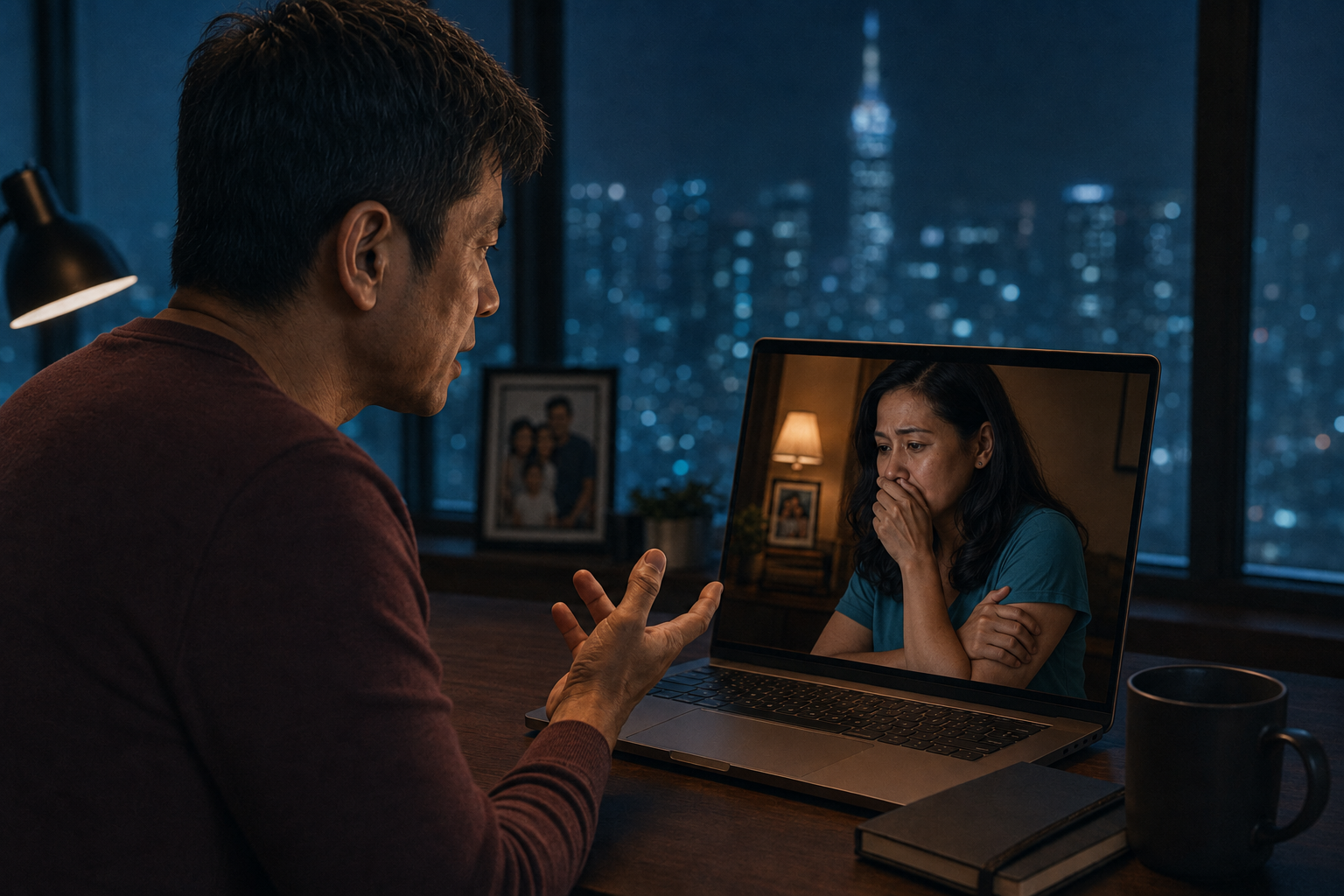
“It’s you, Kath. It has always been you.”
“Stop, Marco.”
“I should have waited. I should never have rushed into marriage with Anna. I should not have listened to my mother. I should have taken you to Cebu.”
“I said stop.”
“I stayed with Anna because there was nowhere else to go. There was no Kath waiting for me. If I ever love someone again, it can only be you. I never stopped loving you.”
Kath stood and moved away from the laptop. When she returned, she looked shaken.
“Do you know what you are doing?”
“I’m being honest.”
“No. You are disturbing my peaceful life. You did it before, and you are doing it again.”
She ended the call.
For a moment, clarity pierced my certainty. She had entered my office years ago wanting nothing more than to begin a career. I had allowed her feelings to deepen while knowing I was married and held authority over her future. Now, after she had built a family and repaired her marriage, I had returned carrying the same disruption.
Kath had not been innocent, but neither was she merely an equal reflection of me. I sent the birthday greeting, insisted on the first video call, revived the old questions, and pushed every answer toward the conclusion I wanted. Each time she said friendship, I searched for a way to make the word contain romance. Each time she asked me to stop, I treated the request as fear to overcome rather than a decision to honor.
Yet even as I recognized the harm, part of me wondered only whether I had moved too quickly. Perhaps I should have revealed my feelings gradually. Perhaps I had frightened her by forcing the issue.
Near midnight, I sent an apology. I promised that I would never call again.
Kath called.
For a long time, neither of us spoke.
“I’m sorry,” I said. “I never intended to disturb your life.”
“But you did. You disturbed my mind.”
I wanted to ask why, but I believed I already knew.
“All I wanted was to reconnect,” I said. “To talk to you again.”
“Can’t you talk to Anna?”
“I can. But I don’t merely want conversation from you. I long for your presence. I want to see you.”
She shook her head. “Why can’t you leave me alone? Forget me.”
“I tried. God knows I tried. I failed.”
“I cannot control what you feel. But expect nothing from me. We are married. We have children. What we can have is friendship.”
“Then let me call once a week.”
She sighed. “Once a week.”
“Thank you. I love you.”
“We are friends, Marco.”
“Friends can say ‘I love you.’”
“Always a loophole.”
“Say it.”
She looked into the camera. “I love you too, my friend.”
The word friend should have ended the matter. Instead, it became permission.
Over the next two weeks, our weekly call became twice a week, sometimes three times. We told each other what had happened during the eight years apart. Kath spoke about her Christian community and the worship services she attended with Jay whenever he was home. I told her that I had begun taking my writing seriously and had created a website.
We also spoke about ordinary things—the children’s classes, groceries, weather, books, films, and the inconveniences of pandemic life. Those conversations were perhaps more dangerous than the declarations. They allowed us to rehearse companionship. We began imagining not only kisses and escape but breakfast, errands, shared jokes, and growing old within reach of each other. Desire entered through nostalgia; domestic fantasy persuaded it to stay.
“I know,” she admitted. “I read your stories and poems.”
“Then you know some are about you.”
“I didn’t want to assume.”
“Whenever I need to write love, joy, longing, or pain, I think of our memories. I think of the us that never happened.”
She asked about the white rose in one of my poems.
“You,” I said. “Obviously.”
“You must have prepared that speech to make me fall in love with you again.”
“Again? Are you saying you aren’t in love now?”
“Friends, Marco. Nothing more, nothing less.”
But soon she began calling me during the day. She knew the hour of my coffee break and the days I left work early. Once, when she noticed a woman behind me in a café, jealousy sharpened her voice.
At home, Kath waited until her children had gone to their rooms before answering my calls. Sometimes one of them knocked, and her entire expression changed as she turned away from the screen and became their mother. Those brief interruptions should have restored perspective. Instead, I waited impatiently for her to return, as though her family were intruding upon time that belonged to me.
“Make sure she isn’t with you.”
“No, baby. I don’t even know her.”
“Baby?”
“May I call you that?”
“Do whatever you want.”
I treated her refusal to refuse as consent.
That night, however, she did not answer my messages. At midnight, I called.
“Are you all right?”
She shook her head. “We have to stop this.”
“Why?”
“The pastor’s sermon struck me hard tonight. I realized that I long for your presence more than I long for Jay’s. I used to talk to him almost every night. Now I would rather talk to you.”
Jay was somewhere at sea, trusting the wife who had told him years earlier about me and had chosen to rebuild their marriage. I knew that history, yet I regarded his absence as an opening. Because Kath and I shared language, humor, and emotional intimacy, I treated compatibility as a superior claim. I rarely asked what promises Jay had kept during the years when I had been absent from her life.
Her confession filled me with joy even as I watched it frighten her.
“Why are you doing this to me again?” she cried. “I had become peaceful. I could have ended our first conversation, but I stayed. I answered your calls. When it comes to you, I am so weak.”
“I love you, baby.”
She looked directly into the camera.
“I love you too, Marco. May God forgive me, but I love you.”