Category Archives: Creative Writing
Reunion
(A Short Story in Filipino)

Dalawampu’t limang taon bago muling nagkita-kita ang magkakaybigang sina Jay, Chris, Mario at Mon. Masaya sila sa dahilang muli silang nagkasama-sama. Sila’y buong sabik na nagkumustahan at nagkuwentuhan.
Katulad ng dati ay nandoon ang kantiyawan at tawanan. At siyempre, hindi naiwasan na mapag-usapan din nila ang mga seryosong bagay – ang mga pagsubok at mga alalahanin, ang kanilang mga kabiguan at tagumpay, at ang kinahinatnan ng kanilang mga pangarap sa buhay.
At kadalasang pagkatapos ng reunion o pagkikita ng mga magkakaybigan o magka-klase ay malalaman kung sino sa kanila ang totoong nagtagumpay. At papaano ba susukatin ang tunay na tagumpay? Ano ang batayang gagamitin mo para sabihing nagtagumpay sa buhay ang mga kaybigan at mga kaklase mo?
If love… then what? (3)
(A Movie Review – last of 3 parts)

The primary conflict – Will Ben and Phillip succeed in diminishing the role of James in the creation of the OED and in striking out William as a contributor? – is categorized as “man against man.” Conversely, what I consider as the secondary conflict – Will Eliza forgive William? – is classified as “man against himself.” This conflict gives the movie a semblance of drama and romance.
While the challenges James and William had to overcome stem from the selfish motives of two members of the OED project’s oversight committee, Eliza’s struggle comes from within her. She had to choose to forgive the man who killed her husband or not.
Anyone seeking forgiveness needs to show repentance and a willingness to make amends, even when not asked to do so. William did both.
William could have just disregarded the crime he committed and hidden his guilt under the rug of his condition, declared by the judicial and health authorities as insanity. But he did not. Guilt pricked his conscience to no end, knowing fully well the severity of his crime – killing the husband of a wife and the father of 6 children. Already tormented by flashbacks to the American Civil War (in which he served as a surgeon in the Union Army), William also had to bear that guilt.
Thus, he asked that his army pension be given to Eliza. Deep inside, William is a good man with a brilliant mind (when lucid). Such goodness and brilliance were ruined by a mental disorder.
Mr. Muncie, a guard at the psychiatric hospital, recognizes the goodness in William. Eventually, a friendship developed between them. Same with William and James, they became very good friends too.
The story exemplifies what people are willing to do for their friends. Mr. Muncie tried to defend William against the abuses of Dr. Brayne, and James did everything he could to secure his release from the psychiatric hospital. James had a very good friend in Freddie, too. How remarkable are Freddie’s attempts to save James from getting booted out of the OED project by lying to the oversight committee that he was responsible for the missing words that were supposedly included in volume 1 of the dictionary? Freddie went as far as using his connections to secure the royal seal of patronage for James, acknowledging him as the primary mover of the OED, rendering moot and academic all of the efforts of Ben and Phillip “to ease the gentle Scotsman off his little perch.” And that is the resolution of the main conflict.
What about the secondary conflict – Will Eliza forgive William?
Mr. Muncie, upon William’s bidding, visits Eliza to discuss the financial assistance William proposes to give. Eliza, at first, refuses. After a while, seeing how difficult life has been for her and her children, Eliza tells Muncie, who visited them again one Christmas Eve, that she will accept William’s offer, but that is only after seeing the killer of her husband in person to find out if she could stomach accepting the money.
The meeting between Eliza and William happened. Eliza finally agrees to accept the money, but at the end of that encounter with her husband’s murderer, she says that her accepting William’s offer doesn’t make things right. William may not have received the forgiveness he was hoping for. Still, somehow, a certain portion of his guilt went away when Eliza accepted the financial assistance he offered.
Eliza visited William a second time, brought him a book, and thanked him for the money. He also informed William that things were better for her and her children. In that conversation, Eliza said that it wasn’t right for her to continue receiving William’s money, to which the latter replied that his life belongs to Eliza and what is his is hers too… and all that started the night he killed her husband.
Those words perhaps melted Eliza’s heart and vaporized whatever hatred she had for William.
That visit led to more, and when William discovered that Eliza could not read, he begged her to allow him to teach her how to… if only so she could teach her children to read as well.
William explained to Eliza the importance of reading this way – “ [Reading] is freedom. I can fly out of this place on the backs of books. I’ve gone to the ends of the world on the wings of words. When I read, no one is after me. When I read, I’m the one chasing. Chasing after God.”
Eliza accepted William’s offer. Each time she visited, William would teach her how to read. The way she looks at Eliza betrays how he feels towards the widow of the man he murdered.
Eventually, Eliza learned to read the words written in the pages of books. There’s something else she learned to read – the innate goodness of William. Eliza came to know who and what William really was.
On the day Eliza brought her children to the psychiatric hospital for them to meet William for the first time, Claire, Eliza’s firstborn, couldn’t refrain from expressing her anger towards her father’s killer. Eliza apologized to William for her daughter’s outburst, and after kissing him, she told him that she had already forgiven him.
Eliza’s forgiveness paved the way for William’s redemption. At that point, the question – Will Eliza forgive William? – was answered. But instead of the “falling action” (at least for that subplot) following that, there was a heightening (rising) of the action instead. Eliza, aside from forgiveness, gave William something else… love.
On one of James’ visits, he saw the portrait of a woman that William had painted. When asked who that woman is, William replied, “The impossible.”
Indeed, it is seemingly impossible for Eliza to forgive William, her husband’s killer. And what is more, it is impossible for Eliza to end up loving William.
But as James said when William referred to her as “the impossible” – “the more impossible, the greater the love.”
And what happened to the note Eliza gave William – “If love, then what?”
William, with that unstable mind that he had, responded to it unexpectedly. It brought back the guilt that he felt after killing Eliza’s husband. Eliza falling in love with him is like killing her husband for the second time. To Eliza’s question, “If love, then what?” William responded, “There’s no chance of redemption.” That guilt worsened William’s paranoid delusions, prompting him to “punish” himself.
That day, Eliza gave William that note and asked him to open it when she was gone. William said, “I’m sorry, Eliza.” Eliza responded, “But what if I’m not?” Then they kissed.
That, for me, is the most beautiful part of the movie. What followed thereafter are the darkest parts of the story – particularly William “punishing” himself and the monsters – Ben, Phillip, and Dr. Bryne – rearing their ugly heads.
The ending may be formulaic – the good triumphs over evil – but what I would like to remember the movie by is Eliza’s answer to her own question.
“If love, then what?” L O V E.
If you are in love, just love… no ifs… no buts.
If love… then what? (2)
(A Movie Review – 2nd of 3 parts)
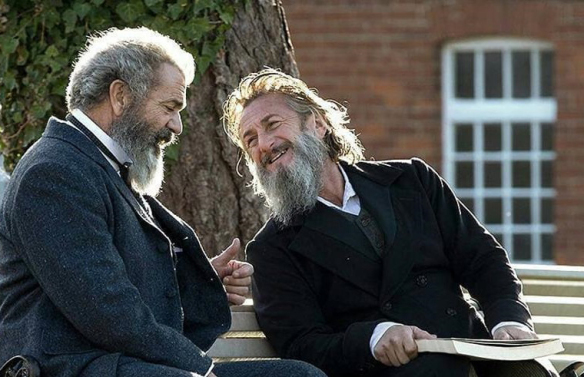
It might be surprising to some that a review of a movie about how a dictionary was created would be subtitled, “If love… then what?”
No… It’s not an attempt to romanticize the love for words of the lexicographers who dedicated their lives to creating a comprehensive compilation of all known English words. I chose that title because of the biopic’s interesting twist involving Eliza and William.
The Professor and the Madman is based on a book with the same title featuring the true story of Sir James Murray, a Scottish lexicographer and first editor of what is now known as The Oxford English Dictionary (OED), and Dr. William Chester Minor, an American surgeon and lexicographer researcher who contributed significantly to the creation of the said dictionary. The latter suffered from paranoid delusions and he killed a man (Eliza’s husband in the story) whom he accused of breaking into his room. He was committed to a psychiatric hospital, and while undergoing treatment, he (reportedly) made contributions to the OED.
Given all the aforementioned, you wouldn’t think this would be an interesting movie. How in the world would a movie about creating a dictionary generate excitement?
Well… I trust in the imagination and creativity of the scriptwriters.
While obviously, the main plot revolves around the events that led to the creation of the OED, as I expected, the creative minds behind the movie injected subplots to make the flick more literary and cinematic.
Those subplots were stitched together using the literary themes of friendship, redemption, forgiveness, and love as threads.
The main plot is centered upon diligence as the source of its theme. Ada, James’ wife, defined diligence to the members of the Oxford University Press. She said the following to the gentlemen deliberating her husband’s ouster from the OED project – “Diligence. I looked it up in your dictionary. A constant and earnest effort to accomplish what is undertaken. Persistence. Application. But also, toil… and pain.”
Those words encapsulate James and William’s efforts to create the OED. The persistence they have shown in the pursuit of such a daunting endeavor is worthy of emulation, and it is perhaps the most important value viewers could learn from the movie.
But as expected, James and Williams should meet an opposition to satisfy one very important requirement in story writing – conflict. Without it, the movie would turn into just a plain documentary. That opposition came from Ben and Phillip, the one whom Ada addressed as Mr. Gell when she gatecrashed into that meeting of the OED project’s oversight committee to speak on behalf (and in defense) of William and her husband.
Ben and Phillip, along with Dr. Richard Brayne (supervisor of the psychiatric hospital where William was undergoing treatment… or is it where he was incarcerated), are the story’s villains.
The maneuverings Ben and Phillip do to make things hard for James and William represent what I think is the story’s main conflict – Will Ben and Phillip succeed in diminishing the role of James in the creation of the OED and in striking out William as a contributor?
The main plot revolves around the aforementioned conflict. But the story has another conflict that, in my opinion, overshadows the main conflict. It is the one that involves William and Eliza.
As previously mentioned, Eliza is the wife of the man whom William killed while having a fit of delusion. This represents the other conflict in the story – Will Eliza forgive William?

If love… then what? (1)
(A Movie Review – 1st of 3 parts)

I recently watched the movie “The Professor and the Madman.” The said biographical drama drew my interest because of this line in an advertisement – “It’s [produced] to teach you an important lesson in the history of the English language.” That tickler ignited the student (and the teacher) of history and language in me.
What made me more interested to watch the movie is that Mel Gibson and Sean Penn lead the cast. I have watched many of the actors’ movies and was curious how the two would fare in this one.
Before watching the movie, I tried to read more information about it on the Internet. I chanced upon an article summarizing what the critics said about the biopic. I don’t usually read reviews before watching a particular movie. Still, because this is not new, it was released in 2019. I decided to read the article and two more after it. The majority of the reviews thumbed down the movie. The comments I read were bad. Of those comments, none could be worse than this – “It is the latest fiasco in bad movie history.” The critics were also not so kind with what they said about the lead actors’ performance.
Other people might not bother to watch the movie at all anymore after reading such negative reviews… but not me.
As far as I am concerned, there is more to a story (or a movie) than what critics say about it. I consider reviews as opinions that could possibly be subjective. If the negative reviews would discourage me from watching it, I would never know what I might be missing.
The subjects I taught in the Philippines before I came here to South Korea include Literary Criticism and Stylistics. I could wear the hat of a movie critic if I choose to. But whenever I watch movies, I put my feet in the shoes of an ordinary movie fan. I put aside all those literary and linguistic devices I was trained to use when dealing with stories. When the movie started, I would always switch off all those literary theories and schools of criticism. All I want to do is enjoy what I am about to see.
Admittedly though, there’s one “ism” that’s not completely switched off while I watch the movie – Appreciative Inquiry. And if you’re familiar with this philosophical model, you know it would not prevent me from enjoying the movie.
I leave the critiquing to the people paid (or whose hobby is) to find faults in movies. I watch films for entertainment and for the possibility of learning a lesson or two about life. I always bear in mind that the stories we read or watch in movies inform, instruct, and somehow prepare us for life if we choose to internalize the morals the story presents to us.
I was glad I decided to watch the movie despite the negative reviews I read because, in the end, I did not only gain more insights into the English language. The movie also broadened my perspectives on four common themes in literature – friendship, redemption, forgiveness, and love. It wasn’t just the student (and the teacher) of history and language in me that experienced satisfaction after watching the movie, the student (and teacher) of literature that I am was also delighted.

Like A Roller Coaster

Love’s indeed a roller coaster
Treacherous switchback it bestrides
It would throw you up and under
Scary! But stay… enjoy the ride
Be not afraid when love rolls down
Expect to be twisted and turned
Buckle up in delight be drowned
Before downwards the ride returns
Expect the twizzles and the twines
Hold tight… sit tight… embrace the flow
When spun and twirled never whine
Buckle up don’t ever let go
Love couldn’t be any wilder
Than a ride on a roller coaster
Buckle up if you want to try
Be ready to laugh… and to cry
The Sounds of the Trail

As the trail steepens
the breeze whistles,
the branches creak…
then the leaves rustle.
Suddenly the birds sing
I even heard crickets chirping
I think from behind the bushes
I heard a hissing.
I could really hear
my heart pounding…
my joints cracking…
my muscles popping…
So I decided to rest
then the huffs
the puffs…
Stopped.
Pintig

Taludturan ay muli kong lalakbayin
Pintig ng puso’y pagtutugma-tugmain
Talinhaga nito pilit mong talusin
Sa kanyang kariktan sarili’y lunurin.
Mga saknong sa tayutay hahabiin
Maraming pagwawangis dito’y gagamitin
Hindi dahil nais isip mo’y guluhin
Nang ito’y maarok puso ang gamitin.
Damdaming dumaloy sa bawat taludtod
Ay laman ng pusong sa pantig tumibok.
Kung isip ang gagamitin – ‘di mo maaarok
Tanging sa puso damdami’y iindayog.
Mata mo sana’y ipikit aking giliw…
Sumayaw tayo sa kumpas ng aliw-iw
Sabihin man nilang ako’y isang baliw
Pag-ibig sa iyo’y hindi magmamaliw.
Pag-ibig ko’y araw na laging sisikat
Tala itong sa gabi laging kukutitap
Pag-ibig ko’y kulay na hindi kukupas
Kawalang hanggan may marating ang wakas
Aking giliw ako sana’y iyong dinggin
Lumapit ka’t masuyo akong yakapin
Pintig ng mga puso nati’y pagtugmain
Sa bawat pantig ng tula’y padaluyinAdvertisements
 M.A.D. LIGAYA


 M.A.D. L I G A Y A