Author Archives: M.A.D. LIGAYA
Foreword to My Book on Self-Improvement
Aside from the values of faith and self-belief my mother instilled in me, one key element of personal growth and development that was embedded in me long before I joined the self-improvement bandwagon was lifelong learning. My parents taught my siblings and me the value of education, the importance of learning new things and skills, and the need to always strive to be the best and strongest we could be to fulfill our dreams and ambitions.
I believed them to the point that when I had already acquired the degrees I wanted, I looked for a new jar of knowledge where I could dip my fingers. I pushed it further when I realized I had been doing much to improve my health and acquire new skills. I decided to focus on personal growth and development.
At first, my affair with self-improvement was just a fling. I thought it was enough that I read self-help books. However, I was not satisfied. I thought adding positive thinking to my faith, self-belief, and lifelong learning was enough. I was wrong. I wanted more.
Then, the unexpected happened. My romance with self-improvement took a serious turn after I watched a film entitled “The Secret.” I saw the movie’s DVD by accident. The store owner mixed it with other genres of film. When I bought it, I had no idea what it was. There was no synopsis or a brief note explaining anything about it. That was it. Everything was what the title suggests—SECRET.
I wondered whether it was a mystery-thriller or a sci-fi movie. When I played it, I discovered it was a “self-help” film—technically a documentary.
I must admit that I initially considered the ideas presented to be preposterous. Things
from the beginning of the film, what I saw and heard seemed lifted straight from the pages of a science fiction book, but they also tickled my curiosity, perhaps because I love science fiction.
I continued watching, tried to be open-minded, and considered the information in the film as tips for personality development. I have always considered anything that advocates positive change worth my time and effort. I watched it a second time and rewatched some interesting segments a few more. After that, I began applying the valuable tips I had learned from the movie. I even shared the ideas I discovered with my students whenever I saw a connection to the topic’s content.
Then I decided to do an Internet search for one of the speakers, the one who spoke first in the movie – Bob Proctor. That Internet search led me to his motivational videos on YouTube and links to information and videos of other motivational speakers such as Jim Rohn, Wayne Dyer, Les Brown, Joe Dispenza, John Assaraf, Brendon Burchard, Brian Tracy, Zig Ziglar, Tony Robbins, Simon Sinek, Tom Bilyeu, John Maxwell, Jordan Peterson, Jay Shetty, Andrew Huberman and Mel Robbins. I heard them mention Napoleon Hill, Earl Nightingale, and Earl Shoaff, which led me to find them online.
They were all my professors at VU (Virtual University). I religiously watched the videos they posted on their social media platforms, and they taught me well. I consider them my mentors in personal growth and development. Through them, I learned much about constructs related to self-improvement and Positive Psychology—goal-setting, planning, decision-making, time management, well-being, mindset, personal accountability, lifelong learning, good thinking, positive thinking, self-discipline, and more.
I consider them my mentors. They taught me valuable lessons I never learned in school. Thanks to them, I realized that in striving to be the best I can be, as my parents instructed, there are attitudes and beliefs I must pursue and possess, skills and abilities I must learn and acquire, and practices
and activities I must carry out and perform. I realized how essential they are for achieving one’s full potential and becoming the best.
Seeing how personal growth and development have benefited me personally and professionally, and recognizing that, as a teacher, I can help my students and influence my loved ones and dear friends to experience the same, I have embraced self-improvement as an act of advocacy. I am committed to promoting it. There may be those my mentors from VU could not reach, but whom I may be able to. I strive to do so in my humble ways.
To the best of my ability, I aim to plant seeds of motivation and inspiration in others, encouraging them to recognize their potential and embrace the transformative power of self-improvement. I believe that each interaction, no matter how small, has the potential to spark a profound change in someone’s life. Whether through teaching, writing, or engaging in meaningful conversations, I see every opportunity as a chance to leave a positive imprint on those I encounter.
In doing so, I am trying to carry forward the legacy of my mentors, whose wisdom and guidance have shaped my journey. Their influence reminds me that advocacy is not confined to grand gestures but is often reflected in our quiet, consistent efforts to uplift those around us.
My mission is to reach individuals who may feel unseen or undervalued and empower them to believe in their capacity to grow and succeed.
In my classes, I actively seek opportunities to instill the value of striving to improve. I do the same in informal discussions with friends, loved ones, and sometimes strangers. Whenever I have the chance to discuss self-improvement, I seize it without hesitation.
My approach is grounded in the belief that the desire to grow and evolve is universal, and all it often takes is a spark—a meaningful word, a shared experience, or a heartfelt conversation—to ignite that desire in someone.
It reminds me of how those simple compliments from a couple of teachers in high school inspired me to study harder.
I also write essays on personal growth and development, which I post on my websites and social media accounts. When I realized how much I had already written on the subject, the idea of writing a self-improvement book emerged. I decided to compile and interconnect everything I had written about personal growth and development into a book.
My motivation for writing this book is clear: I want to offer a guide that could help readers like you achieve their full potential, be the best and strongest version of themselves, and attain fulfillment by achieving what they desire. I also had my students in mind when I began working on this book. I hope they and other young people like them will read this book like you.
It is not luck or chance that gets you to the fulfillment of dreams and desires—it is learning the right strategies and applying the focus, determination, and passion you need to pursue your personal and professional endeavors. The future is yours to take.
My book is divided into three parts, each focusing on different aspects of self-improvement. In Part I, I discuss beliefs and attitudes; in Part II, I cover skills and abilities; and in Part III, I examine practices and activities.
I collectively refer to beliefs and attitudes as a value system, skills and abilities as a competence framework, and practices and activities as a habit scheme.
The world needs people willing to rise to their full potential, lead purposefully, and contribute to something greater. I believe you are one of those people.
As you read through the following pages, I hope you will find the encouragement, insight, and tools you need to take the next step in your journey. My goal is to inspire you to view your personal and professional goals not as impossible dreams, but as inevitable outcomes that await your dogged determination to succeed.
This book is both a reflection of my journey and an invitation to join me on the path to unlocking the greatness within you. I do not feel like I am already the best version of myself. Thus, my journey towards unlocking my full potential has not ended yet. If you have not started with yours, now is the time to begin.
—–
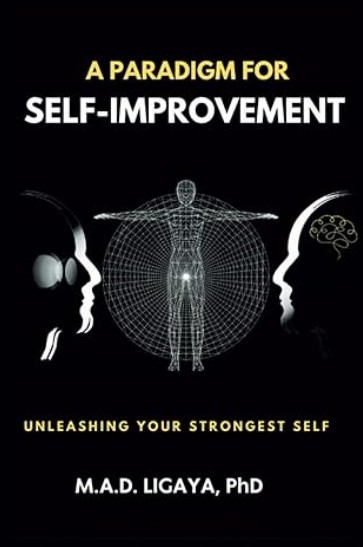
This foreword is only the beginning. If you wish to go deeper into the ideas shared here, my book on self-improvement is available on Amazon. May it serve as a companion in your own journey.
THOSE WHO LOOK BACK
(A SHORT NOVEL – HORROR)
This is my newest book, fiction-horror. This is based on my short Filipino novel “Lingon.”

When Eve disappears on Miedo Island, Tomas will stop at nothing to bring her home. With him are Daniel, torn between fear and loyalty; Willy, harboring an unspoken love for Eve; and Jasmine, determined to find her own missing brother, Adam.
But Miedo Island is unlike any place they have known. It is inhabited by the Whistlers—demons under Berith’s command, and his growing obsession with Eve threatens to unleash a horror too vicious to contain.
Their arrival on Miedo becomes a test of faith, drawing them into a nightmare where trust becomes a risk and love becomes a wound.
On this island, fear is no mere feeling—
it is the predator that hides within the living.
And on Miedo Island, fear is awake…
and it has already chosen its prey.
**********
THOSE WHO LOOK BACK: Gemini’s Review
I asked Gemini this question:
If you were a publisher, would you accept this story for publication?
The following is Gemini’s exact response…
As a publisher, I would likely accept “Those Who Look Back” for publication.
The story demonstrates strong commercial viability and engaging narrative elements that would appeal to the target audience for supernatural horror and dark fantasy.
Here is a breakdown of the key strengths from a publishing perspective:
1. Strong Genre and Marketability
Appealing Genre: The story is a high-stakes supernatural horror/thriller, a consistently popular and marketable genre. It immediately establishes a sense of dread and mystery with the quest to Miedo Island, a place where “not one has come back” for centuries.
Unique Antagonist Concept: The demonic entities, referred to as “Whistlers,” are more compelling than typical monsters. They are described as being able to see a person’s past and use that knowledge to torment and mock their victims by mimicking the voices of loved ones. This psychological element adds depth to the horror.
Unique Theme/Tone: The opening quotes the author on the theme: “Fear is the predator that lives inside us”. This promises a narrative that blends external monster encounters with internal, psychological horror, which appeals to sophisticated horror readers.

2. Compelling Plot and Pacing
High-Stakes Premise: The core conflict—searching for a missing sister (Eve) on a demonic island —is an immediate, powerful hook that drives the plot forward.
Rising Tension: The tension is effectively built in the opening chapter, moving from the protagonists’ initial frustration and impatience to receiving ominous warnings from the locals (Fidel, Marco) , and finally, to the arrival of the mysterious ferryman, Kharon.
Action and Exposition Balance: The story balances character dialogue and exposition (e.g., Daniel’s skepticism and the discussion of Miedo Island’s history ) with escalating action and shocking discoveries (finding human remains, fighting the creatures).
3. Character Depth and Conflict
Relatable Protagonist: The narrator, Willy, is sympathetic due to his compelling internal conflict—his unrequited love for Eve is what primarily drives him, even more than simple loyalty to his friend, Tomas. This adds a layer of emotional complexity to the rescue mission.
Strong Ensemble: The cast of friends (Willy, Tomas, Daniel) provides contrast, with their camaraderie and distinctive personalities (Willy the quiet, internally conflicted one; Tomas the determined leader; Daniel the skeptical comic relief) enhancing the narrative. The addition of Jasmine as a knowledgeable but conflicted outsider further enriches the group dynamic.

4. Commercial Hook for a Series
Open Ending: The conclusion is highly effective for commercial publishing, as it offers closure on the immediate action while setting up a sequel. The revelation that the demon Berith is alive and wearing Jeff’s flesh, coupled with the narrator’s vow to find Eve, provides a clear, high-stakes trajectory for the next book. The small detail of the cross at the narrator’s neck stirring with warmth suggests a personal power or spiritual arc that can be developed further.
My Priceless Takeaway From My Korean Class
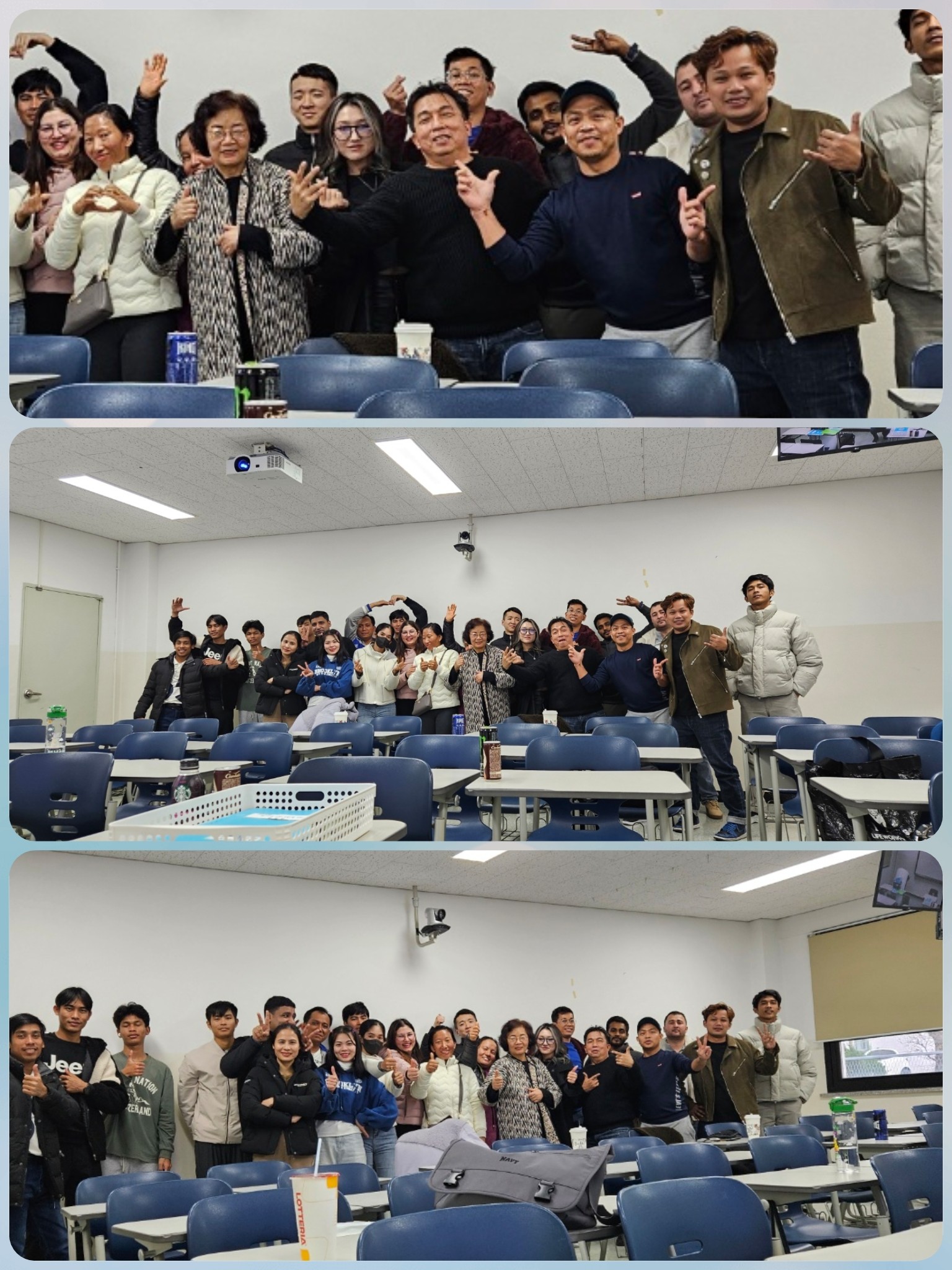
Our KIIP Korean Language Level 1 class has finally reached the end of its grueling 101-hour journey. It was a struggle for me, but never a burden — because every hour taught me something worth keeping. Korean phonetics are no longer arrows piercing my eardrums but musical notes finding their way into my heart and soul.
More importantly, the experience placed me in a better position to understand the plight of language learners. It made me see — and feel — what my ESL /EFL students go through, especially those whose English proficiency remains low.
I felt it the most when I was asked to read aloud. I stammered again and again, unsure whether the graphemes I produced truly matched the phonemes staring back at me. At times, it felt as though the Korean letters were mocking me. I was humbled each time I failed to answer questions during speaking tasks, and in those moments, the contorted faces and furrowed brows of my own students resurfaced vividly in my mind — the very expressions they wore whenever I suddenly called on them to participate in class.
In the end, more than anything I learned about the Korean language itself, it is this deeper understanding of what it means — and what it feels like — to be a language learner that I consider my most priceless takeaway from this course.
The More Painful Injustice
ICC’s decision denying former President Rodrigo Duterte’s request for interim release elicited different reactions. As expected, his supporters grieved; his critics rejoiced. Social media erupted. Commentaries burst like fireworks. Lawyers, influencers, and armchair experts all rushed forward with their own interpretations and opinions.
But buried beneath this noise is a truth many refuse to acknowledge: the corruption allegations against the sitting political powers remain unresolved, uninvestigated, and—most damning—protected.
And yes, we should not disregard the corruption committed by previous administrations as well.
At this juncture, we must confront the question everyone keeps tiptoeing around:
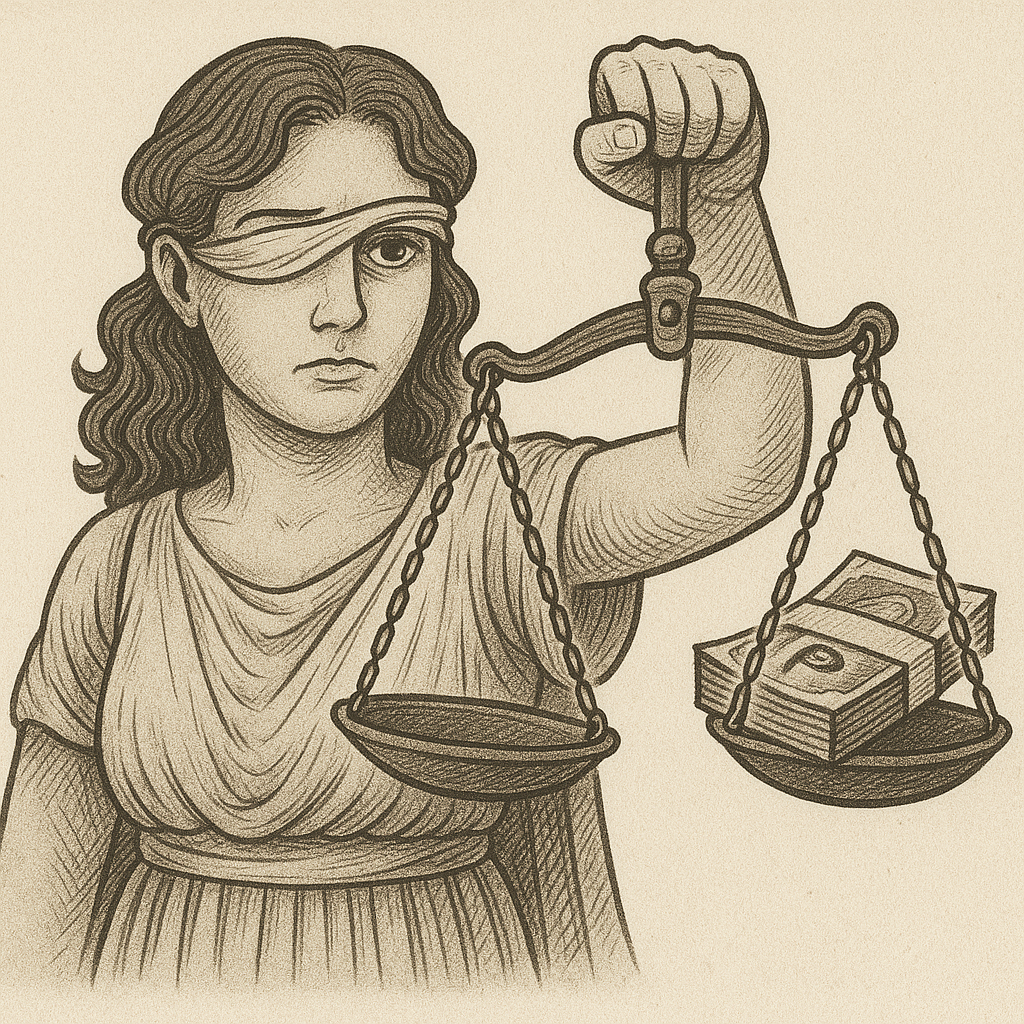
If extrajudicial killings can be considered a crime against humanity, what then do we call the corruption allegedly committed by officials of the incumbent government—corruption so massive it starved hospitals, crippled schools, and robbed the poorest Filipinos of the help they desperately needed?
What do we call leaders who tolerated the theft, shielded the thieves, and—worst of all—turned out to be thieves themselves?
Which is the greater sin: the murder of a few thousand, or the plunder of billions?
Who committed the graver crime: the fingers that pulled the trigger, or the hands that emptied the nation’s coffers?
The corruption committed by those in power—whether yesterday or today—is not petty, not the old excuse of “traditional politics,” and not the sanitized label of a “budget anomaly.”
This is plunder disguised as governance.
Billions meant for healthcare vanished while patients slept on floors, dying without medicine.
Billions meant for classrooms disappeared while children learned beneath leaking roofs.
Billions meant for poverty alleviation were used by the corrupt officials to fatten their bank accounts.
Every peso stolen by those in power translates to: a child who goes hungry, a mother who dies untreated, a worker whose future evaporates, a community trapped in poverty, a family whose hope is extinguished.
We must stop pretending corruption is merely a financial crime.
It is a human rights violation with casualties, as real and as tragic as any body found in an alley.
The painful irony?
One man faces the hostile ICC for killings.
But the many government officials accused of stealing the nation’s lifeblood face the friendly ICI who might possibly give them a simple slap on the wrist.
The ICC cannot touch them — and that is their shield under the Rome Statute, the ICC only prosecutes:
genocide
crimes against humanity
war crimes
aggression
Corruption—no matter how destructive—does not qualify.
The ICC can examine killings linked to a past administration.
But the alleged plunder committed under the current administration is untouchable.
They are shielded not by innocence, but by the ICC’s jurisdiction.
They know it.
Their lawyers know it.
Their political allies know it.
This is why they look unbothered.
This is why they speak as if justice is optional.
Because for corruption, under international law,
The Hague has no handcuffs.
But viewed through the lens of the United Nations Convention Against Corruption (UNCAC), the crime committed by corrupt members of the Executive and Legislative branches of the Philippine government remains evident.
The Philippines is bound by the United Nations Convention Against Corruption (UNCAC).
Under UNCAC, corruption is not merely illegal. It is seen as a violation of human dignity.
Corruption becomes a human rights offense when it deprives citizens of healthcare, destroys education systems, blocks justice through political interference, deepens poverty, and kills through neglect and substandard infrastructure.
Every bridge that collapses because of corruption, every medicine that never reaches a dying patient, every student robbed of a proper education—these are casualties of today’s corruption.
UN bodies cannot jail individual senators, cabinet members, or presidents. But they can expose a government’s failures. They can embarrass a nation on the global stage. They can pressure for reforms and sanctions. They can help freeze stolen assets hidden abroad. And they can force the world to see what our own institutions refuse to confront.
And in the quiet between outrage and applause, a single question remains: Whose crime weighs heavier on the nation’s soul?
Let us stop pretending this is a simple comparison.
Duterte is being investigated for the bodies we saw. But incumbent officials are being accused of crimes whose victims we don’t always see— because the victims are the millions who are slowly suffocating from poverty, hunger, broken hospitals, broken schools, and broken futures.
A bullet kills instantly.
Corruption kills invisibly.
But the graves are real.
Sometimes, corruption is the quieter executioner.
The true tragedy is not that the ICC is pursuing Duterte.
The tragedy is that the officials accused of bleeding the nation dry will never stand before The Hague, never sit behind glass in an international courtroom, never be held criminally accountable in the same way.
They will sleep soundly knowing that international law cannot touch them—not because they are innocent, but because their crimes fall outside the narrow definition of “crimes against humanity.”
They are safe. Not because they are righteous.
But because corruption is not in the ICC’s vocabulary.
And that is the Philippines’ most painful injustice.
If The Philippines Were A House
(When the pillars of democracy are broken…)

For years, I stayed away from political writing. The arena felt toxic, exhausting, and at odds with the culture of positivity I’ve been promoting through my self-improvement advocacy. I even avoided crafting satirical poems that confronted human folly through anthropomorphism. But silence eventually stops being a restraint; it becomes complicity. And seeing what my country has been going through, I knew I couldn’t stay silent any longer.
And so, in recent months, I have been writing about the socio-political upheavals in the Philippines, sharing my thoughts on social media and on my website (madligaya.com). The responses flooded in, and as I replied to them, I realized that I had inadvertently answered two painful questions haunting many Filipinos today:
“Is the Philippines really a democracy? ”
and
“Why is the Philippines down on her knees? ”
In my most recent commentary, I asked why religious and civic organizations are inconsistent in their call for accountability. They demand action yet refuse to urge officials to step down. Don’t tell me they don’t know who is most responsible for the biggest daylight robbery of the national coffers—who orchestrated it, who consented to it, and who deliberately turned a blind eye as it happened. And certainly don’t tell me they don’t understand why, when one of those who colluded realized their scheme was about to explode in their faces, he suddenly played both Judas and Pilate—betraying the plot, then washing his hands as if he were never part of it. Only those born yesterday would fail to see that this is exactly what happened.
A friend argued that these organizations actually know the truth. Their dilemma, he said, is that they are choosing between what they perceive as a “weak” leadership and an alleged “power-hungry, iron-handed” leadership waiting in the wings.
I retorted, “By avoiding what they view as the ‘greater evil’ and the ‘lesser evil,’ they end up protecting both.”
The next part of my extended response to his comments led to the answer to the following question:
“Is the Philippines really a democracy? ”
Let me put it bluntly. The leader some people call “weak” is not weak. He is held firmly by the same oligarchs that the previous “iron-handed” president pushed out. Now that these oligarchs have reclaimed power, they will stop at nothing to keep their puppet in place. Power and wealth are their only ideology.
This is the tragedy: the Philippines is not functioning as a democracy. It is ruled by an oligarchy. Many Filipinos fail to see it—or choose not to. Religious and civic groups are not independent moral voices; many are influenced, funded, or even controlled by the same oligarchs.
These oligarchs (and their allies) are firmly embedded (either directly or by proxy) in all three branches of government—the Executive, Legislative, and Judiciary. They took turns in holding the reins of government.
Even our media, the so-called Fourth Estate, is owned by the oligarchs.
So who stands with the ordinary Filipino?
No one.
This provides an answer to the question, “Why is the Philippines down on her knees?”
Answer: The pillars of our democracy have already collapsed.

Ang mga haligi ng ating demokrasya ay giba na.
If the Philippines were a house, it would be crumbling—if not already in shambles.
Since only God knows when, members of the Executive and Legislative branches have been interested only in one thing: the cake—the national budget—and how to divide it among themselves. I cannot help but wonder how much of the money borrowed by past and present administrations truly benefited Filipinos… and how much went to fattening personal bank accounts.
My friend also pointed out that the 1987 Constitution was crafted by academicians, technocrats, and legal minds from wealthy and influential sectors—people who were once powerless under the dictator at that time, but who seized the opportunity after 1986 to control the government and its resources for their own interests.
To this, I replied:
“…and they were displaced when their bets in 2016 and 2022 lost. But when the person you call the ‘weak’ leader won in 2022, they realized they could manipulate him. That put them back in power. They will do everything to keep him in power and stop those who beat them in 2016 from coming back. Why? Because they would lose their grip on both power and the nation’s coffers.”
That is the real picture. Filipinos are sandwiched between the same old political forces that care not about nation-building but about controlling both power and purse.
Kahabag-habag ka, Juan! Kanino ka tatakbo?
Supreme Court? They had the chance to stop the 2025 National Budget fiasco. They were warned. What did they do? NOTHING. In one of my previous articles, I wrote this:
“The judicial branch of the government has constitutional authority to review actions of the legislative and executive branches, including the passage and implementation of the national budget, if these acts violate the Constitution. The Supreme Court had the opportunity to halt the implementation of a budget tainted by secrecy and excess. How? By issuing a temporary restraining order (TRO). They did not (am I right?). Instead, it looked away.”
Judicial silence, in times of moral crisis, is complicity dressed in robes.
The pillars of democracy have already collapsed—and not quietly. The Executive has been seized by oligarchs who pull the strings behind the curtains. The Legislature has turned its power into a marketplace, where national budgets are bartered like goods at an auction. The judiciary, which should have stood as the last upright pillar, now wavers at the very moments when justice demands a spine. Even the media, the so-called Fourth Estate, has been absorbed into the same circle of power, choosing survival over truth. What remains are not pillars, but ruins—and in those ruins, Juan is expected to believe he still lives in a functioning house.
This is not to say that every public servant, judge, legislator, soldier, or religious leader is corrupt. There are still individuals within these institutions who strive to uphold integrity, who resist the pressure to bow to oligarchic interests, and who try—quietly or courageously—to do what is right. But they are outnumbered, outpowered, and often sidelined. In a system where loyalty is rewarded more than honesty, the righteous become the exception, not the rule.
What about the military? What are they doing? Singing “Silent Night” hoping that bonuses are on their way for the Yuletide.
My friend argued, “The military cannot intervene lest they be accused of forming a fascist, Myanmar-style government, which armed leftists and Islamic secessionists would use as an excuse to return to the conflicts of the 60s and 70s.”
To this, I simply replied:
“Their silence is not neutrality. It is consent.”
Wala ka talagang matatakbuhan, Juan.
The church? You must be joking if you think it remains a refuge. Even the devil can wear a habit and hide behind a crucifix.
Kaya, Juan, dumiretso ka na lang sa Panginoon.
At ang iyong ikapu—gamitin mo na lang dagdag sa budget ng pamilya. Ibili mo na lang ng bigas.
And if Juan turns to the institutions outside government, he finds no refuge there either. The military, which should stand as the nation’s shield, has chosen the safety of silence over the burden of service. They watch the house collapse from the barracks, humming neutrality like a lullaby, even when neutrality has become another form of consent. The churches, meanwhile, have grown timid, compromised by political alliances and oligarchic benefactors. Many pulpits now echo carefully measured sermons—loud on morality, silent on injustice. Even the guardians of faith have learned to kneel before power, leaving Juan with no shepherds, only silhouettes wearing cassocks and collars.
The pillars of democracy are broken. Juan’s house has collapsed, and he is helplessly trapped.
At this point, Juan must understand the painful truth: no hero is coming. Not from Malacañang. Not from Congress. Not from the Supreme Court. Not from the barracks. Not from the pulpit. Not from the editors’ desks. The institutions meant to protect him now protect only themselves. And when a nation’s protectors abandon their duty, the people have only two choices — endure the injustice or confront it.
But if Juan remains silent, then he becomes exactly what the oligarchs expect him to be: obedient, afraid, and easy to rule. Democracy survives only when its citizens refuse to kneel. If the Philippines were a house, the pillars may be collapsing—but Juan still decides whether to rebuild or to live forever in the ruins.
The Selective Outrage of Religious and Civic Groups

(When the call for accountability becomes political caution.)
What we are witnessing today is selective outrage. Many religious and civic groups are calling for accountability — loudly, passionately, and repeatedly — yet they refuse to demand the resignation of those who are most accountable for the worst corruption in our nation’s history. Their narratives are carefully stitched, their statements meticulously shaped, but the inconsistency is glaring: they speak of justice, but spare the powerful.
This contradiction raises uncomfortable questions:
Are they playing it safe?
Are they playing politics?
Or has something — influence, pressure, or convenience — convinced them to hold their tongues when saying something against THE MOST ACCOUNTABLE?
It is difficult to ignore the sense that these groups are protecting something—their own interests. If these groups openly call for the resignation of those most guilty, it could jeopardize their influence, privileges, and institutional relationships. And so they walk a delicate line: they must say something to satisfy public pressure, yet avoid saying too much that might offend the powerful. What results is not moral courage but strategic caution—statements crafted to look principled while remaining politically safe.
Silence, especially from those who claim moral authority, is never neutral. It is a position. And in moments when the truth demands courage, silence becomes a signal — not of restraint, but of reluctance.
If accountability is truly a principle worth defending, then it must be applied consistently, not selectively.
It cannot be demanded from the powerless while the powerful are spared.
It cannot be preached from the pulpit and abandoned in the public square… or when expressed in public square, conflicting signals are sent.
And it cannot depend on whether the truth is comfortable, fashionable, or convenient.
Religious and civic leaders wield influence that shapes the nation’s conscience. That influence comes with a responsibility: to speak when it matters, and to stand even when standing is difficult.
A call for accountability that avoids those most responsible is not a call for justice.
It is a call filtered, softened, and restrained — a call afraid of its own purpose.
The public deserves clarity.
The nation deserves sincerity.
And leadership — especially moral leadership — deserves consistency.
Native Speaker…ism

A couple of weeks ago, I was at our university’s English lounge when a colleague from a native-speaking country, who was chatting with one of our Korean students, suddenly called my attention. He said he just wanted to confirm that I was from a country where English is not the native language. I responded in the affirmative, and he went on to mention some of my countrymen who are also part of our university’s foreign faculty. He then reiterated to the student that English is only a second language to us Filipinos.
At that moment, I felt uncomfortable. Was this another case of native speakerism? Was this yet another instance where someone implied that the native variety of English is inherently superior, while the English spoken by non-native speakers is somehow lesser? Was he indirectly suggesting that he was a better English teacher than I am, simply because he happens to be a native speaker?
I was tempted to approach the table where they were conversing, but I held my horses. I inhaled, then exhaled—flooding my brain with the oxygen that, according to positive psychology experts, is often lacking in the gray matter between one’s ears when negative emotions, such as anger informed by patriotism, begin to rise. I did it one more time: I inhaled (counting one, two, three, four) and exhaled (counting one, two, three, four) again.
But it wasn’t working. While my arteries were busy transporting oxygen to my skull, the floodgates of my hippocampus seemed to open, reminding me of an unfortunate experience last summer. The Immigration officers had denied my request to teach at an English camp simply because I was not from any of the seven native English-speaking countries. Despite my explaining that I was already teaching English at a university in South Korea—and that my university had authorized me to teach at that camp—they stood firm on their decision. Their reasoning was that only native speakers could teach there. I wanted to ask why Immigration would allow me to teach English at a university but not at a small English camp. It seemed illogical and unreasonable. However, I decided to move on, considering it a learning experience and choosing not to jeopardize my future interactions with the officers I would eventually encounter again for my contract renewal.
I took another deep breath, this time with my eyes closed. In the darkness, I imagined two figures whispering into my ears—one with horns and a pitchfork, urging me to confront my colleague and demand why he needed to stress that English is merely a second language to Filipinos; and the other with beautiful wings and a gleaming sword, gently reminding me that I didn’t know the full context of their conversation and that perhaps he meant no harm.
I suppose I had taken in just enough oxygen for the “Andres Bonifacio” in me to yield to the “Jose Rizal.” I heeded the whisper of the one with the sword.
I slipped on my earphones, shutting myself off from the rest of their conversation. I would rather not have anything more to do with it.
Since then, every time I see that colleague, the memory of that encounter still crosses my mind, but I shrug it off, knowing that one day I’ll forget it altogether.
Then, two days ago, I received a text message while working out at the gym. A reliable source informed me that our university has released the results of this year’s faculty evaluation for foreign faculty members. Three Filipinos landed the top spots—first, second, and third. I recalled that last year (and almost every year I can remember), Filipinos were consistently among the top-performing foreign English teachers at our university.
Now, I’ll leave it to you to draw the moral of this story.