Blog Archives
When Do We Wake Up?
(THIRD OF 4 PARTS)
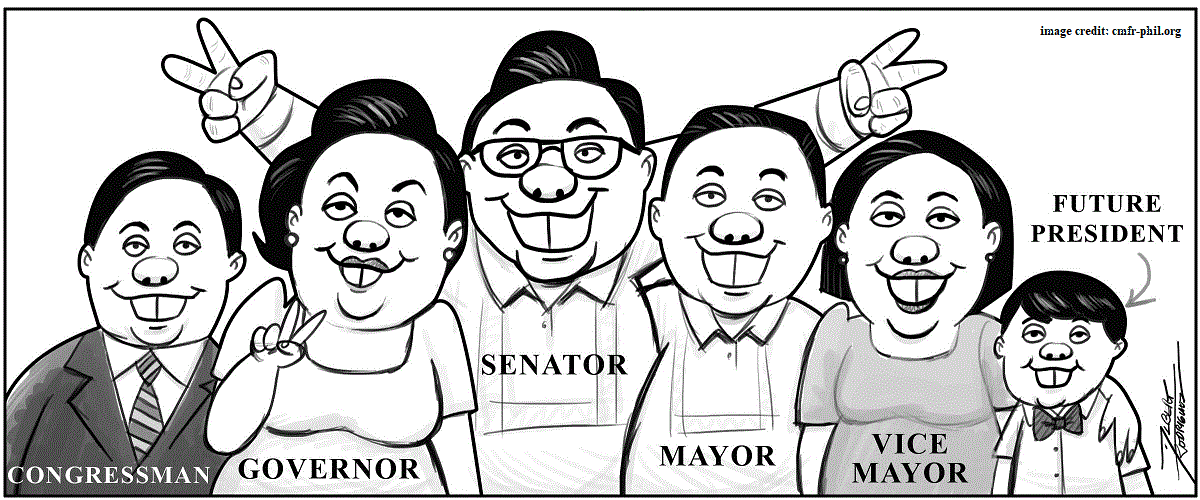
SAME POLITICIANS… SAME RESULTS
We’re complaining about political dynasties, right? But haven’t we realized we are guilty of creating the political dynasties in the Philippines? Yes, we have to admit it. We allowed the same politicians and their family members to lord it over in the Philippine political landscape.
When a politician, let’s say a mayor, could no longer run for re-election due to term limits, what would the honorable gentleman do? Turn his back on politics? Of course not! Power is so addicting. So many of those who experienced being at the helm of either local or national politics (and enjoyed the benefits, including those “passed under the table”) would not just quit politics or pass the torch to another person.
So, what would happen?
His wife would run for the position he previously held. Then that politician would run for another post – as governor, perhaps. Most of the time, Filipino voters would allow them to win, and usually, they would be able to mesmerize (or buy) the voters to luckily get re-elected until they reach their term limits. Would it be the end? Would their thirst for power (and the so-called “benefits”) be finally satiated?
You know the answer… a resounding NO.
The couple would ask their son or daughter (a grandson, a granddaughter, or an in-law) to run for the positions they would vacate. The shocking thing (and you might not believe it) is that there are times when siblings, or even husbands and wives, do not give way to the other, and so members of the same family slug it out in the political arena.
Anyway, this is not about family members squabbling in the political arena but about the political dynasties their families created.
Let’s continue, then.
Let’s return to the mother who just reached her term limit as mayor. Would she go back to being a full-time mother and wife? You were born only yesterday if you don’t know the answer to that question. Yes – she would run for the post vacated by the husband-politician. The husband would then aim for a higher position – run as congressman or senator. If all family members win, then for years, the power will change hands within the same family. The son (or daughter) is a mayor, the mother a governor, and the father either a congressman or senator. When term limits are reached, they will just run for the position a family member would vacate. Some siblings, and even in-laws, in the family also occupy minor positions in their geographical units.
Did that family create their political dynasty? No! We did it. We Filipinos created the political dynasties in the Philippines.
Now, answer these questions – “How (did they perform) are they performing as leaders?” “What is the country’s current economic, social, and political condition?” “Is the Philippines marching towards progress with them holding the reins of government for God knows how long?”
Of course, you know the answers to the foregoing questions.
How many of the available positions in the Philippine government, local and national, are held by the same families who have been the gods and goddesses of Philippine politics since time immemorial? Most of them are offspring of the peninsular who survived “America’s power grab” at the turn of the 20th century. Eventually, they stayed in the country and reaped the dividends. And it’s not only the politics that they dominate. With the enormous fortune they inherited from their Spanish parents/grandparents, they also control the country’s economy. That’s why Filipinos sometimes jokingly ask – “Did the Spanish rule really end?”
Only a few pure-blooded Filipinos and foreign expatriates of Chinese origin who became wealthy when the Americans took their turn to colonize the Philippines had the financial resources to challenge the Spanish mestizos for political supremacy in the Philippines, especially after the Americans granted the Filipinos their independence after the World War II. Some of them succeeded, and when they experienced how intoxicating power is, they (and their offsprings) kept running, and we kept electing them as if nobody else were qualified.
It is no longer surprising that politicians holding national positions have one or two family members and in-laws holding seats in the local government.
Filipinos might ask, “When would the same people from the same families pass the reins of leadership to each other in national and local governments after elections end?”
That’s up to the Filipino voters.
So, we should not wonder why the World Bank still classifies the Philippines as a “developing country.”
According to Albert Einstein, “insanity” is doing the same thing repeatedly and expecting a different result.
Why do we expect a better-performing government when we keep electing the same politicians?
When Do We Wake Up?
(SECOND OF 4 PARTS)
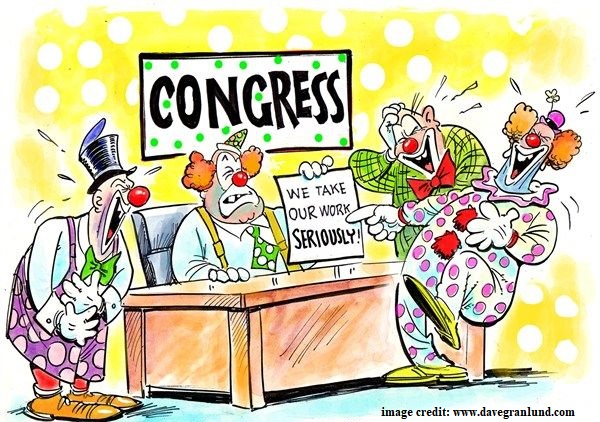
CLOWN-GRESS
We also need to exercise our right to vote seriously. Refusing to sell our votes is only the first step. It’s about time that we set specific standards that candidates should measure up to before we write their names on the ballot—standards that go above and beyond the qualifications set by our Constitution for candidates seeking a particular public office.
It’s time for us to realize that some personalities are venturing into politics not because they want to serve the people but because they think they are popular enough and could get a seat in the government through it. They know their popularity could easily catapult them into public office. Power, like fame, is also addicting. Some of these famous people running for elective positions want to have both.
An interesting question is, “How many showbiz and sports personalities holding public office now were elected not because they are both qualified and capable but because they are popular?”
There are other questions that we need to answer as honestly as we should – “What did those actors, actresses, singers, TV personalities, basketball players, boxers, and other celebrities who used their popularity to win contribute to the improvement of the quality of life in the localities where they were elected?” Those among them who were lucky to become President, Vice President, Senators or Congressmen (or were given cabinet posts), did they contribute anything to national development?” “What good, if any, did their ‘star power’ bring to politics and governance in the Philippines?”
Suppose all those seasoned and veteran politicians with master’s and doctorate degrees in law, economics, political science, public administration, and business administration who have been in public service all their lives could hardly move the needle forward on socio-economic development. What do we expect from showbiz, media, and sports personalities who suddenly turned into politicians only because they are immensely popular and they know that Filipino voters could easily be deceived? Do they honestly think the skills and knowledge needed to run a public office can be acquired by taking crash courses in leadership and management?
Sadly speaking, this is how politicians and celebrities-turned-politicians think of Filipino voters – they can not only be bought, but they are also unintelligent. Most of those running for public office consider the Filipino voters cheap and ignorant – cheap because they are willing to sell their votes for a small amount of cash and ignorant because they don’t know how to choose the right candidate for a position.
Choosing the most qualified and capable candidates is not rocket science. We can evaluate their qualifications to match the position they are seeking. We can check their track record. We can hear them talk during the campaign in person and through any form of media. We can determine who among them is eloquent and can articulate their government platform and who is dumb and merely banking on their popularity so they could get the support of unsuspecting voters or have truckloads of money to buy votes. If we find those celebrities truly qualified, capable, and sincere in their desire to serve this country, and they are the best candidates vying for an elective position, we should vote for them. But if, upon examination of their credentials and background,d you find nothing but their popularity, you’ve got to make the right decision – vote for the most qualified.
We have to separate the wheat from the chaff. We must be diligent in distinguishing the qualified and capable candidates from the pretenders. Electing leaders unto whom we give the mandate to lead – unto whom we pin our hopes for a better nation – is not a game. Elections are not popularity contests.
Governance is a serious business and should be done full-time. A public servant cannot be a part-timer who attends to her/his duties and obligations only when there are no shooting sessions for movies and TV shows or practices or games to play as an athlete in any sport.
We should never entrust a public office to clowns.
PART ONE (THE CURSE OF VOTE BUYING)




 M.A.D. L I G A Y A