Blog Archives
On Stories and Storytelling (2)
(Second of 3 Parts)

Obviously, the conflict is the problem to be resolved in a story. If you are familiar with the literature, you know that there are three categories of conflict – man vs. man, man vs. nature, and man vs. himself. Janet Burroway proposed that the following should be included – man vs. society, man vs. God, and man vs. machine. We may also refer to them as sources of conflict.
In one of my literature classes in the Philippines, I told my students to watch the movie “Titanic.” That was when our topic was “elements of fiction.” Students would prefer watching movies over reading short stories or novels when dissecting stories.
When I asked them to identify the story’s central conflict, most answered “man vs nature.” You would understand why that was the answer they gave –Jack and Rose (and all the rest of the passengers) have to survive the ship’s sinking. They were surprised when I told them that there was a dual conflict in the story. There are two sources – “man vs nature” and “man vs man.” While the star-crossed lovers try to figure out how to stay away from the icy water of the ocean, they also have to contend with an extremely angry Cal and his loyal minion Lovejoy.
That’s how clever some writers are. They push their readers or audience closer to the edge of their seats – to the edge of the cliff of excitement – by inserting a conflict within a conflict. With that, they make the “rising action” more intense. When a writer uses multiple sources of conflict, with all the conflicts equally significant, I call it “layered conflict.” (I am not sure if I was the first to call it this way.)
What if the one who wrote the script for The “Titanic” added an extra layer of conflict? Let’s say somebody steals the necklace (“Heart of the Ocean”), and Rose asks Jack if they have to do everything to return it. Let’s say that the thief is a hardened criminal who is willing to kill just to keep what he has stolen. Would the story be more exciting if, while the lovers are trying to survive the unfolding sea tragedy, they have to pursue the one who took the expensive jewel and at the same time hide from Cal and Lovejoy?
I told my students that it would be easier to explain a story’s conflict by starting with a guide question. In the case of the dual conflict in The Titanic, the questions should be: Will Jack and Rose survive the anger of Cal? Will they (also) survive the sinking of the ship?
In another class – Literary Criticism – I taught my students how to trace symbolism in stories. I also used the movie Titanic for the activity. It was easy for them to pick the necklace and explain its symbolism – that the jewel symbolizes Rose’s heart and her love for Jack. They gave nothing more about symbolism after the necklace.
So, I told them that they should not focus only on objects for symbolism. The story – the writer – may try to convey meaning through events in the story. For example, I asked them if they could see any meaning beyond the band continuing to play while the ship was sinking. What about the sinking of the Titanic? What does it convey?
I told them that the decision of the band to continue playing while the ship sinks conveys two things. Firstly, it shows the resilience of the human spirit in the face of tragedy. Secondly, there are people who when confronted by whatever is inevitable, could face it courageously.
And what does the sinking of the mighty “Titanic” symbolize? It shows how helpless mankind is against the forces of nature.
On Stories and Storytelling (1)
(First of 3 Parts)
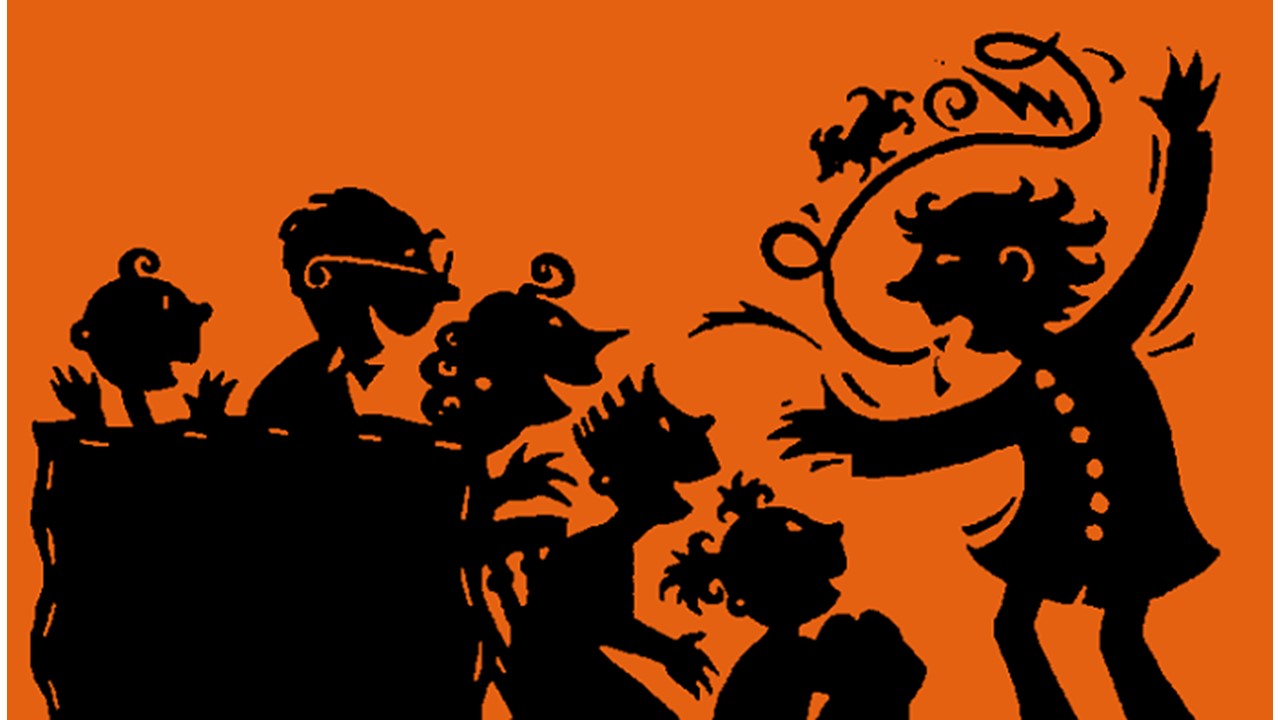
Do you really know what a story is?
Answer the question before sliding your eyes down to the next line.
Done?
Okay, read on.
Just like you, I know what a story is. I can assure you of that.
Let me begin by saying that I love stories. I am so fascinated by them. Very likely that my having earned the degree Bachelor of Arts in English and my having completed the academic requirements for the degree Master of Arts in English contributed to that. The two main fields of studies (major) in both degrees are English language and literature, but more on literature. We studied, among other things, the different forms of literature – prose and poetry, the body of literature of selected countries, literary criticism, philosophy of literature, and creative writing. Just imagine how many stories I had to read when I was enrolled for subjects like Short Story, Novel, Drama, and Shakespeare. To enhance my understanding of the stories I was reading then, I had to watch their screen adaptation (especially of Shakespeare’s famous plays) if they happened to be available. In short, I became interested with stories, not as a hobby. I studied them. I taught Literature and Literary Criticism when I was teaching in the Philippines. By the way, I worked so hard to become a writer as well. I write dramatic monologues, short stories, novels, and plays. Check my website for some of my works – madligaya.com.
I am so fascinated by the art of knitting together the elements of fiction within the frame of a plot – of how to make sure that the most important element of fiction – conflict – is laid down clearly and passes through exposition, complication, crisis (commonly known as climax), falling action, and resolution. Gustav Freitag, a nineteenth-century German critic, laid this down in what came to be known as the Freitag Pyramid. Crisis – or climax – is at the top of the pyramid. The exposition and complication constitute the rising action which ultimately leads to the crisis. Thereafter is the falling action which leads ultimately to the resolution or the denouement. There are stories (movies) that abruptly ends when the climax is reached. In cases like this the crisis implies the resolution. The resolution is left for the readers to deduce.
When a series of events is not laid down in the conflict-crisis-resolution arc, they are but just that – series of events, not a story. Conflict, crisis, and resolution (call them together as plot) are the necessary features of a story. A narrative, to be classified as a story, requires more than setting, character, theme, point-of-view, tone, and style. No matter how short or long a story is, there should be a conflict, conflict that progresses from the time it is revealed (exposition), becomes complicated, reaches a climax (referred to as crisis earlier), slows down to a falling action, and makes a full stop at the juncture called resolution. Am I right? A writer, as I articulated earlier, may stop raising the action right after reaching the climax to let readers imagine how it ends or create the kind of ending they desire.
In movies (or films), cliffhanger endings have become so popular. In cliffhangers, it can be argued that the story does not immediately end after the climax but somewhere between the falling action and the resolution. There was no clear resolution. It can be argued also that cliffhanger endings are applicable only in the case of standalone movies, not of the serialized ones like the Star Wars, Avengers, and the like. When for example Thanos (in Avengers: Infinity War) snapped his fingers and some of the Avengers were reduced to dust, we were like left hanging and wondering why all those heroes we used to seeing alive and victorious in previous Marvel movies died or disappeared. But it’s not a cliffhanger ending per se because we know that that movie is the 3rd part of the main 4-part Avengers series. We know that the last part of the series is forthcoming. All the Avenger movies, together with all the other standalone Marvel hero movies in previous years, are all part of one whole story.
You might ask, “Where are the events in Avengers 3 located in the Freitag (plot) Pyramid?” It’s in the complication (or rising action part), far away yet from the climax. Your next question might be – “Which part of Avengers 4 is the climax?” It started the moment Tony Starks snapped his fingers and said “I am Iron Man” and culminated at the moment Thanos slowly turned to dust. All the events that followed are parts of a very clear falling action and resolution.
What do you think, am I right not to consider the endings of serialized stories as cliffhanger endings (because of the imaginary “To be continued”)?
An example of a movie that had a climax and a falling action but the resolution was not clear and the audience need to decide what to think about it is the way the movie “Don’t Breathe” ends. (I hope you have watched that movie too… and in case you haven’t, I am sorry if this part of my article will now serve as a spoiler. Just skip reading the rest of this paragraph and proceed to the next one instead in case you’re planning to watch the movie.) The climax of that movie came at exactly the 1:20:43 mark. The blind man, after Rocky hits him repeatedly in the head with a crowbar, falls from the 1st floor of the house to the basement. Part of the falling action shows Rocky coming out of the house alive with the blind man’s money. Later she could be seen with her sister leaving Detroit for California. The movie ends showing that the blind man alive. He survived. And I was left formulating my own resolution… or is a sequel (or a prequel) being planned?
I used to teach Literature, Creative Writing and Literary Criticism in the Philippines. One of my students once asked this question: Should all stories have conflict?
If you were me then, how would you answer?
Do you think a series of events stitched up together in any form can be considered a story without a central conflict?
From Janet Burroway’s “Writing Fiction: A Guide To Narrative Craft”:
“And story is a form of literature. Like a face, it has necessary features in a necessary harmony… Every face has two eyes, a nose between them, a mouth below; a forehead, two cheeks, two ears, and a jaw. If a face is missing one of these features, you may say, ‘I love this face in spite of its lacking nose’, but you must acknowledge the in spite of. You can’t simply say, ‘This is a wonderful face.’
The same is true of a story. You might say, ‘I love this piece even though there’s no crisis action in it.’ You can’t say, ‘This is a wonderful story.’
Fortunately, the necessary features of the story form are fewer than those of a face. They are conflict, crisis, and resolution.
Conflict is the first encountered and the fundamental element of fiction, necessary because in literature, only trouble is interesting.”
Let the foregoing paragraphs be my answer to the question “Should all stories have conflict?”
If a narrative has no conflict, don’t call it a story. Call it a face without any part that should be there – eyes, nose, mouth, cheeks, or forehead.
Why Do I Write?

Why do I write?
Is it to impress?
I don’t write to impress. I’m well aware of the fact that my skills in writing are nowhere near excellent. I am not even halfway my journey to excellence in writing. I am not sure if I’ll get there before I breathe my last. I have a long long way to go. Perhaps I may need a dozen of lifetimes (or more) in order to surpass the accomplishments of the likes of William Shakespeare, Elizabeth Browning, George Bernard Shaw, Leo Tolstoy and the likes.
So, why do I write then?
Do I write in the hope that I earn money and become famous?
Not even!
Fame and money are not my primary motivations for writing. Of course I need money. It’s hypocritical to say that I don’t like to have additional numbers to the farthest north of the first digit in my bank…
View original post 1,361 more words
On Being A Poet

It’s not easy.
For me, the literary genre most difficult to produce is the poem. Imagine putting together the elements of meter, rhyme scheme, sound and imagery… weaving your words together metaphorically and figuratively.
My best poems are written in Filipino. I’ve been trying to write good ones in English but I have to admit it’s a mighty struggle. I’m not sure if for example the following quatrain makes sense:
Whisper your woes on the flicker
Cover it with dried leaves and twigs
Whisper till the flame grows taller
Let it burn your anguish and grief
I have no problem with free-verse but my dream is to walk gloriously the “rhymed” and “metered” path while holding the hands of either Erato or Euterpe.
One time I tried to mix Greek mythology and poetry and this is what came out:
Writing stories is just as difficult because mixing in a bowl the elements of fiction within the bounds of the plot is not a walk in the park. But fiction writers have the luxury of using a lot of pages to serve their purpose. Leo Tolstoy needed more than half a million words for his novel “War and Peace.”
Conversely, a poet has a single page, sometimes not even the whole of it, to capture vivaciously and vividly the emotions and thoughts pervading within or around him. The Japanese, through their Haiku, would do it in a single-stanza poem with three lines consisting of a total of 17 syllables.
What adds difficulty when poets thread the rhyme zone is that they can not walk the path of sadness while wearing a smile. Neither can they frolic in the lake of happiness while riding the canoe of sadness.
Pain begets pain, joy engenders joy. This is seemingly the prevailing mood in the realm of poetry. Rare are the crying clowns who can masterfully inject sadness into the veins of their poems while they are cracking a joke.
The melancholic lyre sounds best when played by a poet who in one way or another licked some emotional wounds sometime ago in a desolate room. On the other hand, the trumpet of merriment can best be blown by a poet who has journeyed the clouds of ecstasy.
But life is a masterful musician who teaches poets to play both the melancholic lyre and the trumpet of merriment. Life enables a poet to play any of the said instruments at any given time.
If a poet intends to paint his canvas with gloom then he can easily prick an old emotional wound until it bleeds sadness. He can walk down memory lane and revive the pains inflicted by either a person or an event he would rather forget. That’s not masochism but rather a form of sacrifice, the poet ought to feel what he intends to write.
If it is the rainbow needed in his canvass then exactly the opposite of the foregoing he must be doing.
That‘s the beauty of being a poet. Poets can switch with ease to any emotions that they desire. Like an actor in a theater, crying one moment then in a jiffy burst into laughter.
Sometimes poets get misconstrued. When a poem tackles sadness and regret for losing someone the readers would think that the poet still loves and wants that someone back. Worse, the person who felt alluded to may either be excited or feel vindicated.
Lest we forget that poets are men of arts who write for art’s sake. Undoubtedly, they draw inspiration from someone or something. They need a motivation in pursuance of their art. But as it is, the end is the art and the motivation is but the means to achieve the end.
And what is the reward the poet receives for writing a poem? The reward is the poem itself. No reward can be sweeter than the poem that the poet chisels into perfection.
As to whether or not a poet who writes a poem of gloom and bewail is sad and regretful, only he knows. Who knows it may be Melpomene who visited him in his dreams.
Source: On Being A Poet
Why Do I Write?
Why do I write?
Is it to impress?
I don’t write to impress. I’m well aware of the fact that my skills in writing are nowhere near excellent. I am not even halfway my journey to excellence in writing. I am not sure if I’ll get there before I breathe my last. I have a long long way to go. Perhaps I may need a dozen of lifetimes (or more) in order to surpass the accomplishments of William Shakespeare, Elizabeth Browning, George Bernard Shaw, Leo Tolstoy and the like.
So, why do I write then?
Do I write in the hope that I amass a fortune and become famous?
Not even!
Fame and money are not my primary motivations for writing. Of course I need money. It’s hypocritical to say that I don’t like to have additional numbers to the farthest north of the first digit in my bank account. With a family and a mother to support, with siblings asking for financial help once in a while, and with the projects I intend to embark on, I need additional sources of income.
“There’s no money in writing.” That is a cliche but that’s the truth. Writing is not very financially rewarding. Unless you are a script writer of one of the popular TV networks or movie outfits in your own country or a novelist who belongs in the league of the likes of J.K. Rowling, Dan Brown, and Stephen King.
Of course I am receiving extra cash for some of the stuffs I have written. For example, the university that employs me currently (2014 – present) gave me monetary incentives for my research works that were published in international journals. I would also get the same whenever I contribute an article for the university’s English publication. However, it’s not those extra cash that made (or is making) me write.
The rewards that writing gives, for me, are hard to quantify. Such rewards are transcendental. That’s not me trying to sound philosophical. That’s just the way I feel about it.
What about fame? What about the accolades? Are those the the things that inspire me to write?
NOPE!
As a matter of fact, when I write and allow people to read my works I am unnecessarily putting myself under the microscope. Instead of accolades I may get negative comments instead. This is the reason a friend said he would never write for any publication or post any writings on any of the social networking sites. He is afraid he may not be able to take negative comments. He added he fears committing errors in grammar. He considers it embarrassing to be corrected for such mistakes.
In my case, criticisms and corrections are welcome. As a matter of fact, I have already received a lot of those. I didn’t mind. I never felt offended. I have to admit that I have some works, both in English and Filipino, where my grammar leaves much to be desired. Such is the reason I keep rereading my stuffs in this website – to check for errors in grammar and word choice.
Somebody once gave the reason the eraser was invented – because nobody’s perfect.
People may read or disregard what I write. If they do read, a million thanks. If not – no hard feelings.
I may have received some good comments from my friends for some of my writings in the past. But of course, those comments may have been either meritorious or simply generous. Sometimes there are people who give positive and encouraging compliments.
But aside from good comments some of my works have also angered some individuals who, in one way or another, were offended. Writing sometimes is a magnet for trouble. I remember quite well when I wrote a satirical poem in Filipino (about a wolf in sheep’s clothing) when I was working in a Catholic tertiary institution. The parish priest who felt alluded to (and I was really alluding to him) reportedly asked the Sister-President of the college, my superior, to summon me to the latter’s office so he could talk to me. However he was dissuaded from pursuing his request. But even if he was able to convince the President and the College Dean then, I wouldn’t see him. Why? That poem I wrote and my act of writing it had nothing to do with my employment. My being a writer has no personality and office that could be connected to any of the lines that run vertical and horizontal in our organizational chart. In short, the priest had not authority over me. The priest never bugged me again but I wrote another poem for him (Habit and Habit).
My quatrains (in Filipino) are the ones that brought me some colorful moments. I have lost a friend or two (or is it three… perhaps more) for the quatrains I have posted in a social networking site. I once wrote a quatrain and a friend liked it. Almost a year later, I re-posted the same quatrain and surprisingly the same person who previously liked it was angered and gave me a mouthful. We’re very good friends so we talked about it. He understood, apologized, and we both forgot about it since then.
Also, my writings where my political beliefs are in full display had me losing very dear friends. This is the reason I stopped writing commentaries about politics in the Philippines. I have not written one since the last quarter of 2017.
So, why do I write then?
Is it for the “likes,” “reactions,” and compliments I get when I have those poems, stories, and essays posted in my social networking accounts or in this website? Not also. Of course those things make me happy and I am so thankful for those friends who take time to read my works then reacted and commented on them.
Then, why? Why do I write?
It’s hard to explain. It’s something like a combination of the answers to the following questions: Why do people need to eat when they are hungry? Why do they need to drink when they are thirsty? Why do they need to take medicine when they are sick? Why do they laugh? Why do they cry?
There is a kind of hunger within me that only writing can satisfy. There’s an insatiable thirst in my soul that would go away only when I read what I write. I suffer from a very mysterious illness that goes away only when I write in sentences or verses the equivalent words of the thoughts and feelings that drown me during quiet moments in my life.
Writing is my endorphin.
I must release my pain, anger and disagreement by writing about them or else they will haunt me endlessly. When I feel wronged I have to respond, not by violent means. I respond in a creative manner – through poems – sometimes satirical. I do it usually using anthropomorphism.
If the spirits of William Shakespeare and Elizabeth Browning I could not summon through the glass to inspire me to express in poetry whatever I wish to say then I turn to Francis Bacon and Michel de Montaigne’s way of capturing into words – essays – whatever it is that I wish to convey. if I don’t wish to be so direct with my points and would like to hide my feelings and thoughts between lines and behind symbolism then I walked the path that Edgar Allan Poe and Guy de Maupassan paved. I write stories.
I just don’t keep quiet when I notice human follies, especially if displayed by my friends and co-woorkers. Again I resort to anthropomorphism. I use animals to represent their irrationality. It may hurt them and make them angry but the truth may be bitter but sweeter than the sweetest lie. VERO NIHIL VERIUS. Nothing is truer than the truth.
This is not saying that I am a perfect human being. I am as imperfect as anyone else and may have, perhaps, done more terrible things. Thus, the satires I wrote are like boomerangs. They hit me also.
Pain is like a prison cell. It is by writing that I break free from that hell. As my heart churns out the words, I go through the pain, feel it, not escape from it. And as I write the final sentence or verse, as I put the final punctuation mark, the pain vanishes.
Even my happiness and satisfaction wouldn’t be complete if I do not write about them. I need to capture in either prose or poetry those moments so I can feel more deeply the joy they bring. I do write about them so I can relive those moments any time I wish to.
I need neither material rewards nor accolades for what I have written (and will be writing.) The poems, essays and stories I create are themselves the rewards. I love and treasure them.
I write not to impress but rather to express my thoughts, feelings and ideals. Writing is my freedom, my happiness.
SCRIBO, ERGO SUM. I write, therefore I am.
Source: Why Do I Write?
SA ALON NG PAGSUBOK

Kapag umibig ka’t ‘di na makaiwas
Tiyaking handa’t kalooba’y matatag
Pagkat ang umibig parang naglalayag
Sa ganda’t panganib na hatid ng dagat.
Ihanda mo ang sagwan, layag mo’t katig.
Punuin mo ng tibay ang iyong dibdib.
Tandaan na pag-ibig dagat ay kawangis,
Ito’y sala sa lamig, sala sa init.
Sa duyan ng alon ikaw ay sumabay,
Tataas… bababa habang naglalakbay,
Tiyakin lamang na katig ay matibay,
Hampasin man ng alon ay’dibibigay.
At kapag alon ma’y malakas ang hampas,
Kamay ng sinta’y hawakan, h’wag kakalas,
Tumingala sa langit sa Kanya’y tumawag…
Ang pagsubok ng alon tiyak na lilipas.
At kapag kamay mo’y kanyang binitiwan…
Kung pag-ibig n’ya’y bangkang sa tibay kulang,
Katig sa dibdib mo’y mahigpit hawakan
Lumangoy kang pabalik doon sa pampang.
H’wag hayaan na ikaw ay malunod!
H’wag pagagapi sa alon ng pagsubok!
Muling magmahal, muli kang pumalaot
Dagat papanatag matapos ang unos.
AKO’Y LAYUAN
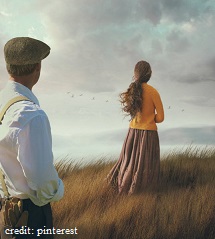
Humakbang kang palayo sa akin
Kinabukasan mo’y h’wag sirain
Pag-ibig mo sana’y h’wag sayangin
Mahalin ka’y ‘di ko pwedeng gawin
Ang maging tayo’y isang pangarap
Na ‘di kaylan man pwedeng matupad
Ang ibigin kita’y ‘di marapat
Dahil sa dusa ka masasadlak
H’wag kang lumuha, h’wag mong damdamin
Nais ko ma’y ‘di pwedeng pilitin
Masakit ma’y dapat na tanggapin
Hindi ka pwedeng hagka’t yakapin
Bakit nang dumating ka’y huli na
Hindi na malayang ibigin ka
Kung noon sana tayo nagkita
Kuwento nati’y naging masaya
H’wag ka nang sa aki’y magpaalam
Baka kasi kita pa’y pigilan
Humayo ka na’t ako’y layuan
Pagsikapan mong ako’y kalimutan
Paglayo mo’y aking daramdamin
Pagluha’y mahirap na pigilin
Matapos kasing ako’y ibigin
Tinulak kang palayo sa akin
(Mula sa kantang “Walk Away” ni Matt Monro)
 M.A.D. LIGAYA


 M.A.D. L I G A Y A