Limang Taon Na…Limang Taon Pa Sana
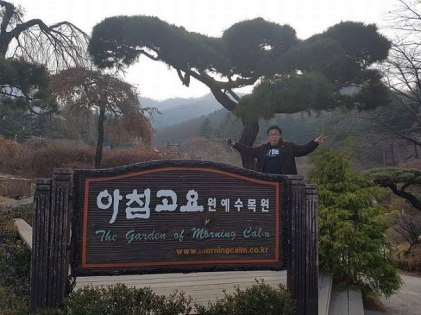 Mahigit limang taon na pala ako dito sa South Korea. Salamat sa Dakilang Maykapal sa pagkakataong ito. Mahaba-habang panahon na rin akong nagtatrabaho dito bilang guro sa isang unibersidad. Sana’y kaloobin ng Panginoon na manatili ako dito ng mas matagal pa.
Napakagandang oportunidad para sa akin na makapagturo dito. Hindi lamang dahil sa sahod. Alam na ng lahat na mas mataas ang kinikita ng mga “professionals” na nabigyan ng pagkakataon na sa ibang bansa makapagtrabaho. Dito kasi, bukod sa pagtuturo ay nakakapagsulat ako. Napakahalagang bahagi ng buhay ko ang pagsusulat – isang bagay na napakahirap gawin sa Pilipinas dahil maghapon ang trabaho. Kung school administrator ka pa, katulad ko noon, ay kakainin ng trabaho mo pati ang gabi. Kung may accreditation eh pihadong nanakawin nito maging ang madaling araw mo. Minsan (o kadalasan?), maging Sabado’t Linggo eh may mga gagawin pa rin. Kaya sa Pilipinas hindi ako nabigyan ng oras ang hilig ko sa pagsusulat.
Dito sa South Korea eh magtuturo lang ako ng walong (8) 2-hour subjects sa loob ng isang linggo at naglalagi sa office ko ng dagdag na tatlong (3) oras para sa student consultation at paperwork. Ang bawat 2-hour subject pa eh kaylangang ituro lang ng 100 minutes. Apat na araw lang ang pasok ko, dalawa doon eh half-day pa.
Kaya napakadami ng oras ko para makapagsulat. Sa dami nga ng bakanteng oras eh may panahon pa akong makapag-basa at pag-aralan ang mga gusto kong matutuhan. Dito nga eh natuto akong gumawa ng sarili kong website kung saan lahat ng mga katha ko eh doon ko ipina-publish.
Hindi swerte ang naghatid sa akin sa bansang ito. Hindi ako naniniwala sa swerte. Nagsunog ako ng kilay at naglaan ng panahon para dito. Gumastos ako’t nagsakripisyo. Pinaghandaan ko ito’t ipininalangin ng taimtim. Ang maging ESL teacher at makapagturo sa ibang bansa ay bahagi ng “career path” na inilatag ko para sa aking sarili maraming taon na ang nakakaraan.
Nasa crossroads ako noong taong 2011. Kung totoo ngang may mid-life crisis ay iyon na marahil ang pinagdaanan ko noon. Naramdaman kong may mga drastic changes akong dapat gawin sa buhay at sa aking propesyon. Napakarami kong tanong noon at alam kong ang kasagutan eh wala sa Pilipinas. Dalawang taon pa ang lumipas bago sa wakas eh napunta ako dito sa South Korea.
Marami akong inaplayang universities sa ibang bansa noong 2011 hanggang 2012. Kadalasang native speakers of English na mga guro ang hinahanap nila. Pero alam ko ring may ilang Pilipino na nagtuturo ng English sa ibang bansa kaya hindi ako sumuko sa paghahanap. At sa wakas, matapos akong mabigo sa 2 personal interviews para sa 2 universities sa Middle East, sa pangatlong pagkakataon, isang university sa South Korea ang nagbukas ng pintuan at ako’y pinatuloy.
Heto nga’t naka-limang taon na ako. Nagtuturo ako hindi lamang ng English. E-1 visa holder ako kaya pwede rin akong magturo ng content subjects. Sa kasalukuyan ay pinagtuturo din ako ng university namin sa Graduate School nito. Hindi lamang mga Koreano ang tinuturuan ko, maging mga foreigners man. May mga PhD at MBA students ako na galing sa mga bansa sa Africa as iba’t-ibang sulok ng Asia.
Dalawang beses akong nakakauwi ng Pilipinas sa isang taon – tuwing winter at summer break dito sa South Korea. Bayad kaming mga professors na nagtuturo sa mga universities sa bansang ito sa buong isang taon kaya kahit bakasyon eh tuloy ang sweldo namin.
Sa isang taon eh katumbas ng tatlong buwan na nasa Pilipinas ako kapiling ng mga mahal ko sa buhay. At kapag nandito naman ako eh mula umaga hanggang ako’y gising na nakabukas lang ang aking Skype kapag wala akong pasok. Parang nasa bahay din lang ako dahil nakikita ko ang ginagawa ng mga mahal ko sa buhay. Naririnig ko hindi lamang ang kanilang mga boses kundi pati ang mga kantang pinapakinggan nila, ang tahol ng mga aso namin, at maging ang tilaok at putak ng mga manok doon. Kaya hindi ako tinatalaban ng homesick. Hindi rin ako dinadalaw ng inip dahil sa lakas ng internet connection eh napakadaming pelikula ang pwedeng ma-download at napakadaming educational and motivational videos na pwedeng panoorin sa YouTube. Dagdag pa na alam ko kung paano hanapin sa Internet ang mga live na palabas ng paborito kong NBA. At kung ayaw ko naman manood eh may sariling gym ang university na pwede kong puntahan at mga hiking trails sa mga bundok na pwedeng lakaran. May hideway ako sa isang bundok dito kung saan ako minsan nagbababad para magbasa, magsulat, uminom ng beer mag-isa, at matulog.
Pangalawang tahanan ko na ang South Korea. Kapag kinaloob nga ng Panginoon ay gusto kong maka-limang taon o higit pa na makapagturo dito. Totoo ngang “Land of the Morning Calm” ang bansang ito. Dito ay kumalma ang katauhan ko. Natutuhan kong maging mahinahon, maghinay-hinay. Dito ay natuto akong mag-isip ng maayos bago gumawa ng desisyon. Nagkaroon ng mas malinaw na direksyon ang aking buhay dito.
Dito, dahil nga sa nakakahalubilo ko ang mga taong iba’t-iba ang wika at kulay ng balat ay natutuhan ko ang mas malalim na kahulugan ng respeto sa kapwa-tao.
Dito sa South Korea ay mas nakilala ko ang aking sarili. Higit sa lahat, natutuhan ko kung paano manalangin ng mas taimtim.
On Perspective

I do have a friend who would usually be mistakenly identified as me. There were many instances that people in the university where both of us are teaching called me by his name and him by mine. Why? None of us is a dead ringer for the other but very likely that our similar built, height and rounded face would make people commit that mistake.
Seemingly bemused, he asked me one time, “Why would they think I am you? Do I look as old as you are?” I paused for a while, smiled then told him jokingly, “No, I think I just look as young and handsome as you are.”
As my friend laughed at my response, I thought that the contrasting way we looked at the issue has opened an opportunity for me to revisit the topic “perspective.”
That (perspective) is one of the most amazing things about us humans – our tendency to look at the same thing differently.
Anything in this world can be viewed from different perspectives. We get to decide at what angle we would look at circumstances, problems, events and even objects using lenses that are uniquely ours. We tend to measure the value of those things using our own sets of standards and label and define them according to our beliefs. Those standards and beliefs are shaped by the way we were raised by our parents, trained by our teachers, influenced by the people around us, and conditioned by our culture.
The sum total of the experiences we accumulated since birth and the amount and quality of information we gathered through the years from different sources are the factors that contribute to the kind of perspectives we develop as persons. Our way of viewing things depends on the belief system that those experiences and information impressed upon us.
Each person is entitled to embrace a particular attitude towards something. There are no specific measurement to determine the rightness and wrongness of perspectives. Only the consequences of a person’s action (or the lack of it) as a result of embracing certain perspectives could perhaps be labeled as right or wrong.
When we are about to take a perspective it’s like we’re positioning ourselves in the number scale and decide whether to go north or south. We can either be positive or negative with our perspective. Those are the only directions we could take when we look at issues and circumstances confronting us. It’s a matter of choice.
Perspective is said to be like a coin, it only has two sides. We flip the coin and choose either “head” or “tail.”
Our perspectives affect the decisions we make. They inform the things we think, say and do. Thus, while we are entitled to have any kind of perspective, in the same manner that we are entitled to our own opinions, we have to understand that we will bear whatever consequences there may be for embracing the perspectives we take.
We also need to understand that we could not assume that what we believe or see is definitive. Different people have different ways of looking at things. The perspective of the world that dictates the lens through which we see it is not the same for everybody. We need to develop the ability to see things from another’s viewpoint.
Perspectives can either be broad or narrow.
Having a broad perspective means being able to see the bigger picture. `
I once had a conversation with another friend about working conditions. He bewailed the fact that a truck driver in his country earns more than what he is earning in a year as an expat teacher. After listening to his litany, I told him to pause for a while and dig deeper into his comparison and consider other factors like number of required work hours and the physical demands for the job. When computing the number of hours, I reminded him that we as teachers are not actually working during winter and summer breaks but we get paid in full by the university as stipulated in our contracts.
He realized at the end that his pay per hour is actually higher than the truck driver and his working conditions are much better.
It is not really hard to train the mind to look at the bigger picture. It is easy to look beyond the obvious if only we’re open-minded. It does not require a special kind of training. All we need is common sense.
There are a lot more that could be explored in the discussion of perspective. At the end, the thing that matters is the answer to the question, “How do our perspectives affect the way we live?”
If the lenses we are using to view the world have brought us success and happiness, why change them. We’ve been told many times, “If it ain’t broke, don’t fix it.” But what about if those lenses are seemingly broken and have caused us nothing but failure and misery? Is it time to visit an OPTIMIST?

Predictors of Organizational Effectiveness of RVM Schools In Luzon

ABSTRACT
This study attempted to answer the general question: How do various factors affect the
organizational effectiveness of RVM schools in Luzon? Specifically, this study sought answers to the following questions:
(1) What is the profile of the RVM schools as embodied by schoolrelated variables (of school environment, number of enrollees, class size, school fees, physical plant and facilities, library resources; and level of accreditation); teacher-related variables (of educational qualification, length of teaching service; and teacher commitment to job and to organization); and administrator-related variables (educational attainment, supervisory/administrative experience; leadership behavior-consideration, leadership behavior initiating structure);
(2) What is the level of organizational effectiveness of the RVM schools in terms of student performance in the RVM Achievement Test in the following subject areas English, Mathematics and Science?; and
(3) Do the profile of the RVM schools as embodied by the school-related, teacher-related and administrator-related variables the performance of the students in the RVM Achievement Test?
It was hypothesized that the profile of the RVM schools as embodied by school-related,
teacher-related and administrator-related variables have no significant effects on the organizational effectiveness of RVM schools in terms of the students’ performance in the RVM Achievement Tests in the subject areas English, Math and Science.
The researcher applied the descriptive method of research. The principals and the English, Math and Science teachers who handled the 4th year students during the school year 2006-2007 served as respondents and were chosen using universal sampling. For the results in the RVM achievement tests in English, Math and Filipino, included in the
study were the scores of 470 students who were randomly selected using the Table or Random Numbers from the total population of 2,050.
The data required in this study were gathered mainly through the use of the two sets of
questionnaires, one for the teacher-respondents and the other for the principal-respondents. The statistical treatment used were the following: frequency counts, percentages, means correlation and multiple regression.
It could be inferred through a comparative examination of the average scores obtained by the students in the three subject areas (English at 26.66, Math at 20.23 and Science at 16) in the RVM Achievement Test for School Year 2006-2007, that it is in the subject area English where the performance level was highest and the lowest was in Science. The difference in the computed mean is considerably big at 10.66.
The fifteen independent variables were significantly correlated with one another. Five independent variables were significantly correlated with the scores in English, nine in Math, and three in Science.
Three of the fifteen independent variables included in this study contributed significantly to the students’ academic performance in English. In both Math and Science, there were ten variables each that appeared as important independent predictors of the students’ academic performance in Math and Science.
The null hypotheses of this study which state that the profile of the RVM schools as
embodied by school-related, teacher-related and principal-related variables have no significant effects on the organizational effectiveness of RVM schools in terms of the students’ performance in the RVM Achievement Test in English, Math and Science were rejected.
Predictors of Organizational Effectiveness of RVM Schools in Luzon

 Periphery: Starving to death
Muling Umawit

Ayaw nang umawit ng puso kong paos
Biglaang huminto ayaw nang tumibok
Damdaming namanhid walang kumukurot
Hindi na masaya, hindi rin malungkot
Balag sa isipa’y ayaw nang gapangan
Nang mga ala-alang sa aki’y nagdaan
Lungkot at saya’y tila nakalimutan
Ligaya’t siphayo’y ayaw ng balikan
Naging manhid – damdamin ay naging tigang
Luha’t ngiti nawalan ng kahulugan
Tula sana’y magsilbi kong kaligtasan
Ibalik sa puso, nawalang pakiramdam
Ngunit walang saysay, aking taludturan
Kung daang pabalik ‘di ko lalakaran
Pinto ng ala-ala ko’y iyong buksan
Sa loob nito ako sana’y samahan
Doo’y samahan ako kahit lang saglit
Turuan ang puso kong muling umawit
Ating muling paindayugin sa pantig
Ang kahulugan ng tunay na pag-ibig
 M.A.D. LIGAYA



 M.A.D. L I G A Y A