Real Life and GMA’s “Ang Dalawang Mrs. Real”
 Admittedly, I got tired watching Filipino drama series shown on Philippine TV. The story lines are so repetitive that it diminishes the element of surprise which is a key ingredient in literary appreciation. Instead of the suspense killing the audience, familiarity to the story line killed the suspense then bored the audience.
Then came GMA’s “Ang Dalawang Mrs. Real.” It’s a story about a philandering husband who married another woman. After going over its synopsis, I said “nothing new.” So, I did not bother to watch, until my one and only “Mrs. Real” asked me to find on You Tube the episodes of the said TV drama that she missed. With nothing else to do I decided to peep on what she’s watching. Result: For the first time in years that I eagerly watched a Filipino drama series.
How many times have we watched a movie and TV drama about unfaithful husbands? How many times have we read stories about men not contended with their wives so they resorted to having extra-marital affairs? We know that when the wife learned about it all hell breaks loose. We know that when men got caught they had to choose between their wives and their other women.
The foregoing is also what GMA’s “Ang Dalawang Mrs. Real” is all about. Familiar situations yet the story, generally, succeeded in veering away from becoming predictable. Every scene, actually, is climactic stuffed with twists and turns. Watching it is like riding an emotional roller coaster.
Elements of the rising action are beautifully put together as the story geared towards the climax. The climax itself was something unexpected. The writer seems to have a penchant on giving clues on how things would turn out in the story and but would present something not expected.
Yes, same story line but delivered differently.
Different not because the actors and actresses, if I may use an oft-repeated phrase, “gave justice to their roles.” This is no longer surprising. It is a given. These people are trained to act out roles.
It is different because the whole story is a realistic rendition of life. And this is exactly what literature is…a faithful reproduction of life.
Characterization and dialogue are consistent with literary realism. The story as a whole presented universal truths about men and women, about family and society making it acceptable even to international audience.
Anthony (Ding-dong Dantes), the husband, is the embodiment of the popular belief about men – “that men are polygamous in nature.” Henry (Robert Arevalo) and Tino (Tommy Abuel), fathers of the two women married by Anthony, are themselves not clean. Both of them have had extra-marital affairs themselves. Among men in many parts of the world, womanizing seems to be a natural tendency.
But the story also presents the good side of the male specie through Jun (Jaime Fabregas), a disciple of monogamy. He is a loving husband to his wife Sonia (Conie Reyes) and a supportive father to Anthony. Chaos descended upon his family for all the troubles created by his son yet he keeps his family above water. He was the glue that keep his family together.
On the other hand, Millet (Maricel Soriano) is an epitome of a martyr wife. While almost violently that she reacted to her husband’s infidelity, while she was offended to the utmost upon learning that Anthony married another woman, she forgave him. That’s how wives are, they always stand by their men. As much as possible they must preserve the famiy. Umeng (Susan Africa), the mother of the other Mrs. Real, Shiela (Lovi Poe) also chose to stick by her husband, Tino, even if she discovered that the latter, just like Anthony, had another woman and actually fathered a child.
Millet and the other Mrs. Real, Shiela (Lovi Poe) and her mother Umeng (Susan Africa) represent women who are at the receiving end of an ongoing notion that it is okay for a man to have another woman. Like many women in society, they unwillingly embrace the dictum that men will always be men. Or maybe they are drowned by fear that life may not go on without their husbands.
Aurora (Celeste Legazpi) and Sonia (Conie Reyes) are the typical mothers protective of their children. They are pained to see their children suffer and they would do anything to alleviate their suffering.
In real life, we criticize people for the things they say and do. We did the same in the drama series, we passed judgment on the characters.
We approved the positions taken by each of the families affected. They did what they needed to do to protect their loved ones.
But while we expressed sympathy for some characters, most especially Millet, we criticized some. The harshest criticism fell, not on Anthony, but perhaps on Henry.
Why not on Anthony? He is the most sinful of all the characters. He caused all the troubles. But why was he not crucified. To err is human to forgive is divine. Anthony committed mistakes but tried to correct them. He tried to put things in order thereby earning the forgiveness and sympathy of the viewers.
And why on Henry? Because he is so unforgiving. He plays his moralism to the extreme. He did not forgive Anthony and sued him for bigamy despite the pleas made by his wife and his daughter and Anthony’s mother.
When Millet fell into depression we considered it to foreshadow the possibility of Henry finally forgiving Anthony. But the story did not give the audience what it expected. Millet getting ill all the more strengthened Henry’s resolve to go hard against Anthony. The case Henry filed prospered.
The viewers disliked Henry for such a hardline stance, although it was out of love for his daughter that he ought to do what he did. Any father would want to punish anybody who would hurt their children.
While Anthony went into catharsis starting from the moment he got caught for his infidelity and culminating in what he did during the trial when he retracted from his “not guilty plea” declaring his willingness to go to prison and be punished for his wrongdoings for the troubles he created that even led to his father’s death, Jaime on his part, took until the time that Anthony finished serving his prison time to have his own catharsis and finally forgive him.
The hatred and passion for revenge simmered down as the story march to its denouement. There was reconciliation and acceptance at the end. “All’s well that ends well!”
The lesson is clear, when wrongdoings are committed, brace for the consequences.
The TV drama may have changed the way people look at the plight of women crying a river while languishing helplessly in the shadows of their husbands’ infidelity. It may have also sent a clear signal to Anthonys out there that they could be chewing more than they could swallow.
“IF YOU KNOW IT, YOU CAN TEACH IT”

That’s a fallacy.
The scary thing is that many seem to have embraced the idea… that if you know something you can teach it. And they are now in the classrooms calling themselves TEACHERS.
Teaching is more than “mastery of the subject matter.” One may have an accumulation of knowledge or may possess a special skill but it is not a guarantee that he could effectively consummate a transfer of that knowledge and skill to a recipient – the LEARNER. Knowing one thing” is different from “knowing how to teach what you know.”
If teaching is an iceberg, “mastery of the subject matter” is just its tip. We can even say that it’s just the tip of half of the iceberg for teaching is just one side of the coin we call Education, the other side being learning.
To say that “If you know it, you can teach it!” is tantamount to saying that just about anybody who knows something could be a teacher.
Being a teacher entails not just knowing “what to teach” but more importantly “how to teach it.” It does not follow that when you are good at Math then you can teach Math. It is difficult to assume that when you know a language you can teach that language. Being knowledgeable and skillful in one area is just one cornerstone of effective teaching. Learning is not yet in that equation.
Becoming a teacher is a tedious process. “Knowing what to teach” and “knowing how to teach it” are merely the icing of a multi-layered function of a teacher. While mastering a certain field of specialization a would-be teacher also need to study the nature of the learner. While memorizing the “A to Z” and the “one to infinity” of a subject anybody who wishes to embrace the vocation (or call it profession) must understand the intricacies of the learning process. That he should not be concerned only with teaching but also learning.
Those who think that knowledge and skills in their fields of endeavors are enough to qualify as a teacher must do a lot of thinking. Teaching and learning are both grounded on Philosophy, Psychology, Sociology and many other fields of learning. There are also principles and strategies one need to learn to effectively deliver teaching and learning. There are methods one need to get acquainted with so teaching will not become a matter of “the blind leading the blind.”
The aforementioned can’t be learned overnight. It’s a tedious process, as previously mentioned. Thus, professionals in other fields who want to become teachers with good intentions enroll in crash courses for teachers before applying for a position in the academe. And when educational administrators hire non-education professionals for they see in them a promise of becoming good teachers they make sure that the latter would undergo rigid training in pedagogy before they deploy them in the classrooms.
If one has no time and resources to enroll in a crash course for teachers, there are books on teaching and learning that can be read. Available on-line are vast quantity of materials that can also be downloaded. The only problem with this scheme is that there will be no actual practice teaching and training in the preparation of lesson plans and learning modules.
So, if you know it don’t teach it yet. First learn how to teach it.
—–
Source of Image Used: learn4real.co.uk
Triumph in Defeat: Defeat in Triumph
 Gilas Pilipinas may have won just a single game, their last against Senegal, at the recently-concluded FIBA World cup held in Spain yet Filipino fans were euphoric as if the team brought home the gold medal.
Rightly so, for the way the team played Filipino fans could not help but feel proud. True to their battle cry “Laban Pilipinas! Puso!”, the undersized players gave their taller and heftier opponents scary moments. Three of the four games they lost were close ones decided only during the closing seconds of the game.
It was only after four decades that the Filipinos had a chance to play at the center stage of basketball and they gave a good account of themselves.
But something in me is withholding celebration…the presence of naturalized players.
We earned the ticket for the trip to the FIBA competitions in Spain by placing second during the FIBA Asia last year, that was with the help of Marcus Douthit. At the FIBA World, the team was reinforced by Andray Blatche, the team’s eventual top scorer and rebounder.
The question is, without those naturalized players how far could we have gone in those FIBA jousts. We’ll never know. Perhaps worse, but who knows, it would have been better.
We know that naturalization of players is allowed by the FIBA. And we are not the only country doing such. It was reported that there were at least nine players who were allowed to don the colors of another country during the latest FIBA tourney in Spain. Even basketball powerhouse Spain had one.
Why do we need to do it? Yes, we get dwarfed in international competitions and by naturalizing players we get to add ceiling to our national team. But by doing so we deprive some local talents the opportunity to be part of the national team. We also spend precious dollars for these naturalized players. It was reported that Blatche, for his efforts, were paid around a million dollars.
Would we really feel completely triumphant should we win a championship with a naturalized player in tow?
Having naturalized players can be construed as admitting that we are not talented enough to compete in the international level. I believe that while their inclusion to the national team adds ceiling it, on the other hand, lessens the respect of our competitors.
I am finding it hard to celebrate whenever Gilas Pilipinas wins because I would always wonder if we could have won without the help of a foreigner who, by technicality, became a Filipino, a Filipino only during FIBA tournaments.
In ending, I wish to mention what I consider as the best moments Gilas Pilipinas had in the FIBA World tourney. It was when Blatche was called for his 5th and final foul with less than two minutes left in the game between the Philippines and Senegal. The Filipinos stood their ground. It was when we saw the kind of heart the Filipino players possess. It was when we witnessed the kind of basketball talent that our home-grown cagers have. Those dying moments of that game is a proof that Gilas Pilipinas could compete even without the help of naturalized players.
Source of image used: http://www.behance.net
Why Do I Write?

Why do I write?
Is it to impress?
I don’t write to impress. I’m well aware of the fact that my writing skill is nowhere near excellent. It seems to me that I am not even halfway my journey to excellence in writing. But I am sure I’ll get there before I breathe my last. Right now, I am still inside the “room for improvement.”
Let me go back to the question – Why do I write?
Do I write in the hope that I earn money and become famous?
Not even!
Becoming famous and earning money are not my primary reasons for writing. Of course I need money. It’s hypocritical to say that I don’t like to have additional numbers to the farthest north of the first digit in my bank account.
But can writing earn you money?
Writing is very financially rewarding specially if you are a script writer of one of the popular TV networks or movie outfits in your own country or a novelist who belongs in the league of the likes of J.K. Rowling, Dan Brown, and Stephen King.
Yes, I am also earning from writing. It’s actually my secondary source of income. I got paid for some of the articles/papers I have written. When I began writing when I was young, I did not expect that someday it would be an additional source of income. I used to think that “there’s no money in writing.”
The university where I am currently employed offer cash incentives to professors for research works published in international (indexed) journals. Professors can also opt to apply for research grants We can get research funds in the process and just ensure to have the paper published within 2 to 3 years. They also give honorarium for articles contributed to the school’s publication in English.
I wouldn’t pass up the opportunity to hone my skills as a writer and researcher, to possibly add to the sum of existing knowledge, to have my works read, and to even get paid in the process. So, I have been publishing papers in international journals and contributing articles to our university publication. In addition, I have been doing it (the publication of research papers) because university professors are supposed to publish. Our university is not requiring us but I consider publishing as a “professional obligation.”
Once in a while, some individuals would also commission me for writing jobs. There were times I did it for free. There were also times that I was promised remunerations for what I wrote but didn’t get any. I was also duped once by an online news organization who did not pay me a single cent for the articles I wrote for them.
I consider the cash incentives as my reward for doing what I love doing – WRITE. But it’s not all about the money. The money is not the reason I write.
The rewards that writing gives, for me, are hard to quantify. Such rewards are transcendental. That’s not me trying to sound philosophical. That’s just the way I feel about it.
What about fame? What about the accolades? Are those the the things that inspire me to write?
NOPE!
As a matter of fact, when I write and allow people to read my works I am unnecessarily putting myself under the microscope. I am putting myself in the line of fire if among my readers there are unforgiving members of the grammar police who wouldn’t hesitate to shoot on sight anyone whose spoken and written English are perforated with errors in grammar. When they start firing you can not hide. My missing the comma between the words “firing” and “you” in the previous sentence is something they could not miss.
So, instead of accolades I may get negative comments. This is the reason, a friend said, that he would never write for any publication or post any of his writings on any of the social networking sites. He is afraid he may not be able to take negative comments. He added he fears committing errors in grammar. He considers it embarrassing to be corrected for such mistakes.
In my case, criticisms and corrections are welcome. I won’t die if criticized and corrected. As a matter of fact, I have already received a lot of those and here I am – still alive and kicking. I don’t mind if somebody calls my attention for mistakes I committed. Just break it to me gently and constructively.
The reason erasers were invented and keyboards of computers have backspace and delete keys is… nobody’s perfect.
I keep rereading my stuffs in this website to correct possible errors and to improve them.
People may read or disregard what I write. If they do read, a million thanks. If not – no hard feelings. And for having reached this far into my essay, I want to say thanks to you.
I may have received some good comments from my friends for some of my writings in the past. But of course, those comments may have been either meritorious or simply generous. Sometimes there are people who give positive and encouraging compliments. Thanks to them.
But aside from good comments some of my works have also angered some individuals who were offended thinking that what I wrote pertained to them. Writing sometimes is a magnet for trouble. I remember quite well when I wrote a satirical poem in Filipino (about a wolf in sheep’s clothing) when I was working in a Catholic college. The parish priest who felt alluded to (and I was really alluding to him) reportedly asked the Sister-President of the college, my superior, to summon me to the latter’s office so he could talk to me about what I wrote. However he was dissuaded from pursuing his request. But even if he was able to convince the President and the College Dean then, I wouldn’t see him. Why? That poem I wrote and my act of writing it had nothing to do with my employment. My being a writer has no personality and office that could be connected to any of the lines that run vertical and horizontal in our organizational chart. In short, the priest had no authority over me. The priest never bugged me again but I wrote another poem for him (Habit and Habit).
My quatrains (in Filipino) are the ones that brought me some colorful moments. I have lost a friend or two (or is it three… perhaps more) for the quatrains I have posted in a social networking site. I once wrote a quatrain and a friend liked it. Almost a year later, I re-posted the same quatrain and surprisingly the same person who previously liked it was angered and gave me a mouthful. We’re very good friends so we talked about it. He understood, apologized, and we both forgot about it since then.
Also, my writings where my political beliefs are in full display had me losing very dear friends.
So, why do I write then?
Is it for the “likes,” “reactions,” and compliments I get when I have those poems, stories, and essays posted in my social networking accounts or in this website?
Not also.
Of course those things make me happy and I am so thankful for those friends who take time to read my works then reacted and commented on them.
Then, why? Why do I write?
It’s hard to explain. It’s something like a combination of the answers to the following questions: Why do people need to eat when they are hungry? Why do they need to drink when they are thirsty? Why do they need to take medicine when they are sick? Why do they laugh? Why do they cry?
There is a kind of hunger within me that only writing can satisfy. There’s an insatiable thirst in my soul that would go away only when I read what I write. I suffer from a very mysterious illness that goes away only when I write in sentences or verses the equivalent words of the thoughts and feelings that drown me during quiet moments in my life.
Writing is my endorphin.
I must release my pain, anger and disagreement by writing about them or else they will haunt me endlessly. When I feel wronged I have to respond, not by violent means. I respond in a creative manner – through poems – sometimes satirical. I do it usually using anthropomorphism.
If the spirits of William Shakespeare and Elizabeth Browning I could not summon through the glass to inspire me to express in poetry whatever I wish to say then I turn to Francis Bacon and Michel de Montaigne’s way of capturing into words – essays – whatever it is that I wish to convey. If I don’t wish to be so direct with my points and would like to hide my feelings and thoughts between lines and behind symbolism then I walked the path that Edgar Allan Poe and Guy de Maupassant paved. I write stories.
I just don’t keep quiet when I notice human follies displayed by my loved one, friends, and other people around me. Again I resort to anthropomorphism. I use animals to represent their irrationality. It may hurt them and make them angry but the truth may be bitter but sweeter than the sweetest lie. VERO NIHIL VERIUS. Nothing is truer than the truth.
This is not saying that I am a perfect human being. I am as imperfect as anyone else and may have, perhaps, done more terrible things. Thus, the satires I wrote are like boomerangs. They sometimes hit me also.
Pain is like a prison cell. It is by writing that I break free from that hell. As my heart churns out the words, I go through the pain, feel it, not escape from it. And as I write the final sentence or verse, as I put the final punctuation mark, the pain vanishes.
Even my happiness and satisfaction wouldn’t be complete if I do not write about them. I need to capture in either prose or poetry those moments so I can feel more deeply the joy they bring. I do write about them so I can relive those moments any time I wish to.
I need neither material rewards nor accolades for what I have written (and will be writing.) The essays, plays, poems, research works, and stories I create are themselves the rewards. I love and treasure them.
I write not to impress but rather to express my thoughts, feelings and ideals. Writing is my freedom, my happiness.
SCRIBO, ERGO SUM. I write, therefore I am.
PAIN’S BUT A MYTH

Venomous pain the Algea injected
In anguish and torment my soul screamed
“Journey to dreamland” Hypnos muttered
“Drown misery in my lake of dreams”
But Dionysus countered “Visit my vines
Feast upon my sweet magical grape
Submerge anguish in the lake of wine
Dream not in languor but while awake”
Aphrodite said “I’ll bring Helen
She can kiss your anxieties away
Frolic with her in Dionysus’ haven
While I hold Menelaus at bay”
When Thanatos arrived he whispered
“Down there anxieties have no domain
Hold tight my hands waiting is Hades
Let death vanquish distress and pain”
Rhea came last took my hand and smiled
Her turret crown beamed comfort and ease
On her laps I cuddled like a child
Then she told me “Pain’s but a myth”
———–
Image source: http://www.flickr.com
SELFIE (Playing With Words)

“Language is a wine upon the lips.”
I am so drunk with words that I could not recall the one who said the foregoing beauty.
So, let’s just drink to SELFIE, till drunkenness do us part. Better yet, let’s play with the word SELFIE with wild abandon. Let’s take a shot, not of ourselves as what we do in SELFIE but let’s take a shot at the word SELFIE itself.
SELFIE can also be spelled as SELFY. But people are more familiar with the variant SELFIE.
FYI, the term SELFIE is not new at all. The word was minted by Jim Krause in 2005. The Wikipedia explains that “a SELFIE is a genre of self-portrait photograph, typically taken with a hand-held digital camera or camera phone.” Generally, self-portraiture dates back to ancient times.
Now, let’s frolic in the playground of language. Let’s play with the word SELFIE. Let’s see what derivatives can we squeeze out of it.
- SELFIENATIC – a person who loves to take his self-portrait photos
- SELFIEISM – the desire to take one’s self-portrait photos
- SELFIEDOM – the sense of satisfaction a person feels after taking self-portrait photos
- SELFIESTIC – describes an artistically-taken self-portrait photo
- SELFIEGENIC – looking attractive in selfies
- SELFIESTICATED – looking elegant in selfies
There are new fields of studies born out of SELFIE namely SELFIEGRAPHY and SELFIETHERAPY. The former is the art of taking self-portrait photos and the latter is the process of eradicating stress by taking self-portrait photos.
Now, if you try to convince other people to try SELFIGRAPHY then SELFINIZE them.
So, if you intend to join the SELFIENATICS, if suddenly you develop SEFIEISM then you will have to undergo SELFINIZATION…the process of initiating oneself into SELFIEGRAPHY.
If ever a person has never taken even just a single self-portrait photo, then he is SELFIELESS.
If a person looks negatively at SELFIE or they have fear of self-portrait photographs then they may be suffering from SELFIETY.
Those people who are courageous in taking self-portrait photos and have fun doing it can be said to have high SELFIESTEEM.
Neither the people SELFIETYING nor those who have high SELFIESTEEM deserve condemnation. As the saying goes…”To each his own.”
To SELFIE or not to SELFIE is a personal call. If there are people who desire not to take their self-portrait photographs, that is within the bounds of their personal freedom. Conversely, those people who are having fun taking self-portrait photos be allowed to express themselves in a manner they see fit. But citizens of SELFIELANDIA need to exercise discretion. They must bear in mind the existing ethical standards.
For the uninitiated, there is an 11th commandment: “Thou shall not commit SELFIETY.”
Come on! Take a SIP (self-inflicted photograph)! Check your SELFIESTEEM.
Citizens of SELFIELANDIA, who may also be referred to as SELFIETIANS, do not forget the 12th commandment: “Thous shall not rest until the whole world is SELFIENIZED..
_________
It takes two to tango
Only one to selfie
There is no place for two
The frames are just for me

Sources of the Images: blog.inonit.in, mobilephotographyblog.com
ON BEING A POET
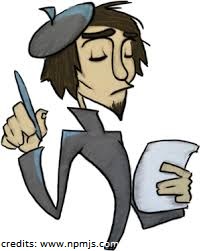
It’s never easy.
The literary genre most difficult to produce is the poem. Imagine putting together the elements of rhythm, rhyme, sound and imagery, not to mention the need to have a formidable vocabulary.
Writing stories may also have maze-like intricacies because mixing in bowl the elements of fiction within the bounds of the plot is not a walk in the park. But fiction writers have the luxury of using a lot of pages to serve their purpose. Leo Tolstoy needed more than half a million words for his novel “War and Peace.”
Conversely, a poet has a single page, sometimes not even the whole of it, to capture vivaciously and vividly the emotions and thoughts pervading within or around him. The Japanese, through their Haiku, would do it in a single-stanza poem with three lines consisting of a total of 17 syllables.
What adds difficulty when poets thread the rhyme zone is that they can not walk the path of sadness while wearing a smile. Neither can they frolic in the lake of happiness while riding the canoe of sadness.
Pain begets pain, joy engenders joy. This is seemingly the prevailing mood in the realm of poetry. Rare are the crying clowns who can masterfully inject sadness into the veins of their poems while they are cracking a joke.
The melancholic lyre sounds best when played by a poet who in one way or another licked some emotional wounds sometime ago in a desolate room. On the other hand, the trumpet of merriment can best be blown by a poet who has journeyed the clouds of ecstasy.
But life is a masterful musician who teaches poets to play both the melancholic lyre and the trumpet of merriment. Life enables a poet to play any of the said instruments at a given time.
If a poet intends to paint his canvass with gloom then he can easily prick an old emotional wound until it bleeds sadness. He can walk down memory lane and revive the pains inflicted by either a person or an event he would rather forget. That’s not masochism but rather a form of sacrifice, the poet ought to feel what he intends to write.
If it is the rainbow needed in his canvass then exactly the opposite of the foregoing he must be doing.
That‘s the beauty of being a poet. Poets can switch with ease to any emotions that they desire. Like an actor in a theater, crying one moment then in a jiffy burst into laughter.
Sometimes poets get misconstrued. When a poem tackles sadness and regret for losing someone the readers would think that the poet still loves and wants that someone back. Worse, the person who felt alluded to may either be excited or feel vindicated.
Lest we forget that poets are men of arts who write for art’s sake. Undoubtedly, they draw inspiration from someone or something. They need a motivation in pursuance of their art. But as it is, the end is the art and the motivation is but the means to achieve the end.
And what is the reward the poet receives for writing a poem? The reward is the poem itself. No reward can be sweeter than the poem itself which the poet chiseled with his pains and joys.
As to whether or not a poet who writes a poem of gloom and bewail is sad and regretful, only he knows.
 M.A.D. LIGAYA

 M.A.D. L I G A Y A