

Ilang ikot pa ng tangkay ng orasan
Kalendaryong gamit muling papalitan
Mga paghahanda’y kaliwa’t kanan
Paligid tiyak dadagundong nanaman

Tiyak na paligid nga ay dadagundong
Sa nanalapit nanamang bagon taon
Kasi gawi na kapag ito’y sinalubong
Paputok dapat bahagi ng selebrasyon

Ang paniniwala kasing nakagisnan
Ingay at paputok kinatatakutan
Ng mga espiritung dala’y kamalasan
Kaya’t sa bagong taon ay pa-ingayan

Ngunit wika ni Brod Pete may nasusulat
Ang paputok daw pala dala ay malas
Espiritung nasa labas kapag nagulat
Sa bahay, nang taguan, ay hahagilap

Dagdag niya kung gusto raw makatiyak
Ito’y kanyang binasa sa nasusulat
Nang ‘di papasok itinataboy na malas
Magpaputok sa loob ‘wag lang sa labas

Meron pang uso bukod sa mga paputok
T’wing bagong taon malapit nang pumasok
Ang natura’y prutas na korteng bilog
Ubod nang dami kung sa mesa’y ihandog

Bilog, kasi, ang kasinghugis ay pera
Kaya’t sa bagong taon swerte daw ang dala
Sa bilog na prutas yayaman, giginhawa
Hindi ang bumibili kundi ang tindera

Iba’t-iba ang ating mga pamahiin
T’wing ang bagong taon ay sasalubungin
May pagkaing dapat at di-dapat ihain
May kulay ang damit na dapat suotin

Dapat may lucky charm sa ding-ding nakadikit
Dili kaya’y sa damit ito’y nakakabit
Dapat kulay pula ang isuot na damit
At may mga bilog dito’y nakatitik

Malas di maitataboy ng paputok
Swerte’y di dadalhin ng prutas na bilog
Kung sa pamahiin hindi huhulagpos
Masaganang buhay hindi maaabot

Kung tagumpay ay nais makamtan
Mga pamahiin atin nang talikuran
Sa bagong taon ang ating asahan
Awa ng DIYOS at sariling kagalingan

ON PHILOSOPHY AND TEACHERS
To say that “no two teachers are alike” is not expressing an assumption but rather stating a universal truth.
Yes, teachers differ in many ways. Even if they may have come from the same culture and graduated from the same college of Education in the same university you don’t expect them to embrace the same philosophies. You don’t see them apply the same methods and strategies in the classroom, approach teaching and learning with the same degree of passion, and treat the learners in the same manner.
Teachers decide which perspective they would use in looking at their role as mentors and in looking at their students. Such perspective depends on either the philosophical foundations they adhere to or their personal set of beliefs, or may be both.
Teachers may have read too much of Hegel, Kant and Plato that they may have developed idealistic tendencies indoctrinating their students into…
View original post 664 more words
GRADING GRADES
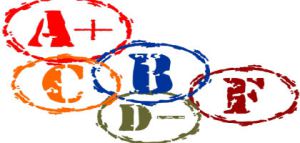
We label students as pesky when they keep pestering us with questions about their scores in quizzes and exercises. We find them annoying when near the end of a semester or shortly after final exams they send emails or call to inquire about their grades.
We say they are desperate when after knowing their grades they move heaven and earth to make us reconsider it and give them higher marks citing 101 reasons we need to do so, some of which are valid, some pure antics.
There are times when some teachers drop the correction fluid unto the grades they have given because they get moved either by the appeal of the students or by pressure from upstairs.
We often criticize students for being so grade-conscious.
But is it their fault?
NO!
Students are grade-conscious not because they want to but standards of society force them to be. The policies…
View original post 690 more words
Bagong Taon Nanaman
GRADING GRADES

We label students as pesky when they keep pestering us with questions about their scores in quizzes and exercises. We find them annoying when near the end of a semester or shortly after final exams they send emails or call to inquire about their grades.
We say they are desperate when after knowing their grades they move heaven and earth to make us reconsider it and give them higher marks citing 101 reasons we need to do so, some of which are valid, some pure antics.
There are times when some teachers drop the correction fluid unto the grades they have given because they get moved either by the appeal of the students or by pressure from upstairs.
We often criticize students for being so grade-conscious.
But is it their fault?
NO!
Students are grade-conscious not because they want to but standards of society force them to be. The policies and procedures in the academe framed that kind of mind-set in the consciousness of students. They are seemingly programmed to become grade-conscious.
It all begins at home. Parents keep reminding their children to study hard and get good grades. When the children get to school, the indoctrination goes full steam. Teachers give a battery of tests and exercises telling the students to perform well if they want to pass the subject. And that if they want to be part of the honor roll then they need to have high scores.
Parents tell students to study hard, the teachers tell them to study harder. Day and night students are told that they must get good grades. After school, parents would even acquire the services of a tutor to further improve the academic performance of their children.
That’s how the “getting-good-grades-is-a-must” mentality gets ingrained in the consciousness of the poor little kids.
Companies and corporations deliver the coup de grace by frequently advertising that they hire only the best and brightest. And what’s the tangible measurement of these superlatives (best and brightest)? GRADES…A+, or 1 or 5 or what-have-you.
Society have assigned GRADES as proof of excellence. Academic performance of students is measured through their grades. The higher the grades the more excellent is the student. That’s how it goes.
RESULT? The students become grade-conscious. The grades they receive is a microscope and they are the specimen in the slide. Their academic marks are like scalpels used to dissect the contents of the shell between their ears.
The parents want them to work hard for their grades. Yes, perhaps for the children’s sake but the grades they receive is an instrument used by the parents in monitoring their investment. They want to make sure that
their children are not wasting the money they are spending for their education.
Parents become so mad when their children present to them unsatisfactory academic marks. And of course, when their children perform well academically, they are elated no end. It is a boost to their pride, a feather in their caps.
The schools in any country stretch their students to the limits of academic achievement because when students pass standardized examinations given by their governments it redounds to their benefit. It’s good for ranking and accreditation purposes. It’s a boost to their reputation. It’s good for marketing.
The parents and the teachers keep telling the kids that good grades is a prerequisite to success, the only way to get a good job. Thus the students think that the purpose of education is purely economic, to prepare them for a job. And if they fail to get good marks their future is doomed. They will not succeed.
This is the way the students are brainwashed into getting the highest marks possible. This is what developed among students a tunnel vision about education, that it’s all about getting good grades in order to be among the best and the brightest to who the big companies and corporations would give a chance to get a high-paying job.
The grades have seemingly become a curse. The grades take joy off learning. They make students prisoners in the classrooms and the teachers the unforgiving and unrelenting prison guards.
The grades put blinders on the students preventing them from seeing the bigger picture, that education is more than getting good grades and that the purpose of education goes beyond getting a job.
It’s sad that both the parents and the educators themselves are the ones putting the blinders on the students. They are the ones who put enormous pressure on the students to get good grades.
There’s nothing wrong if we help students to excel and to get the highest marks possible but we must not forget to tell them at the same time that grades are not the be-all and end-all of schooling. The students need to be told that the world doesn’t end if they don’t receive A+.
Schools must not forget that they exist to prepare the students, not only to find a job after graduation, but to live life and be a productive member of society and humanity.
On Kobe’s Comeback and the Lakers

Kobe Bryant’s out to prove that his being ranked No. 40 among NBA players by ESPN was a big mistake. It’s fair to say that so far he’s succeeding.
The way Kobe has been performing in the hard court shows no effects of the injuries he suffered the past two years. Many predicted that Kobe may no longer be his old self after two successive serious injuries.
The first one was a torn Achilles tendon during the 2012-2013 season. Records show that rarely do basketball players who suffer from such an injury recover to play at the same level that they did prior to the injury. And when Kobe tallied just 9 with 8 rebounds, 4 assists and 2 steals during his first game upon his return to active play during the 2013-2014 season, it was believed that his injury affected his game. But he went on to score in the 20’s in his next games raising hopes that the Black Mamba was back. But on his 6th game into the season, the second injury came. He twisted and hyperextended his left knee and was unable to play the rest of the season.
With that second injury, several started to write Kobe off saying that it could be the end of the line for the 5-time NBA champion having become injury-prone while advancing in age. But with the way he got past Matt Barnes of the Los Angeles Clippers for a dunk in their game on November 1 and the way he attacked a phalanx of Golden State Warriors defenders on their next game for an improbable reverse layup we could hardly see the ill-effects of those successive injuries he suffered. Neither could we see Father time taking its toll on him.
The same old Kobe. Same old fierce competitor in the basketball arena, a top-10 player and not the 40th best NBA player that basketball analysts pegged him to be. He may not have a likeable personality but nobody could question his professionalism in the hard court. Despite the possibility that he may get injured again he is playing the way he knows best…HARD!
After four games he has been averaging 24.8 points per game, just a shade below his career average of 25.6.
But while Kobe maybe winning his personal battles as a player, his team, the Los Angeles Lakers are losing. They have yet to register a win after four tries.
Kobe may be performing well but he definitely could not win games by himself. Basketball’s a team game and he needs a solid supporting cast. Unfortunately, some of their reliable players are on the injury list. Nick Young and Steve Nash are not playing. Then their newest addition, rookie Julius Randle, the one the Lakers hoped to build around in the future, also got injured even before he could complete his first NBA game. Both Steve Nash and Julius Randle are out for the rest of the season.
The Lakers are off to one of the worst starts in franchise history and if the team’s front office will not do anything to somehow improve their roster in the ongoing season, especially after the injury to Randle, there’s no reason to expect that they will go past the regular season.
As it is, the only players who can make meaningful contributions to help Kobe and the Lakers win games are Jeremy Lin and Jordan Hill.
There have been unconfirmed reports that with what happened to Julius Randle the direction the Lakers are taking is towards complete rebuilding. And that includes trading Kobe to the New York Knicks.
PACQUIAO’S MANY “HATS”

Boxing megastar and Honorable Congressman Manny Pacquiao decided to wear another hat, that of a PLAYING-COACH of the team Kia Sorento in the Philippine Basketball Association (PBA). Add that to his being a boxer, a politician, a businessman, an entertainer and a product endorser. That many are the hats that the world’s only eight-division champion has in his head.
Anything about Pacquaio has always been newsworthy and the foregoing is no exception. His decision to enter the world of professional basketball as a player and coach has invaded the newsroom and the rumor mill. It elicited different reactions from both his supporters and bashers.
Would this additional responsibility negatively affect his performance as a boxer?
This was the same question that was asked when because of his popularity as a boxer he was offered product endorsements and TV shows and guestings. Of course, Pacquiao obliged.
Many feared that showbiz would cause him distractions. But the boxer knew what he was doing. Pacquiao embraced his career in showbiz. He even appeared in some movies and also had a brief singing career. He silenced objections to his career in showbiz by stringing up victories in the ring. For as long as he kept winning his critics were silent.
Then in 2007, saying that he wanted to help the needy, Pacquiaio decided to join the political bandwagon. And as expected, the well-wishers and naysayers came out in throngs and expressed both support and warnings.
But Pacquiao is his own man. He listens to advises but does what he thinks is best for his life, family and carreer. His promoter Bob Arum and coach Freddie Roach could only wish him well for they themselves know that nobody can dissuade the former best pound-for-pound boxer from pursuing his political ambitions. He went on and ventured into the unknown territories of politics.
He lost his first attempt to win the congressional seat for General Santos City in South Cotabato, Philippines. He tried again in 2010 when he ran as Congressman of the province of Sarangani and won finally. He is now serving his 2nd term having won his reelectioon bid in 2013.
Then came the next conquest of Pacquaio…a career in basketball. On the heels of his decision to play and coach in the PBA, the Speaker of the House of Representatives, Hon. Sonny Belmonte, called the attention of the boxer-lawmaker. In an interview by the Philippine media, the leader of the House asked him and other absentee lawmakers to perform their mandate, that they need to attend sessions.
If Pacquiao seriously plays his role as coach (forget the player part) at the professional level, this will eat up a lot of his time. Coaching a pro team in the PBA is a serious thing. Each team in the pro league plays at least twice a week and aside from that, as a coach, he needs to supervise the training of the team. There are a lot of things that a coach must accomplish.
Would Pacquiao be able to attend to all the concerns of his team as diligently as he should?
With the many hats he is wearing, very unlikely that he could. It was reported that he did not attend 39 session days during the First Regular Sessions of the 16th Congress. If he could not perform his duties in Congress because of his busy schedule then how could he squeeze in his role as coach. And if he chooses to prioritize his role as playing-coach in the PBA then what would happen to his duties as Congressman?
But the more serious question is— How about his boxing career?
Pacquio has fought 8 times since becoming a lawmaker in 2010 winning 5 via unanimous decision and 1 majority decision. He lost twice, 1 by split decision to Timothy Bradley and the other by knockout to his archnemesis Juan Manuel Marquez.
Philippine’s boxing pride failed to impress in his bouts while serving as a lawmaker. He even suffered a brutal knockout in the process. In his last 4 fights before winning a congresional seat he was mighty. He TKO’ed Miguel Cotto, David Diaz and Oscar Dela Hoya and knocked out Ricky Hatton.
Is it coincidence that he has not been performing well in the boxing ring since he became a member of the House of Representatives? Or is it because he could not carry his vaunted power into the welterweight ranks where his opponents are naturally bigger than him? Or perhaps, Father Time is catching up with him.
What about now that he is a playing-coach of a basketball team? How will this affect him as a boxer? Would his decision to join the PBA be a source of distraction not only on his upcoming fight with Chris Algieri but abut also on his future fights?

ON PHILOSOPHY AND TEACHERS
To say that “no two teachers are alike” is not expressing an assumption but rather stating a universal truth.
Yes, teachers differ in many ways. Even if they may have come from the same culture and graduated from the same college of Education in the same university you don’t expect them to embrace the same philosophies. You don’t see them apply the same methods and strategies in the classroom, approach teaching and learning with the same degree of passion, and treat the learners in the same manner.
Teachers decide which perspective they would use in looking at their role as mentors and in looking at their students. Such perspective depends on either the philosophical foundations they adhere to or their personal set of beliefs, or may be both.
Teachers may have read too much of Hegel, Kant and Plato that they may have developed idealistic tendencies indoctrinating their students into believing that they do not exist for themselves but for others and for a higher purpose. Or like Aristotle, Locke or Rousseau, who all tried to debunk the ideas established by Plato and company, the teachers maybe slowly training their students to subscribe to rational thinking, that the latter need to think critically and scientifically. They could be pragmatists like Dewey and Kilpatrick, guiding students to keep themselves in touch with reality for they believe that there is no other world aside from what can be perceived by the senses.
Whatever set of beliefs teachers bring to the class doesn’t really matter for as long as all that they say and do in class is not inimical to the interests of the students. What is important is that everything that transpire in the classrooms are intended to make the students the best persons they could be and make them prepared to live life.
So be it if the teachers are like Satre, leaning towards Existentialism in guiding the students to take responsibility in deciding who they are in order to make themselves authentic individuals.
Nobody can claim that this or that philosophical perspective in education is superior over the other. It’s fine if the teachers wish to embrace all the philosophies and combine their best features to serve and guide them in shaping their set of values and in choosing their methods and strategies.
Combining the philosophies is not, by the way, a novel idea. In Scholasticism, St. Thomas Aquinas, harmonized Idealism and Realism. What about coming out with a philosophical perspective combining the four major philosophies in Education?
The philosophies aforementioned have shaped the teachers into the kind of educators that they are today. Whatever they knowingly and unknowingly say and do in the classrooms are offshoots of their set of values and beliefs. And this set of values and beliefs constitute their philosophy of education.
Teachers may have also accumulated through the years a personal system of values that govern every decision they make in the classrooms. Thus we see them approach their teaching (and deal with their students) in different ways. We see them display different degrees of enthusiasm in teaching. Some display no enthusiasm at all.
There are teachers who are “sages on the stage” who believe, the way the realists and idealists do, that knowledge emanates from them being the authorities. So, the students should be spoonfed. Conversely, there are teachers, who, like the existentialists and pragmatists, act like “guides on the side” painstakingly guiding the students to self-discovery.
There are teachers who would choose specific methods and strategies without considering the specific needs of their students. But there are also those who would be conscientious enough to take into consideration the heterogeneity in the class before deciding what learning system they would put into effect.
There are teachers whose mere mention of their names would send shivers down the spine of students. Conversely, there are teachers who try to make learning fun making the students enjoy, and not fear, the classroom.
There are teachers who consider the classroom a workplace, while others consider it a playground. They work playfully or playfully work happy doing what they are doing in the classroom thereby rubbing off to the students their joyful spirit.
There are teachers who have seemingly forgotten that the students are not just empty sheets waiting to be filled-out as in Locke’s Tabula Rasa. The kids in the classrooms are not wax figures with empty minds which the teachers need to stuff with all the knowledge that the curriculum requires. These students are not just intellectual beings, they have emotions. They need not just to be taught. They also need to be loved and understood.
Whatever the teachers decide to be… whatever system they implement… whatever method and strategies they apply… however they view learning… however they treat their students… would depend on their perspectives as dictated by their educational philosophy and by set of values and beliefs.
 M.A.D. LIGAYA


 M.A.D. L I G A Y A