Blog Archives
“Only In The Philippines” Nga Lang Ba?

Ang “Only In The Philippines” ay isang expression na maaring mangahulugan ng dalawang bagay.
Ang una ay maganda. Ginagamit ito upang tukuyin ang mga bagay na tanging sa Pilipinas lamang matatagpuan o mga katangian o kaugalian na tanging ang Pilipino lamang ang may angkin. Maaring sabihin ang expression na iyan kapalit ng “uniquely Filipino.”
Ang pangalawa ay hindi kaiga-igaya. “Only In The Philippine” ang madalas natin sabihin kapag may isang bagay na negatibo tayong nakikita sa paligid o may nangyayari sa ating isang hindi magandang karanasan. Kapag buhol-buhol ang traffic… kapag may insidente ng “road rage”… kapag nasisingitan tayo sa pila… kapag may mga taong gobyerno na humihingi ng lagay… kapag may pulitikong nangunglimbat… kapag may insidente ng pagnanakaw at patayan… at kung ano-ano pa. Sasabihin nating kagyat – “Only in the Philippines.”
Bakit? Bakit lagi nating ibubulas ang “Only in the Philippines” kung may mga ganyang pangyayari? Totoo ba na sa Pilipinas lang nangyayari ang mga ganyang bagay? Bakit parang bale-wala lang na ikinakabit natin ang pangalang ng ating bansa sa mga negatibong bagay. Bakit tayo mismong mga isinilang sa bayang ito ang nagbibigay dungis sa pangalan ng bansa natin… ang nagpapaba sa uri ng ating pagka-Pilipino?
Ang “overloading” ng mga pampasaherong sasakyan (katulad ng makikita sa larawan), sa Pilipinas lang ba nangyayari. Mali ka kung “yes” ang sagot mo.
Totoong matindi ang traffic sa Metro Manila. Pero para sabihing “Only in the Philippines” ay masyadong “exaggerated.” Kahit saang parte ng mundo… sa mga siyudad na malalaki… ay may traffic. Ang “road rage” ay isang “worldwide phenomenon.” May mga driver na masyadong mainitin ang ulo kahit saang parte ng mundo. Ang singitan sa pila ay hindi rin “endemic” sa Pilipinas. Sa ibang bansa man ay may mga makakapal din ang mukha na kahit may pila ay pilit silang sisingit. Kaya’t pakiusap… tigilan na natin ang pagsasabi ng “Only in the Philippines.”
Tandaan nating ang lagayan at kotongan ay hindi lamang sa Pilipinas nangyayari. Hindi lamang sa Pilipinas na may mga pulitikong pulpol at ganid na nagnanakaw sa kaban ng bayan. Katulad lang din dito sa atin na ang iba’y nahuhuli, at ang iba naman nakakalusot. Maging sa ibang bansa man ay may mga buwaya sa gobyerno… may mga pulis rin na halang ang kaluluwa – mga bantay-salakay.
Ang bilihan ng boto ay uso din sa ibang bansa. It’s not only in the Philippines! At hindi lang mga Pinoy ang hindi marunong bumoto ng tamang kandidato. Aakalain mo bang si Donald Trump ay nanalo bilang presidente ng America. At heto pa… may pag-asang muli siyang manirahan sa White House. Pero hindi nila sinasabi ang “Only in America.”
Isang malaking kabobohan kung iisipin nating walang nakawan at patayan sa ibang bansa. “It’s not only in the Philippines” na may mga ganyang nangyayari. Hindi lamang sa ilang parte ng Mindanao na may mga “terrorists” at “extremists.” Kung tutuusin ay ang mga bansa na ang “extremism” at “terrorism” ay higit pa sa doble na mas malala kung ikukumpara sa atin.
Ang kahirapan ay isang bagay na hindi lamang sa Pilipinas nakikita. Sa totoo lang ay mga bansang mas labis ang paghihikahos na nararanasan ng kanilang mga mamayan. Hindi lang sa Pilipinas na may mga taong kumakain ng “pagpag.” Kahit sa mga mayayamang bansa ay may mga “scavengers” na para mabuhay ay namumulot ng kung ano ang puwede nilang mapapakinabangan sa mga basurahan… kasama na ang pagkain. Kung tutuusin nga maswerte pa ang may napupulot o nahihinging “leftover foods.” Sa ibang bansa ay mga taong sa sobrang kahirapan ay wala talagang makain.
Minsan may kaybigan akong sinabi ang “Only in the Philippines” ng madaan kami sa isang “squatters’ area.” Sa totoo lang ay mas maswerte pa nga ang mga “slumdwellers” dito sa Pilipinas dahil may mga bahay silang tinitirahan. May mga bansa, kahit pa gaano kayaman, na may mga taong natutulog sa sidewalk o ilalim ng mga tulay gamit ay karton lang bilang banig.
Naala-ala ko tuloy ang enkwentro namin ng isang kasamahan kong guro na Canadian na nagtuturo rin sa South Korea. Hindi ko pinalampas ang ginawa niyang pambabatikos sa mga Pinoy na nakilala niya sa Canada. Muntik nang nauwi sa pisikalan ang diskusyon naming iyon. Bitbit ko ang bandilang Pinoy at hindi ko hahayaang yurakan ng isang dayuhan ang pagkatao ng mga kababayan ko. Hindi perpekto ang lahi nating kayumanggi. Marami tayong mga kapintasan. Ang tanong – may lahi ba na makakapagsabi na sila ay perpekto’t walang kapintasan?
At minsan ay may nabasa akong isang blog tungkol sa “crab mentality among Filipinos” na sinulat ng isang Italyano. Nagkomento ako sa blog na iyon at nilinaw ko na ang “crab mentality” ay laganap hindi lamang sa Pilipinas kundi maging sa kanyang bansa at sa ibang bahagi pa ng mundo. May mga taong “utak talangka” kahit saan mang bahagi ng mundo.
Kaya mali na sabihin ang expression na “Only in the Philippines” kapag may mga negatibong bagay tayong nakikita o may hindi kanais-nais na experience tayong nararanasan. Ang mga negatibong bagay at karanasan ay makikita mo’t mararanasan kahit saang bahagi ng mundo. Baka nga mas malala pa ang mga ito sa ibang bansa kung ikukumpara sa Pilipinas.
At kapag nale-late ang isang kausap natin o may programang hindi nasisimulan sa oras bakit natin ginagamit ang expression na “Filipino Time.” Ang punctuality ay isang personal virtue at mali na sabihing lahat ng Pilipino ay wala nito. Ang pag-gamit ng expression na “Filipino Time” ay pagsasabi na lahat ng Pilipino ay laging late sa usapan at hindi sinisimulan ang dapat gawin sa takdang oras ay maituturing ng “hasty generalization.” Iyan ay isang “fallacy.” FYI, hindi lamang mga Pinoy ang nale-late sa mga appointment paminsan-minsan. It’s not only in the Philippines na may mga nale-late sa usapan. It’s not only in the Philppines na paminsan-minsan ay hindi nasisimulang ang mga programa sa takdang oras.
Sana lang eh matutuhan nating gamitin nang tama ang expression na “Only In The Philippines.” Gamitin sana natin ito upang ipagmalaki ang ating pagka-Pilipino at hindi upang ito’y yurakan. Hindi ko sinasabi na perpekto tayo bilang isang lahi. Pero teka, meron bang lahi ang makakapagsabing sila’y walang bahid-dungis? Bawat lahi, saan mang panig ng mundo, eh mayroong taglay na magaganda at pangit na mga katangian.
What Do Filipinos Need to Realize (4)
(Last in a Series)
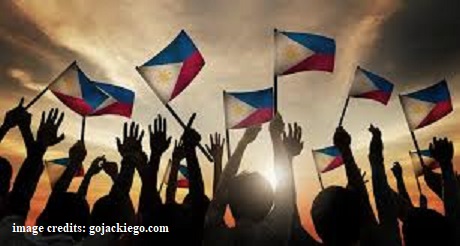
The first three parts of this series of articles identified our serious faults as Filipinos – we sell our votes, we use questionable standards when choosing leaders, we treat elections as if they are popularity contests allowing immensely popular but inexperienced and incompetent celebrities to win, and we either keep restoring from the “recycle bin” the same traditional politicians or replace them with a family member.
Our inability to choose the right leaders is clearly one of the factors preventing us from reaching our full socio-political and economic potential as a nation.
We know that the government plays the most essential role in leading all efforts to make this country progressive. We need the best leaders if we really want to become a “developed nation.” It is our responsibility as citizens to select the best ones to hold the reins of government. Unfortunately, we keep failing to do so.
The funny thing is that after we put them into power – the politicians who won because they have the money to buy votes, celebrities-turned-politicians who are inexperienced and incompetent, and “recycled politicians” and the members of their political dynasties – we expect them to perform well. After every election, we expect a better-performing government.
And why would we expect a different government – a more effective one – when we know that we keep electing the same politicians or use the same old rotten standards when choosing new leaders?
Let us revisit Albert Einstein’s definition of insanity – “Doing the same thing over and over again and expecting a different result.”
But assuming that one day we restore our sanity and finally we refuse to sell our votes – finally we learn to elect into office the most deserving and most qualified among candidates – would the wheels of national development start rolling?
Not quite yet!
There’s one more problem, a problem more serious than our failure to vote wisely and conscientiously. The more serious problem of Filipinos, as mentioned in the first part of this series, is the mindset that that the leaders we elect are solely responsible in solving all of our society’s ills and nation’s problems.
We view our relationship with the state at the vantage point of “self-entitlement.” We think that it is the duty of our leaders to give us “this and that.” We say that the government should do “this and that” for us. See, we expect too much from leaders whom we don’t even choose using the best and most appropriate standards.
Is it the duty of the government to provide each citizen with food, cloths, and shelter?
Of course not!
What the government does, generally speaking, is to formulate, implement, and enforce the laws of the land, to build infrastructure, to ensure peace and order, and to create economic and other opportunities that would help its citizens enjoy the conveniences of life and have the best chance to get good education and find or create means of livelihood.
It is also not the duty of the government to provide everybody a job?
One of the functions of the government is to create an environment that would promote economic growth. They have to make sure that businessmen would be encouraged to invest and initiate businesses activities thus creating job opportunities. But jobs are not given in a silver platter. We have to search for job openings and apply and make sure that we have the required qualifications for the jobs we want. Getting ourselves ready for employment is a personal responsibility. The government will not deliver to our doorsteps the jobs that we want.
The government itself is also an employer but it cannot possibly provide each citizen with a job. It is also impossible for the private sector to employ everybody. That’s just the reality. Harsh it may be. Those who won’t get employed, or do not want to work for others because they have better plans for themselves, could perhaps succeed as entrepreneurs.
Not everybody would get a college degree. Not everybody are trained and destined to be in a workplace – either in the corporate world or in the academe. Some of us will be factory workers, sales clerks, farmers, fishermen, plumbers, drivers, gardeners, or what-have-you. It doesn’t matter whatever jobs we have for as long as they are decent and they allow us to earn a living honestly.
Don’t reason out that you came from a poor family and your parents could not send you to school to get a good education and have a better chance for a better life.
This is just how many of us Filipinos are. When we don’t succeed in life, when things don’t turn the way we expect them to, when we are not doing well in the different areas of our personal lives, we are always ready to check our “blame list” to find somebody or something to put the blame on. And our favorite whipping boy – the government. When we are done accusing our leaders for not doing their job well causing us to become losers, we next vent our ire on our parents saying that they did not work hard enough to ensure that we live a good life when we become adults.
We need to throw away that “blame list” for whether we like it or not we are personally responsible and accountable for our success and failure. There comes a time in our lives when we should become be self-sufficient, a time when we, not the government nor our parents, decide for ourselves and take full control of our destiny.
We Filipinos need to realize that unless we recognize our faults and change there’s no way our country becomes progressive and “developed.” We will never gain the respect of the community of nations if we remain the way that we are now.
Something was said by John F. Kennedy that we should reflect upon – “Ask not what your country can do for you – ask what you can do for your country.”
We Filipinos need to realize that there are two requirements for a country to become progressive and developed – good government and cooperative citizenry. Remove one and a country is doomed. The citizens and their leaders need to work harmoniously towards achieving national goals. There’s no other way. Both of them need to work hard. They have to work hand in hand.
What Do Filipinos Need To Realize (3)
(Third in a Series)
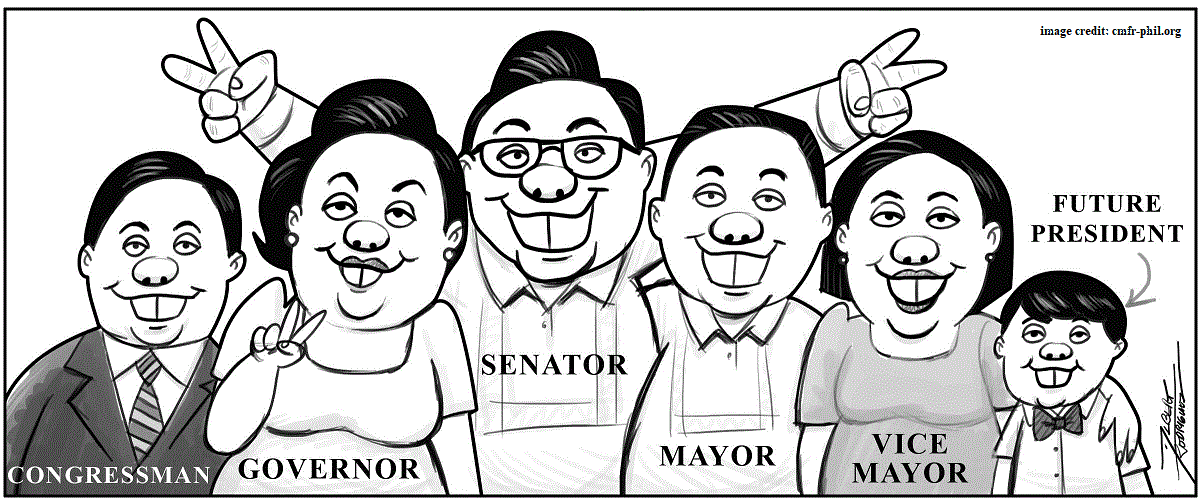
We’re complaining about political dynasties, right? But haven’t we Filipinos realized that we are so guilty of creating the political dynasties in the Philippines? Yes, we have to admit it. We allowed the same politicians and their family members to lord it over in the Philippine political landscape.
When a politician, let’s say a mayor, could no longer run for re-election due to term limits, what would the honorable gentleman do? Turn his back on politics? Of course not! Power is so addicting. So many of those who experienced to be at the helm of either local or national politics (and enjoyed the benefits, including those “passed under the table”) would not just quit politics nor pass the torch to another person.
So, what would happen?
His wife would run for the position he previously held. Then that politician would run for another post – as governor perhaps. Most of the time, Filipino voters would allow them to win and usually they would be able to mesmerize (or buy) the voters to luckily get re-elected until they reach their term limits. Would it be the end? Would their thirst for power (and the so-called “benefits”) be finally satiated?
HELL NO!
The couple would ask their son or daughter (or a grandson – or a granddaughter – or an in-law) to run for the positions they would vacate. The shocking thing (and you might not believe it), there are times that siblings, or even husbands and wives, would not give way to the other and so member of the same family would slug it out in the political arena. Anyway, this is not about family members squabbling in the political arena – this is about the political dynasty their families created.
Let’s continue then.
Let’s go back to the mother who just reached her term limit as mayor. Would she go back to being a full-time mother and wife? You were born only yesterday if you don’t know the answer to that question. Yes – she would run for the post vacated by the husband-politician. The husband would then aim for a higher position – run either as congressman or even senator. In case all family members win then for years that the power will change hands within the same family. The son (or daughter) is a mayor, the mother a governor and the father either as congressman or senator. When term limits are reached then they will just run for the position that a family member would vacate. Some siblings, and even in-laws, in the family are also occupying minor positions in the geographical units where they reside.
Did that family created their political dynasty? No! We ourselves did it. We Filipinos created the political dynasties in the Philippines.
And how did (have) these members of a few beholden families whom we allowed (are allowing) to exclusively hold the reins of our government – local to national – perform (been performing)?
You are either blind or dumb if you don’t know the answer to that question.
How many of the available positions in the Philippine government, local and national, are held by the same families who have been the gods and goddesses of Philippine politics since time immemorial? Most of them are offspring of the peninsulares who survived “America’s power grab” at the turn of the 20th century. They decided to stay in the country and reaped the dividends for doing so. And it’s not only the politics that they dominate. With the enormous fortune they inherited from their Spanish parents/grandparents (which the Americans allowed them to keep), they also control the country’s economy. That’s why Filipinos would sometimes jokingly ask – “Did the Spanish rule really end?”
Only a few pure-blooded Filipinos and foreign expatriates of Chinese origin who became wealthy when the Americans took their turn to colonize the Philippine had the financial resources to challenge the Spanish mestizos for political supremacy in the Philippines, especially after the American granted the Filipinos their independence after the World War II. Some of them succeeded and when they experienced how intoxicating power is, they (and their offsprings) kept running and we kept electing them as if nobody else were qualified.
It is no longer surprising to know that politicians occupying national positions have one, or two family members and in-laws occupying seats in the local government.
Filipinos might ask – “When would having the same people from the same families passing the reins of leadership to each other in both the national and local governments after elections end?”
That’s up to the Filipino voters.
So, we should not wonder why we as a nation could barely move the needle on socio-political stability and economic progress.
Socio-political stability and economic progress are the most important metrics that we ought to use when evaluating the performance of these leaders who are members of the few families whom we allowed to lord it over in Philipppine politics. We keep electing them then keep our fingers crossed that they will deliver.
According to Albert Einstein, “insanity” is doing the same thing over and over again and expecting a different result.
Why in the world we expect a better-performing government when we keep electing the same politicians from the same families? Are we insane?
What Do Filipinos Need to Realize (2)
(Second in a Series)
We also need to exercise our right to vote seriously. Refusing to sell our votes is only the first step. It’s about time that we should also set certain standards that candidates should measure up to before we write their names in the ballot – standards that are over and beyond the qualifications set by our Constitution for candidates seeking a particular public office.
It’s time for us to realize also that some personalities are venturing into politics not because they want to serve the people but because they think that they are so popular and such popularity could easily catapult them into a public office. Fame, like power, is also addicting.
An interesting question to answer is, “How many showbiz and sports personalities holding public office now were elected not because they are both qualified and capable to lead but because they are popular?”
There are other questions that we need to answer as honestly as we should – “What did those actors, actresses, singers, TV personalities, basketball players, boxers, and other celebrities who used their popularity to win contribute to the improvement of the quality of life in the localities where they were elected?” Those among them who were lucky to become President, Vice President, Senators or Congressmen (or were given cabinet posts), did they contribute anything to national development?” “What good if any did their ‘star power’ bring to politics and governance in the Philippines?”
If all those seasoned and veteran politicians who have master’s and doctorate degrees in law, economics, political science, public administration, and business administration and have been in public service all their life could hardly move the needle forward on socio-economic development, what do we expect from showbiz, media, and sports personalities who suddenly turned into politicians only because they are immensely popular and that they know that Filipino voters could easily be deceived. Do they honestly think that the skills and knowledge needed to run a public office can be acquired by taking crash courses in leadership and management?
Sadly speaking, this is how politicians and celebrities-turned-politicians think of Filipino voters – they can not only be bought and but they are also unintelligent. Most of those running for public office consider the Filipino voters cheap and ignorant – cheap because they are willing to sell their votes for a small amount of cash and ignorant because they don’t know how to choose the right candidate for a position.
Choosing the most qualified and capable among sets of candidates is not a rocket science. We can evaluate their qualifications corresponding to the position they are seeking. We can check their track record. We can hear them talk during the campaign period both in person and through any form of media. We can determine who among them are eloquent and could articulate their platform of government and who are dumb and merely banking on their popularity so they could get the support of unsuspecting voters or they have truckloads of money to buy votes. If we find those celebrities truly qualified, capable, and sincere in their desire to serve this country and they are the best among the candidates vying for an elective position, then we should vote for them.
We have to separate the wheat from the chaff. We need to exercise due diligence in distinguishing the qualified and capable candidates from a pretenders. Electing leaders unto whom we give the mandate to lead – unto whom we pin our hopes for a better nation – is not a game. Elections are not popularity contests.
Governance is a serious business and should be done on a full-time basis. One cannot be a public servant on a part-time basis who would attend to her/his duties and obligations only when there are no shooting sessions for movies and TV shows or there are no practices or games to play as athletes in any sport.
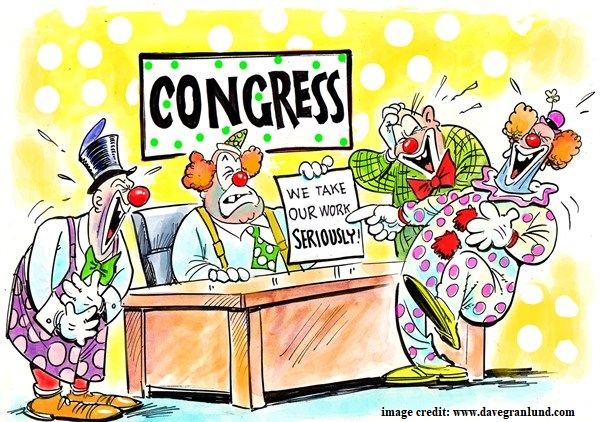
We should never entrust a public office to clowns.
What Do Filipinos Need to Realize (1)
(1st of 4 parts)
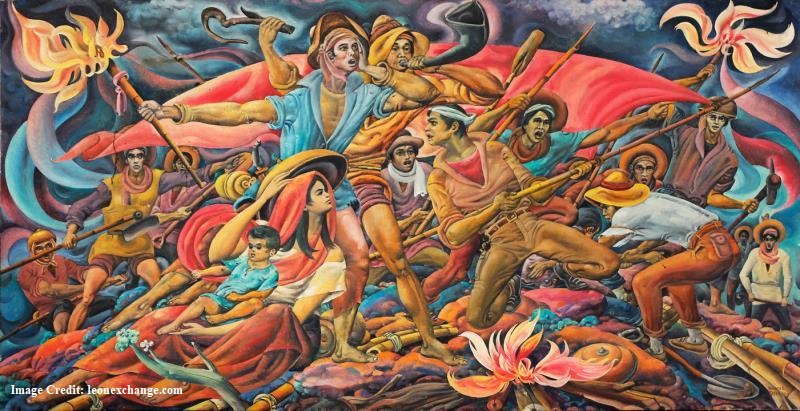
If we, Filipinos, think that our leaders by themselves could deliver us to the proverbial “promised land”, then we are gravely mistaken. If we think that among them is a messiah who could bring about the socio-political and economic reforms needed to make our country progressive and peaceful, then we are hallucinating.
It is not because nobody among them is qualified and capable to lead the Philippine to greatness. It’s just that nation-building doesn’t work the way we think it does – that it can be done single-handedly by whoever we elect as President.
That actually is one (probably the worst) of our major problems as people – the mindset that the leaders we elect have magic wands they can wave to solve all of society’s ills and all of our nation’s problems. This is the prevailing belief among Filipinos. We pin our hopes for a brighter future on our leaders. We expect them – the governors of our provinces, the mayors of our towns and cities, and the captains of our barangays to solve all of our problems. We expect them to weave their magic and cast their spell then when the smoke dissipates we suddenly live a better life. We, think of our congressmen and senators as witches and wizards who through their out-of-this-world powers could make our country a better place to live in. We think that our President is Ironman and the members of the cabinet as the rest of the Avengers who could slay all of our nation’s Thanoses. Well – they are not.
It’s time to wake-up. We need to realize that those elected (and appointed) politicians and leaders manning the executive, legislative, and judicial branches of our government are not superheroes. They don’t have superpowers. They cannot solve all of the nation’s problems by themselves. They need our support as citizens. Each citizen – rich or poor, professional or not – has a role to play. Each of us should contribute to nation-building.
What can ordinary citizens do to help make the Philippines a better nation?
Let us begin by not selling our votes during elections.
We expect too much from our government yet we are not voting for the best and most qualified among those seeking public office during elections. Instead, most of us write in the ballot the names of the candidates who are willing to buy our votes.
Vote-buying is an open secret in our country. It is freaking rampant. It has seemingly become the norm. It’s making the electoral process lost its essence. Leaders are elected not on the strength of their qualifications, abilities, and platform of government but on the power of the money they are capable of paying each voter who would promise to cast their votes for them.
On the eve of an election day, bidding wars begin. Once candidates get the information that their political rivals offer a certain amount for each voter, they will likely double that. Starting price is usually P500. Then candidates will try to maneuver until the price becomes P1000 per vote. The desperate among the politicians would sometimes coughed up P2000 (or even more) for each voter.
Would elected officials admit that they are guilty of vote-buying?Of course not. So, we could only wonder how many percent of our elected officials literally bought the positions they are currently occupying.
Stopping this culture of vote-buying and selling is difficult but it has to be done. One thing that we need to realize is that the leaders we put into office should have the moral ascendancy to lead. It is difficult, if not impossible, to look up to leaders whom we know cheated their way to their offices. They are not credible as leaders. We could not apply the principle of “public office is a public trust” when we know that the persons occupying public offices “bought” their mandate. These scheming politicians feel that the office they are occupying is their “private property” because they paid for it. They can do therefore as they please and their constituents cannot and (shouldn’t) complain because they have been paid.
Those who thought that they duped the politicians by taking the money they offered to them are wrong. They were so happy with that P500 (or P1000… make it P2000) which they received. Such amount is nothing as compared to the millions of pesos they will get when the politicians dip their dirty hands into the coffers of government. The money those politicians use to buy votes are considered an investment. Once they get elected, they would make sure that they will get the return of their investment… with the corresponding interest.
Then we complain about how our government is performing. What kind of performance would we expect from politicians to whom we awarded the mandate to lead not because they are qualified and capable but because they have the money to buy votes?
As Thomas Jefferson puts it, “The government you elect is the government you deserve.”
This is what every Filipino need to realize. Suffrage is not just a right but a moral obligation as well. It’s not for sale. Don’t reason out that you’re selling your votes because someone’s buying. “It takes two to tango.” Both vote-buyers and vote-sellers are guilty of this wrongdoing.
Don’t expect the politicians to stop buying votes. They would never do that. Politicians will do everything to ensure they would get elected and have the power they crave so much to have. It is not public service they are thinking of when they ran for elective positions. Power, as they say, is addicting. They want it so badly and on top of that, they salivate so much for the accruing benefits and the opportunities that they would get once they are in position. And only those who were born yesterday don’t know what benefits and opportunities are those.
No Love Lost Between the Catholic Church and Duterte
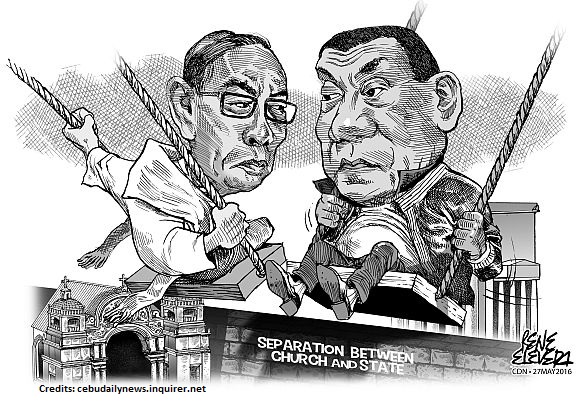
During the campaign period for the May-2016 presidential derby, a few (or is it many or all?) Catholic bishops and priests openly expressed their disapproval of then candidate Rodrigo Duterte. Reportedly, priests used their homilies to dissuade the Catholic faithful from voting for the mayor of Davao City.
But they failed.
Whether the bishops and the priests like it or not, Duterte is the Philippine president for the next 6 years.
Before the May, 2016 elections, Duterte could be remembered saying, “I said let this election be a sort of a referendum, a sort of a plebiscite for the church and me.” And the Filipino people have spoken.
The Catholic Church, by taking sides and for singling out Duterte, initiated the animosity between them and the soon-to-be head of the Philippine government. It can be said that the clergy fired the first shots and they are supposedly wise enough to know that the outspoken Duterte, win or lose, will retaliate. They unwittingly stirred up a hornet’s nest.
For all the verbal salvos fired against him by the bishops and the priests the strongest response by Duterte was “the Catholic Church is the most hypocritical institution.” He has gone as far as accusing the bishops of not keeping their vow of celibacy. The incoming Philippine president also added that the clergymen sought favors such as cars from politicians.
Duterte threatened to expose what he termed as the sins of the past committed by the Church including priests whom he alleged to have had affairs with women. He even claimed that he was sexually abused by a priest when he was a child.
He urged the Catholic Church to just observe the “separation of the Church and the State” and not meddle with the affairs of the government.
After Duterte’s rants and shocking insults, the biggest church organization in the Philippines started singing a different tune.
Before the May 9 elections, one of the most outspoken among the bishops who attacked Duterte’s candidacy was Archbishop Socrates Villegas. The bishop has a reputation of saying what he needs to say but his response to Duterte’s tirades against the Church could be construed as generally reconciliatory. He said, “Mine is the language of peace that refuses the dark magic of revenge. Mine is the silence of respect for those who consider us their enemies but whose good we truly pray for and whose happiness we want to see unfold.”
But while the Archbishop spoke of the nobility in silence, a Catholic priest (whose name I don’t wish to divulge but he knows I’m referring to him should he get to read this article) continued his attack against president-elect Rodrigo Duterte. The exact words he wrote (as a comment to an article about the incoming Philippine President which he posted on his Facebook) goes, “6 years tau [sic] magtitiis.”
Translation: “We’ll suffer for six years.”
Duterte is yet to serve a day in office but the priest is seemingly certain that the Philippines will suffer during his term.
Can he see the future? Definitely not but one thing for sure the priest knows Philippine history. He knows pretty well that for 333 years, not just 6 years, the Filipinos suffered tremendously in the hands of Spanish conquistadores, aided by the Catholic Church. The priest, I’m sure, have read Dr. Jose Rizal’s “Noli Me Tangere” and knows one of the characters called Padre Damaso.
“Are the Spaniards really gone? Is Padre Damaso just a fiction character? Ask Duterte!
2016 Elections: Postscripts
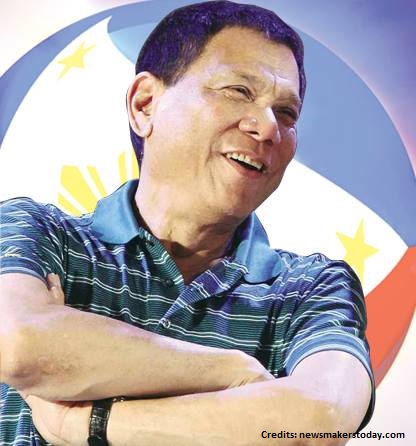
During the campaign period leading to the May 9 presidential derby in the Philippines, Duterte’s opponents were quick to point out that he had no well-defined economic policies in the platform of government he was presenting. His political opponents pounced on this for they perceived the absence of a solid plan for the country’s economy as a weakness of the then candidate for the most powerful seat in the government.
Even the members of the Makati Business Club, an organization of the richest and most influential businessmen in the Philippines, lamented Duterte’s vague economic agenda. They dismissed as lacking in substance, at least in their point of view as businessmen, the speech he delivered when they invited him in to speak in a forum. They expected him to give definitive statements about the conduct of business in the country should he he win (which he did.)
But notwithstanding the absence of clear economic programs (and an assortment of issues hurled against him) the mayor of Davao City garnered almost 16 million of votes to secure a clear mandate from the Filipino electorate. Surprisingly, he has more votes than Aquino, the outgoing president who also tried to dissuade the voters from choosing Duterte by emphasizing that should he win all the economic gains the country had in the past 6 years will be wasted.
In an interview conducted a few hours after the May 9 elections, when the results were unequivocally showing that he would be the 16th President of the Philippine Republic, he unabashedly admitted that economics is not his strong suit. Thus, he intends to hire the best economic minds. To Aquino’s credit, the presumptive president even hinted at continuing the incumbent government’s economic programs.
But why then that the voters did not mind the absence of clear-cut economic policies in Duterte’s to-do lists as a candidate then. The answer is simple…the problem is not the economy. If it is, the people should have voted for Roxas, the economist.
The truth is the problem of the Philippines is not the economy. The economic woes of the country are just the results of deep-seated social problems and failures of existing systems that cannot be solved by an economist. Such problems can only be uprooted by a strong leader, a leader who cannot be manipulated by scheming politicians and businessmen. The Philippines needs a leader who has a strong political will, a political will that cannot be bent by influential lobbyists. Thus, the Filipino voters cast their lot on Duterte.
The programs Duterte are putting in his presidential pipeline are not economic policies per se but they have profound economic implications. For many times that he mentioned in his campaign sorties that it is the job of the government to create an environment that is not only conducive to economic development but where the citizens and foreigners also feel safe and secured.
By eradicating corruption and red tape in all the branches of government he will be creating an atmosphere favorable for the conduct of business and would eventually make the country a haven for both domestic and foreign investments. Specifically, he wants to shorten the processing of papers when transacting business with any agency of the government.
By obliterating criminality and drugs, he will make the citizens focus on improving the quality of their life without fear of getting victimized by petty criminals. Parents can rest assured that their children will not become a victim of drugs.
By increasing the salaries of policemen and soldiers he will strengthen law enforcement which is sorely needed in the maintenance of peace and order. He will boost the morale of policemen and soldiers and make them feel more dignified.
By increasing the salaries of teachers he will make them more effective in the delivery of education which, undoubtedly, is a key component in national development.
By promoting Federalism, he will bring a final solution to the country’s century-old Muslim separatist problem. There will finally be equitable allocation of government resources where people in their respective regions will finally have a chance for self-determination.
It is hard to dispute that all these acts will bring tremendous economic benefits, indirect it may be.
He clearly pointed out that the days of unscrupulous elements in society are numbered, that people should avoid committing acts inimical to the interest of the Filipino, that people can do anything that makes the Filipino comfortable, and that nobody will be allowed to do things that will make his countrymen uncomfortable.
In the interview on May 9th, he proclaimed that he has nothing in mind but the interest of the Filipino people, and nothing follows.
 M.A.D. LIGAYA



 M.A.D. L I G A Y A