Blog Archives
Pro-politico or Pro-Filipino?

A Personal Stand
While I was enjoying the Chuseok celebrations here in South Korea, I received two calls on two separate days asking if I could join the “meet-and-greet a politico” at the end of this month at the Philippine Embassy here. I politely declined.
Before extending the invitation, I was first asked about my political sentiments. I candidly said I don’t like to meet any politicos nowadays – not Marcos, nor Duterte, nor any of those pretending to be public servants “pero mandarambong pala.” They are all responsible for the sufferings of the Filipino people. Only those who were born yesterday, blind, and naïve would not acknowledge this. They are ALL guilty and should be held accountable. I’m giving the benefit of the doubt to the neophytes in Congress (who did not serve in the 19th Congress) and new members of the Cabinet.
I told those people who invited me that I have decided not to support any political personality. Amidst all the political turmoil and government dysfunction, I would like to take not a “pro-politico, ” but a “pro-Filipino” stance. Attending that gathering is tantamount to turning a blind eye to their wrongdoings.
Actually, I coined an expression that is very appropriate for those guilty of plunder and malversation of public funds… “BUWAYANG INA N’YO.” I am afraid I might blurt this out when I see a politico nowadays. Just imagine if I were to hurl this invective in the face of one in that gathering.
Half-jokingly, I said I hope my passport will not be revoked because of my political beliefs.
The Semantics of Corruption
I offer no apologies for using the word ‘politico’ (instead of ‘politician’) in the title. The word is considered derogatory, yet it is the most appropriate way to describe most elected (and appointed) members of the legislative and executive branches of our government.
An online dictionary says, “You can describe a politician as a politico, especially if you do not like them or approve of what they do.” Let me ask you, “Do you approve of what those people in the government do?” Another online dictionary defines ‘politico’ this way: “someone who will do anything to win an election.” The worst example of “will do anything” is “vote buying.” Are the politicos you are supporting not guilty of this? Chat GPT puts its best: “Politico suggests a type of politician – often one driven by ambition, opportunism, or self-interest.”
How I hate “Grammarly” for insisting that I use “politician” instead of “politico.” The algorithm must not know that “politician” is too kind a word for our breed of thieves in barongs.
It fails to grasp that “politico” carries the stench of corruption that “politician” politely hides.
And please, let’s stop addressing them as honorable. They don’t deserve it. They are very much the opposite of that word. “Puwede bang ituring na kagalang-galang ang mga dorobo?”
So, I ask you: Are you pro-politico or pro-Filipino?
The Nation Plundered
The politicos are slowly destroying our nation. They will continue to do so unless we take action. Through the years, they have systematically plundered the nation’s coffers. What were once mere allegations are now supported by emerging evidence, showing that members of both the legislative and executive branches have been dividing the national budget among themselves like a cake. Each takes a slice, along with the icing, leaving only crumbs for the Filipino people.
The greater tragedy is that the Filipino electorate continues to vote for the same politicos. Voters in the Philippines often elect members of the same political clans, as if nobody else is capable of leading the country but those from their own clan.
And what have we gained from voting for them? Did our nation prosper under their leadership? Did voting for them put food on your tables or roofs over your heads?
The Filipino people themselves put the reins of government in the hands of a small group of individuals —the political clans in the Philippines. They are the politicos controlling our nation, its organizations, and institutions.
You may disagree with it, but the Philippines is actually not a democracy, but an oligarchy. The government is run, either directly or indirectly, by the country’s oligarchs, who are also politicos.
The Silence of Institutions
And do you think these oligarch-politicos will ever be convicted of plunder and malversation of public funds? Well, hope springs eternal. But the way I see it, “mga dilis lang at bangus ang huhulihin; iyong mga pating at balyena ay pakakawalan.”
Where was the Supreme Court amidst all the brouhahas? Gentlemen and ladies in robes, “Hindi po kayo safe.” I am not a lawyer (and please correct me if I am wrong), but the judicial branch of the government has constitutional authority to review actions of the legislative and executive branches, including the passage and implementation of the national budget, if these acts violate the Constitution.
The Supreme Court had a chance to stop the bleeding — to halt the implementation of a budget marred by secrecy and excess. How? By issuing a temporary restraining order (TRO). They did not (am I right?). Instead, it looked away.
Judicial silence, in times of moral crisis, is complicity dressed in robes.
Was that judicial restraint, political caution, or internal division? Whatever the case, the result was the same: the budget proceeded while constitutional questions lingered unanswered.
The Fourth Estate, Bought and Sold
“Paano na? Kanino tayo tatakbo ngayon?” The nation is plundered by the members of the executive and legislative branches of government, and the judiciary is doing nothing. Can we run to the Fourth Estate, the fourth pillar of our democracy – the press or mass media? Unfortunately, NO! Search for the meaning of “envelope journalism” and you’ll know why I said so.
The media moguls, who are often oligarchs themselves, are businessmen. The media is intended to safeguard the truth and hold power accountable. But when it sells its soul to the highest bidder, it ceases to be the people’s voice and becomes the regime’s echo.
That’s how grave our situation has become in the Philippines. The legislative and executive branches plunder the nation’s wealth with impunity, while the judiciary looks away, pretending blindness in the face of daylight robbery. The fourth estate, once the voice of truth, now speaks in the language of those who can afford to pay for silence. In a nation where justice sleeps and journalism is bought, who then speaks for the Filipino?
The People’s Guilt
Can the Filipinos rely on themselves?
The answer is very disheartening. Filipinos throw mud at the very politicos they helped elect. They fail to see that they, too, have benefited from the money stolen from the nation’s coffers through the cash handed to them during election season. By accepting that money, they become accomplices. Their hands are as dirty as the politicos they condemn.
Were you born yesterday? Are you blind? Are you naive?
Those born yesterday are the ones who do not understand the concept of “command responsibility.” Those who are blind cannot see that the politicos have been siphoning money from the national coffers to their personal bank accounts. Those who are naive pretend not to know that even the politicos they support are guilty of plunder and malversation of public funds.
It’s time to remove the blindfold—and see our nation for what it has become, and how much the politicos have destroyed it.
As a nation, we have a decision to make. “Patuloy ba tayong magpapagamit at magpapauto sa mga tulisang pulitiko?
The Call to Conscience
We, the Filipino people, are the salvation of our nation. If these “buwayang inang” politicos will not heed the call for them all to resign, at the very least, let’s not vote for them in the next election. Let’s remove the oligarchs from the political landscape. Let them enrich themselves through their legitimate businesses, not through our national budget.
Perhaps it is time we stopped pledging allegiance to politicos and started standing for the people, for the Filipinos, for the Philippines. For once in your life, abandon the political personalities you are supporting until you have proven beyond a reasonable doubt that they are not guilty of plunder and malversation of public funds.
To be pro-Filipino is to reject the culture of impunity that thrives in envelopes, offices, and chambers of power. It is believed that love for country begins not in applause for politicos, but in outrage against their deceit.
For the soul of our nation, silence is no longer an option.
What Do Filipinos Need to Realize (4)
(Last in a Series)
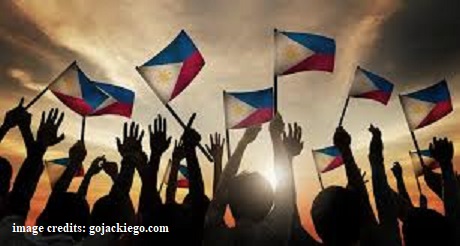
The first three parts of this series of articles identified our serious faults as Filipinos – we sell our votes, we use questionable standards when choosing leaders, we treat elections as if they are popularity contests allowing immensely popular but inexperienced and incompetent celebrities to win, and we either keep restoring from the “recycle bin” the same traditional politicians or replace them with a family member.
Our inability to choose the right leaders is clearly one of the factors preventing us from reaching our full socio-political and economic potential as a nation.
We know that the government plays the most essential role in leading all efforts to make this country progressive. We need the best leaders if we really want to become a “developed nation.” It is our responsibility as citizens to select the best ones to hold the reins of government. Unfortunately, we keep failing to do so.
The funny thing is that after we put them into power – the politicians who won because they have the money to buy votes, celebrities-turned-politicians who are inexperienced and incompetent, and “recycled politicians” and the members of their political dynasties – we expect them to perform well. After every election, we expect a better-performing government.
And why would we expect a different government – a more effective one – when we know that we keep electing the same politicians or use the same old rotten standards when choosing new leaders?
Let us revisit Albert Einstein’s definition of insanity – “Doing the same thing over and over again and expecting a different result.”
But assuming that one day we restore our sanity and finally we refuse to sell our votes – finally we learn to elect into office the most deserving and most qualified among candidates – would the wheels of national development start rolling?
Not quite yet!
There’s one more problem, a problem more serious than our failure to vote wisely and conscientiously. The more serious problem of Filipinos, as mentioned in the first part of this series, is the mindset that that the leaders we elect are solely responsible in solving all of our society’s ills and nation’s problems.
We view our relationship with the state at the vantage point of “self-entitlement.” We think that it is the duty of our leaders to give us “this and that.” We say that the government should do “this and that” for us. See, we expect too much from leaders whom we don’t even choose using the best and most appropriate standards.
Is it the duty of the government to provide each citizen with food, cloths, and shelter?
Of course not!
What the government does, generally speaking, is to formulate, implement, and enforce the laws of the land, to build infrastructure, to ensure peace and order, and to create economic and other opportunities that would help its citizens enjoy the conveniences of life and have the best chance to get good education and find or create means of livelihood.
It is also not the duty of the government to provide everybody a job?
One of the functions of the government is to create an environment that would promote economic growth. They have to make sure that businessmen would be encouraged to invest and initiate businesses activities thus creating job opportunities. But jobs are not given in a silver platter. We have to search for job openings and apply and make sure that we have the required qualifications for the jobs we want. Getting ourselves ready for employment is a personal responsibility. The government will not deliver to our doorsteps the jobs that we want.
The government itself is also an employer but it cannot possibly provide each citizen with a job. It is also impossible for the private sector to employ everybody. That’s just the reality. Harsh it may be. Those who won’t get employed, or do not want to work for others because they have better plans for themselves, could perhaps succeed as entrepreneurs.
Not everybody would get a college degree. Not everybody are trained and destined to be in a workplace – either in the corporate world or in the academe. Some of us will be factory workers, sales clerks, farmers, fishermen, plumbers, drivers, gardeners, or what-have-you. It doesn’t matter whatever jobs we have for as long as they are decent and they allow us to earn a living honestly.
Don’t reason out that you came from a poor family and your parents could not send you to school to get a good education and have a better chance for a better life.
This is just how many of us Filipinos are. When we don’t succeed in life, when things don’t turn the way we expect them to, when we are not doing well in the different areas of our personal lives, we are always ready to check our “blame list” to find somebody or something to put the blame on. And our favorite whipping boy – the government. When we are done accusing our leaders for not doing their job well causing us to become losers, we next vent our ire on our parents saying that they did not work hard enough to ensure that we live a good life when we become adults.
We need to throw away that “blame list” for whether we like it or not we are personally responsible and accountable for our success and failure. There comes a time in our lives when we should become be self-sufficient, a time when we, not the government nor our parents, decide for ourselves and take full control of our destiny.
We Filipinos need to realize that unless we recognize our faults and change there’s no way our country becomes progressive and “developed.” We will never gain the respect of the community of nations if we remain the way that we are now.
Something was said by John F. Kennedy that we should reflect upon – “Ask not what your country can do for you – ask what you can do for your country.”
We Filipinos need to realize that there are two requirements for a country to become progressive and developed – good government and cooperative citizenry. Remove one and a country is doomed. The citizens and their leaders need to work harmoniously towards achieving national goals. There’s no other way. Both of them need to work hard. They have to work hand in hand.
What Do Filipinos Need To Realize (3)
(Third in a Series)
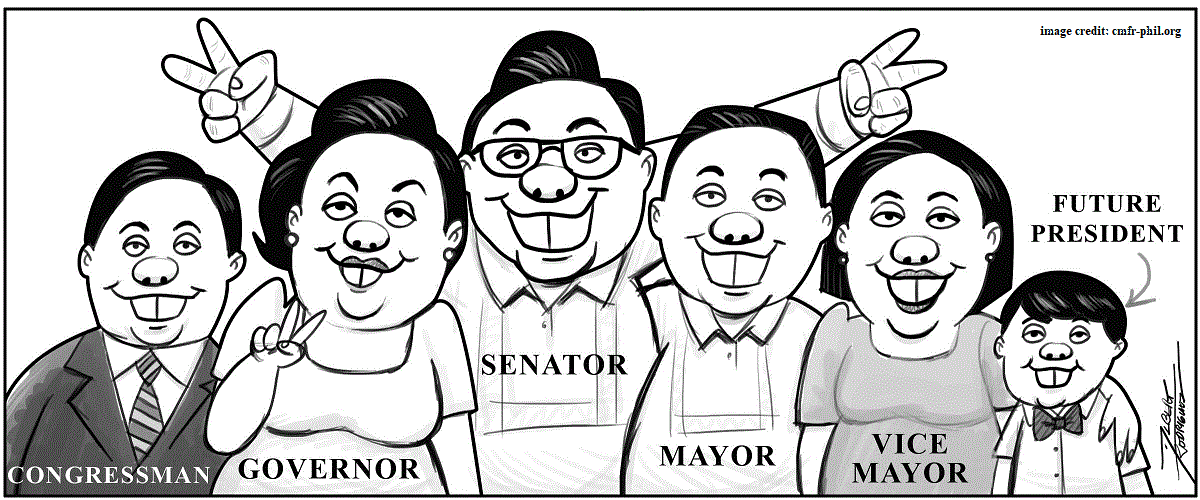
We’re complaining about political dynasties, right? But haven’t we Filipinos realized that we are so guilty of creating the political dynasties in the Philippines? Yes, we have to admit it. We allowed the same politicians and their family members to lord it over in the Philippine political landscape.
When a politician, let’s say a mayor, could no longer run for re-election due to term limits, what would the honorable gentleman do? Turn his back on politics? Of course not! Power is so addicting. So many of those who experienced to be at the helm of either local or national politics (and enjoyed the benefits, including those “passed under the table”) would not just quit politics nor pass the torch to another person.
So, what would happen?
His wife would run for the position he previously held. Then that politician would run for another post – as governor perhaps. Most of the time, Filipino voters would allow them to win and usually they would be able to mesmerize (or buy) the voters to luckily get re-elected until they reach their term limits. Would it be the end? Would their thirst for power (and the so-called “benefits”) be finally satiated?
HELL NO!
The couple would ask their son or daughter (or a grandson – or a granddaughter – or an in-law) to run for the positions they would vacate. The shocking thing (and you might not believe it), there are times that siblings, or even husbands and wives, would not give way to the other and so member of the same family would slug it out in the political arena. Anyway, this is not about family members squabbling in the political arena – this is about the political dynasty their families created.
Let’s continue then.
Let’s go back to the mother who just reached her term limit as mayor. Would she go back to being a full-time mother and wife? You were born only yesterday if you don’t know the answer to that question. Yes – she would run for the post vacated by the husband-politician. The husband would then aim for a higher position – run either as congressman or even senator. In case all family members win then for years that the power will change hands within the same family. The son (or daughter) is a mayor, the mother a governor and the father either as congressman or senator. When term limits are reached then they will just run for the position that a family member would vacate. Some siblings, and even in-laws, in the family are also occupying minor positions in the geographical units where they reside.
Did that family created their political dynasty? No! We ourselves did it. We Filipinos created the political dynasties in the Philippines.
And how did (have) these members of a few beholden families whom we allowed (are allowing) to exclusively hold the reins of our government – local to national – perform (been performing)?
You are either blind or dumb if you don’t know the answer to that question.
How many of the available positions in the Philippine government, local and national, are held by the same families who have been the gods and goddesses of Philippine politics since time immemorial? Most of them are offspring of the peninsulares who survived “America’s power grab” at the turn of the 20th century. They decided to stay in the country and reaped the dividends for doing so. And it’s not only the politics that they dominate. With the enormous fortune they inherited from their Spanish parents/grandparents (which the Americans allowed them to keep), they also control the country’s economy. That’s why Filipinos would sometimes jokingly ask – “Did the Spanish rule really end?”
Only a few pure-blooded Filipinos and foreign expatriates of Chinese origin who became wealthy when the Americans took their turn to colonize the Philippine had the financial resources to challenge the Spanish mestizos for political supremacy in the Philippines, especially after the American granted the Filipinos their independence after the World War II. Some of them succeeded and when they experienced how intoxicating power is, they (and their offsprings) kept running and we kept electing them as if nobody else were qualified.
It is no longer surprising to know that politicians occupying national positions have one, or two family members and in-laws occupying seats in the local government.
Filipinos might ask – “When would having the same people from the same families passing the reins of leadership to each other in both the national and local governments after elections end?”
That’s up to the Filipino voters.
So, we should not wonder why we as a nation could barely move the needle on socio-political stability and economic progress.
Socio-political stability and economic progress are the most important metrics that we ought to use when evaluating the performance of these leaders who are members of the few families whom we allowed to lord it over in Philipppine politics. We keep electing them then keep our fingers crossed that they will deliver.
According to Albert Einstein, “insanity” is doing the same thing over and over again and expecting a different result.
Why in the world we expect a better-performing government when we keep electing the same politicians from the same families? Are we insane?
What Do Filipinos Need to Realize (2)
(Second in a Series)
We also need to exercise our right to vote seriously. Refusing to sell our votes is only the first step. It’s about time that we should also set certain standards that candidates should measure up to before we write their names in the ballot – standards that are over and beyond the qualifications set by our Constitution for candidates seeking a particular public office.
It’s time for us to realize also that some personalities are venturing into politics not because they want to serve the people but because they think that they are so popular and such popularity could easily catapult them into a public office. Fame, like power, is also addicting.
An interesting question to answer is, “How many showbiz and sports personalities holding public office now were elected not because they are both qualified and capable to lead but because they are popular?”
There are other questions that we need to answer as honestly as we should – “What did those actors, actresses, singers, TV personalities, basketball players, boxers, and other celebrities who used their popularity to win contribute to the improvement of the quality of life in the localities where they were elected?” Those among them who were lucky to become President, Vice President, Senators or Congressmen (or were given cabinet posts), did they contribute anything to national development?” “What good if any did their ‘star power’ bring to politics and governance in the Philippines?”
If all those seasoned and veteran politicians who have master’s and doctorate degrees in law, economics, political science, public administration, and business administration and have been in public service all their life could hardly move the needle forward on socio-economic development, what do we expect from showbiz, media, and sports personalities who suddenly turned into politicians only because they are immensely popular and that they know that Filipino voters could easily be deceived. Do they honestly think that the skills and knowledge needed to run a public office can be acquired by taking crash courses in leadership and management?
Sadly speaking, this is how politicians and celebrities-turned-politicians think of Filipino voters – they can not only be bought and but they are also unintelligent. Most of those running for public office consider the Filipino voters cheap and ignorant – cheap because they are willing to sell their votes for a small amount of cash and ignorant because they don’t know how to choose the right candidate for a position.
Choosing the most qualified and capable among sets of candidates is not a rocket science. We can evaluate their qualifications corresponding to the position they are seeking. We can check their track record. We can hear them talk during the campaign period both in person and through any form of media. We can determine who among them are eloquent and could articulate their platform of government and who are dumb and merely banking on their popularity so they could get the support of unsuspecting voters or they have truckloads of money to buy votes. If we find those celebrities truly qualified, capable, and sincere in their desire to serve this country and they are the best among the candidates vying for an elective position, then we should vote for them.
We have to separate the wheat from the chaff. We need to exercise due diligence in distinguishing the qualified and capable candidates from a pretenders. Electing leaders unto whom we give the mandate to lead – unto whom we pin our hopes for a better nation – is not a game. Elections are not popularity contests.
Governance is a serious business and should be done on a full-time basis. One cannot be a public servant on a part-time basis who would attend to her/his duties and obligations only when there are no shooting sessions for movies and TV shows or there are no practices or games to play as athletes in any sport.
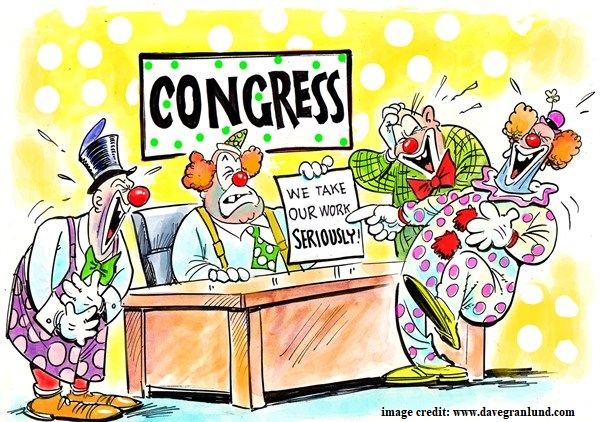
We should never entrust a public office to clowns.
On the Poll That Says “Most Filipinos trust US, not China” – A Case of National Amnesia or Triumph of US Indoctrination?

There is something more to that poll that says “most Filipinos trust US, not China” than meets the eyes. It affirms two things. First, Filipinos suffer from a national amnesia and second, the Americans completely succeeded in indoctrinating the people whom then US President McKinley referred to as “savage warriors” and “little brown brothers.1”
Majority of Filipinos trusting the US is a classic case of amnesia. It seems to support the perception that Filipinos tend to have short memory so much so that they easily forget the lessons of history.
Others would dismiss the idea that Filipinos have short memory. It’s just that the Christian in them would make them easily forgive and forget.
But have Filipinos really forgotten the atrocities committed against them by the Americans during the Philippine-American War (1898-1901)?” Or is it a case of them not knowing what really happened.
The world today, even the Filipinos themselves know little (or nothing) about what has been described by historians as the “first Vietnam”, where US troops first used tactics such as strategic hamleting and scorched-earth policy to “pacify” the natives2.
It’s very convenient for people from other countries to criticize Duterte, the Philippine president, for his stance against the Americans. If only they would bother to scan the pages of Philippine history they would know.
Like the Filipinos, the rest of humanity is suffering from amnesia…selective amnesia that is. It’s difficult to fathom why the world chose to remember only the atrocities committed by the Nazis during the Second World War and forget about the wrongdoings inflicted by the US and the other colonial powers upon the people they colonized.
The world thinks that Duterte’s anti-American sentiment stemmed only from the supposed attempt of the president of the US (Obama) to lecture him in an international gathering about the alleged extra-judicial killings in the Philippines. There was more to it… much more than the irony that the leader of a country who massacred thousands of Filipinos, including children and women, would take the moral high ground to lecture about “killings.”
For the most steadfast of the Duterte critics from other countries and the Filipinos who have forgotten their history here are links you can check…
But despite all of the wrongdoings inflicted upon them by the Americans, why then, according to the poll, Filipinos trust the US more than China?
That’s the result of years of American indoctrination.
Education is a powerful tool of indoctrination. Today’s generation of Filipinos are the offsprings of the children taught by the Thomasites (American teachers named after the ship, the USS Thomas, which brought them to the Philippines) to accept their rule. They did not only teach those young Filipinos the three R’s but also indoctrinated them about the greatness of America, its ways, ideas, values, culture3.
The indoctrination of that generations of Filipinos after the Philippine-American war was a tremendous success. “One look at our society say it all: the preference for American products, the promotion of materialism and hedonism, and a general obsession for all things American. No matter how Filipinos try to deny it, the Americans have succeeded in molding us into their ideal “little brown brothers.4”
The funny thing is Rappler, citing a survey conducted in 2013 by the Pew Research Center, said that “Filipinos like the US even more than Americans5.”
And would it be wrong to presume that none of the history books distributed in Philippine schools during their occupation of the archipelago ever mention about the brutal campaign the Americans waged in the Philippines to pacify the Filipinos?
“Until the lions have historians, tales of the hunt shall always glorify the hunters,” says an African proverb.
President Duterte showing (during the most recent ASEAN meeting held in Laos) photos where US soldiers could be seen posing with dead Filipino Muslims was just a right thing to do. With that act both the Filipinos and the world were reminded of some basic historical truths about the US.
What basic historical truths are those?
The US did not come to liberate Philippines from Spain but to join the competition for empire among the wealthy and powerful countries of the West and to establish a strong presence in the Pacific that would enable them to protect their economic interests.1 They duped Emilio Aguinaldo, the leader of the revolt against Spain, into believing that they didn’t need any colony. 6
The double-crossing of Aguinaldo was completed when the US concluded with Spain the Treaty of Paris without concurring with the Filipino people.6
The US was not at all benevolent to Filipinos. “The atrocities of American troops included: the torture of suspected rebels; refusing to take prisoners; wholesale massacres of entire villages of men, women and children and starvation resulting from relocating large populations.7”
Worst of all, the new colonial masters extinguished the flames of Filipino nationalism.
When the US decided to flex its muscles in the Pacific by colonizing the Philippines, Filipino nationalism which was struggling to develop was nipped in the bud. That dark period in the history of Filipino people was referred to as the “Era of Suppressed Nationalism6. Advocate independence from the US and the Filipinos would get either death penalty or a long prison term (Sedition Law, 1901). A simple display of the Filipino flag (Flag Law, 1907) would also get them into trouble6.
The young Filipinos today should be given an honest-to-goodness account of what really happened during the American occupation, particularly in its early years. They need to be presented with an objective analysis of the REAL reasons the Americans came, how it affected the development of Filipino nationalism and how their presence shaped Philippine politics.
It’s not to teach them to hate the Americans but for them to become aware of their past and decide whether or not US should be trusted.
Historical awareness will give the young Filipinos a better understanding of their identity. It will enable them to develop a proper perspective in appraising the current state of things in the country.
References:
[1] Brewer, Susan (2013, October 22). Selling Empire: American Propaganda and War in the Philippines. The Asia-Pacific Journal, Vol. 11, Issue 40, No. 1, October 7, 2013. [Cited 2016 October 29] Available from: http://www.globalresearch.ca/selling-empire-american-propaganda-and-war-in-the-philippines/5355055
[2] American Occupation of the Philippines . [Cited 2016 October 28] Available from: http://www.colorado.edu/AmStudies/lewis/2010/usoccupy.htm retrieved 10-28
[3] Simbulan, D. The modern principalia, the historical evolution of the Philippine ruling oligarchy, Quezon City: University of the Philippines Press; 2005.
[4] Eight Dark Chapters of Filipino-American History We Rarely Talk About (FilipiKnow) [Cited 2016 October 29] Available from: http://www.filipiknow.net/philippine-american-history/
[5] Filipinos like the U Even More Than Americans Do – PEW Research (Rappler) [Cited 2016 October 2016] Available from http://www.rappler.com/nation/56085-philippines-usa-pew-research.
[6] How colonialism shaped the Filipino character (Blog post) [Cited 2016 October 2016] Available from http://www.globalresearch.ca/selling-empire-american-propaganda-and-war-in-the-philippines/5355055.
[7] Ablett, Phillip. Colonialism In Denial: Us Propaganda In The Philippine-American War [Cited 2016 October 2016] Available from https://www.academia.edu/352646/Colonialism
_In_Denial_Us_Propaganda_In_The_Philippine-American_War?auto=download
 M.A.D. LIGAYA


 M.A.D. L I G A Y A