Author Archives: M.A.D. LIGAYA
The Work Attitude of (Some) Expat Teachers

(A PERSONAL ESSAY)
I started teaching here in South Korea in 2013. For six years now (going 7), I have been working with expat teachers from different parts of the world, mostly from countries where English is the native language. Rarely do South Korean universities hire Asian ESL teachers (like me).
Those years I worked with my fellow expat teachers allowed me to witness their brand of professionalism (or the lack of it). I saw their work, heard them talk, and witnessed how they behaved as persons and professionals. My being given by the university where I am teaching now the privilege to be a head professor for three (3) semesters a few years back also allowed me to have access to information about them. In addition, for the past four years, I have been a member of the university’s hiring committee and have reviewed hundreds of résumés from ESL job applicants. A few of those applicants were first-timers, and the majority were attempting to transfer from other universities here. That enabled me to scrutinize their academic and employment background. I discovered that MANY of those moving from other universities are not teachers by profession, and it was their first time teaching when they were hired as ESL teachers here in South Korea. In the job interviews where I was assigned to be a member of the panel of interviewers, I came to know more about expat teachers.
Sometimes, even without me asking, tactless birds from the grapevine would tweet me a thing or two about my fellow expat teachers. I am also a member of an organization of Filipino professors teaching in different universities here in South Korea, and during our meetings, I would get more information about ESL teachers from different countries in their respective workplaces, which kind of confirmed my overall perception and observation about them.
I have become so awkwardly familiar with my fellow expat teachers’ behavior in the workplace. I can vividly describe their work attitude. And this personal essay is exactly that – an exposé about the work attitude of some expat teachers here in South Korea.
Anyway, these are just my personal observations. I may be wrong. But what if I am right?
Before I proceed, though, let me clarify that MOST of the expat teachers I worked with in the past years (and those who are still with me where I am currently teaching) are very good – personally and professionally. But as you may have noticed, I used MOST, not ALL, because there are a FEW bad apples.
Yes, there are a FEW bad apples. And you know how the saying goes – “One rotten apple spoils the whole barrel.” Because of the bad decisions they make as people and professionals, employers may think that all expat teachers are like them. That’s my worry.
I hope that Koreans wouldn’t think that expat teachers are alike. MANY of us are serious about our work as ESL teachers here, but those FEW who don’t might be creating a negative perception about us.
I witnessed how certain policies were changed in my workplace in response to some of my former colleagues’ bad decisions. Remember that when school administrators implement a new policy or amend an existing one in response to the wrongdoings of one bad apple, the changes will affect all expat teachers and not only the ones who did something wrong.
There are expat teachers everywhere who complain a lot about what they perceive as imperfections of the universities where they belong. Some of them would say, “In my country, this is not how we do things.” Others would make unnecessary comments about this country and its people, as if they themselves, their respective countries, and their countrymen were perfect and blameless. If that is the case, why did they decide to leave their countries and work here? If the universities back in their countries are the best and most ideal, why didn’t they apply for teaching jobs there? Why are they here in South Korea? Did they come here to whine?
This reminds me of what one of my former colleagues from the US said some time ago when he got so frustrated about the complaints of our fellow expat teachers – “Why can’t these people accept the fact that the reason they are here working as ESL teachers is that they couldn’t get a decent job back in their own countries?”
The problem with the expat teachers who have a lot of complaints about the policies in their universities, and granting that their complaints are valid, is that when their employers offer them a contract for the next school year, they would sign their names on the dotted lines. They would return and still teach in the universities they malign so much.
Is that a dignified thing to do?
If these expat teachers think that the system in the universities where they are currently working is rotten, why do they keep coming back? (I personally know some of them.) Is salary the reason? Is it the reality that back in their countries, they will not be able to earn the money they are being paid here? Would they even qualify to teach in their universities (or are they competent enough to be chosen among qualified applicants)? Is it the fear that should they not accept the contract their present university is offering them, they may not be able to convince another university to hire them?
These expat teachers claim that they are complaining because they want to change the system. Really? When will the Don Quixotes stop fighting the windmills? Okay, if they insist, here is my advice – They should request a meeting with their respective university Presidents and present to them their complaints and the reforms they want to implement. Let’s see what happens. If they are really the idealists they seem to be trying to project themselves as, they should do this.
These expat teachers should express their grievances and suggest the reforms they want, not to their colleagues during meetings, but directly to university officials who have the power to implement changes. Or better yet, go to either the Ministry of Education or the Ministry of Labor and file a complaint against whatever they think their university is doing wrong. That is if, aside from barking, they can also bite. That is, if they got balls. If none, they’d better keep quiet and just work. They should not waste their colleagues’ time listening to their whinges and whines.
One thing that I have noticed is that most of the expat teachers I met who are fond of complaining are the teachers who are not “trained to teach” but are “forced to teach.” They are not “real teachers” but “pretenders.” Please click this link if you want to know how I differentiated the “real teachers” from the “pretenders.”
How they conduct themselves as professionals deliver instruction, treat their students, and comply with the job requirements are telltale signs that they have no formal training as teachers. And truth be told – SOME expat teachers here in South Korea were not trained to teach. They have no degrees in education. They were lucky to have been hired. Well, they trained as teachers on the job. Hopefully, they eventually became “real teachers,” no longer “pretenders,” after a year or two. But wait… did they?
What is so frustrating is that the ones complaining a lot are not doing their job how they ought to. They do not comply with all the requirements. And with some of the tasks perennially performed by teachers, they still had to bother their colleagues for assistance. I witnessed how SOME of them swept their incompetence under the rugs of their complaints. They thought that they could hide their inability to perform and deliver by verbally attacking school policies and administrators who were not present to defend themselves or refute what they (the whiners) were saying. There were times that I had to call the attention of a few of my fellow expat teachers for taking the floor too long during meetings to needlessly complain about something. This made me unpopular with them. The exchange between us would usually get heated. I had to do it to prevent meetings from dragging on too long.
How surprised I was when one time, a few of my fellow expat teachers complained about reading long (job-related) emails. Let’s say it would take an extra 5 minutes to read an email longer than usual. What is an extra 5 minutes when compared to the more or less 5 months in a year that we get paid while vacationing and doing almost nothing job-related?
I have some colleagues who voice their discontent about policies but, at the same time, perform their functions as best as they could. Their students never complained about being shortchanged. They know that whatever disagreement they have with policies, it’s between them and the school administrators. The students should never be caught in the crossfire. They help in solving issues that could be remedied. They are professionals, and I admire them. They are not whiners. I listen when they talk. Sometimes, I disagreed with them, and we had healthy discussions.
I could go on and on and say a lot more about the work attitude of SOME expat teachers here is South Korea, but I need to stop at this point.
Let me just give the following parting shots: Expat teachers should perform in such a way that nobody would accuse them of being “mercenary teachers.” And if they think the universities where they are currently working do not measure up to their personal core values and standards of excellence, what should they do? Nobody is forcing them to stay. They must reject a contract extension should it be offered to them. They must leave and find their perfect university.
Magnilay Tayo
 Sa bundok ng Golgotha’y umakyat
Pinasan ang krus hirap na hirap
Ikatlong hapon nang maganap
Pagkakatawang taong nagwakas
Kasalanan ay koronang tinik
Sibat na tumusok sa gilid
Kay Hudas tayo ay ang naghatid
Nang sa Mesiya s’ya ay humalik
Hinayaang si Hudas magtaksil
Di ba’t kusang loob nagpakitil
Utang nati’y sa Kanya siningil
Ang utang nating mga nagtaksil
Di ba’t dugo n’ya’y ipinanlinis
Sa pagkatao nating madungis
Kusang loob buhay ibinuwis
Nang tayo’y makapiling sa langit
Huminto’t magnilay kahit saglit
Lumuhod tayo’t mata’y ipikit
Sa Panginoon tayo’y sumandig
Walang hanggan ang Kanyang pag-ibig
Ang Samyo Ng Hinog Na Bayabas
 Nang trabaho’y natapos, ako’y lumabas
Sa jeep na dumaan pumara’t umangkas
Nang maupo, sa barandilya’y humawak
Nais na maidlip, pumikit akong kagyat.
Habang nakapikit, ako’y may nalanghap
Animo’y samyo ng hinog na bayabas,
Natakam…kaya’t mata ko’y iminulat
“Ay sus!” Katabi ko… braso’y nakataas.
Di pala bayabas ang aking naamoy
Ito pala’y panis na pagkaing baboy
Nang langit ng baho sa daigdig nagsaboy
Sinalo lahat ng katabi kong kolokoy.
Ako’y nahilo sa amoy na nasagap
Sikmura ko noo’y halos bumaligtad
Para akong ikinulong sa “septic tank”
Nais ko nang pumara upang tumakas.
Ilang saglit pa’t meron akong napansin
May pasaherong sa akin nakatingin
Braso ko kasi pala’y nakataas din
Doon sa baradilya’y nakalambitin.
Hindi lang pala dalawa kundi marami
Matang tutok sa aki’t aking katabi
Marahil ay pilit nilang winawari
Akin o kanya… mabahong kili-kili.
Halos sabay kaming nagbaba ng braso
Pagkatapos… tumingin sa akin ang loko
Aba’y biglang tinakpan ang ilong nito
At mabilis bumaba nang jeep pumreno.
Bago ang jeep nagpatuloy sa pag-usad
Aba’t ang kolokoy ako’y kinausap –
“Eh tanggapin mo sana ang payo ko brod,
Maligo ka palagi’t gumamit ng tawas.”
An Unforgettable Triumph
 I am a big fan of basketball. I love the game so much. I can’t recall a day that I didn’t visit websites that cater to basketball – particularly the NBA. It is through ESPN and FOX Sports that I keep track of the standings of my favorite teams, the performance of my favorite players, and the latest developments in the world of basketball. I get updates on professional basketball in the Philippines through pba.ph.
Lebron James is still my favorite player and it is quite difficult to accept the fact that he (and the Lakers) are not playing in the playoffs. But had he not suffered that groin injury, the narrative could have been different.
I also follow college basketball both in the US and in my country. My heart bled when Zion Williamson and the Duke Blue Devils were defeated by MI State.
I could not recall missing any FIBA basketball tournaments also, especially when the Philippine team played.
I would either watch basketball games live (thanks to betting websites that stream them for free) or catch their highlights through Youtube.

I am into fantasy basketball as well. In 2016, I joined a Yahoo fantasy basketball league organized by a fellow expat here in South Korea. My team (M2 Trappers) lead by Lebron James won. For winning that tournament, I earned 80,000 won.
I also enjoy playing hoops and coaching/training a basketball team. I don’t have very fond memories as a basketball player though. I have always been a benchwarmer who would be called to play only when somebody needs to rest for a minute or two or when my team needs to send to the foul line a poor free throw shooter from the opposing team.
However, my being a basketball coach-trainer is a different story. It’s a colorful one.
Aside from teaching and writing, another thing that I do passionately is coaching a basketball team. I have coached basketball teams for school and inter-school competitions. Once upon a time that I was also a manager and coach of a basketball team in the barrio (a geographical unit smaller than a town ) where I am residing in the Philippines.
Some of the teams I coached reached championship rounds. There were times we ended up as runner-ups but of course there were times also that we emerged as champions.
What I consider as the most memorable of all the basketball championships in my collection is the one my team won during a sportsfest (in the college where I worked) many years ago. That time I coached students taking the course Hotel and Restaurant Management (HRM).
It was a championship so hard to forget because the manner it was won was too good to be true.
It was epic!
I actually wrote an article about that championship run. It was published in the school paper that year. I decided to reprint here the said article entitled “No Championship Could Be Sweeter.”
**********
No Championship Could Be Sweeter
What inspired me to write about the championship which my team (BLUE) collared during the Sportsfest 2000 was not the desire to brag about it nor an intention to magnify our triumph. We could brag about it should we decide to do so but there was no need for that. No need to magnify it either for winning the basketball men crown in the fashion the HRM team did it was in itself huge that need not be magnified. Writing about it is simply my way of giving tribute to the players who immortalized themselves in the memory of those who watched (as well as those who heard) how they bravely persevered in winning three (3) games in a span of six (6) hours en route to winning the title.
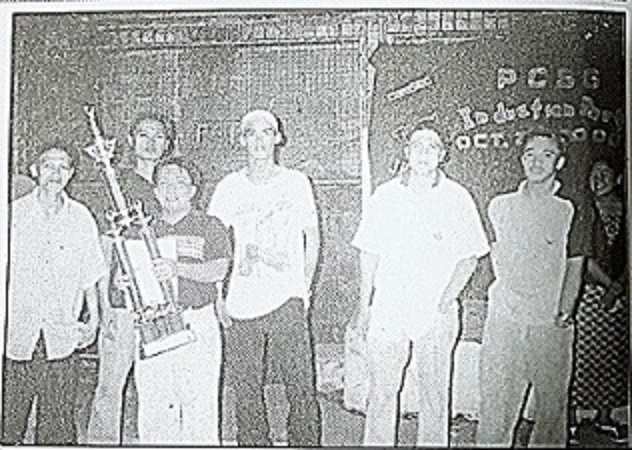
(August 23, 2000)
The BLUE team was loaded with talent making them one of the pre-tournament favorites. The team had 2 good point guards, a shooting guard/forward capable of shooting the lights out from beyond the arch, a lanky dependable center, and a formidable go-to guy who can play point-forward. Predictions had it that they will vie for the championship.
But predictions can go either way…right or wrong.
The BLUE team’s lofty billing (and their morale) were sent crashing back to earth when the BLACK team (Com Sci – Octoberian), the defending champion seeking to “three-peat” and composed mainly of the members of the school’s basketball varsity, dealt them an ego-bruising trashing.
All the hype about the BLUE team were gone. Just that and they were no longer regarded as title contenders. Suddenly, the BLACK team had no more competition to being the darling of the tournament and became the sole favorite to win the crown.
While the BLACKS developed a cloak of invisibility, the BLUES, with their defeat right on their first game, began to doubt their capabilities.
(August 24, 2000)
Such a doubt in themselves became very apparent when in their second game on the second day of the tournament, despite the fact that they had a relatively light assignment (against the GRAY team), they held only a 2-point lead at the half.
Before that game, I talked to the players, pointed out the mistakes which led to their eventual defeat to the BLACKS on their first game and asked them to avoid committing the same. We were literally on a cliff’s edge for the tournament format provides that 2 losses would boot a team out of the competition.
Somehow they responded. They made a conscious effort to avoid their loopholes in game 1 but the problem during the first half of game 2 was their lack of enthusiasm. They played a lackluster brand of basketball which was giving their opponents confidence. So, during the huddle when the second half was about to start, I started cursing and swearing and even called my key players names. I told them that they would become a shameful bunch of idiots should they lose the game.
Cursing and swearing and calling my players names come dead last in my repertoire of motivational methods. I was forced to use them for it was my intention to offend them, make them angry, and push them to prove that they indeed know how to play basketball.
It worked!
For the first few minutes of the second half my players played like men possessed in both ends of the floor. While they scored an avalanche of points their counterparts struggled and had to bleed for theirs. At the end, the BLUES emerged victorious with plenty to spare.
(August 25, 2000)
The third game was very meaningful and integral. Not because we won over a formidable opponent (the GREEN team); not because I finally discovered the team’s best offensive and defensive combinations; and not because the players got their confidence back burying in oblivion the ghosts of game 1. It was meaningful and integral for what one of my players did (not in the playing court but before the start of the game). When I granted him permission to talk he reminded me about one missing ingredient to make the team stronger…PRAYERS. He asked if we could pray before the game. He put me in an awkward position because I’ve never done that. Yes I believe in God and I pray but I do it privately. I don’t know if it was his way of telling me that instead of cursing and swearing to motivate the players why not try praying to God instead. Praying before playing wouldn’t do the team any harm. Nobody objected to it. So, from then on, we would always have a short prayer in one corner of the tournament venue before entering the playing court.
For our second win, we claimed the scalps of the GREENS and faced the tall order of defeating the WHITES for the right to square off against the BLACKS (who enjoyed a twice-to-beat advantage) for the championship.
That night was almost a sleepless one for me. I pondered about the bleak prospects that await my team the following day. We had to beat the WHITES once the BLACKS twice so we could hoist the championship hardware.
Winning three games in a row was a tall order. Honestly, I doubted our chances. Defeating the equally-determined WHITES in the do-or-die game and the seemingly invincible BLACKS twice all in the same day was “mission impossible.” I believed it was probable for us to win the first two games. But when the third game comes, it would take super-human efforts from my players to win.
(August 26, 2000)
I was so disappointed upon seeing that morning that of my 14 players only 7 came. To make matters worse, one of my two good point guards, was one of those who did not come. I used to play both my point guards together during the 1st 5 minutes of the game and one of them not showing up affected my rotation. But we were at the point of no return.
I told the players to employ a half-court offense in every possession unless there’s a clear fastbreak opportunity. Not that they can’t run but with only 7 players, and with the possibility of playing a total of three games that day, they needed to conserve energy.
Though I predicted a win for us, the WHITES we knew were tough nuts to crack. We watched the previous day how they gave the BLACKS a scare before losing by just two points. But as it turned out, my players were tougher. Despite playing with only 7 men in the rotation, the BLUES won and primed themselves for the daunting task of defeating the BLACK team twice for the crown.
Our team was given by the tournament officials just half an hour to rest before we began with the championship game. We prayed, as usual, before entering the playing court. Then one more of my players came, not the good point guard, but an additional pair of fresh legs just the same that somehow deepened a bit our rotation.
While the BLACKS were busy with their pre-game rituals, I asked my players to just shoot free throws and catch-and-shoot from the 3-point line to conserve their energy.
I reminded the players that they were up against the defending champion with most of the members playing together for the past three years and that they were trying to nail another championship to complete a “three-peat.” I told the BLUES that only them are capable of spoiling the BLACK’s impending victory party. The following were my words for them before the opening tip-off… “You have nothing to lose but everything to gain. We’ve gone this far. Let’s go a bit further.”
Once more I asked them to use the game plan we employed against the WHITES earlier that day.
When the final buzzer for that game sounded, the BLUES raised their hands in triumph.
By winning against their first-game tormentors, the blue team effectively exorcised the ghosts of that defeat shattering at the same time the BLACKS’ cloak of invisibility. That was the first time in three years that that team suffered a defeat. At that time my players knew that they were capable of defeating the defending champions. The players of the opposing team recognized also that despite having only 8 players our team could defeat them.
The winner-take-all match was scheduled to be played at 1:00 PM giving both teams just one hour to rest. My players had a light meal and I bought for them energy drinks (Lipovitan). Then, we again prayed… harder… for we all knew that it would take a miraculous performance from them to win a third straight game (twice) against the BLACKS who had more players and fresher legs.
My players were very tired having played twice in the morning that day. Fatigue was one of the two formidable opponents they needed to contend with that afternoon the second one being the strong and determined team BLACK aching to avenge their defeat and continue their winning tradition.
However, neither fatigue nor the strong determination of their opponents could prevent the BLUE team from realizing their victorious date with destiny.
The BLUES vanquished the BLACKS, crowned themselves the school’s Sportsfest 2000 Basketball-Men champions and handed me my first (and sweetest) championship as a basketball coach.
**********
Thank you Niño, Hector, Ramon, Irish, Edward, Ruel, Rommel, Rowell, Arnold, Jaysan, Francis, Ivan, Angelo, Audie, and Sir Jyx. But remember…it was GOD who made it possible for us.
My Essays on Education
 The year South Korea hosted the Summer Olympics was the year I started my journey as a teacher. That was 1988.
Those many years I spent in the academe, 24 years in the Philippines and 6 years here in South Korea, taught me a lot about the teaching profession – more than those that I learned from undergraduate and graduate schools. My experiences as a classroom teacher and as a school administrator enabled me (and they still do) to look at issues, problems, and disputes using the lens of the one teaching and that of the one formulating and implementing school policies. My having been in the position of both made me understand how it feels to be in-charge of students and to be in-charge of both the teachers and students.
Those 30 years in 10 different schools in 2 different countries made the following very clear to me: that it is not easy to wear the hat of a teacher; that teaching is not just another job; that teaching is not just a means of livelihood but a way to serve; and that everything schools, from the simplest activities to the most complicated policies, should be student-centered because the students are the reasons schools exist.
There were many times that I reflected on teaching as a profession and education in general. Those reflections resulted to essays and research works.
This is where I put them (essays I wrote on education and some of the research works I have completed here in South Korea) together. I added also in this section the dissertation and thesis I wrote as requirements for my PhD and Master’s degrees, respectively.
In the university where I completed my PhD and Master’s, the research papers students are required to complete are called differently – dissertation for PhD and thesis for Master’s.
The other studies listed in the subsections identified below (with links) include those that I presented in international conferences and were subsequently published in SCOPUS-indexed international journals. Papers published in international journals are usually longer that the versions presented in international conferences.
The following is my most recent research work:

I presented this in an international conference in Manila earlier this year and is currently waiting approval for publication in an SCOPUS-indexed international journal.
Links to the international journals where some of the articles were published as well as links to the websites of the conferences where they were presented are provided on the pages allotted for the papers.
This part of my website is divided into the following subsections:
Papers Presented in Conferences
My website also features the following section:
Most of the articles found in this section are my very personal reflections on education.
Pananagutan Sa Sarili
 Kapag ba late kang dumating sa trabaho, sa isang okasyon, oh sa klase, kanino mo ibinubunton ang sisi? Siyempre pa eh ‘di sa walang kamalay-malay na traffic. Kapag masama ang panahon at maulan, baha naman ang may sala kaya hindi ka sumipot sa takdang oras. Sa mga sumunod na pagkakataon na na-late ka nanaman, dahil gasgas na ang dahilang “Traffic eh!” at hindi naman umuulan para sabihin mong “Baha kasi!” eh ang sinisi mo naman ay ang alarm clock – hindi gumana. Tama ba?
Noong nagkahiwalay kayo ng karelasyon mo o nagkagalit kayo ng kamag-anak, kaybigan, o kapitbahay mo, sino ang may kasalanan? Eh di siyempre hindi ikaw. Halos nakakatiyak akong sa kabilang partido mo ibinunton ang sisi. Kesyo masama ang ugali niya o nila, hindi marunong makisama, walang pinag-aralan, at bastos.
Ang punto eh hindi ka nauubusan ng pagbubuntunan ng sisi. Napakahaba kaya ng listahan mo ng mga dapat sisihin. Basta may nangyaring hindi maganda sa buhay mo o may pangyayaring hindi sumasangayon sa iyong kagustuhan, eh pilit mong hahanapin kung sino ang dapat managot kung bakit nagkaganoon?
Naalaala ko tuloy ang kuwento ni Jim Rohn, isang kilalang personalidad sa larangan ng “personal growth and development”. Isang araw daw eh tinanong siya ng kanyang mentor na si Earl Shoaf, “Jim, curious lang ako, bakit hanggang ngayon eh parang hindi ka pa umaasenso?” Para daw huwag naman siyang magmukhang parang walang kadiska-diskarte sa buhay, ang ginawa ni Jim eh inilista niya sa isang papel ang mga may kagagawan kung bakit hindi niya maiangat ang kanyang kalagayan sa buhay.
Heto ang mga isinulat ni Jim Rohn sa kanyang listahan – pamahalaan, ekonomiya, panahon, traffic, pamamalakad ng kumpanya nila, mga walang kwentang kamag-anak at kapitbahay, at mga taong nakapaligid sa kanya.
Sino ang madalas sinisisi ng mga taong hindi makahanap ng trabaho? Eh ‘di siyempre ang pamahalaan. Tungkulin daw ng mga nasa poder ng kapangyarihan na tiyakin na ang mga mamamayan ay magkaroon ng oportunidad na makapagtrabaho.
Tama naman sila. Pero meron bang bansa sa alin mang bahagi ng mundo na kayang bigyan ang bawat mamamayan nila ng trabaho? Meron bang bansa na kung saan ang mga pribadong kumpanya at negosyo, maliit man o malaki, ay kayang i-hire ang lahat ng gustong magtrabaho?
Sa pagkakaalam ko’y wala. Mahirap tanggapin pero iyan ang katotohanan.
Balikan natin ang uapan nina Jim Rohn at Earl Shoaf.
Matapos daw basahin ni Jim ang listahan ng kung sino (at ano) ang dapat sisihin kung bakit hindi siya umaasenso eh tinanong siya ni Earl – “Bakit wala ang pangalan mo sa listahan?” Ang ibig sabihin ni Earl ay bakit tila yata sa hindi pag-angat sa buhay ni Jim noong panahong iyon eh ni katiting eh parang wala siyang pagkukulang.
Ikaw ba? Hindi mo ba kahit kaylan naisip na maaring ikaw mismo ang dahilan kung bakit hindi ka umaasenso at kinakaharap mo ang mga problemang meron ka?
Bakit mo sinisisi ang traffic at baha sa hindi mo pagsipot sa takdang oras sa lugar n na dapat mong puntahan? Tapos sasabihin mo nanaman na inutil ang mga lider ng bansa dahil hindi nila magawan ng paraan na solusyonan ang problema sa traffic. Sige nga, sagutin mo ito – “Sino ba ang nagluklok sa pwesto sa mga taong nasa poder ng kapangyarihan ngayon?” Ah… hindi mo sila ibinoto. O sige, eh iyon bang mga ibinoto mo noon, ano ang nagawa nila para sa bayan? Nawala ba ang traffic at baha noong panahon ng mga politikong sa tingin mo eh mas magaling at matino kaysa sa mga nakaupo ngayon?
At teka, kaninong ugali ba talaga ang hindi maganda kaya nakagalit mo ang taong kagalit mo ngayon? Sila ba talaga?
Sa palagay mo, ano ang ginawa ni Jim Rohn matapos sabihin iyon ni Earl Shoaf? Heto ang ginawa niya – nilamukos niya at itinapon sa basurahan ang listahan ng mga sinisi kung bakit hindi maganda ang itinatakbo ng pamumuhay niya. Gumawa siya ng bagong listahan. Isa na lamang ang isinulat niya – kanyang pangalan. Tinanggap niyang siya, at tanging siya lamang, ang dahilan kung bakit hindi umaasenso ang kanyang buhay. Siya ang may pagkukulang. Tinanggap niyang hindi puwedeng iaasa kahit kanino ang ating tagumpay. Noon nagsimulang maging maayos ang takbo ng kanyang buhay.
O ngayon, sagutin mo ito – bakit hindi ka makahanap ng trabaho? Naghanap ka bang talaga? Baka naman ang gusto mo eh ikaw ang hanapin ng trabaho? Baka naman kaya wala kang mapasukan eh masyado kang maselan. Tanggapin mo kung anong trabaho ang nababagay sa iyong kakayahan o tinapos.
Tandaan mo rin sanang may kompetisyon. Katulad mo, marami ding iba na naghahanap ng pagkakakitaan. Sa isang trabahador o empleyado na kaylangan eh maaring dalawa, tatlo, o higit pa kayo na pinagpipilian. Kung ikaw ang pinakamagaling, ikaw tiyak ang mapipili. Kaya’t pananagutan mo sa iyong sarili na iangat ang iyong kaalaman at kakayahan sa napili o kinabilangan mong karera o larangan para magkaroon ka ng bentahe sa iba.
Huwag mong ikahiya kung pagsasaka, o pangingisda, o pagakakarpintero, o pagtitinda ang siyang napili o kinaya mong gawing pagkakakitaan. Hindi naman kasi lahat ng tao eh makakapagtapos ng pagaaaral at magiging propesyonal. Pero hindi nangangahulugan na tanging ang mga nakapagtapos lang ng pagaaral ang puwedeng magtagumpay sa buhay. Ayon sa isang pagaaral, tatlo sa bawas sampung bilyonaryo ay hindi nakapagtapos ng kolehiyo. Kasama diyan ang mga pinakasikat na college dropouts na sina Mark Zuckerberg (CEO ng Facebook) at Bill Gates (founder ng Microsoft). Kung meron kang skill o talent, pagyamanin mo. Maaring iyan ang magiging tuntungan mo para matupad ang mga pangarap mo sa buhay
Meron ding mga tao na ayaw talagang mamasukan, may pinag-aralan man sila o wala, dahil mas gusto nilang magtayo ng sariling negosyo. Bakit hindi mo subukan?
Kung ayaw mo namang magnegosyo at wala kang makitang trabaho sa Pilipinas bakit hindi mo subukan ang mangibang-bansa? Kanya-kanya tayo ng diskarte o pamamaraan para pagandahin ang kalagayan natin sa buhay. May makikita kang trabaho o pagkakakitaan kung maghahanap ka.
Pananagutan sa sarili na humanap ng paraan upang mabuhay ng matiwasay at maunlad. Responsibilidad mo na tiyakin na magkakaroon ka ng kaalaman at kakayahan upang itaguyod mo ang iyong sarili at pamilya. Huwag mong iasa sa mga ibinoto mong kandidato, o kahit kanino pa man, ang iyong kinabukasan. Huwag kang magmaktol dahil mahirap ang mga magulang mo kaya hindi ka nakapagaral. Marami kayang nakapagtapos ng pag-aaral sa kolehiyo na hindi umaasa sa kanilang mga magulang na batid nilang wala namang kakayahang pinansyal. Huwag kang magdamdam sa mga kamag-anak mong mapepera na ni singkong duling eh hindi ka maabutan. Hindi nila responsibilidad na tulungan ka. Magpasalamat ko kung may tutulong sa iyo. Pero kung wala eh ganoon lang talaga ang buhay.
O, ano na ang balak mong gawin sa listahan ng mga tao at bagay na sinisisi mo sa hindi pagbuti ng kalagayan mo sa buhay? Lamukusin mo na iyan at itapon.
Dapat mong malaman na ano man ang estado mo ngayon sa buhay, ang lahat ng iyan ay ikaw ang may kagagawan. Huwag mong isisi kahit kanino. Ang tagumpay mong naabot o kabiguang pasan… ang maganda mong kalusugan o sakit na iniinda… ang kaligayahan mong nararamdam o lungkot na sa puso mo dumadagan – lahat ng iyan ay resulta ng mga ginawa mong tama at maling desisyon sa buhay. Hindi ka batang paslit para hindi mo malaman kung ano ang kakahinatnan ng mga bagay na ginawa at hindi mo ginawa.
Katulad ng madalas nating sabihin, “Nasa Diyos ang awa, nasa tao ang gawa.”
How Different Are Teachers From One Another
 No two teachers use the same lens when they view teaching as a profession. They don’t have the same set of knowledge, skills, attitudes, and values either. Like their fingerprints, their mindsets, tendencies and other personal qualities are very unlikely to be identical.
Even if teachers are made to use a similar lens, they would still look at their job (as teachers) differently. They have perspectives, educational and personal, that are uniquely theirs – or some of them may have none at all.
When given the same course syllabus, we should not expect them to map out their daily lesson plans in the same manner. They would design learning activities and deliver or carry them out in ways they see fit. Some would not bother to plan anything
The work attitudes of teachers are also not the same.
There are those who are so conscious about the number of hours they are required to serve as stipulated in their contracts. You could not expect them to go overtime and do extra job – unless you give them extra pay.
Conversely, there are teachers who are willing to go the extra mile. They assist their students beyond their assigned teaching hours and volunteer for tasks and do things not written in their job description, expecting nothing in return.
Of course, the worst are those teachers who either come to class late or dismiss their classes earlier than expected – or both. For reasons only them know, they do not perform their assigned tasks the way they ought to. They submit required paperwork either late or not at all.
If you are a teacher reading this, here is a question for you, “In which of the three groups do you belong? Of course, only you know. At the very least, be not the one described in the preceding paragraph.
There are teachers who are eternal fault-finders always trying to find something wrong – either with the policies being implemented or with their colleagues and administrators. And should they succeed in finding one, they would either whine or gossip about it, or both.
Teachers also differ in the way they treat their students.
Some teachers would set standards that are difficult to achieve while others know how to calibrate their standards to give even the slowest of learners a chance to succeed. There are teachers who have “one-size-fits-all” mentality thinking that educational processes and approaches to teaching and learning are standard and could not be tailored to meet individual needs. Conversely, they have counterparts who understand that students have different learning styles, abilities, and personal backgrounds. They know that they must recognize the uniqueness of each student (or groups of students) and differentiate their methods and strategies as teachers. These teachers don’t believe that standards are absolute.
Describing how teachers are different from one another could boil down to the following statements: 1. There are teachers who display both passion and compassion – they are passionate about their job and compassionate to their students; 2. There are teachers who have only one of the two; and 3. There are teachers who do not have both.
And again, if you are a teacher reading this, here is another question for you, “Which of the three statements in the paragraph above applies to you?”
If it’s the third one, you could be in the wrong profession. Think about it.
Now, let’s try to find out why teachers are not the same.
In doing so, let’s answer the following questions:
“Why do teachers view their profession (or approach teaching) differently?”
“Why do they have different work attitudes?”
“Why are some passionate with their job and compassionate to their students while the others are not?”
Before we answer those questions, it is important to note that there are only two ways to classify the way teachers perform – effective or ineffective; two ways to label their work attitude – good or bad; and two ways to view the way they treat their students – fairly or poorly.
What could be the reason teachers treat their students the way they do? Some teachers are perceived by their students as mean, unfair and inconsiderate. Is it because these teachers were not taught by their parents the values of kindness and fairness during their formative years? Did their experiences in life make them rude? Or were they treated in the same way by their former teachers and they are thinking that being mean, unfair, and inconsiderate to students is nothing but normal.
Teachers need to be reminded of the importance of establishing a good rapport with the students. In several studies conducted, what emerged as among the top qualities of effective teachers as perceived by students include “the ability to develop relationships with their students” and “patient, caring, and kind personality.”
As Andrew Johnson puts it, “Teaching starts with a relationship. Until then, you are just a dancing monkey standing up in front of your students performing tricks.”
The hardest stone that school authorities could pick up and hit their heads with is if they would decide to hire a “nonteacher” to be a teacher. There are teachers in (some, a few, or is it many?) schools who are not really teachers by profession. They either have non-Education degrees or they did not receive any kind of teacher-training but were lucky to be hired for whatever reasons only those who hired them know.
How could a “nonteacher” be effective and passionate in a job completely alien to him/her?
Being a math wizard doesn’t give one the right to become a Math teacher. Having a perfect accent and impeccable grammar in English doesn’t make one qualified to teach English. These are things I emphasized in one of my essays about teaching It doesn’t mean that if you know it, you can teach it.
How do we expect somebody who has no training in pedagogy to be effective in preparing a lesson plan – to set objectives, to choose the strategies and methods appropriate for a lesson and the levels of students, to motivate students before delivering the lesson, and to create tests intended to measure and evaluate learning.
Do you really think that teaching is just another job?
How do we expect a “nonteacher” to understand what kind of work attitude teachers should have – to agree with what Ben Orlin said that he sees teaching as an act of self-sacrifice, as a hard path undertaken for the greater good.
So, when colleagues in the academe are not performing and behaving the way a teacher should, check their academic background. They could be “nonteachers.” And pardon me using the word “nonteacher.” It’s not in any dictionaries I checked online, except for one – http://www.yourdictionary.com. I just can’t think of a word to label professionals in the academe that were allowed to teach even if their degrees are not related to education or they did not have any training as a teacher at all.
But a more serious concern in the academe is this – Why are there teachers who were trained to be teachers who act as if they themselves are “nonteachers”?
The way teachers perform are dictated by the personal educational philosophy they developed when they got exposed to the many isms they studied while pursuing their education degree. Such philosophy would evolve through time as they accumulate actual teaching experiences. Teachers also have personal belief systems that inform whatever decision they make. Or their decisions are influenced by the colleague they surround themselves with.
The way teachers behave and talk reflect the kind of personal educational philosophy they have (or the absence of it). The way they conduct themselves as professionals depends on whether they adhere (or not) to the code of teacher professionalism.
When teachers act and speak strangely, it is possible that they don’t know that there exists a code of professionalism created so teachers would be guided accordingly. Or they chose to ignore it.
But even if let’s say teachers are not aware of the existence of such code of professionalism, common sense would tell them that they ought to be careful with whatever they say or do or else they will be charged with conduct unbecoming to a teacher.
That is if they care and it’s not only the paycheck they are after.