Blog Archives
How Different Are Teachers From One Another
 No two teachers use the same lens when they view teaching as a profession. Even if teachers are made to use similar lens, they would still look at their job (as teachers) differently. They have perspectives, educational and personal, that are uniquely theirs – or some of them may have none at all.
Teachers don’t have the same set of knowledge, skills, attitudes, and values either. Like their fingerprints, their mindsets, tendencies and other personal qualities are very unlikely to be identical.
When given the same course syllabus, we should not expect them to map out their daily lesson plans in the same manner. They would design learning activities and deliver or carry them out in ways they see fit. Some would not bother to plan anything
The work attitudes of teachers are also not the same.
There are those who are so conscious about the number of hours they are required to serve as stipulated in their contracts. You could not expect them to go overtime and do extra job – unless you give them extra pay or service credits.
Conversely, there are teachers who are willing to go the extra mile. They assist their students beyond their assigned teaching hours and volunteer for tasks and do things not written in their job description, expecting nothing in return.
Of course, the worst are those teachers who either come to class late or dismiss their classes earlier than expected – or both. For reasons only they know, they do not perform their assigned tasks the way they ought to. They submit required paperwork either late or not at all.
If you are a teacher reading this, here is a question for you, “In which of the three groups do you belong? Of course, only you know. At the very least, be not the one described in the paragraph right above this one.
There are teachers who are eternal fault-finders always trying to find something wrong – either with the policies being implemented or with their colleagues and administrators. And should they succeed in finding one, they would either whine or gossip about it, or both.
Teachers also differ in the way they treat their students.
Some teachers would set standards that are difficult to achieve while others know how to calibrate their standards to give even the slowest of learners a chance to succeed. There are teachers who have a “one-size-fits-all” mentality thinking that educational processes and approaches to teaching and learning are standard and cannot be tailored to meet individual needs. Conversely, they have counterparts who understand that students have different learning styles, abilities, and personal backgrounds. They know that they must recognize the uniqueness of each student (or groups of students) and differentiate their methods and strategies as teachers. These teachers don’t believe that standards are absolute.
Describing how teachers are different from one another could boil down to the following statements: 1. There are teachers who display both passion and compassion – they are passionate about their job and compassionate to their students; 2. There are teachers who have only one of the two; and 3. There are teachers who do not have both.
And again, if you are a teacher reading this, here is another question for you, “Which of the three statements in the paragraph above applies to you?”
If it’s the third one, you could be in the wrong profession. Think about it.
Now, let’s try to find out why teachers are not the same.
In doing so, let’s answer the following questions:
“Why do teachers view their profession (or approach teaching) differently?”
“Why do they have different work attitudes?”
“Why are some passionate about their job and compassionate to their students while others are not?”
Before we answer those questions, it is important to note that there are only two ways to classify the way teachers perform – effective or ineffective; two ways to label their work attitude – good or bad; and two ways to view the way they treat their students – fairly or poorly.
What could be the reason teachers treat their students the way they do? Some teachers are perceived by their students as mean, unfair, and inconsiderate. Is it because these teachers were not taught by their parents the values of kindness and fairness during their formative years? Did their experiences in life make them rude? Or were they treated in the same way by their former teachers and they are thinking that being mean, unfair, and inconsiderate to students is nothing but normal.
Teachers need to be reminded of the importance of establishing a good rapport with the students. In several studies conducted, what emerged as among the top qualities of effective teachers as perceived by students include “the ability to develop relationships with their students” and a “patient, caring, and kind personality.”

As Andrew Johnson puts it, “Teaching starts with a relationship. Until then, you are just a dancing monkey standing up in front of your students performing tricks.”
The hardest stone that school authorities could pick up and hit their heads with is if they would decide to hire a “nonteacher” to be a teacher. There are teachers in (some, a few, or is it many?) schools who are not really teachers by profession. They either have non-Education degrees or did not receive any kind of teacher training but were lucky to be hired for whatever reasons only those who hired them know.
How could a “nonteacher” be effective and passionate in a job completely alien to him/her?
Being a math wizard doesn’t give one the right to become a Math teacher. Having a perfect accent and impeccable grammar in English doesn’t make one qualified to teach English. These are things I emphasized in one of my essays about teaching. It doesn’t mean that if you know it, you can teach it.
How do we expect somebody who has no training in pedagogy to be effective in preparing a lesson plan – to set objectives, to choose the strategies and methods appropriate for a lesson and the levels of students, to motivate students before delivering the lesson, and to create tests intended to measure and evaluate learning.
Do you really think that teaching is just another job?
How do we expect a “nonteacher” to understand what kind of work attitude teachers should have and to agree with Ben Orlin who sees teaching as an act of self-sacrifice, as a hard path undertaken for the greater good?
So, when colleagues in the academe are not performing and behaving the way a teacher should, check their academic background. They could be “nonteachers.” (And excuse me for using the word “nonteacher.” It’s not in any dictionaries I checked online, except for one – http://www.yourdictionary.com.) I just can’t think of a word that could best label professionals in the academe that were allowed to teach even if their degrees are not related to education or they did not have any training as a teacher at all.
But a more serious concern in the academe is this – Why are there teachers who were trained to be teachers who act as if they themselves are “nonteachers”?
The way teachers perform is dictated by the personal educational philosophy they developed when they got exposed to the many isms they studied while pursuing their education degree. Such philosophy would evolve through time as they accumulate actual teaching experiences. Teachers also have personal belief systems that inform whatever decision they make. Or their decisions are influenced by the colleague they surround themselves with.
The way teachers behave and talk reflects the kind of personal educational philosophy they have (or the absence of it). The way they conduct themselves as professionals depends on whether they adhere (or not) to the code of teacher professionalism.
When teachers act and speak strangely, it is possible that they don’t know that there exists a code of professionalism created so teachers would be guided accordingly. Or they chose to ignore it.
But even if let’s say teachers are not aware of the existence of such a code of professionalism, common sense would tell them that they ought to be careful with whatever they say or do or else they will be charged with conduct unbecoming to a teacher.
That is if they care and it’s not only the paycheck they are after.
Getting Through The First Day Of Class
(A Personal Essay)
 Each meeting with my students is important but it’s the first day that I consider very special – the most strategically important. It’s the day that I would attempt to accomplish one of the hardest things to do in education – to shatter the students’ image of the classroom as a prison cell, with them as prisoners and the teachers as nasty prison guards. It’s the day when I begin to lay the foundations of what every teacher should endeavor to forge between them and their students – a good rapport.
The entire semester is a long haul and I know that winning their hearts would make our journey together as enjoyable and productive as it could be. If I succeed in making them trust me during the first day, half-of-the battle is already won. Earning the trust of my Korean students is very important to me as an expat teacher teaching English. What makes that task of earning their trust not only necessary but also (doubly) challenging is the fact that I yes I am an ESL teacher with the proper qualifications and training but I am not from any of their preferred native English speaking countries.
There’s nothing very special about the way I conduct my first meeting with my new students here in South Korea. It’s just a bit unconventional.
My introduction would always include telling my students the nickname which I adopted with the intention of eliciting laughter whenever I deliver a talk – Tonitonipoponibananananapoponinomimayfofoni. (Inspired by Laura Branigan’s song entitled “Name Game.”) Amazingly, when I tell my students that and jokingly threaten them to memorize it if not they would fail in my subject, they would try very hard to repeat it after me and laugh at themselves if they wouldn’t be able to say it.
Then I would add, “Whoever could say my nickname correctly will get an A+.” I don’t mean it of course. Luckily, up until this time, no one among those who tried succeeded. It was me who would always succeed – in getting their attention.
From there, I would give them the necessary information about me as their teacher. The most significant of those information (as far as I am concerned) is the number of years I have been teaching. It currently stands at (a few months more than) 30 years. The point I wish to drive home for highlighting to my students how long I have been teaching is – I wouldn’t stay this long in the academe if I don’t love my job.
The next part of my first-day-of-class script would touch the boundaries of philosophy.
I would be delivering something like an“eve-of-battle” speech. The way they do it in movies.
I would ask my first question: “Why am I teacher?”
Puzzled, the students would grope for an answer.
I would give follow-up questions after that – Would you call a woman a mother without a son or a daughter? Are your mothers and fathers mothers and fathers without you as their children?
Amid their “aahs” and nods I would then say, “I am a teacher because of the students. My reason for being a teacher is each of you. Without you, I am just a person – not a teacher.”
That’s my way of telling my students that the most important stakeholder in a school are them. Schools exist because of them. School administrators and teachers have work because of them.
That’s my way of telling them that I exist (as a teacher) to serve their interests.
I would end that part with the following statement: “Thank you for having me as your teacher.”
After that I would show them a video clip from the movie “Collateral Beauty” – that part where Howard Inlet, the character played by Will Smith, delivered a speech in a gathering of his employees at the beginning of the movie.
- “What is your why? Why did you even get out of the bed this morning? Why did you eat what you ate? Why did you wear what you wore? Why did you come here?”
I would pause the video clip after each question and would ask them to give an answer.
Then I would ask them follow-up questions. (These were the only questions I asked when I was not yet using that movie clip.)

Why are you here in school?
Why do you want to finish your studies?
The last question I would ask – Why did you enroll in this class?
I never failed to ask the said questions because I want my students to understand that for them to succeed not only in their studies but in all their present and future endeavors, they need to set goals. They ought to know their whys. They must know the reasons why they do what they do, say what they say, and think what they think.
I would tell them also that the worst “why” to have for studying is to get A+ – that grades are not the be-all and end-all of schooling.
All of the foregoing would be finished in twenty to thirty minutes.
I would then ask the student to introduce themselves.
After all of the foregoing , I would proceed to the presentation of the course syllabus – explain the course objectives, give the topics to be discussed weekly, and tell them what activities will be done in the class and how are they going to be graded.
In explaining discipline in the class, I would simply ask this question – “Are you small children?” They would of course say “NO.” Then I would tell them this – “I therefore expect you not to speak and behave like small children.”
Then we proceed to the finale – presentation of course requirements.
It’s not surprising to see the students frown when they see the course requirements on the last page of the syllabus. That’s the time that I would deliver the last part of my “eve-of-battle” speech.
I would ask – “Is learning fun?”
As expected, majority would say “no.”
My next question would be – “Is work fun?”
Of course the students would say “no” again. And every time I would ask that, one or two would say “There were many times I heard my father complained about his job.”
Then I would go on and tell them the following:
“Nothing is to be given to you in a silver platter. You need to work hard to achieve your dreams. Studying and working would require effort – you have to exert mentally, emotionally and physically. But something could make studying and working fun – your attitude. Your attitude towards studying will be dictated by your whys. Your whys put together is your philosophy.”
I would spend another minute or two to explain something about “personal philosophy.” At the end I would tell them that each teacher has a personal teaching philosophy and mine is as follows:
“The classroom is my playground. The students are my playmates. The subject is our toy.”
How surprised they would be whenever I say that when I come to class I don’t work, I play. Work is hard. Play is fun.
As we end the first meeting I would tell them, “Come back next week and let’s play.”
Beyond Schooling

We stop schooling at a certain age but we should never stop learning. Learning is a lifelong endeavor and education is not confined in the four corners of the academe. The process of acquiring the desired knowledge, skills and values should continue even after graduation.
Schooling is not the only way to learn. There are other ways to obtain knowledge, to develop skills, and to cultivate the values required for us to become the best that we can be and function as productive members of society.
The foregoing assertions should not be construed as an attempt to undervalue schooling rather they should be viewed as arguments against the perception that not going to school to get a formal education is a reason for us not to be able to maximize our potentials and succeed.
Not everybody has the financial resources to afford formal education from kindergarten to at least college and not everybody who has the capability to pay would also have the interest and enthusiasm for schooling.
If parents are well-off, the higher the possibility for the children to finish at least an undergraduate degree. That is if said children believe that education is a key to securing a good future. It is rather ironic that sometimes those who have the money to spend for education are not motivated to go to school and those who have the motivation to do so don’t have the capability to pay.
For some, not having enough financial resources is not a hindrance in the pursuit of a good education. We heard a lot of narratives about people belonging to poor families who worked while studying, earned their degrees, then eventually succeeded in life.
But there are people who also attained success even if they have no university diploma. A few of them even made it to the Forbes’ list of richest persons in the world. The oft-repeated stories of the Bill Gates and the Steve Jobs of the world support the assertion that a bachelor’s degree (or higher – Master’s and PhD) is not the only key that could be used to unlock the doors to wealth, fame.
It can be argued that a university degree does not always guarantee success in life in the same manner that not having it means that a person’s future would be bleak. It all depends on how those who manage to earn degrees and those who did not play the cards their circumstances dealt them and the way they maximize their opportunities and whatever potentials they have.
There are degree holders who could not find decent jobs citing the lack of job opportunities as reason. Conversely, there are college dropouts who do not relish the idea of being under someone’s employ. So, they charted their own destinies and created their own opportunities. Check the list of the Forbes’ list of billionaires and you’ll be surprised to see some how many are actually college dropouts.
There are specific professions requiring prolonged training and certain qualifications that can be acquired only through formal education. This is when schooling becomes a necessity. But there are also occupations where formal education is not required. Artists, athletes, and business men for example need not have a university diploma. The degree they need is the degree of expertise they must exhibit in their respective arts, sports, and business.
It can also be argued that the schools could not possibly teach all of the competencies and skills we need to acquire aside from those required by whatever professions or occupations we have embraced. And even the said competencies and skills we learn while schooling need to be honed and upgraded. There’s more learning that must be done beyond schooling.
And there is one thing that we ought to learn when we start practicing our chosen profession or occupation – live a balanced life.
Life is not all about work and work is supposed to be “earning a living” and not “slowly killing one’s self.” While we may work hard to achieve whatever we want in life – money, degree, fame, and what have you, we should not sacrifice our relationships and health. Don’t work unreasonably hard that you may earn your millions just so you have money to spend for your hospitalization when you get sick. Living a balanced life means taking care of your work or business without sacrificing your health and disregarding the family and friends who need your attention.
The Work Attitude of (Some) Expat Teachers
 (A PERSONAL ESSAY)
I started teaching here in South Korea in 2013. For six years now (going 7) that I have been working with expat teachers from different parts of the world, mostly from countries where English is the native language. Rarely do South Korean universities hire Asian ESL teachers (like me).
Those years I worked with my fellow expat teachers allowed me to witness their brand of professionalism (or the lack of it). I saw their work, heard them talk, and witnessed how they behaved as persons and professionals. My being given by the university where I am teaching now the privilege to be a head professor for three (3) semesters a few years back allowed me also to have access to information about them. In addition, for the past four years, I have been a member of the university’s hiring committee and have gone over hundreds of résumés of ESL job applicants. A few of those applicants were first-timers, and the majority were attempting to transfer from other universities here. That enabled me to scrutinize their academic and employment background. I discovered that MANY of those moving from other universities are not teachers by profession, and it was their first time teaching when they were hired as ESL teachers here in South Korea. In the job interviews where I was assigned to be a member of the panel of interviewers, I came to know more about expat teachers.
Sometimes, even without me asking, tactless birds from the grapevine would tweet me a thing or two about my fellow expat teachers. I am also a member of an organization of Filipino professors teaching in different universities here in South Korea, and during our meetings, I would be getting more information about ESL teachers from different countries in their respective workplaces, which kind of confirmed my overall perception and observation about them.
I have become so awkwardly familiar with my fellow expat teachers’ behavior in the workplace. I can vividly describe their work attitude. And this personal essay is exactly that – an exposé about the work attitude of some expat teachers here in South Korea.
Anyway, these are just my personal observations. I may be wrong. But what if I am right?
Before I proceed, though, let me clarify that MOST of the expat teachers I worked with in the past years (and those who are still with me where I am currently teaching) are very good – personally and professionally. But as you may have noticed, I used MOST, not ALL, because there are a FEW bad apples.
Yes, there are a FEW bad apples. And you know how the saying goes – “One rotten apple spoils the whole barrel.” Of the bad decisions they make as persons and professionals, there is a possibility that employers will think that all expat teachers are like them. That’s my worry.
I hope that Koreans wouldn’t think that expat teachers are alike. MANY of us are serious with our work as ESL teachers here but those FEW who don’t might be creating a negative perception about us.
I witnessed how certain policies were changed in my workplace in response to some of my former colleagues’ bad decisions. Remember that when school administrators implement a new policy or amend an existing one in response to the wrongdoings of one bad apple, the changes will affect all expat teachers and not only the ones who did something wrong.
There are expat teachers everywhere who complain a lot about what they perceive as imperfections of the universities where they belong. Some of them would say, “In my country, this is not how we do things.” Others would make some unnecessary comments about this country and its people as if they themselves, their respective countries, and their countrymen are perfect and blameless. If that is the case, why did they decide to leave their countries and work here? If the universities back in their countries are the best and most ideal, why didn’t they apply for teaching jobs there? Why are they here in South Korea? Did they come here to whine?
This reminds me of what one of my former colleagues from the US said some time ago when he got so frustrated about the complaints of our fellow expat teachers – “Why can’t these people accept the fact that the reason they are here working as ESL teachers is that they couldn’t get a decent job back in their own countries.”
The problem with the expat teachers who have a lot of complaints about the policies in their universities, and granting that their complaints are valid, is that when their employers offer them a contract for the next school year they would sign their names on the dotted lines. They would return and still teach in the universities they malign so much.
Is that a dignified thing to do?
If these expat teachers think that the system in the universities where they are currently working is rotten, why do they keep coming back? (I personally know some of them.) Is salary the reason? Is it the reality that back in their countries, they will not be able to earn the money they are being paid here? Would they even qualify to teach in their universities (or are competent enough to be chosen among qualified applicants)? Is it the fear that should they not accept the contract their present university is offering them, they may not be able to convince another university to hire them?
These expat teachers claim that they are complaining because they want to change the system. Really? When will the Don Quixotes stop fighting the windmills? Okay, if they insist, here is my advice – They should request a meeting with their respective university Presidents and present to them their complaints and the reforms they want to implement. Let’s see what happens. If they are really the idealists that they are seemingly trying to project themselves to be, they should do this.
These expat teachers should express their grievances and suggest the reforms they want, not to their colleagues during meetings, but directly to university officials who have the power to implement changes. Or better yet, go either to the Ministry of Education or the Ministry of Labor and file a complaint against whatever it is that they think their university is doing wrong. That is if, aside from barking, they can also bite. That is, if they got balls. If none, they’d better keep quiet and just work. They should not waste their colleagues’ time listening to their whinges and whines.
One thing that I have noticed is that most of the expat teachers I met who are fond of complaining are the teachers who are not “trained to teach” but are “forced to teach.” They are not “real teachers” but “pretenders.” Please click this link if you want to know how I differentiated the “real teachers” from the “pretenders.”
How they conduct themselves as professionals deliver instruction, treat their students, and comply with the job requirements are telltale signs that they have no formal training as teachers. And truth be told – SOME expat teachers here in South Korea were not trained to teach. They have no degrees in education. They were lucky to have been hired. Well, they trained as teachers on the job. Hopefully, they eventually became “real teachers,” no longer “pretenders,” after a year or two. But wait… did they?
What is so frustrating is that the ones complaining a lot are not doing their job how they ought to. They do not comply with all the requirements. And with some of the tasks perennially performed by teachers, they still had to bother their colleagues for assistance. I witnessed how SOME of them swept their incompetence under the rugs of their complaints. They thought that they could hide their inability to perform and deliver by verbally attacking school policies and administrators who were not present to defend themselves or refute what they (the whiners) are saying. There were times that I had to call the attention of a few of my fellow expat teachers for taking the floor too long during meetings to needlessly complain about something. This made me unpopular with them. The exchange between us would usually get heated. I had to do it to prevent meetings from dragging on too long.
How surprised I was when one time, a few of my fellow expat teachers complained about reading long (job-related) emails. Let’s say it would take an extra 5 minutes to read an email longer than usual. What is an extra 5 minutes when compared to the more or less 5 months in a year that we get paid while vacationing and doing almost nothing job-related?
I have some colleagues who voice their discontent about policies but, at the same time, perform their functions as best as they could. Their students never complained about being shortchanged. They know that whatever disagreement they have with policies, it’s between them and the school administrators. The students should never be caught in the crossfire. They help in solving issues that could be remedied. They are professionals, and I admire them. They are not whiners. I listen when they talk. Sometimes, I disagreed with them, and we had healthy discussions.
I could go on and on and say a lot more about the work attitude of SOME expat teachers here is South Korea, but I need to stop at this point.
Let me just give the following parting shots: Expat teachers should perform in such a way that nobody would accuse them of being “mercenary teachers.” And if they think the universities where they are currently working do not measure up to their personal core values and standards of excellence, what should they do? Nobody is forcing them to stay. They must reject a contract extension should it be offered to them. They must leave and find their perfect university.
My Essays on Education
 The year South Korea hosted the Summer Olympics was the year I started my journey as a teacher. That was 1988.
Those many years I spent in the academe, 24 years in the Philippines and 6 years here in South Korea, taught me a lot about the teaching profession – more than those that I learned from undergraduate and graduate schools. My experiences as a classroom teacher and as a school administrator enabled me (and they still do) to look at issues, problems, and disputes using the lens of the one teaching and that of the one formulating and implementing school policies. My having been in the position of both made me understand how it feels to be in-charge of students and to be in-charge of both the teachers and students.
Those 30 years in 10 different schools in 2 different countries made the following very clear to me: that it is not easy to wear the hat of a teacher; that teaching is not just another job; that teaching is not just a means of livelihood but a way to serve; and that everything schools, from the simplest activities to the most complicated policies, should be student-centered because the students are the reasons schools exist.
There were many times that I reflected on teaching as a profession and education in general. Those reflections resulted to essays and research works.
This is where I put them (essays I wrote on education and some of the research works I have completed here in South Korea) together. I added also in this section the dissertation and thesis I wrote as requirements for my PhD and Master’s degrees, respectively.
In the university where I completed my PhD and Master’s, the research papers students are required to complete are called differently – dissertation for PhD and thesis for Master’s.
The other studies listed in the subsections identified below (with links) include those that I presented in international conferences and were subsequently published in SCOPUS-indexed international journals. Papers published in international journals are usually longer that the versions presented in international conferences.
The following is my most recent research work:
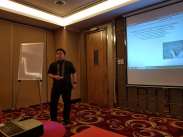
I presented this in an international conference in Manila earlier this year and is currently waiting approval for publication in an SCOPUS-indexed international journal.
Links to the international journals where some of the articles were published as well as links to the websites of the conferences where they were presented are provided on the pages allotted for the papers.
This part of my website is divided into the following subsections:
Papers Presented in Conferences
My website also features the following section:
Most of the articles found in this section are my very personal reflections on education.
How Different Are Teachers From One Another
 No two teachers use the same lens when they view teaching as a profession. They don’t have the same set of knowledge, skills, attitudes, and values either. Like their fingerprints, their mindsets, tendencies and other personal qualities are very unlikely to be identical.
Even if teachers are made to use a similar lens, they would still look at their job (as teachers) differently. They have perspectives, educational and personal, that are uniquely theirs – or some of them may have none at all.
When given the same course syllabus, we should not expect them to map out their daily lesson plans in the same manner. They would design learning activities and deliver or carry them out in ways they see fit. Some would not bother to plan anything
The work attitudes of teachers are also not the same.
There are those who are so conscious about the number of hours they are required to serve as stipulated in their contracts. You could not expect them to go overtime and do extra job – unless you give them extra pay.
Conversely, there are teachers who are willing to go the extra mile. They assist their students beyond their assigned teaching hours and volunteer for tasks and do things not written in their job description, expecting nothing in return.
Of course, the worst are those teachers who either come to class late or dismiss their classes earlier than expected – or both. For reasons only them know, they do not perform their assigned tasks the way they ought to. They submit required paperwork either late or not at all.
If you are a teacher reading this, here is a question for you, “In which of the three groups do you belong? Of course, only you know. At the very least, be not the one described in the preceding paragraph.
There are teachers who are eternal fault-finders always trying to find something wrong – either with the policies being implemented or with their colleagues and administrators. And should they succeed in finding one, they would either whine or gossip about it, or both.
Teachers also differ in the way they treat their students.
Some teachers would set standards that are difficult to achieve while others know how to calibrate their standards to give even the slowest of learners a chance to succeed. There are teachers who have “one-size-fits-all” mentality thinking that educational processes and approaches to teaching and learning are standard and could not be tailored to meet individual needs. Conversely, they have counterparts who understand that students have different learning styles, abilities, and personal backgrounds. They know that they must recognize the uniqueness of each student (or groups of students) and differentiate their methods and strategies as teachers. These teachers don’t believe that standards are absolute.
Describing how teachers are different from one another could boil down to the following statements: 1. There are teachers who display both passion and compassion – they are passionate about their job and compassionate to their students; 2. There are teachers who have only one of the two; and 3. There are teachers who do not have both.
And again, if you are a teacher reading this, here is another question for you, “Which of the three statements in the paragraph above applies to you?”
If it’s the third one, you could be in the wrong profession. Think about it.
Now, let’s try to find out why teachers are not the same.
In doing so, let’s answer the following questions:
“Why do teachers view their profession (or approach teaching) differently?”
“Why do they have different work attitudes?”
“Why are some passionate with their job and compassionate to their students while the others are not?”
Before we answer those questions, it is important to note that there are only two ways to classify the way teachers perform – effective or ineffective; two ways to label their work attitude – good or bad; and two ways to view the way they treat their students – fairly or poorly.
What could be the reason teachers treat their students the way they do? Some teachers are perceived by their students as mean, unfair and inconsiderate. Is it because these teachers were not taught by their parents the values of kindness and fairness during their formative years? Did their experiences in life make them rude? Or were they treated in the same way by their former teachers and they are thinking that being mean, unfair, and inconsiderate to students is nothing but normal.
Teachers need to be reminded of the importance of establishing a good rapport with the students. In several studies conducted, what emerged as among the top qualities of effective teachers as perceived by students include “the ability to develop relationships with their students” and “patient, caring, and kind personality.”
As Andrew Johnson puts it, “Teaching starts with a relationship. Until then, you are just a dancing monkey standing up in front of your students performing tricks.”
The hardest stone that school authorities could pick up and hit their heads with is if they would decide to hire a “nonteacher” to be a teacher. There are teachers in (some, a few, or is it many?) schools who are not really teachers by profession. They either have non-Education degrees or they did not receive any kind of teacher-training but were lucky to be hired for whatever reasons only those who hired them know.
How could a “nonteacher” be effective and passionate in a job completely alien to him/her?
Being a math wizard doesn’t give one the right to become a Math teacher. Having a perfect accent and impeccable grammar in English doesn’t make one qualified to teach English. These are things I emphasized in one of my essays about teaching It doesn’t mean that if you know it, you can teach it.
How do we expect somebody who has no training in pedagogy to be effective in preparing a lesson plan – to set objectives, to choose the strategies and methods appropriate for a lesson and the levels of students, to motivate students before delivering the lesson, and to create tests intended to measure and evaluate learning.
Do you really think that teaching is just another job?
How do we expect a “nonteacher” to understand what kind of work attitude teachers should have – to agree with what Ben Orlin said that he sees teaching as an act of self-sacrifice, as a hard path undertaken for the greater good.
So, when colleagues in the academe are not performing and behaving the way a teacher should, check their academic background. They could be “nonteachers.” And pardon me using the word “nonteacher.” It’s not in any dictionaries I checked online, except for one – http://www.yourdictionary.com. I just can’t think of a word to label professionals in the academe that were allowed to teach even if their degrees are not related to education or they did not have any training as a teacher at all.
But a more serious concern in the academe is this – Why are there teachers who were trained to be teachers who act as if they themselves are “nonteachers”?
The way teachers perform are dictated by the personal educational philosophy they developed when they got exposed to the many isms they studied while pursuing their education degree. Such philosophy would evolve through time as they accumulate actual teaching experiences. Teachers also have personal belief systems that inform whatever decision they make. Or their decisions are influenced by the colleague they surround themselves with.
The way teachers behave and talk reflect the kind of personal educational philosophy they have (or the absence of it). The way they conduct themselves as professionals depends on whether they adhere (or not) to the code of teacher professionalism.
When teachers act and speak strangely, it is possible that they don’t know that there exists a code of professionalism created so teachers would be guided accordingly. Or they chose to ignore it.
But even if let’s say teachers are not aware of the existence of such code of professionalism, common sense would tell them that they ought to be careful with whatever they say or do or else they will be charged with conduct unbecoming to a teacher.
That is if they care and it’s not only the paycheck they are after.
On Education and What People Achieve and Become

For education to be meaningful, it should be holistic having as its ultimate goal the development of the whole person. Holistic education helps an individual to grow and develop in all dimensions: emotional, psychological, creative, social, imaginative, physical, intuitive, and spiritual as well as intellectual.1 The focus is on the acquisition of knowledge, skills, and values not for the sake of getting the best scores in standardized tests but to prepare them to engage in the real world. Holistic educators seek to engage students in their real life worlds to the greatest extent possible.2
Have the schools of the 21st century been approaching education holistically? Do they deliver the kind of education that enable their students to achieve their full potential? Are children in schools trained merely to be a worker in their chosen fields or prepared to take on the multi-layered challenges they have to contend with in real life?
Answering the foregoing questions definitively is difficult. The ones in the best position to answer them are the graduates themselves. It is only after a few years after completing schooling that people can really evaluate whether the education they receive is meaningful or otherwise.
In the process of evaluating the value of the education people received, the question they need to answer is – “What have they achieved and become through it?”
What education allow people to achieve determines only half the value (or even less) of that education. The other half (or even more) lie in what people become through it. It is not enough that people succeed in their chosen careers – either by being gainfully employed or by having a business of their own – to say that their education is meaningful. What have they become as persons needs to be examined as well.
Psychologists have identified the different aspects of personality as physical, emotional, social, moral/spiritual, and intellectual. It is all in these areas that the evaluation of the process of becoming should be anchored upon.
Tests such as Big Five Personality, HEXACO, Myers-Brigs Type Indicator and Core Self-evaluation can be used to determine the dominant personality traits a person has. In China they have their CPAI (Chinese Personality Assessment Inventory). These tests can somehow help people analyze what have they become (or what are they becoming).
There are only two ways to classify personality traits or characteristics – they are either positive or negative. The HEXACO model of personality structure, for instance, is very specific in describing people in the honesty-humility (H) dimension – sincere, honest, faithful, loyal, and modest/unassuming versus sly, deceitful, greedy, pretentious, hypocritical, boastful and pompous.
What people become can only be labeled in two ways as well – good or bad. There are no gray areas. Ethics (as a branch of Philosophy) established the clear guidelines in determining what is good and bad, right and wrong.
It is of paramount importance that education should not only help people prepare for a career but guide them into developing positive traits and right attitudes. A child is not only a future employee or businessman. When eventually a child becomes an adult, there are other roles he/she has to play in society – as a citizen, as a community member, as a fellowman, as a neighbor, as a friend, as a family member. Life is not all about work. The workplace is only a small part of the world where the child lives.
Achieving is the process of succeeding in one’s chosen career or business – of enjoying the fruits of one’s labor. Becoming is the process of developing into the best person one is capable of turning into – physically, emotionally, socially, morally/spiritually, and intellectually. The person a child becomes would directly impact the way he/she would perform in the workplace, community and society.
The process of achieving enables a person to have the means to earn a living. But earning a living is different from living a life. It is the process of becoming that empowers that person to live a life beyond work.
Education should be considered functional only if it succeeds in guiding the child in the processes of achieving and becoming.
_______________
* (1 & 2) Andrew P. Johnson, Ph.D. Minnesota State University, Mankato
andrew.johnson@mnsu.edu
 M.A.D. LIGAYA


 M.A.D. L I G A Y A