Blog Archives
How and Why I Love Teaching

How do I love teaching?
Let me count the years… thirty!
Yes, I have been a teacher for three decades now. I began my teaching career at a basic education institution in Bauan, Batangas (Philippines) in 1988 and served my 30th year in the academe at a university in South Korea. I will be returning to that same school for 2019 (and beyond… God willing) to continue my journey as a teacher.
Despite the not-so-good comments I heard about teaching as a profession when I was young, I embraced it and I don’t regret having done so.
It is both surprising and amusing how lowly teaching is regarded by some people. It is one of the least popular jobs anywhere in the world.
Parents in the culture where I grew up would tell their children graduating from high school to just take up an Education course and be a teacher once they find out that their children are of average intelligence.
To some professionals, teaching plays second fiddle. They would seek positions in the academe as teachers when in their chosen fields they could not get job offers. Many native speakers of English who had difficulty finding jobs in their own countries are working as ESL teachers in countries like Japan, China, and South Korea. Luckily for some of them, even if they are not graduates of Education courses or are not trained as teachers, there are schools who would hire them only because they are native speakers of English. I consider this a disservice to the teaching profession.
I love teaching and I do take my job as a teacher seriously. I sought employment in the academe upon completion of my bachelor’s degree knowing that I am qualified to be a teacher. I became a teacher not because I have no other choice. I became one by choice.
I know that teaching as a profession requires a lot and I made sure I am apt to the task. I went to graduate school, attended conferences and seminars, took certificate courses (like TESOL), and studied by myself the application of technology to education. I also keep reading books and journals related to both my subject area and pedagogy. All of the aforementioned I did (am doing) in order to ensure that I could cope up with the demands of the profession and to give nothing but the best to my students. This is my way of respecting my profession as a teacher.
Why do I love teaching?
Search for the 25 best-paying jobs (or make that 50… or 100) and it’s very unlikely that teaching is included. This is what makes the teacher’s job not-so appealing. Teachers get paid low and on top of that – they are overworked. They work way beyond office hours. Such is the reality that I fully accepted. I never whined about it.
But for me, it’s never been the pay. It’s the happiness and the sense of fulfillment that teaching gave me. That’s what I love about this profession.
I enjoy doing the things that teaching requires me to do. Teachers need to read and write a lot. And those are my hobbies. Teachers have to do a lot of talking and leading and I so happen to love public speaking. I love the feeling of being in front of people… talking to them, making them laugh, and leading them to action.
Teaching allowed me do the things I love doing. It actually honed my skills and improved my knowledge in the areas where I could excel. It developed in me values that guide me both personally and professionally. It challenged me to strive for excellence and pushed me beyond my abilities. It made me believe in myself and it strengthened my faith in God as well.
As Jim Rohn said, “True happiness is not contained in what you get, happiness is contained in what you become.”
What I have become because of teaching is just amazing.
And the rewards for becoming what I have become are equally amazing.
The rewards – both intrinsic and extrinsic – are just awesome.
Don’t tell me that teaching is not financially rewarding. Teachers can be paid handsomely if they play their cards well and push the right buttons. It’s a matter of how they handle their career in the academe, how they build up their reputation, and what stuffs do they have in their professional portfolios.
Here is my advise to teachers like me, most especially to the young ones – don’t teach for the money. Become first what you ought to become. Be the best teacher you could be. Don’t be contended with your Bachelor’s degree. Aspire to have a doctorate. Attend all the seminars and training you could attend. Be certified in your field. Invest on yourself… not on gadgets and other material possessions. Plan well your career in the academe and make the right decisions.
If teachers would love their job and treat it with utmost respect, they will get the rewards they richly deserve.
Measuring School Effectiveness

 The main subject of the dissertation I wrote for my doctorate was “school effectiveness.” Choosing this subject was driven by a personal belief that the school contributes the most in the development of an individual. It is in school where an individual acquires and develops formally most of the knowledge, skills, attitudes, and values they need and they ought to have.
I put emphasis on the word formally in the preceding paragraph for it could be argued that the home and the church contribute also to the formation of an individual.
It is true, but not all parents are trained educators. Teachers (presumably) are. And not all families are functional. The dysfunctional ones may not help in the proper development of an individual. A school (presumably also) is always functional. This is not saying that the home does not contribute to the development of an individual. It does, but not as comprehensively as…
View original post 926 more words
The Questions They Asked
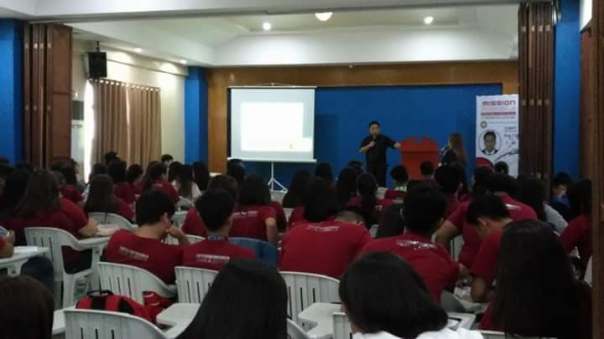
While spending my summer vacation in the Philippines, I was invited as guest speaker in a seminar organized by a teacher education institute for their Education students. I obliged for being a teacher myself, I consider it both a pleasure and an obligation to help young people who are aspiring to become teachers understand the complexity of the teaching profession. I want them to realize that teaching is not just any job – something that people wanting to be employed should turn to only when there are no other jobs available in the market.
After delivering my talk came the usual question-and-answer session.
The theme of the seminar was similar to a topic that I explored in one of the essays I have written about teaching – “What Makes A Great Teacher.”
I was asked – “Do you think you are a great teacher?”
That was a question I didn’t see coming.
Part of my preparation when invited to speak is anticipate the questions that I might possibly be asked and mentally get the answers ready. For that question, I did not have a ready answer.
So, I just answered it as best as I could.
I said, “That’s a question that only my (present, past and future) students could answer. I am as good or as bad as what my students think I am (or thought I was or will be thinking I am). The truth is the students are the the best judge in determining the greatness or ordinariness of their teachers. They are the ones who witness every meeting the adequacies or inadequacies of the people assigned to teach them. Only the students could say how excellent or mediocre their teachers are. However, there is one thing I could assure you – I never shortchange my students. I always come to class prepared.”
Little did I know that that would only be the first of a series of unexpected questions.
I was also asked, “Why do you need to teach in South Korea?” That question came as a surprise. I almost said that is not related to any part of my presentation. But I refrained from offering that excuse and played with the question anyway.
I responded with a single word – “Economics!!!”.
They understood… I guess!
That I said because that’s the answer they were expecting. They would not believe anything else. Would they believe had I told them that it was not the search for a greener pasture that brought me to South Korea?
The common perception in the Philippines is if somebody applies for a job overseas, it is to satisfy the desire to earn more money. Secondly, Filipinos abroad accept jobs not in line with the college degrees they pursued.
Before the next question came, I remember telling the Dean of that institution’s Education program before my talk started that it was “job burnout” that prompted me to revisit the “career path” I set for myself many years ago. Teaching overseas is part of my plan – something I pursued only when I got tired working as a school administrator.
I also told the attendees in the seminar about that and I added that initially my intention was to be out of the country only for a year. However, when I noticed that here in South Korea my health got better and that I am having more time to pursue my passion for writing (not to mention that the remunerations are great), I decided to stay for as long as God would permit.
“What’s the difference between teaching in the Philippines and in South Korea?,” was the next unexpected question.
I answered, “None!”
It’s simple, teachers are teachers wherever they are. Notwithstanding their location they would first establish a good rapport with the students then perform all the activities that teachers do in the class.
I said that the principles and strategies in teaching and learning are universal. Wherever they are, teachers draw from the same pool of teaching and learning methodologies. Whoever they teach they get to choose which ones from the same set of educational philosophies would inform whatever decisions they make in the classroom.
I pointed them back to a certain portion of my presentation where I said the following: “Pedagogy dictates that the teachers should be able to master the subject matter, set learning objectives, motivate students, design learning activities, facilitate learning, construct assessment and assess learning.” These are the things teachers ought to be doing whatever is the nationality of the students they are teaching. Wherever and whoever they teach, teachers are expected to display excellently their pedagogical skills and manifest the behavior expected from professionals like them.
After that, I asked them to read my essays entitled “Professionalism Among Teachers” and “What Teachers and Students Expect From One Another.”
Another question that I did not expect to be asked, the last one, was – “Am I satisfied with the current educational system?”
I said that the shift to K–12 basic education system, to me, was the boldest and perhaps the best initiative the government undertook to overhaul Philippine education. Obviously, all the educational programs put up by past governments failed for the simple reason that we remained as a “developing country” until now.
Whether the new education system (K–12) works or not is too early to say. It depends on the kind of Filipinos that the schools will produce in the future and what kind of performance they dish out in the socio-economic and political fronts for the country. If after 10 to 20 years the Philippines will finally be classified as a “developed country,” then the ongoing educational reforms are effective.
For the aforementioned to happen, I argued that the present educational system should inculcate in the students two basic qualities of persons/citizens that could help solve the ills of society – self-sufficiency and personal accountability. Such are the values lacking among Filipinos.
I told the participants that if I ever I will be putting up a school of my own, I will tweak the curriculum a bit and make sure that the students become self-sufficient and personally accountable persons/citizens upon their graduation. I will add components in the curriculum to ensure the development of such values in them.
If the said values the school would fail to teach the citizens of the Philippines, the future generation of Filipinos will not be any different from who and what the Filipinos are now.
The schools, I reiterated, need to help the students to become personally accountable for their own lives – to do everything they should to succeed, to not rely on anyone to achieve their goals in life, and to not think that it is somebody’s duty to help them.
I told the participants in the seminar that for a school system to be truly effective and successful, it should succeed in changing the mindset of Filipinos – a mindset that revolves around the principles of self-sufficiency and personal accountability.
My lecture was entitled “The Ps of Great Teaching.”
The Ps I discussed were the following:
Philosophy
Professionalism
Pedagogy
Patience
passion
Passion
That’s not a typo there, there are two “passions” in the list, one with a capital P.
It was my turn to ask the students questions after I answered all theirs.
“Which of the Ps of great teaching is most important for you?”
I got many good answers.
When they asked me to answer my own question, this was my response:
“All the Ps are important. You cannot teach as best as you could when you lack any one of them. However, for me, Passion is the most important.
Passion with a capital P means the sufferings of Jesus Christ. Becoming a teacher is following His example – to be self-less.
Like Jesus, teachers have to carry their cross. The cross and Jesus getting nailed on it was the symbol of humanity’s salvation. Education is the cross that teachers carry on their shoulders – that cross called education is what brings salvation to the soul of every student in their classes.
What Teachers and Students Expect From One Another

Teachers do talk about their students. They share among themselves their best and worst experiences in the classroom and compare their students’ performance and behavior. This they do either in meetings or just informally during lunch and coffee breaks.
Students do the same – they also talk about their teachers. When they are not within hearing distance of the educators, they discuss about them. Students tell each other (and their parents) how good or bad their teachers are – how much they like or abhor them.
It’s not only the teachers who could express satisfaction over good performance of students or show discontent for the students’ lack of effort in their studies. The students could do the same. They would show approval for the good effort put up by their teachers and convey disdain when they feel they are being shortchanged.
Both teachers and the students expect each other to perform well when they come to class. They both demand excellence. The teachers assume that their students have studied their lessons and have done their assignments. On the other hand, the students believe that the ones leading the learning process, their teachers, are prepared whenever they stand in front of them – that they have a lesson plan and they know how to execute it.
The most foolish assumption that teachers could make is to think that their students wouldn’t notice if they come to class unprepared. Students know if a teacher is not doing his or her job properly. It’s not only the teachers who could distinguish excellence from mediocrity.
Teachers require students to participate in discussions and other class activities. For that, they need to do their part. The teachers should never forget that there is a prerequisite to requiring the students to participate – motivation. Students expect their teachers to make them interested in the subject and to ask questions that make them think. They expect them to explain clearly and give sufficient examples for them to be ready to participate.
Such are among the pedagogical skills that teachers are expected to manifest if they hope to succeed in making students participate actively in their classes.
Students expect their teachers to be competent. The worst mistake educational managers could do is to not strictly screen applicants or blindly disregard hiring procedures and standards for whatever reasons and end up entrusting to somebody mediocre – to somebody not trained to be a teacher – the education of students. Knowledge coupled with the required pedagogical skills are what constitute competence among teachers.
Interestingly, competence and their correlates are not the ones that came out on top of the list of what students perceive as qualities of effective teachers. In studies conducted to determine what students consider as the best characteristics of quality teachers, those that relate to personality, not pedagogical skills, were the ones that consistently top the list.
In one of the said studies, among what emerged as the top five qualities of effective teacher as perceived by students, “the ability to develop relationships with their students” received the highest score.1 Of the four remaining, only “engaging students in learning” (ranked 5th) is related to pedagogy. “The ability to develop relationships with their students,” “patient, caring, and kind personality,” and “knowledge of learners” were ranked, 2nd, 3rd, and 4th, respectively.
Students and teachers differ in their perception of the characteristics of effective teachers. In a study that explored student and teacher beliefs on good teaching,2 teachers rated constructs related to their abilities as teacher much higher than those related to their personality. For the students, it’s the opposite. They gave preference to constructs related to the personality of teachers. Students who participated in the study rated “caring,” “content knowledge,” “safe environment,” “dependable,” “prepared” and a “teacher-student relationship” as most important when describing what makes a good teacher.
Again, emerging on top of the list, as viewed on the perspective of students, is a quality related to the personality of the teacher – “caring.” Note that “content knowledge” and “prepared” are related to pedagogy, the rest to the attitude and behavior of the teachers.
A very interesting topic for research is who can best answer the question “What are the qualities of an effective teacher, the students or the teachers?”.
Who is the better judge of what constitutes quality teaching – the students or the teachers themselves?
Teachers also expect respect from the students. That is something not difficult to elicit from young people like the students who are (supposedly) taught by their parents to respect people in authority. But even if parents were remiss of their duties to inculcate among their children that value, the teachers are always in a position to be accorded respect. The teachers, however, have to understand that respect is a two-way street. Students also expect to be respected. Their being the persons in authority don’t give them the right to embarrass the students either directly or indirectly.
In a study on students’ perceptions of effective teaching in higher education,3 “respectful” and other correlated descriptors were mentioned by students in a number of times significantly more than any of the other characteristics, including “knowledgeable” (which got the second highest mark). Student-respondents said that they appreciate teachers who are compassionate and understanding of the unique and challenging situations that students sometimes experience.
One of the proven ways of ensuring successful learning is for the teacher to ensure that a good rapport between them and their students exist. And the best way to do it is by not only telling the students what they expect from them but by knowing also what the students expect from the teachers.
References:
What Teachers and Students Expect From One Another
Teachers do talk about their students. They share among themselves their best and worst experiences in the classroom and compare their students’ performance and behavior. This they do either in meetings or just informally during lunch and coffee breaks.
Students do the same – they also talk about their teachers. When they are not within hearing distance of the educators, they discuss about them. Students tell each other, their parents too, how good or bad their teachers are – how much they like or abhor them.
It’s not only the teachers who could express satisfaction over good performance of students or show discontent over their lack of effort in their studies. The students could do the same. They would show approval for the good effort put up by their teachers and convey disdain when they feel they are being shortchanged.
Both teachers and the students expect each other to perform well when they come to class. They both demand excellence. The teachers assume that their students have studied their lessons and have done their assignments. On the other hand, the students believe that the ones who will lead the learning process, their teachers, are prepared whenever they stand in front of them – that they have a lesson plan and they know how to execute it.
The most foolish assumption that teachers could make is to think that their students wouldn’t notice if they come to class unprepared. Students know if a teacher is not doing his or her job properly. It’s not only the teachers who could distinguish excellence from mediocrity.
Teachers require students to participate in discussions and other class activities. For that, they need to do their part. The teachers should never forget that there is a prerequisite to requiring the students to participate – motivation. Students expect their teachers to make them interested in the subject and to ask questions that make them think. They expect them to explain clearly and give sufficient examples for them to be ready to participate.
Such are among the pedagogical skills that teachers are expected to manifest if they hope to succeed in making students participate actively in their classes.
Students expect their teachers to be competent. The worst mistake educational managers could do is to not strictly screen applicants or blindly disregard hiring procedures and standards for whatever reasons and end up entrusting to somebody mediocre – to somebody not trained to be a teacher – the education of students. Knowledge coupled with the required pedagogical skills are what constitute competence among teachers.
Interestingly, competence and their correlates are not the ones that came out on top of the list of what students perceive as qualities of effective teachers. In studies conducted to determine what students consider as the best characteristics of quality teachers, those that relate to personality, not pedagogical skills, were the ones that consistently top the list.
In one of the said studies, among what emerged as the top five qualities of effective teacher as perceived by students, “the ability to develop relationships with their students” received the highest score.1 Of the four remaining, only “engaging students in learning” (ranked 5th) is related to pedagogy. “The ability to develop relationships with their students,” “patient, caring, and kind personality,” and “knowledge of learners” were ranked, 2nd, 3rd, and 4th, respectively.
Students and teachers differ in their perception of the characteristics of effective teachers. In a study that explored student and teacher beliefs on good teaching,2 teachers rated constructs related to their abilities as teacher much higher than those related to their personality. For the students, it’s the opposite. They gave preference to constructs related to the personality of teachers. Students who participated in the study rated “caring,” “content knowledge,” “safe environment,” “dependable,” “prepared” and a “teacher-student relationship” as most important when describing what makes a good teacher.
Again, emerging on top of the list, as viewed on the perspective of students, is a quality related to the personality of the teacher – “caring.” Note that “content knowledge” and “prepared” are related to pedagogy, the rest to the attitude and behavior of the teachers.
A very interesting topic for research is who can best answer the question “What are the qualities of an effective teacher – the students or the teachers?”.
Who is the better judge of what constitutes quality teaching – the students or the teachers themselves?
Teachers also expect respect from the students. That is something not difficult to elicit from young people like the students who are (supposedly) taught by their parents to respect people in authority. But even if parents were remiss of their duties to inculcate among their children that value, the teachers are always in a position to be accorded respect. The teachers, however, have to understand that respect is a two-way street. Students also expect to be respected. Their being the persons in authority don’t give them the right to embarrass the students either directly or indirectly.
In a study on students’ perceptions of effective teaching in higher education,3 “respectful” and other correlated descriptors were mentioned by students in a number of times significantly more than any of the other characteristics, including “knowledgeable” (which got the second highest mark). Student-respondents said that they appreciate teachers who are compassionate and understanding of the unique and challenging situations that students sometimes experience.
One of the proven ways of ensuring successful learning is for the teacher to ensure that a good rapport between them and their students exist. And the best way to do it is by not only telling the students what they expect from them but by knowing also what the students expect from the teachers.
References:
To Pass, Or Not To Pass
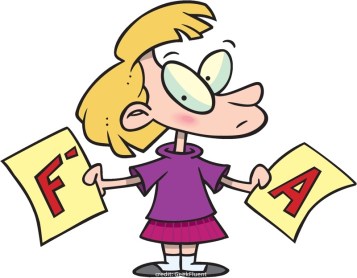 To pass, or not to pass?
That is the dilemma of teachers when the performance of some students during an entire term is below par and their total grades go south of the passing mark.
What should the teachers do – pass or fail the students?
Is passing students in a subject or course mandatory on the part of the teachers?
It’s a different story if a student fails due to absences. The student failed by default. But what if a student is regularly attending classes?
There are possible repercussions should teachers fail their students. When they fail students they had better be ready to answer possible queries from the students themselves or from their parents. Usually, complaints of students, most specially when they are accompanied by their parents, would also lead to school authorities investigating the teachers concerned. It’s not only a matter of being ready to answer questions but the teachers should also prepare class records and other documents that could prove beyond reasonable doubt that the students did not perform well and deserve to get a failing mark.
There are times that teachers thought that they have exhausted all possible means to help the students perform better but to no avail… that they have tried different strokes for different folks, but none of the strokes they applied worked.
But the painful truth is that there are also teachers who would not walk an extra mile to help students improve on their academic performance.
Now, granting that the teachers have done everything they possibly could to help the students pass but their efforts proved futile, would failing the students be considered justifiable already?
Should teachers be applauded when they take the moral high ground and say that schools are committed to excellence and passing failing students would be tantamount to promoting mediocrity?
Failing students is not a simple decision to make. Whether or not to pass students is a path that should be carefully tread. There are a lot of things to be considered before making the final decision. There are questions that the teachers need to answer very clearly. Questions that would lead to more questions.
Do the grades teachers give truly reflect the abilities of the students? Let’s say that the answer is yes. The next question would be, “Were the tests the teachers made valid? Did the teachers make sure that their tests measured what they intended to measure?
There are more questions – Were the tests the teachers designed in congruence with the strategies they used when they presented theirs lessons? What informed the strategies that they have selected? What foundation of learning and teaching did they stand upon when they delivered their lessons? Did they consider the abilities of their students when they designed the activities in the class? Or is it a matter of whatever decision they make as teachers are contingent upon their personal comfort?
Yes, the role of the teacher is that complicated. That’s why the decision to pass or not to pass a students is actually an examination of the teachers’ conscience. It is answering the ultimate question – “Did I really do my job as a teacher?”
Ask teachers if they are really doing the things expected of them and their response would be an unequivocal yes.
Really?
So here is another question – “Why would students fail if teachers are doing their job well?”
The question above leads us to the next question – “When students fail does it mean they did not learn?”
Students failing means they did not pass majority (if not all) of the tests (short or long, oral or written) the teachers gave during the entire term. All of those tests are meant to evaluate learning that was supposed to have taken place when the teachers discussed their lessons and did all the activities they designed for the class. So, if the students failed the tests it would mean they did not learn.
Why did the students not learn? What happened? Did the teachers bother to know why? Could there be something wrong with their strategies? Like their strategies probably did not work or something could be wrong with their methods of testing. Yet, they did not bother to adjust and allowed the accumulation of failed tests on the part of the students.
Only the teachers who are pedagogically trained would be able to detect when something is not right with what they are doing. If they are true to their calling as teachers, they would do something about it. They will make the necessary adjustments. If they don’t care then may God bless the students. It’s much worse when those hired to teach are not really trained as teachers. They don’t have the pedagogical skills to understand what is really happening. For them, it’s just a matter of when the students don’t get the scores required they fail. That’s it.
Let’s bring back one of the questions posed earlier – “When students fail does it mean they did not learn?”
If the answer to this is yes it means that the grades of the students reflect not only their performance but that of their teachers as well.
How true is it that “it’s not teaching if there’s no learning.” Can the teachers claim they did their job as teachers even if their students fail?”
When students fail the tests meant to evaluate learning then the activities designed and strategies selected fail to help achieve the objectives. It is the responsibility of the teachers to make sure that their objectives are attainable and the corresponding activities and strategies are effective. It is their responsibility to make sure that their students would succeed. It is as simple as that. A philosophical mind is not needed to grasp that… just common sense would do.
The worst thing that can happen to students is to have teachers whose view of education is myopic – teachers who judge students according to the numbers they crunch during tests and recitations. The students are much more valuable than those numbers.
Education transcends all statistical data that teachers collect during a school term. Yes there are written rules. There are policies and regulations. But they are not absolute. Education cannot be confined to a box. It is more than black and white. It is as colorful as the rainbow. Teachers should lead their students to the proverbial end of that rainbow where a pot of gold – a good future – awaits them.
Valuing Grades
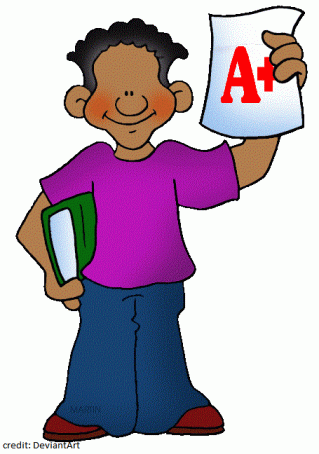
Students are labeled pesky when they pester their students with questions about their scores in quizzes and exercises. They are viewed as annoying when near the end of a semester or shortly after final exams they send emails to their teachers or call them to inquire about their grades.
Teachers say that students are desperate when after seeing their report cards they move heaven and earth to make the former reconsider the grades they have given and possibly give higher marks citing 101 reasons why it must be done. Reasons they give range from queer to valid.
How many times have some teachers violated established rules on test and measurement… rolled the correction tape on the grades they have given because they got moved either by appeals from the students or by pressure from the academic gods and goddesses.
Students are often criticized for being so grade-conscious.
But is it their fault?
NO!
Students are grade-conscious not because they want to but standards of society force them to be. The policies and procedures in the academe frame that kind of mind-set in the consciousness of students. They are seemingly programmed to become grade-conscious.
It all begins at home. Parents keep reminding their children to study hard and get good grades. When the children get to school, the indoctrination goes full steam. Teachers give a battery of tests and exercises telling the students to perform well if they want to pass the subject. And that if they want to be part of the honor roll then they need to have high scores.
Parents tell students to study hard, the teachers tell them to study harder. Day and night students are told that they must get good grades. After school, parents would even acquire the services of a tutor to further improve the academic performance of their children.
That’s how the “getting-good-grades-is-a-must” mentality gets ingrained in the consciousness of the poor little kids.
Companies and corporations deliver the coup de grace by frequently advertising that they hire only the best and brightest. And what’s the tangible measurement of these superlatives (best and brightest)? GRADES… A+, or 1 or 5 or what-have-you.
Society have assigned GRADES as proof of excellence. Academic performance of students is measured through their grades. The higher the grades the more excellent is the student. That’s how it goes. RESULT? The students become grade-conscious. The grades they receive is a microscope and they are the specimen on the slide. Their academic marks are like lenses used to magnify the contents of the shell between their ears.
The parents want them to work hard for their grades. Yes, perhaps for the children’s sake but the grades they receive is an instrument used by the parents in monitoring their investment. They want to make sure that their children are not wasting the money they are spending for their education.
Parents become so mad when their children present to them unsatisfactory academic marks. And of course, when their children perform well academically, they are elated no end. It is a boost to their pride, a feather in their caps.
The schools in any country stretch their students to the limits of academic achievement because when students pass standardized examinations given by their governments it redounds to their benefit. It’s good for ranking and accreditation purposes. It’s a boost to their reputation resulting to more funding from their government and more enrollees flocking to their gates with their parents just more than willing to pay so their children could take a bite at their academic excellence pie.
The parents and the teachers keep telling the kids that good grades is a prerequisite to success, the only way to get a good job. Thus the students think that the purpose of education is purely economic, to prepare them for a job. And if they fail to get good marks their future is doomed. They will not succeed.
This is the way the students are brainwashed into getting the highest marks possible. This is what developed among students a tunnel vision about education, that it’s all about getting good grades in order to be among the best and the brightest to who the big companies and corporations would give a chance to get a high-paying job.
The grades have seemingly become a curse. The grades take joy off learning. They make students prisoners in the classrooms and the teachers the unforgiving and unrelenting prison guards.
The grades put blinders on the students preventing them from seeing the bigger picture, that education is more than getting good grades and that its purpose goes beyond getting a job… that education is a preparation for life.
It’s sad that both the parents and the educators themselves are the ones putting the blinders on the students. They are the ones who put enormous pressure on the students to get good grades.
There’s nothing wrong with inculcating excellence among students. That’s what schools ought to be doing. There’s nothing wrong as well if students are encouraged to get the highest marks possible. But both their teachers and parents must not forget to tell them also that grades are not the be-all and end-all of schooling. The students need to be told that the world doesn’t end if they don’t receive A+ (or 1 or 5).
Schools must not forget that they exist to prepare the students, not only to find a job after graduation, but to live life and be a productive member of society and humanity.
 M.A.D. LIGAYA


 M.A.D. L I G A Y A