Professionalism Among Teachers
 The complexities involving the teaching profession and the importance of the role of teachers in the holistic development of learners require strict adherence to the tenets of professionalism. There are expectations that teachers need to meet and there are qualities that they are expected to possess.
All the qualities teachers ought to have and what are expected of them can be summed up in one concept – “teacher professionalism.”
“Teacher professionalism” is an idea that can be defined differently based on multiple perspectives and its merits scrutinized according to various arguments. It is considered a broad concept consisting of several dimensions. However, for delimitation purposes, the discussion on the subject in this article is anchored only on the definitions of the term “professionalism” given in the next two (2) paragraphs.
Evans pointed out that “professionalism means different things to different people.”1 The Oxford dictionary simply defines the term as “the competence or skills expected of a professional.”2 It is the level of excellence or competence that professionals should manifest in their chosen fields of specialization.
Tichenor3 explains that professionalism are the expected behaviors of individuals in a specific occupation. Professionals need to conduct themselves in accordance to set standards.
Boyt, Lusch and Naylor4 combined the said views about professionalism when they describe it as a multi-dimensional structure consisting of one’s attitudes and behaviors towards his/her job and the achievement of high level of standards. Similarly, Hargreaves5 defines professionalism as the conduct, demeanor and standards which guide the work of professionals.
The terms associated to professionalism as seen from the definitions and explanations given are as follows: competence, skills, behaviors, conduct, demeanor and standards. Competence and skills are synonymous and so are behaviors, conduct and demeanor. Standards refer to the quality or accepted norms for competence and behaviors.
Skills are not the only components that make up teacher’s competence. Knowledge is, of course, an integral part of it.
Skills and knowledge are very broad attributions to teacher’s competence however. What specifically are the skills and knowledge that would make a teacher competent?
As Baggini puts it, “To be a professional or a professor was to profess in some skill or field of knowledge.”6 It’s a given that teachers should have knowledge of the subject matter or expertise in a particular skill. Teachers are expected to know not a little but much about what they are teaching.
What adds challenge to being a teacher is the ability to dig (whenever applicable) into the scientific, philosophical, legal, sociological and psychological foundations of what is being taught. It is important that teachers are able to relate whatever they are discussing to other fields. Such an ability would enable teachers to enrich the discussion.
But teaching and learning are complex processes that involve a lot more… not just knowing what to teach and being able to connect a topic to other disciplines. What would make teachers truly competent are the corresponding skills that enable them to effectively teach what they know and make the students learn. Such skills are acquired through training in pedagogy.
Pedagogy is commonly defined as “the art, science, or profession of teaching.” Pedagogy informs teaching strategies, teacher actions, and teacher judgments and decisions by taking into consideration theories of learning, understandings of students and their needs, and the backgrounds and interests of individual students.7
Pedagogy, in a nutshell, tells how best to teach and how best the students learn.
Knowledge and expertise in a field would not make one a teacher. Pedagogical skills are needed. Competent teachers SHOULD know, not just the subject matter, but how to set learning objectives, motivate students, design learning activities, facilitate learning, construct assessment, and assess learning.
In addition, another skill through which competence of 21st century teachers is gauged, is how extensive and effective do they apply technology (computer) to teaching and learning.
Aside from competence, the other dimension of teacher’s professionalism this article is exploring is behavior.
Teachers are aware that they should behave in accordance to the ethical standards set for the teaching profession. They are expected to speak, act and dress accordingly. Barber8 pointed this out when he identifies as one of the main characteristics of professional behavior a “high degree of self-control of behavior through codes of ethics.”
But the behavior dimension of professionalism among teachers goes beyond proper manner and decorum.
Another characteristic of professional behavior identified by Barber is “orientation primarily to community interest rather than to individual self-interest.” It is no secret that teachers sacrifice a lot to help their students. Teachers work long hours and the practice a lot of patience. As Orlin puts it, “ I see it (teaching) as an act of self-sacrifice, as a hard path undertaken for the greater good.”9
Teachers also know that they need to keep learning. They need to have a continuing professional development plan for them to be better-equipped in dealing with the challenges of the profession. They need to keep abreast with the current trends and innovations in the field of education.
There are also general teaching behaviors which, according to a study, are the most important for effective teaching (as perceived by students). Hativa identified five (5) of them, namely, making the lessons clear, organized, engaging/interesting, maintaining interactions, and rapport with students.10
Two (2) of the said general teaching behaviors (making the lessons clear and organized) are related to the first dimension of teacher professionalism (competence and skills). The rest are more indicative of the second dimension (behavior).
Teacher professionalism strongly implies the demands and complexities of teaching making it harder to understand why the profession doesn’t get due recognition. Teaching is not just any profession. Not just anybody can be a teacher. Not just anybody can be entrusted the responsibility of developing the mind and body.
– SDG –
References:
- Evans, Linda (2008) Professionalism, professionality and the development of education professionals. British Journal of Educational Studies, 56 (1). pp. 20-38.
- Definition of “professionalism” – Oxford English Dictionary
- Tichenor, M. S., Tichenor, J. M. (2005). Understanding teachers’ perspectives on professionalism. ERIC.
- Boyt, T., Lusch, R. F. ve Naylor, G. (2001). The role of professionalism in determining job satisfaction in professional services: a study of marketing researchers, Journal of Service Research, 3(4), 321-330
- Hargreaves, A. (2000). Four ages of professionalism and professional learning. Teachers and Teaching: History and Practice, 6 (2),151-182.
- Baggini, J. (2005). What professionalism means for teachers today? Education Review, 18 (2), 5-11.
- Shulman, Lee (1987). “Knowledge and Teaching: Foundations of the New Reform”(PDF). Harvard Educational Review. 15(2): 4–14. Retrieved 12 June 2017.
- Barber, B. (1965). Some Problems in the Sociology of the Professions. In K. S. Lynn (Edt.), The Professions in America (pp. 669-688). Boston: Houghton Mifflin.
- Orlin, Ben “Teaching As Self Sacrifice.” Match With Bad Drawing. WordPress, March 10, 2014. Web. 19 July, 2017.
- Hativa, N. (2014). A pratical approach to designing, operating, and reporting, 2nd, Tel Aviv: Oron Publications.
Source: Professionalism Among Teachers
Tunay Na Kaibigan

Simple ang tanong. Kaylan masasabi na ang taong tinatawag kang kapatid, kapuso, kapamilya o kabarkada ay tunay mo ngang kaibigan at hindi nagpapanggap lamang? Nakakatiyak ka ba na ang fren o BFF mo, na minsan ay tinatawag mong sister o brother, kahit hindi kayo magkadugo, ay tunay mong kasangga at pinagmamalasakitan ka?
Tunay ngang napakasarap na magkaroon ng kaibigan. Iyong taong kasama mong tumatawa kapag ikaw ay masaya at kasama mong nagdiriwang kapag ika’y nagtatagumpay. Subalit hindi sa lahat ng pagkakataon ay masaya ka, nakakamit mo ang iyong mga pangarap, at ang takbo ng buhay mo ay sumasangayon sa iyong kagustuhan. May mga panahong igugupo ka ng kalungkutan at kabiguan. Ito ang pagkakataong kaylangan mo ng balikat na iiyakan – ng taong kadamay.
Ang kaibigan bang kasama mo kapag masaya ka at masagana ay nandoon rin kapag gumagapang ka sa balag ng pighati at kabiguan? Kung siya ay nandoon kasama mong sumasagwan habang ang bangka mo ay tumatawid sa lawa ng kalungkutan at paghihirap ay mapalad ka sa dahilang meron kang tunay na kaibigan.
Hindi kasi lahat ng taong akala mo ay kaibigan ay tunay na nagmamalasakit sa iyo at handa kang damayan sa abot ng kanilang makakaya. May mga tao na gusto ka lamang kasama sa lakaran, inuman, kainan o kantahan. Wika nga sa English, “friends in good times,” lalo na nga kung ikaw ang taya.
Marahil narinig mo na rin ang idyom sa wikang English na “fair-weather friends.” Sila ang mga taong ituturing kang kaybigan kung may mapapala sila.
May mga tao kasing ang pananaw sa pakikipagkaibigan ay nakabase sa tanong na ,“Ano ba ang pakinabang ko sa iyo?” Kung merong mapapala mula sa iyo ay babarkadahin ka upang sa panahon na may kaylangan sila ay tatawagin o pupuntahan ka.
May ganyan bang tao na kaybigan ang tawag sa iyo? Mag-ingat ka dahil siya ay manggagamit – isang “user.” Maaala-ala ka lang ng ganyang uri ng kaibigan sa pagkakataon na may hihingin siyang pabor o kaya nalulungkot siya kaya kaylangan ng kausap. Kabilang ka sa listahan ng mga tinatawag niyang kaibigan dahil may mapapala sa iyo. Paminsan-minsan na may gagawin siyang pabor para sa iyo para hindi siya halatain. Pero kung lilimiin mo nang mas malalim ay makikita mo na hindi “symbiotic” ang uri ng relasyon ninyo. Makikita mong para siyang “parasite” na gusto laging kumabig. Hindi ka naman tanga para hindi mo mapansin na ang taong iyan ay makasarili at nuknukan ng gulang.
Hindi sa naghihintay ka ng kapalit sa mga bagay na ginagawa mo sa iyong kaibigan. Hindi rin materyal na bagay ang pinaguusapan dito. Ang pagtulong natin sa mga kaybigan sa ano mang paraan ay pagpapakita natin ng kagandahang loob. At lahat ng tao, ano man ang estado sa buhay, may pinagaralan man o wala, mahirap man o mayaman, ay alam na dapat sinusuklian ang kagandahang loob kahit sa pinakasimpleng paraan. Subalit kung ang taong tinatawag kang kaibigan ay hindi alam iyan dapat eh magisip-isip ka.
Hindi lamang mga kaibigang may kagulangan ang pag-iingatan mo. Baka rin may mga taong traydor na ang tawag din sa iyo ay kaibigan. Sila ang mga taong kapag nakatalikod ka lahat ng baho mo ay isinisiwalat sa iba. Kaya’t kilatisin mo ng mabuti kung ang pinagsasabihan mo ng iyong mga problema at mga hinaing sa buhay ay mapagkakatiwalaan o hindi.
Mahirap magkaroon ng kaibigang makati ang dila na ang kaligayahan ay siraan ang mga tinatawag niyang kaibigan sa iba niyang mga kakilala. Kaya’t mag-ingat ka. Hindi nangangahulugan na kapag ang kaibigan mo may pinag-aralan na siya ay matinong tao. Hindi ibig sabihin na kung ang tumatawag sa iyo ng kaibigan ay pala-simba, nagnonobena at nagrorasaryo na siya ay isang santo o santa. Ang siste nga ay kung habang nasa simbahan mismo kayo ay kung ano-ano ang kanyang pinupuna at sinasabi sa mga taong hindi naman ninyo kakilala eh magisip-isip ka na.
Ano pa ba ang ibang uri ng kaibigan ang dapat iwasan?
May mga kaibigan ka ba na sa tuwing kausap mo ay puro tsismis at kasiraan ng ibang tao ang laging bukang-bibig? Tandaan mo ito – kapag wala ka at kausap niya ay ibang tao, isa ka sa mga pinaguusapan nila. Pinagpipyestahan nila ang mga problema at sikreto mo. Tiyak iyan.
May kabarkada ka ba na kapag kausap mo ay puro pamimintas at paghuhusga ang ginagawa sa iyo? Iwasan mo na siya. Okay lang na sabihan ka sa mga maling ginagawa mo pero alam mo kung ano ang pagkakaiba ng pagpapayo upang itama mo ang isang pagkakamali at pagsasabi ng pagkakamali mo para pintasan at husgahan ka.
At kung may kaibigan ka na minemenos ka’t minamaliit, aba, ora mismo, lumayo ka. Ang tunay na kaybigan ay dapat pinapalakas ang ating loob at naniniwala na may kakayanan tayo. Gusto nilang tayo ay magtagumpay at makamit natin ang ating mga pangarap sa buhay.
Meron kasing mga grupo ng magkakaibigan na kapag sama-sama sila ay kaylangang merong isa sa kanila na pagtsismisan, merong hahamak-hamakin at merong pagtatawanan. Sa madaling sabi, kaylangan nila ng “punching bag” – ng kaybigang pagtitripan. Huwag kang pumayag na ikaw iyon. Umiwas ka sa ganyang uri ng grupo. Mero’t merong kang mahahanap na mga kaybigan na may paggalang at tunay na pagmamalasakit sa bawat isa – mga kabarkadang alam ang pagkakaiba ng biro sa lait.
Hindi tayo perpekto. Walang taong perpekto. Kaya’t kaylangan natin, bukod sa pamilya, ng mga kaibigan na tutulong upang maiangat natin ang ating mga sarili. Iyon bang susuporta sa pakikipagtunggali natin sa mga hamon ng buhay. Hindi iyong lalo pang magpapabigat sa ating mga dalahin. Kaylangan natin ng mga kaibigang bukal sa loob ang pagtulong at hindi pansariling interes lang ang iniisip, kaybigan marunong magbalik ng kagandahang loob, sa ano mang paraan, hindi mo man ito hinihingi.
Kaylangang natin ng mga kaibigan na nakatampuhan mo man, may nasabi man kayong hindi maganda sa isa’t-isa, sa paglipas ng panahon, kapag muli kayong nagkita, nagkapaliwanagan ay muli ninyong yayakapin ang isa’t-isa. Ganyan ang tunay na kaybigan. Minsan nga, matindi man ang tampuhan ninyo, kapag nagkita kayong muli at nagyakapan ay ni hindi na kaylangan ng paliwanagan.
Isa pang palatandaan ng tunay na pagkakaibigan ay ang pagiging bukal sa puso ng pagtulong sa bawat isa. Hindi na kaylangang hingin, hindi na kaylangang sabihin. Ano mang bagay na makakatulong ay kusang loob na ibinibigay o ginagawa natin para sa ating mga kaybigan.
Ang tunay na kaibigan ay iyong naaalala ka kahit walang kaylangan, iyong tipong bigla kang yayayaing mag-kape dahil nami-miss ka.
Huling tanong, “Anong uri ka ng kaibigan, tunay o nagpapanggap?”
Reconfiguring Mythology

(I wrote this essay a few years ago after watching the first ‘Avengers’ movie and before the showing of “Prometheus.” Screenwriters and movie producers have mined the pages of Mythology and Legend for their movie projects. Both Marvel and DC (and their partners) keep coming out with movies where their resident superheroes either make friends or clash with mythological and legendary characters and creatures. Watch “Wonder Woman” and you’ll see how elements of “Greek Mythology” were fused into the movie. Go watch the latest “Transformers” movie next and find out whether Merlin, King Arthur and the knights of the round table sided with the Autobots or with the Decepticons.)
Recent movies I watched (“Clash of the Titans”, “Thor” and the “Avengers”) have brought me endless amazement. Amazed because my favorite characters in classic literature come alive in fresh story lines stuffed with visual and sound effects that are breathtakingly outstanding and astounding.
But more than the amazement, the said movies also inspired me to revisit the subject in Literature that I have always considered most interesting – Mythology.
Of course we know that the Titans are entities from Greek Mythology. Seemingly, movie producers are casting their lots on the Titans nowadays. “Prometheus” (which is the title of the movie that soon I will be watching) himself is another Titan. What remains to be seen is whether or not in the movie Prometheus plays out his role of stealing the heavenly fire for the benefit of humanity.
Conversely, Thor and Loki, who appeared in both “Thor” and “The Avengers” are both characters in Norse Mythology.
Generally, script writers and movie producers are seemingly mining the pages of Mythology for their movie projects.
Movies similar to the aforementioned clearly show how enormous advancement in technology benefited Mythology. There’s nothing now that creative writers can’t describe in their narratives that 3D and 4D computer graphics can’t project unto the silver screen.
The unbelievable visual effects made possible through Computer Graphics Imagery (CGI) thrill movie goers and startle them no end. This is one of the best ways to present Mythology. All those imaginary creatures, out-of-this world settings and incredible circumstances would no longer be left for the audience to imagine but for their eyes to feast upon.
What would be the educational implications of this modern rendition of Mythology?
Teaching the said subject has become easier and learning on the part of the students become more fun. For teachers, the movie versions (or even just a few clips) of stories from the pages of Mythology may serve as their audio-visual materials. Discussions during classes will be greatly augmented by the visuals students see in the movies. Lest we forget that the current generation of learners are visual. The better they learn when presented with images, pictures and colors. With the right movies, they learn while having fun.
It could be true that the movie versions of Mythology may make students disinterested with reading but one thing we should bear in mind is that the learning landscape has changed. Through viewing learning could be achieved as well. Viewing, just like reading , has lately been classified as a macro skill in language also.
These reminds me of the suggestion made by one of my students in Creative Writing before. She said that to make sure that the students would read the original story and not just rely on the movie version one activity that could be designed is ask them to find the portions of the original story modified in the movie version.
Could it be that learning Mythology becomes more effective through “viewing” than through “reading?” This is not saying that today’s generation of learners should no longer be encouraged to read. For each area of knowledge there is a corresponding macro skill most applicable. Methinks that for Mythology it is “viewing.”
However, teachers need to pay attention to the discrepancies between the original story and the movie versions. They have to warn the students about such.
For instance, in the movie “Troy”, the Trojan war took place in less than a month. In the original story (Homer’s Iliad), the war ended after ten years. The movie also shows Paris killing Menelaus which is not the case in the original story. The foregoing are but a few of the many discrepancies.
The teachers have to be on the lookout for possible changes to the original story. They themselves need to recognize the changes so the students get to be informed.
Perhaps the movie producers needed to tinker with the original storylines of the “classics” to make the movie versions more cinematic. Understandably, not all the details in the original stories can be included but at least the brains behind the movie production be sensible enough not to change significant details in the story.
Another thing that teachers should be ready for are questions like “Are the Hulk and the Iron Man mythological characters?”
“Myth” is traditionally defined as a story about gods, heroes or imaginary animals which has been handed down from one generation to another from primitive times and is usually of a religious nature. Additionally the purpose of myths is to explain some belief or natural phenomenon.
Should the foregoing definition be considered, the Hulk and the Iron Man are not mythological characters. In the movie “The Avengers” only Thor and Loki fall in that category.
Experts differ in opinion as to whether or not the companions of Thor and Loki in “The Avengers” be classified as mythological characters. Others contend that they are simply fictional characters or superheroes that appear in comic books. Their stories do not bear the prerequisites for a myth.
Some are saying that stories in the comic books are part of “modern mythology.” It is not. In a strict sense the term “modern mythology” is delivering classic mythology using as medium the modern technology available nowadays.
What could really be considered as modern version of mythology are the “urban legends.” “Batman,” also a famous character from the comic books is said to be part of urban legend. Thus, if the comic book character Batman, technically, is a Mythological character, urban legends being a modern version of Mythology, what about the rest of the comic book characters?
Then, the discussion goes in full circle again.
But who knows, with characters from Mythology and comic books finally brought together either as friends cooperating or enemies locking horns in the movie “The Avengers” a redefinition of the term MYTH may follow.
Source: Reconfiguring Mythology
PAGHILUMIN

Heto ako’t sa pighati’y nalulunod
Sa bigat ng lumbay puso ko’y nadurog
Ngayo’y nagsusumamo’t naninikluhod
Bumalik ka sana’t pawiin ang lungkot
Pagbalong ng luha ko’y iyong pigilin
Bisig mo’y ibuka at ako’y yakapin
Andap sa puso mo’y hipa’t pag-alabin
Damdaming kong sinugata’y paghilumin
Sakit mong idinulot iyong pawiin
Bumalik ka na’t muli akong mahalin
Ikaw ang tanglaw ko sa mundong madilim
Kay hirap mabuhay nang ‘di ka kapiling
Nasaktan akong labis nang iyong iwanan
Paggulong ng luha’y ‘di ko mapigilan
Bumalik ka’t halik labi ko’y dampian
Pighati sa puso ko’y iyong tuldukan
(Mula sa awiting “Unbreak My Heart” ni Toni Braxton)
Warriors-Cavs: It’s 3-1…Again
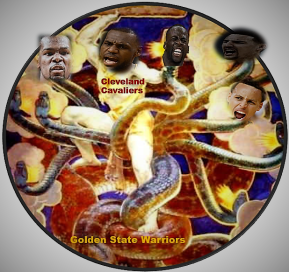
The Cavs avoided the dreaded broom and prevented the Warriors from celebrating a historic sweet 16-0 Playoffs sweep.
The Warriors’ flirtation with a perfect Playoffs record ended. However, despite losing Game 4, the faithful citizens of Dub Nation are not worried believing that the 2017 NBA Larry O’Brien trophy is still heading to the San Francisco Bay area. They may be right for it would take a super human effort to win 4 straight games against their “juggernaut” of a team.
It may seem a tall order to recover from a 0-3 hole to make a series a little more competitive but it has been done in the past. NBA records show that there were 9 teams that forced a Game 6 after losing the first three games and 3 forced a game 7.
It would take a super human effort for the Cavs to win 4 straight games against the “juggernaut” Warriors. They had that kind of effort in Game 4 clinching them a win. But still the “Hydra” from San Francisco Bay is up 3-1. Do the Cav’s “Hercules” (Lebron) still have what it takes to slay the many-headed monster? The Cavs indeed face a herculean task of clawing back from a 1-3 hole. They did it last year. Would they be able to do it again this year? They cut one of the Hydra’s head (Curry) last year. But cut one head and two heads would emerge from the fresh wound. It happened. Curry’s back playing healthy and with him sprang the Hydra’s additional head, Durant!
All roads lead to the Oracle, not of Delphi, but the arena in San Franciso on Monday night! Let’s see who the basketball gods favor this time.
The New York Knicks snared 3 consecutive wins after losing the first 3 games of the 1951 NBA Finals to push the Rochester Royals to a deciding Game 7. The Knicks lost the deciding game though, something that the Warriors could hope would happen should the Cavs, again, succeed in bringing the series to a winner-take-it-all finale.
The Warriors and their legion of hopefuls are counting on the fact the no NBA team has brought home the championship trophy after going down 0-3. But the Cavs and their throng of believers are certainly not looking at the picture anymore as rising from a 0-3 grave but climbing a 1-3 mountain. And there was a team who succeeded in scaling that mountain to become NBA champions…the Cavs themselves.
Déjà vu? Not exactly.
Just like last year, after four games, the Warriors are up 3-1. Then, horrendously, they dropped the next 3.
Will history repeat itself?
Nobody knows.
However, the circumstances (which favor the Warriors) are much different this year. Now the Warriors have a Kevin Durant and a healthier Stephen Curry. These are the reasons that made basketball experts believe that it’s almost impossible for the Cavs to recover from either a 0-3 or a 1-3 deficit.
But, again, nobody knows what would happen. With Lebron finally getting ample support from Irving and Love, the Cavs are harder to beat. It’s worth noticing that when Smith finally got out of his scoring slump, they almost won in Game 3. Smith again came out to play in Game 4 scoring 5 threes and Tristan Thompson, finally, played the way he was expected to contributing 10 boards and 5 points. Finally, the Cavs won. Not only that Lebron’s teammates started contributing, but the Cavs are also finally shooting better from downtown.
Analysts of the game are unanimous in saying that the Warriors need to need to win Game 5 to end the series. If not, the possibility of a playing a game 7 is strong. Then, it can be anybody’s ballgame.
Golden State Warriors Up 2-0
 It’s no longer surprising that the Golden State Warriors are up 2-0 against the Cleveland Cavaliers and it doesn’t take one to have a head full of gray basketball hair to figure out why. What has given the Dub Nation a distinct advantage against the Cleveland is the addition of its “new citizen” Kevin Durant.
The Warriors also raced to a 2-0 start last year then split their next two games in their opponents’ turf to hold a commanding 3-1 lead. The rest is history. The Lebron-led team won the next 3 games, including 2 in the Warriors’ own homecourt, to give Cleveland its first ever NBA championship.
That lost was indeed painful for the Dubs. They are aching for revenge. But with the powerhouse team that they already had in 2015 and 2016, they found Lebron James and the Cavs tough nuts to crack with them being pushed to Game 6 in 2015 before prevailing and beaten in 2016. So, they thought they need another superstar to add more firepower in their arsenal in order for them to be ready against King James and his Cavaliers. Luckily, they found one willing to join them, a basketball star who also have a score to settle against Lebron James – Kevin Durant. It should be remembered that Lebron, donning a Miami Heat uniform, defeated Durant’s OKC for the 2012 NBA diadem.
2-0 is a familiar hole for the Cavs. It was the same situation they were in last year before the series switched to their homecourt. But this year may be a different story. They may have dug themselves a hole difficult to climb back from with a Kevin Durant helping the Warriors to plug it.
The statistics are too difficult to ignore. In games 1 & 2, both Cavs’ starting line-up and bench were outscored by their opponents.
The Cavs getting outworked in both ends of the floor is not also surprising. NBA records show that during the regular season, the Warriors ranked first in offense and their efficiency in the defensive end is above the league’s average. Conversely, the Cavs came in fourth in offense but way below the league’s average in defensive efficiency.
Not the Cavs’ “big 3” are not contributing the numbers that they are expected to. In the 2 games played so far, the troika of Lebron, Irving and Love produced a combined 142 points, 59 rebounds and 32 assists. Unfortunately for them, this year, the Warriors have a “super 4” – Curry, Thompson, Green and Durant – who produced bigger numbers than their – 180 points, 66 rebounds and 43 assists.
Compounding Cavs problems is not only the Warriors’ bench churning out better numbers than their supporting cast but also their not getting enough contributions from the other members of their line-up – Smith and Thompson.
Perhaps it’s time for coach Tyron Lue to tweak his starting line-up.
Kevin Durant has been averaging 35.5 points, 11 rebounds and 7 assists in the series so far. That’s the big difference, the main reason the Warriors are up 2-0.
Had Durant not joined the Warriors, who would have produced the said numbers?
WARRIORS VS CAVS: TAKE 3
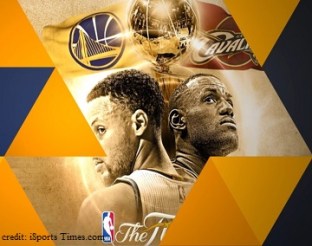
Basketball experts were proven right with their prediction. The Golden State Warriors and the Cleveland Cavaliers are locking horns for the 3rd time in 3 years for the right to hoist the Larry O’Brien NBA Championship trophy.
The Warriors almost effortlessly destroyed the pretenders to their throne in the West during the regular season while the Cavs performed erratically relegating themselves to 2nd seed in the Eastern Conference Playoffs.
With their (the Cavs’) lethargic performance during the 82-game grind, the “uninitiated” were quick to dismiss the defending champs doubting their chance of reaching the championship round. Conversely, those with keener basketball sense knew that the Cavs were either disinterested in winning games that do not count or were simply reserving their strength for the playoffs.
The inconsistencies on the part of the Cavs could also be attributed to injuries to key players, the need to rest the stars of the team, and the mid-season changes in their line-up.
But when the playoffs gates were opened, the Cavs were like hungry lions unleashed. The players who came back from injury got their rhythm back, the new players got fully integrated into the system, and their key players were seemingly playing with fresher legs and sharper focus. Result? They decimated their playoff opponents, losing only once to the top-seeded Boston Celtics for an impressive 12-1 win-loss record in the playoffs.
More impressive though is the Warriors’ clean slate (12-0). They did not lose a single game in the Western Conference playoffs. However, some experts are not giving the Warriors full credit for such a feat due to Kawhi Leonard’s injury in Game 1 of the Warriors-Spurs series. Many even believe that the Warriors would have lost that game had Leonard not gotten injured.
As it is, it’s Warriors versus Cavs once more.
The oddsmakers installed the Warriors (-270) as the heavy favorites and the Cavs (+230), the underdogs.1
Even majority of ESPN sportswriters predict that the NBA trophy will be reclaimed by the San Francisco Bay team. 23 out of 28 who were asked see the Warriors winning the championship with 8 of them saying that the Cavs might win just a single game.2
That much respect the Warriors are given. That’s nothing new for the Cavs. They’re in a familiar territory.
The Cavs were also the underdogs in 2015 NBA Finals. The Warriors defeated them 4 games to 2 but it should be noted that that series was played without Kevin Love when he suffered an injury in the Cavs’ playoffs series with the Boston Celtics. Kyrie Irving got injured as well in Game 1 and did not play the rest of the championship series. But notwithstanding the injuries to those key players, the Cavs extended the series to a game 6 even managing to race to a 2-1 lead.
In the 2016 NBA Finals, the Cavs were give the same tag (underdogs) with the Warriors being predicted to breeze through them having then achieved a seemingly improbable NBA milestone… they set a regular season 73-9 win-lose record eclipsing the Chicago Bulls’ record of 72-10 that stood for 21 years. And when the Warriors raced to a 3-1 lead, their fans started to release the confetti in celebration.
But the whole sporting world knows what happened. the basketball gods had other plans. They allowed the team from Cleveland to set a seemingly improbable record of their own. Given up for dead, the Cavs, with all their key players finally playing together in championship games, rose from the grave to become the first team ever to overcome a 3-1 deficit to win an NBA championship.
That was of course, the most painful way to lose a championship. The Dub nation knows that. They are aching for a payback. They were aware that during the 2015 NBA Championship, the Cavs, with Lebron James as the only legit superstar in the lineup to carry the team, they were stretched to a Game 6. The following year (in the 2016 championship series), they witnessed how potent was the combination of Lebron James, Kyrie Irving and Kevin Love that even when they had what was believed to be an insurmountable 3-1 lead, they lost.
The Golden State Warriors’ front office have probably concluded that the team’s main core of Draymond Green, Stephen Curry and Klay Thompson have had and will have a hard time dealing with the Cav’s troika of Lebron, Kyrie and Kevin. So, they recruited another superstar… Kevin Durant.
Now, the Warriors have 4 superstars as against 3 of the Cavs. Thus, it doesn’t take a genius to understand why the former are the overwhelming favorites to win the 2017 NBA Championship trophy.
Why is it logical and completely understandable that the Golden State Warriors are heavily favored?
With the inclusion of Durant, the Warriors now have 2 MVPs in their lineup bringing to 4 the total of All-star players in the team. They also registered the best win-loss record in the regular season (67-15) winning 27 of their last 28 games including 12 straight in the playoffs. NBA records show that they ranked first in offense and their defensive efficiency is way above the league average.
On the other hand, the Cavs came 4th in offense and way below the league average in defensive efficiency.
Nevertheless, it is difficult to write-off the Cavs. Why? They have Lebron James in the line-up who knows what it takes to win. He’s been playing superbly in the playoffs. And don’t forget the brilliance of Kyrie and the resurgence of Kevin, not to mention the quiet effectiveness of Tristan Thompson who might as well be the 4th superstar in Cav’s uniform. If Tristan Thompson does not deliver the way he used to (and the way he ought to) and the Cavs end up losing the NBA crown, then the front office of the Cleveland Cavaliers must recruit an additional player, another superstar, in response to the Warriors adding a Kevin Durant in their line-up for clearly, if there’s one reason the NBA championship trophy returns to the San Fracisco Bay area, it’s Durant.
But as the late coach Rudy Tomjanovich said after the Houston Rockets repeated as NBA champions in 1995, “Don’t ever underestimate the heart of the champion!” However, as to which NBA champions (2015 or 2016?) would say so when the current NBA season concludes, remains to be seen.
———-
1Source: Westgate Las Vegas SuperBook (Thru: NBA-ESPN)
2 Source: http://www.espn.com/nba/
 M.A.D. LIGAYA


 M.A.D. L I G A Y A