Blog Archives
Human Rights Victimization and Self-esteem of University Students: Mediating Effect of Hope and Moderating Effects of Human Rights Awareness
A research paper published in a Scopus-indexed journal

Human Rights Victimization and Self-esteem of University Students: Mediating Effect of Hope
and Moderating Effects of Human Rights Awareness
Massuline Antonio D. Ligaya & Chang Seek Lee and Massuline Antonio D. Ligaya
Indian Journal of Public Health Research & Development, Vol. 9, No. 9, September 2018, pp. 1138–1142
DOI: 10.5958/0976-5506.2018.01151.8
Research Summary
Human dignity lies at the heart of human rights, and violations of those rights can have important psychological consequences. Because self-esteem reflects an individual’s sense of self-worth and personal dignity, experiences of human rights victimization may undermine how people perceive and value themselves. This study examined the relationship between human rights victimization and self-esteem among university students in South Korea, while investigating two psychological and cognitive factors that might help explain or alter that relationship: hope and human rights awareness.
The study involved 233 university students selected through purposive sampling from universities located in Seosan City, Chungcheongnam Province, and Mokpo City, Jeonnam Province. The participants had a mean age of 22.6 years; 149 were female and 84 were male. Established instruments were used to measure human rights victimization, hope, human rights awareness, and self-esteem. The scales demonstrated acceptable to high internal reliability. Data were analyzed using SPSS and Hayes’ PROCESS macro, with bootstrapping employed to examine mediation and moderation effects.
Correlation analysis revealed that human rights victimization was significantly and negatively associated with self-esteem (r = −.452, p < .01), hope (r = −.324, p < .01), and human rights awareness (r = −.132, p < .05). In contrast, hope was strongly and positively related to self-esteem (r = .601, p < .01), suggesting that students with greater hope also tended to possess higher levels of self-esteem.
The mediation analysis provided further insight into this relationship. Human rights victimization had a significant negative effect on hope, while hope had a significant positive effect on self-esteem. Bootstrapping confirmed a significant indirect effect, demonstrating that hope mediated the relationship between human rights victimization and self-esteem. In other words, victimization was associated with diminished hope, which in turn was associated with lower self-esteem. Conversely, maintaining or strengthening hope may help protect an individual’s sense of self-worth in the face of adverse experiences.
The study also found that human rights awareness moderated the relationship between victimization and self-esteem. The interaction between human rights victimization and human rights awareness was statistically significant, indicating that the association between victimization and self-esteem varied according to students’ level of human rights awareness. This finding highlights awareness of one’s rights as an important factor in understanding how experiences of victimization relate to psychological well-being.
Taken together, the findings show that the consequences of human rights victimization cannot be understood solely through the direct relationship between victimization and self-esteem. Psychological resources such as hope and an individual’s awareness of human rights form part of a more complex process through which experiences of victimization are associated with self-perception and well-being. The study therefore points toward educational and institutional interventions that strengthen students’ hope, awareness of their rights, and capacity to respond constructively when those rights are violated.
Research Contribution
The study contributes to the literature on human rights and psychological well-being by moving beyond a simple victimization–self-esteem relationship and examining both a mediating and a moderating mechanism. By identifying hope as a mediator and human rights awareness as a moderator, it offers a more nuanced account of the factors associated with university students’ self-esteem following experiences of human rights victimization. The findings also provide a basis for universities to consider human rights education and hope-enhancing interventions as complementary approaches to supporting students’ psychological well-being.
Keywords: human rights, human rights victimization, human rights awareness, self-esteem, hope, university students, mediation, moderation
Full Text
The full text of this publication is available upon request. Researchers, educators, students, and other interested readers who wish to obtain a copy may contact the author through this website or by email at madligaya@gmail.com.
Human rights victimization and self-esteem of university students: Mediating effects of hope and moderating effects of human rights awareness
A research paper published in a Scopus-indexed journal
Human Rights Victimization and Self-esteem of University Students: Mediating Effect of Hope
and Moderating Effects of Human Rights Awareness
Massuline Antonio D. Ligaya & Chang Seek Lee
Indian Journal of Public Health Research & Development, Vol. 9, No. 9, September 2018, pp. 1138–1142
DOI: 10.5958/0976-5506.2018.01151.8
Research Summary
Human dignity lies at the heart of human rights, and violations of those rights can have important psychological consequences. Because self-esteem reflects an individual’s sense of self-worth and personal dignity, experiences of human rights victimization may undermine how people perceive and value themselves. This study examined the relationship between human rights victimization and self-esteem among university students in South Korea, while investigating two psychological and cognitive factors that might help explain or alter that relationship: hope and human rights awareness.
The study involved 233 university students selected through purposive sampling from universities located in Seosan City, Chungcheongnam Province, and Mokpo City, Jeonnam Province. The participants had a mean age of 22.6 years; 149 were female and 84 were male. Established instruments were used to measure human rights victimization, hope, human rights awareness, and self-esteem. The scales demonstrated acceptable to high internal reliability. Data were analyzed using SPSS and Hayes’ PROCESS macro, with bootstrapping employed to examine mediation and moderation effects.
Correlation analysis revealed that human rights victimization was significantly and negatively associated with self-esteem (r = −.452, p < .01), hope (r = −.324, p < .01), and human rights awareness (r = −.132, p < .05). In contrast, hope was strongly and positively related to self-esteem (r = .601, p < .01), suggesting that students with greater hope also tended to possess higher levels of self-esteem.
The mediation analysis provided further insight into this relationship. Human rights victimization had a significant negative effect on hope, while hope had a significant positive effect on self-esteem. Bootstrapping confirmed a significant indirect effect, demonstrating that hope mediated the relationship between human rights victimization and self-esteem. In other words, victimization was associated with diminished hope, which in turn was associated with lower self-esteem. Conversely, maintaining or strengthening hope may help protect an individual’s sense of self-worth in the face of adverse experiences.
The study also found that human rights awareness moderated the relationship between victimization and self-esteem. The interaction between human rights victimization and human rights awareness was statistically significant, indicating that the association between victimization and self-esteem varied according to students’ level of human rights awareness. This finding highlights awareness of one’s rights as an important factor in understanding how experiences of victimization relate to psychological well-being.
Taken together, the findings show that the consequences of human rights victimization cannot be understood solely through the direct relationship between victimization and self-esteem. Psychological resources such as hope and an individual’s awareness of human rights form part of a more complex process through which experiences of victimization are associated with self-perception and well-being. The study therefore points toward educational and institutional interventions that strengthen students’ hope, awareness of their rights, and capacity to respond constructively when those rights are violated.
Research Contribution
The study contributes to the literature on human rights and psychological well-being by moving beyond a simple victimization–self-esteem relationship and examining both a mediating and a moderating mechanism. By identifying hope as a mediator and human rights awareness as a moderator, it offers a more nuanced account of the factors associated with university students’ self-esteem following experiences of human rights victimization. The findings also provide a basis for universities to consider human rights education and hope-enhancing interventions as complementary approaches to supporting students’ psychological well-being.
Keywords: human rights, human rights victimization, human rights awareness, self-esteem, hope, university students, mediation, moderation
Full Text
The full text of this publication is available upon request. Researchers, educators, students, and other interested readers who wish to obtain a copy may contact the author through this website or by email at madligaya@gmail.com.
Human Rights Victimization and Self-esteem of University Students: Mediating Effect of Hope and Moderating Effect of Human Rights Awareness
 Abstract
This study focused on human rights victimization among university students and how it affects their self-esteem. It also examined the mediating effects of hope and the moderating effects of human rights awareness in the relationship between human rights victimization and self-esteem. 223 university students, chosen through purposive sampling, participated in the study. Human rights victimization did not significantly affect self-esteem (β = .6052, p>.05) and also had a statistically significant negative effect on the mediating variable – hope (β = -. 2413, p <.01). Hope, on the other hand, had a statistically significant positive effect on self-esteem (β = .5307, p<.001). Therefore, hope mediates the relationship between human rights victimization and self-esteem. The moderator – human rights awareness – had a statistically positive effect on self-esteem (β=.5683, p<.01), but the interaction variable (human right victimization x human rights awareness) had a statistically significant negative effect on self-esteem (β = -. 2479, p <.01) meaning human right awareness moderates the relationship between human rights victimization and self-esteem.
Full Text in PDF form:


On Positive Thinking
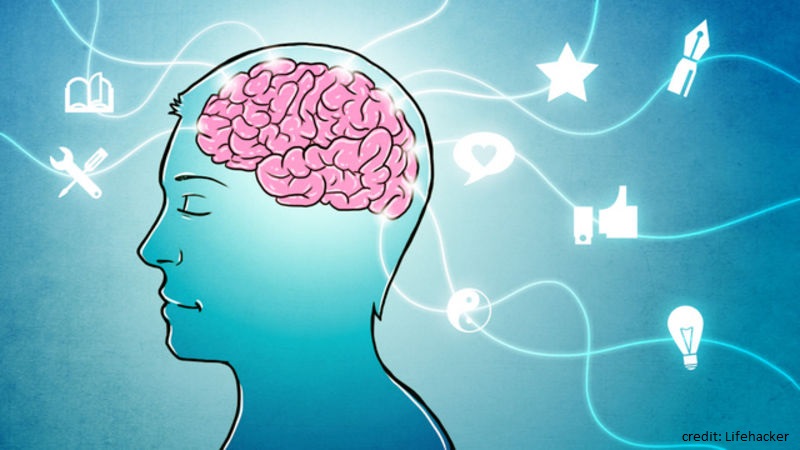
How should positive thinking be classified – a science or a philosophy (or both)? Calling it a science would be contentious since critics believe that positive thinking has no scientific credibility. What about philosophy? It could be if we consider the meaning of philosophy in casual speech. We usually use the term to refer to any set of beliefs, concepts, and attitudes of a person or a particular group of people.
Positive thinking is unquestionably an attitude. It is a mental attitude that leads a person to expect good results. It is a system of belief that makes people set positive expectations in all their undertakings in life. It makes them hopeful for the future. The term is synonymous with optimism, hope, and cheerfulness. The Collins dictionary focused more on optimism in its definition of positive thinking.
Let’s just say that positive thinking is an idea. Ideas can either be embraced or dismissed. Thus, it is understandable why some quarters are negative about positive thinking.
Positive thinking, with many journalists and academicians ridiculing it, may not be accepted to mainstream philosophy. At best, it can remain attached to the field of psychology. It is not that this system of beliefs was not advocated by any of the great philosophers. Buddha’s philosophy is anchored on the idea that “changing one’s thoughts can change one’s reality.”. Perhaps nothing beats the disciples of the Lord Jesus Christ in advancing positive thinking. The Bible is replete with verses that foster hope and optimism through faith. Christ Himself said, “Truly I tell you, if you have faith as small as a mustard seed, you can say to this mountain, ‘Move from here to there,’ and it will move. Nothing will be impossible for you.” (Matthew 17:20.)
Again, those who consider themselves thinkers, especially if you connect the dots of positive thinking to faith in God, might ask for empirical evidence, a scientific basis, to accept it as valid and true.
William James, himself a famous philosopher who experimented in mental healing, defends the right to violate the principle of evidentialism to justify hypothesis venturing. Such allows anyone to assume belief in God [or anything] and prove its existence by what the belief brings to one’s life. How credible is William James? His work has influenced intellectuals such as Émile Durkheim and W. E. B. Du Bois, Edmund Husserl, Bertrand Russell, Ludwig Wittgenstein, Hilary Putnam, and Richard Rorty.
Questions surrounding positive thinking are philosophical, not scientific. Being so, they are said to be foundational and abstract in nature, thus treated primarily through reflection and not relying on experiments. Of course, academicians would not settle for anything less than the product of scientific inquiry.
The strongest argument against this idea is that no proof can be provided that it works. The question is, “Can the critics themselves provide solid evidence that it doesn’t work?” We could go on and say that the burden of proof should be on the side of those who say that positive thinking is not true.
The usual criticism of books written about positive thinking is that they are full of anecdotes that are difficult to substantiate. On the contrary, not all evidence provided by advocates of this belief system is anecdotal. Studies were conducted to help build a scientific foundation for positive thinking. Mark Guidi, for instance, identified five (5) scientific studies that prove the power of positive thinking. In his article “How the Power of Positive Thinking Won Scientific Credibility”, Hans Villanueva, explained that in 2011, “hundreds of academic papers were published studying the health effects of good things to happen, which researchers call “dispositional optimism.”
However, despite all the efforts to establish academic credibility for positive thinking, this idea will be difficult to accept. It is not easy to convince people to embrace this belief system especially with critics vigorously disputing it. Some even resort to “name calling” the advocates of positive thinking.
Others are seemingly even cashing in on their disagreement. They published books discrediting positive thinking. This system of belief may not have been embraced by many, but it has become a good read, and many authors have earned (have earned) a lot from their publications. So, by writing something against it, some authors are hoping to get attention.
One author presented what he called the seven (7) biggest myths about positive thinking. Among other things, he said that positive thinkers ignore the world’s suffering.
Positive thinkers do not ignore suffering, deny the existence of problems and conflicts in society, or disregard the daily struggles people face. They just want to approach them differently, to look at them from a different perspective. What is wrong with that?
Positive thinking simply promotes a new way of approaching all difficulties and challenges in life. It presents an alternative viewpoint. There’s no harm in trying it. It’s not inimical to anyone’s well-being. There’s nothing to lose but everything to gain.
Positive thinking wants people to realize that any phenomena, natural or otherwise… or life issues can be viewed from many angles. There’s a negative or a positive angle… which means things could either be good or bad. Positive thinking does not ignore the bad but instead offers hope that things will be better if proper actions are taken.
Does that sound harmful? Is it bad to take into consideration what Helen Keller said – “I cried because I had no shoes until I met a man who had no feet”?
This system of belief is not passive. Positive thinkers know that they have to take action and the best part of it is that positive thinking requires people to inquire into the nature of their problems using multiple perspectives before deciding on what should be done.
One of the things Rene Descartes explained in “Passions of the Soul” was that “the key task of a philosopher is to help people understand and control their passions—that is to become a little less anxious, status-driven, and scared.” Isn’t this one of the principles that positive thinking advocates?
There are some questions that critics of positive thinking need to answer.
What system of belief can you offer as an alternative to positive thinking?
With the system of belief you have, are you happy and successful?
If not, try positive thinking. It might work for you.



 M.A.D. L I G A Y A