Sa Sayawan
 May nagbulong sa akin…
Ika’y nasa sayawan
May kasama ka raw
Magkahawak ang inyong kamay.
Ang bilis.
Noong isang linggo lang eh tayo,
Kamay ko ang hawak mo.
Bakit ganoon?
Ayaw ko sana
Na sa sawayan pumunta
Subalit para mo akong hinihila
Parang gusto kitang muling makita.
Nadatnang tugtog doo’y mabilis… magaslaw
Subalit ‘di ako maenggayong sumayaw
At pilit kitang tinatanaw
Sa gitna ng patay-sinding mga ilaw.
Nang biglang nagliwanag ang paligid
Tumigil ang tugtog na mabilis
Pumalit ay mabagal na himig
Himig ng mga pusong umiibig.
Silang lahat nagsiupo
Humihingal…
Hapong-hapo.
Ngunit kayong dalawa nanatiling nakatayo.
Kayo’y aking pinagmasdan,
Umiindayog kayo ng marahan.
Katawan ninyo’y magkadikit,
Parang kinukurot ang aking dibdib.
Nakahilig ka sa kanyang balikat
Balakang mo nama’y mahigpit niyang hawak.
Hindi mo ako matanaw dahil ikaw ay nakapikit.
Parang nang-aalipusta ang ngiti mong matamis.
At bakit naman ang sumunod pang kanta
Ay ang paborito nating dalawa
Kantang sabay nating inawit
Noon ako pa ang iyong iniibig.
Kanta’y parang ayaw matapos
Halos hininga ko sa panibugho’y malagot.
At nang sa labi siya’y iyong hinagkan,
Masuyong halik mo’y kanyang ginantihan.
Nang marubdob kayong naghalikan
Sayawan ay dagli kong nilisan.
(Mula sa kantang “Dancing on my Own” ni Calum Scott)
Honoring My Parents
(A Personal Essay)

I am so blessed because God gave me the best parents in the world.
My parents are not perfect persons. They are flawed and sinful – like you and me. They were not even the best couple. They eventually decided to dissolve the marriage that produced me and my two siblings. But believe it or not – they are the best parents a son or a daughter could ever dream of having.
I love and respect them both.
Nobody could do what my parents did for me and my elder brother and younger sister. They have done more than what mothers and fathers ought to do for their children. Their sacrifices to ensure that I and my siblings get past the critical stages of infancy was tremendous to say the least. They were there for us as we advance from childhood to early adulthood. They were never remiss of their obligations. They performed their duties as parents, with love and joy. I would never forget how hard they tried to ensure that we would have what we needed to survive until we reached the age when we could already take care of (and decide for) ourselves.
What my parents did for us went way beyond providing our physiological needs. They loved us unconditionally and provided us security and belongingness. And despite their personal imperfections, they did not forget to empower us through the values which they tried to teach us and to model through their examples.
When we were young, my mom, a devout Catholic, strictly required us to be home by 6 o’clock PM so we could recite the Angelus and pray the Rosary together. Failure to do so would be met by painful whips delivered through a long thin bamboo stick. Both of my parent are loving and caring but we’d better tow the lines they have drawn or else we would face dire consequences.
Those bamboo sticks taught me one thing – discipline. When I experienced how painful it was to be struck by them for the first time, I said never again. So, I followed the instructions of my parents to the letter.
We would have dinner after our prayers then my mother would help us do our homework. She would require us to read our books after those tutorial sessions.
That was how we were introduced to the values of prayer, discipline, and education. My mom was chiefly responsible for laying the foundation of my faith and for developing my study habits. She also kindled my competitive spirit through the candies and biscuits she would give to whoever among us siblings could answer her questions from the stories she read to us during the tutorial sessions we had with her.
My dad contributed also in the development of my study habits – particularly the reading part. Every day, a newsboy would deliver him newspapers – one broadsheet in English and two tabloids, one in English and the other one in Filipino. We read those newspapers together and as we did so, my father would speak to me in English. My dad was very good at English, despite completing only Elementary education. Through those conversations in English that I had with him that I started becoming fascinated with the English language. My interest in literature – stories and poems – was I think the result of my mother’s fondness for comics and magazines written in Filipino which I would also read when I am done with my father’s newspapers. These things, later on, would influence my choice for a college degree – Bachelor of Arts in English, a course in the Philippines that focuses on linguistics and literature.
The importance of education was something that both my parents impressed upon me. It was from them that I first heard that “education is the great equalizer.” I believed them. They saw my seriousness in the pursuit of education and they supported me until I completed my tertiary education. My siblings did not fall in love with education the way I had. They took different paths.
The value of faith – that’s what my mom inculcated in me. On the other hand, the values of hard work and patience are my dad’s most important gifts to me. He taught me through his examples to be self-sufficient and to never assume that somebody will serve to me in a silver platter whatever I want in life.
I also tried to emulate my dad’s good communication skills. When I accompanied my father in his business sorties (he was engaged in a buy-and-sell business then), I marveled at his uncanny ability to make people laugh and to convince them to buy.
Later on I realized that the values I learned from my parents are the very things I need in my pursuit to become the best version of me. Those values are the inheritance I received from my parents. They are priceless.
Stored in the hallowed corners of my memory vault are the best times I spent with my mom and dad. The one thing that I could recall in my most distant past was one night I woke up with my chin resting on my dad’s broad shoulder. I lifted my head and saw my mom walking beside us. She gently touched my cheeks then took me from my dad. They alternately carried me until we reached my aunt’s home.
That piece of memory was so precious. It would constantly remind me of the love and affection of my parents. It made me feel important… that I am connected. It helped me develop self-esteem growing up.
I will forever be grateful to my mom and dad. They are the best gifts I received from God.
On Personal Accountability

One of my favorite poems is W.E. Henley’s “Invictus.” I read it for the first time in my literature class way back in college. That was the time when I started to ask a lot of questions about many things – not the way a curious child would but the way a young adult searching for a personal identity ought to. The poem impressed upon me a strong belief. It created a mind-set, a value that helped shaped who I am now – that a person is in-charge of his own destiny. That whatever (or whoever) a person becomes is the sum total of all the decisions he makes.
For me, the day a person says “I am the master of my fate: I am the captain of my soul” is the day that he is embracing personal accountability. Thenceforth he becomes responsible for his words, thoughts, and actions and whatever decisions he makes he ought to own them. If he succeeds and becomes happy as a result of his decisions he will take the full credit and benefits. Conversely, should he fail, should he not succeed in his boldness to take on the challenges of life refusing help from anyone, he knows there’s nobody to blame, not even himself. He acknowledges that being self-sufficient is not a fault. Recognizing that each person has his own mountain to climb and that it is wrong to become an additional burden to anybody is a virtue, not a fault.
It is the person who makes himself a burden to his fellowmen that should be faulted. He should be faulted for not making himself personally accountable for his own life. He should be faulted for thinking that it is the responsibility of his fellowmen to help him. Yes, “no man is an island” but each person should think that nobody could force anyone to offer help. Helping is something that nobody could demand from anyone. It flows naturally from the generosity of a pure heart.
Believe that people know when somebody really needs help. The good-hearted among them would definitely offer a hand. However, they are also wise, they are capable of determining if the problems a person is facing resulted from his unwillingness to embrace personal accountability. They know if a person is stuck in a hole dug by his own laziness and vices. They know that that person does not deserve help. Never assume that generous people are dumb. No person should push himself to the edge because of his irresponsibility thinking that somebody would hold his hand before he falls to the bottom of regrets. Nobody might and he would come crashing down to his certain demise.
The person who acknowledges personal accountability blames neither himself nor anyone when he fails in his undertakings. Instead of falling into the deadly trap of the blame game, he tries to figure out what went wrong and learn from his mistakes. He considers failures as pathways to attainment. He won’t stop until he succeeds, no matter how many times he fails.
On the other hand, a person without it (personal accountability) blames not himself but others for all his failures. For whatever misfortunes he encounters it is always someone else’s fault. When he fails in his relationships, the other party is to be blamed for failing to satisfy the standards he set. When he resigns from his job, it’s because his co-workers and his boss suck. When he could not find a new job, he blames the government. Even for simple matters like coming late for an appointment he would put the blame on someone or something else – like the traffic and the weather.
Heaven forbid that he also blames his parents for their being poor (if his parents are) and their being unable to leave a fortune he could inherit. Heaven forbid that he blames his siblings and relatives, branding them selfish for not sharing their blessings to him.
The list of people and things he blames for his bad luck and adversities is so long but has forgotten to put himself on top of it.
It is not difficult to identify a person who is allergic to personal accountability. He is the one who whines at everything and whinges every time. He is never satisfied. His standards of excellence are so high that it seems none of the geniuses, past or present, could ever earn his approval.
For the person who lacks personal accountability there is always something wrong. The problem is he offers no solution to the wrongs and ills he sees. Compounding the dilemma is his strong sense of entitlement feeling that people around him should find a solution to his own problems. He is not satisfied not helping find solutions to problems, he also wants others to solve his own.
It is not obligatory for any person to offer solutions to all the wrongs and ills – to fight all evils. Voluntarism is a rare virtue. And if you’re not that somebody with a strong sense of personal accountability who would come forward to resolve the problems, if you could not offer a solution to the problems, please don’t add up to the problem. Be not the problem.
At least, each person is being called upon to tread the path of self-sufficiency. Take care of you own problems and don’t bother others for them, directly or indirectly. Self-sufficiency is the starting point to the journey to personal accountability.
Teachers, Leadership Styles and McGregor’s Theories X and Y Assumptions
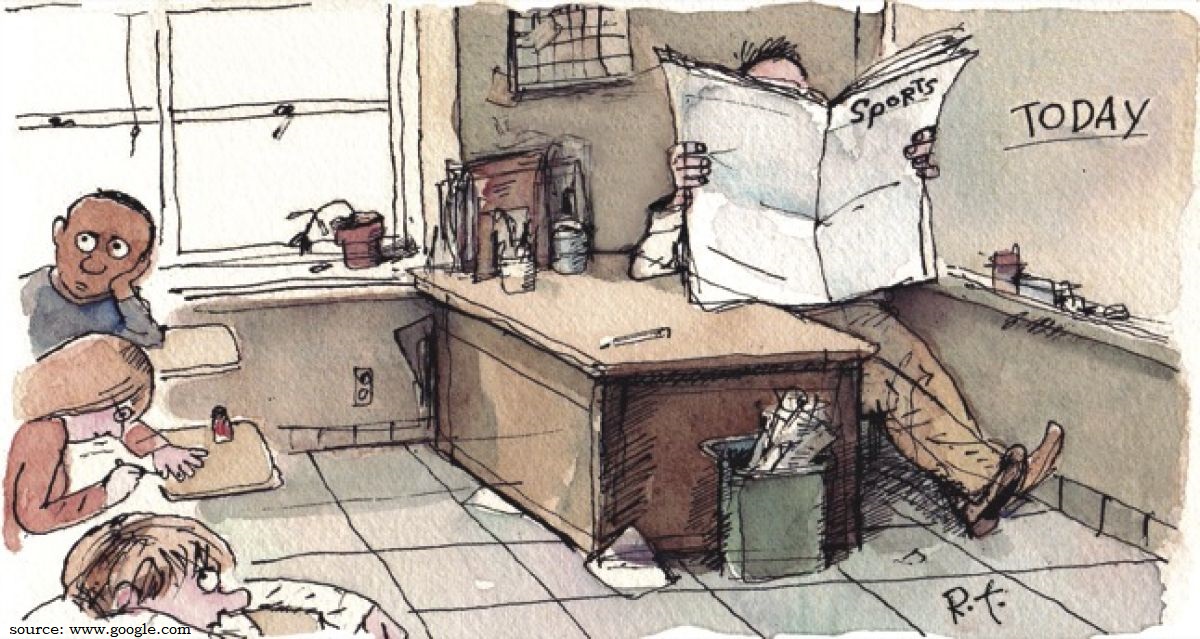
Managing people in both the corporate world and the academia industry is difficult and complicated. It requires not only mental and emotional competence but also toughness. It is an enterprise not meant for the fainthearted and weak-kneed.
Managers need both smarts and grit. They need to be astute and their patience boundless. Perhaps the trickiest part of the job of those in supervisory positions is as leaders they have to determine which leadership style is most applicable given the kind of people they are leading and the nature of the business they have.
Leadership theories abound and before managers, supervisors, or administrators are catapulted into the position as head of the organization they might already have a style which is inherent in them and framed by their education and personal experiences.
As leaders, they could be any of what Koontz and Weilhrich in “Behavioral Theories” describe as autocratic, democratic, or free-rein leader (laissez-faire). Those in the position of leadership (according to the said authors) have the following options: maintain strong control over their subordinates and lead using their ability to withhold or give rewards and punishment; consult with the people they are leading on proposed actions and decisions and encourage participation from them; or use their power very little, if at all, giving subordinates a high degree of independence in their operations.
As to which of the aforementioned styles is most effective is hard to determine. Those espousing the “Contingency Theory” claim that there is no best way to organize a corporation, to lead a company, or to make decisions. They add that the optimal course of action is contingent upon the internal and external situation. This is the principle that guided me when I was given the opportunity to lead.
In my experience as school administrator (1994-2012), I figured that there is no one-size-fits-all kind of leadership. I realized that the way to supervise people is a decision that designated leaders could arrive at only when they assume office. They may have a blueprint on how to lead when they take the reins of leadership in their organization but such is not set in stone. Whether as leaders they become autocratic, democratic, or free-rein depends largely on the kind of people being led.
Douglas McGregor, in his Theory X and Theory Y, presented two opposing perceptions about employees. Theory X assumes that employees inherently dislike work, avoid responsibilities and seek formal direction and should therefore be coerced, controlled, or threatened with punishment. Conversely, in theory Y, they (employees) are viewed quite the opposite. They need not be controlled and closely supervised because they love work, exercise self-direction and self-control, accept and even seek responsibility, and make innovative decisions.
When leaders have already determined under which set of those perception the people they are supervising belong, they begin to devise what they think is the best way to lead them.
Experts in human behavior are saying though that people working in organizations are not necessarily either one type or the other. They said that between the two extremes, there could be a combination of behaviors. Thus, leaders need to be careful not to implement policies and operate in response only to either (or both) of those two assumptions about employees. They need to be flexible.
The best leaders are those who could devise a way to have a complete inventory of the different personalities of people in the organization they are running and calibrate their approaches to leadership to the categories of personalities that would emerge from the inventory. That of course is easier said than done especially if they are overseeing a big group, company or association.
What about teachers? Generally speaking, where should teachers be classified – under theory X or theory Y?
It is hard to imagine teachers disliking their work and avoiding responsibilities. To be in-charge of the teaching-learning process is not a walk in the park. It demands the highest form of professional competence which means doing a lot of work and accepting a lot of responsibilities as well. The list of the things that teachers are expected to perform is long – prepare lessons; construct exams, mark tests, quizzes and assignments; prepare reports; attend seminars and trainings; and keep abreast with the current innovations including using technology in instruction. The teachers’ primary function, of course, is instruction. If they are in universities, they are also expected to do research and get involved in community extension programs.
That’s a lot of things to do for teachers and with their plates that full the teachers cannot possibly be theory X type. When they embraced the profession, they know the kind of work they are doing. They know that they don’t stop working after class hours. Teachers always walk an extra mile or two.
The prevailing perception about teachers is that they are consummate professionals – the embodiment of the theory Y assumptions.
Teachers are responsible and independent. They don’t need to be micromanaged because they are happy to work on their own initiative and their strong sense of professionalism and self-motivation always lead to the successful completion of their tasks and responsibilities and strict adherence to policies and guidelines. They also need not be told as to what to do because they have strong sense of self-direction and self-control.
Are these assumptions about teachers true?
I have been in the academia for almost 31 years as a teacher. I worked with different kinds of teachers across demographics – age, gender, race, education, religion, and philosophical persuasion – as a colleague and as administrator (for 18 of those 31 years). Based on my experiences (most particularly here in South Korea where I have been teaching since 2013 and was briefly a head professor for 3 semesters), I can say that that prevailing perception about teachers is not true.
Some teachers are theory X type, some theory Y, and some are in-between.
The worst assumption that school owners and administrators could make is “all teachers conduct themselves within the bounds of professionalism.” They ought to check carefully the background of the teachers they hire. They need to strictly monitor the performance of the teachers and ensure they are following school policies and guidelines. This should not be construed as lack of trust but rather enforcing excellence and ensuring that the students get what they deserve, what they pay for.
The ones leading schools ought to make sure that their teachers are not engaged in what I call “mercenary teaching” – interested only in the money and disregards professional ethics.
K-Drama
Dulang May Isang Yugto

Mga Tauhan:
Jack
Arnold
Joy
Waitress
Rose
Korean Man
Korean Woman
Customer
Tagpuan:
Sa isang restaurant sa South Korea.
Panahon:
Isang araw, buwan ng Marso sa kasalukuyang panahon.
(Magkakailaw sa tanghalan. Makikita ang interior ng isang pribadong bahagi ng isang restaurant sa South Korea. Nakasabit sa pader (nakaharap sa audience) ang mga larawan ng mga pagkain na inihahain ng restaurant katabi ang isang malaking larawan ng Jeju Island. Makikitang nililinis ng waitress ang mga ginamit ng mga papa-alis na customer. Nasa gitna ang mesa na kasya ang anim na katao. Walang upuan.)
Waitress: Kamsahamnida! Tashi Oseyo. Annyonghikaseyo.
Isa sa mga customers: Ne! Kamsahamnida!
(Tuloy lang ng paglilinis ang waitress. Nilagyan ng mga bagong hugas na kutsara at chopsticks ang lagayan. Maririnig mula sa labas ang mga usapan.)
Click on the link below to continue reading…
When Students Don’t Learn
 One morning, I witnessed how an English teacher masterfully discussed the intricacies of the English language. It would take a paragraph or two should I explain in details the things he talked about. Let me just say that he is every inch a native English speaker. His knowledge of the phonemes, morphemes, lexemes, syntax and context is impeccable. He dissected the language so skillfully and the way he did it almost made me envious. I was reduced to being a listener uncertain whether I just wanted to make sure not to miss anything new (something I don’t know yet) from what he was saying or I have nothing more to share because he had everything covered about what he was discussing. I wasn’t really sure what prevented me from saying anything. Maybe I was intimidated by his evident mastery of grammar, semantics, and pragmatics or I just did not like to gatecrash into his moment to showcase his brilliance.
That teacher held court in his impromptu lecture. He had the attention of everybody present. It was difficult to judge the intentions of my colleagues whenever they (unsolicitedly) share their expertise like that. Was it to impress upon us (their co-teachers) that they know that much or they simply would (good-naturedly) like to help us learn more about the subject (English) we’re teaching.
Later that day, I changed upon a student who attended my English class in a previous semester. That student was one of the best in my class. Like me, he was heading out of the campus. After the exchange of greetings, I asked “Who’s your English teacher this semester?” The student already started responding before I recalled that I have previously made a promise to myself never to ask any of my former students that question for the reason that a few of my previous attempts led to the opening of “a can of worms.”
But it already happened – I asked that stupid question again.
The student named the teacher – he was the one I heard deliver an impromptu lecture about the English language earlier that day. After that, the student heaved a sigh and said, “We could hardly understand what he’s teaching.”
I looked at him seriously and all I could say was “Really!?”.
He nodded and said one more thing, “He is also very serious.”
Before he could open wider that “can of worms,” I told my former student to give that teacher more time to adjust since the semester is still a long way to go. Then I quickly redirected our conversation to another topic after that.
What’s amazing is that the occurrence – of me one day hearing a colleague deliver a brilliant impromptu lecture but later that same day (or within the week) I would meet one of his students (who used to be my student also) claiming that they, in the class, could hardly understand what he is teaching – did not happen only once. If my memory serves me right, that’s the fourth time.
It finally made me reflect. That’s the reason I wrote something about it.
It made me wonder (again) how my former students rate my performance as a teacher. What do they really think (and how they feel) about me as their teacher? What would they say to a colleague or their fellow students when asked about me?
Students evaluate the performance of their teachers every semester. It’s hard to tell how reliable and valid are the results of such evaluation. Whether or not the results is a reflection of the true professional and personal qualities of the teachers is a matter of debate.
But valid or not, reliable or otherwise, it’s hard to ignore what students say about the performance and behavior of their teachers. Teachers get to read what students write in their evaluation. They could either agree or disagree with the results of their evaluation. But what the teachers would not know is what students say about them in informal discussions. Only the most naïve among teachers don’t know that students talk about their teachers.
In gatherings, teachers do talk (or should I say gossip) about their students – their performance and behavior in the class. Conversely, students do the same. They talk (or gossip) about their teachers. There are only two possibilities – they either praise or curse their teachers.
One of the most unacceptable things that students could say about a teacher is – they do not (or they could hardly understand) what he/she is teaching.
Witnessing first hand an English teacher discuss with ease the complexities of the English language and hearing a student claim that he and his classmates could hardly understand what that teacher is teaching is quite paradoxical.
So I asked myself this question that night – Which is true… my impressions about that English teacher or that of his students?
What could have gone wrong?
My former student said that their current English teacher is very serious. Is that the problem – good rapport does not exist between him and the students? It is no secret that teacher’s personality is correlated to students’ academic performance.
I tried to think of other reasons.
Then I recalled my teaching demonstration when I was applying for a job right after my graduation. When the high school principal called me to her office to discuss the results, she told me I did great. But she said there was a problem – I explained things in a way that only students enrolled in a graduate program could understand.
Could that be the reason?
If that teacher carry out discussions in the class in the same way he explained the grammar topic to us in that gathering earlier that day then that exactly is the problem. You cannot discuss a grammar point to students trying to learn the language the way you would to teachers teaching that language. I think that is not a rocket science.
There are two things I learned before I officially began my teaching career – adapt my strategies and materials to students’ levels and simplify my language.
The problem is there are teachers who have a “one-size-fits-all” mentality thinking that educational processes and approaches to teaching and learning are standard and could not be tailored to meet individual needs. They wouldn’t buy into the idea of differentiated learning and teaching.
They will never accept responsibility when their students don’t learn.
Their standards are as immovable and high as Mt. Everest. The students have no other choice but to climb their Mt. Everest.
For them, it’s the fault of the students when they fail.
How Much and Why Do I Love Teaching?
(A Personal Essay)

How much do I love teaching?
It’s so hard to describe in a sentence or two the love affair between me and teaching. Let me just tell you how many years have I been in this romance – 30 years.
Yes, I have been a teacher for three decades now. I began my teaching career at a basic education institution in the Philippines in 1988 and served my 30th year in the academe at a university here in South Korea. I have been in this country since 2013 and if given the chance (and God willing) I would love to stay here until at least 2025.
Despite the not-so-good comments I heard about teaching as a profession when I was young, I embraced it and I don’t regret having done so.
It is both surprising and amusing how lowly teaching is regarded by some people. It is one of the least popular jobs anywhere in the world.
Parents in the culture where I grew up would tell their children graduating from high school, that is once they find out that their children are of average intelligence (or even lower), to just take up an Education course and be a teacher.
To some professionals, teaching plays second fiddle. Teaching is their last resort. They would seek positions in the academe as teachers when in their chosen fields they could not get job offers. They would enroll in crash courses for teachers thinking that pedagogic skills could be acquired in so short a time. Some native speakers of English who had difficulty finding jobs in their own countries are working as ESL teachers in countries like Japan, China, and South Korea. Luckily for them, even if they are not graduates of Education courses, or they were not trained to become teachers, there are schools who would hire them for reasons that only those who hire them know. I consider this a disservice to the teaching profession.
I love teaching and I do take my job as a teacher seriously. I sought employment in the academe upon completion of my bachelor’s degree knowing that I am qualified to be a teacher. I became a teacher not because I have no other choice. I became one by choice.
I know that teaching as a profession requires a lot and I made sure I am apt to the task. I passed the licensure examination for teachers. I went to graduate school, attended conferences and seminars, took certificate courses (like TESOL), and studied by myself the application of technology to education. I also keep reading books and journals related to both my subject area and pedagogy. All of the aforementioned I did (am doing) in order to ensure that I could cope up with the demands of the profession and to give nothing but the best to my students. This is my way of respecting my profession as a teacher.
Why do I love teaching?
Search for the 25 best-paying jobs (or make that 50… or 100) and it’s very unlikely that teaching is included. This is what makes the teacher’s job not-so appealing. Teachers get paid low and on top of that – they are overworked. They work way beyond office hours. Such is the reality that I fully accepted. I never whined about it.
But for me, it’s never been the pay. It’s the happiness and the sense of fulfillment that teaching gave me. That’s what I love about this profession.
I enjoy doing the things that teaching requires me to do. Teachers need to read and write a lot. And those are my hobbies. Teachers have to do a lot of talking and leading and I so happen to love public speaking. I love the feeling of being in front of people… talking to them, making them laugh, and leading them to action.
Teaching allowed me do the things I love doing. It actually honed my skills and improved my knowledge in the areas where I could excel. It developed in me values that guide me both personally and professionally.
Teaching challenged me to strive for excellence and pushed me beyond my abilities. It became my way of serving other people. It made me believe in myself and it strengthened my faith in God as well.
As Jim Rohn said, “True happiness is not contained in what you get, happiness is contained in what you become.”
What I have become because of teaching is just amazing.
And the rewards for becoming what I have become are equally amazing.
The rewards – both intrinsic and extrinsic – are just awesome.
Don’t tell me that teaching is not financially rewarding. Teachers can be paid handsomely if they play their cards well and push the right buttons. It’s a matter of how they handle their career in the academe, how they build up their reputation, and what stuffs do they have in their professional portfolios.
Here is my advise to teachers like me, most especially to the young ones – don’t teach for the money. Don’t be a mercenary teacher. Become first what you ought to become. Be the best teacher you could be. Don’t be contended with your Bachelor’s degree. Aspire to have a doctorate. Attend all the seminars and training you could attend. Be certified in your field. Invest on yourself… not on gadgets and other material possessions. Plan well your career in the academe and make the right decisions.
If teachers would love their job and treat it with utmost respect, they will get the rewards they richly deserve.
In teaching you serve. And when you serve well, you will be rewarded.