Category Archives: Effective Schools
TO PASS, OR NOT TO PASS
 The semester – when most teachers hold their classes online because of the corona virus – is about to end. From what I have been experiencing, I have all the reasons to say that online teaching is more challenging than face-to-face instruction. Teaching during the pandemic put my creativity, resourcefulness, and patience to a litmus test.
What I consider as the most difficult challenge in online teaching is assessment. And as the semester is about to end, it’s time to crunch numbers then decide to push either the “pass” or “fail” buttons.
What if the scores of my students are very low?
Below is an essay I have written on the subject of passing or failing the students.
**********
To pass, or not to pass…
That is the dilemma of teachers when the performance of some students during an entire term is below par and their total grades go south of the passing mark.
What should the teachers do – pass or fail the students?
Is passing students in a subject or course mandatory on the part of the teachers?
It’s a different story if a student fails due to absences. The student failed by default. But what if a student is regularly attending classes?
There are possible repercussions should teachers fail their students. When they fail students they had better be ready to answer possible queries from the students, from their parents, and the school administration. Usually, complaints of students, most specially when they are accompanied by their parents, would also lead to school authorities investigating the teachers concerned. It’s not only a matter of being ready to answer questions but the teachers should also prepare class records and other documents that could prove beyond reasonable doubt that the students did not perform well and deserve to get a failing mark.
There are times that teachers thought that they have exhausted all possible means to help the students perform better but to no avail… that they have tried different strokes for different folks, but none of the strokes they applied worked.
But the painful truth is that there are also teachers who would not walk an extra mile to help students improve on their academic performance.
Now, granting that the teachers have done everything they possibly could to help the students pass but their efforts proved futile, would failing the students be considered justifiable already?
Should teachers be applauded when they take the moral high ground and say that schools are committed to excellence and passing failing students would be tantamount to promoting mediocrity?
Failing students is not a simple decision to make. Whether or not to pass students is a path that should be carefully tread. There are a lot of things to be considered before making the final decision. There are questions that the teachers need to answer very clearly. Questions that would lead to more questions.
Do the grades teachers give truly reflect the abilities of the students? Let’s say that the answer is yes. The next question would be, “Were the tests the teachers made valid? Did the teachers make sure that their tests measured what they intended to measure?
There are more questions – Were the tests the teachers designed in congruence with the strategies they used when they presented theirs lessons? What informed the strategies that they have selected? What foundation of learning and teaching did they stand upon when they delivered their lessons? Did they consider the abilities of their students when they designed the activities in the class? Or is it a matter of whatever decision they make as teachers are contingent upon their personal comfort?
Yes, the role of the teacher is that complicated. That’s why the decision to pass or not to pass a students is actually an examination of the teachers’ conscience. It is answering the ultimate question – “Did I really do my job as a teacher?”
Ask teachers if they are really doing the things expected of them and their response would be an unequivocal yes.
Really?
So here is another question – “Why would students fail if teachers are doing their job well?”
The question above leads us to the next question – “When students fail does it mean they did not learn?”
Students failing means they did not pass majority (if not all) of the tests (short or long, oral or written) the teachers gave during the entire term. All of those tests are meant to evaluate learning that was supposed to have taken place when the teachers discussed their lessons and did all the activities they designed for the class. So, if the students failed the tests it would mean they did not learn.
Why did the students not learn? What happened? Did the teachers bother to know why? Could there be something wrong with their strategies? Like their strategies probably did not work or something could be wrong with their methods of testing. Yet, they did not bother to adjust and allowed the accumulation of failed tests on the part of the students.
Only the teachers who are pedagogically trained would be able to detect when something is not right with what they are doing. If they are true to their calling as teachers, they would do something about it. They will make the necessary adjustments. If they don’t care then may God bless the students. It’s much worse when those hired to teach are not really trained as teachers. They don’t have the pedagogical skills to understand what is really happening. For them, it’s just a matter of when the students don’t get the scores required they fail. That’s it.
Let’s bring back one of the questions posed earlier – “When students fail does it mean they did not learn?”
If the answer to this is yes it means that the grades of the students reflect not only their performance but that of their teachers as well.
How true is it that “it’s not teaching if there’s no learning.” Can the teachers claim they did their job as teachers even if their students fail?”
When students fail the tests meant to evaluate learning then the activities designed and strategies selected fail to help achieve the objectives. It is the responsibility of the teachers to make sure that their objectives are attainable and the corresponding activities and strategies are effective. It is their responsibility to make sure that their students would succeed. It is as simple as that. A philosophical mind is not needed to grasp that… just common sense would do.
The worst thing that can happen to students is to have teachers whose view of education is myopic – teachers who judge students according to the numbers they crunch during tests and recitations. The students are much more valuable than those numbers.
Education transcends all statistical data that teachers collect during a school term. Yes there are written rules. There are policies and regulations. But they are not absolute. Education cannot be confined to a box. It is more than black and white. It is as colorful as the rainbow. Teachers should lead their students to the proverbial end of that rainbow where a pot of gold – a good future – awaits them.
Teachers, Leadership Styles and McGregor’s Theories X and Y Assumptions

Managing people in both the corporate world and the academia industry is difficult and complicated. It requires not only mental and emotional competence but also toughness. It is an enterprise not meant for the fainthearted and weak-kneed.
Managers need both smarts and grit. They need to be astute and their patience boundless. Perhaps the trickiest part of the job of those in supervisory positions is as leaders they have to determine which leadership style is most applicable given the kind of people they are leading and the nature of the business they have.
Leadership theories abound and before managers, supervisors, or administrators are catapulted into the position as head of the organization they might already have a style which is inherent in them and framed by their education and personal experiences.
As leaders, they could be any of what Koontz and Weilhrich in “Behavioral Theories” describe as autocratic, democratic, or free-rein leader (laissez-faire). Those in the position of leadership (according to the said authors) have the following options: maintain strong control over their subordinates and lead using their ability to withhold or give rewards and punishment; consult with the people they are leading on proposed actions and decisions and encourage participation from them; or use their power very little, if at all, giving subordinates a high degree of independence in their operations.
As to which of the aforementioned styles is most effective is hard to determine. Those espousing the “Contingency Theory” claim that there is no best way to organize a corporation, to lead a company, or to make decisions. They add that the optimal course of action is contingent upon the internal and external situation. This is the principle that guided me when I was given the opportunity to lead.
In my experience as school administrator (1994-2012), I figured that there is no one-size-fits-all kind of leadership. I realized that the way to supervise people is a decision that designated leaders could arrive at only when they assume office. They may have a blueprint on how to lead when they take the reins of leadership in their organization but such is not set in stone. Whether as leaders they become autocratic, democratic, or free-rein depends largely on the kind of people being led.
Douglas McGregor, in his Theory X and Theory Y, presented two opposing perceptions about employees. Theory X assumes that employees inherently dislike work, avoid responsibilities and seek formal direction and should therefore be coerced, controlled, or threatened with punishment. Conversely, in theory Y, they (employees) are viewed quite the opposite. They need not be controlled and closely supervised because they love work, exercise self-direction and self-control, accept and even seek responsibility, and make innovative decisions.
When leaders have already determined under which set of those perception the people they are supervising belong, they begin to devise what they think is the best way to lead them.
Experts in human behavior are saying though that people working in organizations are not necessarily either one type or the other. They said that between the two extremes, there could be a combination of behaviors. Thus, leaders need to be careful not to implement policies and operate in response only to either (or both) of those two assumptions about employees. They need to be flexible.
The best leaders are those who could devise a way to have a complete inventory of the different personalities of people in the organization they are running and calibrate their approaches to leadership to the categories of personalities that would emerge from the inventory. That of course is easier said than done especially if they are overseeing a big group, company or association.
What about teachers? Generally speaking, where should teachers be classified – under theory X or theory Y?
It is hard to imagine teachers disliking their work and avoiding responsibilities. To be in-charge of the teaching-learning process is not a walk in the park. It demands the highest form of professional competence which means doing a lot of work and accepting a lot of responsibilities as well. The list of the things that teachers are expected to perform is long – prepare lessons; construct exams, mark tests, quizzes and assignments; prepare reports; attend seminars and trainings; and keep abreast with the current innovations including using technology in instruction. The teachers’ primary function, of course, is instruction. If they are in universities, they are also expected to do research and get involved in community extension programs.
That’s a lot of things to do for teachers and with their plates that full the teachers cannot possibly be theory X type. When they embraced the profession, they know the kind of work they are doing. They know that they don’t stop working after class hours. Teachers always walk an extra mile or two.
The prevailing perception about teachers is that they are consummate professionals – the embodiment of the theory Y assumptions.
Teachers are responsible and independent. They don’t need to be micromanaged because they are happy to work on their own initiative and their strong sense of professionalism and self-motivation always lead to the successful completion of their tasks and responsibilities and strict adherence to policies and guidelines. They also need not be told as to what to do because they have strong sense of self-direction and self-control.
Are these assumptions about teachers true?
I have been in the academia for almost 31 years as a teacher. I worked with different kinds of teachers across demographics – age, gender, race, education, religion, and philosophical persuasion – as a colleague and as administrator (for 18 of those 31 years). Based on my experiences (most particularly here in South Korea where I have been teaching since 2013 and was briefly a head professor for 3 semesters), I can say that that prevailing perception about teachers is not true.
Some teachers are theory X type, some theory Y, and some are in-between.
The worst assumption that school owners and administrators could make is “all teachers conduct themselves within the bounds of professionalism.” They ought to check carefully the background of the teachers they hire. They need to strictly monitor the performance of the teachers and ensure they are following school policies and guidelines. This should not be construed as lack of trust but rather enforcing excellence and ensuring that the students get what they deserve, what they pay for.
The ones leading schools ought to make sure that their teachers are not engaged in what I call “mercenary teaching” – interested only in the money and disregards professional ethics.
Teachers, Leadership Styles and McGregor’s Theories X and Y Assumptions
Managing people either in the academia or industry is difficult and complicated. It requires not only mental and emotional competence but also toughness. It is an enterprise not meant for the fainthearted and weak-kneed.
Managers need both smarts and grit. They need to be astute and their patience boundless. Perhaps the trickiest part of the job of those in supervisory positions is as leaders they have to determine which leadership style is most applicable given the kind of people they are leading and the nature of the business they have.
Leadership theories abound and before managers, supervisors, or administrators are catapulted into the position as head of the organization they might already have a style which is inherent in them and framed by their education and personal experiences.
As leaders, they could be any of what Koontz and Weilhrich in “Behavioral Theories” describe as autocratic, democratic, or free-rein leader (laissez-faire). Those in the position of leadership (according to the said authors) have the following options: maintain strong control over their subordinates and lead using their ability to withhold or give rewards and punishment; consult with the people they are leading on proposed actions and decisions and encourage participation from them; or use their power very little, if at all, giving subordinates a high degree of independence in their operations.
As to which of the aforementioned styles is most effective is hard to determine. Those espousing the “Contingency Theory” claim that there is no best way to organize a corporation, to lead a company, or to make decisions. They add that the optimal course of action is contingent upon the internal and external situation. This is the principle that guided me when I was given the opportunity to lead.
In my experience as school administrator (1994-2012), I figured that there is no one-size-fits-all kind of leadership. I realized that the way to supervise people is a decision that designated leaders could arrive at only when they assume office. They may have a blueprint on how to lead when they take the reins of leadership in their organization but such is not set in stone. Whether as leaders they become autocratic, democratic, or free-rein depends largely on the kind of people being led.
Douglas McGregor, in his Theory X and Theory Y, presented two opposing perceptions about employees. Theory X assumes that employees inherently dislike work, avoid responsibilities and seek formal direction and should therefore be coerced, controlled, or threatened with punishment. Conversely, in theory Y, they (employees) are viewed quite the opposite. They need not be controlled and closely supervised because they love work, exercise self-direction and self-control, accept and even seek responsibility, and make innovative decisions.
When leaders have already determined under which set of those perception the people they are supervising belong, they begin to devise what they think is the best way to lead them.
Experts in human behavior are saying though that people working in organizations are not necessarily either one type or the other. They said that between the two extremes, there could be a combination of behaviors. Thus, leaders need to be careful not to implement policies and operate in response only to either (or both) of those two assumptions about employees. They need to be flexible.
The best leaders are those who could devise a way to have a complete inventory of the different personalities of people in the organization they are running and calibrate their approaches to leadership to the categories of personalities that would emerge from the inventory. That of course is easier said than done especially if they are overseeing a big group, company or association.
What about teachers? Generally speaking, where should teachers be classified – under theory X or theory Y?
It is hard to imagine teachers disliking their work and avoiding responsibilities. To be in-charge of the teaching-learning process is not a walk in the park. It demands the highest form of professional competence which means doing a lot of work and accepting a lot of responsibilities as well. The list of the things that teachers are expected to perform is long – prepare lessons; construct exams, mark tests, quizzes and assignments; prepare reports; attend seminars and trainings; and keep abreast with the current innovations including using technology in instruction. The teachers’ primary function, of course, is instruction. If they are in universities, they are also expected to do research and get involved in community extension programs.
That’s a lot of things to do for teachers and with their plates that full the teachers cannot possibly be theory X type. When they embraced the profession, they know the kind of work they are doing. They know that they don’t stop working after class hours. Teachers always walk an extra mile or two.
The prevailing perception about teachers is that they are consummate professionals – the embodiment of the theory Y assumptions.
Teachers are responsible and independent. They don’t need to be micromanaged because they are happy to work on their own initiative and their strong sense of professionalism and self-motivation always lead to the successful completion of their tasks and responsibilities and strict adherence to policies and guidelines. They also need not be told as to what to do because they have strong sense of self-direction and self-control.
Are these assumptions about teachers true?
I have been in the academia for almost 30 years as a teacher. I worked with different kinds of teachers across demographics – age, gender, race, education, religion, and philosophical persuasion – as a colleague and as administrator (for 18 of those 30 years). Based on my experiences (most particularly here in South Korea where I have been teaching since 2013 and was briefly a head professor for 3 semesters), I can say that that prevailing perception about teachers is not true.
Some teachers are theory X type, some theory Y, and some are in-between.
The worst assumption that school owners and administrators could make is “all teachers conduct themselves within the bounds of professionalism.” They ought to check carefully the background of the teachers they hire. They need to strictly monitor the performance of the teachers and ensure they are following school policies and guidelines. This should not be construed as lack of trust but rather enforcing excellence and ensuring that the students get what they deserve, what they pay for.
The ones leading schools ought to make sure that their teachers are not engaged in what I call “mercenary teaching” – interested only in the money and disregards professional ethics.
To Pass, Or Not To Pass
 To pass, or not to pass?
That is the dilemma of teachers when the performance of some students during an entire term is below par and their total grades go south of the passing mark.
What should the teachers do – pass or fail the students?
Is passing students in a subject or course mandatory on the part of the teachers?
It’s a different story if a student fails due to absences. The student failed by default. But what if a student is regularly attending classes?
There are possible repercussions should teachers fail their students. When they fail students they had better be ready to answer possible queries from the students themselves or from their parents. Usually, complaints of students, most specially when they are accompanied by their parents, would also lead to school authorities investigating the teachers concerned. It’s not only a matter of being ready to answer questions but the teachers should also prepare class records and other documents that could prove beyond reasonable doubt that the students did not perform well and deserve to get a failing mark.
There are times that teachers thought that they have exhausted all possible means to help the students perform better but to no avail… that they have tried different strokes for different folks, but none of the strokes they applied worked.
But the painful truth is that there are also teachers who would not walk an extra mile to help students improve on their academic performance.
Now, granting that the teachers have done everything they possibly could to help the students pass but their efforts proved futile, would failing the students be considered justifiable already?
Should teachers be applauded when they take the moral high ground and say that schools are committed to excellence and passing failing students would be tantamount to promoting mediocrity?
Failing students is not a simple decision to make. Whether or not to pass students is a path that should be carefully tread. There are a lot of things to be considered before making the final decision. There are questions that the teachers need to answer very clearly. Questions that would lead to more questions.
Do the grades teachers give truly reflect the abilities of the students? Let’s say that the answer is yes. The next question would be, “Were the tests the teachers made valid? Did the teachers make sure that their tests measured what they intended to measure?
There are more questions – Were the tests the teachers designed in congruence with the strategies they used when they presented theirs lessons? What informed the strategies that they have selected? What foundation of learning and teaching did they stand upon when they delivered their lessons? Did they consider the abilities of their students when they designed the activities in the class? Or is it a matter of whatever decision they make as teachers are contingent upon their personal comfort?
Yes, the role of the teacher is that complicated. That’s why the decision to pass or not to pass a students is actually an examination of the teachers’ conscience. It is answering the ultimate question – “Did I really do my job as a teacher?”
Ask teachers if they are really doing the things expected of them and their response would be an unequivocal yes.
Really?
So here is another question – “Why would students fail if teachers are doing their job well?”
The question above leads us to the next question – “When students fail does it mean they did not learn?”
Students failing means they did not pass majority (if not all) of the tests (short or long, oral or written) the teachers gave during the entire term. All of those tests are meant to evaluate learning that was supposed to have taken place when the teachers discussed their lessons and did all the activities they designed for the class. So, if the students failed the tests it would mean they did not learn.
Why did the students not learn? What happened? Did the teachers bother to know why? Could there be something wrong with their strategies? Like their strategies probably did not work or something could be wrong with their methods of testing. Yet, they did not bother to adjust and allowed the accumulation of failed tests on the part of the students.
Only the teachers who are pedagogically trained would be able to detect when something is not right with what they are doing. If they are true to their calling as teachers, they would do something about it. They will make the necessary adjustments. If they don’t care then may God bless the students. It’s much worse when those hired to teach are not really trained as teachers. They don’t have the pedagogical skills to understand what is really happening. For them, it’s just a matter of when the students don’t get the scores required they fail. That’s it.
Let’s bring back one of the questions posed earlier – “When students fail does it mean they did not learn?”
If the answer to this is yes it means that the grades of the students reflect not only their performance but that of their teachers as well.
How true is it that “it’s not teaching if there’s no learning.” Can the teachers claim they did their job as teachers even if their students fail?”
When students fail the tests meant to evaluate learning then the activities designed and strategies selected fail to help achieve the objectives. It is the responsibility of the teachers to make sure that their objectives are attainable and the corresponding activities and strategies are effective. It is their responsibility to make sure that their students would succeed. It is as simple as that. A philosophical mind is not needed to grasp that… just common sense would do.
The worst thing that can happen to students is to have teachers whose view of education is myopic – teachers who judge students according to the numbers they crunch during tests and recitations. The students are much more valuable than those numbers.
Education transcends all statistical data that teachers collect during a school term. Yes there are written rules. There are policies and regulations. But they are not absolute. Education cannot be confined to a box. It is more than black and white. It is as colorful as the rainbow. Teachers should lead their students to the proverbial end of that rainbow where a pot of gold – a good future – awaits them.
Valuing Grades
Students are labeled pesky when they pester their students with questions about their scores in quizzes and exercises. They are viewed as annoying when near the end of a semester or shortly after final exams they send emails to their teachers or call them to inquire about their grades.
Teachers say that students are desperate when after seeing their report cards they move heaven and earth to make the former reconsider the grades they have given and possibly give higher marks citing 101 reasons why it must be done. Reasons they give range from queer to valid.
How many times have some teachers violated established rules on test and measurement… rolled the correction tape on the grades they have given because they got moved either by appeals from the students or by pressure from the academic gods and goddesses.
Students are often criticized for being so grade-conscious.
But is it their fault?
NO!
Students are grade-conscious not because they want to but standards of society force them to be. The policies and procedures in the academe frame that kind of mind-set in the consciousness of students. They are seemingly programmed to become grade-conscious.
It all begins at home. Parents keep reminding their children to study hard and get good grades. When the children get to school, the indoctrination goes full steam. Teachers give a battery of tests and exercises telling the students to perform well if they want to pass the subject. And that if they want to be part of the honor roll then they need to have high scores.
Parents tell students to study hard, the teachers tell them to study harder. Day and night students are told that they must get good grades. After school, parents would even acquire the services of a tutor to further improve the academic performance of their children.
That’s how the “getting-good-grades-is-a-must” mentality gets ingrained in the consciousness of the poor little kids.
Companies and corporations deliver the coup de grace by frequently advertising that they hire only the best and brightest. And what’s the tangible measurement of these superlatives (best and brightest)? GRADES… A+, or 1 or 5 or what-have-you.
Society have assigned GRADES as proof of excellence. Academic performance of students is measured through their grades. The higher the grades the more excellent is the student. That’s how it goes. RESULT? The students become grade-conscious. The grades they receive is a microscope and they are the specimen on the slide. Their academic marks are like lenses used to magnify the contents of the shell between their ears.
The parents want them to work hard for their grades. Yes, perhaps for the children’s sake but the grades they receive is an instrument used by the parents in monitoring their investment. They want to make sure that their children are not wasting the money they are spending for their education.
Parents become so mad when their children present to them unsatisfactory academic marks. And of course, when their children perform well academically, they are elated no end. It is a boost to their pride, a feather in their caps.
The schools in any country stretch their students to the limits of academic achievement because when students pass standardized examinations given by their governments it redounds to their benefit. It’s good for ranking and accreditation purposes. It’s a boost to their reputation resulting to more funding from their government and more enrollees flocking to their gates with their parents just more than willing to pay so their children could take a bite at their academic excellence pie.
The parents and the teachers keep telling the kids that good grades is a prerequisite to success, the only way to get a good job. Thus the students think that the purpose of education is purely economic, to prepare them for a job. And if they fail to get good marks their future is doomed. They will not succeed.
This is the way the students are brainwashed into getting the highest marks possible. This is what developed among students a tunnel vision about education, that it’s all about getting good grades in order to be among the best and the brightest to who the big companies and corporations would give a chance to get a high-paying job.
The grades have seemingly become a curse. The grades take joy off learning. They make students prisoners in the classrooms and the teachers the unforgiving and unrelenting prison guards.
The grades put blinders on the students preventing them from seeing the bigger picture, that education is more than getting good grades and that its purpose goes beyond getting a job… that education is a preparation for life.
It’s sad that both the parents and the educators themselves are the ones putting the blinders on the students. They are the ones who put enormous pressure on the students to get good grades.
There’s nothing wrong with inculcating excellence among students. That’s what schools ought to be doing. There’s nothing wrong as well if students are encouraged to get the highest marks possible. But both their teachers and parents must not forget to tell them also that grades are not the be-all and end-all of schooling. The students need to be told that the world doesn’t end if they don’t receive A+ (or 1 or 5).
Schools must not forget that they exist to prepare the students, not only to find a job after graduation, but to live life and be a productive member of society and humanity.
Measuring School Effectiveness

The main subject of the dissertation I wrote for my doctorate was “school effectiveness.” Choosing this subject was driven by a personal belief that the school contributes most to an individual’s development. It is in school where a person formally acquires and develops most of the knowledge, skills, attitudes, and values they need and ought to have.
I placed emphasis on the word “formally” in the preceding paragraph, for it could be argued that the home and the church also contribute to an individual’s formation.
It is true, but not all parents are trained educators. Teachers (presumably) are. And not all families are functional. The dysfunctional ones may fail to help in the proper development of an individual. A school is, presumably, always functional. This is not to say that the home does not contribute to an individual’s development — it does, but not as comprehensively as the school could.
What about the Church?
An individual cannot be forced to embrace religion. Many people have none. And even those who profess a religion cannot be obliged to go to church or attend services during days of spiritual obligation. Thus, religious institutions may contribute little, if at all, to an individual’s development. A young person, on the other hand, cannot avoid going to school. No parent in their right mind would want their children to go without an education. For as long as the family can afford it, children will be sent to school from basic to tertiary education. And even when a family lacks the resources for private schooling, government-run or government-subsidized schools serve as an alternative.
The school carries on its broad shoulders the task of ensuring that the students entrusted to it acquire and develop the knowledge, skills, attitudes, and values they ought to possess. The school, already acknowledged as an extension of the home, should even be ready to serve as a vehicle of the church in spreading the gospel — except, of course, in societies where religion is not part of the culture.
The school, then, cannot afford to be mediocre. Schools, as a matter of course, should always be a paragon of excellence.
But how do we measure excellence in schools?
Excellence is an abstract concept, but it can be tested empirically. The excellence of schools can be quantified through existing measures of school effectiveness.
Existing literature suggests that measuring school effectiveness requires accounting for student performance or achievement. Scheerens1 refers to school effectiveness as “the performance of the organizational unit called school. The performance of the school can be expressed as the output of the school, which in turn is measured in terms of the average achievement of the pupil at the end of the period of formal schooling.”
Student achievement in basic skills is undoubtedly the most widely used criterion for defining an effective school. Sergiovanni2 explains that an effective school is one in which students perform well in basic skills as measured by standardized tests. Schools, therefore, take pride whenever their students top government examinations — proficiency exams for basic education students and board exams for college graduates.
But are grades and scores on standardized tests and government examinations a valid measure of school effectiveness?
Sergiovanni’s model, and similar approaches to quantifying school effectiveness, have been criticized as unidimensional and insufficient. Critics argue that focusing exclusively on academic achievement ignores the relationship between effectiveness in academic outcomes and effectiveness in other dimensions — citizenship training, the development of self-esteem, independence training, and the development of self-discipline.
This overemphasis on academic outcomes has made society too obsessed with grades.
Schools are believed to have purposes beyond teaching basic skills. School effectiveness, therefore, should not be measured only by whether graduates can read, write, and compute, or by how well they perform on government examinations.
Effectiveness should be measured along other dimensions as well. To measure school effectiveness through Sergiovanni’s model alone is to take a myopic view of the purposes of education — it considers only the intellectual purpose of schooling, which, according to McNergney and Herbert3, includes the teaching of basic cognitive skills such as reading, writing, and mathematics, and the transmission of specific knowledge. McNergney and Herbert identify other purposes of education as well — political, social, and economic.
A comprehensive measurement of school effectiveness should attempt to quantify how schools perform across all of these dimensions.
It is beyond dispute that schools play a vital role in the development of the individual and in nation-building. They cannot, therefore, disregard their political and social purposes.
Measuring the effectiveness of schools should not stop the moment their students graduate. How those students perform in the workplace and in society as they grow older should also be considered.
The school is the vehicle for the delivery of education, and the quality of education that a citizenry and its leaders receive through the educational system determines whether a nation is destined for greatness or condemned to socio-economic stagnation.
A nation, it is said, is only as good as its citizens. One measure of school effectiveness, then, is the kind of citizens — the kind of members of society — that schools produce.
Whatever a country’s condition at the moment, whether progressive and peaceful or not, is what its citizens have made it to be. And how the citizens have made their nation reflects the kind of education they received from their schools.
Measuring school effectiveness this way, admittedly, is difficult. But even the simplest of minds can easily answer the following:
Which school is more effective — the one that produced graduates who topped board examinations, or the one that produced responsible, productive, and conscientious citizens and leaders?
Which schools are effective — those that produced topnotchers in standardized and board examinations, or those that produced citizens and leaders who contribute positively to the betterment of society, the nation, and the world?
The answer, I think, is self-evident — yet our systems of accreditation, our league tables, and even our own instincts as parents keep reaching for the test score anyway, because it is easier to count than character. Perhaps that, in the end, is the truer measure of a school’s effectiveness: not merely what its graduates score, but what they become, and what they choose to build with what their education gave them.
References:
1. Scheerens, Jaap. Effective Schooling: Research, Theory and Practice.
2. Sergiovanni, Thomas. The Principalship: A Reflective Practice Perspective.
3. McNergney, Robert & Herbert, Joanne. Foundations of Education: The Challenge of Professional Practice.
Technology and the 21st Century Teacher
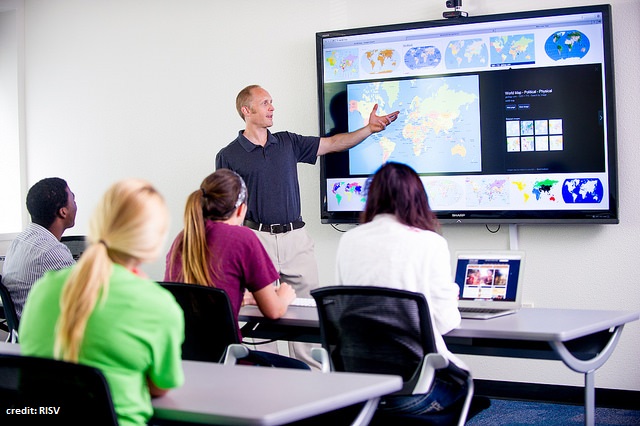
The central argument upon which I anchored my previous research work entitled “Factors Affecting The Use of Computers for Classroom Instruction in South Korean Universities”1 is “information technology has significantly altered the landscape of teaching and learning.” Indeed, it drastically changed the ways teachers taught and students learn thus school administrators and teachers need to respond accordingly and effectively.
At the turn of the 21st century education leaders have been reconfiguring educational paradigms that became almost obsolete because of the rapid changes in technology. Nowadays, emerging models of educational frameworks have included technology in both the expected outcomes and support mechanisms of the new paradigms.
The P21, a national non-profit organization that advocates for 21st century readiness for every student, developed the “Framework for 21st Century Learning” (F21CL) to define and illustrate the skills, knowledge students need to succeed in work, life and citizenship.2 The two parts of the framework (see figure below) are student outcomes (as represented by the arches of rainbow) and the support system (as represented by the pools at the bottom. One of the 4 clusters of student outcomes, is “Information, Media, and Technology Skills.” The article explains that to be effective in the 21st century, citizens and worker must be able to create, evaluate and effectively utilize information, media and technology.
And to be effective 21st century teachers, it has become A MUST that the teachers themselves should have those skills just mentioned. We cannot have “the blind leading the blind” scenario.
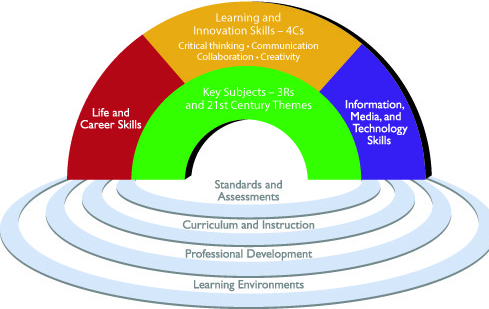
The 21st Century Student Outcomes and Support Systems
Schools need to respond by making the needed investment. They have to upgrade their existing facilities and purchase the necessary equipment in order to cope up with the demands of the new educational paradigms they have drawn up in order to keep abreast with the demands of the 21st century.
Not only in terms of equipment and facilities that the schools should focus on. They need to pay attention also to their manpower – particularly the teachers who plays the key role to ensure that success of the endeavor.
I made an assertion (in the previous work aforementioned) that integration of technology in instruction and assessment is inevitable and the teachers, being at the center of the delivery of learning need to accept it. The F21CL clearly defines the responsibilities of teachers (Standards and Assessment, Curriculum and Instruction, Professional Development and Leaning Environment.) Much of the responsibilities will be shouldered by the teachers. The said framework even specified clearly what is the role of teachers in the attainment of cluster 4 of students outcome – that is to “Enable innovative learning methods that integrate the use of supportive technologies, inquiry-and-problem-based approaches and higher order thinking skills.
But the application of technology in instruction is a contentious area that caused (or is causing) a lot of arguments and controversies in the academe. Despite the immense benefits that technology brings to education, some teachers are still either unwilling or hesitant to embrace the application of technology to the teaching-learning process.
I specifically identified also (in that same work) the pedagogical benefits that computers and internet provide. For example, the internet has become the teachers and students’ virtual library. Projectors and media players make the interaction between the students and their mentors more efficient. For the teachers in particular, the educational and organizational softwares and web browsers give them more resources and enable them to create better presentations.
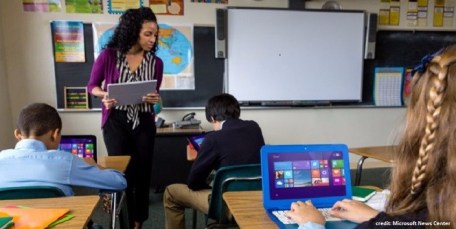
But apparently, not all teachers are convinced. They do not believe that computers benefit teaching and learning. They are the ones who do not use presentation softwares preferring to either just dictate or write on the board everything they wish to convey to their students. They are ones who refuse to use available course softwares opting to just open the prescribed textbook and read from it while teaching.
But why?
There are two possible reasons.
First – these teachers were exposed to educational philosophies different from those of the ones to whom embracing technology is a welcome development . This could be the reason they have different attitudes and views about the value of computers in teaching and learning. Their educational beliefs just don’t jibe with using computers in the classrooms.
Second and last – they simply (heaven forbid) do not know how to use any office software suites (word processing, spreadsheet, database and presentations applications) and specific educational software provided for them. They have difficulty navigating around any computer-generated environment. They are so helplessly not computer-literate that no amount of tutoring would help them learn.
Presumably, the reason they could not use the prescribed course software packages (that make things easier for them and their students) is that they don’t have the ability to do so. Even if assuming a course software, at a particular time, suddenly doesn’t work, its contents can be copied and pasted to any presentation software. But that again could be another problem… they probably don’t know how to create presentations.
Worst, they could simply be just aversive to technology.
Or maybe, they are simply lazy. They are computer literate but are not willing to try new systems being introduced.
The question that begs for answer is, “How can a teacher without the required 21st century skills teach such things to students?”
Professional competence for teachers is continuously evolving as technology keeps creeping into the foundations of education. Alongside pedagogical skills, another skill through which competence of 21st century teachers should be gauged is how extensive and effective do they apply technology (computer) to teaching and learning.
Perhaps it’s about time that computer literacy be strictly considered when hiring teachers.
On the part of school administrators and owners, they have a responsibility of ensuring that when they introduce a new computer application of learning the teachers are given enough time and sufficient training to become familiar with it.
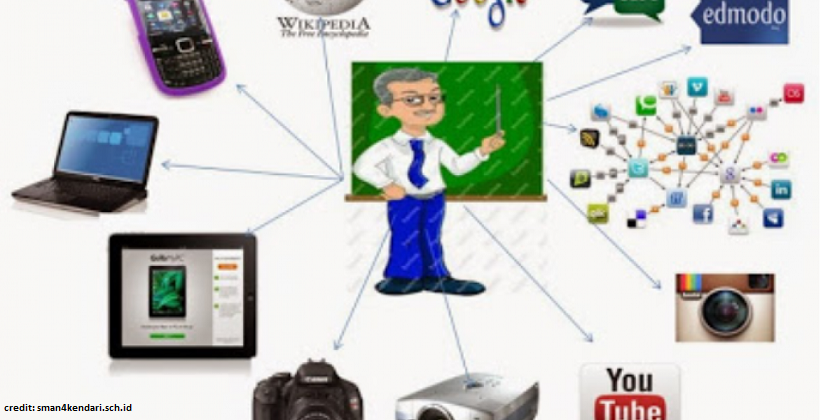
The following is one of the recommendations I made in a previous study I have been referring to.
“It should be noted also that among noted also that among the variables that are significant statistically teachers’ perception on the value of computers has the positive influence on their extent of use of computers for instruction in Korean classrooms. Thus, it is important for school administrators to keep that perception positive. The study also found out that a key factor in this positive perception is the teachers’ level of preparedness in using computers to facilitate learning. Being proficient in using computers is different from being familiar in using a new computer application for learning. Even the most proficient among computer users need time to learn an application introduced to them for the first time. Teachers tend to perceive the value of computers for classroom instruction negatively if they were not given enough time to acclimatize themselves with a new system being introduced.”
According to Edwin Creely3, “I was challenged by the ideas from Don Idle that we are textured for technology and that technology has always been and will ever be part of the deepest learning that we do. Learning to move technology and the digital technology of the 21st century into the heart of the learning process is an ongoing challenge for educators. So, the practice of being a literacy educator in the 21st Century must be, has to be, inclusive of digital literacies, including, most importantly, the use of social media.”
As Janelle Cox puts it, “A modern teacher is willing to try new things, from new educational apps to teaching skills and electronic devices. Being innovative means not only trying new things, but questioning your students, making real-world connections and cultivating a creative mindset. It’s getting your students to take risks and having students learn to collaborate.”4
References:
Factors Affecting the Use of Computer Technology for Instruction in South Korean Universities
http://www.p21.org/our-work/p21-framework
(E.Creely)(https://www.researchgate.net/post/What_are_the_qualities_required_of_ teachers_to_teach_21 st_century_learners.
(J.Cox)http://www.teachhub.com/15-professional-development-skills-modern-teachers



 M.A.D. L I G A Y A