Blog Archives
The Pursuit of Happiness

A lot of essays have already been written about happiness. There’s even a scientific journal called “Journal of Happiness Studies.” I think I don’t need to explain what kind of studies are published in the said journal.
I also have several essays about this topic. One of them is entitled “Defining Happiness” which if you wish to read later then you may click on this link.
So, what else should I be discussing here about happiness when it is possible that I may have already articulated everything I wish to say about it in my past essays. I decided to revisit this topic because I just want to share one very significant insight I heard when I listened to one of Dr. John C. Maxwell’s audiobooks. Dr. Maxwell is an American author, speaker, and pastor. He has written many books and I have actually purchased two of those – “How Successful People Think” and “Jumpstart Your Thinking.” I sometimes watch his videos on YouTube and that’s how I came across that audio book.
In that said audio book Dr. Maxwell shared an experience when he and his wife (Margaret) were invited as co-speakers in a seminar about happiness. According to him, when it was Mrs. Maxwell’s turn to speak, one of the participants asked, “Does your husband make you happy?”
Dr. Maxwell said that he was surprised with the question, but even more so with the answer given by his wife – “No!” He added that upon hearing that, people started to look at him. And as if the negative response was not enough to indict him (if it were true), somebody from the audience asked “Why?”
Then his wife explained.
“No! John Maxwell cannot make me happy. John Maxwell is a very good husband. He is never drunk. He never cheats on me. He always tries to fulfill my needs, physically and spiritually. But still, he cannot make me happy. Why? Because no one in this world is responsible for my happiness than me.”
The message is simple – we are responsible for our own happiness. It’s nobody else’s job to make us happy. Mrs. Maxwell is telling us that whether we become happy or not is up to us. It is a decision we make and not based on what others do or don’t do. As you probably have read (or heard) many times – “Happiness is an inside job.” You should have control over it. You shouldn’t allow your JOYstick to be handled by anyone.
Each of us is responsible for setting the parameters of our own happiness and we should be careful when we do so. We should set our own answers to the question “What would make me happy?” The question that should follow is – Which level (or levels) in the Maslow’s hierarchy of needs should be met for you to be happy – the basic, the psychological, or the self-actualization needs?
Those who consider money as their source of happiness have their physiological and safety needs as underlying reasons for doing so. Their need for food, clothes, and shelter are foremost among their concerns. There’s nothing wrong with that – for as long as they acknowledge that living a happy life requires more than eating, wearing clothes, and living under a roof.
We all have a dream house and car. We all want to eat the best foods. We all want something more – jewelry, bag, and what have you. We all want to have a vacation in the places listed in our bucket lists. For all those, we need money.
Money is not bad, it’s a blessing. The more of it we have, the better. Whoever says “I don’t need it” is a hypocrite. Whoever says also that “money is the root of all evils” is mistaken. Very likely that those people who have this kind of mindset about money don’t have it. What makes money bad is the way we want it, how we acquire it, how we spend it, and what we sacrifice to have it. What makes it bad is the answer to the question – “Are you the master of money… or its slave?” And what are you sacrificing in your quest for fortune? Is it your health… relationships… or your dignity as a human being? Is it worth it?
If you tie up your happiness with your need for love and belongingness, that’s when other people – your family and loved ones, friends, and to some extent, co-workers – get involved. From “What makes you happy?” it now becomes a matter of “Who makes you happy?” This is when we should be reminded of Mrs. Maxwell’s words – “No one is responsible for my happiness than me.”
It’s difficult but we should not allow other people to dictate our happiness. No matter how close they may be to us. We should manage our relationships in such a way that it would not destroy the tranquility of our lives and distract us from our personal pursuits and endeavors.
How to do it?
We become unhappy in our relationships when we get disappointed by something that a loved one, a friend, or a co-worker did or had failed to do. That is because we have set expectations and standards that they must measure up to. When they don’t, we become disappointed leading us to feel unhappy.
What should you do then? Consider dumping your expectations and standards.
Our happiness should not be contingent upon the way we expect other people to think, speak, and act. Do not set standards that whether your relatives, boyfriend, girlfriend, husband, wife, children, parents, friends, co-workers, boss, leaders, neighbor or a stranger, like it or not, should comply with. You will be gravely disappointed if you expect other people to behave and think exactly the way you want.
You have no control of the way your fellowmen would conduct themselves as persons and as professionals. You just need to embrace them for the way that they are. Just like you and me, they are not perfect. If your relationship is at a level that they could accept rebuke and advice then try. But how sure are you that with whatever issues or disagreements that you have with whoever, you are right and they are wrong – that the mistake is theirs, not yours. Should they not accept your rebuke or advice, in the event that you are certain that you stand on the side of truth and reason, then let them be and you do what is best for you. Move on. Let whoever erred suffer the consequences… and pray that it’s not you.
Happiness, being an inside job that it is, should not be hinged upon any external factors that we don’t have direct control of. We should, therefore, in our pursuit of happiness, focus internally. Our happiness is our own business. We should strive higher than satisfying our basic needs and our need for love and belongingness. We should set higher ideals for ourselves.
Nestled on top of Maslow’s hierarchy of needs are self-esteem and self-actualization. Include them in the list of your answers to the question “What would make me happy?”. It will be in your best interest should you place them on top of your list as well.
Happy you will certainly become if you acquire the knowledge and skills that would enable you to achieve success in your chosen field of endeavor. Through it, you will earn the recognition and respect of your fellowmen bringing you an immeasurable amount of self-esteem.
If you attain self-actualization, it means that you succeeded in unleashing your full potential as a person and you will be surprised how money, love and admiration, and respect of other people will come knocking at your door even if you don’t seek them.
True happiness comes from within thus there are people asserting that it (happiness) is actually a decision we make and not a goal that we try to achieve. But if we consider it as an “end,” the “means” of getting it should not be anybody or anything but what we become as a person.
Happiness is our reward when we succeed in our efforts to become, not perfect for perfection can never be achieved, but the best version of ourselves. When we become the best of what we could be, we can live our lives to the fullest and become productive members of both our family and society.
Where Has “Positive Thinking” Brought Me?
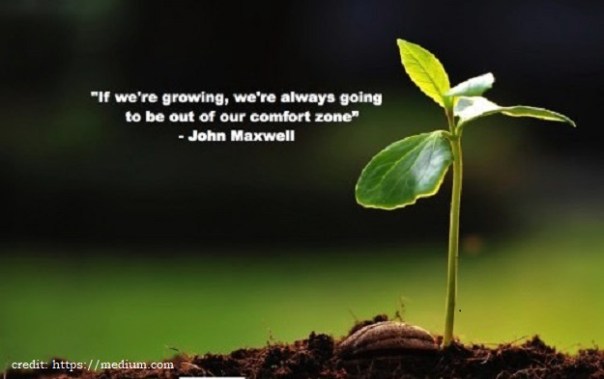
“Positive thinking” as a concept is like a narrow street that seemingly leads to nowhere. When you embrace it and take the first few steps forward, it would make you feel like you’re not going anywhere.
Consider that normal. When you venture into the unknown and leave your comfort zone, it’s normal to feel iffy. It is your old negative mental programming taking control of your thought processes. As you take a few more steps forward, doubts would start to set in and you’ll be tempted to go back where you came from. That temptation to abandon the journey just beginning would become stronger when people around you start saying how crazy you are to even believe that “positive thinking” works. But should you succeed in conquering all the negative chatters and take the courage to just keep on walking you would soon hit the main road.
The main road that narrow street called “positive thinking” leads to is “personal growth and development.” That was what I personally discovered.
When I decided to dive deeper into “positive thinking,” I realized that it is but the tip of the iceberg. “Positive thinking” is not the main thing. “Personal growth and development” is.
My journey to “positive thinking” started with my accidental discovery of a “self-help” film. I stopped by a stall selling old (pirated) DVDs of old movies. The label (title) of the one of the DVDs – “The Secret” – caught my attention. It intrigued me. So, I picked it up thinking that it’s either a mystery-thriller or a sci-fi movie.
I described in full that encounter with “The Secret” in my essay entitled “Beyond Positive Thinking.”
It is that “self-help” film that got me into positive thinking. For me, anything that advocates positive change is worth my time and worth trying. I though I had nothing to lose but everything to gain when I decided to give it a try.
When I watched that film for the second time, I took off my “critic’s hat” and emptied my mind of all those philosophies that tried to filter all the information the film conveyed and was leading me to analysis paralysis. Anyway, all of those philosophies – all of those isms – which I previously learned were seemingly not leading me to what I want to be and what I want to achieve. Honestly, at that point in my life, I was not even so certain of what I really wanted to be and what I really wanted to achieve. That “self-help” film offered me an option, an opportunity to try another system of beliefs that might help me have clarity of purpose.
I really thought then that my PhD would transform me into the best version of myself. I was wrong.
So, I took a leap of faith and embraced “positive thinking.” I walked down that narrow street that seemingly led to nowhere. I struggled but succeeded in overcoming doubts, in shooting down skepticism, and in turning a deaf ear to the internal and external negative chatters.
And I don’t regret that decision I made.
Then I probed deeper. I read existing literature about “positive thinking” and watched lots of videos about it. That’s how I came to discover that it (“positive thinking”) is the narrow street that leads to the main road called “personal growth and development.”
“Positive thinking” is the springboard to “personal growth and development.” The former is the key to unlocking the latter. I strongly believe that only when a person develops dispositional optimism, when that person expects good things to happen, and when that person hopes that he/she could be a better person and live a better life that he/she would become open to the idea of undertaking the necessary steps to venture seriously into growing and developing further as a person.
When I reached the end of that narrow street of “positive thinking” and got to the main road of “personal growth and development,” I confirmed that indeed it (“positive thinking”) is just the beginning of the journey. The road ahead is long and winding. There’s much to be done. After the “thinking” comes the “doing.”
I discovered that in order to experience meaningful growth and development as a person, it would take more than “positive thinking.” There are other requirements aside from having a positive mindset. There are other things that ought to be done and these are what the gurus of “personal growth and development” commonly describe as the practices and habits that made extremely successful people who and what they are. These people became the best versions of themselves and had found the happiness, good health, and wealth they sought because of such practices and habits.
These practices and habits are actually very practical ones. They are not magical and out of this world stuffs. They are as follows: knowing your whys; embracing a solid belief system; goal setting; short and long-term planning; managing time effectively; developing self-discipline; practicing mindfulness; being purposive; becoming self-sufficient; and living a balanced life.
These are the things that Brendon Burchard, Tom Bilyeu, Jim Rohn, Wayne Dyer, Les Brown, Joe Dispenza, Brian Tracy, Zig Ziglar, Tony Robbins, Simon Sinek, John Maxwell, Mel Robbins, and the like, recommend to people intending to maximize their potentials.
The above-mentioned experts in the field of “personal growth and development” pointed out also that extremely successful people have a common hobby – reading. They also practice meditation.
What I consider as the most significant among those practices or habits of people who reached the pinnacle of success in their fields of endeavors is “living a balanced life.”
“Balanced life” is a concept difficult to define definitively. It is so because people have different priorities and live different kinds of life.
But when I sifted through the works of advocates of “personal growth and development” I saw a common pattern about living a “balanced life” that made me understand what the concept is. And it is not rocket science.
Firstly – as people work hard to achieve what they want in life – money, degree, fame, and what have you – they should not disregard their health and relationships. Not disregarding health means eating the right food, getting enough rest, and exercising regularly. Not disregarding relationships means not forgetting that you have a family and friends needing your attention too.
Secondly (and lastly) – become a well-rounded person. Becoming a well-rounded person means bearing in mind that you are a physical, intellectual, emotional, and a social being (insert spiritual if you happen to believe in God). You should strive to develop in all these areas.
This is how far “positive thinking” brought me – to the discovery of these “personal growth and development” practices and habits. They seem to be simple, but believe me, they are easier said than done – especially if you have a fixed mindset and you keep looking at life and the world using a negative perspective.
Your Blame List

The last time we came to work late, was it the traffic or the weather that we blamed? Or was it the alarm clock’s fault for it didn’t go off? Ahh, the battery of the cellphone went dead.
When we had a break-up with a lover (or a major falling out with a friend), who did we blame? Ourselves or the other party?
Whenever something goes wrong, seldom or rarely (or is it never?) do we hold ourselves responsible for it. We always point our finger at something or hold others accountable. When things don’t turn the way we expect them to, we are always ready to check our blame list to find somebody or something to put the liability on.
This reminds me of one of the narratives of Jim Rohn.* He said that one day he was asked by his mentor Earl Shoaff, “Jim just out of curiosity tell me how come you haven’t done well up until now?” What Mr. Rohn did, according to him, for him not to look too bad, was read on his list why he wasn’t looking good and not doing well. He blamed, among other things, the government, weather, traffic, company policies, negative relatives, cynical neighbors, economy, and community.
What about our personal blame lists? Is it as long Mr. Rohn’s. Perhaps it’s longer.
Who do people who could not find jobs blame? Of course the favorite whipping boy – the government. They contend that it is the duty of the government to create job opportunities for them. That is true. But work is something that is not going to be awarded to anybody in a silver platter. We have to search for it and we ought to be prepared. It is our responsibility to get ourselves ready for employment. Get the required education or training. We need to have the necessary knowledge and skills.
What if you could not get the education and training you need? Well, whose fault? Okay, I will give you time to check your blame list.
Done?
Now let’s continue.
Common sense will tell us that the government cannot possibly provide each citizen with a job. It is also impossible for the private sector to employ everybody. That’s just the reality. Harsh it may be. So, what should we do? Simple – be competitive. Be the best in our field or profession. The best are always on top of the priority lists of prospective employers. And if in our respective countries there are no job opportunities, or we won’t get the salary we want, let’s consider applying for work overseas. If you’re not satisfied where you are, go somewhere else.
“You can always move out from where you are now to find yourselves better opportunities. You’re not a tree.” That’s also from Mr. Rohn.
The ones who won’t get employed, or do not want to work for others because they have better plans for themselves, could perhaps succeed as entrepreneurs. Not everybody are trained to be in a workplace and be someone else’s employee. Some of us will be farmers, or fishermen, or plumbers, or drivers, or gardeners. There is always a way to earn an honest living. Whatever it is that we find as a source of livelihood, let’s us be thankful.
Accept the reality that some are rich and some are poor. And hey, don’t blame the rich if they don’t want to help the poor. Don’t blame your rich siblings, friends, and neighbors if they don’t share with you their blessings. It’s either you work as hard as they did for you to have what they have or be content with what you are capable of having.
Just bear in mind that each of us has a choice to A – Be rich; B – Have the means to meet both ends and at least get extra cash to afford some luxuries in life; or C – Have 3 square meals a day. Yes, I consider A, B and C as choices. It’s up to us to decide what to aim at… which of the three would make us happy.
Some people live simple lives happy to be able to eat three times a day. Some set their ceilings high and sometimes even go through it. Each of us has a chance at A. Nobody would prevent us from wanting to become rich. But becoming that won’t be easy… unless you win millions in the lottery.
There are two ways to go (and robbing a bank is not one of them) for those who would aim at A – hope that you hit that lotto jackpot or work as hard and wisely as those who became millionaires and billionaires did.
And when you fail to be so… when you fail to achieve your dreams and realize your goals… blame no one.
People who suffer from setbacks and face adversities would more often than not blame their friends or family members – parents, siblings, children, spouses – citing lack of support. Let’s not forget that support is something that is given voluntarily. It is not an entitlement. We could say that it is the obligation of our loved ones to help us. But what if they are not capable of helping for just like us they also need help or they also have problems of their own?
Or what if they have the capacity to support but they won’t? That would bring us to another “don’t” aside from don’t blame. That is don’t expect. If we get support in the pursuit of our dreams and goals we should be thankful. If not, our fight goes on. It’s not the end of the world. We should always be ready to fight our battles alone.
And please, let’s not blame our parents also if we are not doing well in life. Let’s not accuse them of not paving the way for us and ensure that rolled in our paths to better lives is a red carpet. Whatever kind of parents we have (or had) – good or bad – they ceased to be in control of us and our future the moment we became capable of deciding for ourselves. The question is, “What did we do when we sat in the driver’s seat of our lives?” Did we do everything we could to ensure that we succeed in our endeavors? Or did we expect that success is like the manna that fell from heaven which the Israelites in the Exodus just freely picked up?
Remember the narrative of Mr. Rohn? It did not end after he made a litany of the reasons why he was not succeeding and who and what should be blamed for that. Mr. Shoaff patiently listened to him and at the end said the following, “Mr. Rohn, the problem with your list is you ain’t on it!”
Before Mr. Rohn decided to work for Mr. Shoaff, he tore off his old blame list and replaced it with a new one where he wrote the only reason for not doing good in life – “ME.”
Now, let’s review our personal blame lists? Are we included on it? Or we automatically assign fault to something or someone for the misfortunes and failures that befall us?
Something that we should understand and accept is whatever we have become, wherever we are in the socio-economic pyramid, and whatever we have and don’t have, are the results of all the decisions we made. Others may disagree but I believe that our destiny is the sum total of all our decisions and indecisions.
We disagree in our interpretation of destiny. Theists believe that whatever happens to us is the will of a supreme being. I also believe that God exists but I think that we chart our own destiny. He gave us the gift of volition so we could have the dignity to decide for ourselves.
So, if we are not succeeding in our endeavors, if we are not healthy, and if we are not happy, we only have ourselves to blame.
__________
* Jim Rohn was a successful American entrepreneur and motivational speaker and his net worth before his death, according to estimates, was $500 million.
Essays On Personal Growth and Development

I have in this part of my website the articles I have written about personal growth and development. I want to share the lessons and insights I learned from motivational speakers whose books (and videos on YouTube) have given me the blueprint on how best I could restructure my way of thinking so I could make better decisions in the different areas of my life.
I have been experiencing amazing changes in my life that I started regretting why didn’t I dig into these personal development stuffs when I was younger. I have heard a lot about “positive thinking” and related ideas before but I did not pay attention. But as the saying goes, “better late than never.”
I figured that “positive thinking” is but the first step in a person’s journey to a better self and a better life. It’s not the be-all-end-all of personal growth and development. But it all begins in setting a positive mindset. The corresponding positive actions should come next.
My goal in writing these articles and have them put together in this corner of my website is to help promote awareness on personal growth and development. I am not an expert in this field… all I want is to share the little things I have learned so far and to say that I am so happy with the results I am getting.
**********
Self-doubt: The 8th Deadly Sins
 M.A.D. LIGAYA


 M.A.D. L I G A Y A