Blog Archives
South Korea: In the Eyes of an Expatriate (1)
(1st of 3 parts)
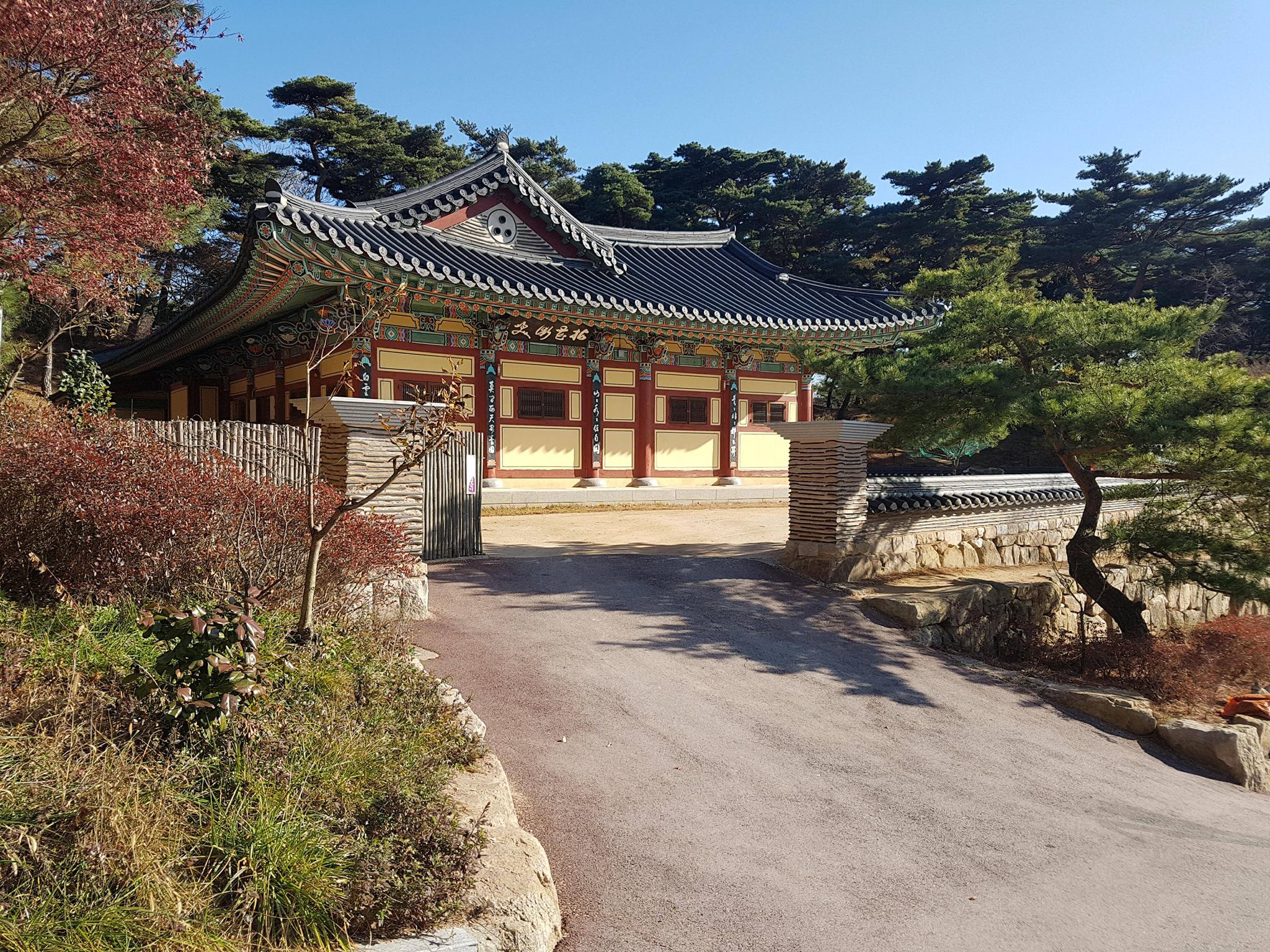
South Korea entered my consciousness through Hallyu – a term that when translated to English means Korean Wave. And yes, when that cultural wave reached our shores, South Korean dramas, movies, and music drowned the country’s airwaves. Local magazines and the entertainment sections of newspapers regularly featured K-pop artists and other Korean TV and movie personalities. Before long, other aspects of Korean culture – food, fashion, lifestyle, and what have you – started to deeply influence me and my countrymen.
Before the Korean Wave came, I knew not much about South Korea. I remember checking the encyclopedia for information about the Korean war when I took World History when I was a college student. It was only then that I found out that my country was one of those which sent troops to help this country to ward off the Communist invasion from north of its borders.
Just imagine how dreadful a picture of the war-torn Korean peninsula the things that I read created in my mind. It was horrible, to say the least. The death and destruction were too much to bear.
But before I graduated, I had another chance to check the encyclopedia for more information about South Korea when the country hosted the 1988 Summer Olympics. Because of the said sporting event, South Korea was all over the news. That triggered my curiosity thus I checked the encyclopedia to once again read something about the said nation.
I saw a country different from what those pages about the Korean war presented to me. I found out that the nation called “Land of the Morning Calm” rebounded from the horrors of the Korean war and eventually became very progressive. Then I wondered at that time and asked – “What did the South Koreans do that enabled them to, like the legendary Phoenix, rise from the ashes of a horrendous war at that time and even became only the second country in Asia to host the world’s biggest sporting event?”
As years passed, I learned more and more about South Korea, not only through traditional media but more from the Internet (which became more accessible than when I was in college). I got to see more and more Korean dramas. It made me, just like many of my countrymen, want to visit the country so bad. I wanted to visit the places in the country that I got to see only on TV programs and movies. I wanted to try soju and maekju and when the two are combined – somaek. I wanted to taste kimchi and eat Korean dishes prepared and served by Koreans. I wanted to try bibimbap, pyo haejangguk, and kalguksu served with plenty of banchan in a restaurant in South Korea, not in a Korean restaurant in my native land. I wanted to meet real Korean people. In short, I wanted to have an authentic Korean experience. I personally call that my “Korean dream.”
That urge became stronger when I enrolled in the program Teaching English to Speakers of Other Languages (TESOL). South Korea was mentioned by the program coordinator as one of the countries considered as premiere destination for ESL teachers. Thus, since teaching overseas is an option in the career path I set for myself, I thought that if I would teach abroad, why not in South Korea? My “Korea dream” suddenly expanded – I no longer just wanted to have an authentic Korean cultural experience but to live and work in this country.
Then I did what I had to do for that “Korean dream” to come true. I left no stone unturned.
My persistence and hard work eventually paid off. My wish was granted. I was given the opportunity to live that dream when a university hired me as a teacher. So, off to South Korea, I flew.
As soon as I exited Gimhae Airport, I started having that authentic Korean experience. The early spring weather giving me an icy cold welcome got it going.
As days and weeks passed, I gradually immersed myself into the country’s culture. I was no longer just watching the people of this land from the television set, the silver screen, and the World Wide Web. It’s no longer a Korean drama I was watching but it’s real Korean life I was experiencing… from reel to real. I got what I wanted.
Love At First Bite
I am a foodie. The extra pounds around my waist is a testament to that. So, when I came here (South Korea) I was excited to finally try the dishes which I saw only on television shows and in movies in my country.
The first food I ate here in South Korea was (drum roll, please)… biscuits from the Philippines. I wasn’t able to eat anything Korean immediately when I and sir Kenn (a fellow professor from the Philippines) arrived at the Busan International Airport. I was not thinking of food at that time. I was looking for at least a cup of coffee then, not because of hunger nor my usual craving for caffeine. I just wanted to feel something warm in my hands which started to go numb. It was freezing cold that morning and hunger was the least of my worries. The only thing I wanted was to reach our destination at Gyeoungju-si and wrapped myself up with the thickest of blanket I could find there.
My jacket wasn’t thick enough for my body to enjoy the early spring weather trying to give me an icy cold welcome. I didn’t have time to open my travelling bags because we had a bus to catch. It was my fault to believe what some friends back home told me that it’s not that cold here during spring. For a body used to either a hot or a VERY HOT weather, experiencing a negative two for the first time was literally a chilling experience.
As soon as I reached the apartment reserved for me by 경주 대학교 (Gyeoungju University), the first school where I worked here, I immediately unpacked and got myself another jacket. It was only when I was warm enough that I started to feel hungry and realized that I was actually a time zone away from my family. Back home, my wife would make sure that whenever hunger strikes there’s food I could grab from either the fridge or the table.
I waited for another day to officially get introduced to Korean dishes that I had the chance to see only on TV through the Korean dramas that Filipinos like me are so fond of watching. I found it amusing that aside from wishing me well for the Korean adventure I was about to embark on, my family and friends kept telling me that finally I would have a chance to try the legendary 김치 (kimchi).
Then finally the day came that something Korean would travel my digestive tract. I got that chance during the orientation for the university students held at the Concorde Hotel (Bomun Lake Resort, Bodeok-dong, Gyeongju-si, Gyeongsangbukdo). Of course, I was excited to meet my fellow professors from other countries and have my first encounter with Korean university students. But I was, I think, more excited to have my first dining experience in South Korea. What made it more exciting was the fact that after that night, the taste of kimchi would no longer be a mystery to me.
Right after the orientation, I joined the foreign professors and university officials and we all headed to the restaurant of the hotel. As we approached the dining hall, the ambrosial smell characteristic of hotel lobbies was replaced by a savory waft that was unlike any combination of aroma my sense of smell was used to. It made me hungrier and more excited.

There were four of us who shared one of the tables reserved. Already there (on the table) before we sat down were lots of 반찬 (banchan), or side dishes, mostly vegetables, including Korea’s “most-talked-about” kimchi.
I dived in. The first Korean food I tried was (drum roll again, please)… kimchi.
Despite my struggles with the chopsticks, I managed to pick a small chunk of this famous fermented cabbage. The smell, as I expected, was biting and pungent. Its tanginess was nothing new to me because in the Philippines there are items in our cuisine that I could say are perhaps more biting and more pungent than kimchi. What about the taste? It’s garlicky, salty and of course spicy. The first one I tried then had a combination of sweetness and spiciness. I was told that there are more than 100 known varieties of kimchi.
After my first bite, I immediately wanted more of it. Yes, I came to like kimchi. I don’t know why, let me just say that it was “love at first bite.” It is so hard to explain as to why I would consider meals incomplete without a serving of this side dish.

The main meal served was a kimchi-based dish called 김치 찌개 (kimchi-jjigae). Kimchi-jjigae is kind of stew where kimchi (preferably older or more fermented) is mixed with pork, seafood and diced tofu. I could handle spicy foods like this one. There are two problems though when I eat them. First, I sweat too much. Second and last, I probably would have up to two orders of extra rice. I was a little overweight when I came to South Korea. One of the things I set as goal when I came here was to get rid of the “belt bag.” With foods like kimchi-jjigae, I realized that night that losing weight is an impossible dream.
I completely abandoned my weight concerns when sir Randy, also a fellow professor from the Philippines, told me that the following day he would make me try 삼겹살 (samgyeobsal).
Kimchitized
There is a strong possibility that when we visit a country as tourists or stay there for a long time to work, we might experience culture shock. It happened to me here in South Korea. But mine is a culture shock unlike any other. It was like I was shocked, not to my dismay, but to my delight.
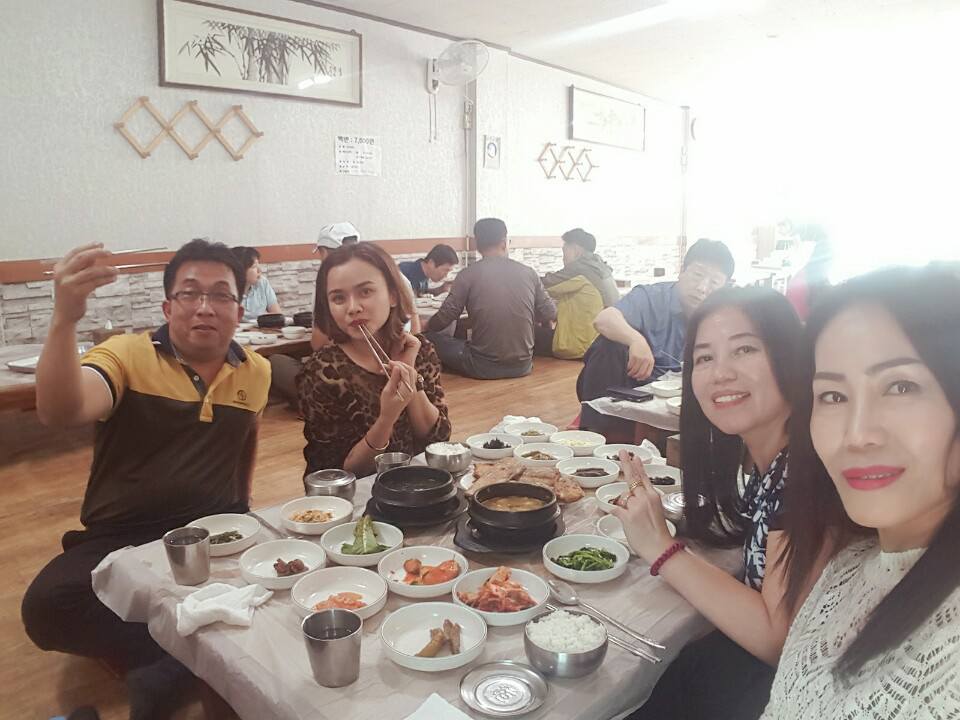
Which part of Korean culture did that?
It’s their FOOD!
That’s right! It’s the food. When I had my initial encounters with this element of Korean culture, I was shockingly delighted. I loved it.
I couldn’t find the right word to describe the experience. So, pardon me for coining a new word – KIMCHITIZE.
Am I the first one to use this word? (Please tell me if not.)
Anyway, KIMCHITIZE is a verb. It means “to cause a foreigner to like (or fall in love with) Korean dishes/foods.”
For the purpose of this essay, I need the past participle form of the verb – KIMCHITIZED.
The first Korean food that landed on my tongue was Korea’s fabled kimchi and the first Korean dish that traveled the full length of my digestive tract was kimchi-jjigae.
It was love at first bite. I was readily kimchitized!
It’s not much with the newness to me of the Korean cuisine. I have actually read a lot of literature about Korean dishes before. Even the Korean dramas we Filipinos are fond of watching in the Philippine give us a glimpse of what South Koreans cook and eat. What I consider, if I may say it again – “shockingly delighting” – are some things that I consider peculiar about the food part of Korean culture.
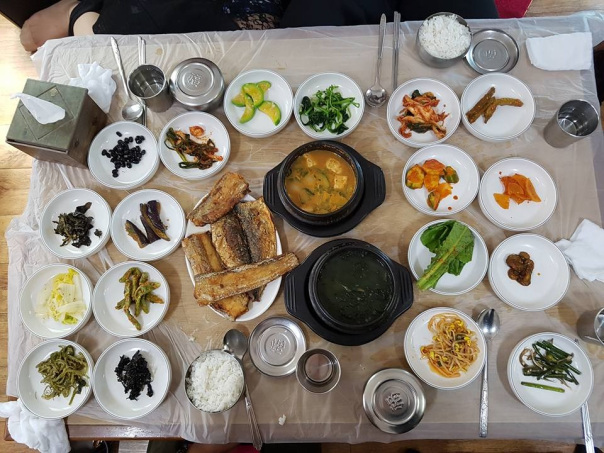
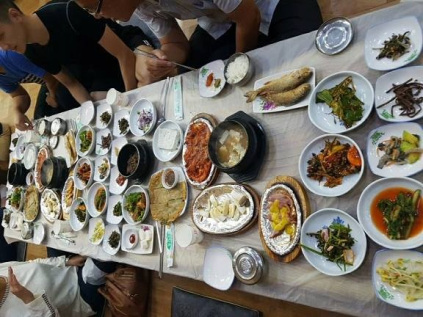
The first one I consider unusual are the side dishes (반찬 – banchan). No! Not the side dishes per se but the amount. Look at the photos and you’ll see what I mean. That’s a plethora of side items. The main dish is drowned in a sea of side dishes. It’s too many that you can easily say goodbye to weight loss once you see them scattered on a table. So inviting. It’s so hard not to pick one with your chopsticks, spoon or – fingers. You would promise “just this one” until that one becomes two – then three – then more.
The first time I experienced that shocking delight of having lots of side dishes was when for the first time I tried 삼겹살 (samgyeobsal). Aside from the leaves, there were plenty of side dishes like steamed eggplant, soybean sprouts, cucumber salad, and some more I could no longer recall.
Shockingly delighting also, for me, is the Koreans’ romance with green leaves. They love wrapping their meat with leaves, particularly lettuce and perilla. I got accustomed to just dipping grilled meat into a plate of salt or a bowl of soy sauce and vinegar combined then they’re ready to be eaten. For the Koreans, it’s different. They will get a leaf, spread it flatly on their palm then carefully pile there meat, grilled garlic, and a side dish or two. Then they carefully roll it making sure that it’s securely wrapped before stuffing it into their mouths.
It surprised me also to see how my Korean friends would ordinarily munch green pepper and garlic as if it’s just another kind of fruit or vegetable. I am okay with the garlic, though I had to grill it first. I bravely tried the green pepper once my bravery was gone in just a few seconds. My friends laughed at how I perspired and my face turned so red that time. Since then I avoided it like a plague and would politely say no whenever offered.
They say that there are four phases of culture shock namely, honeymoon, frustration, adjustment and acceptance. In my case, it started with honeymoon and jumped right away to the final phase of acceptance. There were no frustrations at all. But wait! I remember that I passed through the adjustment period anyway.
And here’s what I did in the adjustment period – I needed to punch another hole on my belt because with all the mouth-watering Korean dishes/foods out there waiting to be discovered losing weight is going to be a mighty struggle.
__________
Below is a link to the articles about some of the Korean dishes/foods I have been enjoying here in South Korea.
Bakit Espesyal Ang Unang Araw Ko Sa South Korea
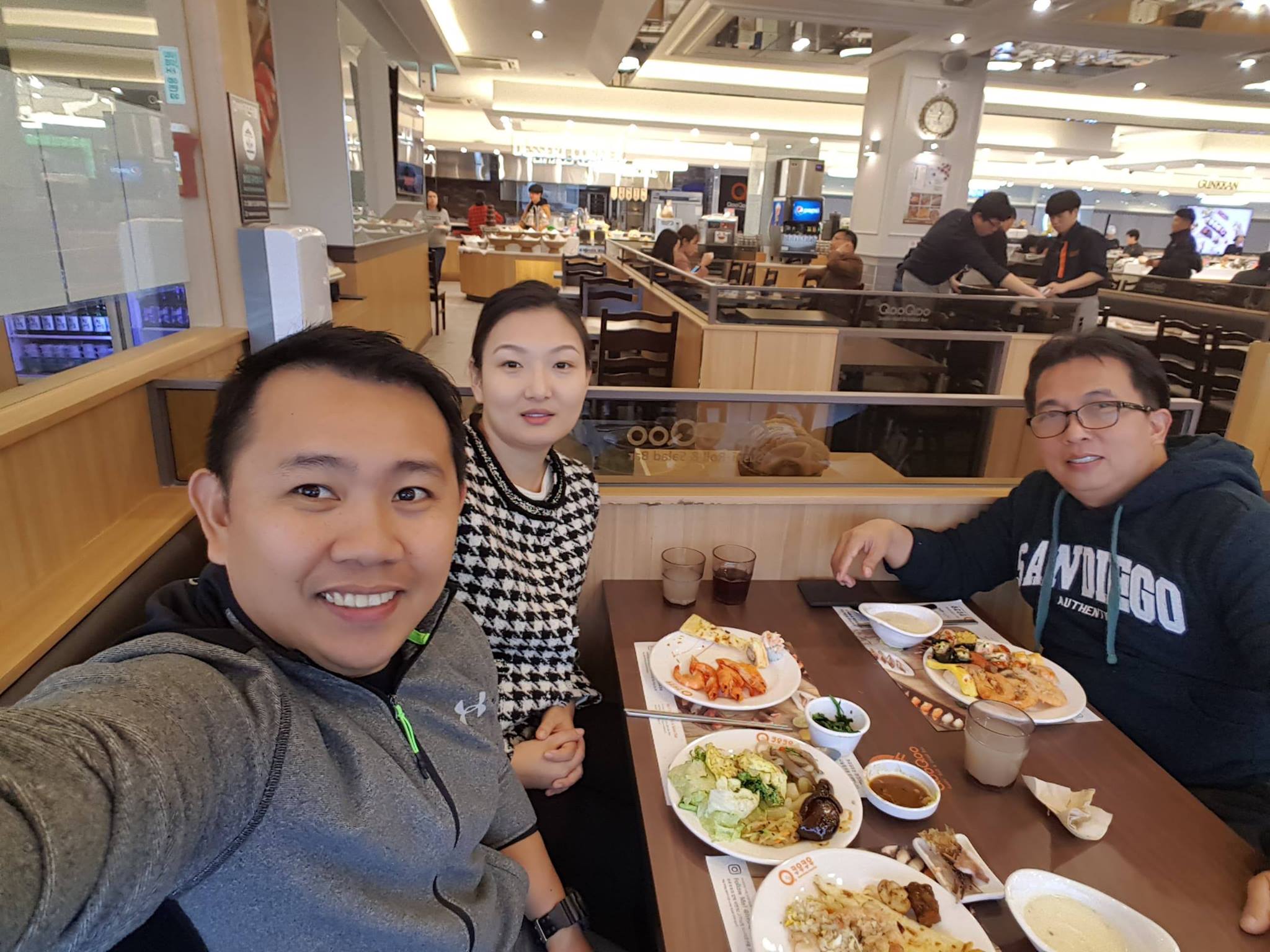
Madaling araw ng ikalawa ng Marso taong 2013 nang ako’y umalis ng Pilipinas sakay ng Asiana Airlines. Bandang alas-otso na ng umaga nang ito’y lumapag sa Pusan International Airport. Kasabay ko noon si G. Kenn Lachenal. Pareho kaming patungo sa South Korea upang magturo ng English sa Gyeoungju University.
Aaminin kong sabog ako noong panahong iyon, hindi sa droga, kundi sa napakadaming isipin tungkol sa mga mahal ko sa buhay at pangamba sa panibagong hamon na pinili kong harapin.
Labag sa kalooban kong lisanin ang mga mahal ko sa buhay, ngunit kaylangan. Ayaw ko rin sanang talikuran ang paraaalang pinaglikuran ko bilang Principal ng halos isang taon. Subalit ayaw na ayaw kong nagpapadaig sa aking emoyson, ayaw kong hindi gawin ang isang desisyon dahil nagpatalo ako sa mga emosyon. Pinag-isipan kong mabuti ang aking pag-punta sa South Korea upang magturo. Hindi ito biglaang desisyon. Bahagi ito ng mga plano ko. Isa itong balak na dumating na ang panahon upang isakatuparan at hindi ko papayagan ang mga emosyon ko upang ako’y pigilan.
Hindi ang pagnanais na makatanggap ng mas malaking sahod ang pangunahing dahilan kaya ako nagbalak mangibang bansa. Malaki ang sahod na tinatanggap ko bilang Principal noong panahong iyon. Malaking magpasahod sa mga principal nila ang mga Pakistani employers ko. Bukod pa nga sa may kinikita ako bilang academic consultant sa isang technical school at part-time teacher sa isang kolehiyo. Sapat ang kinikita ko sa Pilipinas kung tutuusin. Nakapagpatayo nga ako ng bahay. Ang problema – hindi na ako komportable sa loob ng aking “comfort zone.”
Nakaramdam kasi ako noon ng matinding pagkaumay sa pagsu-supervise ng mga guro’t empleyado. Parang walang pagbabago – wala ng hamon. May kulang… kulang na gusto kong hanapin. Hindi nakatulong na may ilang personal na problema akong dapat ayusin. Napakalinaw na kaylangan ko ng isang napakalaking pagbabago sa aking buhay kung nais kong manatili ang aking katinuan. Kinaylangan kong mangibang bayan para sa isang panibagong panimula.
Pakiramdam ko noo’y nasa isang deadend ako at batid kong merong mundo sa likod ng mga deadends. Iyon ang gusto kong puntahan… lakbayin.
Ang sabi nga ni Jake Sully, ang main character sa pelikulang “Avatar,” “Sometimes your whole life boils down to one insane move.” At katulad din ni Jake, may pangamba man ay sigurado ako sa aking gagawin bago ako tumalon upang makipagbuno at mapaamo ang sariling kong “Toruk.”
Dalawang bagay ang baon ko ng magpunta ako sa South Korea – tiwala sa sarili at pananalig sa Diyos. Laging ito ang kumbinasyong ginagamit kong panangga sa lahat ng pagsubok at panungkit sa ano mang inaasam kong makamit.
Ang tiwala ko sa sarili at pananalig sa Diyos ay parang sandwich. Meron itong palaman – sipag at tiyaga.
Hindi swerte ang hanap ko sa bansang pinuntahan, hindi ako naniniwala sa swerte. Naniniwala ako na “Nasa Diyos ang awa, nasa tao ang gawa.” Ang pakay ko ay sumulat dito ng bagong kabanata sa aking buhay – bagong yugto sa tadhanang naniniwala akong ako ang dapat gumuhit. Batid kong dapat lang na doblehin ko ang aking sipag at tiyaga.
Unang byahe ko iyon palabas ng bansa at mabuti na lamang na nakasabay ko si G. Lachenal. Bukod na sa matulungin ay sanay siyang bumiyahe sa labas ng bansa. Kaya medyo kampante ako. Sa Gyeoungju University nga din s’ya pupunta kaya nakakatiyak na akong hindi ako maliligaw.
Nang makarating kami sa Pusan International Airport ay nagulantang ako sa lamig. Nanuot ito sa suot kong jacket. Buong akala ko ay dahil tapos na ang winter at noo’y papasok na ang spring ay parang sa Baguio na lang ang lamig. Mabuti na lang at ang nasakyan naming bus papuntang Gyeoungju-si ay nakaandar ang heater. Antok na antok ma’y hindi ko magawang matulog sa biyahe dahil tinitignan ko ang bawat lugar na madaanan. Lahat ay bago sa aking paningin. Wika ko sa sarili’y, “Heto na ako sa South Korea.”
Matapos ang halos dalawang oras na biyahe ay nakarating kami sa Gyeoungju-si. Ang sumalubong sa amin ay G. Mark Celis. Siya ang naghatid sa amin sa apartment na aming titirhan, si G. Lachenal sa “white house,” ako nama’y sa “blue house.” Hindi sa Washington D.C. at Seoul ang “white house” at “blue house” na nabanggit ko. Iyon lang ang tawag sa mga apartments na provided ng Gyeoungju University para sa mga professors nila na galing ng ibang bansa. Kulay iyon ng pintura ng apartment. Meron din “yellow house” at “green house.”
Bago umalis si G. Celis ay tiniyak n’yang maayos ang unit na magsisilbi kong tirahan at ipinakilala din n’ya sa akin ang isa pang Pinoy na professor din sa Gyeongju University – si Dr. Randy Tolentino, nakatira rin sa “blue house.”
Pumasok na ako sa aking kwarto at doon ko unang naramdaman ang pakiramdam ng literal na nag-iisa, malayo sa mga mahal sa buhay at nasa isang lugar na hindi ko kabisado. Nakatayo lamang ako, hindi ko malaman kung ano ang una kong gagawin.
Nang medyo mahimasmasan ako’y binuksan ko ang aking maleta at unti-unti inayos ang mga dala kong gamit.
Tahimik ang paligid, wala akong marinig kundi ang mga sarili kong yabag at kaluskos. Nakakapanibago. Wala ang nakasanayan kong tahol ng mga aso, tilaok at putak ng mga manok, maingay na tambutso ng motor at ang malakas na stereo ng mga kapitbahay ko sa Pilipinas.
Matapos kong ayusin ang mga damit at gamit ko’y bigla nanamang naramdaman ko ang sobrang lamig at nagsimula na rin akong makaramdam ng gutom. Walang laman ang refrigerator na nandoon. Nakakapanibago talaga. Sanay akong kapag kumalam ang sikmura ko, buksan ko lang ang refrigerator at solve ang problema ko. Malinis ang maliit kong lamesa. Sa ibabaw nito’y walang tray na may lamang prutas. May gas stove kaya lang wala naman akong lulutuin. Wala na nga ako sa Pilipinas. Pinagtyagaan ko na lang ang biscuit na ipinabaon sa akin ng aking butihing may.bahay
Naalala ko na kaylangan ko nga palang tawagan ang aking mga mahal sa buhay sa Pilipinas upang ibalitang nakarating ako ng malualhati sa South Korea. Nang kuhanin ko ang aking cellphone ay noon ko pa lamang na-realize na hindi ko nga pala na-activate ang aking sim na roaming. Pakiramdam ko’y napakatanga ko, napamura ako ng hindi oras. Hindi ako makakatawag, ang cellphone ko’y magagamit ko lamang na parang music player.
Aaminin kong sa pagkakataong iyon ay inatake ako ng matinding kalungkutan. Gutom pa rin ako kahit naubos ko na halos ang baon kong biscuit. Nanginginig sa lamig. Nabibingi sa katahimikan – nagiisa’t walang makausap. Nangangamba rin ako na na baka nagaalala na nang masyado ang mga mahal ko sa buhay na naghihintay ng balita mula sa akin.
Sa pagkakataoong iyon ay naramdaman ko ang totoong kahulugan ng HOMESICK. Iyon eh matapos lamang ang ilang oras pagkalapag ko sa South Korea.
Pero sa kalagitnaan ng kalungkutang iyon ay napatingala ako sa langit at naala-ala kong ang pagtungo ko sa bansang ito’y naidulog ko na sa panalangin ng maraming beses. Hindi ko alam kung bakit pero sa pagkakaalam ko’y wala akong panalanging hindi n’ya dininig kaya. Ginawan ko nga iyon ng tula sa English. Anim na pantig lang…
HE answers.
Just wait.
Have faith!
Hihiga na sana ako upang lunurin na lang sa tulog ang gutom ko’t kalungkutan nang makarinig ako ng mga katok sa aking pintuan. Si Dr. Tolentino. Pumasok s’ya at nakipagkwnentuhan sa akin. Taga Iloilo siya. Hayun, at least may kausap na ako. Habang kami’y nag-uusap ay tinignan niya ang lutuan ko’t itinuro kung paano iyon i-operate. Maaring napansin n’yang giniginaw ako kaya’t itinuro din n’ya kung papaano gamitin ang floor heater. Medyo na-relax ako sa pagtulong na ginagawa n’ya noon. Binuklat n’ya ang mga drawer sa bandang kusina at doo’y nakakita s’ya ng ilang de-lata na hindi pa naman expired na maaaring sadyang iniwan ng dating nakatira doon. Umalis siya sandali at pagbalik ay may bitbit siyang ilang balot ng noodles at mga 3-in-1 coffee.
Nagulat ako sa generosity na ipinakita ni Dr. Tolentino na kalauna’y tinawag ko na lamang na sir Randy. Animo’y matagal na n’ya akong kakilala. Umalis ulit s’ya sandali at nang pagbalik niya’y sinabing, “Halika na brod, nakaluto na girlfriend ko, kain tayo.” Sumunod ako sa kanyang unit. Nagulat ako pero hindi na ako nagpakipot pa, hindi dahil sa talagang ako’y gutom sa pagkakataong iyon kundi dama ko ang sinseridad ng imbitasyon n’ya at nakakahiyang tanggihan.
Mainit ang mga inihaing pagkain, ngunit mas higit ang init ng pagaasikasong ipinakita sa akin nina sir Randy at ng kasintahan n’yang si Nikki na taga-China. Susubo na sana ako nang biglang nagdasal muna si sir Randy bilang pasasalamat, lumalalim at tumataas ang pagtingin ko sa kanya sa nakita kong iyon. Sa unang subo ko ay nangilid ang luha ko sa kabutihang loob na nasaksihan ko sa kanila at sa kung gaano sumagot ng panalangin ang Panginoon. Nang napatingin sa akin ang magkasintahan ay pasimple kong sinabi na sinisipon yata ako kaya ako naluluha.
Pagkakain ay inihatid ako ni sir Randy sa aking unit, may bitbit pa s’yang ilang lutong pagkain. Sabi ko’y, “Sobra-sobra na ito bro!” Ngumiti siya’t sinabing aalis silang magkasintahan papuntang Daejon at gusto lang n’yang matiyak na may kakainin ako hanggang kinabukasan. Tapos bumalik s’ya sa kanyang unit at kumuha ng kasirola, kawali ang pakuluan ng tubig, pati ilang coffee sticks. Hindi ko alam kung ano ang sasabihin ko sa kanya noon, gusto ko s’yang yakapin sa pagtulong na ginagawa n’ya.
Hindi doon natapos ang pagtulong sa akin ni sir Randy. Nang malaman n’yang hindi ko magamit ang SIM ko na roaming ay ipinahiram nya sa akin ang isa n’yang smart phone at ang kanyang i-pod bago sila umalis at iniwang bukas ang kanyang wifi sa kwarto upang makagamit ako ng internet.
Wala na akong masabi sa pagkakataong iyon. Gasgas na paulit-ulit na “thank you” na sinasabi ko. Gusto ko sana s’yang yakapin pero nagmamadali s’yang umalis. Nang makalabasa siya ng unit ko’y napapikit na lamang ako at tahimik na nagpasalamat sa Kanya. Hindi naman ako mabait na tao. Mahina ako’t makasalanan. Mapagpala’t mapagmahal lamang talaga ang Panginoon sa mga tumatawag sa Kanya.
Napakapalad ko na sa unang araw ko pa lamang sa South Korea ay nakatagpo ako ng mga kaybigang katulad nina Randy at Nikki. Higit pa sila sa kaybigan – sila’y mga kapatid kong nanggaling sa ibang sinapupunan. Sila ang dahilan kung bakit espesyal ang unang araw ko sa South Korea.
Sina Randy at Nikki ay mga patotoo na napakabuti ng Panginoon.
Higit Pa Sa Kaibigan (Part 1)
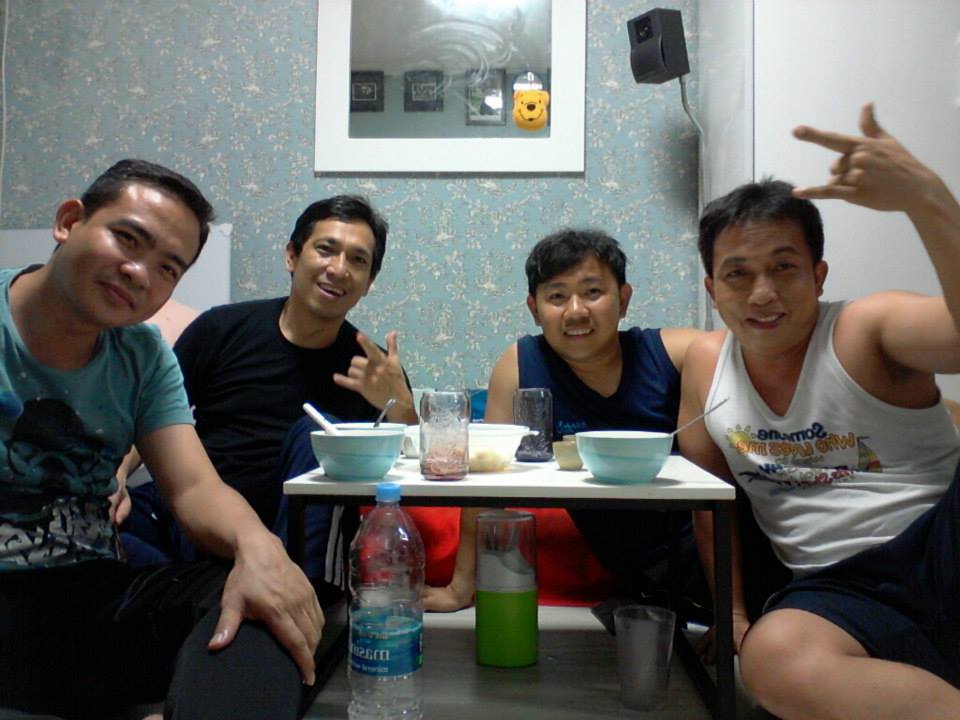
Madaling araw ng March 2 noong 2013 ako umalis ng Pilipinas sakay ng Asiana Airlines at bandang alas-otso ng umaga kami lumapag sa Pusan International Airport. Kasabay ko noon si sir Ken, kapwa ko guro sa Gyeoungju University, ang unang unibersidad na pinagturuan ko dito.
Aaminin kong sabog ako noong panahong iyon, hindi sa droga, kundi sa napakadaming agam-agam at isipin. Labag sa kalooban kong lisanin ang mga mahal ko sa buhay. Ayaw ko ring talikuran ang paraaalang pinanglikuran ko ng ilang buwan bilang isang principal. Subalit ayaw na ayaw kong nagpapadaig sa aking emoyson. Napakalinaw na kaylangan ko ng isang napakalaking pagbabago sa aking buhay dahil nga sa mga dahilang nabanggit ko sa “Sa Aking Pagtungo sa South Korea.” Sabi nga ni Jake Sully, ang main character sa pelikulang “Avatar,” “Sometimes your whole life boils down to one insane move.” At katulad din ni Jake, may pangamba man ay sigurado ako sa aking gagawin bago ako tumalon upang makipagbuno at mapaamo ang sariling kong “Toruk.”
May dalawang bagay akong baon ko nang pumunta ako sa South Korea… tiwala sa sarili at pananalig sa Diyos. Laging ito ang kumbinasyong ginagamit kong panangga sa lahat ng pagsubok at panungkit sa ano mang inaasam kong makamit.
Hindi swerte ang hanap ko sa bansang pinuntahan, hindi ako naniniwala sa swerte. Naniniwala ako na “Nasa Diyos ang awa, nasa tao ang gawa.” Ang pakay ko ay sumulat dito ng bagong kabanata sa aking buhay… bagong yugto sa tadhanang naniniwala akong tayo ang gumuguhit.
Unang byahe ko iyon palabas ng bansa at mabuti na lamang na nakasabay ko si sir Ken, na bukod na sa matulungin ay sanay na sa “overseas travel.” Sa Gyeoungju University din s’ya pupunta kaya nakakatiyak na akong hindi ako maliligaw.
Nang makarating kami sa Pusan International Airport ay nagulantang ako sa lamig. Nanuot ito sa suot kong jacket. Buong akala ko ay dahil tapos na ang winter at noo’y papasok na ang spring ay parang sa Baguio lamang ang lamig. Mabuti na lamang at ang nasakyan naming bus papuntang Gyeoungju-si ay nakaandar ang heater. Antok na antok ma’y hindi ako makatulog sa biyahe dahil tinitignan ko bawat lugar na madaaanan. Wika ko sa sarili’y, “Heto na ako sa South Korea.”
Matapos ang halos dalawang oras na biyahe ay nakarating kami sa Gyeoungju-si. Ang sumalubong sa amin ay sir Mark. S’ya ang naghatid sa amin sa apartment na aming titirhan, si sir Ken sa “white house,” ako nama’y sa “blue house.”
Bago umalis si sir Mark ay tiniyak n’yang maayos ang unit na magsisilbi kong tirahan at ipinakilala din n’ya sa akin ang isa pang Pinoy na professor din sa Gyeongju University…si sir Randy.
Pumasok na ako sa aking kwarto at doon ko unang naramdaman ang pakiramdam ng literal na nag-iisa, malayo sa mga mahal sa buhay at nasa isang lugar na hindi ko kabisado. Nakatayo lamang ako, hindi ko malaman kung ano ang una kong gagawin. Binuksan ko ang aking maleta at unti-unti inayos ang mga dala kong gamit.
Tahimik ang paligid, wala akong nadidinig kundi ang mga sarili kong yabag at buntong-hininga. Matapos kong ayusin ang mga damit at gamit ko’y bigla nanamang naramdaman ko ang sobrang lamig at nagsimula na rin akong makaramadam ng gutom. Walang laman ang refrigerator na nandoon, may gas stove kaya lang wala naman akong lulutuin. Pinagtyagaan ko ang baon kong biscuits (Skyflakes) mula sa Pilipinas.
Naalala ko na kaylangan ko nga palang tawagan ang aking mga mahal sa buhay sa Pilipinas upang ibalitang nakarating ako ng ligtas sa South Korea. Nang kuhanin ko ang aking cellphone ay noon ko pa lamang napagtanto na hindi ko nga pala na-activate ang aking sim na roaming. Pakiramdam ko’y napakatanga ko, napamura ako ng hindi oras. Hindi ako makakatawag, ang cellphone ko’y magagamit ko lamang na parang music player.
Aaminin kong sa pagkakataong iyon ay inatake ako ng matinding kalungkutan… gutom pa rin ako kahit naubos ko halos ang baon kong biscuit… giniginaw… tahimik… walang makausap… at nagiisip na baka nagaalala nang masyado ang mga mahal ko sa buhay, lalong-lalo na ang aking kabiyak, na naghihintay ng balita mula sa akin. Sa pagkakataoong iyon ay naramdaman ko ang totoong kahulugan ng HOMESICK, iyon eh matapos lamang ang ilang oras pagkalapag ko sa South Korea.
Pero sa kalagitnaan ng kalungkutang iyon ay napatingala ako sa langit at naala-ala kong ang pagtungo ko sa bansang ito’y naidulog ko na sa panalangin ng maraming beses. Hindi ko alam kung bakit pero sa pagkakaalam ko’y wala akong panalanging hindi n’ya dininig… kaya nga ang paborito ko sa mga tulang nagawa ko sa English na may pitong syllables lang ay…
HE answers.
Just wait.
Have faith!
Hihiga na sana ako upang lunurin na lang sa tulog ang gutom ko’t kalungkutan nang makarinig ako ng mga katok sa aking pintuan. Si sir Randy iyon. Pumasok s’ya at nakipagkwnentuhan sa akin. Hayun, at least may kausap na ako. Habang kami’y nag-uusap ay tinignan n’ya ang lutuan ko’t itinuro kung paano iyon i-operate. Maaring napansin n’yang giniginaw ako kaya’t itinuro din n’ya kung paano gamitin ang floor heater. Medyo na-relax ako sa pagtulong na ginagawa n’ya noon. Binuklat n’ya ang mga drawer at doo’y nakakita s’ya ng ilang de-lata na hindi pa naman expired. Maya-maya pa’y panandalian s’yang umalis at pagbalik ay may bitbit na ilang balot ng noodles at mga 3-in-1 coffee. Nagulat ako sa generosity na ipinakita ni sir Randy. Animo’y matagal na n’ya akong kakilala. Umalis ulit s’ya sandali at nang pagbalik niya’y sinabing, “Halika na brod, nakaluto na girlfriend ko, kain tayo. Sunod ka sa 401.” Nagulat ako pero hindi na ako nagpakipot pa, hindi dahil sa talagang ako’y gutom sa pagkakataong iyon kundi dama ko ang sinseridad ng imbitasyon n’ya at nakakahiyang tanggihan.
Mainit ang mga inihaing pagkain, ngunit mas higit ang init ng pagaasikasong ipinakita sa akin nina sir Randy at nang kasintahan n’yang si Nikki na taga-China. (Mag-asawa na sila ngayong). Susubo na sana ako nang biglang nagdasal muna sir Randy bilang pasasalamat, lumalalim at tumataas ang pagtingin ko sa kanya sa nakita kong iyon. Sa unang subo ko ay nangilid ang luha ko sa kabutihang loob na nasaksihan ko sa kanila at sa kung gaano sumagot ng panalangin ang Panginoon. Nang napatingin sa akin ang magkasintahan ay pasimple kong sinabi na sinisipon yata ako kaya ako naluluha.
Pagkakain ay inihatid ako ni sir Randy sa aking unit, may bitbit pa s’yang ilang lutong pagkain. Sabi ko’y, “Sobra-sobra na ito bro!” Ngumiti siya’t sinabing aalis silang magkasintahan papuntang Daejon at gusto lang n’yang matiyak na may kakainin ako hanggang kinabukasan. Tapos bumalik s’ya sa kanyang unit at kumuha ng kasirola, kawali ang pakuluan ng tubig, at karagdagang 3-in-1 coffee. Hindi ko alam kung ano ang sasabihin ko sa kanya noon, gusto ko s’yang yakapin sa sobrang pagtulong na ginagawa n’ya.
Hindi doon natapos ang pagtulong sa akin ni sir Randy. Nang malaman n’yang hindi ko magamit ang SIM kong roaming ay ipinahiram nya sa akin ang isa n’yang smart phone at ang kanyang i-pod bago sila umalis at iniwang bukas ang kanyang wifi sa kwarto upang makagamit ako ng internet.
Wala na akong masabi sa pagkakataong iyon. Gasgas na paulit-ulit na “thank you” na sinasabi ko. Gusto ko na talaga sanang s’ya ay yakapin pero nagmamadali s’yang umalis. Napapikit na lamang ako at nagpasalamat sa NASA ITAAS.
Sobrang swerte ko. Hindi naman ako mabait na tao. Taimtim lang talaga akong magdasal at matibay ang pananalig ko sa KANYA.
On Teaching English In South Korea
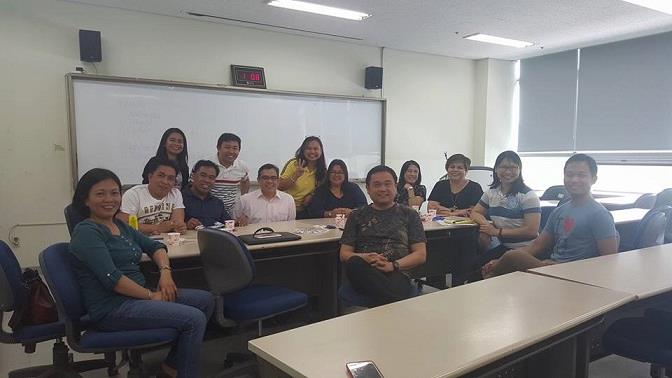
Filipino professors attending a meeting of the AFEK
Most universities here in South Korea (and other Asian countries) prefer to hire English teachers from countries where English is the native language. That is a matter of policy but it does not follow that the best English teachers are the ones coming from those countries… they could be somewhere else just waiting to be given an opportunity to prove their mettle in ESL teaching.
There are only a few tertiary institutions in this country who employ Filipino teachers to teach English. These are the universities who believe that teaching English is not a monopoly of the teachers labeled as “native speakers” coming from the following countries: USA, UK, Canada, Australia, New Zealand, South Africa, Ireland.
If the statistics gathered in 2013 by the AFEK, Association of Filipino Professors in Korea, is accurate then there are more or less 100 teachers from the Philippines in this part of the Korean peninsula. Reportedly, there are more in elementary and secondary schools and academies (hagwon). This, the organization (AFEK) came to know when they launched in May, 2017 the program “Skills Enhancement for Filipino Teachers Teaching English in Korea.” Several of the attendees were Filipino women married to South Koreans and are employed as English teachers. The Philippine Embassy in Seoul, however, doesn’t have an official record as to how many Filipinos are teaching in the basic education schools and academies here.
Filipino professors are not limited to teaching English subjects only. They are E-1 visa holders and are allowed to teach content subjects depending on their fields of specialization.
E-2 visa holders are allowed by the Ministry of Education here to teach strictly English subjects only. One advantage of hiring Filipino professors, because theirs is E-1 visa, is they can be asked to teach content subjects related to their fields especially if the curriculum requires that the content subjects are should be taught in English. Currently, in the university where this writer is teaching, three teachers from the Philippines, are also teaching, aside from English subjects, content subjects in the university’s Graduate School.
I wouldn’t say that Filipino professors in universities in South Korea are lucky to have been hired. Why? They have to go through the proverbial eye of the needle to have a chance of getting hired. They applied alongside teachers who are native speakers of English who have the upper hand because of their geographical roots.
Most of the Filipino professors here are PhD degree holders. The minimum requirement FOR THEM is Master’s.
To the universities who opened the opportunity for Filipino professors, the applicants needed to prove that they are as equally capable as their counterparts from the native English-speaking regions of the world. When they got hired, it was because they are qualified and had proven that they have what it takes to be English teachers. It wasn’t luck.
Filipino teachers are trained in the Philippines to both know what to teach and know how to teach what they know.

Modesty aside, the Philippines have a very good education curriculum implemented through the Commission on Higher Education which closely monitors TEIs (Teacher Education Institutions) to ensure strict compliance. Thus, Education graduates from the Philippines can be relied upon not only in terms of the knowledge, skills, attitude and values in their field of specialization but also in pedagogy and in research. Filipino teachers are good in both instruction and research.
One of the best features of Teacher training in the Philippines is teachers are made to understand that the most important stakeholder in a school is the STUDENT, not the TEACHER. Filipino teachers adhere to the philosophy that the teaching-learning process should be student-centered.
One reason, if not the main and only reason, most universities in Asian countries (like South Korea, Japan and China) prefer to hire teachers from those seven countries is ACCENT.
Filipinos are good at English. It (English) is the medium of instruction in the Philippines from kindergarten to college – even in the graduate school. Filipinos, at an early age, write and speak English. They hear and read it everywhere. It is also the the official language of communication in the Philippines. All business and government transactions are done in English. The country also has the 3rd largest group of English speakers in the world. Their accent is not bad. Philippines wouldn’t be the BPO/Call Center capital of the world if so. But notwithstanding all the aforementioned, still the said universities prefer native English speakers and not include Filipino teachers in their lists of preference.
But there are two things that would make hiring a Filipino teacher a wise investment – two things far more important than ACCENT… their PASSION for teaching and COMPASSION for the learners.
It is not difficult for a teacher to improve his accent. It is easy to train the tongue to mimic somebody’s way of producing vowel and consonant sounds and diphthongs. What is hard is to convince a teacher to be passionate about the job and to be compassionate to the students…. especially if he/she is not really trained to be one and was only forced to accept the teaching job for lack of better options.
Patungkol sa Pagtuturo ng English Sa South Korea
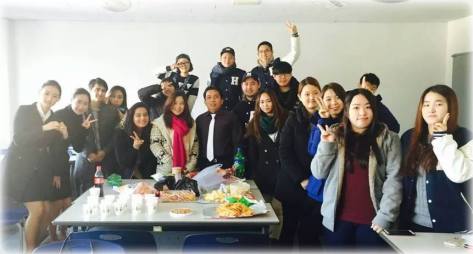
Kahit na nga na mas gusto (o ang tanging gusto) ng mga unibersidad dito sa South Korea ang mga native speakers upang magturo ng English ay may ilang mga Pinoy na English teachers na nataggap at dito ay nakapagturo. Kung ang pagbabatayan ay ang statisctics na noong 2013 ay nakalap ng Association of Filipino Professors in South Korea (AFEK), samahan ng mga gurong Filipino sa South Korea, ay mayroong higit kumulang na 100 na mga gurong Pinoy sa bahaging ito ng mundo.
Bukod sa English ay mayroon ding mangilan-ngilang mga Pinoy na nagtuturo ng “content subjects” dito. Ngunit ang karamihan sa amin ay English ang itinuturo, ang ilan ay sa mga unibersidad at ang iba’y sa mga elementarya at hayskul. Hindi ko pa nababalitaan kung may mga Pinoy ding nagtuturo sa mga tinatawag ditong hagwon (academy.)
Ayaw kong sabihing pinalad o maswerteng na-hire ang mga kababayan …
 M.A.D. LIGAYA



 M.A.D. L I G A Y A