Category Archives: Personal Essay
Why Did I Decide To Come To South Korea?
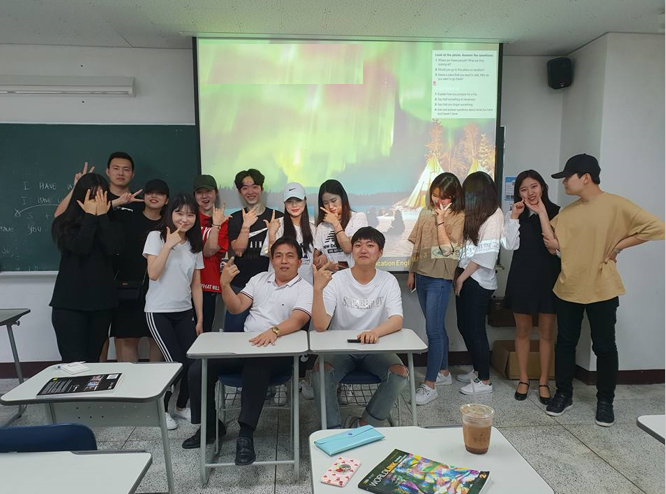
As my 9th year here in South Korea started a few days ago, I tried to recall what made me want to come to this part of the world. It was not fate that brought me here. It was a conscious decision made after many nights of contemplation and prayers.
So, why did I travel to the Land of the Morning Calm?
The reason I decided to venture into ESL teaching here in South Korea was not that there were no teaching jobs available in the Philippines. As a matter of fact, I had to cut short my work in my country back in 2013 to come here. At that time, I was employed as Principal of a basic education institution. To earn extra, I also worked as a part-time college instructor and as an academic consultant in another school.
I had no problem finding jobs in the Philippines.
So, what made me decide to teach here?
Firstly, I suffered from severe “job burnout”. I got so tired of being a school administrator and a teacher at the same time. I desired to go back to full-time teaching.
I started doing supervisory works in 1994 at a technical-vocational institution. I resigned in 2002 then moved to another school, a Catholic tertiary institution, where I was offered a supervisory position – head of the Education program. From there I became a college dean in another school then principal in a basic education institution. From 1994 to early 2013 I was a school administrator and a teacher at the same time.
I really got tired of supervising people and doing administrative works. I felt sick about it. I felt sick with the politics involved in supervising and managing employees. My last two years as a school administrator were terrible and horrible, particularly the penultimate one. How I wish I could go into details.
I wanted to go back to just being a teacher. That’s the reason I applied for a teaching job in South Korea. I was hired. My getting hired also proved that the notion “that only native speakers of English could (and should) teach ESL in South Korea” is but a myth. The truth is some of them could not and should not teach.
It was that “job burnout” that got me seeking for a job opportunity overseas. Not that I wanted a greener pasture. I would be branded a hypocrite if I say I don’t need higher pay. But I was somewhat satisfied with the salary I was receiving at that time. It was good enough that I and my wife could save then, later on, buy a small parcel of land and had a house built. My family and I could even enjoy some of the luxuries in life, travel if we wanted.
Of course, I was (and more so now) happier and more satisfied with my monthly pay in this country when I came. Who wouldn’t be? It’s roughly 75% higher than what my Pakistani employers paid me in the Philippines and with me having to work 60% less in terms of hours. Do the math. That basic (K to 12) education school where I was Principal is owned by Pakistanis operating a vast network of schools (The City School) in Pakistan and some parts of Asia.
At that time I felt that I was at the crossroads of my career. I have to admit that there was some kind of dissatisfaction within me. Burnout torched my soul and I was really unhappy. There was something missing.
Then came the opportunity to teach here.
When I got settled, I finally figured out what was missing. Because I was so busy with my administrative functions and was teaching at the same time, I was not able to attend to my other passion…WRITING.
In the Philippines, being a school administrator and teacher at the same time require that you stay in the workplace, officially, for 8 hours a day. But most of the time, I would stay way beyond that, even if I wasn’t required to. It was just something that I felt I ought to do. Sometimes I would even go to my office on Saturdays and Sundays. With that hectic schedule, I could hardly find time to write poems, essays and stories… much less do research.
That’s what makes teaching in South Korea different (and a blessing) for me. It allowed me to have a lot of spare time which I could use to write. I was even able to write papers for presentations in international conferences and for publication in international journals. Something that, unfortunately, I couldn’t do in the Philippines. Back there I would be lucky if in a month I could write even just a single poem. Here, after 8 years, I have written a lot, as in hundreds of them. I had them published in my two websites (madligaya.com and chingligaya.wordpress.com). I even found time to pursue my interest in personal growth and development. And that worked more wonders for me.
ESL teaching is part of the career-path I paved for myself. I really trained and prepared for this. As early as 2009, I was already thinking of coming to this country to become an English teacher. I applied also to schools in the Middle East but it was my dream that I would be given the opportunity to do ESL teaching here. After my rejections by 2 universities in the Middle East, I didn’t lose hope of eventually landing a job as an English teacher overseas. True enough, in 2013, a university here in South Korea, believed that I have the necessary qualifications to teach English.
I did not become an English teacher overnight or by accident. I did not teach because there are no other jobs available. I chose to be a teacher.
I am a licensed English teacher in the Philippines. I passed the Licensure Examination for Teachers 2003. I was required by the RVM sisters to take it (and I am thankful that they did.) Then in 2010, notwithstanding my busy schedule, I enrolled in a certification class in TESOL (Teaching English to Speakers of Other Languages).
My second (and last) reason for deciding to try teaching here (South Korea) has nothing to do with my career. At that time I was journeying to midlife. Midlife crisis is a real thing. It isn’t a myth. There were some personal demons that I had to slay. It’s too personal to share. Let me just say that I am not proud of those decisions I made during those times. Suffice it to say that I needed space. I needed that entire space between the Philippines and South Korea to really get my bearings back… to bring back sanity to my existence. Let me just concude this paragraph with this… Romans 8:28.
Then my efforts paid off and my prayers answered. I was hired by a South Korean university in 2013.
God is really good. I got what I wanted… just teach and no more supervisory works. That gave me a lot of time to write. I was also able to squeeze myself out of that personal crisis and take the road to self-improvement more seriously. I wouldn’t have not done so had I opted to just stay in that principal’s office in the Philippines.
My journey as a teacher continues. This is my 33rd year as a teacher – 24 years in the Philippines and on to my 9th year here in South Korea.
As Seth Godin said, “Do what you love and love what you do.”
What I do that I love is writing and what I love that I do is teaching.
To God be the Glory!
How and Why I Love Teaching

How do I love teaching?
Let me count the years… thirty!
Yes, I have been a teacher for three decades now. I began my teaching career at a basic education institution in Bauan, Batangas (Philippines) in 1988 and served my 30th year in the academe at a university in South Korea. I will be returning to that same school for 2019 (and beyond… God willing) to continue my journey as a teacher.
Despite the not-so-good comments I heard about teaching as a profession when I was young, I embraced it and I don’t regret having done so.
It is both surprising and amusing how lowly teaching is regarded by some people. It is one of the least popular jobs anywhere in the world.
Parents in the culture where I grew up would tell their children graduating from high school to just take up an Education course and be a teacher once they find out that their children are of average intelligence.
To some professionals, teaching plays second fiddle. They would seek positions in the academe as teachers when in their chosen fields they could not get job offers. Many native speakers of English who had difficulty finding jobs in their own countries are working as ESL teachers in countries like Japan, China, and South Korea. Luckily for some of them, even if they are not graduates of Education courses or are not trained as teachers, there are schools who would hire them only because they are native speakers of English. I consider this a disservice to the teaching profession.
I love teaching and I do take my job as a teacher seriously. I sought employment in the academe upon completion of my bachelor’s degree knowing that I am qualified to be a teacher. I became a teacher not because I have no other choice. I became one by choice.
I know that teaching as a profession requires a lot and I made sure I am apt to the task. I went to graduate school, attended conferences and seminars, took certificate courses (like TESOL), and studied by myself the application of technology to education. I also keep reading books and journals related to both my subject area and pedagogy. All of the aforementioned I did (am doing) in order to ensure that I could cope up with the demands of the profession and to give nothing but the best to my students. This is my way of respecting my profession as a teacher.
Why do I love teaching?
Search for the 25 best-paying jobs (or make that 50… or 100) and it’s very unlikely that teaching is included. This is what makes the teacher’s job not-so appealing. Teachers get paid low and on top of that – they are overworked. They work way beyond office hours. Such is the reality that I fully accepted. I never whined about it.
But for me, it’s never been the pay. It’s the happiness and the sense of fulfillment that teaching gave me. That’s what I love about this profession.
I enjoy doing the things that teaching requires me to do. Teachers need to read and write a lot. And those are my hobbies. Teachers have to do a lot of talking and leading and I so happen to love public speaking. I love the feeling of being in front of people… talking to them, making them laugh, and leading them to action.
Teaching allowed me do the things I love doing. It actually honed my skills and improved my knowledge in the areas where I could excel. It developed in me values that guide me both personally and professionally. It challenged me to strive for excellence and pushed me beyond my abilities. It made me believe in myself and it strengthened my faith in God as well.
As Jim Rohn said, “True happiness is not contained in what you get, happiness is contained in what you become.”
What I have become because of teaching is just amazing.
And the rewards for becoming what I have become are equally amazing.
The rewards – both intrinsic and extrinsic – are just awesome.
Don’t tell me that teaching is not financially rewarding. Teachers can be paid handsomely if they play their cards well and push the right buttons. It’s a matter of how they handle their career in the academe, how they build up their reputation, and what stuffs do they have in their professional portfolios.
Here is my advise to teachers like me, most especially to the young ones – don’t teach for the money. Become first what you ought to become. Be the best teacher you could be. Don’t be contended with your Bachelor’s degree. Aspire to have a doctorate. Attend all the seminars and training you could attend. Be certified in your field. Invest on yourself… not on gadgets and other material possessions. Plan well your career in the academe and make the right decisions.
If teachers would love their job and treat it with utmost respect, they will get the rewards they richly deserve.
Why I Came To South Korea
(A Personal Essay)

I decided to try ESL teaching here in South Korea not because there were no good jobs available in the Philippines. As a matter of fact, I had to cut short my employment back home in 2013 to come here. That time I was employed as Principal of a basic education (K to 12) institution. To earn extra, I also worked as a part-time instructor in a college and academic consultant in another school .
I had no trouble finding jobs in the Philippines. I carefully crafted a career path and built a strong supporting structure that would ensure I won’t run out of options and ascertain a stable future for me and my family.
So, what made me decide to teach here?
Firstly, I suffered from a severe “job burnout”. I got so tired being a school administrator and a teacher at the same time. There was no sense of fulfillment anymore. I wanted to go back to full-time teaching and try to discover what I was missing. Yes, there was something missing.
I started doing supervisory works in 1994 in a technical-vocational institution. I resigned in 2002 then moved to another school, a Catholic tertiary institution, where I was offered a supervisory position – head of the Education program. Thinking that I could pursue a career in the public school system, I applied (and was accepted) as College Dean in a local college. It did not turn out the way I wanted. The working environment and the organizational climate was not what I envisioned it was. It was then that I began to feel the “burnout.” From there I transferred to that basic education institution where I became a principal. It did not help that at that time the said school had to renew its FAPE (Fund for Assistance to Private Education) accreditation. Those were the days when I almost had to sleep in my office to finish all the required paper work for the re-accreditation.
I really got tired supervising people and performing administrative works. I felt sick about it. I wanted to go back to just being a teacher and find out what I was missing – something else that I should be doing. That’s the reason I applied for a teaching job in South Korea.
After passing through the proverbial eye of the needle, I was hired.
It was that “job burnout” that got me seeking for a job opportunity overseas. It’s not just because the pasture is greener. I would be branded a hypocrite if I say I don’t need a higher pay. But I was really satisfied with the salary I was receiving at that time. It was good enough that it enabled me to buy a small parcel of land and had a house built.
Of course I am happier and more satisfied with my monthly pay in this country. Who wouldn’t be. It’s roughly 75% higher than what my Pakistani employers paid me in the Philippines and with me having to work almost 60% less in terms of hours. That basic education school where I was a Principal then is owned by Pakistanis operating a vast network of schools (The City School) in Pakistan and some parts of Asia.
At that time I felt that I was at the crossroads of my career. I have to admit that there was some kind of dissatisfaction within me. That job burnout (and the search for that something I was missing) torched my soul and it was making me unhappy.
Then came the opportunity to teach here.
When I got settled, I finally figured out what was missing. I found out that with my being so busy with my administrative functions and my concurrent consulting and teaching duties, I was not able to attend to my other passion – WRITING.
In the Philippines, being a school administrator and a teacher at the same time require that you stay in the workplace, officially, for 8 hours a day. But most of the time, I would stay way beyond that, even if I wasn’t required to. It was just something that felt I ought to do. Sometimes I would even go to my office on Saturdays. With that hectic schedule, I could hardly find time to do what really makes me alive – writing poems, essays and stories.
That’s what makes teaching in South Korea different for me. It afforded me a lot of spare time which I could use to write. It gave me an opportunity to create (and maintain my own websites.) I was even able to write papers for presentations in international conferences and for publication in international journals. Something that, unfortunately, I wasn’t able to do in the Philippines. Back then, I would be lucky if in a month I could write even just a single poem.
ESL teaching is part of the career-path I paved for myself. I really trained and prepared for this. I am a licensed English teacher in my country. As early as 2009, I was already thinking of coming to this country to teach. I also applied in universities in the Middle East but I was really hoping that it’s here (South Korea) where I would be given the opportunity to do ESL teaching.
My second (and last) reason for deciding to try teaching here (South Korea) has nothing to do with my career. At that time I was journeying to midlife. There were some personal demons that I ought to slay. It’s too personal to share. Suffice it to say that I needed space. I needed that entire space between the Philippines and South Korea to really get my bearings back.
Then my efforts paid off and my prayers answered. I was hired by a South Korean university in 2013.
God is really good. (Yes, I believe in the existence of God!) I got what I wanted – just teach and no more supervisory works. That gave me a lot of time to write. I was also able to squeeze myself out of a personal crisis. I wouldn’t have not done so had I opted to just stay in that air-conditioned principal’s office.
I am forever grateful to universities (like Hanseo University and Gyeoungju University) who believe that not only native speakers of English could (and should) teach the language – that qualified non-native English speakers could also excel in ESL teaching.
South Korea has become my second home and I would love to stay here to teach (and write) for as long as possible… if given the opportunity.
The Jokers In The Academe

I have been a teacher since 1988. It has been a long journey full of ups and downs and filled with joys and sorrows. I don’t regret anything that I have undergone as a teacher and proudly I could l say that I triumphed over all the difficulties and pains because I wouldn’t last this long in the academe if not.
I worked in eight different schools in the Philippines, in six as a full-timer and in two as a part-timer. Here in South Korea, where I am teaching now is my second university. I stayed a year in the first one and now I’m on my way to completing my fifth year where I transferred.
Go back to the previous paragraph and count the number of academic institutions where I worked.
How many?
Two short of a dozen.
In those schools, I met different kinds of students, administrators, and – teachers, the best and the worst.
This essay deals with teachers I refer to as “jokers in the academe.” The experience I had with them taught me to have a great deal of patience. There were times though that I lost that patience and locked horns with them. Actually, I wrote this essay right after a verbal tussle with one of them.
Yes, you need to be patient when you encounter the jokers among your colleagues. These jokers aren’t funny at all. They are annoying.
I am not saying that I am a perfect teacher. I still have lots to improve. At least I have been trying my best to conform with the existing and evolving professional standards set for teachers.
Most importantly, I am not a joker. I would never be.
Who might these jokers be?
One of those that I classify as jokers are the “super dependents.”
The “super dependents” are teachers who will not solve their own problems. They expect their colleagues to do that for them. They are the ones who hate exerting extra effort to find a solution to whatever bugs them. Their sense of entitlement is so strong that they think that it is the duty of people around them to help them get out of a difficult situation.
What these jokers consider as problems are not problems to begin with.
For example – the school requiring teachers to apply a new technology in the classroom. That for them is a contentious issue. They would try to dip their hands deep into their bag of reasons to justify their non-compliance.
You would hear the lamest of excuses like “My training as an educator did not include applying those technology.”
Really!?
Another excuse, lame also, “It’s labor-intensive.”
They want things to be given to them on a silver platter. They would never go the extra mile.
They are like square pegs in round holes. No amount of explanation would make them buy the idea that being a 21st century teacher teaching 21st century learners would require the learning of 21st century skills.
These jokers don’t understand that part of their responsibility as educators – if they really consider themselves as educators – is to retool and retrain if necessary in order to cope with the demands of what has become a technology-driven pedagogy used by 21st century teachers.
They should not subscribe to the idea that “old dogs can’t learn new tricks” because they are not dogs. They’re human beings who are supposed to be rational.
Are they?
Anyway, let’s talk about dogs.
They bark, right?
Some of the jokers in the academe are like dogs. They bark a lot.
I call them the “barkers.”
These jokers bark about their disagreement with school policies and what they perceive as incompetence among the “people upstairs.” They are the eternal fault-finders who see nothing but negative in the organization. They live to seek the “tiny black in an ocean of white.” For them nothing is right, everything is wrong.
They complain day and night, except when they go to the ATM machine during payday.
Do they deserve their pay? Are they doing their job? Only them and their students could tell.
Yes, there are times that they have valid reasons to disagree. But what is frustrating is that they bark up the wrong tree. They don’t address their concerns to the right people at the right place and at the right time. They grandstand during meetings wasting their colleagues’ precious time. They force them to listen to their misguided eloquence. Sometimes they also write long unsolicited e-mails where they express their grievances. They don’t understand that not everybody in the organization share their opinion about the policies and their school administrators.
The funny thing is these jokers just bark but they don’t bite.
They do nothing about their complaints except bark about them. But when the administrators responsible in implementing the policies they disagree with are present in meetings, they are very quiet, silent in one corner of the room wagging their tails.
These jokers curse the school and their administrators at every opportunity they have. They tell everybody that the school where they work is the worst place to be. Yet at the end of the school year they (let me use these words again) wag their tails as they sign their names on the dotted lines for a contract extension.
Dogs bark. They also eat their own vomits.
The last category of jokers in my list are those who applied (and luckily got hired) as teachers even if they are not qualified and trained for the profession.
They are the ones I call the “pretenders.”
Yeah, they pretend to be teachers.
These jokers applied as teachers because there are no other jobs available. They are very fortunate (and the students unfortunate) that there are schools willing to hire them even if they are not qualified to be teachers.
Among these jokers are English teachers who thought that they could be English teachers because they can speak the language. I have emphasized in one of my essays that it doesn’t mean that when you know something you can already teach it. “If you know it, you can teach it” is a fallacy.
Knowing a subject matter is different from knowing how to teach it. The former is only one of the many requirements for the latter.
“Real teachers,” those not pretending to be, know what it takes to be a teacher. Teaching is not parroting the contents of the book. It’s not delivering a monologue in front of the students.
Teachers need to choose the best strategy to use in the class from a variety of strategies available. They have to set objectives and test if those objectives are met. They need to differentiate the levels of their students and identify the corresponding techniques and activities suitable for those levels.
“Real teachers” know what philosophy would inform whatever they do and say in the class. They know which sociological, psychological, historical and legal foundations upon which they would base all their decisions as teachers.
It means that the job of a teacher is so complicated that not just anybody should be allowed to teach. And when a school commits the mistake of hiring applicants who are not trained to be teachers, expect them to become the jokers in the academe.
In the academe, most of those who complain a lot – those who create a lot of troubles – are the ones who are not really trained to become teachers. These jokers are the ones who seemed to be lost in the wilderness not knowing what to do and how to do things related to the job of a teacher. They are the ones who would blame others when they encounter difficulties and can’t figure out how to deal with them.
The common trait among these jokers is that they want everything given to them in a silver platter. You need to explain to them in detail (and repetitively) how to perform tasks that teachers are supposedly trained to do. Sometimes they would even require their colleagues to do things for them. They would not bother learning how to do it themselves.
Beware of the jokers in the academe. They’re not funny.
These jokers could be many or but a few in schools everywhere.
There was a voice within that kept telling me not to mind the jokers in the academe. I did so, but not for long. It became too difficult for me to hold my horses when I heard the “non-performing” barkers whined and whinged so persistently. It’s so difficult to just turn a blind eye (and a deaf ear) to the things they are doing (and saying) all the time. I had to say my piece – through this essay.
What’s dangerous is that they are contagious. They contaminate the working environment. They have the ability to flip the organizational climate, from positive to negative.
So, beware of the jokers. Avoid them like a plague.
These whining and crying babies are not cute. Don’t babysit them.
Puti at De-kolor

“Ihiwalay mo ang mga puti sa de-kolor.”
Ako’y isang batang musmos pa lamang noong marinig ko ang mga salitang iyon sa unang pagkakaton. Iyon ang mahigpit na bilin ng lola sa aming kasambahay tuwing ito’y maglalaba.
“Brasin mo ang mga puti. Tiyakin mong mawawala lahat ng mantsa.” Dagdag pa ng medyo may pagka-istriktang nanay ng nanay ko. “Huwag mong kalimutang ikula.”
Ganun ka-espesyal ang atensyong ibinibigay sa mga puting damit.
Heto pa ang pahabol ng lola ko noon, “Ihuli mo ang mga kulay itim. Huwag na huwag mong isasama sa mga puti yan. Naku, malilintikan ka sa akin.”
Tumimo iyon sa aking isipan. Kaylangang pag-ingatan ang mga damit na puti ang kulay. Huwag na huwag silang ihahalo sa mga de-kolor kapag naglalaba upang huwag silang mamantyahan. At ang mga itim na damit ay kaylangang ihuli sa lahat – huwag na huwag isasama sa mga puti at kahit anong de-kolor na damit. Kapag nagbanlaw man ay ihuli raw rin ang mga de-kolor at itim at ang gamiting tubig ay iyong pinagbanlawan na lang ng mga puti.
Kaawa-awang de-kolor, lalo na ang mga itim.
Naugnay ito sa isang bagay na nagdulot sa akin ng kalituhan noong ako’y mura pa ang gulang. Ito ay nang tanungin ko ang aking ina tungkol sa isang larawan sa pahina ng librong binabasa niya na ang pamagat ay “Land of the Free.” Ipanagpatuloy kasi ni mama ang pag-aaral sa kolehiyo noong kaming magkakapatid ay hindi na alagain. Madalas eh buklatin ko’t basahin ang mga librong iniuuwi n’ya galing sa kanilang library. Ipinapakita sa larawan iyon ang salitang “rest room” at may nakalagay sa ilalim nito sa magkabilang bahagi na “white” at “colored.”
“Colored” daw ang tawag ng mga Amerikanong puti sa mga kababayang nilang itim ang balat.
Hindi ko alam kung bakit natawa ang aking ina nang sabihin kong kulay din naman ang puti. Mali ba ako? Bakit ang mga maiitim eh “colored” kung tawagin at ang mga puti eh hindi? Colorless ba ang puti.
Pilosopo daw ako sabi ni mama. Tama daw akong kulay din ang puti pero napakabata ko pa daw para maiintindihan ang konseptong “colored.”
Para bang gusto akong batukan ni mama ng sabihin ko sa kanya na siya ang nagturo sa akin na ang English sa kulay ay color at tanging ang tubig alang masasabing walang kulay.
Natingin ako noon sa aking balat. Ito’y kayumanggi. Kaunti na lang eh itim na rin. Basta hindi ako maputi. At kapag natapos akong maglalaro ako ng matagal sa labas tuwing walang pasok eh sasabihin ng nanay kong, “Ayan kakabilad mo sa araw nangitim ka na.” Kung ang mundo’y isang malaking batya at ako’y damit na lalabhan eh masasama ako sa de-kolor at hindi sa puti. Kaunti na lang ang diperensya ng balat ko sa itim kaya kapag binanlawan ako eh malamang sa bandang huli na rin.
Ipinaliwanag ni mama na may panahon daw sa bansang Amerika na hindi pwedeng makihalubilo ang mga Negro sa mga puti sa mga pampublikong lugar katulad ng restaurant, sinehan, mga sasakyan at maging nga sa mga palikuran.
Eh bakit?
Tinignan ko ang iba pang mga larawan sa mga sumunod na pahina ng libro. Maging sa isang drinking fountain eh ganoon nga. Hindi pwedeng uminom ang mga de-kolor ang kutis sa iniinuman ng mga puti.
Bakit ganun?
“Baka ba mamantsahan ang mga puti kaya’t bawal na makihalubilo sila sa mga hindi nila kakulay ng balat?”
Iyon syempre ang uri ng tanong na pwedeng manggaling sa isang batang paslit na katulad ko.
Parang nagulat si mama. Hindi kaagad siya nakasagot. Naningkit ang mata’t pagkatapos eh biglang kumunot ang noo. Ganun din ang itsura ng mga kaklase ko kapag sila’y biglang tinawag ng titser namin upang sumagot sa isang tanong at hindi nila masagot.
Tila nahirapan si mama na sagutin ang tanong ko. Tumango’t ngumiti na lamang siya. Hindi ko masasabing “oo” ang sagot ni mama sa aking tanong. Sa tango niya’t ngiti kasi ay parang sinasabi niyang, “Sorry hind ko alam ang sagot.” Parang ako lang kapag hindi ko kayang sagutin ang tanong ng aming guro. Titingin na lang ako sa kanya at ngingiti sabay kamot sa aking batok.
Kabisado ako ng aking ina. Alam n’yang unang tanong ko pa lamang iyon, marami pang susunod. Subalit bago ko pa man buksan ang bibig ko upang muling magtanong ay inunahan na niya ako.
“Balang araw eh maiintindihan mo din kung bakit. Sige na anak, maglaro ka na muna sa labas. Akin na muna ang librong iyan at magre-review pa ako.”
*****
Pagsampa ko ng high school eh naririnig ko pa rin ang bilin ni lola na dapat hiwalay ang mga puti sa de-kolor. At tulad pa rin ng dati, ang mga itim na damit ay parang ketongin na nakahiwalay sa lahat nang huwag makahawa ng kulay. Sa panahong iyon si mama naman ang nagbibilin sa bunso naming kapatid na babae bago sila maglaba. Wala na kasi kaming kasambahay noon. Nagsimula ng magtipid ang mga magulang ko. Hindi na rin namin kapiling si lola kaya’t siya at ang bunso namin ang naglalaba.
Minsan tumutulong akong paghiwalayin ang mga puti sa de-kolor bago maglaba ang aking ina’t kapatid. At habang ginagawa ko ‘yon ay bumabalik sa aking ala-ala ang mga larawang nakita ko noon sa librong binabasa ni mama – mga larawang nagpapakita na sa Amerika ay pinagbabawalang makihalubilo ang mga de-kolor ang kutis sa mga puti. Akala ko pa naman na mababait ang mga Amerikano dalhin madalas magkwento ang lola ko noon na iniligtas daw tayo ng mga puting dayuhan laban sa mga mapang-aping mga Hapones noong panahon ng ikalawang-digmaang pandaigdig.
Kaya nga’t kahit first year pa lang ako noon eh nagbabasa na ako ng libro ng World History. Sa fourth year pa namin pag-aaralan dapat iyon subalit nabitin kasi ako sa sagot noon ni mama kung bakit ganun – kung bakit sa bansang Amerika ay parang pinandidirihan ang mga maitim ang kutis. Naisip ko din kung ganun din ba ang turing sa mga Negro sa iba pang bahagi ng mundo. Eh bakit ba kasi ganun? May ginawa bang masama ang mga taong maiitim ang balat kaya ganun sila kung tratuhin? Kasalanan ba ang maging maitim?
Akala ko na sa pagbabasa eh mauunawaan ko kung bakit may ganoong patakaran sa Amerika noon. Hindi pala. Marami pa akong nalaman at habang ang isip ko ay nadadagdagan ng impormasyon eh lalo lamang akong nalilito. Lalong dumadami ang aking mga tanong.
Gusto ko noong tanungin ang aking ina kung bakit hindi n’ya sa akin kaagad ipinaliwanag na dati pala’y alipin ng mga puti ang mga taong itim ang balat kaya’t mababa ang pagtingin nila sa mga ito.
Ang pinagmulan pala ng lahi ng mga Amerikano ay ang Inglatera. Dati pala silang mga Briton. Ang mga Briton ang nagdala noon sa Amerika ng mga Negro galing sa kontinente ng Africa upang gawing mga alipin – tagapagsilbi nila at mga taga-tanim.
Ang dami ko palang hindi alam tungkol sa kasaysayan ng mundo. Kaya’t pinagbuti ko pa ang pagbabasa. Noon ko naunawaan na sa pagbabasa ay hindi ka lang makakahanap ng sagot sa mga katanungan mo kundi mula sa mga sagot ay dadami lalo ang iyong mga tanong. Sa mga malalaman mo ay maaring ikaw ay magtaka, matawa, magalit, mainis o mandiri. Maari din namang maawaka ka.
Ako’y naawang lalo sa mga taong itim ang kulay ng balat.
Ang mga larawang nakita ko kasi sa patuloy kong pagbabasa eh hindi lamang inihihiwalay ang mga taong maitim sa mga mapupusyaw ang balat. Merong mga larawang nakakadena sila sa leeg, nakatali ang kamay at hinihila ng mga puti na parang mga hayop. May mga tinatadyakan, sinasampal at sinusuntok
Ang iba’y may tali sa leeg, hindi hinihila kundi nakasabit sa puno. Labas ang dila. Patay. Nakapaligid ang mga mapuputi’t matatangkad na tao. May hawak na pamalo at baril. Ang ila’y nakapamaywang pa at parang tumatawa. Ang hirap unawain na kung bakit sa mga larawang iyon ay nakuha pa nilang ngumiti habang sa likuran nila’y may mga bangkay ng mga taong itim ang balat na nakalambitin.
Bakit ganun?
Nabasa ko rin na ang mga kababaihan ay ginagahasa. Ganun kabrutal ang mga puti. Minaltrato’t inaabuso nila ang mga de-kolor. Sana eh hindi totoo ang mga nabasa ko. Sana inimbento lang iyon ng mga sumulat ng kasaysayan. San lang eh ang mga larawang nakita ko ay mga drawing na masyado magaling lang ang gumuhit kaya’t nagmukhang totoo.
Sana man lang eh binigyan ako ni mama ng babala noon na magugulantang ako sa iba pang mga bagay na malalaman ko kapag ako’y nagpumilit na ungkatin ang isyu tungkol sa mga de-kolor ang kutis at mga puti. Naisip ko na lamang na kaya hindi sinagot ni mama kung bakit ganun ay maging siya man ay nahirapang unawain ang bagay na iyon. At kung siya nga ay nahirapan eh ako pa kaya na noo’y batang uhugin lang.
Tama naman si mama. Mahihirapan talaga akong unawain kung bakit hinakot ng mga ninuno ng mga puti sa Amerika ang mga tinatawag nilang “colored” mula sa Africa upang sila’y gawing alipin at pagkatapos ay parang hayop kung ituring, parang baka o kabayong pwedeng ibenta, sasaktan kung magkakamali, gagahasain ang mga kababaihan kung sila’y lukuban ng makamundong pagnanasa, at papatayin kung magtatankang lumaban.
Mahirap pa ring unawain na porke de-kolor ang kutis ng tao ay may karapatan na ang mga puti na sila’y maltratuhin. O dahil maputi ba sila eh pwede na nilang gawin ang ano mang gusto nilang gawin?
Bakit? Nabili na ba ng mga taong maputi ang balat ang mundo?
Natanong ko sa sarili iyan nang sabihin ng guro namin sa Philippine History na minsa’y hinati ng Espanya at Portugal ang lahat ng lupain sa mundo na nasa labas ng Europa. Kaya hayun, bukod sa kasaysayan ng mundo eh nagbasa na rin ako ng tungkol sa kasaysayan naman ng Pilipinas.
Hindi ko maintindihan. Lalo akong nalito. Pinaghati-hatian daw ng mga Ingles, Pranses, Espanyol, Portuges, at Aleman ang lahat ng lugar na kayang marating ng kanilang mga dambuhalang sasakyang-pandagat. Silang mga mapuputi ang siyang naghari.
Bakit ganun?
Nabasa ko na ng pahanong iyon ay na sinakop pala tayo ng mga Kastila, mga puting galing sa Europa sa loob ng mahigit tatlong daang taon. Tapos nagtangkang agawin ng mga Ingles ang Pilipinas mula sa kanila. Ngunit ang nagtagumpay na umagaw ng bayang sinilangan ko mula sa Espanya ay ang Amerika. Ang katwiran pa ng mga Amerikano ay kung hindi daw nila sinakop ang bansa natin ay ang mga Aleman daw ang gagawa nito. Ganun? Parang laruan lang ang mga bansa ng mga taong de-kolor kung pagpasapasaan ng mga puti.
Ang mga lahing de-kolor, mga itim at kayumanggi, tayo’y parang mga hayop na itinuring ng mga puting galing sa kanluran. Ang mga lupain nati’y kanilang kinamkam at ang ating mga likas na yaman ay kanilang ninakaw.
*****
Pagtungtong ko sa kolehiyo, ako na naglalaba ng sarili kong damit. Sinunod ko pa rin ang mahigpit na bilin ng aking lola – inihihiwalay ko ang mga puti sa de-kolor at ang itim ay laging huli.
Patuloy pa rin ang pagbabasa ko ng kasaysayan ng mundo at ng Pilipinas. Marami pa akong nalaman tungkol sa pilit na ginagawang paghahari-harian ng mga puti at kung papaanong hindi nila ituring na kapantay ang mga de-kolor.
Noon ko mas naintindihan ang tinatawag na “holocaust” na kung saan ay pinatay ng mga Nazi ang milyong-milyong Hudyo na ang intension ay burahin sa mundo ang lahi ng mga ito. Kay hirap unawain kung bakit ganun na lamang ang galit ng mga Aleman sa mga Hudyo. Marami ang naniniwala na nang gawin ng mga Aleman ang karumal-dumal na krimeng iyon ay sinunod nila ang sistema ng “racial segregation” na ipinatupad ng mga Amerikano sa mga kababayan nilang itim ang kulay ng balat.
Pinilit kong saliksikin iyon dahil sa isa ding larawang nakita ko sa isang encyclopedia sa high school library namin noon. Larawan iyon ng isang malaking hukay na may lamang maraming bangkay at may mga nakapaligid na sundalong mga puti’t matatangkad, mga Aleman, na parang mga nakangisi pa habang nakamasid sa mga kahabag-habag na mga kapwa nila taong patay na.
Bakit ganun?
Bakit tinangkang lipulin ng mga Aleman ang lahing galing sa binhi ni Abraham? Kasalanan ba ang maging Hudyo.
Hindi ko maintindihan na kung bakit sa paniniwalang sila’y ang superiyor na lahing puti ay nagkaroon na sila ng karapatang ubusin ang mga Hudyo. Dahil ang mga Hudyo daw ay hindi maituturing na puti. Ang mga Hudyo daw ay isang mantsa sa lahing puti kaya’t dapat burahin.
Gusto ko na sanang tigilan na ang pagbabasa dahil habang patuloy kong binabaybay ang mga pahina ng kasaysayang ng bansa ko’t ng mundo eh paulit-ulit kong nasasabi ang “Bakit ganun?”
Bakit tuwing may larawang pupukaw ng aking atensyon ay laging may mga mapuputi’t matatangkad na kung hindi nakatingala ay nakayapak sa mga bangkay ng mga taong de-kolor ang kutis?
Bakit kasi kinunan pa ng larawan ang mga sundalong Amerikano na mga nakangiti’t nakapamaywang habang nasa paanan nila ang isang malaking hukay na puno ng dang-daang bangkay ng mga kayumangging Pilipinong Muslim.
Ke puputi’t ke yayabang ng mga kriminal. Di bale sana kung mga mandirigma lang ang mga napatay nila. Bakit pati mga sibilyan, mga babae at mga bata eh kanilang idinamay? Dahil ba sa sila’y de-kolor kaya’t wala silang karapatang mabuhay.
Wala akong makitang pagkakaiba sa larawan ng Holocaust at sa larawan ng Bud Dajo massacre. Pareho lamang silang nagpapakita ng kalupitan na kayang gawin ng tao sa kanilang kapwan. At di ko alam kung bakit nagkataong parehong puti ang kulay ng kutis ng mga taong may kagagawan ng mga iyon.
Bakit ganun?
Ang mga sundalong Nazi sa Alemanya ay kinasuhan ng “genocide.” Eh ano naman ang tawag sa ginawa ng mga Amerikano sa Jolo, sa Samar at sa ilang lugar pa sa Pillipinas? Ano ba ang tawag sa ginawang pamamaslang ng mga kapwa nila puting Kastila, Pranses, Ingles, Portuges at Aleman sa mga bansang sinakop nila noong “colonial period?”
Ah, may teknikalidad pala sa batas na dapat ikonsidera. Krimen lamang na maituturing ang genocide kung ginawa ito matapos ang “Genocide Convention” noong 1948. Kaya sorry na lang sa mga de-kolor na nabiktima ng mga puti noong panahong inari nila’t pinaghahatian ang mundo.
Kung hindi man magbayad ng danyos perwisyo eh humingi man lang sana ng paumanhin ang mga puti sa mga pagpatay, pag-aabuso’t pangangamkam na ginawa nila sa mga bansang kanilang sinakop.
Pero imposibleng gawin nila iyon. Hindi kaylanman yuyuko ang mga puti sa mga taong ang balat ay de-kolor.
Nangangatwiran pa nga ang mga taong mapuputi ang kutis na kaya nila pinatay ang mga taong hindi nila kakulay sa mga bansang sinakop nila noon eh dahil sa ang mga ito’y lumaban. Aba eh natural na sila’y lumaban. Alangan namang inaalipin ka na’t ninanakawan at sinaktan pa’y hindi ka na lamang kikibo. At kung panangutin daw ang mga gobyernong kolonyal ng mga puting mananakop sa kung ano mang krimeng ginawa nila sa mga bansang sinakop nila eh hindi daw ba dapat ring bayaran naman sila sa mga ipinagawa nilang mga gusali, tulay at mga daan at sa pagbibigay ng edukasyon sa kanilang mga sinakop. Bakit? Wala ba silang naging pakinabang sa mga bansang sinakop nila? Hindi ba’t sapilitan naman nilang pinagtrabaho ang mga sinakop nilang taong itim o kayumanggi ang balat? Hindi ba’t ang mga likas na kayamanan ng mga bansang sinakop nila eh kinankam nila. Kulang na kulang pa na kabayaran kung tutuusin ang ano man ang mga ipinagawa nila.
Hindi kayang ibalik ng mga puti o walang halaga ng salapi na makakasapat upang kanilang ipambayad sa dignidad ng mga taong de-kolor ang balat na kanilang sinira’t niyurakan ng ang mga ito’y kanilang sakupin.
*****
Bakit ganun?
Sabi ng aking ina noong bata ako na balang araw ay maiintindihan ko din kung bakit hindi pwedeng umihi ang mga de-kolor sa ihian ng mga puti. Pero heto ako’t tumanda na at sobrang dami na mga nabasa ko sa libro… sa internet… eh hindi ko pa rin maintindihan.
Ano kaya ang isasagot ko sa aking anak halimbawa’t isang araw eh makita rin niya ang alin man sa mga larawang nakita ko? May paliwanag kaya akong maibibigay kung tatanungin niya ako kung bakit ang “drinking fountain” ng mga “white” ay hindi pwedeng gamitin ng mga “colored.”
Paano kaya kung sa Facebook o sa YouTube eh makita ng anak ko ang pamamaril ng mga puting pulis sa mga hindi armado at walang kalabang-labang mga taong kulay itim ang balat?
Pwede kayang sabihin ko na lang kapag nagtanong siya na ang mundo’y parang batyang gustong solohin ng mga puti. Ayaw nilang makasama ang mga de-kolor, lalo na ang mga itim ang balat at baka sila ay mamantyahan.
Tutularan ko na lang siguro ang aking ina. Tatango na lamang ako’t ngingiti at sasabihin kong, “Balang araw anak eh maiintindihan mo kung bakit.”
Teaching in South Korea
(My Journey as a Teacher – 4)

I decided to try ESL teaching here in South Korea not because there were no teaching jobs available in the Philippines for me then. As a matter of fact, I had to cut short my employment back home in 2013 to come here. That time I was employed as Principal of a basic education institution. To earn extra, I also worked as a part-time instructor in a college and academic consultant in another school .
I had no problem finding jobs in the Philippines.
So, what made me decide to teach here?
Firstly, I suffered from a severe “job burnout”. I got so tired being a school administrator and a teacher at the same time. There was no sense of fulfillment. I desired to go back to full-time teaching and try to discover what I was missing.
I started doing supervisory works in 1994 in a technical-vocational institution. I resigned in 2002 then moved to another school, a Catholic tertiary institution, where I was offered a supervisory position – head of the Education program. From there I became a college dean in another school then principal in a basic education institution. From 1994 to early 2013 I was a school administrator and a teacher at the same time.
I really got tired supervising people and doing administrative works. I felt sick about it. I wanted to go back to just being a teacher. That’s the reason I applied for a teaching job in South Korea. Luckily, I was hired.
It was that “job burnout” that got me seeking for a job opportunity overseas. Not that I wanted a greener pasture. I would be branded a hypocrite if I say I don’t need a higher pay. But I was really satisfied with the salary I was receiving at that time. It was good enough that it enabled me to buy a small parcel of land and had a house built.
Of course I am happier and more satisfied with my monthly pay in this country. Who wouldn’t be. It’s roughly 75% higher than what my Pakistani employers paid me in the Philippines and with me having to work 60% less in terms of hours. That basic (K to 12) education school where I was Principal is owned by Pakistanis operating a vast network of schools (The City School) in Pakistan and some parts of Asia.
At that time I felt that I was at the crossroads of my career. I have to admit that there was some kind of dissatisfaction within me. Burnout torched my soul and I was really unhappy.
Then came the opportunity to teach here.
When I got settled, I figured out what was missing. Because I was so busy with my administrative functions and was teaching at the same time, I was not able to attend to my other passion…WRITING.
In the Philippines, being a school administrator and teacher at the same time require that you stay in the workplace, officially, for 8 hours a day. But most of the time, I would stay way beyond that, even if I wasn’t required to. It was just something that felt I ought to do. Sometimes I would even go to my office on Saturdays. With that hectic schedule, I could hardly find time to write poems, essays and stories… much less do research.
That’s what makes teaching in South Korea different for me. It afforded me a lot of spare time which I could use to write. I was even able to write papers for presentations in international conferences and for publication in international journals. Something that, unfortunately, I couldn’t do in the Philippines. Back then I would be lucky if in a month I could write even just a poem.
ESL teaching is part of the career-path I paved for myself. I really trained and prepared for this. As early as 2009, I was already thinking of coming to this country to become an English teacher. I applied also in schools in the Middle East but it was my hope that I would be given the opportunity to do ESL teaching here.
I did not become an English teacher overnight. I am a licensed English teacher in the Philippines. I passed the Licensure Examination for Teachers 2003. Then in 2010, notwithstanding my busy schedule, I enrolled for a certification class in TESOL (Teaching English to Speakers of Other Languages).
My second (and last) reason for deciding to try teaching here (South Korea) has nothing to do with my career. At that time I was journeying to midlife. There were some personal demons that I OUGHT to slay. It’s too personal to share. Suffice it to say that I needed space. I needed that entire space between the Philippines and South Korea to really get my bearings back.
Then my efforts paid off and my prayers answered. I was hired by a South Korean university in 2013.
God is really good. I got what I wanted… just teach and no more supervisory works. That gave a lot of time to write. I was also able to squeeze myself out of a personal crisis. I wouldn’t have not done so had I opted to just stay in that principal’s office.
My journey as a teacher continues. I don’t know for how long it would last.
As I said in another essay, “Nobody knows if where I am teaching now is the final leg of my journey…my final destination. I’d love to if given the chance.”
Stopovers and “Multiple Hats”
(My Journey as a Teacher – 2)

When I thought of a title for the series of essays I intend to write to mark my 30th year in the academe, I initially thought of “My Teaching Career.” But I know there is a title more appropriate for my experience of having taught in 8 different schools. It’s like moving from one place to another until I reach a final destination. So I ended with “My Journey as a Teacher.”
A journey has a final destination and the places where you stayed along the way are the stopovers.
I consider the schools where I worked in the past as the stopovers in my journey as a teacher. Not that my stay in those institutions were brief and meaningless but that I was not meant to stay there longer than I did. I moved out and continued with my career as a teacher. I did not stop teaching after leaving thus I consider them as stopovers.
Nobody knows if where I am teaching now is the final leg of my journey…my final destination. I’d love to if given the chance.
I worked full-time in 6 different schools in the Philippines before a South Korean university hired me as ESL teacher in 2013. I stayed in the said institution for only a year and decided to apply in the university where I am currently teaching both undergraduate and graduate students. I am on my 6th year in South Korea and 30 years in the academe overall.
Where I am teaching now is my 8th school. Some people consider moving from one school to another so frequently as negative. Well, that depends on the reason for leaving.
If a teacher keeps getting fired after spending a year in a school then something is wrong. But if a teacher decides to leave for valid reasons then it should not be taken against him/her.
In the first school where I worked I was a high school teacher. I taught English and Social Studies subjects. Seeing that students in the night session there were not very active in extra-curricular activities, I asked the principal if I could open a theater group for them. I was given the go signal and “Teatrong Pang-gabi” was born. Night students joined. That paved the way for me to become the moderator also of the school’s main theater group – “Teatro Teresiana.”
In 1990, I resigned because I was supposed to work at a supermarket in Oman. I was enticed by the salary offered which was 500% higher than my salary as a teacher then. But chaos descended on the Middle East when Saddam Hussein invaded Kuwait. My mother and many more dissuaded me from leaving. I heeded.
From Batangas, I relocated to Bulacan when I was hired by a technical-vocational school. There I taught English and Social Sciences . I was also the marketing officer and was asked to do some administrative works at the same time. There I stayed for 4 years and had to resign when I focused on my dream to have a school of my own. Unfortunately, I was not able to convince the prospective partners to whom I presented my business proposal to invest.
If only I had rich parents or siblings. Not one of my relatives and friends too had the sufficient funds to finance my project then. If only the encouragement of my loved ones and friends could be converted to cash, I would have had the needed capital.
So, I set aside my dream of running my own school for the meantime and sought teaching positions in schools in Batangas and Bulacan. I got offers from schools in both provinces but I opted to accept the teaching job offered by a technical-vocational school that opened only that year (1994). That makes me one of the pioneers in that institution. I decided to work there for the simple reason that everything about that institution resemble the school that I envisioned and wanted to open in Batangas had I found a capitalist partner.
I was assigned the same subjects I have been teaching in the past years. After six months, the owners of the school realized that they need somebody to run the academic and student affairs office of the school. The President of the institution could no longer attend to those matters. Even if I have yet to finish my Master’s at that time, having learned that I performed some administrative works in my previous school, the President offered me the position.
I did not hesitate to grab the opportunity. As a result, I did not continue with my Master’s in English anymore and instead pursued a Master’s in Educational Management so I would learn more about managing schools.
In addition, I was also the marketing officer until I found (and recommended for hiring) a very capable individual to teach and at the same time take my place as in-charge of promoting the school. Nobody was willing to be the moderator of the school paper so I had to be it also.
Then I learned from a friend that a college run by one of the country’s biggest congregations was looking for somebody qualified to head their Education program. The salary was much higher and it just so happen that the said college was located a few kilometers away from the subdivision where we were planning to have our house constructed.
The most practical thing for me to do then was grab the offer.
So, I left that technical-vocational school after 8 years and accepted the offer of a Catholic institution to spearhead their Education program and help in the promotion of the school. That was year 2002.
While working as chair of the education program, I also taught English, Literature, Social Sciences and Education subjects.
The sister president of that college at that time told me that if I wish to remain as head of the Education program beyond that school year – I need to pass the national licensure examination for teachers (LET). I was surprised for I wasn’t told of that kind of arrangement before. But I just took it as a challenge.
I had no chance to enroll in a review center. My plate was full. I had to work from morning till late afternoon from Monday to Friday and had to pursue my PhD studies on Saturdays. But I was confident I would pass because the subject areas covered in the LET were the subjects I have taught in the past years.
So, in 2003 I took the LET (Major in English) and passed.
My first seven years in that Catholic institution were my best years in the academe. The sister president that time was the one of the best (if not the best) school administrator I have worked with. She influenced me in so many ways and squeezed out the best in me. I learned a lot from her. Well, I could give her name… S. Viri.
It was unfortunate that the congregation would allow a religious to head their school for 3 years then they have to be transferred to another school. There were times that they allowed an extension of 3 more years.
So after 6 years, S. Viri bade us a tearful goodbye.
I had it so great in that institution that I told my wife that I would see there all my hair turn gray and my hairline recede… or so I thought.
The next sister president of the institution made me realize that God had other (and better) plans for me. This I articulated in of the essays in this series. The subtitle is “The Decision.”
It was in that “stopover” where I stayed the longest. I really thought it was the final destination in the journey.
From a string of private institutions, I was given a chance to work in a public school – a city college. I was hired as a College Dean, the highest academic position I had. Educators from private schools were transferring to the public schools because of the salaries and benefits becoming better. I was glad to join the exodus.
But there I spent the worst school year in my career. I had encounters with two people that I never thought I would have in a place where supposedly educated people work.
I was warned by the teachers I was supervising and the non-teaching personnel about those two people. I told them about my experiences in my previous employment and they said greater are the challenges I would be facing.
Having heard that, I became very careful with everything that I do and say. I stayed away from school politics and just focused on my job.
I held two positions in that city college – College Dean and Dean of the Education Department. I gave my all, I always do. I always make sure that I would deserve every cent in my pay. I strictly adhered to the tenets of professionalism.
The first and only time perhaps that I lost my cool was when I asked the College President to allow me and one of “the two” to have a dialogue in front of her. I told him nicely to review his job description and not to intervene in my duties as College Dean.
That proved to be my undoing. I just locked horns with one of the President’s dearest allies. I prepared for a possible consequence.
It came.
At the end of my first year in that city college, after I secured the government permit to offer BSED – Major in Mathematics, I was informed that the following school year I would still be Dean of the Education Department but no longer the College Dean.
They could not provide me with a valid reason for the demotion. They could not present an official document showing the results of an evaluation that would show I fared poorly. I said that had I performed poorly as an administrator why retain me as Dean of the Education Department.
The writing on the walls were very clear. I should not stay in that city college a minute longer. I resigned the following day. I’d rather go unemployed than work with those kind of people.
To my amazement, amusement, and bemusement, I was told later by one of “the two” that the announcement about my demotion was just a test. They were just trying to see how I would react. They wanted to see what stuff I am made of specially that they were about to inform me that my “item” (that would make me a regular public school employee) from the government was already granted.
“What?????”
That was the worst joke I heard.
I wasn’t treated professionally.
(If ever those people would come across this article, they are free to refute what I wrote here. My colleagues and friends in that city college could attest to the lack of professionalism of those people.)
From that city college, I became the principal of a basic education institution ran by Pakistanis who own a network of schools in their country and some parts of Asia. That school gave me the highest salary I had in the Philippines. They were about to send me also to Pakistan at that time for the training of their school heads. It would have been all-expense paid. I declined because we were preparing for the FAPE re-accreditation. I was familiar with the accreditation system for tertiary institutions but I never had an experience doing it for a basic education institution. I figured I could not afford to be out of the country for a month. I needed to spend those times for the paperwork and legwork for the re-accreditation and for studying the accreditation policies of FAPE, DEPED guidelines, and the school system that my Pakistani employers wanted to implement. It was something new for me.
We passed the FAPE re-accreditation.
What my unfortunate experiences in that city college and the amount of work and adjustment I had to do in my new role as principal, particularly at that time that we needed to pass the FAPE re-accreditation, did was make me experience BURNOUT. Those two years were emotionally and physically draining. It did not help that it came at a time that I was also having a serious “personal problem.”
Suddenly, I began to dislike my work as school administrator. I just wanted to teach… to write. I no longer wanted to do any administrative and supervisory works.
I needed a break… a change in environment.
I pursued seriously my application as ESL teacher abroad at the turn of 2013.
My dear God listened to my prayers.
On March 2, 2013, an Asiana Airline plane brought me to South Korea to have the fresh start I badly needed. I had a reboot of my career as a teacher.



 M.A.D. L I G A Y A