Blog Archives
My Priceless Takeaway From My Korean Class
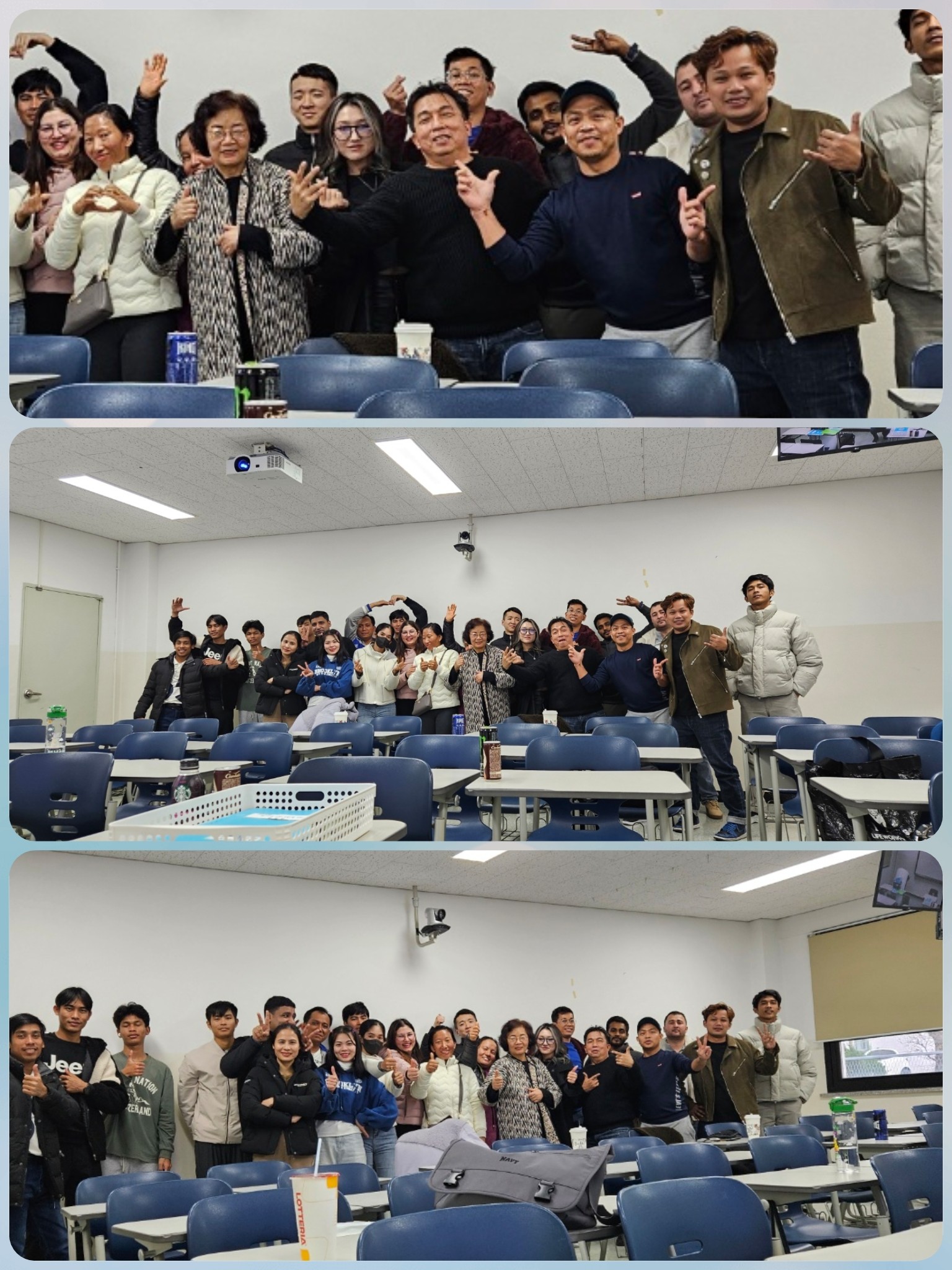
Our KIIP Korean Language Level 1 class has finally reached the end of its grueling 101-hour journey. It was a struggle for me, but never a burden — because every hour taught me something worth keeping. Korean phonetics are no longer arrows piercing my eardrums but musical notes finding their way into my heart and soul.
More importantly, the experience placed me in a better position to understand the plight of language learners. It made me see — and feel — what my ESL /EFL students go through, especially those whose English proficiency remains low.
I felt it the most when I was asked to read aloud. I stammered again and again, unsure whether the graphemes I produced truly matched the phonemes staring back at me. At times, it felt as though the Korean letters were mocking me. I was humbled each time I failed to answer questions during speaking tasks, and in those moments, the contorted faces and furrowed brows of my own students resurfaced vividly in my mind — the very expressions they wore whenever I suddenly called on them to participate in class.
In the end, more than anything I learned about the Korean language itself, it is this deeper understanding of what it means — and what it feels like — to be a language learner that I consider my most priceless takeaway from this course.
“Please Teach Me English!” (2)
(Second of Three Parts)

I’ve realized that getting into K-pop and K-drama has been beneficial for me. It has provided me with valuable insights into the nature and culture of my Korean students even before I taught my first class in their country. Watching the movie “Please Teach Me English” has also been helpful.
The Young-jus and Jang-hyuks
The students in the movie are not regular enrollees in basic education institutions or universities. They are professionals enrolled in what looks like a hagwon (or it could be an adult education center of a university). In reality, classes in hagwons could be a mixture of students and working people.
Through the characters in the romantic-comedy film, I learned in advance about the different types of Korean students and their reasons for learning the language. The students in the movie had to choose English names, like Candy for Young-ju and Elvis for Jang-hyuk. Other students in Catherine’s class had English names like Betty, Julie, Tyson, and Richard, but their real Korean names were not revealed in the movie. I followed Catherine’s example in my classes. I also had my students adopt English names. Most embraced the idea, but some, like Young-ju, were hesitant. When I asked them to adopt an English name in one of my classes, a student suggested I should also have a Korean name. That student named me Hyeong. When I asked why he chose that name for me, he said the word means “big brother” in English, and that’s how he considered me.
The film emphasizes the reasons why Korean students take English classes. Young-ju was chosen to take the class because the head of the government office where she works made it mandatory. Someone in their office must learn English to effectively deal with foreigners.
Around the time the movie was released, the Korean government began to acknowledge the growing interconnectedness of global economies and cultures. South Koreans are actively engaged in international trade, exporting products as well as pop culture, entertainment, music, TV dramas, and movies. They recognize that success in business and international relations relies on establishing connections with the outside world, which necessitates the ability to communicate in English.
Language experts have identified two types of motivation for learning a language: instrumental and integrative. As contextualized in the movie, instrumental motivation is learning for practical reasons, while integrative motivation is learning to connect with others.
Those who are instrumentally motivated to learn a language, like Young-ju, do so to obtain essential qualifications and to improve career prospects. On the other hand, Jang-hyuk is integratively motivated to learn English. He wants to learn the language because his long-lost English-speaking sister, who cannot speak Korean, is visiting South Korea to meet him and their mother. His intention is to be able to “socialize” with somebody who does not speak his native tongue.
Many of my Korean students, like Young-ju, are instrumentally motivated. They aim to obtain the required scores for their English course or to meet specific academic or job requirements rather than to effectively communicate and engage with people from different cultures who speak a different language.
Like Young-ju, Richard is instrumentally motivated. His new boss is a foreigner who conducts his meetings in English. Thus, he must learn the language, even if it’s difficult given his old age. Julie’s reason is akin to Jang-hyuk’s. She is going to migrate to the US soon. The film does not have enough information to help determine Betty and Tyson’s motivation for taking the language course. But Betty seems to enjoy attending English classes, for where Catherine teaches is already her nineteenth school.
The movie also reveals specific characteristics of Korean learners when it comes to language learning. There was one instance when Julie and Betty disagreed with Catherine’s teaching style. They demanded that their teacher do away with preliminary activities or introductions and focus on the primary language skills they wanted to acquire. It is hard to determine if this indicates their impatience or desire to learn only the primary language skills they signed up for. This incident may be unfortunate, as it goes against a trait Koreans are known for – respect for elders and persons in authority. However, it reminds me of what every teacher must bear in mind – that students have expectations that must be met.
What The Students Expect
Before embarking on my journey as an English teacher in South Korea, I read a lot about the country’s culture and people. As an English teacher who would soon teach Korean students, I felt it incumbent upon me to study their culture because of some cultural nuances that may affect or influence my communication with them.
I have watched several K-dramas such as Jewel in the Palace, Stairway to Heaven, Lovers in Paris, Winter Sonata, and Baker King. These shows have taught me a great deal about the people of South Korea. The movie “Please Teach Me English” also gave me insights into Korean students. Furthermore, our TESOL supervisor shared tips on effectively working with ESL/EFL students.
It’s not enough to be guided by the apparent truth that students want to learn and expect their teachers to guide them in their learning journey. Yes, I had been a teacher in the Philippines for over two decades before I came to South Korea. However, students in those countries are of a different breed of learners.
The information the film provided about the characteristics of Korean learners is obviously not enough. So, as I taught during the first weeks of my classes, I took the opportunity to observe my students and determine their tendencies and habits, strengths, and weaknesses.
Korean students have a strong foundation in grammar. They pay more attention to the discussion of grammar points than other topics. They expect their teachers to give them grammatical rules, structures, and many grammar exercises. They tend to understand what they are being taught when presented to them in structural form. This group of learners pays close attention to details and can quickly determine grammar and spelling mistakes. However, they struggle with spoken fluency. As much as they prioritize grammatical accuracy, their speaking proficiency was paid less attention. This makes them feel less confident (or unconfident) in speaking English. My students are aware of this and want me to help them develop confidence in speaking.
Considering that they are from a technologically advanced country, Korean students are highly skilled in using digital tools and accessing online resources for learning. Being so, they expect their teachers to incorporate technology in the classroom; without it, they tend to lose interest. Therefore, I have had to adapt and stay current with the latest educational technologies. For instance, I have transitioned to using Google Forms for assessments instead of traditional paper-based exams. Additionally, I have set up individual Google folders for each student to submit their assignments and other requirements. My presentations need to be visually stimulating as well.
Many of them are highly motivated to excel in English because, as mentioned earlier, they understand its significance in business and international relations. As a result, they persist in their efforts to learn the language and expect to succeed at any cost. Their desire to learn the language sometimes borders on desperation. This is illustrated in a scene in the movie where Young-ju (and another character on a bus) is seen chewing and swallowing pages of a dictionary. It is hard to determine whether that is just a symbolic illustration of their fervent desire to learn the language or if it happened.
I found out that it is true that Korean students, like the rest of their compatriots, demonstrate politeness and respect. In the movie, it may have seemed that Betty and Julie were not polite when arguing with their English teacher. However, Catherine was at fault for repeatedly committing a faux pas by forgetting to include politeness when she talked to her students in Korean. Yes, Catherine is the teacher, but most of her students are adults, and some are even older than she is. This part of the movie may remind foreign teachers that cultural norms regarding social etiquette and English-speaking cultures’ formality levels are different from theirs. Tyson, the most sensible among Catherine’s students, tried to find a way to point this out to their teacher nicely. He advised Catherine to include honorifics if she insists on using Korean when talking to them.
Catherine followed Tyson’s advice. She started including honorifics whenever she used the Korean language, much to the delight of her students. What she did improved communication between her and the students. Their rapport resulted in Catherine enjoying teaching and the students having fun learning.
Establishing A Good Rapport
The film “Please Teach Me English” underscored the importance of rapport. Establishing a harmonious relationship with students is essential in Korean ESL/EFL classrooms. Creating a good rapport between me and my students is something I learned as a teacher a long time ago. I have also read many studies that found that students tend to perform better academically when their teachers establish a good rapport with them. It is one of the foundations of effective learning in any subject area, including English.
I always prioritize building a positive relationship with my students regardless of where I teach. As a foreigner in South Korea, this can be more challenging, so I make a conscious effort to earn the trust of my Korean students. I take special care in planning the class orientation to establish a strong partnership with my students. It’s not just a simple introduction to the course but a foundation for a constructive relationship.
In addition to introducing myself and going over the course content and requirements, I need to establish a good rapport with my students, clarify any misconceptions about the classroom and the teacher, debunk any myths about ESL/EFL teaching, and deliver an encouraging speech to motivate them for the upcoming semester. Together, these elements constitute the script I use religiously when meeting my classes for the first time in a semester.
During the initial meeting, my goal would be to achieve one of the most challenging educational tasks: to change the students’ perception of the classroom as a prison cell, with them as inmates and the teachers as harsh prison guards. Traditionally, Korean students hold a high level of respect for teachers, often seeing them as authoritative figures in the classroom. While this is good for maintaining order and discipline in the class, it can have adverse effects as it affects the development of critical thinking and creativity. My students are reluctant to ask questions, thinking that doing so is disrespectful. Rarely did they participate in discussions, even if they knew the answer to my questions. They would not volunteer to answer, so I had to call on them.
Students deferring too much to their teachers kills their creativity and makes instruction teacher-centered instead of student-centered, which reduces their engagement and motivation. They become overly dependent on their teachers.
I ensured the students felt comfortable in my presence at our first meeting. I emphasized that I am not a “sage on the stage” but rather a “guide on the side,” always ready to assist them. I encouraged them to ask questions, seek clarification, and actively participate in discussions.
Like Catherine, the teacher in the movie, I consciously try to build a positive connection with my Korean students. The first day of class is the perfect opportunity to establish this connection, especially as an expat teacher working with students for whom English is a second or foreign language. Through my research, I discovered that students’ speaking ability is influenced by their attitude towards foreign English teachers. This reinforced my belief that students are more motivated to learn when they perceive their teachers as approachable, friendly, and caring. It solidified my determination to deliver course content and prioritize building a rapport with my students. Just like a farmer must prepare the soil before planting seeds, I understand that gaining the trust and confidence of my students is crucial. Teaching students without establishing a positive relationship with them is akin to sowing seeds on unprepared soil.
Like Catherine, ESL/EFL teachers need to be adaptable and open-minded. When she followed Tyson’s advice to behave and speak in a way acceptable to Koreans, her students began to enjoy her class and became more engaged and interactive. This illustrates that foreign teachers, like myself, must consider cultural nuances when interacting with Korean students. We must learn quickly and try to understand their specific communication styles and social norms.
The whole semester is a marathon, and I believe that by first winning my students’ hearts, our journey together in language learning will be as enjoyable and productive as possible. Gaining their trust means that half of the battle is already won.
Establishing rapport with my students is more complicated due to our cultural barrier. Before I can start teaching, I need to put in more effort than my local counterparts. The cultural barrier immediately arose when I entered the classroom during our first meeting. This barrier makes the students anxious, as they don’t know what to expect from me as their English teacher from a foreign land. The student’s level of English proficiency could add to their anxiety. The lower their language ability, the more uncomfortable they would feel dealing with me. Therefore, I must set the right tone during my class orientation, ensuring my students feel comfortable and confident when interacting with me. Achieving this depends on how I present myself to them the first time we meet. Thus, I must make a good account of myself.
I always strive to make the first day of class memorable wherever I teach, and that’s no different here in South Korea. But here, I have added a new task to my routine during class orientations – to destroy a fallacy, which I will explain in the next section. The rest of my introduction is the same as usual; I present the course contents and requirements. The only difference is that I incorporate humor into my presentation. Those who know me say I have a strong sense of humor and a knack for making people laugh. I use humor as a tool in my teaching because I know it effectively captures students’ attention and makes the learning experience more enjoyable.
I create a relaxed and enjoyable atmosphere when introducing myself to my students during our first meeting. As I previously mentioned, one of my immediate objectives as a teacher is to help the students not feel that the classroom is a prison cell and I am a jail guard. Thus, I would never miss presenting and explaining my educational philosophy to them – “The classroom is my playground. The students are my playmates, and the subject I teach is our toy.” I know it’s unconventional, but I find it to be practical. My students here in South Korea seem to enjoy this approach to teaching as much as my students in the Philippines do.
My self-introduction would always include telling my students the nickname I adopted to elicit laughter whenever I deliver a talk. It’s Tony-Tony-Bo-Bony- Banana-Fanna-Fo-Fony-Fee-Fi-Mo-Mony-Tony. Yes, that’s taken from the song “Name Game” by Laura Branigan. I say that with the exact tune from the song – twice, sometimes thrice. Some students would smile. A few would laugh. I am not sure if that is because of the way I introduce myself or the way I sing.
It is incredible how when I tell my students my long nickname and jokingly threaten them to memorize it, or they will fail in my subject, they try very hard to repeat it after me. If they can’t say it, they laugh at themselves. I always add, “Whoever can say my nickname correctly will get an A+.” Of course, I don’t mean it. Luckily, no one has succeeded in saying it correctly so far. It’s always me who succeeds – in getting their attention.
When I have their attention, that’s the time I would try to debunk a myth.
My Continuing Journey In South Korea
When I quit my job as a school administrator in Bulacan to pursue ESL teaching in South Korea, my loved ones and friends strongly advised me to reconsider. They reminded me that I already had a solid career in the academe in the Philippines, and the pay was decent. But as Jake Sully says in the movie Avatar, “Sometimes your whole life boils down to one insane move.”
So, in 2013, I flew to South Korea. But it wasn’t an insane move, rather a calculated risk. I have no regrets, as coming here was one of the best decisions I’ve made in my life. Working here has been an enormous blessing. This country is a beautiful place to live. When I arrived, I could confirm the impressions created by the Korean dramas and movies I had watched. Indeed, South Korea is progressive and beautiful, and its citizens are competitive, hard-working, and health-conscious.
Beyond providing financial stability for me and my family, my time in South Korea has fostered tremendous personal and professional growth. The working conditions at the university where I am currently employed are excellent. At first, I could hardly believe that I only needed to work less than 20 hours over four days. We must work only seven months but are paid for the entire year. This arrangement has given me ample time to connect virtually with my family and pursue my other passion—writing. Additionally, our university offers performance points and cash incentives for research projects, further enhancing my love for writing.
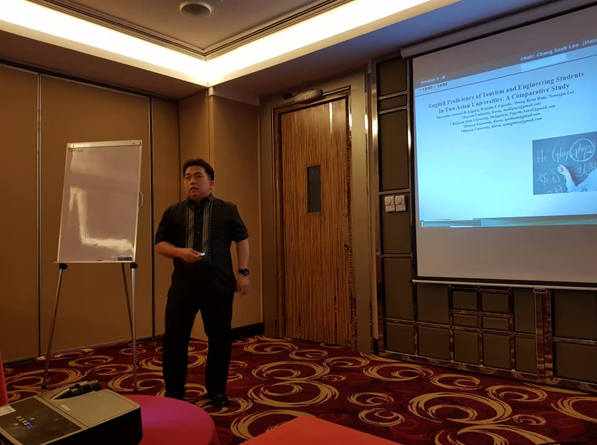
I mainly teach English subjects. There have been semesters when I was asked to teach at the graduate school and serve as an adviser to graduate students working on their dissertations. When I’m not engaged in academic work, I dedicate time to writing stories, poems, plays, and scholarly studies, many of which are published on my personal website. Several of my research studies have been presented at international conferences and published in internationally indexed journals. I have genuinely found fulfillment as a writer in this country.
I can’t imagine having any other “job cum hobby” besides teaching and writing. You may ask why. As Seth Godin said, “Do what you love and love what you do.” What I do and love is teaching, and what I love and do is writing. I use the expression “job cum hobby” because, when I engage in these activities, I don’t feel like I’m working; it feels more like pursuing hobbies.
My greatest challenge as a teacher is overcoming the cultural barrier between myself and my Korean students. I address this by building a good rapport with them and diligently fulfilling my responsibilities. Being a Filipino in ESL/EFL teaching places me and my fellow countrymen at a disadvantage. There is a common misconception that only native English speakers can teach the language, and even some of our Korean students believe this. It is something that Filipino English teachers like me must work to dispel. If I were to identify my most significant contribution as a Filipino in my profession, it would be demonstrating to the academic community in South Korea that one doesn’t need to be a native English speaker to be an effective ESL/EFL teacher.
I can’t think of anything negative about my current job; I have nothing but gratitude. I enjoy a harmonious relationship with my coworkers, both Korean and foreign. Although I occasionally clash with fellow foreigners over policy matters and work attitudes, we adhere to the principle of disagreeing without being disagreeable, which helps us maintain mutual respect.
My best advice for my fellow Filipinos working in South Korea is to work hard and respect everyone. Hard work leads to success as expat workers, while respect for others, regardless of citizenship, helps them stay out of trouble. It’s also important to abide by the laws of our host country.
Reflecting on my 12 years here, I see that what began as a leap into the unknown has become the most fulfilling chapter of my life. Teaching and writing—my two greatest passions—have flourished in this country. Embracing new challenges reminds me why I took that “calculated risk” in 2013. South Korea has provided me with opportunities to improve my overall well-being and has reaffirmed my belief that staying true to what you love leads to rewarding outcomes.



 M.A.D. L I G A Y A