Blog Archives
When Do We Wake Up?
(LAST OF 4 PARTS)
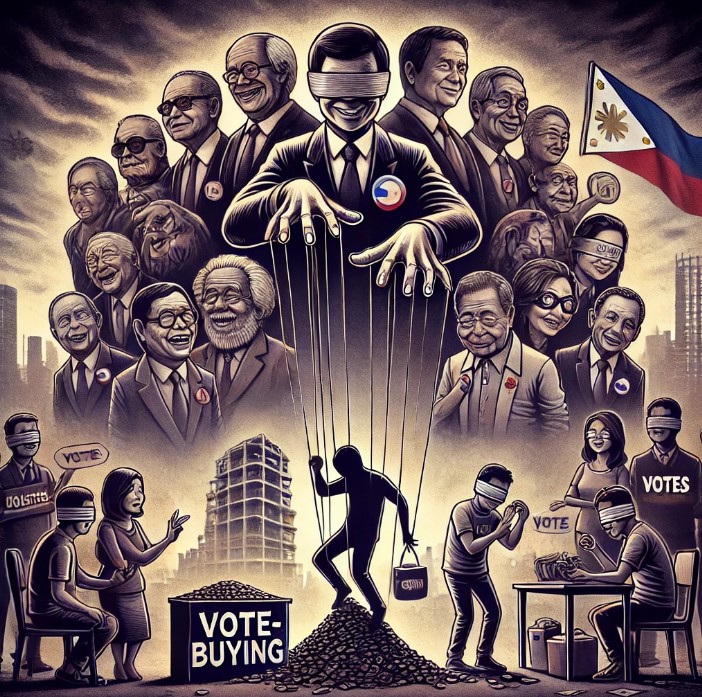
FILIPINOS’ HAMARTIA
The first three parts of this series of articles identified our serious faults as Filipinos—we sell our votes, we use questionable standards when choosing leaders, we treat elections as if they are popularity contests, allowing immensely popular but inexperienced and incompetent celebrities to win, and we either keep restoring the same traditional politicians from the “recycle bin” or replace them with family members. It is a “hamartia” (or tragic flaw) in our character as a nation.
Our inability to choose the right leaders clearly prevents us from reaching our full socio-political and economic potential as a nation.
We know the government is essential in leading all efforts to make our country progressive. We need the best leaders if we really want to become a “developed nation.” We as citizens are responsible for selecting the best ones to hold the reins of government. Unfortunately, we keep failing to do so.
The funny thing is that after we put them into power—the politicians who won because they had the money to buy votes, celebrities-turned-politicians who are inexperienced and incompetent, “recycled politicians” and the members of their political dynasties—we expect them to perform well. After every election, we expect a better-performing government.
And why would we expect a different government – a more effective one – when we know that we keep electing the same politicians or use the same old rotten standards when choosing new leaders?
Let us revisit Albert Einstein’s definition of insanity: “Doing the same thing repeatedly and expecting a different result.”
But assuming that one day we restore our sanity and finally refuse to sell our votes—finally, we learn to elect the most deserving and qualified candidates into office—would the wheels of national development start rolling?
Not quite yet!
There’s one more problem, a problem more serious than our failure to vote wisely and conscientiously. The more serious problem of Filipinos, as mentioned in the first part of this series, is the mindset that the leaders we elect are solely responsible for solving all of our society’s ills and the nation’s problems.
We view our relationship with the state from the vantage point of “self-entitlement.” We think that our leaders must give us “this and that.” We say the government should do “this and that” for us. We expect too much from leaders whom we don’t even choose using the best and most appropriate standards.
Is it the duty of the government to provide each citizen with food, clothes, and shelter?
There goes another problem among us Filipinos. We answer “yes” to the foregoing question, and we seem to have embraced another dangerous tendency—the “ayuda mentality.”
The government’s general functions are to formulate, implement, and enforce the laws of the land, build infrastructure, ensure peace and order, and create economic and other opportunities that help its citizens enjoy the conveniences of life, have the best chance to get a good education, and find or create means of livelihood.
It is also not the duty of the government to provide everybody with a job.
One of the functions of the government is to create an environment that promotes economic growth. They have to ensure that businessmen would be encouraged to invest and initiate business activities, thus creating job opportunities. But jobs are not given on a silver platter. We have to search for job openings, apply, and ensure that we have the required qualifications for the jobs we want. Getting ourselves ready for employment is a personal responsibility. The government will not deliver to our doorsteps the jobs that we want.
The government is also an employer but cannot possibly provide each citizen with a job. It is also impossible for the private sector to employ everybody. That’s just the reality—harsh as it may be. Those who don’t get employed or do not want to work for others because they have better plans for themselves could perhaps succeed as entrepreneurs.
Not everybody would get a college degree. Not everybody is trained and destined to be in a workplace – either in the corporate world or the academe. Some of us will be factory workers, sales clerks, farmers, fishermen, plumbers, drivers, gardeners, or what-have-you. It doesn’t matter what jobs we have, as long as they are decent and they allow us to earn a living honestly.
Don’t reason out that you came from a poor family and your parents could not send you to school to get a good education and have a better chance for a better life.
Unfortunately, this is how we are wired. When we encounter failure, when things don’t turn the way we expect them to, when we are not doing well in the different areas of our personal lives, we are always ready to check our “blame list” to find somebody or something to put the blame on. And our favorite whipping boy – the government. When we are done accusing our leaders for not doing their job well, causing us to become losers, we next vent our ire on our parents, saying that they did not work hard enough to ensure that we live a good life when we become adults.
We need to throw away that “blame list” because, whether we like it or not, we are personally responsible and accountable for our successes and failures. There comes a time in our lives when we should become self-sufficient, when we, not the government nor our parents, decide for ourselves and take complete control of our destiny.
We Filipinos must realize that without recognizing our faults and changing, this country will never become progressive and “developed.” We will never gain the respect of the community of nations if we remain the way we are now.

John F. Kennedy said something we should reflect upon: “Ask not what your country can do for you—ask what you can do for your country.”
We Filipinos need to realize that there are two requirements for a country to become progressive and developed: good government and responsible citizens. Remove one, and a nation is doomed. The citizens and their leaders need to work harmoniously towards achieving national goals. There’s no other way. Both of them need to work hard. They have to work hand in hand. And in case you did not notice, we as citizens control both requirements – we can decide to become responsible as citizens and also choose in whose hands we should put the reins of government.
When Do We Wake Up?
(THIRD OF 4 PARTS)
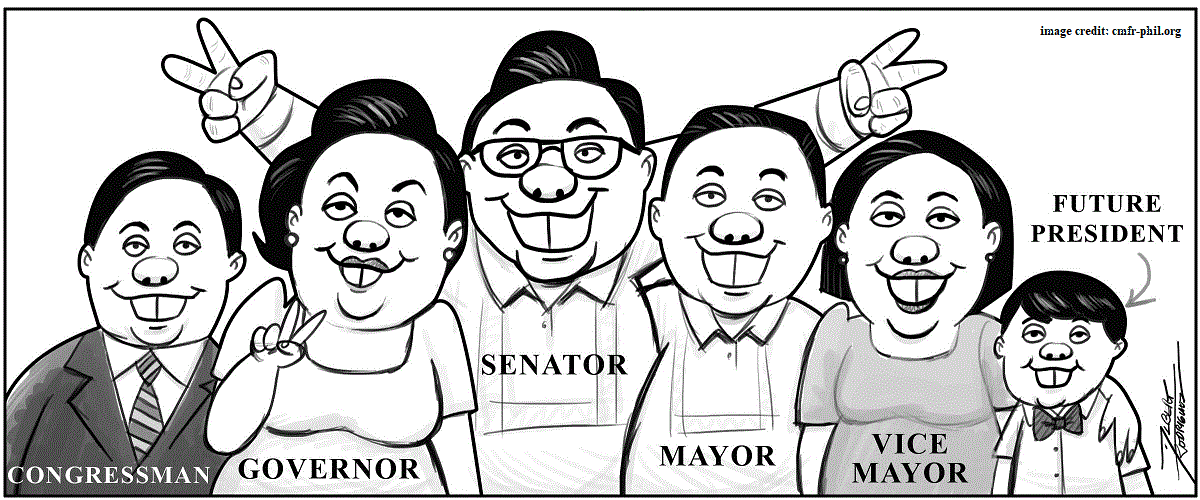
SAME POLITICIANS… SAME RESULTS
We’re complaining about political dynasties, right? But haven’t we realized we are guilty of creating the political dynasties in the Philippines? Yes, we have to admit it. We allowed the same politicians and their family members to lord it over in the Philippine political landscape.
When a politician, let’s say a mayor, could no longer run for re-election due to term limits, what would the honorable gentleman do? Turn his back on politics? Of course not! Power is so addicting. So many of those who experienced being at the helm of either local or national politics (and enjoyed the benefits, including those “passed under the table”) would not just quit politics or pass the torch to another person.
So, what would happen?
His wife would run for the position he previously held. Then that politician would run for another post – as governor, perhaps. Most of the time, Filipino voters would allow them to win, and usually, they would be able to mesmerize (or buy) the voters to luckily get re-elected until they reach their term limits. Would it be the end? Would their thirst for power (and the so-called “benefits”) be finally satiated?
You know the answer… a resounding NO.
The couple would ask their son or daughter (a grandson, a granddaughter, or an in-law) to run for the positions they would vacate. The shocking thing (and you might not believe it) is that there are times when siblings, or even husbands and wives, do not give way to the other, and so members of the same family slug it out in the political arena.
Anyway, this is not about family members squabbling in the political arena but about the political dynasties their families created.
Let’s continue, then.
Let’s return to the mother who just reached her term limit as mayor. Would she go back to being a full-time mother and wife? You were born only yesterday if you don’t know the answer to that question. Yes – she would run for the post vacated by the husband-politician. The husband would then aim for a higher position – run as congressman or senator. If all family members win, then for years, the power will change hands within the same family. The son (or daughter) is a mayor, the mother a governor, and the father either a congressman or senator. When term limits are reached, they will just run for the position a family member would vacate. Some siblings, and even in-laws, in the family also occupy minor positions in their geographical units.
Did that family create their political dynasty? No! We did it. We Filipinos created the political dynasties in the Philippines.
Now, answer these questions – “How (did they perform) are they performing as leaders?” “What is the country’s current economic, social, and political condition?” “Is the Philippines marching towards progress with them holding the reins of government for God knows how long?”
Of course, you know the answers to the foregoing questions.
How many of the available positions in the Philippine government, local and national, are held by the same families who have been the gods and goddesses of Philippine politics since time immemorial? Most of them are offspring of the peninsular who survived “America’s power grab” at the turn of the 20th century. Eventually, they stayed in the country and reaped the dividends. And it’s not only the politics that they dominate. With the enormous fortune they inherited from their Spanish parents/grandparents, they also control the country’s economy. That’s why Filipinos sometimes jokingly ask – “Did the Spanish rule really end?”
Only a few pure-blooded Filipinos and foreign expatriates of Chinese origin who became wealthy when the Americans took their turn to colonize the Philippines had the financial resources to challenge the Spanish mestizos for political supremacy in the Philippines, especially after the Americans granted the Filipinos their independence after the World War II. Some of them succeeded, and when they experienced how intoxicating power is, they (and their offsprings) kept running, and we kept electing them as if nobody else were qualified.
It is no longer surprising that politicians holding national positions have one or two family members and in-laws holding seats in the local government.
Filipinos might ask, “When would the same people from the same families pass the reins of leadership to each other in national and local governments after elections end?”
That’s up to the Filipino voters.
So, we should not wonder why the World Bank still classifies the Philippines as a “developing country.”
According to Albert Einstein, “insanity” is doing the same thing repeatedly and expecting a different result.
Why do we expect a better-performing government when we keep electing the same politicians?
What We Filipinos Ought To Realize (3)
(3rd of 4 parts)
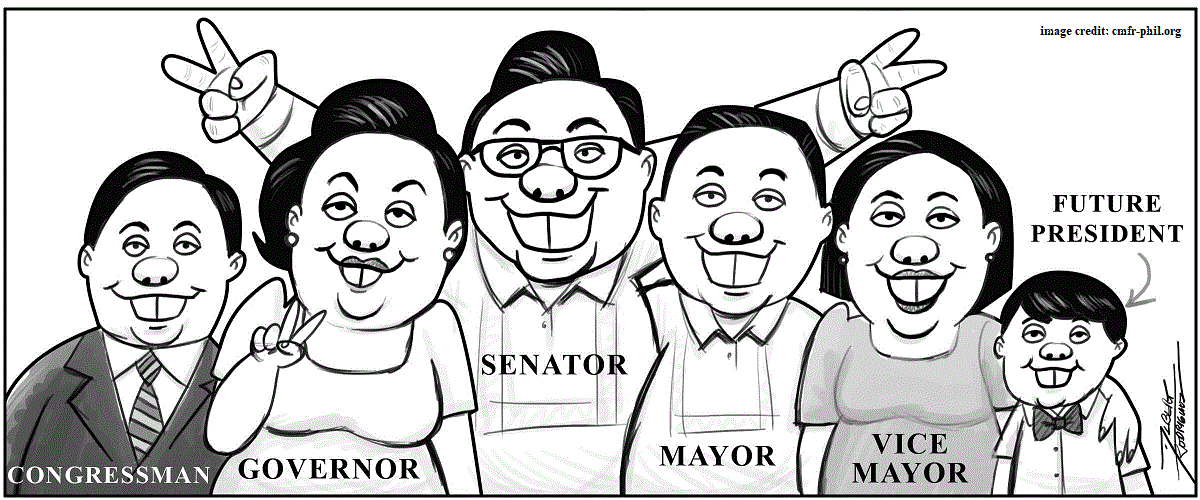
We keep on criticizing the political dynasties in our country. But haven’t we Filipinos realized that we are so guilty of creating them? Yes, we have to admit it. We allowed the same politicians and their family members to lord it over in the Philippine political landscape for God knows how long. We made our country look like a de facto monarchy ruled by political kings and queens… their princes and princesses.
When a politician, let’s say a mayor, could no longer run for re-election due to term limits, what would the honorable gentleman do? Turn his back on politics? Of course not! Power is so addicting. So many of those who experienced being at the helm of either local or national politics (and enjoyed the benefits, including those “passed under the table”) would not just quit politics nor pass the torch to another person.
So, what would happen?
His wife would run for the position he previously held. Then that politician would run for another post – as governor perhaps. Most of the time, Filipino voters would allow them to win and usually they would be able to mesmerize (or buy) the voters to luckily get re-elected until they reach their term limits. Would it be the end? Would their thirst for power (and the so-called “benefits”) be finally satiated?
HELL NO!
The couple would ask their son or daughter (or a grandson – or a granddaughter – or an in-law) to run for the positions they would vacate. The shocking thing (and you might not believe it), there are times that siblings, or even husbands and wives, would not give way to the other and so members of the same family would slug it out in the political arena. Anyway, this is not about family members squabbling in the political arena – this is about the political dynasty their families created.
Let’s continue then.
Let’s go back to the mother who just reached her term limit as mayor. Would she go back to being a full-time mother and wife? You were born only yesterday if you don’t know the answer to that question. Yes – she would run for the post vacated by the husband-politician. The husband would then aim for a higher position – run either as congressman or even senator. In case all family members win then for years that the power will change hands within the same family. The son (or daughter) is a mayor, the mother a governor, and the father either as congressman or senator. When term limits are reached then they will just run for the position that a family member would vacate. Some siblings, and even in-laws, in the family are also occupying minor positions in the geographical units where they reside.
Did that family create their political dynasty? No! We ourselves did it. We Filipinos created the political dynasties in the Philippines.
And how did (have) these members of a few beholden families whom we allowed (are allowing) to exclusively hold the reins of our government – local to national – perform (been performing)?
You are either blind or dumb if you don’t know the answer to that question.
You got fooled if you think they keep pursuing positions in government in the name of “public service.”
You are naive if you believe that what drives them to stay in power is they love you, they want to serve you, and they want to help you have a better life.
How many of the available positions in the Philippine government, local and national, are held by the same families who have been the gods and goddesses of Philippine politics since time immemorial? Most of them are offspring of the peninsulares who survived “America’s power grab” at the turn of the 20th century. They decided to stay in the country and reaped the dividends for doing so. And it’s not only the politics that they dominate. With the enormous fortune they inherited from their Spanish parents/grandparents (which the Americans allowed them to keep), they also control the country’s economy. That’s why I would sometimes jokingly ask – “Did the Spanish rule really end?”
Only a few pure-blooded Filipinos and foreign expatriates of Chinese origin who became wealthy when the Americans took their turn to colonize the Philippines had the financial resources to challenge the Spanish mestizos for political supremacy in the Philippines, especially after the Americans granted the Filipinos their independence after the World War II. Some of them succeeded and when they experienced how intoxicating power is, they (and their offsprings) kept running and we kept electing them as if nobody else were qualified.
It is no longer surprising to know that politicians occupying national positions have one, or two family members and in-laws occupying seats in the local government.
Here is a question – “When would having the same people from the same families passing the reins of leadership to each other in both the national and local governments after elections end?”
That’s up to the Filipino voters.
So, we should not wonder why we as a nation could barely move the needle on socio-political stability and economic progress.
Socio-political stability and economic progress are the most important metrics that we ought to use when evaluating the performance of these leaders who are members of the few families whom we allowed (let me say this again) to lord it over in the political arena. We keep electing them then keep our fingers crossed that they will deliver.
According to Albert Einstein, “insanity” is doing the same thing over and over again and expecting a different result.
Why in the world do we expect a better-performing government when we keep electing the same politicians from the same families? Are we insane?
 M.A.D. LIGAYA


 M.A.D. L I G A Y A