Category Archives: Expat Teachers in South Korea
South Korea: In the Eyes of an Expatriate (2)
(2nd of 3 parts)

I started mingling with real Korean people – real men and women and not fictional characters. I dined with them, drank their wine and beer, ate their kimchi and their delicious dishes, and spoke (a little) of their language.
I witnessed their way of life and even adopted some parts of it. I saw what’s inside their houses, their theatres, their bars, restaurants, and coffee shops. I have entered their museums, strolled in their parks, and hiked in their mountains.
Through daily encounters with my Korean students, colleagues, and friends, I was also able to probe into their character. I confirmed that just like what I saw in their dramas, South Koreans fall in love, get angry, feel sad and happy, and suffer from anxiety and stress. In short, just like me or any average human being from any part of the world, they also ride the roller coaster of emotions. They do have strengths and weaknesses too. They are not faultless… like me. Anyway, nobody is. They also have fears and uncertainties. But just like me and anyone else, they have dreams and ambitions. They have plans and a vision of a good life in the future for themselves and their families.
I discovered more. I found out that their prosperity is not a myth. Those things I saw in Korean dramas and movies that indicate how progressive and modernized their country is are not fictitious. Their provinces, cities, and towns are effectively interconnected by impressive highway systems that how I wish we could also have in my country of origin. How I wish that our telecom companies could provide us with internet connectivity as fast as South Korea’s.
With everything that I have seen and experienced, I could not help but compare this country to mine. I could not help but be envious of the South Koreans for what they have accomplished as a nation. As I stayed here longer, my “How I wish!” list grew longer. How I wish that in my country, packages could be left in front of our doors, even for days, not fearing that somebody would steal them. How I wish we could also send to prison our politicians who would be found guilty of wrongdoings without fearing that when a political ally would become the next president they would be granted a pardon. How I wish we would take research as seriously and meticulously as the Koreans do.
Whatever metrics I used for the comparison, it was a mismatch with this country always ending up on top after all the comparative analyses I performed except for this – my country has a younger population where the median age is less than 26 years. For this country, it’s more than 40 years. I will no longer be citing other statistics like those of life expectancy, GDP, and international ranking of universities. South Korea’s numbers are far more superior to my country’s.
In addition, South Korean students perform better in Math and Science as compared to the youth of my country. If there is any consolation though, I and my countrymen scored higher in English proficiency.
But does it matter if we in our country are better at English? Does it make my country better than South Korea? The answer is obvious – NO. There is no direct correlation between a country’s English proficiency and its economic performance. If there is, then why does this country, as of 2021, rank as the world’s 10th biggest economy while mine barely made it to the list of newly-industrialized countries?
Don’t get me wrong, I am not putting my country down while I am seemingly extolling South Korea. I love the country where I was born and I am proud to be its citizen. I am just wondering how come this country has gone this far leaving my native land way behind in the race to prosperity and stability.
My desire to figure that out led me to read more about the history of this country. In the process, I discovered certain uncanny similarities between our historical experiences. Both South Korea and my native land are colonized nations and earned independence after the second world war. Both countries embraced the democratic form of government thereafter. Additionally, just like in my country, the development of democracy here in South Korea was interrupted by military takeovers, and what a coincidence that martial law in our countries was declared both in 1972. Was it also a coincidence that powerful military leaders in both countries were removed via popular revolt in the mid 1980s?
Unfortunately, the similarities in the historical development of this nation and mine stop there. We took different paths in building our nations from the ashes of colonization, the second world war, and military juntas.
South Korea: In the Eyes of an Expatriate (1)
(1st of 3 parts)
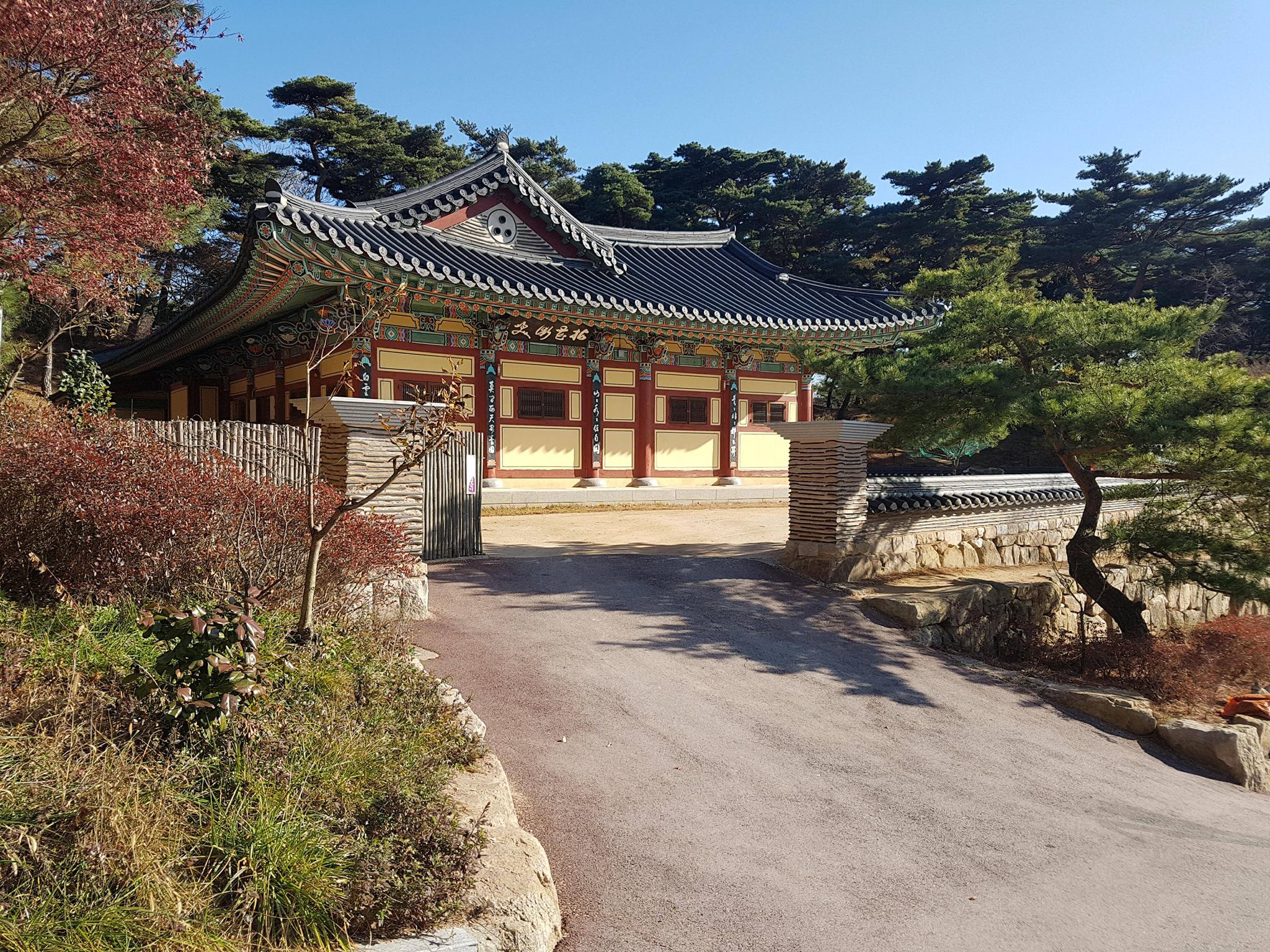
South Korea entered my consciousness through Hallyu – a term that when translated to English means Korean Wave. And yes, when that cultural wave reached our shores, South Korean dramas, movies, and music drowned the country’s airwaves. Local magazines and the entertainment sections of newspapers regularly featured K-pop artists and other Korean TV and movie personalities. Before long, other aspects of Korean culture – food, fashion, lifestyle, and what have you – started to deeply influence me and my countrymen.
Before the Korean Wave came, I knew not much about South Korea. I remember checking the encyclopedia for information about the Korean war when I took World History when I was a college student. It was only then that I found out that my country was one of those which sent troops to help this country to ward off the Communist invasion from north of its borders.
Just imagine how dreadful a picture of the war-torn Korean peninsula the things that I read created in my mind. It was horrible, to say the least. The death and destruction were too much to bear.
But before I graduated, I had another chance to check the encyclopedia for more information about South Korea when the country hosted the 1988 Summer Olympics. Because of the said sporting event, South Korea was all over the news. That triggered my curiosity thus I checked the encyclopedia to once again read something about the said nation.
I saw a country different from what those pages about the Korean war presented to me. I found out that the nation called “Land of the Morning Calm” rebounded from the horrors of the Korean war and eventually became very progressive. Then I wondered at that time and asked – “What did the South Koreans do that enabled them to, like the legendary Phoenix, rise from the ashes of a horrendous war at that time and even became only the second country in Asia to host the world’s biggest sporting event?”
As years passed, I learned more and more about South Korea, not only through traditional media but more from the Internet (which became more accessible than when I was in college). I got to see more and more Korean dramas. It made me, just like many of my countrymen, want to visit the country so bad. I wanted to visit the places in the country that I got to see only on TV programs and movies. I wanted to try soju and maekju and when the two are combined – somaek. I wanted to taste kimchi and eat Korean dishes prepared and served by Koreans. I wanted to try bibimbap, pyo haejangguk, and kalguksu served with plenty of banchan in a restaurant in South Korea, not in a Korean restaurant in my native land. I wanted to meet real Korean people. In short, I wanted to have an authentic Korean experience. I personally call that my “Korean dream.”
That urge became stronger when I enrolled in the program Teaching English to Speakers of Other Languages (TESOL). South Korea was mentioned by the program coordinator as one of the countries considered as premiere destination for ESL teachers. Thus, since teaching overseas is an option in the career path I set for myself, I thought that if I would teach abroad, why not in South Korea? My “Korea dream” suddenly expanded – I no longer just wanted to have an authentic Korean cultural experience but to live and work in this country.
Then I did what I had to do for that “Korean dream” to come true. I left no stone unturned.
My persistence and hard work eventually paid off. My wish was granted. I was given the opportunity to live that dream when a university hired me as a teacher. So, off to South Korea, I flew.
As soon as I exited Gimhae Airport, I started having that authentic Korean experience. The early spring weather giving me an icy cold welcome got it going.
As days and weeks passed, I gradually immersed myself into the country’s culture. I was no longer just watching the people of this land from the television set, the silver screen, and the World Wide Web. It’s no longer a Korean drama I was watching but it’s real Korean life I was experiencing… from reel to real. I got what I wanted.
The Work Attitude of (Some) Expat Teachers

(A PERSONAL ESSAY)
I started teaching here in South Korea in 2013. For six years now (going 7), I have been working with expat teachers from different parts of the world, mostly from countries where English is the native language. Rarely do South Korean universities hire Asian ESL teachers (like me).
Those years I worked with my fellow expat teachers allowed me to witness their brand of professionalism (or the lack of it). I saw their work, heard them talk, and witnessed how they behaved as persons and professionals. My being given by the university where I am teaching now the privilege to be a head professor for three (3) semesters a few years back also allowed me to have access to information about them. In addition, for the past four years, I have been a member of the university’s hiring committee and have reviewed hundreds of résumés from ESL job applicants. A few of those applicants were first-timers, and the majority were attempting to transfer from other universities here. That enabled me to scrutinize their academic and employment background. I discovered that MANY of those moving from other universities are not teachers by profession, and it was their first time teaching when they were hired as ESL teachers here in South Korea. In the job interviews where I was assigned to be a member of the panel of interviewers, I came to know more about expat teachers.
Sometimes, even without me asking, tactless birds from the grapevine would tweet me a thing or two about my fellow expat teachers. I am also a member of an organization of Filipino professors teaching in different universities here in South Korea, and during our meetings, I would get more information about ESL teachers from different countries in their respective workplaces, which kind of confirmed my overall perception and observation about them.
I have become so awkwardly familiar with my fellow expat teachers’ behavior in the workplace. I can vividly describe their work attitude. And this personal essay is exactly that – an exposé about the work attitude of some expat teachers here in South Korea.
Anyway, these are just my personal observations. I may be wrong. But what if I am right?
Before I proceed, though, let me clarify that MOST of the expat teachers I worked with in the past years (and those who are still with me where I am currently teaching) are very good – personally and professionally. But as you may have noticed, I used MOST, not ALL, because there are a FEW bad apples.
Yes, there are a FEW bad apples. And you know how the saying goes – “One rotten apple spoils the whole barrel.” Because of the bad decisions they make as people and professionals, employers may think that all expat teachers are like them. That’s my worry.
I hope that Koreans wouldn’t think that expat teachers are alike. MANY of us are serious about our work as ESL teachers here, but those FEW who don’t might be creating a negative perception about us.
I witnessed how certain policies were changed in my workplace in response to some of my former colleagues’ bad decisions. Remember that when school administrators implement a new policy or amend an existing one in response to the wrongdoings of one bad apple, the changes will affect all expat teachers and not only the ones who did something wrong.
There are expat teachers everywhere who complain a lot about what they perceive as imperfections of the universities where they belong. Some of them would say, “In my country, this is not how we do things.” Others would make unnecessary comments about this country and its people, as if they themselves, their respective countries, and their countrymen were perfect and blameless. If that is the case, why did they decide to leave their countries and work here? If the universities back in their countries are the best and most ideal, why didn’t they apply for teaching jobs there? Why are they here in South Korea? Did they come here to whine?
This reminds me of what one of my former colleagues from the US said some time ago when he got so frustrated about the complaints of our fellow expat teachers – “Why can’t these people accept the fact that the reason they are here working as ESL teachers is that they couldn’t get a decent job back in their own countries?”
The problem with the expat teachers who have a lot of complaints about the policies in their universities, and granting that their complaints are valid, is that when their employers offer them a contract for the next school year, they would sign their names on the dotted lines. They would return and still teach in the universities they malign so much.
Is that a dignified thing to do?
If these expat teachers think that the system in the universities where they are currently working is rotten, why do they keep coming back? (I personally know some of them.) Is salary the reason? Is it the reality that back in their countries, they will not be able to earn the money they are being paid here? Would they even qualify to teach in their universities (or are they competent enough to be chosen among qualified applicants)? Is it the fear that should they not accept the contract their present university is offering them, they may not be able to convince another university to hire them?
These expat teachers claim that they are complaining because they want to change the system. Really? When will the Don Quixotes stop fighting the windmills? Okay, if they insist, here is my advice – They should request a meeting with their respective university Presidents and present to them their complaints and the reforms they want to implement. Let’s see what happens. If they are really the idealists they seem to be trying to project themselves as, they should do this.
These expat teachers should express their grievances and suggest the reforms they want, not to their colleagues during meetings, but directly to university officials who have the power to implement changes. Or better yet, go to either the Ministry of Education or the Ministry of Labor and file a complaint against whatever they think their university is doing wrong. That is if, aside from barking, they can also bite. That is, if they got balls. If none, they’d better keep quiet and just work. They should not waste their colleagues’ time listening to their whinges and whines.
One thing that I have noticed is that most of the expat teachers I met who are fond of complaining are the teachers who are not “trained to teach” but are “forced to teach.” They are not “real teachers” but “pretenders.” Please click this link if you want to know how I differentiated the “real teachers” from the “pretenders.”
How they conduct themselves as professionals deliver instruction, treat their students, and comply with the job requirements are telltale signs that they have no formal training as teachers. And truth be told – SOME expat teachers here in South Korea were not trained to teach. They have no degrees in education. They were lucky to have been hired. Well, they trained as teachers on the job. Hopefully, they eventually became “real teachers,” no longer “pretenders,” after a year or two. But wait… did they?
What is so frustrating is that the ones complaining a lot are not doing their job how they ought to. They do not comply with all the requirements. And with some of the tasks perennially performed by teachers, they still had to bother their colleagues for assistance. I witnessed how SOME of them swept their incompetence under the rugs of their complaints. They thought that they could hide their inability to perform and deliver by verbally attacking school policies and administrators who were not present to defend themselves or refute what they (the whiners) were saying. There were times that I had to call the attention of a few of my fellow expat teachers for taking the floor too long during meetings to needlessly complain about something. This made me unpopular with them. The exchange between us would usually get heated. I had to do it to prevent meetings from dragging on too long.
How surprised I was when one time, a few of my fellow expat teachers complained about reading long (job-related) emails. Let’s say it would take an extra 5 minutes to read an email longer than usual. What is an extra 5 minutes when compared to the more or less 5 months in a year that we get paid while vacationing and doing almost nothing job-related?
I have some colleagues who voice their discontent about policies but, at the same time, perform their functions as best as they could. Their students never complained about being shortchanged. They know that whatever disagreement they have with policies, it’s between them and the school administrators. The students should never be caught in the crossfire. They help in solving issues that could be remedied. They are professionals, and I admire them. They are not whiners. I listen when they talk. Sometimes, I disagreed with them, and we had healthy discussions.
I could go on and on and say a lot more about the work attitude of SOME expat teachers here is South Korea, but I need to stop at this point.
Let me just give the following parting shots: Expat teachers should perform in such a way that nobody would accuse them of being “mercenary teachers.” And if they think the universities where they are currently working do not measure up to their personal core values and standards of excellence, what should they do? Nobody is forcing them to stay. They must reject a contract extension should it be offered to them. They must leave and find their perfect university.
 M.A.D. LIGAYA



 M.A.D. L I G A Y A