How Colonialism Shaped the Filipino Character (2nd of 4 parts)
Filipinos often ask, “What would the Philippines be like today had Spain never colonized the island nation? Would the Filipino character have developed the way it has now had the Spaniards not succeeded in keeping the natives in chains for more than three centuries?”

What if the Americans had honored the principle that “governments derive their just powers from the consent of the governed” [4], and decided in 1898 not to stay, allowing the Filipinos to govern themselves instead? The Americans should have known better. That very principle drove their own declaration of independence in 1776, and it is held up as the model for the right to self-determination — the same right they denied the Filipinos when they colonized the Philippines. The Americans justified their occupation by claiming the Filipinos were not ready for self-governance. But how could they have been so certain? Even so, the Filipinos would certainly have preferred to chart their own destiny as a nation, whatever the consequences. The world will never know what might have become of the Philippines had the Americans handed over the reins of government. It is not certain the Filipinos would have succeeded — but one thing is clear: the Philippines did not become a better nation because the Americans occupied it either.
It would have been a tremendous boost to Filipino pride had they been allowed to continue their war with Spain — a war they were winning — before Spanish and American strategists staged what later became known as the “Mock Battle of Manila Bay,” a battle the Americans claimed to have won. The plan was concocted to keep Manila, the nation’s capital, from falling into the hands of Filipino revolutionaries. Imagine how differently the Filipino psyche might have evolved had that victory been real and theirs. The nation’s character would have taken a very different shape. But it was not meant to be.
As it happened, the Philippines was colonized by both Spain and America, and the evolution of the Filipino psyche did not unfold as it should have had that colonization never occurred. So how did that colonization shape the Filipino character? How did Spanish cruelty and American treachery impact the evolution of Filipino values and traits?
A nation’s character is expressed through the values and traits of its people. These develop over time, shaped by the events of a nation’s life and by the environment in which its people live.

Filipinos carry both positive and negative values and traits. Among the positive are hospitality and resilience.
Filipinos are famous for their hospitality. They treat visitors, especially foreigners, with remarkable generosity, offering them the best of what they have. As hosts, Filipinos go out of their way to make guests comfortable, providing the finest amenities available. The Spaniards experienced this hospitality firsthand upon arriving on the islands and took full advantage of it. Though there were places where the natives met them with hostility, they were, on the whole, welcomed warmly.
This hospitality is sometimes mistaken for subservience. Some argue that centuries of colonization left Filipinos with a sense of inferiority, making them overly gracious toward foreigners — that they were conditioned by their former colonial masters to obey, serve, and never question. This stereotype has been reinforced by the number of Filipinos working abroad as domestic helpers.
Those who look at Filipino hospitality this way are mistaken. Warmth toward strangers and generosity toward guests were already woven into pre-colonial Filipino custom, embedded in values these people held long before any foreign flag was planted on their shores. A trait rooted in something that old cannot be reduced to a symptom of something that came centuries later. Those who insist otherwise choose to view the trait through a negative lens, mistaking a virtue that predates colonization for a wound it supposedly caused.
Filipinos are naturally caring, friendly, polite, and respectful. Their hospitality reflects genuine humanity, not subservience. They are highly relational people who form connections easily, adapt quickly to different cultures, and embrace foreigners without judgment. If the world were tested for what Howard Gardner calls “interpersonal intelligence,” Filipinos would likely rank among the highest.
This trait did not disappear with the arrival of the Spaniards — it was reinforced. The Spaniards introduced Christianity, and embracing that faith gave Filipinos still more reason to love and care for others.
Genuine concern for others comes naturally to Filipinos. Beyond domestic work, many serve abroad as doctors, nurses, caregivers, nannies, and teachers. Filipinos are not driven by ego; they can take on menial work, believing that “any necessary work that pays an honest wage carries its own honor and dignity” [5]. This is why many accept such jobs overseas. At the same time, skilled Filipino workers and professionals are sought after in many countries, and Filipino artists can be found working around the world — proof of Filipino intelligence and talent.
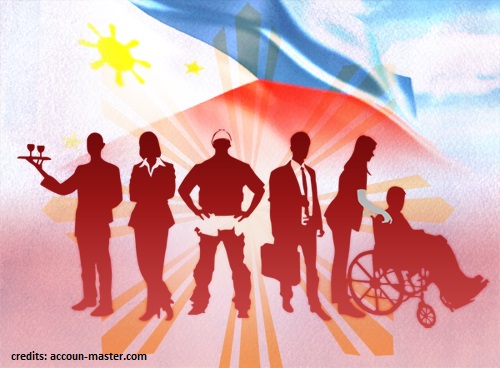
Filipinos are also resilient, almost unwilling to give up. Both the natural calamities that have plagued the nation since time immemorial and the painful experience of colonization have hardened them. They rise again after serious setbacks, their ingenuity and resourcefulness helping them find a way out of difficult situations, their trademark humor allowing them to laugh even through the hardest of times.
Another trait that survived colonization is close family ties. Perhaps the harsh rule of Spain and America drew Filipino families closer — in times of sorrow and desperation, during those long years of subjugation, they had nothing to rely on but each other. This trait runs deep: Filipinos maintain close bonds with relatives to nearly the fourth degree of consanguinity, and parents often allow their children to remain in the family home even after marriage.
Strong among Filipinos, too, is the spirit of “Bayanihan” — communal unity, something akin to volunteerism. It shows up in many forms, most famously in the old tradition of neighbors helping a family relocate their home — long bamboo poles slid beneath a traditional house and carried by volunteers to its new location [6]. The tradition persists even now that homes are built of wood and concrete; the spirit of Bayanihan lives on in other forms, especially during natural calamities, when Filipinos readily offer help and resources to neighbors in need. This, too, is part of the innate humanity that Christianity helped strengthen.
This same resilience and devotion to family now sustains the nation in a form the pre-colonial Filipino could never have imagined. Millions work abroad, apart from spouses and children for years at a stretch, so that money sent home might build a house, put a sibling through school, or cover a parent’s medical bills. The remittance economy that keeps much of the Philippines afloat today is not a modern invention so much as a very old loyalty finding a new outlet in a globalized world — proof that the traits colonization tested centuries ago are still doing the very same work today.
But Filipinos have negative traits as well.
___________________________
[6] http://groups.csail.mit.edu
How Colonialism Shaped the Filipino Character (3rd of 4 Parts)

Posted on October 22, 2015, in Colonization, Filipino Values and Traits, Philippine History and tagged Colonization, Filipino Values and Traits, Philippine History. Bookmark the permalink. 2 Comments.


Reblogged this on HARDPEN'S PORTFOLIO.
LikeLike
Pingback: How Colonialism Shaped the Filipino Character (1st of 4 parts) | M. A. D. L I G A Y A