Blog Archives
Like Leaves

Made to sprout
Nourished
Grow lush
Then deprived
They dry
Shaken
Pulled
Then detached
They descend
But before the eternal repose
Hither and tither they go
The wind will decide their fate
The wind will assign their grave
DIFFERENTLY THE SAME

You’re white
He’s black
She’s yellow
I’m brown
Different skin
Different hair
Different height
Different sizes
But we are all humans.
Brown, white, black, yellow
Different religions
But the same GOD
…others have none
Different beliefs
But the same fears
…same hurts
…same joys
White or black or yellow or brown
We all live
…we dream
…we cry
…we laugh
…we love
…we die!
Real Life and GMA’s “Ang Dalawang Mrs. Real”
 Admittedly, I got tired watching Filipino drama series shown on Philippine TV. The story lines are so repetitive that it diminishes the element of surprise which is a key ingredient in literary appreciation. Instead of the suspense killing the audience, familiarity to the story line killed the suspense then bored the audience.
Then came GMA’s “Ang Dalawang Mrs. Real.” It’s a story about a philandering husband who married another woman. After going over its synopsis, I said “nothing new.” So, I did not bother to watch, until my one and only “Mrs. Real” asked me to find on You Tube the episodes of the said TV drama that she missed. With nothing else to do I decided to peep on what she’s watching. Result: For the first time in years that I eagerly watched a Filipino drama series.
How many times have we watched a movie and TV drama about unfaithful husbands? How many times have we read stories about men not contended with their wives so they resorted to having extra-marital affairs? We know that when the wife learned about it all hell breaks loose. We know that when men got caught they had to choose between their wives and their other women.
The foregoing is also what GMA’s “Ang Dalawang Mrs. Real” is all about. Familiar situations yet the story, generally, succeeded in veering away from becoming predictable. Every scene, actually, is climactic stuffed with twists and turns. Watching it is like riding an emotional roller coaster.
Elements of the rising action are beautifully put together as the story geared towards the climax. The climax itself was something unexpected. The writer seems to have a penchant on giving clues on how things would turn out in the story and but would present something not expected.
Yes, same story line but delivered differently.
Different not because the actors and actresses, if I may use an oft-repeated phrase, “gave justice to their roles.” This is no longer surprising. It is a given. These people are trained to act out roles.
It is different because the whole story is a realistic rendition of life. And this is exactly what literature is…a faithful reproduction of life.
Characterization and dialogue are consistent with literary realism. The story as a whole presented universal truths about men and women, about family and society making it acceptable even to international audience.
Anthony (Ding-dong Dantes), the husband, is the embodiment of the popular belief about men – “that men are polygamous in nature.” Henry (Robert Arevalo) and Tino (Tommy Abuel), fathers of the two women married by Anthony, are themselves not clean. Both of them have had extra-marital affairs themselves. Among men in many parts of the world, womanizing seems to be a natural tendency.
But the story also presents the good side of the male specie through Jun (Jaime Fabregas), a disciple of monogamy. He is a loving husband to his wife Sonia (Conie Reyes) and a supportive father to Anthony. Chaos descended upon his family for all the troubles created by his son yet he keeps his family above water. He was the glue that keep his family together.
On the other hand, Millet (Maricel Soriano) is an epitome of a martyr wife. While almost violently that she reacted to her husband’s infidelity, while she was offended to the utmost upon learning that Anthony married another woman, she forgave him. That’s how wives are, they always stand by their men. As much as possible they must preserve the famiy. Umeng (Susan Africa), the mother of the other Mrs. Real, Shiela (Lovi Poe) also chose to stick by her husband, Tino, even if she discovered that the latter, just like Anthony, had another woman and actually fathered a child.
Millet and the other Mrs. Real, Shiela (Lovi Poe) and her mother Umeng (Susan Africa) represent women who are at the receiving end of an ongoing notion that it is okay for a man to have another woman. Like many women in society, they unwillingly embrace the dictum that men will always be men. Or maybe they are drowned by fear that life may not go on without their husbands.
Aurora (Celeste Legazpi) and Sonia (Conie Reyes) are the typical mothers protective of their children. They are pained to see their children suffer and they would do anything to alleviate their suffering.
In real life, we criticize people for the things they say and do. We did the same in the drama series, we passed judgment on the characters.
We approved the positions taken by each of the families affected. They did what they needed to do to protect their loved ones.
But while we expressed sympathy for some characters, most especially Millet, we criticized some. The harshest criticism fell, not on Anthony, but perhaps on Henry.
Why not on Anthony? He is the most sinful of all the characters. He caused all the troubles. But why was he not crucified. To err is human to forgive is divine. Anthony committed mistakes but tried to correct them. He tried to put things in order thereby earning the forgiveness and sympathy of the viewers.
And why on Henry? Because he is so unforgiving. He plays his moralism to the extreme. He did not forgive Anthony and sued him for bigamy despite the pleas made by his wife and his daughter and Anthony’s mother.
When Millet fell into depression we considered it to foreshadow the possibility of Henry finally forgiving Anthony. But the story did not give the audience what it expected. Millet getting ill all the more strengthened Henry’s resolve to go hard against Anthony. The case Henry filed prospered.
The viewers disliked Henry for such a hardline stance, although it was out of love for his daughter that he ought to do what he did. Any father would want to punish anybody who would hurt their children.
While Anthony went into catharsis starting from the moment he got caught for his infidelity and culminating in what he did during the trial when he retracted from his “not guilty plea” declaring his willingness to go to prison and be punished for his wrongdoings for the troubles he created that even led to his father’s death, Jaime on his part, took until the time that Anthony finished serving his prison time to have his own catharsis and finally forgive him.
The hatred and passion for revenge simmered down as the story march to its denouement. There was reconciliation and acceptance at the end. “All’s well that ends well!”
The lesson is clear, when wrongdoings are committed, brace for the consequences.
The TV drama may have changed the way people look at the plight of women crying a river while languishing helplessly in the shadows of their husbands’ infidelity. It may have also sent a clear signal to Anthonys out there that they could be chewing more than they could swallow.
ON BEING A POET
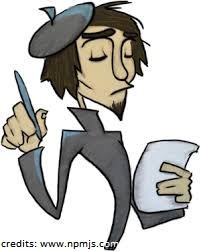
It’s never easy.
The literary genre most difficult to produce is the poem. Imagine putting together the elements of rhythm, rhyme, sound and imagery, not to mention the need to have a formidable vocabulary.
Writing stories may also have maze-like intricacies because mixing in bowl the elements of fiction within the bounds of the plot is not a walk in the park. But fiction writers have the luxury of using a lot of pages to serve their purpose. Leo Tolstoy needed more than half a million words for his novel “War and Peace.”
Conversely, a poet has a single page, sometimes not even the whole of it, to capture vivaciously and vividly the emotions and thoughts pervading within or around him. The Japanese, through their Haiku, would do it in a single-stanza poem with three lines consisting of a total of 17 syllables.
What adds difficulty when poets thread the rhyme zone is that they can not walk the path of sadness while wearing a smile. Neither can they frolic in the lake of happiness while riding the canoe of sadness.
Pain begets pain, joy engenders joy. This is seemingly the prevailing mood in the realm of poetry. Rare are the crying clowns who can masterfully inject sadness into the veins of their poems while they are cracking a joke.
The melancholic lyre sounds best when played by a poet who in one way or another licked some emotional wounds sometime ago in a desolate room. On the other hand, the trumpet of merriment can best be blown by a poet who has journeyed the clouds of ecstasy.
But life is a masterful musician who teaches poets to play both the melancholic lyre and the trumpet of merriment. Life enables a poet to play any of the said instruments at a given time.
If a poet intends to paint his canvass with gloom then he can easily prick an old emotional wound until it bleeds sadness. He can walk down memory lane and revive the pains inflicted by either a person or an event he would rather forget. That’s not masochism but rather a form of sacrifice, the poet ought to feel what he intends to write.
If it is the rainbow needed in his canvass then exactly the opposite of the foregoing he must be doing.
That‘s the beauty of being a poet. Poets can switch with ease to any emotions that they desire. Like an actor in a theater, crying one moment then in a jiffy burst into laughter.
Sometimes poets get misconstrued. When a poem tackles sadness and regret for losing someone the readers would think that the poet still loves and wants that someone back. Worse, the person who felt alluded to may either be excited or feel vindicated.
Lest we forget that poets are men of arts who write for art’s sake. Undoubtedly, they draw inspiration from someone or something. They need a motivation in pursuance of their art. But as it is, the end is the art and the motivation is but the means to achieve the end.
And what is the reward the poet receives for writing a poem? The reward is the poem itself. No reward can be sweeter than the poem itself which the poet chiseled with his pains and joys.
As to whether or not a poet who writes a poem of gloom and bewail is sad and regretful, only he knows.