Blog Archives
Why Do I Write?
I wrote this essay years ago. I reposted it because just lately, twice that I was asked by two colleagues in two separate occasions the following question – “Why do you keep writing?” I had this essay in my mind when I was asked that question but it would take long to explain to them all the points I made here. So, I just gave simple answers. “I ought to,” was the first and the second, – “An idle mind is the devil’s workshop.”
Let me now answer that question comprehensively.

*****
Why do I write?
Why do I keep writing?
Is it to impress?
I don’t write to impress. I’m well aware of the fact that my writing skill is nowhere near excellent. I am not even halfway my journey to excellence in writing. I am not sure if I’ll get there before I breathe my last. I have a long long way to go. Perhaps I may need a dozen of lifetimes (or more) in order to surpass the accomplishments of William Shakespeare, Elizabeth Browning, George Bernard Shaw, Leo Tolstoy and other literary giants.
So, why do I write then?
Do I write in the hope that I earn money and become famous?
Not even!
Fame and money are not my primary motivations for writing. Of course I need money. It’s hypocritical to say that I don’t like to have additional numbers to the farthest north of the first digit in my bank account. Being the sole breadwinner in my family and with the projects I intend to embark on, I need additional sources of income.
“There’s no money in writing.” That is a cliche but that’s the truth. Writing is not very financially rewarding. Unless you are a script writer of one of the popular TV networks or movie outfits in your own country or a novelist who belongs in the league of the likes of J.K. Rowling, Dan Brown, and Stephen King.
Anyway, I had received extra cash for some of the stuffs I wrote. For example, the university where I am currently employed gave me cash incentives for the research works that got published in international journals. The university also paid me for the articles I contributed to the school’s publication in English. That’s about it. The amount I received is not that substantial that would push me to write more.
The rewards that writing gives, for me, are hard to quantify. Such rewards are transcendental. That’s not me trying to sound philosophical. That’s just the way I feel about it.
What about fame? What about the accolades? Are those the the things that inspire me to write?
NOPE!
As a matter of fact, when I write and allow people to read my works I am unnecessarily putting myself under the microscope. I am putting myself in the line of fire if among my readers there are unforgiving members of the grammar police who wouldn’t hesitate to shoot on sight anyone whose spoken and written English are perforated with errors in grammar. When they start firing you can not hide. My missing the comma between the words “firing” and “you” in the previous sentence is something they could not miss.
So, instead of accolades I may get negative comments. This is the reason, a friend said, that he would never write for any publication or post any of his writings on any of the social networking sites. He is afraid he may not be able to take negative comments. He added he fears committing errors in grammar. He considers it embarrassing to be corrected for such mistakes.
In my case, criticisms and corrections are welcome. I won’t die if criticized and corrected. As a matter of fact, I have already received a lot of those and here I am – still alive and kicking. I don’t mind if somebody calls my attention for mistakes I committed. Just break it to me gently.
The reason erasers were invented and keyboards of computers have backspace and delete keys is… nobody’s perfect.
I keep rereading my stuffs in this website to improve my works and to correct possible errors.
People may read or disregard what I write. If they do read, a million thanks. If not – no hard feelings.
I may have received some good comments from my friends for some of my writings in the past. But of course, those comments may have been either meritorious or simply generous. Sometimes there are people who give positive and encouraging compliments.
But aside from good comments some of my works have also angered some individuals who were offended thinking that what I wrote pertained to them. Writing sometimes is a magnet for trouble. I remember quite well when I wrote a satirical poem in Filipino (about a wolf in sheep’s clothing) when I was working in a Catholic college. The parish priest who felt alluded to (and I was really alluding to him) reportedly asked the Sister-President of the college, my superior, to summon me to the latter’s office so he could talk to me about what I wrote. However he was dissuaded from pursuing his request. But even if he was able to convince the President and the College Dean then, I wouldn’t see him. Why? That poem I wrote and my act of writing it had nothing to do with my employment. My being a writer has no personality and office that could be connected to any of the lines that run vertical and horizontal in our organizational chart. In short, the priest had no authority over me. The priest never bugged me again but I wrote another poem for him (Habit and Habit).
My quatrains (in Filipino) are the ones that brought me some colorful moments. I have lost a friend or two (or is it three… perhaps more) for the quatrains I have posted in a social networking site. I once wrote a quatrain and a friend liked it. Almost a year later, I re-posted the same quatrain and surprisingly the same person who previously liked it was angered and gave me a mouthful. We’re very good friends so we talked about it. He understood, apologized, and we both forgot about it since then.
Also, my writings where my political beliefs are in full display had me losing very dear friends.
So, why do I write then?
Is it for the “likes,” “reactions,” and compliments I get when I have those poems, stories, and essays posted in my social networking accounts or in this website?
Not also.
Of course those things make me happy and I am so thankful for those friends who take time to read my works then reacted and commented on them.
Then, why? Why do I write?
It’s hard to explain. It’s something like a combination of the answers to the following questions: Why do people need to eat when they are hungry? Why do they need to drink when they are thirsty? Why do they need to take medicine when they are sick? Why do they laugh? Why do they cry?
There is a kind of hunger within me that only writing can satisfy. There’s an insatiable thirst in my soul that would go away only when I read what I write. I suffer from a very mysterious illness that goes away only when I write in sentences or verses the equivalent words of the thoughts and feelings that drown me during quiet moments in my life.
Writing is my endorphin.
I must release my pain, anger and disagreement by writing about them or else they will haunt me endlessly. When I feel wronged I have to respond, not by violent means. I respond in a creative manner – through poems – sometimes satirical. I do it usually using anthropomorphism.
If the spirits of William Shakespeare and Elizabeth Browning I could not summon through the glass to inspire me to express in poetry whatever I wish to say then I turn to Francis Bacon and Michel de Montaigne’s way of capturing into words – essays – whatever it is that I wish to convey. if I don’t wish to be so direct with my points and would like to hide my feelings and thoughts between lines and behind symbolism and have them scattered in a plot then I walked the path that Edgar Allan Poe and Guy de Maupassan paved. I write stories.
I just don’t keep quiet when I notice human follies, especially if displayed by my friends and co-workers. Again I resort to anthropomorphism. I use animals to represent their irrationality. It may hurt them and make them angry but the truth may be bitter but sweeter than the sweetest lie. VERO NIHIL VERIUS. Nothing is truer than the truth.
This is not saying that I am a perfect human being. I am as imperfect as anyone else and may have, perhaps, done more terrible things. Thus, the satires I wrote are like boomerangs. They hit me also.
Pain is like a prison cell. It is by writing that I break free from that hell. As my heart churns out the words, I go through the pain, feel it, not escape from it. And as I write the final sentence or verse, as I put the final punctuation mark, the pain vanishes.
Even my happiness and satisfaction wouldn’t be complete if I do not write about them. I need to capture in either prose or poetry those moments so I can feel more deeply the joy they bring. I do write about them so I can relive those moments any time I wish to.
I need neither material rewards nor accolades for what I have written (and will be writing.) The poems, essays and stories I create are themselves the rewards. I love and treasure them.
I write not to impress but rather to express my thoughts, feelings and ideals. Writing is my freedom, my happiness.
SCRIBO, ERGO SUM. I write, therefore I am.
My Website – “Hardpen’s Portfolio”
Allow me to guide you through the highways and byways of this site.
The following are the main sections which are accessible by clicking on them directly or you may go to the home page and click on them in the navigation menu and tabs.

Home
About the Philippines
My Korean Stuffs
My Works in English
My Works In Filipino
Welcome
If you click on the section Home from here, you will be brought to the homepage of this website.
If you click directly on the other main sections (after Home) from this page you will be directed to an article introducing the section at the bottom of which are links to the subsections (or articles) beneath them.

On the left is the homepage of the website. The article that appears when you open it and the other two you’ll find should you scroll down are the latest of my blog posts.
If items are posted in the HOME section they are classified by WordPress as “blog posts.” All other items in the other sections (and the sections themselves) are called “pages.” That, I suppose, is only for the purpose of proper placement because technically all the “posts” can be transformed to “pages” if desired so. The first item in the NAVIGATION MENU, as you can see, is HOME. That is where all “blog posts” are displayed. All tabs north of HOME is where all “pages” are placed.
After posting a blog, I automatically create its “page version” and place it in a category where it belongs in the other sections.
Let me help you if you wish to explore the entirety of this website. The following are the links you can click from here. You can also access all of my works using the navigation bar.
I also provided an introductory page in each section and subsection. The introductory page for each section provides links to the subsections. There are also links to specific works provided in the introductory pages for the subsections.
I included the section About The Philippines for the essays I wrote (and will be writing) and other stuffs about my country – the Philippines. My intention for this is to make people from different parts of the world know more about us Filipinos and our country.
In the section My Korean Stuffs is where I share my experiences as a Filipino expat and as a teacher here in South Korea. The four subsections are Korean Adventures (essays/commentaries written in English), Kuwentong Kimchi (essays written in Filipino), “Kimchied” (articles chronicling my gastronomic journey here in South Korea), and Korean Dishes/Foods I Tried (videos and essays about the Korean dishes I have been eating here in this country).
The section My Works in Filipino contains the one-act plays, short stories, essays and poems (all in Filipino) which I have written through the years, mostly from 2013 onwards. The following are the sub sections: Dulang May Isang Yugto, Maikling Nobela, Maikling Kwento, Sanaysay and Tula. Clicking on these links brings you to the pages where you can see also links for the specific individual works.
Below you’ll see how a section is subdivided into subsections, and subsections into more subdivisions until the titles of specific works could be seen.

I have written a lot of poems in Filipino. Thus, you see here that Tula also has its own sub sections, namely, Apatang Taludtod, Bayan Muna, Heto Na Ang Jeep, Kwentulaan, Pagninilay, Pakwelang Taludturan, Sa Piling Ng Mga Hayop, Samu’t-sari, Tibok, Tinulang Jokes and Tinula Kong Kanta.
There are also several sub-sections for the section My Works in English . These are Commentaries, Dramatic Monologue (Declamation), Essays, My Research Works, Oratorical Pieces, Poems, Short Stories, and The Jungle Story – a collection of the anthropomorphized blogs I wrote (in another blogsite) when I got so frustrated with the leadership style of the school administrator where I used to work in the Philippines.
I love the sports of basketball and boxing. I included in the section My Works in English the subsection Sport Blog where I put together the articles I wrote about the said sports, including those that were published in a couple of sports websites.
Topics I discussed in my essays vary. So I also subdivided the section Essays into several subsections namely Changing Perspectives, Literature, Language and Movies, and Personal Essays. I also wrote essays on education and my experience as a teacher but I kept them in the section My Academic Essays beneath the section My Research Works.
Just like my poems in Filipino, the few poems I have written in English are also subdivided with the following assigned labels: Heartbeats, Quatrains, Random Thoughts, and Frames and Verses.
My website also features some of the studies I have completed including those that were presented in international conferences and published in international journals. You can find them in the subsection My Research Works under My Works in English. The said subsection is further subdivided into the following: As Main Author, As Corresponding Author, My Academic Essays, My Master’s Thesis, and My PhD Dissertation.
The items I have in the section Welcome, aside from this guide to my website, include my curriculum vitae and an answer to the question “Why do I write?”. There you can find also the poem I wrote about my names and pseudonyms.
The Questions They Asked
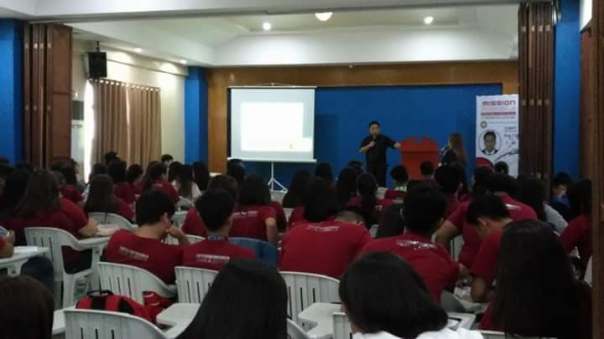
While spending my summer vacation in the Philippines, I was invited as guest speaker in a seminar organized by a teacher education institute for their Education students. I obliged for being a teacher myself, I consider it both a pleasure and an obligation to help young people who are aspiring to become teachers understand the complexity of the teaching profession. I want them to realize that teaching is not just any job – something that people wanting to be employed should turn to only when there are no other jobs available in the market.
After delivering my talk came the usual question-and-answer session.
The theme of the seminar was similar to a topic that I explored in one of the essays I have written about teaching – “What Makes A Great Teacher.”
I was asked – “Do you think you are a great teacher?”
That was a question I didn’t see coming.
Part of my preparation when invited to speak is anticipate the questions that I might possibly be asked and mentally get the answers ready. For that question, I did not have a ready answer.
So, I just answered it as best as I could.
I said, “That’s a question that only my (present, past and future) students could answer. I am as good or as bad as what my students think I am (or thought I was or will be thinking I am). The truth is the students are the the best judge in determining the greatness or ordinariness of their teachers. They are the ones who witness every meeting the adequacies or inadequacies of the people assigned to teach them. Only the students could say how excellent or mediocre their teachers are. However, there is one thing I could assure you – I never shortchange my students. I always come to class prepared.”
Little did I know that that would only be the first of a series of unexpected questions.
I was also asked, “Why do you need to teach in South Korea?” That question came as a surprise. I almost said that is not related to any part of my presentation. But I refrained from offering that excuse and played with the question anyway.
I responded with a single word – “Economics!!!”.
They understood… I guess!
That I said because that’s the answer they were expecting. They would not believe anything else. Would they believe had I told them that it was not the search for a greener pasture that brought me to South Korea?
The common perception in the Philippines is if somebody applies for a job overseas, it is to satisfy the desire to earn more money. Secondly, Filipinos abroad accept jobs not in line with the college degrees they pursued.
Before the next question came, I remember telling the Dean of that institution’s Education program before my talk started that it was “job burnout” that prompted me to revisit the “career path” I set for myself many years ago. Teaching overseas is part of my plan – something I pursued only when I got tired working as a school administrator.
I also told the attendees in the seminar about that and I added that initially my intention was to be out of the country only for a year. However, when I noticed that here in South Korea my health got better and that I am having more time to pursue my passion for writing (not to mention that the remunerations are great), I decided to stay for as long as God would permit.
“What’s the difference between teaching in the Philippines and in South Korea?,” was the next unexpected question.
I answered, “None!”
It’s simple, teachers are teachers wherever they are. Notwithstanding their location they would first establish a good rapport with the students then perform all the activities that teachers do in the class.
I said that the principles and strategies in teaching and learning are universal. Wherever they are, teachers draw from the same pool of teaching and learning methodologies. Whoever they teach they get to choose which ones from the same set of educational philosophies would inform whatever decisions they make in the classroom.
I pointed them back to a certain portion of my presentation where I said the following: “Pedagogy dictates that the teachers should be able to master the subject matter, set learning objectives, motivate students, design learning activities, facilitate learning, construct assessment and assess learning.” These are the things teachers ought to be doing whatever is the nationality of the students they are teaching. Wherever and whoever they teach, teachers are expected to display excellently their pedagogical skills and manifest the behavior expected from professionals like them.
After that, I asked them to read my essays entitled “Professionalism Among Teachers” and “What Teachers and Students Expect From One Another.”
Another question that I did not expect to be asked, the last one, was – “Am I satisfied with the current educational system?”
I said that the shift to K–12 basic education system, to me, was the boldest and perhaps the best initiative the government undertook to overhaul Philippine education. Obviously, all the educational programs put up by past governments failed for the simple reason that we remained as a “developing country” until now.
Whether the new education system (K–12) works or not is too early to say. It depends on the kind of Filipinos that the schools will produce in the future and what kind of performance they dish out in the socio-economic and political fronts for the country. If after 10 to 20 years the Philippines will finally be classified as a “developed country,” then the ongoing educational reforms are effective.
For the aforementioned to happen, I argued that the present educational system should inculcate in the students two basic qualities of persons/citizens that could help solve the ills of society – self-sufficiency and personal accountability. Such are the values lacking among Filipinos.
I told the participants that if I ever I will be putting up a school of my own, I will tweak the curriculum a bit and make sure that the students become self-sufficient and personally accountable persons/citizens upon their graduation. I will add components in the curriculum to ensure the development of such values in them.
If the said values the school would fail to teach the citizens of the Philippines, the future generation of Filipinos will not be any different from who and what the Filipinos are now.
The schools, I reiterated, need to help the students to become personally accountable for their own lives – to do everything they should to succeed, to not rely on anyone to achieve their goals in life, and to not think that it is somebody’s duty to help them.
I told the participants in the seminar that for a school system to be truly effective and successful, it should succeed in changing the mindset of Filipinos – a mindset that revolves around the principles of self-sufficiency and personal accountability.
My lecture was entitled “The Ps of Great Teaching.”
The Ps I discussed were the following:
Philosophy
Professionalism
Pedagogy
Patience
passion
Passion
That’s not a typo there, there are two “passions” in the list, one with a capital P.
It was my turn to ask the students questions after I answered all theirs.
“Which of the Ps of great teaching is most important for you?”
I got many good answers.
When they asked me to answer my own question, this was my response:
“All the Ps are important. You cannot teach as best as you could when you lack any one of them. However, for me, Passion is the most important.
Passion with a capital P means the sufferings of Jesus Christ. Becoming a teacher is following His example – to be self-less.
Like Jesus, teachers have to carry their cross. The cross and Jesus getting nailed on it was the symbol of humanity’s salvation. Education is the cross that teachers carry on their shoulders – that cross called education is what brings salvation to the soul of every student in their classes.
Ang Maging Makata

Mahirap ang maging makata.
Sa lahat ng dyanra ng panitikan, ang tula ang pinakamahirap sulatin. Hindi gawang biro ang pagsama-samahin sa iisang kabuuan ang mga elemento nitong tugma, sukat, saknong, talinghaga, at kariktan. Kaylangan ding puno at liglig ang talasalitaan ng sinumang susulat ng tula upang doo’y hugutin ang salitang katumbas ng damdami’t kaisipang nais ipahayag.
Hindi sa mas madaling magsulat ng maikling kwento o nobela. Hindi rin gawang biro ang pagapangin sa banghay ng kwento ang mga elemento nitong tagpuan, tauhan at tunggalian. Subalit ang mga sumusulat ng kwento ay maginhawang nakakagamit ng maraming pahina hanggang matumbok nila ang kasukdulang ng kwento at marating ang wakas. Si Leo Tolstoy ay nangailangan ng mahigit kalahating milyong salita upang tapusin ang nobela niyang pinamagatang “War and Peace.”
Sa kabilang banda, ang makata’y mayroon lamang isang piraso ng papel, minsan nga kalahati lamang nito, upang ipahayag ng malinaw at buo ang kanyang saloobi’t iniisip. Ang mga Hapon, sa anyo ng tula nilang tinatawag na Haiku, ay kapiranggot na bahagi lang ng papel ang kaylangang gamitin sa dahilang ang naturang tula’y binubuo ng isang saknong lamang na may tatlong taludtod na ang gitna’y may pitong pantig at ang una’t huli’y tig-limang pantig.
May mga dagdag pang hamon sa mga makata kapag kanilang nilakbay ang mundo ng taludturan.
Mahirap bumagtas sa daan ng kalungkutan habang ikaw ay nakangiti. Hindi rin pwedeng sumagwan sa ilog ng kasiyahan habang nakasakay ka sa bangkang yari sa luha. Ang luhang ididilig sa mga taludtod ng tula upang ito’y mamunga ng kalungkutan ay iniigib ng makata sa balon ng mapapait niyang karanasan.
Tanging ang puno ng kalungkutan ang pwedeng pitasan ng luha at tanging ang hardin ng kasiyahan ang pwedeng tubuan ng nakangiting bulaklak. Kung aakyat ang makata sa puno o dadalaw sa hardin ay nakadepende sa uri ng damdaming nais niyang ipahayag.
Kung meron man ay iilan lamang ang mga makatang kayang humahalhak habang gumagapang sa balag ng malungkot na taluduturan.
Mas magandang pakinggan ang kudyapi ng lumbay kung ito’y hihipan ng isang makatang minsa’y halos malunod sa sariling luha dahil sa isang karanasang nagdulot sa kanya ng matinding kapanglawan. Ang tambuli naman ng kagalakan ay pwede lamang hipan ng makatang narating na ang kasukdulan ng saya na tuwing ito’y naaalala ay nangingiti ito o natatawa kahit siya ay nag-iisa.
Ngunit ang buhay ay isang musikerong tinuturuan ang makata na kayang hipan ang kudyapi ng lumbay o tambuli ng kagalakan sa ano mang pagkakataon na kanyang naiisin.
Kung ang intensyon ng makata’y hasikan ng butil ng luha ang kanyang mga taludtod upang doo’y yumabong ang hapis ay kanyang susundutin ng karayom ang pilat na iniwan ng isang sugat ng kahapon hanggang umagos mula rito ang dugo ng kalungkutan. Hindi ito pagiging masokista bagkus ay isang sakripisyo na dapat gawin ng makata. Dapat kasing nararamdaman niya ang ano mang damdaming nais ilatag sa mga saknong ng kanyang tula.
Kaya nga tunay na alagad ng sining ang makata. Kaya niyang paikutin sa kanyang kamay ang mga emosyon. Katulad ng isang artista sa entablado, umiiyak…matapos ang ilang saglit ay biglang tatawa.
Minsan ay mali ang pakahulugan ng mga tao sa makata. Kapag ang tula’y puno ng pagsisisi at kalungkutan dulot ng isang hiwalayan ay inaakala ng mga bumabasa na ang makata’y minamahal pa rin ang nakahiwalayan at nais na ito’y muling bumalik. At ang taong nag-aakalang siya ang pinatutungkulan sa tula’y nagmamalaki’t nagbubunyi.
Huwag kalimutang ang makata’y alagad ng kanyang sining. Ang makata’y hindi alipin ng nakaraan, masaya man o malungkot. Ang tunay na makata’y inaalipin ang nakaraan. Pinaglilingkuran siya nito.
Binabalikan ng makata ang nakaraan para maghanap lamang ng inspirasyon. Binabalikan ng makata ang nakaraan upang may paghugutan ng emosyon…upang siya ay magalit, mainis, mangiti o matawa…upang muling maramdaman kung paano umibig at mabigo…kung paano magtaksil at pagtaksilan…upang muling mangarap…upang muling maramdaman kung paaano mabigo, bumangon at magtagumpay.



 M.A.D. L I G A Y A