How Colonialism Shaped the Filipino Character
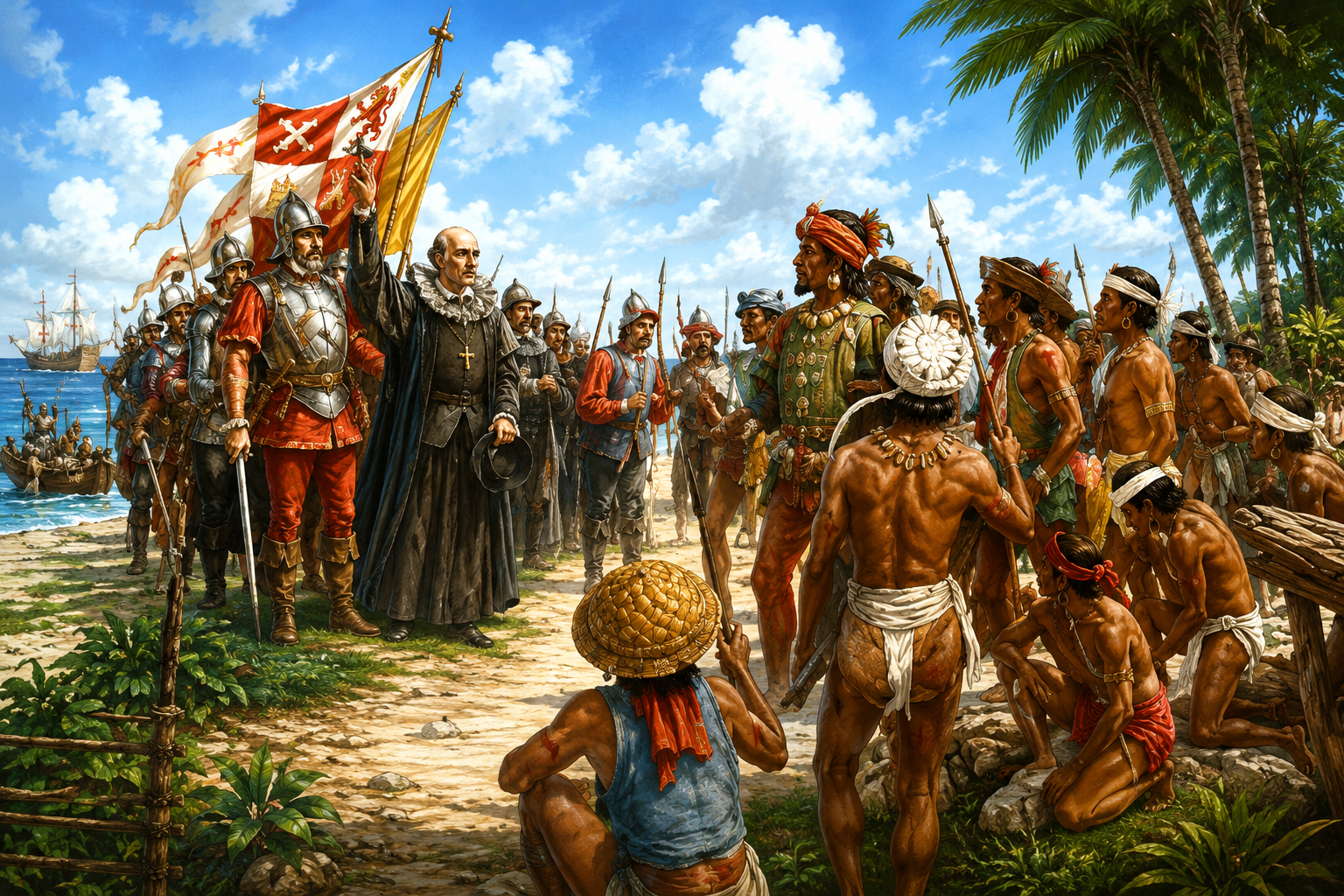
Ask a hundred Filipinos what makes a Filipino a Filipino, and you will likely get a hundred different answers — hospitality, resilience, family, faith, humor, an uncanny gift for finding joy in hardship. Ask a hundred more, and darker answers will surface too: a fatalism that shrugs at misfortune, a habit of measuring themselves against foreigners and coming up short in their own eyes, a suspicion of the next province that borders on hostility. Both sets of answers are true. Neither tells the whole story on its own.
This four-part essay is an attempt to tell that fuller story — not by cataloging Filipino traits as though they simply exist, the way eye color or height exists, but by asking where they came from. A people’s character is not accidental. It is built, layer upon layer, from the specific things that happen to them over specific centuries, under specific rulers. For the Filipino, those centuries were largely colonial ones: 333 years under Spain, nearly half a century more under the United States. To understand the Filipino today without reckoning with those years is to admire a house’s furniture while ignoring the foundation on which it was built.
This essay draws on historical record as much as personal reflection — the documented mechanisms of colonial administration alongside the lived, inherited patterns still visible in Filipino life today. Where the two meet is where this essay lives.
Part One lays that foundation, tracing the Filipino from a people already possessed of their own culture and governance before any galleon arrived, through the long violence of Spanish rule, to the betrayal that followed when a nation Filipinos had mistaken for an ally simply became their next colonizer.
Part Two turns to what survived — and what may have even been strengthened — through all of it: the hospitality, the resilience, the family loyalty and communal spirit that colonization tested but did not break.
Part Three turns to the cost — the fatalism, the regionalism, the colonial mentality that took root during those same centuries, planted deliberately by rulers who profited from a people divided against themselves and unsure of their own worth.
Part Four brings both halves together, arguing that the strength and the wound were never separate stories. They came from the same three hundred years, visited on the same people, and they live on, side by side, in the same national character today.
The writer does not pretend to have the final word on Filipino identity — no single essay could. But for a people whose history has too often been written by outsiders, and too rarely examined by themselves, even an incomplete reckoning is worth attempting. As you read what follows, you might find it useful to ask the same questions of your own family, your own province, your own habits of thought — because the history in these four parts is not abstract. It is, in some quiet way, still writing itself through each of us.
Understanding the wound is the first task. What a Filipino chooses to do with that understanding — for himself, his family, his country — is a separate reckoning, for another time. But understanding why we are the way we are remains the first step toward deliberately deciding who we choose to become next.

Posted on July 13, 2026, in American Rule in the Philippines, Better Philippines, Colonialism, Colonization, Phiilppines, Philippine Culture, Philippine Government, Philippine-American War, Philippines, Philippines Under Spain and tagged Colonialiasm, Philippine Government, Philippine History, Philippines, Philippines Under American Rule, Philppine Culture, Philppines Under Spain. Bookmark the permalink. 3 Comments.


What a powerful introduction. The line ‘history is not abstract… it is still writing itself through each of us’ hits hard. It’s easy to blame the system or the past, but the real challenge is recognizing how Pinoys act out that inherited colonial script in their daily choices—their diets, their fatalism, their short-term thinking, and how they treat one another. Understanding the wound is indeed the first step to healing it
LikeLiked by 1 person
Blaming the system and the past will not really do good for the Pinoys. What we can do with the past is learn our lessons from them and what we can do with the stystem is change it. But the change I have been advocating is internal.
LikeLiked by 1 person
Exactly, it’s a shift in consciousness not a political revolution
LikeLike