Blog Archives
The Only Thing That Interested Me in BBM’s SONA
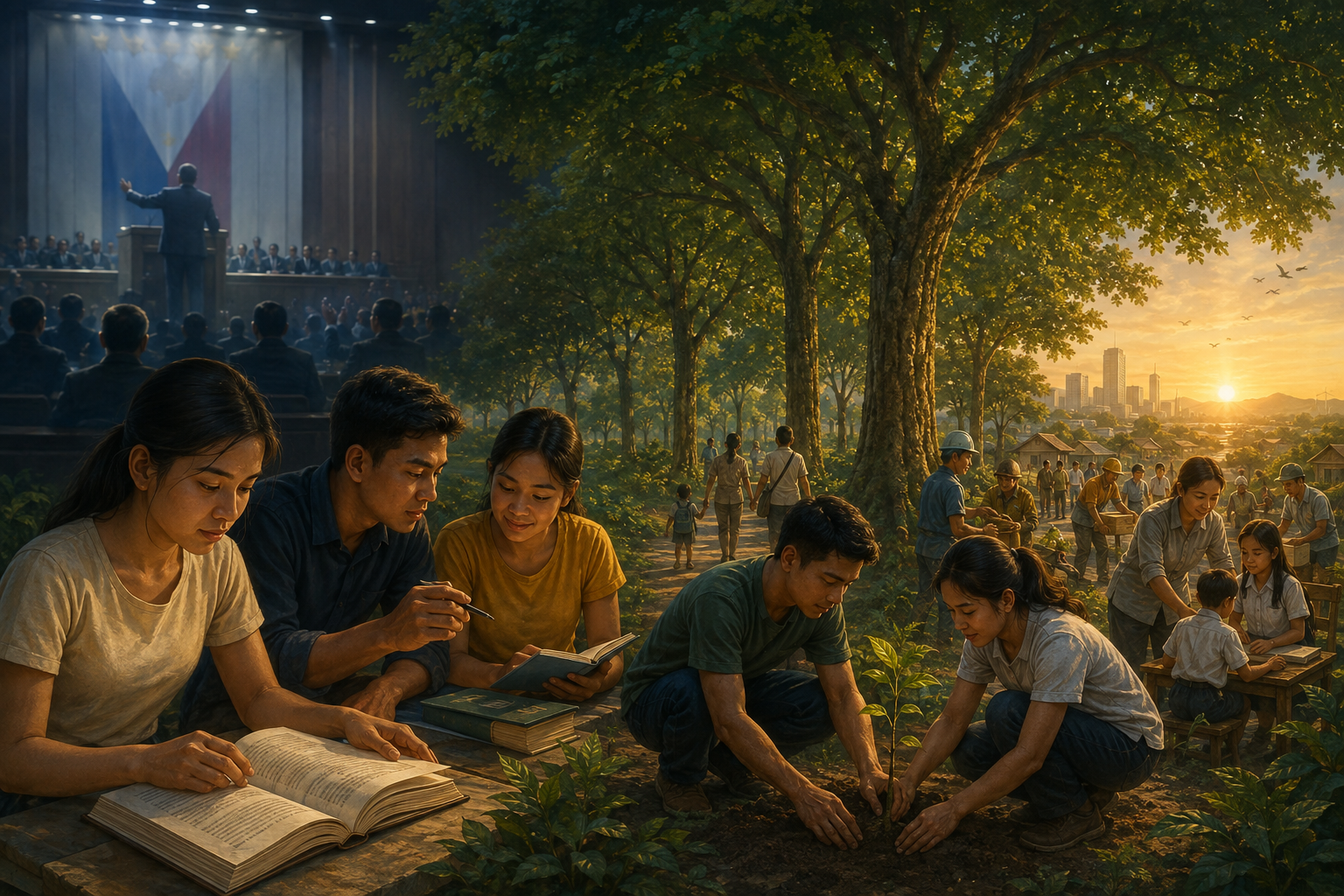
There is only one sentence in President Ferdinand Marcos Jr.’s latest State of the Nation Address that truly interests me:
“Kaya dapat nakakintal sa puso’t isipan ng mga Pilipino ang lifelong learning at continuous self-improvement.”
Rendered in English, the statement reads:
“Lifelong learning and continuous self-improvement must be deeply ingrained in the hearts and minds of Filipinos.”
Of everything spoken from the podium, this single statement transcended politics. It did not ask Filipinos to applaud a reported accomplishment, believe another political promise, defend an administration, or condemn its opponents. Its truth does not depend on whether one supports or opposes the President. It speaks to every citizen regardless of political affiliation because it places neither a politician nor the government at the center of national progress. It places the individual Filipino there.
Ironically, this sentence—if translated into meaningful legislation, coherent public policy, and sustained community programs—could yield consequences far more profound than any of the applause lines that echoed through the plenary hall. Yet it received no ovation. Perhaps it drew little enthusiasm because true education rarely offers the immediate spectacle that politics demands. Investing in human capacity is like planting a forest: the seeds sown today may take years—or even generations—to reach maturity. Political applause is immediate but fleeting; educational investment is gradual but enduring.
Strip this statement of the President’s name, voice, and political identity, and it loses none of its validity. A DDS, a Kakampink, a Marcos loyalist, or someone entirely indifferent to politics can recognize its worth. Its truth does not derive from the authority of the speaker, but from the reality it expresses:
- Lifelong Learning develops what people know and can do—strengthening competence in a rapidly changing world of technology, evolving industries, and shifting responsibilities.
- Continuous Self-Improvement develops who they are and how they live—cultivating character, discipline, health, ethics, and civic responsibility.
Together, these twin pillars prepare citizens to adapt, solve complex problems, resist manipulation, and create meaningful opportunities.
To be clear, self-improvement alone cannot fix every broken institution or eradicate corruption. Nor does this perspective grant government officials an escape from accountability—Filipinos must remain relentless in demanding honest, competent, and responsive leadership. However, systemic policy and individual growth must go hand in hand; even the best policies fail when executed by individuals who neglect their own ethical and intellectual growth.
We must abandon the myth that electing a political savior will, on its own, transform the nation. We cannot demand discipline from leaders while tolerating indiscipline in ourselves, condemn dishonesty in public office while practicing it in daily life, or expect national excellence while settling for personal mediocrity.
The most vital message in the SONA was not a grand promise of what the government will do for us, but a timely reminder of what Filipinos must continually do for themselves—and, ultimately, for one another. Lifelong learning and continuous self-improvement do not render government obsolete; rather, they cultivate citizens capable of demanding better governance, electing wiser leaders, building resilient institutions, and sustaining lasting national progress.
The future of the country cannot be left solely in the hands of politicians. It must be built within the hearts, minds, character, competence, and daily conduct of the Filipino people.
Better Self • Better Life • Better Nation



 M.A.D. L I G A Y A