Category Archives: Teaching
When Students Don’t Learn
 One morning, I witnessed how an English teacher masterfully discussed the intricacies of the English language. It would take a paragraph or two should I explain in details the things he talked about. Let me just say that he is every inch a native English speaker. His knowledge of the phonemes, morphemes, lexemes, syntax and context is impeccable. He dissected the language so skillfully and the way he did it almost made me envious. I was reduced to being a listener uncertain whether I just wanted to make sure not to miss anything new (something I don’t know yet) from what he was saying or I have nothing more to share because he had everything covered about what he was discussing. I wasn’t really sure what prevented me from saying anything. Maybe I was intimidated by his evident mastery of grammar, semantics, and pragmatics or I just did not like to gatecrash into his moment to showcase his brilliance.
That teacher held court in his impromptu lecture. He had the attention of everybody present. It was difficult to judge the intentions of my colleagues whenever they (unsolicitedly) share their expertise like that. Was it to impress upon us (their co-teachers) that they know that much or they simply would (good-naturedly) like to help us learn more about the subject (English) we’re teaching.
Later that day, I changed upon a student who attended my English class in a previous semester. That student was one of the best in my class. Like me, he was heading out of the campus. After the exchange of greetings, I asked “Who’s your English teacher this semester?” The student already started responding before I recalled that I have previously made a promise to myself never to ask any of my former students that question for the reason that a few of my previous attempts led to the opening of “a can of worms.”
But it already happened – I asked that stupid question again.
The student named the teacher – he was the one I heard deliver an impromptu lecture about the English language earlier that day. After that, the student heaved a sigh and said, “We could hardly understand what he’s teaching.”
I looked at him seriously and all I could say was “Really!?”.
He nodded and said one more thing, “He is also very serious.”
Before he could open wider that “can of worms,” I told my former student to give that teacher more time to adjust since the semester is still a long way to go. Then I quickly redirected our conversation to another topic after that.
What’s amazing is that the occurrence – of me one day hearing a colleague deliver a brilliant impromptu lecture but later that same day (or within the week) I would meet one of his students (who used to be my student also) claiming that they, in the class, could hardly understand what he is teaching – did not happen only once. If my memory serves me right, that’s the fourth time.
It finally made me reflect. That’s the reason I wrote something about it.
It made me wonder (again) how my former students rate my performance as a teacher. What do they really think (and how they feel) about me as their teacher? What would they say to a colleague or their fellow students when asked about me?
Students evaluate the performance of their teachers every semester. It’s hard to tell how reliable and valid are the results of such evaluation. Whether or not the results is a reflection of the true professional and personal qualities of the teachers is a matter of debate.
But valid or not, reliable or otherwise, it’s hard to ignore what students say about the performance and behavior of their teachers. Teachers get to read what students write in their evaluation. They could either agree or disagree with the results of their evaluation. But what the teachers would not know is what students say about them in informal discussions. Only the most naïve among teachers don’t know that students talk about their teachers.
In gatherings, teachers do talk (or should I say gossip) about their students – their performance and behavior in the class. Conversely, students do the same. They talk (or gossip) about their teachers. There are only two possibilities – they either praise or curse their teachers.
One of the most unacceptable things that students could say about a teacher is – they do not (or they could hardly understand) what he/she is teaching.
Witnessing first hand an English teacher discuss with ease the complexities of the English language and hearing a student claim that he and his classmates could hardly understand what that teacher is teaching is quite paradoxical.
So I asked myself this question that night – Which is true… my impressions about that English teacher or that of his students?
What could have gone wrong?
My former student said that their current English teacher is very serious. Is that the problem – good rapport does not exist between him and the students? It is no secret that teacher’s personality is correlated to students’ academic performance.
I tried to think of other reasons.
Then I recalled my teaching demonstration when I was applying for a job right after my graduation. When the high school principal called me to her office to discuss the results, she told me I did great. But she said there was a problem – I explained things in a way that only students enrolled in a graduate program could understand.
Could that be the reason?
If that teacher carry out discussions in the class in the same way he explained the grammar topic to us in that gathering earlier that day then that exactly is the problem. You cannot discuss a grammar point to students trying to learn the language the way you would to teachers teaching that language. I think that is not a rocket science.
There are two things I learned before I officially began my teaching career – adapt my strategies and materials to students’ levels and simplify my language.
The problem is there are teachers who have a “one-size-fits-all” mentality thinking that educational processes and approaches to teaching and learning are standard and could not be tailored to meet individual needs. They wouldn’t buy into the idea of differentiated learning and teaching.
They will never accept responsibility when their students don’t learn.
Their standards are as immovable and high as Mt. Everest. The students have no other choice but to climb their Mt. Everest.
For them, it’s the fault of the students when they fail.
My Essays on Education
 The year South Korea hosted the Summer Olympics was the year I started my journey as a teacher. That was 1988.
Those many years I spent in the academe, 24 years in the Philippines and 6 years here in South Korea, taught me a lot about the teaching profession – more than those that I learned from undergraduate and graduate schools. My experiences as a classroom teacher and as a school administrator enabled me (and they still do) to look at issues, problems, and disputes using the lens of the one teaching and that of the one formulating and implementing school policies. My having been in the position of both made me understand how it feels to be in-charge of students and to be in-charge of both the teachers and students.
Those 30 years in 10 different schools in 2 different countries made the following very clear to me: that it is not easy to wear the hat of a teacher; that teaching is not just another job; that teaching is not just a means of livelihood but a way to serve; and that everything schools, from the simplest activities to the most complicated policies, should be student-centered because the students are the reasons schools exist.
There were many times that I reflected on teaching as a profession and education in general. Those reflections resulted to essays and research works.
This is where I put them (essays I wrote on education and some of the research works I have completed here in South Korea) together. I added also in this section the dissertation and thesis I wrote as requirements for my PhD and Master’s degrees, respectively.
In the university where I completed my PhD and Master’s, the research papers students are required to complete are called differently – dissertation for PhD and thesis for Master’s.
The other studies listed in the subsections identified below (with links) include those that I presented in international conferences and were subsequently published in SCOPUS-indexed international journals. Papers published in international journals are usually longer that the versions presented in international conferences.
The following is my most recent research work:
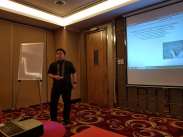
I presented this in an international conference in Manila earlier this year and is currently waiting approval for publication in an SCOPUS-indexed international journal.
Links to the international journals where some of the articles were published as well as links to the websites of the conferences where they were presented are provided on the pages allotted for the papers.
This part of my website is divided into the following subsections:
Papers Presented in Conferences
My website also features the following section:
Most of the articles found in this section are my very personal reflections on education.
How and Why I Love Teaching

How do I love teaching?
Let me count the years… thirty!
Yes, I have been a teacher for three decades now. I began my teaching career at a basic education institution in Bauan, Batangas (Philippines) in 1988 and served my 30th year in the academe at a university in South Korea. I will be returning to that same school for 2019 (and beyond… God willing) to continue my journey as a teacher.
Despite the not-so-good comments I heard about teaching as a profession when I was young, I embraced it and I don’t regret having done so.
It is both surprising and amusing how lowly teaching is regarded by some people. It is one of the least popular jobs anywhere in the world.
Parents in the culture where I grew up would tell their children graduating from high school to just take up an Education course and be a teacher once they find out that their children are of average intelligence.
To some professionals, teaching plays second fiddle. They would seek positions in the academe as teachers when in their chosen fields they could not get job offers. Many native speakers of English who had difficulty finding jobs in their own countries are working as ESL teachers in countries like Japan, China, and South Korea. Luckily for some of them, even if they are not graduates of Education courses or are not trained as teachers, there are schools who would hire them only because they are native speakers of English. I consider this a disservice to the teaching profession.
I love teaching and I do take my job as a teacher seriously. I sought employment in the academe upon completion of my bachelor’s degree knowing that I am qualified to be a teacher. I became a teacher not because I have no other choice. I became one by choice.
I know that teaching as a profession requires a lot and I made sure I am apt to the task. I went to graduate school, attended conferences and seminars, took certificate courses (like TESOL), and studied by myself the application of technology to education. I also keep reading books and journals related to both my subject area and pedagogy. All of the aforementioned I did (am doing) in order to ensure that I could cope up with the demands of the profession and to give nothing but the best to my students. This is my way of respecting my profession as a teacher.
Why do I love teaching?
Search for the 25 best-paying jobs (or make that 50… or 100) and it’s very unlikely that teaching is included. This is what makes the teacher’s job not-so appealing. Teachers get paid low and on top of that – they are overworked. They work way beyond office hours. Such is the reality that I fully accepted. I never whined about it.
But for me, it’s never been the pay. It’s the happiness and the sense of fulfillment that teaching gave me. That’s what I love about this profession.
I enjoy doing the things that teaching requires me to do. Teachers need to read and write a lot. And those are my hobbies. Teachers have to do a lot of talking and leading and I so happen to love public speaking. I love the feeling of being in front of people… talking to them, making them laugh, and leading them to action.
Teaching allowed me do the things I love doing. It actually honed my skills and improved my knowledge in the areas where I could excel. It developed in me values that guide me both personally and professionally. It challenged me to strive for excellence and pushed me beyond my abilities. It made me believe in myself and it strengthened my faith in God as well.
As Jim Rohn said, “True happiness is not contained in what you get, happiness is contained in what you become.”
What I have become because of teaching is just amazing.
And the rewards for becoming what I have become are equally amazing.
The rewards – both intrinsic and extrinsic – are just awesome.
Don’t tell me that teaching is not financially rewarding. Teachers can be paid handsomely if they play their cards well and push the right buttons. It’s a matter of how they handle their career in the academe, how they build up their reputation, and what stuffs do they have in their professional portfolios.
Here is my advise to teachers like me, most especially to the young ones – don’t teach for the money. Become first what you ought to become. Be the best teacher you could be. Don’t be contended with your Bachelor’s degree. Aspire to have a doctorate. Attend all the seminars and training you could attend. Be certified in your field. Invest on yourself… not on gadgets and other material possessions. Plan well your career in the academe and make the right decisions.
If teachers would love their job and treat it with utmost respect, they will get the rewards they richly deserve.
Why I Came To South Korea
(A Personal Essay)
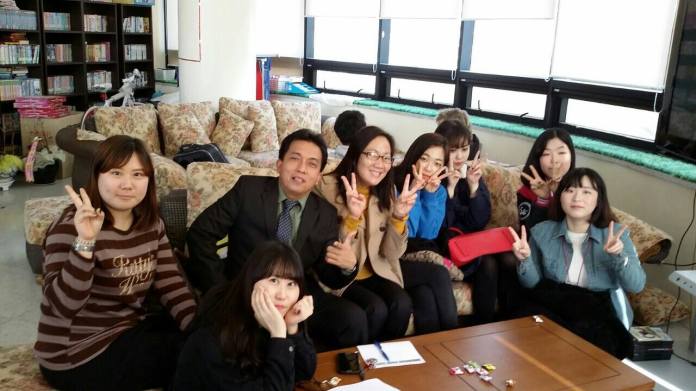
I decided to try ESL teaching here in South Korea not because there were no good jobs available in the Philippines. As a matter of fact, I had to cut short my employment back home in 2013 to come here. That time I was employed as Principal of a basic education (K to 12) institution. To earn extra, I also worked as a part-time instructor in a college and academic consultant in another school .
I had no trouble finding jobs in the Philippines. I carefully crafted a career path and built a strong supporting structure that would ensure I won’t run out of options and ascertain a stable future for me and my family.
So, what made me decide to teach here?
Firstly, I suffered from a severe “job burnout”. I got so tired being a school administrator and a teacher at the same time. There was no sense of fulfillment anymore. I wanted to go back to full-time teaching and try to discover what I was missing. Yes, there was something missing.
I started doing supervisory works in 1994 in a technical-vocational institution. I resigned in 2002 then moved to another school, a Catholic tertiary institution, where I was offered a supervisory position – head of the Education program. Thinking that I could pursue a career in the public school system, I applied (and was accepted) as College Dean in a local college. It did not turn out the way I wanted. The working environment and the organizational climate was not what I envisioned it was. It was then that I began to feel the “burnout.” From there I transferred to that basic education institution where I became a principal. It did not help that at that time the said school had to renew its FAPE (Fund for Assistance to Private Education) accreditation. Those were the days when I almost had to sleep in my office to finish all the required paper work for the re-accreditation.
I really got tired supervising people and performing administrative works. I felt sick about it. I wanted to go back to just being a teacher and find out what I was missing – something else that I should be doing. That’s the reason I applied for a teaching job in South Korea.
After passing through the proverbial eye of the needle, I was hired.
It was that “job burnout” that got me seeking for a job opportunity overseas. It’s not just because the pasture is greener. I would be branded a hypocrite if I say I don’t need a higher pay. But I was really satisfied with the salary I was receiving at that time. It was good enough that it enabled me to buy a small parcel of land and had a house built.
Of course I am happier and more satisfied with my monthly pay in this country. Who wouldn’t be. It’s roughly 75% higher than what my Pakistani employers paid me in the Philippines and with me having to work almost 60% less in terms of hours. That basic education school where I was a Principal then is owned by Pakistanis operating a vast network of schools (The City School) in Pakistan and some parts of Asia.
At that time I felt that I was at the crossroads of my career. I have to admit that there was some kind of dissatisfaction within me. That job burnout (and the search for that something I was missing) torched my soul and it was making me unhappy.
Then came the opportunity to teach here.
When I got settled, I finally figured out what was missing. I found out that with my being so busy with my administrative functions and my concurrent consulting and teaching duties, I was not able to attend to my other passion – WRITING.
In the Philippines, being a school administrator and a teacher at the same time require that you stay in the workplace, officially, for 8 hours a day. But most of the time, I would stay way beyond that, even if I wasn’t required to. It was just something that felt I ought to do. Sometimes I would even go to my office on Saturdays. With that hectic schedule, I could hardly find time to do what really makes me alive – writing poems, essays and stories.
That’s what makes teaching in South Korea different for me. It afforded me a lot of spare time which I could use to write. It gave me an opportunity to create (and maintain my own websites.) I was even able to write papers for presentations in international conferences and for publication in international journals. Something that, unfortunately, I wasn’t able to do in the Philippines. Back then, I would be lucky if in a month I could write even just a single poem.
ESL teaching is part of the career-path I paved for myself. I really trained and prepared for this. I am a licensed English teacher in my country. As early as 2009, I was already thinking of coming to this country to teach. I also applied in universities in the Middle East but I was really hoping that it’s here (South Korea) where I would be given the opportunity to do ESL teaching.
My second (and last) reason for deciding to try teaching here (South Korea) has nothing to do with my career. At that time I was journeying to midlife. There were some personal demons that I ought to slay. It’s too personal to share. Suffice it to say that I needed space. I needed that entire space between the Philippines and South Korea to really get my bearings back.
Then my efforts paid off and my prayers answered. I was hired by a South Korean university in 2013.
God is really good. (Yes, I believe in the existence of God!) I got what I wanted – just teach and no more supervisory works. That gave me a lot of time to write. I was also able to squeeze myself out of a personal crisis. I wouldn’t have not done so had I opted to just stay in that air-conditioned principal’s office.
I am forever grateful to universities (like Hanseo University and Gyeoungju University) who believe that not only native speakers of English could (and should) teach the language – that qualified non-native English speakers could also excel in ESL teaching.
South Korea has become my second home and I would love to stay here to teach (and write) for as long as possible… if given the opportunity.
Paddling Through Waves of Discouragement and Doubts
(My Journey as a Teacher – 1)

2018 marks my 6th year as an ESL teacher here in South Korea and my 30th year as a teacher in general.
I dreamt of becoming a lawyer but I know my parents wouldn’t be able to support me financially had I decided to take up Bachelor of Laws upon completion of my AB English in 1988. So, I decided to pursue what came second among my career choices back then – teaching.
When my friends in the boarding house where I was staying learned that I applied to several schools, one of them told me frankly this:
“Who would hire you? You’re too short and skinny to be considered for a teaching position.”
His name is Nick and I would never forget him.
I stand just a shade over 5 feet and weighed probably around 45 kilos at that time.
Some (or is it most?) people (like Nick) tend to underestimate those who are shorter than they are. They think that their being taller makes them better than shorter people.
Well, I got used to being underestimated because of my height. But I never allowed it to affect me. I very well know my value as a person. It goes way above my 5-foot frame.
The truth is, wherever I go, (modesty aside), I feel like “a dime thrown in with a whole bunch of nickels.”
So, despite the discouragement I heard that day, I pursued my applications vigorously.
I had no good clothes at that time. I just borrowed a friend’s polo which I wore when I attended three interviews and three teaching demonstrations.
A week into SY 1988, I joined a conversation among my friends in the boarding house. Present then was Nick, the one who gave me the discouraging remarks. I told them the dilemma I was facing.
“I was hired by Western Philippine Colleges (High School Department) then this morning I was informed that St. Theresa’s Academy is waiting for me and they’re offering a higher salary.
I asked.
What shall I do friends?”
Of course I knew what to do then. I just took that opportunity to prove to Nick a point. I wanted him to know that there were two well-educated school principals who measured me using a different yardstick and saw that I am qualified to be a teacher… that I am valuable despite my small frame.
Nick was not the only one who tried to shake the foundations of my confidence.
In the summer of 1990, I worked part-time selling encyclopedias (Lexicon Encyclopedia). During one sales training session, I introduced myself and said that I am teacher. The lady seated beside me (her name is Carol) commented:
“Are you sure you’re a teacher?”
What could have prompted her to ask me that was probably same as Nick’s – my being short and skinny. I didn’t gain much weight after 2 years and she probably found it too hard to believe that given my small frame and simple clothes a school would hire me as a teacher.
I wanted to tell her that actually I had to turn down an offer from another school. But I chose to keep quiet for I did not like to have an argument with a lady.
I just took what she did in stride. At least I was right of my impression of her as being a prima donna.
My paddling through waves of discouragement and doubts did not end with Carol.
When my friends learned that I was applying as ESL teacher in South Korea, Japan and China, they chorused:
“It’s a long shot.”
They had a point in saying so. All of the advertisement I checked during those times indicated that universities in the said countries hire only native English speakers. But I learned from other sources that there are Filipino teachers (in South Korea) teaching English and content subjects. That gave me a glimmer of hope.
A Nick-Carol type of individual told me this:
“You’d passed through the proverbial eye of the needle before you could even get an interview for an ESL teaching position.”
But I was more than willing to squeeze through a hole smaller than the eye of a needle in the pursuit of my dreams.
Then that small (or shall I say microscopic) opening presented itself when one day while checking job openings at a website (www.workabroad.ph) I came across a job opening at a university in South Korea (Gyeoungju University). It said urgently needed are English teachers. It did not say that only native speakers may apply.
I immediately sent my application. A week later I got a response advising me to prepare for an interview right there in the Philippines. It was held at the Bayleaf Hotel in Intratmuros, Manila.
The rest was history. I got hired and in March 02, 2013 flew here to South Korea to work as an ESL teacher.
I should be thankful to the Nicks and Carols I encountered in life and in my journey as a teacher. They strengthened my philosophy of not allowing other people to define who I am. They made me more resolute in establishing my own standards in measuring happiness and success. Because of them I became deaf to prejudices and biases of self-righteous people. I believe that in the pursuit of my dreams and desires, the opinion of other people don’t count. Yes, I listen to wise counsel but at the end of the day, after praying hard, I do things my way.
My confidence come from my strong faith in myself and in my God.
 M.A.D. LIGAYA



 M.A.D. L I G A Y A