Category Archives: Filipino Values and Traits
How Colonialism Shaped the Filipino Character (2nd of 4 parts)
Filipinos often ask questions like, “What would the Philippines be like today had Spain not colonized the island nation? Would the Filipino character have developed the way it is now had the Spaniards not succeeded in putting the natives in chains for more than three centuries?”
 What if the Americans observed the principle that “governments derived their just powers from the consent of the governed” [3] and decided not to stay in 1898 and allow the Filipinos to govern themselves? Americans should have known better. That principle was the driving force of the declaration of their independence in 1776. It is touted to be the model for the right to self-determination, the very right that they deprived the Filipinos of when they colonized the Philippines. The Americans justified their occupation of the islands by saying that the Filipinos were not ready for self-governance. But how sure were they? Even then, the Filipinos certainly would have preferred to chart their destiny as a nation, no matter the consequences. The world will never know what would have happened to the Philippines had the Americans given them the reins of their own government. While it is not certain that the Filipinos would have succeeded, one thing is clear, neither did the Philippines become a better nation because the Americans occupied it.
It would have been a significant boost to the Filipino pride if only they were allowed to continue their war with Spain, which they were winning at that time when the Spanish and American strategists connived to stage what would later become known as the “Mock Battle at the Manila Bay” which the Americans purportedly won. That plan was concocted to prevent Manila, the nation’s capital, from falling into the hands of Filipino revolutionaries. Just imagine how big a victory like that would have affected the Filipino psyche. Its character as a nation would have evolved in a much different direction. But it was not meant to be.
As it was, the Philippines was colonized by Spain and America. The evolution of the Filipino psyche did not go how it should have had had they not been colonized by Spain and America. And how did that colonization affect the formation of the Filipino character? How did Spanish cruelty and American treachery impact the evolution of Filipino values and traits?
A nation’s character is manifested through its people’s values and traits. These values and traits develop over time and are shaped by the events in the nation’s life. They are also affected by the environment where people live.
Filipinos have positive and negative values and traits. Hospitality and resilience are positive qualities that can be attributed to these people.

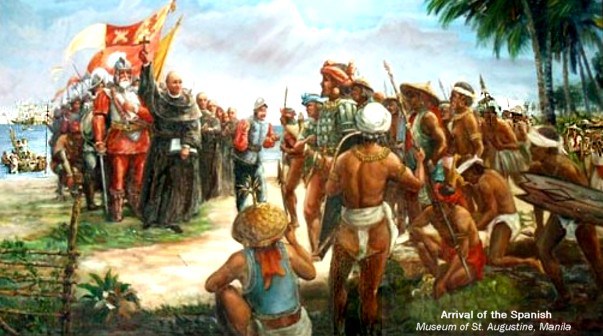
Filipinos are famous for their hospitality. They treat their visitors, especially foreigners, extraordinarily, giving them the best of what they have. As a host, the Filipino will try to make his visitors comfortable and provide them with the best amenities. The Spaniards had a taste of this hospitality when they came to the islands. They loved it and took advantage of it. Although there were places where the natives were hostile to them, they were generally welcomed.
Sometimes, this is mistaken as being subservient. Some contend that being colonized for hundreds of years made the Filipinos feel inferior; thus, they are gracious to other people, especially those coming from other countries. The Filipinos are perceived to have that feeling of inferiority complex, especially in the presence of foreigners, because they were programmed by their former colonial masters to obey, serve, and never ask questions. This stereotyping of Filipinos was compounded by the fact that many Filipinos work as domestic helpers abroad.
Those who look at Filipinos in the manner mentioned above are mistaken. They chose to view that trait of these people using a negative perspective.
Filipinos are naturally caring and friendly. They are also very polite and respectful. Their hospitality is a manifestation of their innate humanity, not subservience. These people from Southeast Asia are highly relational. They can quickly establish connections with other people. They are highly flexible and able to adapt rapidly to different cultures. Filipinos embrace people, especially foreigners, for who they are and do not judge them. If people worldwide were tested for what Howard Gardner describes as “interpersonal intelligence,” the Filipinos would probably top.
This trait did not vanish with the arrival of the Spaniards; it was actually reinforced. The Spaniards introduced Christianity to the natives, and becoming Christians made them discover more reasons to love and care for others.
Genuine care for others is something very natural among Filipinos. Thus, aside from domestic helpers, there are many Filipino doctors, nurses, caregivers, nannies, and teachers abroad. Filipinos are not egotistical. They can take on menial jobs, thinking “any necessary work that pays an honest wage carries its own honor and dignity” [4]. This is the reason many Filipinos accept these kinds of jobs abroad. However, skilled Filipino workers and professionals are also being sought in many countries. There are also a lot of Filipino artists working in different parts of the world. All these are proofs of Filipino intelligence and innate talent.
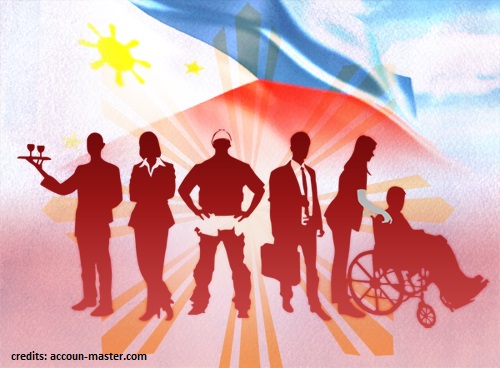 Filipinos are also good at communication. This can be attributed to their confidence in speaking and high interpersonal intelligence. Their good command of the English language, the result of their American occupation, and their being naturally friendly enables them to quickly start a conversation with people from other countries. Aside from being hardworking, Their excellence in communication makes them attractive to foreign employers. If there’s a profession where the ability to communicate well and deal effectively with other people is badly needed, it is teaching. Thus, many Filipinos work as teachers abroad, not just for English but in different learning fields.
These people are also resilient, almost unwilling to give up. Both the natural calamities that have plagued this nation since time immemorial and their painful experiences as colonized people hardened them. They always get back to their feet after suffering from serious setbacks. Their ingenuity and resourcefulness enable them to find ways to wiggle out of difficult situations. Their trademark humor makes them laugh out of even the hardest of problems.
Another Filipino value that was preserved notwithstanding colonization was close family ties. Perhaps the despotic rules of Spain and America made the Filipino families closer, for in times of sorrow and desperation, during those long years of being unwillingly chained, they had nothing to rely upon but each other. This Filipino trait is indeed epic. They maintain affinity to their relatives up to almost the fourth degree of consanguinity. Parents also allow their children to stay with them even after getting married.
Strong among Filipinos also is the so-called “Bayanihan” (spirit of communal unity). It is something similar to volunteerism. The natives display this trait in many ways, but the most famous is the old tradition of neighbors helping a family trying to relocate. Long bamboo poles will be placed under a traditional Filipino house and carried by volunteers to their new location [5]. It has not vanished even now that homes are built using wood and concrete. The concept of “Bayanihan” still lives on. It goes on in other forms, especially in times of natural calamities. The Filipinos are ready to offer their help, even resources, to their neighbors in need. This is also part of the Filipino’s innate humanity that was strengthened by their having been exposed to the doctrine of Christianity.
But Filipinos have negative traits as well.
How Colonialism Shaped the Filipino Character (3rd of 4 Parts)
_____
How Colonialism Shaped the Filipino Character (1st of 4 parts)
The United States, initially perceived by Filipinos as allies in their quest for independence, had other motives. Emilio Aguinaldo, leader of the revolution, was deceived into believing that the Americans sought to liberate the Philippines from Spanish rule without ulterior motives. In reality, the Treaty of Paris in 1898 saw Spain cede the Philippines to the United States for $20 million, equivalent to over half a billion dollars today. The treaty, negotiated without Filipino input, transferred control of the islands from one colonial power to another.
This betrayal was a bitter blow to the Filipinos. After centuries of resisting Spanish domination, they had hoped to chart their own future. Instead, they faced a new colonial master. Filipinos resisted, but despite their bravery, the Philippine-American War (1899–1902) ended in defeat after three years of intense fighting. The struggle for independence continued, but the dream of genuine self-determination was postponed again.
When the Spaniards left, the natives fought the more superior American forces. It was a case of a “David” having to contend with a “Goliath.” But in this version, Goliath subdued David. It wasn’t that way that it ended for the Filipinos. They gallantly stood their ground and fought as fiercely as they could but eventually lost the Fil-American war after three long years of struggle.
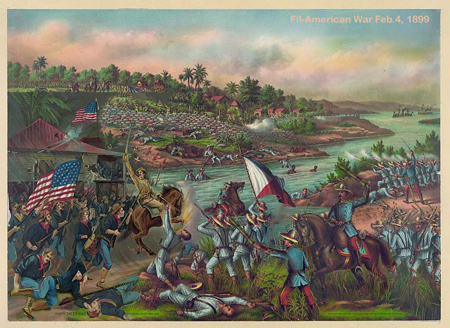
So, the Philippines changed hands – from one colonial master to another, from the Spanish yoke to that of the American.
As the Philippines transitioned from Spanish to American rule, elements of both cultures became integrated into Filipino society. The Spanish and American periods deeply imprinted Filipino values, traditions, and gene pool. The policies and practices implemented during these colonial periods undoubtedly influenced the evolution of the Filipino character.
The 20th century witnessed the rise of a distinct post-colonial Filipino identity—a fusion of Asian and European influences shaped by a history of colonization and resilience in the face of frequent natural disasters. This unique character continues to evolve, blending the past with contemporary influences.
How did these centuries of colonization influence the formation of the Filipino character? How did the cruelty of the Spanish and the betrayal of the Americans shape the values and traits of the Filipino people? These questions remain central to understanding what it means to be Filipino today.
How Colonialism Shaped the Filipino Character (2nd of 4 Parts)
__________
[1] philippinestudies.net
[2] asianjournalusa.com
Images used were taken from the following sites:
> lifestyle.inquirer.net
> angelsinasphere.wordpress.com
 M.A.D. LIGAYA


 M.A.D. L I G A Y A