Category Archives: National Character
Malaya Ka Ba Juan?
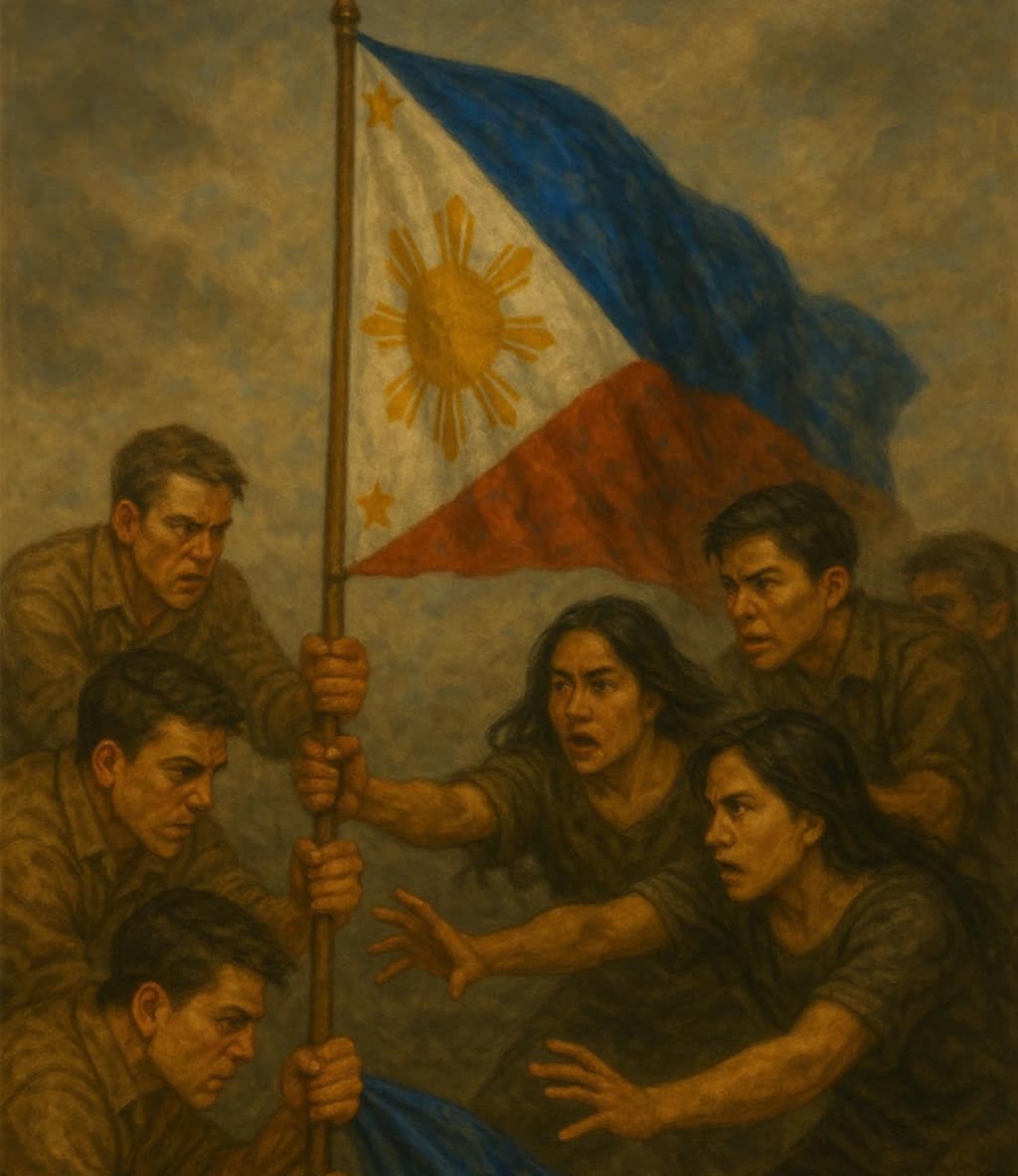
Kumusta Juan? Usap nga tayo sandali. May itatanong lang ako. Nakita mo naman siguro ang pamagat ng akda kong ito na nakasulat sa itaas. Iyan ang gusto kong itanong sa iyo. Totoo bang malaya ka na? Wala na nga bang sa iyo’y umaalipin? Wala na nga bang sa iyo’y pumipigil upang makamit mo ang mga pangarap mo sa buhay? Wala na nga bang sagabal upang marating ng bayan mo ang kaunlaran?
Syempre ang una mong reaksyon eh, “Ano bang tanong ‘yan?” Napaka-absurd! Obvious naman na malaya ka na dahil wala na ang mga Kastilang umalisputa’t sa iyo’y umalipin. Maging ang mga Amerikanong pumalit sa kanila ay matagal nang wala, pati nga base-militar nila’y pinalayas na natin ‘di ba? Napakatagal na rin namang tapos ang World War II at ang mga Hapon na nandito’y hindi mga sundalo kundi mga turista at mga asawa ng mga dating OFW sa Japan.
So, wala nang sagabal sa pag-unlad mo dapat ‘di ba? Kaya sasabihin mo bang malaya ka na? Wala na rin naman sa Malacanang ang mapaniil na diktaduryang Marcos. Kahit na nga ba alive and kicking pa ang aleng Imelda pero harmless na s’ya. Pero teka, ‘di ba Marcos din ang nakaupo ngayon, at may kapatid pa siya sa Senado na posibleng mamuno doon. Hala, pinsang buo pa pala niya ang nagpapatakbo ng Kongreso ngayon. Pero hindi sila ang kaaway at hadlang sa pag-unlad mo.
Kung gayon, kung hindi sila, eh sino kalaban at sagabal sa pag-angat mo sa buhay? Iyon bang nasa kabilang kampo… ang mga Duterte? Ay naku hindi rin. Mali ka t’song.
Hindi ang mga Marcos o Duterte at kung sino mang kumakampi sa kanila ang batong suong mo sa balikat kaya sa buhay ay hindi ka makausad. Hindi sila ang mga tanikalang nakakabit sa iyong mga paa kaya hindi ka makahakbang patungo sa mga pangarap mo… kung may pangarap ka nga.
Eh kung hindi sila, sino ang kaaway na hanggang ngayon ay umaalipin sa iyo kaya hindi mo masasabi na malaya ka.
Eh sino?
Nasaan siya?
Nakatira s’ya sa bahay n’yo. Isinusuot nga n’ya ang mga damit mo, medyas , at sapatos. Pati underwear mo! Pati nga pala toothbrush mo. Kumakain nga s’ya sa pinggang kinakainan mo.
Ano ulit kamo? Sino? Tatay mo? Nanay mo? Hindi kaya isa sa mga kapatid mo? Kuya mo? Engot! Ikaw iyon. Ang matinding kaaway mo ay ang sarili mo. Manalamin ka nang makita mo ang itsura ng totoo mong kaaway. Sige na humarap ka sa salamin.
Ayaw mo? Nahihiya ka! Ayaw mong aminin na ikaw mismo ang dahilan kung bakit hanggang d’yan lang ang narating mo. Ayaw mong aminin na ikaw ang pinakamatinding sagabal sa ‘di mo pagunlad at ng bansa mo?
O h’wag kang magalit sa akin. Totoo naman ah. Ano iyon? Hindi ka nagsisikap dahil kahit anong gawin mo ay hanggang d’yan ka na lang kasi hindi ka ipinanganak na mayaman? Na ang mga magulang mo kasi ay isang kahig isang tuka lamang. Tapos ano pa idudugtong mo? Na nasa guhit ng palad mo na maging mahirap. Na baka sirain lang ng bagyo o lindol ang ano mang bagay na ipupundar mo. Don’t give me that crap Juan! Ang sabihin mo hindi ka nagsisikap dahil tamad ka. JUAN TAMAD!
Tamad ka! Batugan! Iniaasa mo ang lahat sa iba. Aba’y hanggang ngayon eh nasa poder ka pa yata ng mga magulang mo. Baka ultimo pambili mo ng sigarilyo eh hinihingi mo pa sa nanay mo. Bakit ayaw mong maghanap ng trabaho.
Adik ka ba Juan… sa droga o ayuda?
Alipin ka ng katamaran mo Juan. Kaya h’wag mong sabihing malaya ka. At ‘di bale nga sana kung sarili mo lang pinuperwisyo mo. Kaso mo hindi eh. Pati ang bayan eh apektado. Ikaw ang sagabal kung bakit ang bansa mo’y gumagapang pa rin hanggang ngayon sa balag ng alanganin. Bakit? Oh come on Juan. Alam mo ang dahilan, h’wag ka nang magmaang-maangan pa. Batid mong isa kang modernong Hudas na nagkakanulo sa sarili mong bayan para sa halagang P500 o P1,000 (o magkaano man ang iyong tinanggap noong Mayo 12).Tuwang-tuwa ka sa ibinayad sa boto mo, pambili ng yosi at pangtoma. Pero ano ang kapalit? Hayun, maraming mga buwaya at linta ang nakaupo pa rin sa pamahalaan. Malabo pa sa burak ang asensong pinapangarap.
At pagkatapos ng eleksyon ano ang ginawa mo? Sa halip na kumilos ka para maabot mo ang iyong pangrap eh ano ang pinili mong pagkaabalahan? Ang pagkampi kay Marcos o kay Duterte? O baka sa ikatlong puwersang nanahimik pero nagsisimula na namang mag-ingay.
Anak ng tokwa, wala kang mapapala diyan. Bago ka kumabit kanino mang panig, unahin mo ang paghahanap ng pagkaing isasalpak mo diyan sa iyong bibig. Kaylangan ng katawan mo ng damit. Kaylangan mo ng bahay na masisilungan sa panahon ng tag-araw o tag-init. Mga iyan ang unahin mo. Tiyakin mo ring may pambili ka ng gamot kapag ikaw eh nagkasakit.
Sa halip na pagpapaunlad ng sarili mo at kabuhayan ang iyong atupagin eh pakikipagbangyan sa mga hindi mo kapanalig sa pulitika ang ginagawa mo. Makakadagdag ba iyan kahit singkong duling sa pitaka mong naghihingalo. Panay ang pagpopost mo ng mga opinyon laban sa kabila. Eh ano ba alam mo? Sigurado ka ba sa mga sinasabi mo? Nag-aral ka ba ng abugasya para magpahayag ka ng opinyon na may kaugnayan sa batas? Ano ba basehan mo sa iyong mga sinasabi? Mga sabi-sabi? Nag-research ka ba? At kung abugado ka man eh wala bang halong pulitika ang interpretasyon mo sa mga nangyayari? Hindi ba ikaw iyong tipo ng abugado na babaluktutin ang isyu pabor sa pinili mong panig… o sa panig na binayaran ka upang sayawin ang tugtog na gusto nila.
Hayaan nating Korte Suprema ang magpasya kung aling panig ang tama at legal ang ginagawa. Sila lang ang puwedeng gumawa niyan, hindi ang grupo mong kinabibilangan. Hayaan mong kasaysayan ang humusga sa mga politiko na sa tingin mo eh taliwas sa tamang katwiran ang mga desisyon. Hayaan mong ang mga abugado ng magkabilang panig ang magpingkian ng talino. Tumahimik ka dahil wala namang bilang ang opinyon mo.
Palayain mo ang iyong sarili sa walang kabuluhang pakikipagkagalit sa mga hindi mo kapanalig. Ako eh maka-Duterte, hindi ko itanago iyan mula noon. Oh kung ikaw eh galit sa mga Duterte eh dapat ba tayong mag-away. Hindi ba puwedeng irespeto mo ang paniniwala ko. Ano man ang dahilan ng panggagalaiti mo sa kanilang angkan eh igagalang ko yan. Bahala kang ma-stress sa galit mo sa kanila.
Ang problema kung makapanglait ka sa mga hindi mo kakampi eh akala mo perpekto kang tao. Kung makabatikos ka ng mga pulitikong kinasusuklaman mo parang wala kang bahid dungis. Kung makapangmenos ka ng mga taong hindi sumasangayon sa iyo eh akala mo ubong ka ng galing at talino. Brad, manalamin ka paminsan-minsan.
Palayain mo ang sarili mo sa pakikisawsaw sa away ng mga pulitiko? Inaalipin ka ng maling paniniwala na sa pagsali mo sa mga usaping ganyan eh makakatulong ka na magkaroon ng pagbabago sa atin lipunan. Diyos ko po! Gumising ka. Makakagulo ka lang. Hindi mo kayang baguhin ang mga politiko natin. Ang puwede mo lang gawin eh tiyakin na iyong mga karapat-dapat sa kanila ang iyong iboboto at… huwag kang magpapabayad. Iyong lang brad ang puwede mong gawin. Pero ginagawa mo ba? Hindi, di ba? Dahil nakakasilaw ang P500 o P1,000. Lalo na kung mahigit pa. Alipin ka ng kasakiman sa kaunting pera na iniaabot sa iyo tuwing eleksyon.
Sa halip na makisawsaw ka sa mga usaping pulitika eh unahin mo ang iyong kapakanan at ng iyong pamilya. Wala naman pakiaalam sa iyo ang mga pulitikong iyan. Ni hindi ka nga nila kilala. Asikasuhin mo na lang ang pagbabuti ng iyong kalusugan – katawan at isip. Iwanan mo ang politika, masyadong toxic iyan. Walang idudulot yan sa iyo kundi inis at away.
Pansinin mo Juan, kunwari lamang na umalis ang mga Kastila noon. Nandito pa rin sila’t alipin pa rin ang tingin sa iyo. Sila ang mga namimili ng boto mo upang paulit-ulit silang maupo sa pwesto at patuloy na salantain ang bayan mo.
Juan! Brad! H’wag kang magalit sa akin. Sinasabi ko ito dahil gusto kong magkasama tayong tahakin ang landas ng pagbabago. Ako man kasi’y kaylangan ding lumaya mula sa mga bagay na nakakasagabal sa pag-asenso ko. Ikaw, ako…TAYO, ang pag-asa ng bayan natin.
H’wag nating sayangin ang sakripisyong ginawa nina kuya Jose, Andres, Emilio, Marcelo, Gregorio at iba pang mga kuya natin. Hindi ko naman sinasabi na magpunta tayo sa Monumento at hiramin natin ang itak ni kuya Andres at pagtatagain ang mga natitirang Kastila na nagkukuwaring mga Pilipino. Ayaw kong maging mainitin ang ulo mo katulad ni Antonio, oo… iyong kapatid ni Juan, at pagbabarilin ang politikong sa tingin mo eh dapat nang sunugin sa dagat-dagatang apoy.
Juan, may isang linya sa isang kanta ni Michael Jackson na gusto kong ipaunawa sa iyo at gusto ko rin mas maunawaan pa… “If you want to make this world a better place, take a look at yourself and make a change.”
Kapag nagawa natin yan saka natin masasabi na malaya na tayo.
K-DREAM (Part 3)
(Last of 3 Parts)

For me, it is amazing how this country has gone this far, leaving my native land behind in the race to prosperity and stability. I want to know in what areas we Filipinos should improve if we intend to catch up with the South Koreans, and the rest of the world, in that race.
My desire to figure that out led me to read more about the history of this country. In the process, I discovered certain uncanny similarities between our historical experiences. South Korea and my native land are colonized nations and earned independence after the Second World War, and both countries embraced the democratic form of government. Additionally, just like in my country, the development of democracy in South Korea was also interrupted by military takeovers. And what a coincidence that martial law in this country and mine was declared in 1972. Was it also a coincidence that influential military leaders in both countries were removed via popular revolt in the mid-1980s?
Unfortunately, the similarities in the historical development of South Korea and my country stop there. We took different paths in building our nations from the ashes of colonization, the Second World War, and military juntas. However, the results differed even when the two countries were under totalitarian regimes with identical circumstances. Historians assert that it brought rapid industrialization to South Korea but, unfortunately, economic stagnation in the Philippines.
I really tried hard to figure out what happened. What went wrong for my country, and conversely, what did the South Koreans do correctly? To think that in the 1950s, while my country was soaking in the glory of being Asia’s second most robust economy, the Korean peninsula plunged into a devastating war.
I tried to probe deeper into this nation’s history to find the answers to the following questions I have in mind.
How did the South Koreans slay the ghosts of a bitter colonial past?
How did they survive the devastation wrought by the Korean War?
How did they triumph over internal political turmoil while trying to ward off a belligerent neighbor in North Korea?
How did the South Koreans accomplish all of those mentioned above and eventually catapult themselves to their current lofty position in the global community?
In my probe, I learned what the South Koreans did in 1998 at the height of the Asian financial crisis. They willingly donated their gold – jewelry (including their wedding rings), medals and trophies, good luck keys, and what have you. This they did to help save their economy during that crisis. As reported, the collective weight of the gold they donated may not be much. But more significant than the corresponding monetary value of their donation was the willingness of the South Koreans to make personal sacrifices for their country. Will the Filipinos do the same? I am not sure.
I call what the South Koreans did then an act of nationalism. If it’s not, then I don’t know what is. It is the same sense of nationalism that emboldened them to resist one military junta after another… to sacrifice their lives and limbs to lay the democratic foundations of their country, which eventually became a fertile ground that nurtured the economic prosperity they are currently enjoying.
Yes, my fellow Filipinos also sacrificed and resisted a dictatorship and, in the process, have even created the blueprint for a bloodless revolution – the EDSA revolution. But why were the Korean people able to ride the momentum of their victory after toppling a dictator to collectively bring their nation to prosperity, but we Filipinos could not? After both countries were ruled by dictators in 1972 and eventually returned to democracy approximately in 1987, where are they now economically and socio-politically speaking? ANSWER – South Korea is among the top 15 economies in the world, and the Philippines is far below the ranking. How did this happen?
My search for answers to questions that kept piling up prompted me to further my probe. After turning pages in the history of South Korea and my country, I decided to factor in variables that affect a country’s socio-political and economic development.
We know that nation-building is affected by geographical location, the pervading climate, political stability, natural resources, and human resources. Arguably, there are other factors, and those that I identified are obviously important. But the most vital in a country’s quest for development on all fronts is human resources. How far a country goes in terms of overall growth is contingent upon the quality or nature of its people.
National character is the construct used to embody the quality or nature of a group of people living in a country. Using Hofstede’s Cultural Dimension Theory (Hofstede’s 6-D Model) and the results of the extensive research done by its proponents on the cultures of 118 countries, I decided to make a simple comparative analysis of the national characters of South Koreans and Filipinos, hoping to find reasons why the latter is eating the dust of the former in the race to global significance.
I discovered that the Philippines is a highly hierarchical society, while South Korea is only slightly hierarchical. People in hierarchical organizations are said to embrace the notion that power is naturally unequally distributed and believe there is nothing they can do about it. They defer too much to their leaders, thinking that they are infallible.
That’s how we Filipinos are. We embrace the politicians we decided to follow to the point of fanatism, and we support them to a fault. The South Koreans also respect their leaders, but they strongly demand accountability.
Filipinos and South Koreans are collectivist societies, but the latter do not embrace individualism like the former. We Filipinos may have somehow absorbed the individualistic tendencies of our colonizers.
Filipinos are not so collectivistic. As a matter of fact, we are afflicted with a trait that we need to overcome if we wish to make our nation great. That trait is “kanya-kanya” – the tendency to think of personal, family, and group interests over and above general welfare. The South Koreans are quite the opposite. They consider the welfare of the many as necessary, if not more important than their personal interests. No wonder, as I previously mentioned, they donated their gold during the financial crisis in 1998. I also witnessed first-hand how the South Koreans willingly obeyed the restrictions set by their government during the early onslaught of the COVID-19 pandemic. Their leaders did not need to implement a “hard lockdown” like other countries did, including mine. The citizens strictly wore their masks, observed social distancing, and avoided leaving their homes unless necessary. They have shown their willingness to sacrifice for the greater good.
What is the reason behind the success of the political upheavals in my country in the 1980s not translating to meaningful socio-political and economic gains? Was it because they were driven not by the collective will of the Filipino people but by partisan politics?
What was clearly articulated in the findings of the extensive research done by the proponents of Hofstede’s 6-D Model is that the cultural dimensions of power distance (hierarchy) and collectivism/individualism are significantly positively correlated with wealth or prosperity. The Korean experience had me inferring that the less hierarchical and more collectivistic a society is, the more progressive it could become. And this has all the more expanded my K-dream. I wish Filipinos, like the South Koreans, would be less hierarchical and more collectivistic. Like them, we should demand accountability from our leaders. Like them, let’s think of the general welfare over and above our personal, group, and party interests. An important component of thinking for the common good is remembering our civic responsibilities, including contributing whatever we can to nation-building. But while we hold our leaders accountable, we should not forget that we, as citizens, have accountability too. Nation-building is a shared responsibility between leaders and citizens.
We must ask if Filipinos knowingly copied hook, line, and sinker the socio-political and economic models of our colonizers, or were we unknowingly indoctrinated or coerced to adopt them? Either way, what is clear is that we have yet to get desirable results. After decades of applying their economic and socio-political systems, our country is where it is now. Our needle of success as a nation needs to be moving. But we have been trying to fit the square peg of the countries that colonized us into our round hole. And to no avail. It’s not working. It’s time for us to rethink our strategies for nation-building. And this brings me to the culmination of my K-dream. I wish that we Filipinos give the South Korean economic, social, and political models a try. Let’s see what will happen if we embrace not only the popular culture of the South Koreans but also the standards and values that brought them to where they are now.
Examining National Character and Development in Selected Southeast Asian Countries and South Korea
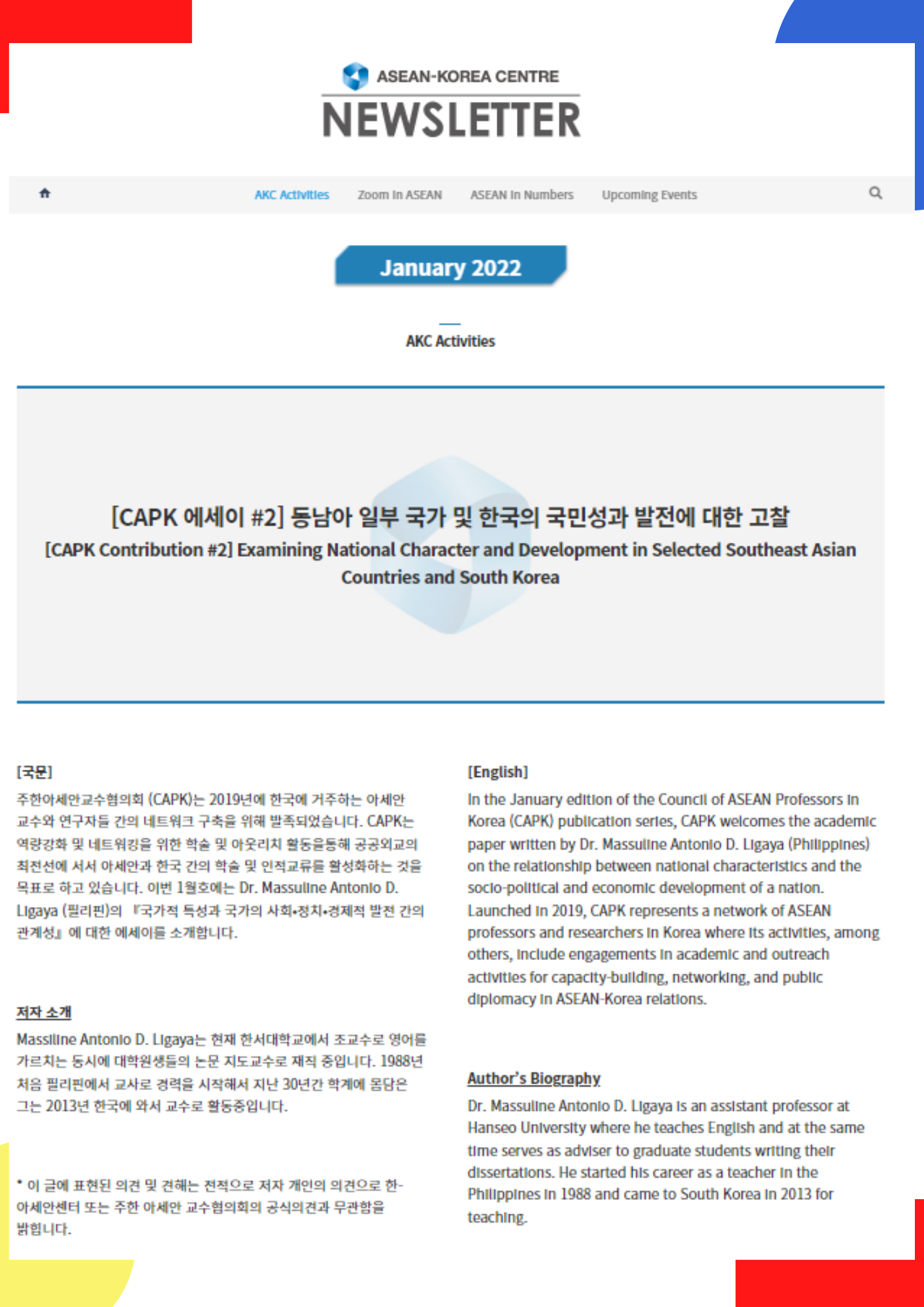
ABSTRACT
This essay investigated the relationship between the development of a nation and the characteristics of its people. In this investigation, the construct used to embody the characteristics of the people living in a particular country is national character and the development of a nation is viewed here using the socio-economic and political lenses. The countries chosen upon which this investigation was anchored were South Korea and three Southeast Asian (SEA) nations, namely, Malaysia, the Philippines, and Vietnam.
In examining the national character of the aforementioned countries, Hofstede’s measures of cultural values (Hofstede’s 6-D model) were used. In measuring the development level these countries have reached, their scores and corresponding ranks in the Human Development Index (HDI) were compared. The descriptive-comparative structure was used in the discussion.
The investigation sought answers to the following questions: 1) How may the national character of the selected SEA countries and South Korea be described in terms of Hofstede’s measures of cultural values?; 2)What is the current status of development in these countries as indicated in their latest HDI rank?; 3) What inferences could be made as to how national development in these countries is associated with their national character as described using Hofstede’s measures of cultural values?; and 4) What can SEA countries learn from South Korean models in terms of national character and socio-economic and political development?
Hofstede’s 6-D model show that the South Koreans are the least hierarchical, most collectivist, the most feminine, the most uncomfortable with uncertainty, the most long-termed oriented, and the most restrained among the group of people whose national culture and human development were analyzed. The Malaysians are the most hierarchical and indulgent while the Filipinos are the most individualistic. Only the Philippines has a masculine society, and its citizens are the most short-term oriented. Of the three Southeast Asian nations, Vietnam is the most long-term oriented.
The cultural dimensions that are considered significantly correlated with wealth are power distance, individualism-collectivism, and long-term orientation. The less hierarchical, more collectivist, and more long-term oriented a country is, the wealthier and developed it could become. The South Koreans are the least hierarchical, the most collectivistic, and the most long-termed oriented. Of the four countries chosen for this analysis, South Korea is ranked the highest in the Human Development Index. Among the three Southeast Asian countries, Malaysia has the best score in the Human Development Index.
This investigation concluded that the development of a nation could be affected by the characteristics of its people. The South Koreans have certain characteristics, as shown in their scores in Hofstede’s 6-D model, that helped them consistently ranked high in the Human Development Index. People in Malaysia, the Philippines, Vietnam, and other Southeast Asian nations may perhaps consider embracing, not only the music, movies, TV dramas, food, and fashion of the South Koreans but also their cultural and behavioral orientations that are considered positive and applicable to them. In particular, the leaders of the said countries should consider looking at South Korean models when formulating their policies in the fields of education, research and development but at the same time also study how they could avoid the social problems besetting South Korea.
Keywords: National Character, National Development, Culture, Hofstede’s Cultural Dimension Theory, Human Development Index
 M.A.D. LIGAYA



 M.A.D. L I G A Y A