Blog Archives
When Students Don’t Learn

One morning, I witnessed how an English teacher masterfully discussed the intricacies of the English language. It would take me a paragraph or two to explain in detail the things he talked about. Let me just say that he is every inch a native English speaker. His knowledge of the phonemes, morphemes, lexemes, syntax, and context is impeccable. He dissected the language so skillfully, and the way he did it almost made me envious. I was reduced to being a listener, uncertain whether I just wanted to make sure not to miss anything new (something I don’t know yet) from what he was saying or I had nothing more to share because he had everything covered about what he was discussing. I wasn’t really sure what prevented me from saying anything. Maybe I was intimidated by his mastery of grammar, semantics, and pragmatics, or I did not like to gatecrash into his moment to showcase his brilliance. Stealing someone’s thunder is not my cup of tea.
That teacher held court in his impromptu lecture. He had the attention of everybody present. It was difficult to judge the intentions of my colleagues whenever they (unsolicitedly) shared their expertise like that. Was it to impress upon us (their co-teachers) that they know that much, or they simply would (good-naturedly) like to help us learn more about the subject (English) we’re teaching.
Later that day, I changed upon a student who had attended my English class in a previous semester. That student was one of the best in my class. Like me, he was heading out of the campus. After the exchange of greetings, I asked, “Who’s your English teacher this semester?” The student had already started responding before I recalled that I had previously made a promise to myself never to ask any of my former students that question for the reason that a few of my previous attempts led to the opening of “a can of worms.”
But it already happened – I asked that stupid question again.
The student named the teacher – he was the one I heard deliver an impromptu lecture about the English language earlier that day. After that, the student heaved a sigh and said, “We could hardly understand what he was teaching.”
I looked at him seriously, and all I could say was, “Really!?”.
He nodded and said, “He is also very serious.”
Before he could open that “can of worms,” I told my former student to give that teacher more time to adjust since the semester is still a long way to go. Then, I quickly redirected our conversation to another topic after that.
What’s amazing is the occurrence – of one day hearing a colleague deliver a brilliant impromptu lecture, but later that same day (or within the week), I would meet one of his students (who used to be my student also) claiming that they, in the class, could hardly understand what he is teaching – did not happen only once. If my memory serves me right, that’s the fourth time.
It finally made me reflect. That’s the reason I wrote something about it.
It made me wonder (again) how my former students rate my performance as a teacher. What do they think (and how they feel) about me as their teacher? What would they say to a colleague or fellow students when asked about me?
Students evaluate the performance of their teachers every semester. It’s hard to tell how reliable and valid the results of such evaluation are. Whether or not the results are a reflection of the true professional and personal qualities of the teachers is a matter of debate.
But valid or not, reliable or otherwise, it’s hard to ignore what students say about the performance and behavior of their teachers. Teachers get to read what students write in their evaluations. They could either agree or disagree with the results of their evaluation. But what the teachers would not know is what students say about them in informal discussions. Only the most naïve among teachers don’t know that students talk about their teachers.
In gatherings, teachers talk (or should I say gossip) about their students – their performance and behavior in the class. Conversely, students do the same. They talk (or gossip) about their teachers. There are only two possibilities – they either praise or curse their teachers.
One of the most unacceptable things that students could say about a teacher is that they do not (or they could hardly understand) what he/she is teaching.
Witnessing firsthand an English teacher discuss with ease the complexities of the English language and hearing a student claim that he and his classmates could hardly understand what that teacher was teaching is quite paradoxical.
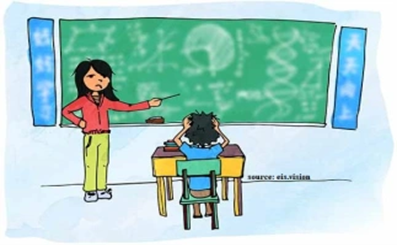
So I asked myself this question that night – Which is true… my impressions about that English teacher or that of his students?
What could have gone wrong?
My former student said that their current English teacher is very serious. Is that the problem – good rapport does not exist between him and the students? It is no secret that a teacher’s personality is correlated to students’ academic performance.
I tried to think of other reasons.
Then I recalled my teaching demonstration when I was applying for a job right after my graduation. When the high school principal called me to her office to discuss the results, she told me I did great. But she said there was a problem – I explained things in a way that only students enrolled in a graduate program could understand.
Could that be the reason?
If that teacher carried out discussions in the class in the same way he explained the grammar topic to us in that gathering earlier that day then that exactly is the problem. You cannot discuss a grammar point with students trying to learn the language the way you would with teachers teaching that language. I think that is not rocket science.
There are two things I learned before I officially began my teaching career – adapt my strategies and materials to students’ levels and simplify my language.
The problem is there are teachers who have a “one-size-fits-all” mentality, thinking that educational processes and approaches to teaching and learning are standard and cannot be tailored to meet individual needs. They wouldn’t buy into the idea of differentiated learning and teaching.
They will never accept responsibility when their students don’t learn.
Their standards are as immovable and high as Mt. Everest. The students have no choice but to climb that “Mt. Everest.”
For them, it’s the fault of the students when they fail.
Professionalism Among Teachers

The complexities involving the teaching profession and the importance of the role of teachers in the holistic development of learners require strict adherence to the tenets of professionalism. There are expectations that teachers need to meet, and there are qualities that they are expected to possess.
All the qualities teachers ought to have and what is expected of them can be summed up in one concept – “teacher professionalism.”
“Teacher professionalism” is an idea that can be defined differently based on multiple perspectives, and its merits are scrutinized according to various arguments. It is considered a broad concept consisting of several dimensions. However, for delimitation purposes, this article’s discussion on the subject is anchored only on the definitions of “professionalism” given in the next two (2) paragraphs.
Evans pointed out that “professionalism means different things to different people.”1 The Oxford dictionary defines the term as “the competence or skills expected of a professional.”2 It is the level of excellence or competence that professionals should manifest in their chosen fields of specialization.
Tichenor3 explains that professionalism is the expected behavior of individuals in a specific occupation. Professionals need to conduct themselves in accordance with set standards.
Boyt, Lusch, and Naylor4 combined the views about professionalism when they describe it as a multi-dimensional structure consisting of one’s attitudes and behaviors towards his/her job and achieving high standards. Similarly, Hargreaves5 defines professionalism as the conduct, demeanor, and standards that guide the work of professionals.
The terms associated with professionalism, as seen from the definitions and explanations given, are as follows: competence, skills, behaviors, conduct, demeanor, and standards. Competence and skills are synonymous with behaviors, conduct, and demeanor. Standards refer to the quality or accepted norms for competence and behaviors.
Skills are not the only components that make up a teacher’s competence. Knowledge is, of course, an integral part of it.
However, skills and knowledge are very broad attributions to a teacher’s competence. What specifically are the skills and knowledge that would make a teacher competent?
As Baggini puts it, “To be a professional or a professor was to profess in some skill or field of knowledge.”6 It’s a given that teachers should have knowledge of the subject matter or expertise in a particular skill. Teachers are expected to know not a little but much about what they are teaching.
What adds challenge to being a teacher is the ability to dig (whenever applicable) into the scientific, philosophical, legal, sociological, and psychological foundations of what is being taught. It is important that teachers can relate whatever they are discussing to other fields. Such an ability would enable teachers to enrich the discussion.
But teaching and learning are complex processes that involve a lot more… not just knowing what to teach and being able to connect a topic to other disciplines. The corresponding skills that enable teachers to effectively teach what they know and make the students learn would make them truly competent. Such skills are acquired through training in pedagogy.
Pedagogy is commonly defined as “the art, science, or profession of teaching.” Pedagogy informs teaching strategies, teacher actions, and teacher judgments and decisions by considering theories of learning, understandings of students and their needs, and the backgrounds and interests of individual students.7
Pedagogy, in a nutshell, tells how best to teach and how best the students learn.
Knowledge and expertise in a field would not make one a teacher. Pedagogical skills are needed. Competent teachers SHOULD know the subject matter and how to set learning objectives, motivate students, design learning activities, facilitate learning, construct assessment, and assess learning.’
In addition, another skill through which the competence of 21st-century teachers is gauged is how extensively and effectively they apply technology (computer) to teaching and learning.
Aside from competence, the other dimension of a teacher’s professionalism this article explores is behavior.
Teachers are aware that they should behave according to the ethical standards set for the teaching profession. They are expected to speak, act, and dress accordingly. Barber8 pointed this out when he identifies as one of the main characteristics of professional behavior a “high degree of self-control of behavior through codes of ethics.”
However, the behavior dimension of professionalism among teachers goes beyond proper manners and decorum.
Another characteristic of professional behavior identified by Barber is “orientation primarily to community interest rather than to individual self-interest.” It is no secret that teachers sacrifice a lot to help their students. Teachers work long hours and practice a lot of patience. As Orlin puts it, “ I see it (teaching) as an act of self-sacrifice, as a hard path undertaken for the greater good.”9
Teachers also know that they need to keep learning. They need a continuing professional development plan to better deal with the profession’s challenges. They need to keep abreast with the current trends and innovations in the field of education.
There are also general teaching behaviors that, according to a study, are the most important for effective teaching (as perceived by students). Hativa identified five (5) of them: making the lessons clear, organized, engaging /interesting, and maintaining interactions and rapport with students.10
Two (2) of the said general teaching behaviors (making the lessons clear and organized) are related to the first dimension of teacher professionalism (competence and skills). The rest are more indicative of the second dimension (behavior).
Teacher professionalism strongly implies the demands and complexities of teaching, making it harder to understand why the profession doesn’t get due recognition. Teaching is not just any profession. Not just anybody can be a teacher. Helping young people achieve holistic development and preparing them to become responsible individuals and productive members of society is a ginormous responsibility. If those young people are your children, you will not entrust that responsibility to any Tom, Dick, or Harry but to a “professional” teacher.
References:
- Evans, Linda (2008) Professionalism, professionality and the development of education professionals. British Journal of Educational Studies, 56 (1). pp. 20-38.
- Definition of “professionalism” – Oxford English Dictionary
- Tichenor, M. S., Tichenor, J. M. (2005). Understanding teachers’ perspectives on professionalism. ERIC.
- Boyt, T., Lusch, R. F. ve Naylor, G. (2001). The role of professionalism in determining job satisfaction in professional services: a study of marketing researchers, Journal of Service Research, 3(4), 321-330
- Hargreaves, A. (2000). Four ages of professionalism and professional learning. Teachers and Teaching: History and Practice, 6 (2),151-182.
- Baggini, J. (2005). What does professionalism mean for teachers today? Education Review, 18 (2), 5-11.
- Shulman, Lee (1987). “Knowledge and Teaching: Foundations of the New Reform”(PDF). Harvard Educational Review. 15(2): 4–14. Retrieved 12 June 2017.
- Barber, B. (1965). Some Problems in the Sociology of the Professions. In K. S. Lynn (Edt.), The Professions in America (pp. 669-688). Boston: Houghton Mifflin.
- Orlin, Ben “Teaching As Self Sacrifice.” Match With Bad Drawing. WordPress, March 10, 2014. Web. 19 July, 2017.
- Hativa, N. (2014). A practical approach to designing, operating, and reporting, 2nd, Tel Aviv: Oron Publications.
Having Fun At Work

What I consider as one of the most memorable moments in my career as a teacher was when one of my students asked me this question, “Why do you seem so happy when you’re teaching?” That question caught me by surprise. My initial reaction was to say, “Really!” He nodded and said some other kind words. Then I told him that I just love what I am doing.
When I went home after work, I reflected on that exchange between me and that student. Do I really love teaching? Well, the love affair between me and this profession I wholeheartedly embraced started in 1988. I have been in this “romance” for 34 years (24 in the Philippines and 10 here in South Korea). And I don’t see me and this profession divorcing even when all my hair turns gray. Teaching is one of my passions… the other two are writing and lifelong learning.
That question my student asked did something else. It made me recall the usual comments my students would write when they evaluate my performance at the end of every semester. They are as follows: “His class is fun.” and “He is a funny teacher.” I did not pay attention to those comments until I was asked that question. It made me glad that what I do as a teacher in the classroom would create that kind of impression among students. I just hope that aside from having fun, my students are also learning. The thought that they are having fun, even if to some or many of them language learning is difficult, is consoling.
Indeed I have fun when I teach. I am happy doing it. Is it because I love public speaking and talking in front of people excites me? It could be the result of my embracing what Confucius asserted, “Choose a job you love, and you will never have to work a day in your life.” Maybe it is an offshoot of my creating a unique teaching philosophy. Yes, I do have a personal teaching philosophy. Each teacher must have one. A teacher without a teaching philosophy is like a person who journeyed into the wilderness without a compass.
I didn’t pattern my teaching philosophy after any of those classical “isms” made popular by the great philosophers. Neither did I use contemporary educational philosophies to guide me in its creation. The personal teaching philosophy I created is unconventional and it reads…
“The classroom is my playground, the students are my playmates, and the subject that I teach is our toy.”
It doesn’t sound like a philosophy, right? But to me it is. The things I do in the classroom and the way I treat my students are informed by that statement. It works wonderfully. Perhaps it helps also that I subscribe to the principle that the “students are the reason schools exist… the reason I am a teacher.” A woman cannot be called a mother without a son or daughter… biological or adopted. In the same vein, I cannot be called a teacher without students. It doesn’t make me feel less of a person, much less a professional, if I say that I serve my students. Teachers can always opt to practice servant leadership if they want to… and I do.
That principle aforementioned and my personal teaching philosophy are the lamps that illuminate the path that I tread in my journey as a teacher. They make me love what I do in the classroom… the reason I am having fun out there.
In addition, what helps me have fun at work is my acceptance of the reality that there is no such thing as a perfect workplace. To think otherwise is tantamount to being delusional.
When I was young, I dreamt of finding a workplace where everything is perfect – systems, policies, and relationships. Who wouldn’t want to belong to an organization where everything is as you expect them to be. The problem is a perfect workplace is nothing but a utopian dream. Nowhere in the world it could be found.
So, I figured that if I think my workplace has become toxic and it has stopped me from growing personally and professionally, I just leave. I would not stay a single day in that kind of working environment.
What I consider the craziest people (pardon the adjective) in the schools I joined (both past and present) are those who criticize the policies of the organization, express their dislike of the work we do, and say all the negative things they could say about our employers. They call our employers inutile and incompetent who have no idea what they are doing yet when they are offered a contract for the next school year, they would gladly sign their names on the dotted lines and agree to stay for the next school year… another school year of whining and whinging. Isn’t that crazy?
It’s plain and simple. Changes in the workplace are inevitable. Employers have to do what they need to do in order for their business to prosper or simply survive. When they do that, they are ready to lock horns with anybody who disagrees with them. They are not foolish to have not considered all the legal ramifications of their actions. They know what they are doing. Making them change their minds is like “beating a dead horse.” It’s a quixotic undertaking… most especially when you are not a citizen of the country where you are working… like me.
Fighting the windmills is not fun. I leave that to the Don Quixotes in our organization. As for me, I just work and perform the duties and responsibilities as stipulated in my job description. I control what I could. I would walk an extra mile if need be particularly if that is something that I need to do for my students.
On The First Day of Class

Each meeting with my students is important but it’s the first day that I consider very special – the most strategically important. It’s the day that I would attempt to accomplish one of the hardest things to do in education – to shatter the students’ image of the classroom as a prison cell, with them as prisoners and the teachers as nasty prison guards. It’s the day when I begin to lay the foundations of what every teacher should endeavor to forge between them and their students – a good rapport.
The entire semester is a long haul and I know that winning their hearts would make our journey together as enjoyable and productive as it could be. If I succeed in making them trust me, half-of-the battle is already won. Earning the trust of my Korean students is very important to me as an expat teacher teaching English. What makes that task of earning their trust not only necessary but also (doubly) challenging is the fact that I maybe an ESL teacher with the proper qualifications and training but I am not from any of their preferred native English-speaking countries.
There’s nothing very special about the way I conduct my first meeting with my new students here in South Korea. It’s just a bit unconventional.
My introduction would always include telling my students the nickname which I adopted with the intention of eliciting laughter whenever I deliver a talk – Tonitonipoponibananananapoponinomimayfofoni. (That’s inspired by the song “Name Game.”) Amazingly, when I tell my students that and jokingly threaten them to memorize it if not they would fail in my subject, they would try very hard to repeat it after me and laugh at themselves if they wouldn’t be able to say it.
Then I would add, “Whoever could say my nickname correctly will get an A+.” I don’t mean it of course. Luckily, up until this time, no one among those who tried succeeded. It was I who would always succeed – in getting their attention.
From there, I would give them the necessary information about me as their teacher. The most significant of which (as far as I am concerned) is the number of years I have been teaching. It’s 34 years. The point I wish to drive home for highlighting to my students how long I have been teaching is – I wouldn’t stay this long in the academe if I don’t love my job.
The next part of my first-day-of-class script would touch on the boundaries of philosophy.
I would be delivering something like an“eve-of-battle” speech. The way they do it in movies.
I would ask my first question: “Why am I a teacher?”
Puzzled, the students would grope for an answer.
I would give follow-up questions after that – Would you call a woman a mother without a son or a daughter? Are your mothers and fathers mothers and fathers without you as their children?
Amid their “aahs” and nods I would then say, “I am a teacher because of the students. My reason for being a teacher is each of you. Without you, I am just a person – not a teacher.”
That’s my way of telling my students that the most important stakeholder in a school are them. Schools exist because of them. School administrators and teachers have work because of them.
That’s my way of telling them that I exist (as a teacher) to serve their interests.
I would end that part with the following statement: “Thank you for having me as your teacher.”
After that, I would show them a video clip from the movie “Collateral Beauty” – that part where Howard Inlet, the character played by Will Smith, delivered a speech in a gathering of his employees at the beginning of the movie.
- “What is your why? Why did you even get out of bed this morning? Why did you eat what you ate? Why did you wear what you wore? Why did you come here?”
I would pause the video clip after each question and would ask them to give an answer.
Then I would ask them follow-up questions. (These were the only questions I asked when I was not yet using that movie clip.)
Why are you here in school?
Why do you want to finish your studies?
The last question I would ask is– Why did you enroll in this class?
I never failed to ask the said questions because I want my students to understand that for them to succeed not only in their studies but in all their present and future endeavors, they need to set goals. They ought to know their whys. They must know the reasons why they do what they do, say what they say, and think what they think.
I would tell them also that the worst “why” to have for studying is to get A+ – that grades are not the be-all and end-all of schooling.
All of the foregoing would be finished in twenty to thirty minutes.
I would then ask the student to introduce themselves.
After all of the foregoing, I would proceed to the presentation of the course syllabus – explain the course objectives, give the topics to be discussed weekly, and tell them what activities will be done in the class and how are they going to be graded.
In explaining discipline in the class, I would simply ask this question – “Are you small children?” They would of course say “NO.” Then I would tell them this – “I, therefore, expect you not to speak and behave like small children.”
Then we proceed to the finale – the presentation of course requirements.
It’s not surprising to see the students frown when they see the course requirements on the last page of the syllabus. That’s the time that I would deliver the last part of my “eve-of-battle” speech.
I would ask – “Is learning fun?”
As expected, majority would say “no.”
My next question would be – “Is work fun?”
Of course the students would say “no” again. And every time I would ask that, one or two would say “There were many times I heard my father complained about his job.”
Then I would go on and tell them the following:
“Nothing is to be given to you in a silver platter. You need to work hard to achieve your dreams. Studying and working would require effort – you have to exert mentally, emotionally and physically. But something could make studying and working fun – your attitude. Your attitude towards studying will be dictated by your whys. Your whys put together is your philosophy.”
I told my students that I would be lying should I tell them that studying is easy. Then I added the following…
“Going to the gym to exercise is not also easy. Doing all forms of exercises… lifting barbells and dumbbells is stressful. You stress your muscles. But what would be the result? Your body will look better and you will be healthier. That kind of stress is good. But you have not only a body but a mind as well. You need to develop both. Now, imagine the books as barbells and dumbbells. You read them to exercise, not your body, but your brain. Reading… studying… that’s the way you develop your mind.”
I would spend another minute or two to explain something about “personal philosophy.” At the end I would tell them that each teacher has a personal teaching philosophy and mine is as follows:
“The classroom is my playground. The students are my playmates. The subject is our toy.”
How surprised they would be whenever I say that when I come to class I don’t work, I play. Work is hard. Play is fun.
As we end the first meeting I would tell them, “Come back next week and let’s play.”
Can Anyone Teach? (The Extra Mile Teachers Walk)
Search any site on the internet for the highest-paid professions in the world and you will not find “teachers” in the top 30. Expand your search and look for the list of professions in different countries where the practitioners receive the best compensation packages and you will find out that teaching is not among them. You will not find a country where teachers are ranked among the highest money earners.
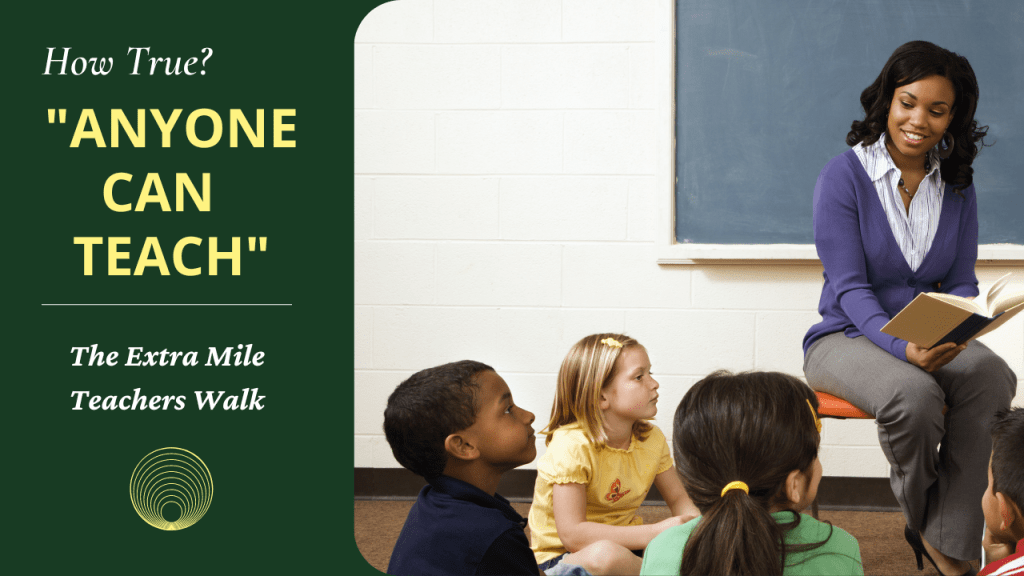
Teaching not classified among the highest paying jobs, of course, is not surprising. That has been the case since time immemorial and it is most likely not to change anytime soon. One possible reason teaching as a profession is not getting the recognition it should get is because of the pervading notion that “anyone can teach.” You cannot say the same for law and medicine… not just anyone can practice those professions. But how true is it that just anyone can be a teacher?
But even if teachers do not get the recognition and sufficient remuneration they deserve, they wholeheartedly perform the role they have embraced. Indifference and poor salary are included among the thorny steps in the extra mile that teachers need to walk when they have accepted that teaching is not merely a profession but a vocation. It is not merely a job to perform but an obligation to carry out.
Acknowledging that teaching is not merely a job but a duty to fulfill is what makes teachers go the extra mile, to do what is more than required in the performance of their tasks, including sacrificing personal resources and sometimes even happiness. Teachers understand and fully grasp the nature of the responsibility that they agreed to fulfill when they signed up for the job. They know it’s not easy. How in the world would one consider it easy to be responsible for the education of other people, especially the young ones? When did it become easy to facilitate the acquisition of knowledge and values and the development of skills of your fellow human beings?
Teachers would be one of the highest-paid professionals if only pay would be commensurate to how significant is one’s job in the enlightenment of the soul, the preservation and enhancement of the fabric of society, and the socio-economic development of a nation. Teaching would certainly be at top of the list of the highest-paid professions in the world.
But it is what it is. Teaching is not a profitable profession. If it is material wealth one would like to accumulate, teaching is not the profession to have. The realities confronting the teachers in the academe could really make them say a lot of things in the “present unreal conditional” form. There are times that they couldn’t also help but make a “wish statement” like “I wish that I were a health care professional.”
And why?
Healthcare professionals like physicians, surgeons, and dentists, consistently round out the top 10 in the lists of highest-paid professionals.
What they (the medical practitioners and their fellow health workers) do, maintenance and restoration of good health are very important. For that, they deserve the pay they get, most especially during the time that the coronavirus pandemic was raging. But nurturing the human spirit…helping a person achieve holistic development is as equally important, if not more important. What professional endeavor could be more meaningful than helping your fellow men achieve their full potential for them to become responsible human beings and productive members of society?
And not only are the teachers not getting the pay commensurate to the importance of the work they do and the effort they need to exert when doing their job, but they also don’t get the recognition they deserve.
A study concluded that American society does not generally view teachers in the same way, as they view other professionals; the belief that “anyone can teach” is not found in other professions. For example, not just anyone can play professional baseball, be an accountant or engineer, or practice law or medicine.
Such is the indifference teachers, as professionals are getting.
But how true is the contention that “anyone can teach?” Those who know what it takes to become a teacher would say that it is a fallacy. That “anyone can teach” is an erroneous assumption.
Education is not just a matter of whether you can teach or not but also whether or not you can make the students learn. Even if a person is an expert in a particular field, it is not a guarantee that they can teach what they know. Knowing something is different from knowing how to teach it.
Hiring just anyone to become a teacher is doing a disservice to the teaching profession. Hiring somebody to teach a language just because they could speak that language is a mistake. Not because somebody is good at math that they should be allowed to teach math. It takes a lot to become a teacher. Teachers undergo rigid training for them to hone their pedagogical skills. They read a lot knowing that teaching and learning are both grounded in Philosophy, Psychology, Sociology, and other related fields. They understand that they need to be familiar not only with their field of expertise or chosen subject area but with different principles and strategies to effectively deliver learning and teaching. They know that when they are done teaching in the classroom, their work is not done yet. There are other things to be done – checking graded activities and preparing a new lesson plan. The preparation of a lesson plan, in itself, is a tedious process.
The list of the things that teachers need to know and do is long. At the end of that long list are two characteristics that teachers need to develop if they wish to succeed in the profession. Those are PASSION for their work and COMPASSION for their students.
With all the aforementioned, what would anybody assume that just “anyone can teach?”
Be that as it may, teaching will forever be a NOBLE PROFESSION! Nothing can diminish its intrinsic value.
One thing is for sure, all successful professionals in the world – business executives, lawyers, architects, engineers, surgeons, physicians, dentists, nurses, brokers, and what-have-you – know that their teachers, who did not mind walking the extra mile contributed a thing or two or more into whatever they have become.
The Keys to Effective Teaching
This is the talk I delivered when I was invited as a resource person in a webinar for Education students in the Philippines on February 16, 2022.
Part 1
Part 2:
On Filipinos Teaching English In South Korea

Filipino Educators in Korea (AFEK)
Most universities here in South Korea (and other Asian countries) prefer to recruit English teachers from countries where English is the native language. That is a matter of policy but it does not follow that the best English teachers are the ones coming from those countries… they could be somewhere else just waiting to be given an opportunity to prove their mettle in ESL teaching. And whether that policy reaped dividends and made the students in those countries better at English or ripped those countries of their precious dollars is an interesting topic for discourse.
There are a few tertiary institutions in this country employing teachers from the Philippines to teach English. These are the universities that believe that teaching English is not a monopoly of the teachers labeled as “native speakers” coming from the following countries: USA, UK, Canada, Australia, New Zealand, South Africa, and Ireland. I have also written an article about the Filipinos and their romance with the English language. I also discussed in the same article a little bit about the thesis that ACCENT is getting in the way of INTELLIGIBILITY and COMPREHENSIBILITY. I am planning to explore the topic further in future articles.
If the statistics gathered in 2013 by the Association of Filipino Professors in Korea (AFEK) is accurate then there are more or less 100 teachers from the Philippines in this part of the Korean peninsula. That could still be the same number as of 2022. Reportedly, there are more in elementary and secondary schools and academies (hagwon). This AFEK came to know when they launched in May, 2017 the program “Skills Enhancement for Filipino Teachers Teaching English in Korea.” Several of the attendees were Filipino women married to South Koreans and are employed as English teachers. The Philippine Embassy in Seoul, however, doesn’t have any official record that could give the exact number of Filipinos teaching in the basic education schools and academies here.
Filipino professors are not limited to teaching English subjects only. They are E-1 visa holders and are allowed to teach content subjects depending on their fields of specialization.
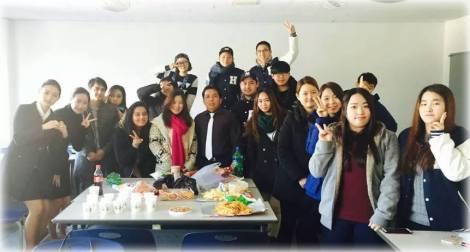
E-2 visa holders are allowed by the Ministry of Education here to teach strictly English subjects only. One advantage of hiring Filipino professors, because theirs is E-1 visa, is they can be asked to teach content subjects related to their fields especially if the curriculum requires that the content subjects should be taught in English. Currently, in the university where this writer is teaching, three teachers from the Philippines, aside from teaching English subjects, would once in a while be invited to teach content subjects in the university’s Graduate School or serve as advisers to foreign students writing their dissertation.
I wouldn’t say that Filipino professors in universities in South Korea are lucky to have been hired. Why? They have to go through the proverbial eye of the needle to have a chance of getting hired. They applied alongside teachers who are native speakers of English who have the upper hand, not because of their qualifications and pedagogical skills, but because of their geographical roots.
Most of the Filipino professors here are PhD degree holders. The minimum requirement FOR THEM is Masters. Surprisingly, some native speakers of English, are allowed to teach in universities here even if they don’t have Masters.
To the universities that opened the opportunity for Filipino professors and hired them, the applicants needed to prove that they are as equally capable as their counterparts from the native English-speaking regions of the world. When they got hired, it was because they are qualified and have proven that they have what it takes to be English teachers. It wasn’t luck.
Filipino teachers are trained in the Philippines to both know what to teach and know how to teach what they know.

Modesty aside, the Philippines has a very good education curriculum implemented through the Commission on Higher Education which closely monitors TEIs (Teacher Education Institutions) to ensure strict compliance. Thus, Education graduates from the Philippines can be relied upon not only in terms of the knowledge, skills, attitude, and values in their field of specialization but also in pedagogy and in research. Filipino teachers are good in both instruction and research.
One of the best features of “teacher training” in the Philippines is teachers are made to understand that the most important stakeholder in a school is the STUDENT, not the TEACHER. When they need to, Filipino teachers know how to adhere to the philosophy that the teaching-learning process should be student-centered.
One reason, if not the main and only reason, most universities in Asian countries (like South Korea, Japan and China) prefer to hire teachers from those seven countries is ACCENT.
The Filipinos are good at English with the said language being the official medium of instruction in the Philippines from kindergarten to college – even in graduate school. Filipinos, at an early age, write and speak English. They hear and read it everywhere. It is also the official language of communication in the Philippines. All business and government transactions are done in English. The country also has the 3rd largest group of English speakers in the world. Their accent is not bad. It’s neutral, to say the least. This is the reason why the Philippines is one of the leading countries for BPO. But notwithstanding all the aforementioned, still the said universities prefer native English speakers and do not include Filipino teachers in their lists of preferences.
But there are two things that would make hiring a Filipino teacher a wise investment – two things far more important than ACCENT… their PASSION for teaching and COMPASSION for the learners.
It is easy to learn to mimic somebody’s way of creating vowel and consonant sounds and diphthongs but it is hard for teachers to be passionate about the job and compassionate with the students…. especially if they are not really trained to be one and were only forced to accept the teaching job for lack of better options.
 M.A.D. LIGAYA


 M.A.D. L I G A Y A