Category Archives: Philippines
The More Painful Injustice
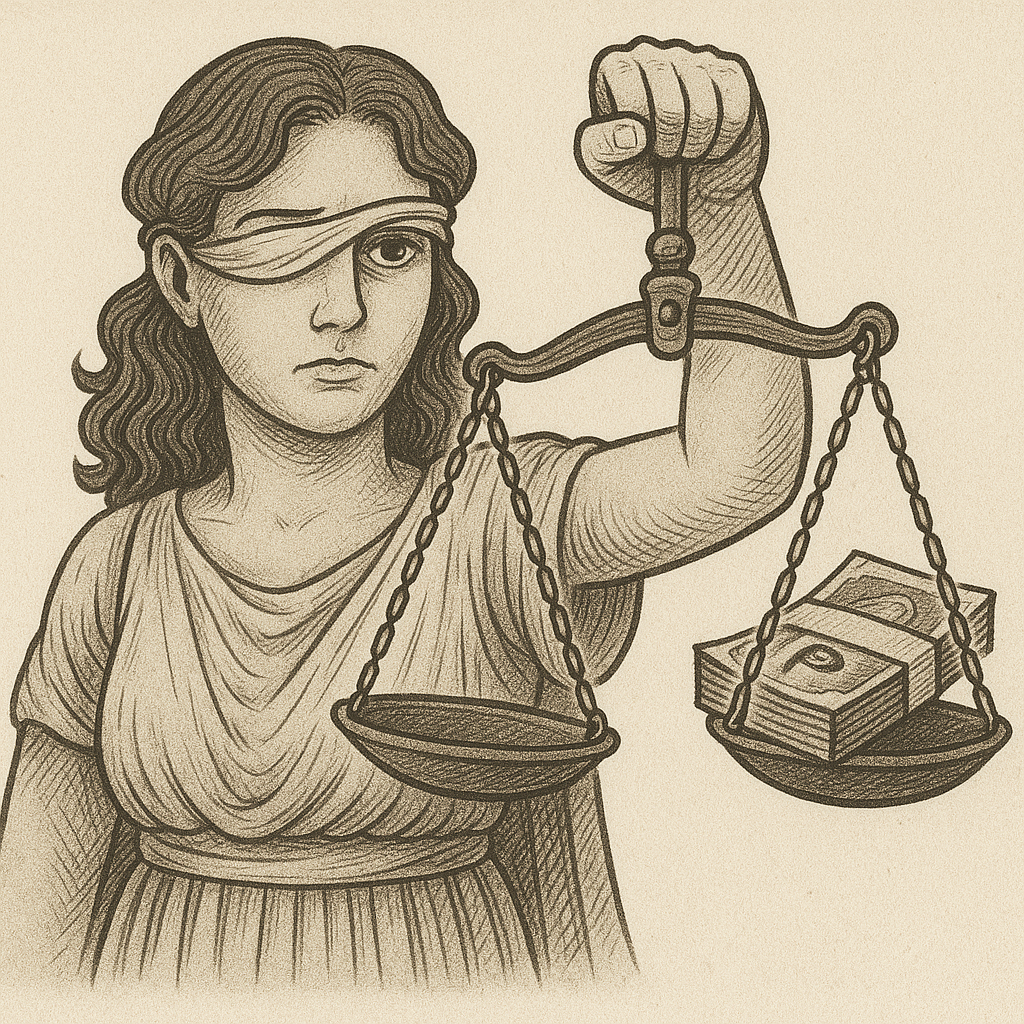
ICC’s decision denying former President Rodrigo Duterte’s request for interim release elicited different reactions. As expected, his supporters grieved; his critics rejoiced. Social media erupted. Commentaries burst like fireworks. Lawyers, influencers, and armchair experts all rushed forward with their own interpretations and opinions.
But buried beneath this noise is a truth many refuse to acknowledge: the corruption allegations against the sitting political powers remain unresolved, uninvestigated, and—most damning—protected.
And yes, we should not disregard the corruption committed by previous administrations as well.
At this juncture, we must confront the question everyone keeps tiptoeing around:
If extrajudicial killings can be considered a crime against humanity, what then do we call the corruption allegedly committed by officials of the incumbent government—corruption so massive it starved hospitals, crippled schools, and robbed the poorest Filipinos of the help they desperately needed?
What do we call leaders who tolerated the theft, shielded the thieves, and—worst of all—turned out to be thieves themselves?
Which is the greater sin: the murder of a few thousand, or the plunder of billions?
Who committed the graver crime: the fingers that pulled the trigger, or the hands that emptied the nation’s coffers?
The corruption committed by those in power—whether yesterday or today—is not petty, not the old excuse of “traditional politics,” and not the sanitized label of a “budget anomaly.”
This is plunder disguised as governance.
Billions meant for healthcare vanished while patients slept on floors, dying without medicine.
Billions meant for classrooms disappeared while children learned beneath leaking roofs.
Billions meant for poverty alleviation were used by the corrupt officials to fatten their bank accounts.
Every peso stolen by those in power translates to: a child who goes hungry, a mother who dies untreated, a worker whose future evaporates, a community trapped in poverty, a family whose hope is extinguished.
We must stop pretending corruption is merely a financial crime.
It is a human rights violation with casualties, as real and as tragic as any body found in an alley.
The painful irony?
One man faces the hostile ICC for killings.
But the many government officials accused of stealing the nation’s lifeblood face the friendly ICI who might possibly give them a simple slap on the wrist.
The ICC cannot touch them — and that is their shield under the Rome Statute, the ICC only prosecutes:
genocide
crimes against humanity
war crimes
aggression
Corruption—no matter how destructive—does not qualify.
The ICC can examine killings linked to a past administration.
But the alleged plunder committed under the current administration is untouchable.
They are shielded not by innocence, but by the ICC’s jurisdiction.
They know it.
Their lawyers know it.
Their political allies know it.
This is why they look unbothered.
This is why they speak as if justice is optional.
Because for corruption, under international law,
The Hague has no handcuffs.
But viewed through the lens of the United Nations Convention Against Corruption (UNCAC), the crime committed by corrupt members of the Executive and Legislative branches of the Philippine government remains evident.
The Philippines is bound by the United Nations Convention Against Corruption (UNCAC).
Under UNCAC, corruption is not merely illegal. It is seen as a violation of human dignity.
Corruption becomes a human rights offense when it deprives citizens of healthcare, destroys education systems, blocks justice through political interference, deepens poverty, and kills through neglect and substandard infrastructure.
Every bridge that collapses because of corruption, every medicine that never reaches a dying patient, every student robbed of a proper education—these are casualties of today’s corruption.
UN bodies cannot jail individual senators, cabinet members, or presidents. But they can expose a government’s failures. They can embarrass a nation on the global stage. They can pressure for reforms and sanctions. They can help freeze stolen assets hidden abroad. And they can force the world to see what our own institutions refuse to confront.
And in the quiet between outrage and applause, a single question remains: Whose crime weighs heavier on the nation’s soul?
Let us stop pretending this is a simple comparison.
Duterte is being investigated for the bodies we saw. But incumbent officials are being accused of crimes whose victims we don’t always see— because the victims are the millions who are slowly suffocating from poverty, hunger, broken hospitals, broken schools, and broken futures.
A bullet kills instantly.
Corruption kills invisibly.
But the graves are real.
Sometimes, corruption is the quieter executioner.
The true tragedy is not that the ICC is pursuing Duterte.
The tragedy is that the officials accused of bleeding the nation dry will never stand before The Hague, never sit behind glass in an international courtroom, never be held criminally accountable in the same way.
They will sleep soundly knowing that international law cannot touch them—not because they are innocent, but because their crimes fall outside the narrow definition of “crimes against humanity.”
They are safe. Not because they are righteous.
But because corruption is not in the ICC’s vocabulary.
And that is the Philippines’ most painful injustice.
 M.A.D. LIGAYA



 M.A.D. L I G A Y A