Category Archives: Filipino Identity
Quezon’s Curse
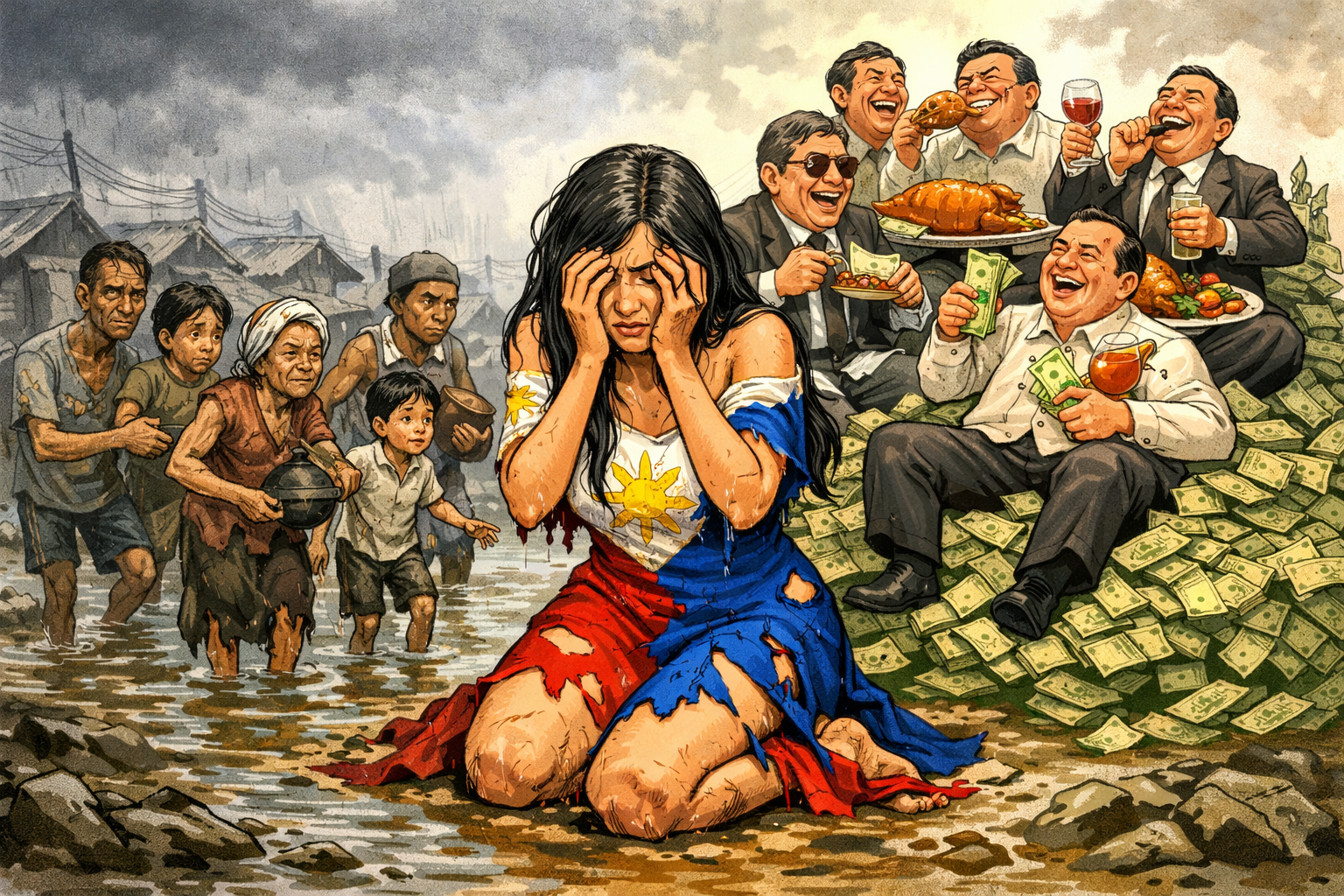
Did Manuel L. Quezon, the second president of the Philippines who served from 1935 to 1944, unknowingly curse the nation when he declared, “I would rather have a government run like hell by Filipinos than a government run like heaven by Americans”?
The Americans eventually ceased governing the Philippines by force after the Second World War. It was not independence that the Filipinos were granted on July 4, 1946, but freedom. The Americans did not save the Philippines from Spain, as some uninformed Filipinos and the rest of the world wrongly thought. The US coerced Spain into selling the island to them. So, the Philippines was passed by a colonial tyrant to another… to a more powerful and ruthless tyrant.
Let this be clear… The US did not save the Philippines from Spain. The former forcibly grabbed our nation from the latter.
When the Americans finally turned over the reins of government to Filipinos, Quezon could have been the happiest man alive had he lived to witness it. At last, the Philippines had a government run by its own people.
But as the saying goes, “Be careful what you wish for.”
Our country has since been governed by Filipino politicians. Given the Philippines’ governance over the decades, how would we assess the performance of those who have served in the different branches of government since the Americans passed the baton of leadership?
Only the blind — and those who benefit from the system — would deny how badly the nation has deteriorated. Only the naïve would refuse to see that the Filipino spirit seems lost. Like a dried leaf in autumn, it drifts wherever the wind blows. The Filipino identity has become like a shattered mirror. Each broken piece reflects a different truth, yet none shows the whole picture of who we once were or what we should be as a people.
As a nation, we are as fragmented as the islands that form our archipelago. The colonial strategy of “divide and conquer,” once used to weaken and subjugate us, continues to linger in our society. Even today, it keeps us deeply divided.
And all this appears to trace back to what now feels like Quezon’s curse — “a government run like HELL by Filipinos.”
For how long have we been led by politicians who seem to have descended from hell itself? Would it be unfair to describe members of the executive and legislative branches as soulless demons who take turns plunging their hands into the nation’s coffers, depriving the people of the services and opportunities they deserve? And what of those in the judiciary and the military who appear to look the other way?
One cannot help but recall the countless anomalous “flood control projects” — billions poured into programs meant to protect communities, yet every year, towns and cities continue to drown while only a select few grow richer. What was supposed to shield the people from disaster has instead become another avenue for plunder.
The sad reality is that the Filipino people cannot simply play the victim. It was Filipinos themselves who summoned these demons from the depths of hell and enthroned them in Malacañang and in Congress. In short, they voted for them. And the sadder part is that even now, when it is clear as day that the devils they have chosen are guilty of corruption, many still continue to support them.
Thus, Quezon’s pronouncement refers not only to Filipino politicians but also to the Filipinos who placed them in power.
“Kawawang Inang Bayan.”
Would we not, at times, be tempted to think that perhaps we would have been better off had the Americans continued to run our government?
Would we not be tempted to accept their old justification for staying on Philippine soil — that Filipinos were not ready for self-governance?
Yet perhaps Quezon did not curse us at all.
Perhaps what he offered was not a prophecy of doom but a challenge — a declaration of faith in the Filipino people’s capacity to govern themselves, to learn from their mistakes, and to shape their own destiny. The tragedy is not that Filipinos were given the reins of government. The tragedy is that, over time, many surrendered vigilance, traded principles for convenience, and allowed power to fall into the hands of the few.
A government “run like hell by Filipinos” was never meant to be permanent. It was meant to be corrected by an awakened citizenry. Democracy was supposed to be a system in which bad leaders could be removed, corruption punished, and the people remain the true sovereign.
But when a nation grows tired, when poverty silences voices, and when hope is repeatedly betrayed, tyranny does not need foreigners to thrive. It is cultivated from within.
Quezon’s words were not a curse. They were a warning wrapped in hope.
What turned that hope into hell was not Filipino governance itself, but Filipino complacency. We allowed demons to rise not because we were incapable of self-rule, but because we stopped guarding it fiercely.
In the end, the real question is not whether Quezon cursed us.
The real question is whether we, as a people, abandoned the responsibility that freedom demanded.
 M.A.D. LIGAYA



 M.A.D. L I G A Y A