Category Archives: Educational Management
GRADING GRADES

We label students as pesky when they keep pestering us with questions about their scores in quizzes and exercises. We find them annoying when near the end of a semester or shortly after final exams they send emails or call to inquire about their grades.
We say they are desperate when after knowing their grades they move heaven and earth to make us reconsider it and give them higher marks citing 101 reasons we need to do so, some of which are valid, some pure antics.
There are times when some teachers drop the correction fluid unto the grades they have given because they get moved either by the appeal of the students or by pressure from upstairs.
We often criticize students for being so grade-conscious.
But is it their fault?
NO!
Students are grade-conscious not because they want to but standards of society force them to be. The policies…
View original post 690 more words
GRADING GRADES
We label students as pesky when they keep pestering us with questions about their scores in quizzes and exercises. We find them annoying when near the end of a semester or shortly after final exams they send emails or call to inquire about their grades.
We say they are desperate when after knowing their grades they move heaven and earth to make us reconsider it and give them higher marks citing 101 reasons we need to do so, some of which are valid, some pure antics.
There are times when some teachers drop the correction fluid unto the grades they have given because they get moved either by the appeal of the students or by pressure from upstairs.
We often criticize students for being so grade-conscious.
But is it their fault?
NO!
Students are grade-conscious not because they want to but standards of society force them to be. The policies and procedures in the academe framed that kind of mind-set in the consciousness of students. They are seemingly programmed to become grade-conscious.
It all begins at home. Parents keep reminding their children to study hard and get good grades. When the children get to school, the indoctrination goes full steam. Teachers give a battery of tests and exercises telling the students to perform well if they want to pass the subject. And that if they want to be part of the honor roll then they need to have high scores.
Parents tell students to study hard, the teachers tell them to study harder. Day and night students are told that they must get good grades. After school, parents would even acquire the services of a tutor to further improve the academic performance of their children.
That’s how the “getting-good-grades-is-a-must” mentality gets ingrained in the consciousness of the poor little kids.
Companies and corporations deliver the coup de grace by frequently advertising that they hire only the best and brightest. And what’s the tangible measurement of these superlatives (best and brightest)? GRADES…A+, or 1 or 5 or what-have-you.
Society have assigned GRADES as proof of excellence. Academic performance of students is measured through their grades. The higher the grades the more excellent is the student. That’s how it goes.
RESULT? The students become grade-conscious. The grades they receive is a microscope and they are the specimen in the slide. Their academic marks are like scalpels used to dissect the contents of the shell between their ears.
The parents want them to work hard for their grades. Yes, perhaps for the children’s sake but the grades they receive is an instrument used by the parents in monitoring their investment. They want to make sure that
their children are not wasting the money they are spending for their education.
Parents become so mad when their children present to them unsatisfactory academic marks. And of course, when their children perform well academically, they are elated no end. It is a boost to their pride, a feather in their caps.
The schools in any country stretch their students to the limits of academic achievement because when students pass standardized examinations given by their governments it redounds to their benefit. It’s good for ranking and accreditation purposes. It’s a boost to their reputation. It’s good for marketing.
The parents and the teachers keep telling the kids that good grades is a prerequisite to success, the only way to get a good job. Thus the students think that the purpose of education is purely economic, to prepare them for a job. And if they fail to get good marks their future is doomed. They will not succeed.
This is the way the students are brainwashed into getting the highest marks possible. This is what developed among students a tunnel vision about education, that it’s all about getting good grades in order to be among the best and the brightest to who the big companies and corporations would give a chance to get a high-paying job.
The grades have seemingly become a curse. The grades take joy off learning. They make students prisoners in the classrooms and the teachers the unforgiving and unrelenting prison guards.
The grades put blinders on the students preventing them from seeing the bigger picture, that education is more than getting good grades and that the purpose of education goes beyond getting a job.
It’s sad that both the parents and the educators themselves are the ones putting the blinders on the students. They are the ones who put enormous pressure on the students to get good grades.
There’s nothing wrong if we help students to excel and to get the highest marks possible but we must not forget to tell them at the same time that grades are not the be-all and end-all of schooling. The students need to be told that the world doesn’t end if they don’t receive A+.
Schools must not forget that they exist to prepare the students, not only to find a job after graduation, but to live life and be a productive member of society and humanity.

ON PHILOSOPHY AND TEACHERS
To say that “no two teachers are alike” is not expressing an assumption but rather stating a universal truth.
Yes, teachers differ in many ways. Even if they may have come from the same culture and graduated from the same college of Education in the same university you don’t expect them to embrace the same philosophies. You don’t see them apply the same methods and strategies in the classroom, approach teaching and learning with the same degree of passion, and treat the learners in the same manner.
Teachers decide which perspective they would use in looking at their role as mentors and in looking at their students. Such perspective depends on either the philosophical foundations they adhere to or their personal set of beliefs, or may be both.
Teachers may have read too much of Hegel, Kant and Plato that they may have developed idealistic tendencies indoctrinating their students into believing that they do not exist for themselves but for others and for a higher purpose. Or like Aristotle, Locke or Rousseau, who all tried to debunk the ideas established by Plato and company, the teachers maybe slowly training their students to subscribe to rational thinking, that the latter need to think critically and scientifically. They could be pragmatists like Dewey and Kilpatrick, guiding students to keep themselves in touch with reality for they believe that there is no other world aside from what can be perceived by the senses.
Whatever set of beliefs teachers bring to the class doesn’t really matter for as long as all that they say and do in class is not inimical to the interests of the students. What is important is that everything that transpire in the classrooms are intended to make the students the best persons they could be and make them prepared to live life.
So be it if the teachers are like Satre, leaning towards Existentialism in guiding the students to take responsibility in deciding who they are in order to make themselves authentic individuals.
Nobody can claim that this or that philosophical perspective in education is superior over the other. It’s fine if the teachers wish to embrace all the philosophies and combine their best features to serve and guide them in shaping their set of values and in choosing their methods and strategies.
Combining the philosophies is not, by the way, a novel idea. In Scholasticism, St. Thomas Aquinas, harmonized Idealism and Realism. What about coming out with a philosophical perspective combining the four major philosophies in Education?
The philosophies aforementioned have shaped the teachers into the kind of educators that they are today. Whatever they knowingly and unknowingly say and do in the classrooms are offshoots of their set of values and beliefs. And this set of values and beliefs constitute their philosophy of education.
Teachers may have also accumulated through the years a personal system of values that govern every decision they make in the classrooms. Thus we see them approach their teaching (and deal with their students) in different ways. We see them display different degrees of enthusiasm in teaching. Some display no enthusiasm at all.
There are teachers who are “sages on the stage” who believe, the way the realists and idealists do, that knowledge emanates from them being the authorities. So, the students should be spoonfed. Conversely, there are teachers, who, like the existentialists and pragmatists, act like “guides on the side” painstakingly guiding the students to self-discovery.
There are teachers who would choose specific methods and strategies without considering the specific needs of their students. But there are also those who would be conscientious enough to take into consideration the heterogeneity in the class before deciding what learning system they would put into effect.
There are teachers whose mere mention of their names would send shivers down the spine of students. Conversely, there are teachers who try to make learning fun making the students enjoy, and not fear, the classroom.
There are teachers who consider the classroom a workplace, while others consider it a playground. They work playfully or playfully work happy doing what they are doing in the classroom thereby rubbing off to the students their joyful spirit.
There are teachers who have seemingly forgotten that the students are not just empty sheets waiting to be filled-out as in Locke’s Tabula Rasa. The kids in the classrooms are not wax figures with empty minds which the teachers need to stuff with all the knowledge that the curriculum requires. These students are not just intellectual beings, they have emotions. They need not just to be taught. They also need to be loved and understood.
Whatever the teachers decide to be… whatever system they implement… whatever method and strategies they apply… however they view learning… however they treat their students… would depend on their perspectives as dictated by their educational philosophy and by set of values and beliefs.
“IF YOU KNOW IT, YOU CAN TEACH IT”
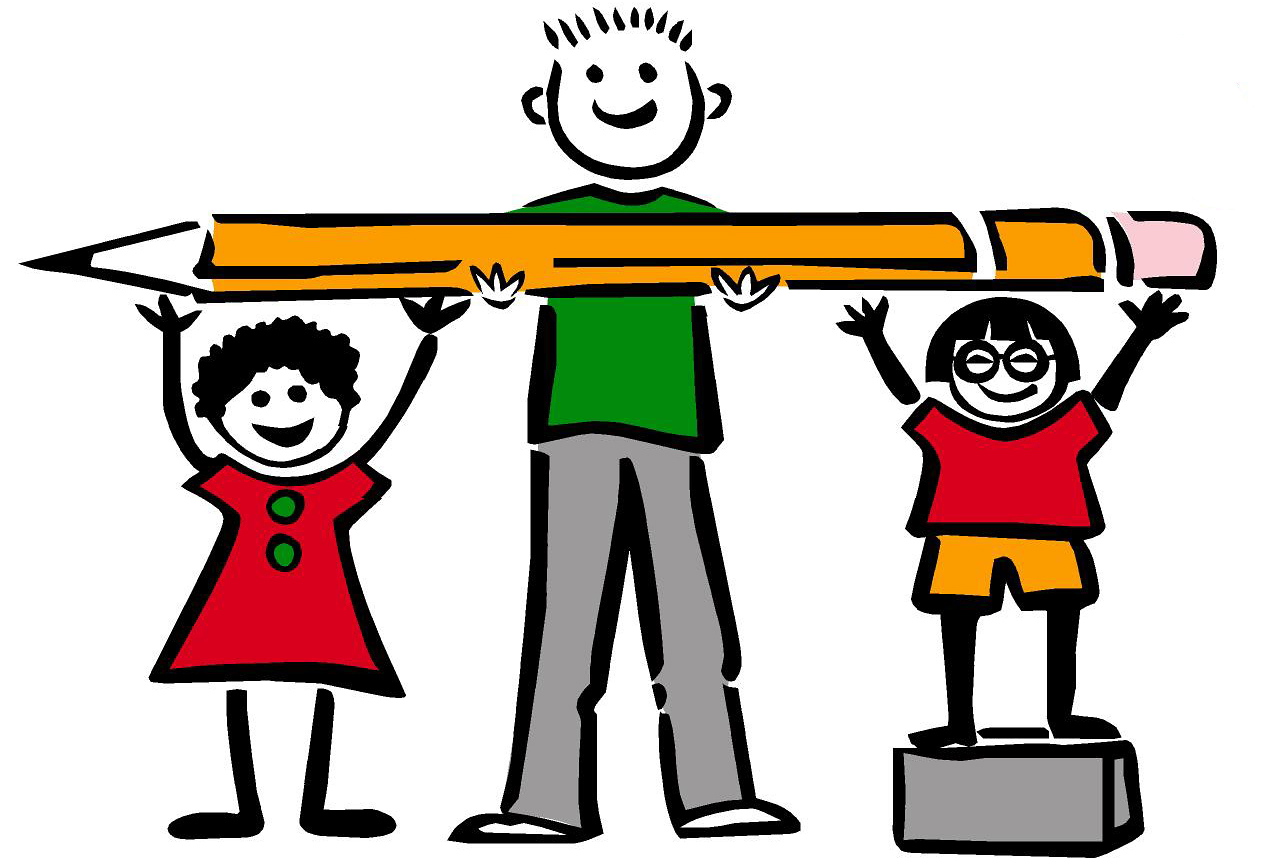
That’s a fallacy.
The scary thing is that many seem to have embraced the idea… that if you know something you can teach it. And they are now in the classrooms calling themselves TEACHERS.
Teaching is more than “mastery of the subject matter.” One may have an accumulation of knowledge or may possess a special skill but it is not a guarantee that he could effectively consummate a transfer of that knowledge and skill to a recipient – the LEARNER. Knowing one thing” is different from “knowing how to teach what you know.”
If teaching is an iceberg, “mastery of the subject matter” is just its tip. We can even say that it’s just the tip of half of the iceberg for teaching is just one side of the coin we call Education, the other side being learning.
To say that “If you know it, you can teach it!” is tantamount to saying that just about anybody who knows something could be a teacher.
Being a teacher entails not just knowing “what to teach” but more importantly “how to teach it.” It does not follow that when you are good at Math then you can teach Math. It is difficult to assume that when you know a language you can teach that language. Being knowledgeable and skillful in one area is just one cornerstone of effective teaching. Learning is not yet in that equation.
Becoming a teacher is a tedious process. “Knowing what to teach” and “knowing how to teach it” are merely the icing of a multi-layered function of a teacher. While mastering a certain field of specialization a would-be teacher also need to study the nature of the learner. While memorizing the “A to Z” and the “one to infinity” of a subject anybody who wishes to embrace the vocation (or call it profession) must understand the intricacies of the learning process. That he should not be concerned only with teaching but also learning.
Those who think that knowledge and skills in their fields of endeavors are enough to qualify as a teacher must do a lot of thinking. Teaching and learning are both grounded on Philosophy, Psychology, Sociology and many other fields of learning. There are also principles and strategies one need to learn to effectively deliver teaching and learning. There are methods one need to get acquainted with so teaching will not become a matter of “the blind leading the blind.”
The aforementioned can’t be learned overnight. It’s a tedious process, as previously mentioned. Thus, professionals in other fields who want to become teachers with good intentions enroll in crash courses for teachers before applying for a position in the academe. And when educational administrators hire non-education professionals for they see in them a promise of becoming good teachers they make sure that the latter would undergo rigid training in pedagogy before they deploy them in the classrooms.
If one has no time and resources to enroll in a crash course for teachers, there are books on teaching and learning that can be read. Available on-line are vast quantity of materials that can also be downloaded. The only problem with this scheme is that there will be no actual practice teaching and training in the preparation of lesson plans and learning modules.
So, if you know it don’t teach it yet. First learn how to teach it.
—–
Source of Image Used: learn4real.co.uk
 M.A.D. LIGAYA



 M.A.D. L I G A Y A