Blog Archives

The Pursuit of Well-Being (Part 1)

“Wellness is the complete integration of body, mind, and spirit – the realization
that everything we do, think, feel, and believe has an effect
on our state of well-being.”
~ Greg Anderson ~
To most people, being healthy is seemingly inconsequential–not a big deal. It’s not considered an achievement worthy of praise and deserving of a spot on social media. As someone once quipped, “Being healthy is a success that many people forget to celebrate.” They don’t consider not being stricken by any kind of disease or burdened by stress and anxiety a victory–a huge blessing that they should thank God for (if they believe He exists).
Virgil’s assertion that the greatest wealth is health is often disregarded. Only when we get sick and bedridden do we start to pay attention to our health or well-being. In some instances, we only do so when it’s too late, and the condition is already either difficult to reverse or not reversible at all.
Let’s not forget that pursuing your personal and professional endeavors is difficult if you’re not healthy—mind, body, and soul. Nurture your well-being before you can embark on a journey towards achieving your dreams and ambitions.
The Oxford Dictionary defines well-being as the “state of being comfortable, healthy, or happy (Oxford, n.d.). Merriam-Webster defines the construct in almost the same way except that instead of “comfortable,” it uses “prosperous” as an adjective used to explain the construct further. As Purcell (2018) explained, this concept embraces more than just physical health. It considers the entire person, both body and mind [and more]. It indicates not just the absence of illness but also the presence of positive mental states, emotions, and moods.”
Ruggeri et al. (2020) gave a more comprehensive definition of well-being. They explained that well-being is the combination of feeling good and functioning well, experiencing positive emotions such as happiness and contentment, developing one’s potential, having some control of everyone’s life, having a sense of purpose, and experiencing positive relationships. This shows that well-being goes beyond the pursuit of a healthy body. It encompasses various aspects of a person’s life, including physical, mental, emotional, spiritual, and social. A person is a physical, emotional, mental, and a spiritual being.
Engaging in activities that promote wellness can nurture well-being. Good wellness habits can contribute to a sense of well-being. This article will delve into the various wellness activities that can lead to well-being.
Wellness is the active pursuit of activities, choices, and lifestyles that lead to holistic health (Wellness Defined, n.d.). The enhancement of one’s overall well-being is the ultimate goal of engaging in activities that promote wellness.
Swarbrick (2012) explained that wellness is a conscious, deliberate process that requires a person to become aware of and make choices for a more satisfying lifestyle. She proposed a model that has been used to craft a practical framework for the pursuit of overall health. Her ‘wellness model’ (see Figure 1) is considered the gold standard for a comprehensive well-being program. Well-being programs found on the Internet have adopted this program in one way or another, wholly or in part.
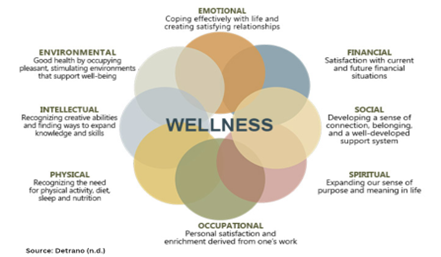
Figure 1 – Eight Dimensions of Well-Being
The model illustrates the different dimensions interlocked in circles to demonstrate their connection and interdependence. Swarbrick proposed that wellness should be approached holistically. You should not focus solely on specific dimensions while neglecting others. A meaningful wellness program aimed at maximizing your overall well-being requires that each dimension be given due consideration. You need to become familiar with each dimension and give them proper attention.
The definitions/explanations of each dimension shown in Table 1 were compiled by the University of Pittsburg on its website, which caters to well-being.
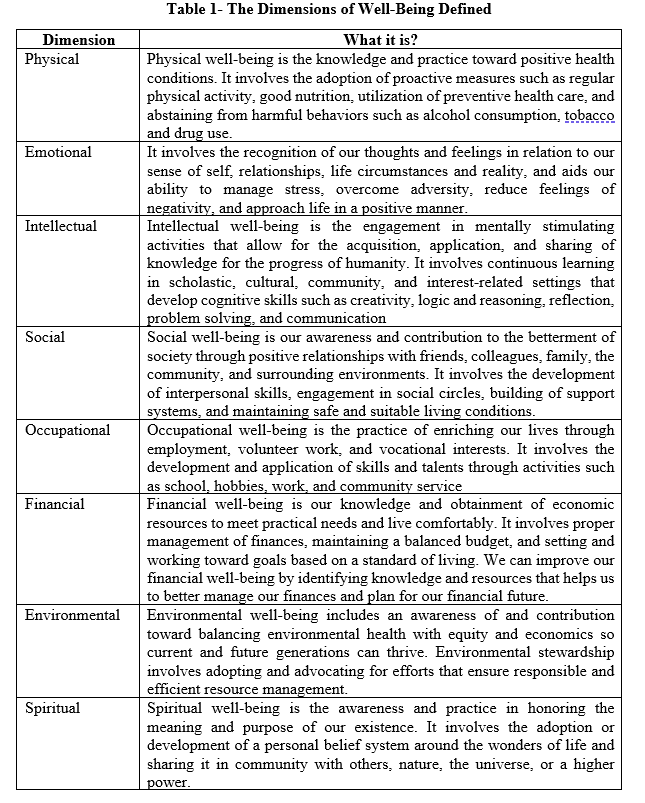
While all eight dimensions are equally important and should receive proper attention, overall well-being should begin with the physical aspect—by taking good care of your body. You must be strong and healthy before pursuing your dreams and ambitions. Regular exercise, a balanced diet, and adequate sleep are the usual advice to achieve physical well-being. It would behoove you to also take regular check-ups and preventive care.
Mahindru et al. (2023) asserted that physical activity also positively affects mental health in addition to the apparent physical health benefits. They mentioned specifically that consistent physical activity may also significantly improve sleep quality. The researchers cautioned that physically inactive individuals have been reported to have higher rates of morbidity and healthcare expenditures. Taking good care of your physical well-being also requires avoiding alcohol, cigarettes, or cigars and using prohibited drugs. Government and health authorities issue warnings against these substances, but surprisingly, there are no high-profile precautions against sugar, another substance that, when abused, will cause illnesses. Just like smoking, excessive sugar consumption leads to debilitating diseases like diabetes, obesity, and heart disease. So, if you genuinely care about the physical aspect of your well-being, be sure to include sugar in the list of substances to avoid.
__________
Emotional wellness has been proven to be directly tied to physical health. When you experience tremendous stress and negative emotions and fail to overcome them, you are bound to develop health problems. You need to develop techniques to manage stress. You probably have often heard how mindfulness practices and meditation help reduce stress and enhance focus.
Mental health professionals suggest staying connected with people in our lives to safeguard our emotional and mental well-being. They also recommend striking a balance between life and work. Thus, you must leave your work in the office so you will have fun and enjoy yourself when you’re with your family and friends. Additionally, cultivating a positive mindset and practicing gratitude are essential. Most importantly, do not hesitate to seek professional help when necessary.
The activities or things you can do to nurture your emotional well-being include exercising, eating well, and getting good sleep. In addition, the CDC (n.d.) offered tips to improve the emotional aspects of your well-being. You get outside to take a nature walk or a city hike. Be active, too. Take a dance break. You can also go to the gym to lift weights or do push-ups or sit-ups. You can also channel your energy into quick cleaning or spending an hour at home. You may also practice relaxation techniques. You can close your eyes, take deep breaths, stretch, do yoga, or meditate. In addition, they suggested that you embrace self-care, check it with yourself, practice gratitude, laugh, consider a new hobby, find an inspiring song or quote, maintain or build your social network, and connect with your faith through prayer or reach out to a member of your faith community.
 M.A.D. LIGAYA



 M.A.D. L I G A Y A