THE NATION WE CREATED (Part 1)
“The darkest places in hell are reserved for those who maintain
their neutrality in times of moral crisis.”
– Dante Alighieri –
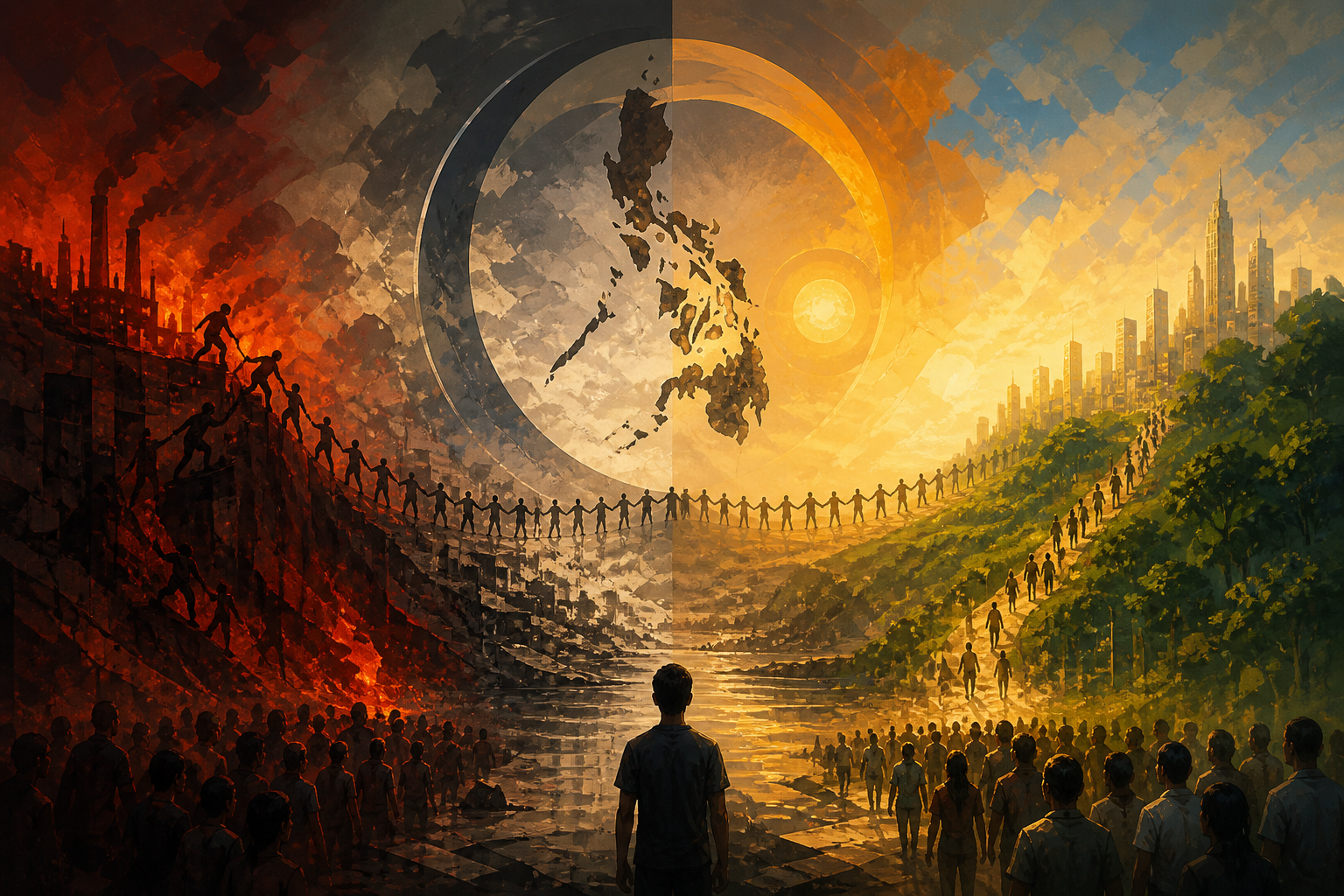
In my fourteen years in South Korea, I have often reflected on the delicate architecture of a nation’s soul. In those reflections, I found myself drawn to quiet comparisons between the systems of my host country and my own.
As an author, I tend to see the world through the lens of structure and foundation—much like the deliberate order I impose on the pages of my books—and I have come to believe that a nation’s destiny rests on two pillars: the integrity of its leaders and the responsibility of its people.
To me, these aren’t just political concepts; they are the boundary lines between peace and chaos. When both are strong, the nation feels like a paradise. When one falters, we drift into a restless purgatory. But when both fail, as I sometimes fear they have back home, the descent into a collective hell becomes almost inevitable.
Over the fourteen years I have lived in South Korea, I have come to view the condition of a nation not as a static map, but as a journey—a long, winding movement shaped by the weight of our collective choices. As an author, I find myself drawn to the structure of the Divine Comedy, where Dante must descend through the depths of Hell before he can even hope to see the light of Paradise. It’s a lens that helps me process our own national reality: we are not stuck in a fixed state, but are moving through a landscape defined by our actions.
From this perspective, three questions have begun to haunt my thoughts, demanding to be addressed:
Do we have a good government?
Are we a responsible citizenry?
Where do we stand as a nation—paradise, purgatory, or hell?
**********
DO WE HAVE A GOOD GOVERNMENT
The answer to the first question, as painful as it is to write, feels unequivocal to me.
We are governed by a dysfunctional government.
In my time writing about self-improvement and the shadow of our choices, I’ve seen how corruption acts as a plague on our institutions, siphoning away the very resources meant for our growth. It is heartbreaking to realize that the funds intended for our children’s schools or our farmers’ roads are so often lost to dishonesty. Tools that should be used for our collective progress instead become narrow paths for personal gain, turning our public coffers into the private piggy banks of those in power.
In my observations, these practices reveal something far deeper than a simple institutional breakdown; they expose the raw, ethical flaws that I often explore in my own writing—where greed is allowed to prioritize personal gain over the public good, and pride stands like a wall against accountability. These are the same vices I find echoed in the great literary traditions I study, yet they are not confined to the pages of a book; they manifest in the very way our daily lives and institutions function.
I’ve seen how this dysfunction slowly erodes the foundation of our society and lowers the bar for what we expect from one another. As corruption becomes common, integrity feels less like a standard and more like a rare exception. I worry that we have begun to tolerate dishonesty, normalizing inefficiency until we are trapped in a cycle: weak systems create passive citizens, and our passivity, in turn, allows that weakness to persist.
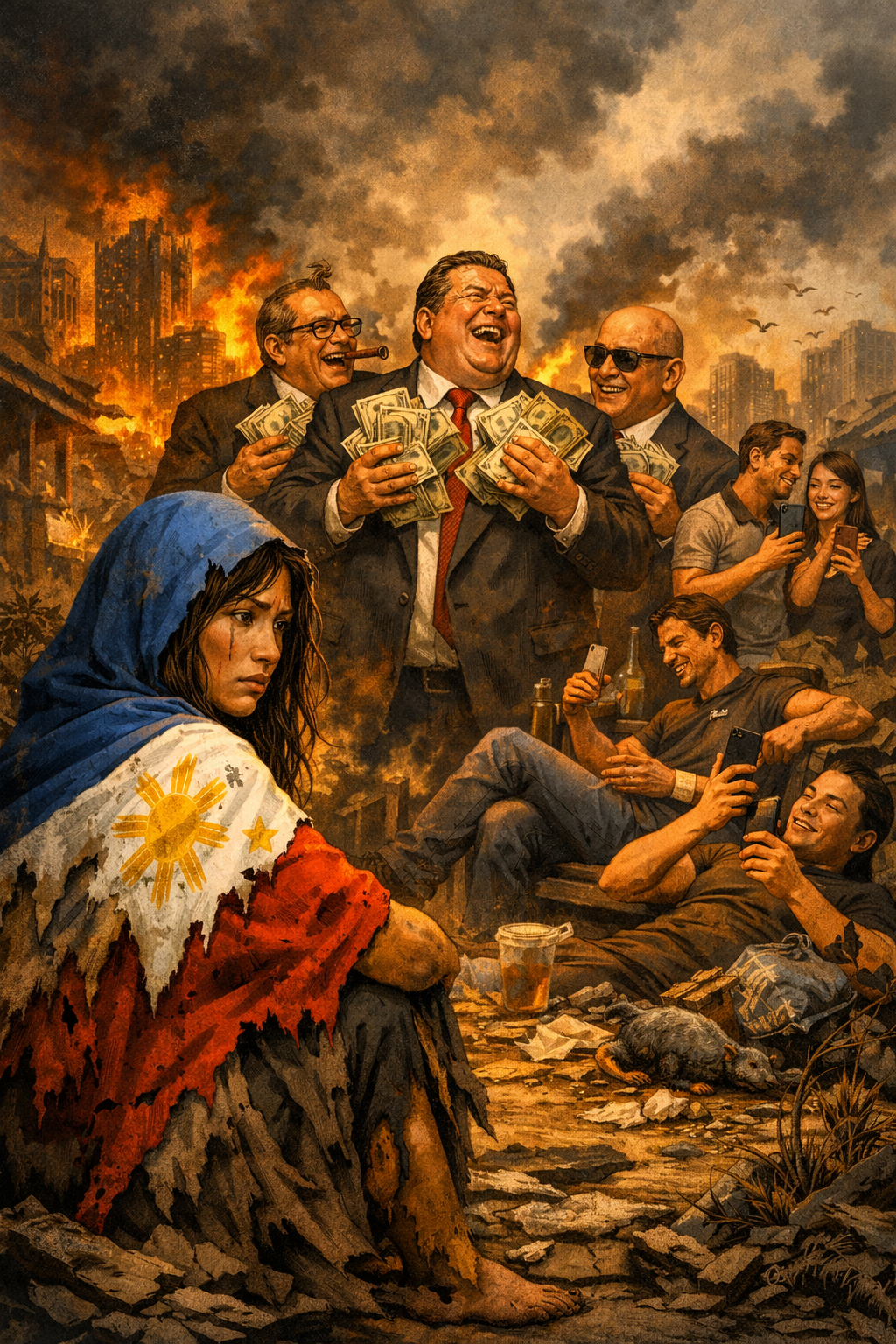
More concerning to me is the resignation this environment breeds. It’s easy to start believing that change is impossible, but that belief only serves to normalize corruption. It silences the critical voices and weakens our collective will to demand something better. When I see hope being lost, I realize that our withdrawal from civic engagement is the very thing that prevents reform from taking root.
I often think of Dante’s vision, where the morally indifferent—those who refuse to take a stand—are denied entry even into Hell. They are condemned not for their actions, but for their silence. In much the same way, I feel that our own inaction allows this dysfunction to continue, unchallenged and uninterrupted.
It reminds me of what Dante portrayed as sloth: not just simple idleness, but a moral passivity that allows injustice to endure through quiet tolerance. Like the inscription at the gates of Hell—“Abandon all hope, ye who enter here”—too many of us have accepted this state as permanent, surrendering the very hope that could spark change and, instead, enabling the very actors who thrive in this dysfunction.
As I watch from afar, the political theater back home often feels less like a debate and more like a spectacle of mudslinging between rival groups. It is a pattern I find deeply unsettling, reflecting not a reasoned disagreement but a descent into raw hostility, in which the pursuit of truth is sacrificed for the sake of division. Instead of the meaningful dialogue and collaboration I advocate for in my own reflections on self-improvement, we witness a cycle of endless accusations and personal attacks.
It resembles a tragicomedy—absurd, disquietingly humorous, yet undeniably tragic. What strikes me most is how we, as citizens, often become unwitting participants in these divisions, defending rival factions even when the conflict yields no real benefit to our lives. The energy I believe should be devoted to substantive governance and personal growth is instead consumed by these political theatrics.
Watching this from afar, I am reminded of Shakespeare’s Troilus and Cressida, a problem play in which the pursuit of truth is buried beneath ego and partisan hostility, leaving the characters mired in a stalemate that mirrors our own national stagnation.
I find it even more troubling to see the persistent failure to hold erring officials accountable. Even when scandals capture our attention, I’ve seen justice delayed or diluted until it is effectively denied. It seems to me that accountability has become selective, fueled by partisan loyalties: rigorous when applied to an adversary, but met with a heavy silence when it concerns an ally. In my view, this selective justice only strengthens a culture of impunity in which misconduct is not just ignored but effectively tolerated because the consequences never seem to match the actions.
Taken together, these realities paint a picture for me of a government struggling to fulfill its basic duties—not because we lack solutions, but because the system itself feels compromised.
It leads me to wonder: if we lack a good government, does that place us in Purgatory?
In my heart, the answer is “not quite,” because I’ve come to realize that the failure of a government never exists in isolation; it is a mirror that reflects and reinforces the shortcomings we carry as a people.

Posted on May 4, 2026, in Accountability, Expat Teachers in South Korea, My Personal Experiences, National Character, National Development, Nationalism, Personal Accountability, Responsible Citizenship and tagged Accountability, Expat Teachers in South Korea, Good Governance, National Character, National Development, Responsible Citizenry. Bookmark the permalink. Leave a comment.
 M.A.D. LIGAYA


 M.A.D. L I G A Y A
Leave a comment
Comments 0