Blog Archives
When Do We Wake Up?
(FIRST OF 4 PARTS)
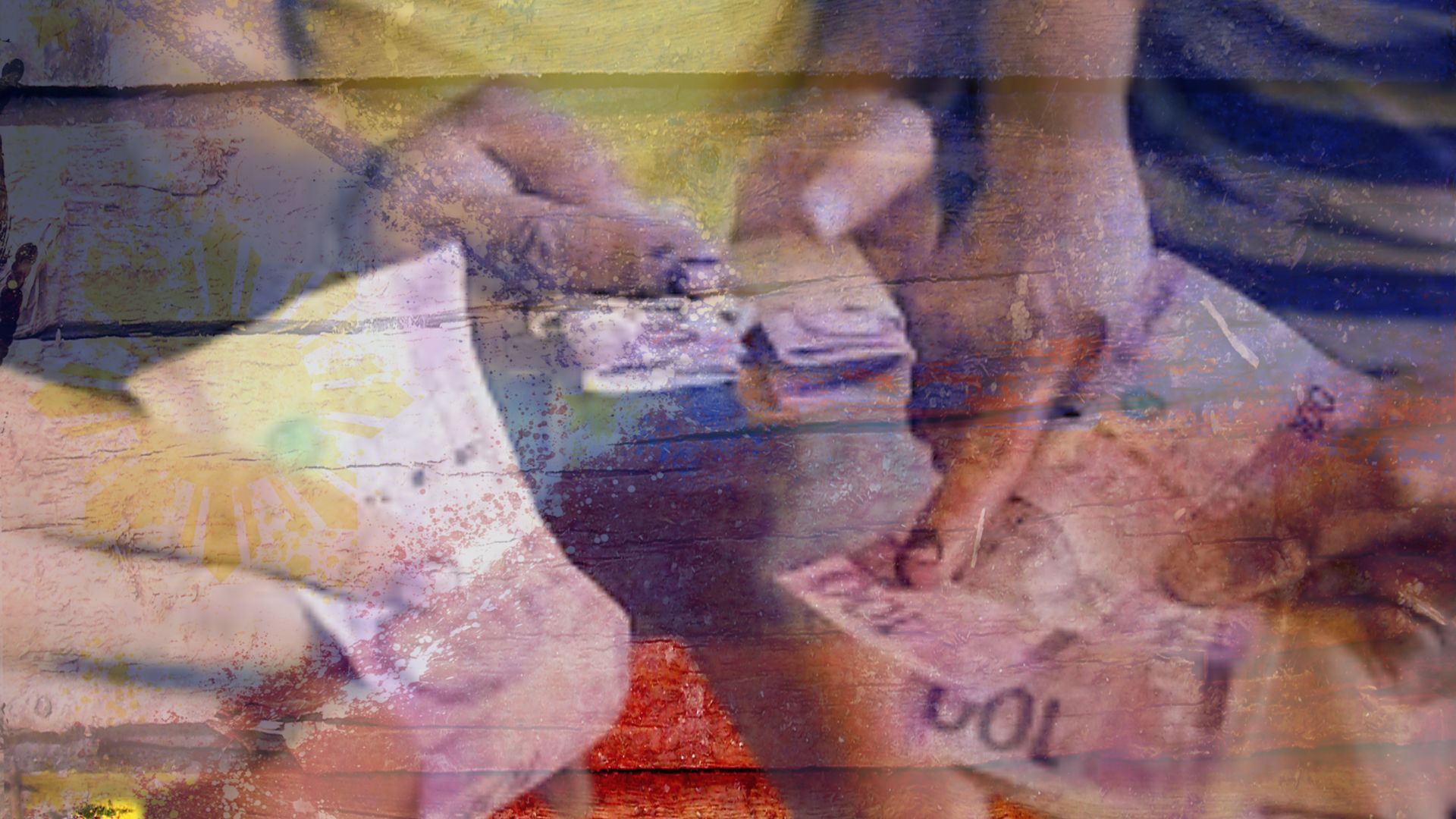
THE CURSE OF VOTE BUYING
If we think our leaders alone can deliver us to the proverbial “promised land,” we are gravely mistaken. If we believe that among them is a messiah who can bring about the socio-political and economic reforms needed to make our country progressive and peaceful, then we are having a dream, or more fittingly, a nightmare, and it’s time to wake up.
It is not because nobody among them is qualified and capable of leading our country to greatness (but I won’t blame you if you think so). It’s just that nation-building doesn’t work the way we think—that it can be done unilaterally by those we elect to occupy the seats in the executive and legislative branches of government. We believe our only role is voting, which we even fail to do responsibly.
That is one (probably the worst) of our major problems as people – the mindset that the leaders we elect have magic wands they can wave to solve all of society’s ills and all of our nation’s problems. It is the prevailing belief among us. We pin our hopes for a brighter future on our leaders.
We expect them – the governors of our provinces, the mayors of our towns and cities, and the captains of our barangays to solve our problems. We expect them to weave their magic and cast their spell, and then when the smoke dissipates, we suddenly live a better life.
We think of our members of Congress and senators as witches and wizards who could improve our country through their out-of-this-world powers.
We think our President, vice President, and cabinet members are mighty superheroes who can save us from any disaster and protect us from villains. Well, they are not. If we think we live in either the DC or Marvel universes, it’s time to wake up. We live a real life, not a “reel” one.
It’s time to wake up. We must realize that those elected (and appointed) politicians and leaders manning our government’s executive, legislative, and judicial branches are as human as us. They don’t have superpowers. They cannot solve all of the nation’s problems by themselves. They need our support as citizens. Each citizen—rich or poor, professional or not—has a role. Each of us should contribute to nation-building.
What can ordinary citizens do to help make the Philippines a better nation?
What about not selling votes during elections?
We expect too much from our government, yet we do not vote for the best and most qualified candidates for public office during elections. Instead, most of us write on the ballot the names of the candidates willing to buy our votes.
Vote-buying is an open secret in our country. It is freaking rampant. It has become the norm. It’s making the electoral process lose its essence. Leaders are elected not on the strength of their qualifications, abilities, and platform of government but on the power of the money they can pay each voter who would promise to cast their votes. On the eve of election day, bidding wars begin. Once candidates get the information their political rivals offer a certain amount for each voter, they will likely double that. The starting price is usually P500. Then, candidates will try to maneuver until the price becomes P1000 per vote. The desperation among the politicians sometimes makes them willing to cough up P2000 (or even more) for each voter.
Would elected officials admit that they are guilty of vote-buying? Of course not. So, we could only wonder how many percent of our elected officials bought the positions they are currently occupying. The other question is how much they spent during the past elections to secure their win.
Stopping this culture of vote-buying and selling is difficult, but it has to be done. We must realize that the leaders we put into office should have the moral ascendancy to lead. It is difficult, if not impossible, to look up to leaders whom we know cheated their way to their offices. They are not credible as leaders. We could not apply the principle of “public office is a public trust” when we know the persons occupying public offices “bought” their mandate. These scheming politicians feel their office is their “private property” because they paid for it. They can do, therefore, as they please, and their constituents cannot and (shouldn’t) complain because they have been paid.
Those who thought they duped the politicians by taking the money they offered them are wrong. They were so happy with that P500 (or P1000… make it P2000) they received. Such an amount is nothing compared to the millions of pesos they will get when the politicians dip their dirty hands into the government’s coffers. The money those politicians use to buy votes is considered an investment. Once elected, they will ensure they will get a return on their investment, with the corresponding interest.
Then we complain about how our government is performing. What kind of performance would we expect from politicians we awarded the mandate to lead not because they are qualified and capable but because they have the money to buy votes?
As Thomas Jefferson says, “The government you elect is the government you deserve.”
Every Filipino needs to realize that suffrage is not just a right but a moral obligation. It’s not for sale. Don’t reason out that you’re selling your votes because someone’s buying. “It takes two to tango.” Both vote-buyers and vote-sellers are guilty of this wrongdoing.
Don’t expect the politicians to stop buying votes. They would never do that. Politicians will do everything to ensure they get elected and have the power they crave. Power, as they say, is addicting. They want it so badly and salivate so much for the accruing benefits and opportunities they would get once they are in position. Only those born yesterday don’t know what benefits and opportunities those are.
It is not public service they are thinking of when they run for elective positions. I could be wrong. But am I? How many of those occupying seats in our government’s Executive and Legislative branches are genuine public servants? Who among them are real statesmen?
 M.A.D. LIGAYA



 M.A.D. L I G A Y A