What Teachers and Students Expect From One Another
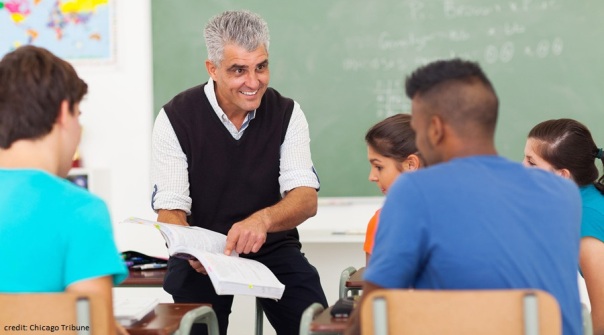
Teachers do talk about their students. They share their best and worst experiences in the classroom and compare their students’ performance and behavior. They do this in meetings or informally during lunch and coffee breaks.
Students do the same – they also talk about their teachers. When they are not within hearing distance of the educators, they discuss them. Students tell each other, their parents too, how good or bad their teachers are – how much they like or abhor them.
It’s not only the teachers who could express satisfaction over the good performance of students or show discontent over their lack of effort in their studies. The students could do the same. They would show approval for the good effort put up by their teachers and convey disdain when they feel they are being shortchanged.
Both teachers and students expect each other to perform well when they come to class. They both demand excellence. The teachers assume their students have studied their lessons and completed their assignments. On the other hand, the students believe that their teachers, who will lead the learning process, are prepared whenever they stand in front of them – that they have a lesson plan and know how to execute it.
The most foolish assumption teachers could make is that their students wouldn’t notice if they came to class unprepared. Students know if a teacher is not doing his or her job properly. It’s not only the teachers who can distinguish excellence from mediocrity.
Teachers require students to participate in discussions and other class activities. For that, they need to do their part. The teachers should never forget that motivation is a prerequisite to requiring the students to participate. Students expect their teachers to make them interested in the subject and to ask questions that make them think. They expect them to explain clearly and give sufficient examples to be ready to participate.
Such are among the pedagogical skills that teachers are expected to manifest if they hope to succeed in making students participate actively in their classes.
Students expect their teachers to be competent. The worst mistake educational managers could make is to not strictly screen applicants or blindly disregard hiring procedures and standards for whatever reasons and end up entrusting to somebody mediocre – to somebody not trained to be a teacher – the education of students. Knowledge coupled with the required pedagogical skills is what constitutes competence among teachers.
Interestingly, competence and its correlates are not the ones that came out on top of what students perceive as qualities of effective teachers. In studies conducted to determine what students consider the best characteristics of quality teachers, those that relate to personality, not pedagogical skills, were consistently at the top of the list.
In one of the said studies, among what emerged as the top five qualities of effective teachers as perceived by students, “the ability to develop relationships with their students” received the highest score.1 Of the four remaining, only “engaging students in learning” (ranked 5th) is related to pedagogy. “Patient, caring, and kind personality,” “knowledge of learners,” and “dedication to teaching” were ranked 2nd, 3rd, and 4th, respectively.
Students and teachers differ in their perception of the characteristics of effective teachers. In a study that explored student and teacher beliefs on good teaching,2 teachers rated constructs related to their abilities as teachers much higher than those related to their personality. For the students, it’s the opposite. They gave preference to constructs related to the personality of teachers. Students who participated in the study rated “caring,” “content knowledge,” “safe environment,” “dependable,” “prepared,” and a “teacher-student relationship” as most important when describing what makes a good teacher.
Again, emerging on top of the list, as viewed from students’ perspective, is a quality related to the teacher’s personality – “caring.” Note that “content knowledge” and “prepared” are related to pedagogy, the rest to the attitude and behavior of the teachers.
A very interesting topic for research is “Who can best answer the question ‘What are the qualities of an effective teacher?’ – the students or the teachers?”.
Who better judges what constitutes quality teaching – the students or the teachers themselves?
Teachers also expect respect from the students. That is not difficult to elicit from young people like the students who are (supposedly) taught by their parents to respect people in authority. But even if parents were remiss of their duties to inculcate among their children that value, the teachers are always in a position to be accorded respect. The teachers, however, have to understand that respect is a two-way street. Students also expect to be respected. Their being the persons in authority doesn’t give them the right to embarrass the students either directly or indirectly.
In a study on students’ perceptions of effective teaching in higher education,3 “respectful” and other correlated descriptors were mentioned by students a number of times significantly more than any of the other characteristics, including “knowledgeable” (which got the second highest mark). Student respondents said that they appreciate teachers who are compassionate and understanding of the unique and challenging situations that students sometimes experience.
One proven way of ensuring successful learning is for the teacher to ensure that a good rapport exists between them and their students. The best way to do it is by telling the students what they expect from them and knowing what the students expect from the teachers.
References:
 M.A.D. LIGAYA



 M.A.D. L I G A Y A