Effective Communication
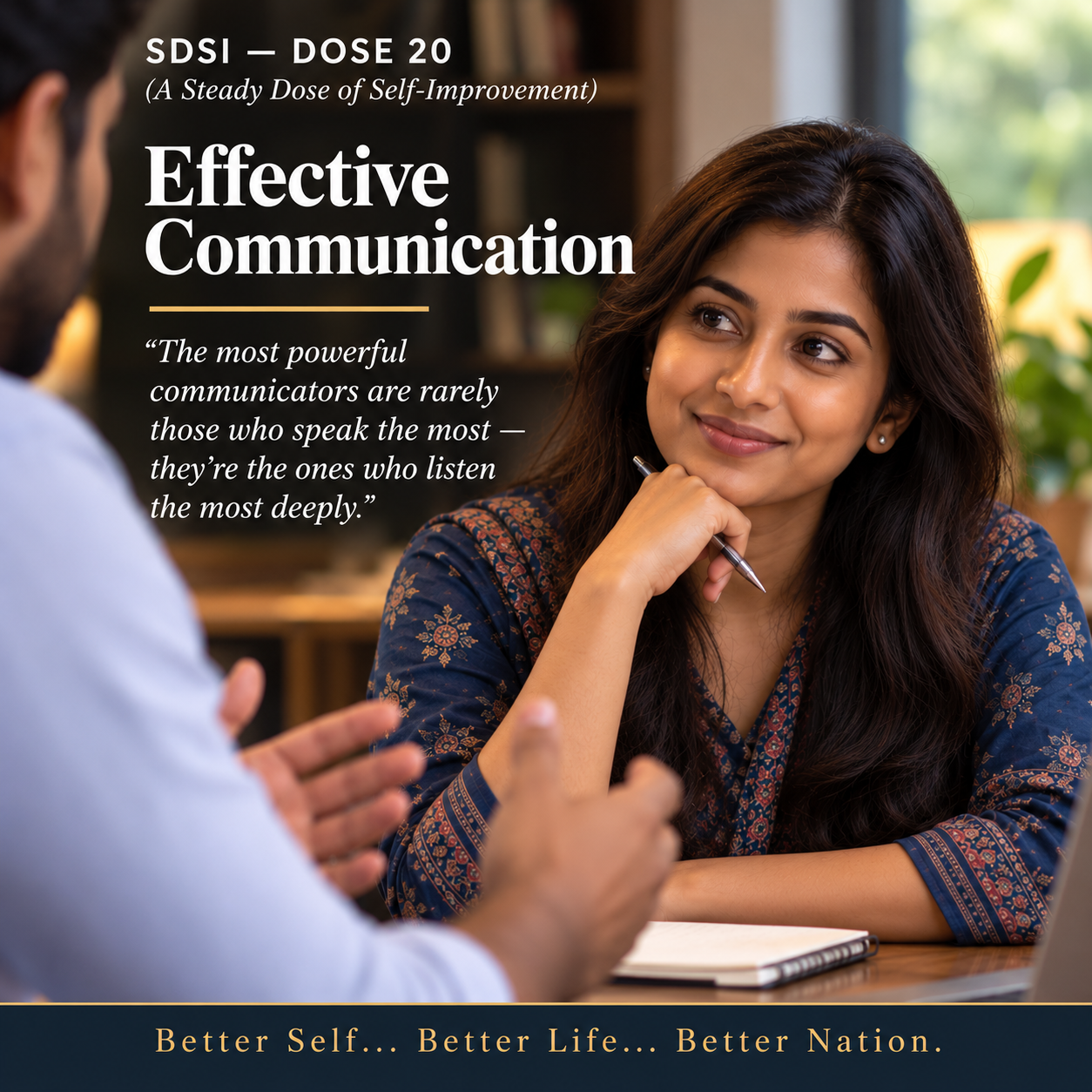
The most powerful communicators are rarely those who speak the most — they’re the ones who listen the most deeply.

Nelson Mandela’s greatest communication skill wasn’t his speeches. It was his listening.
Of all the skills in the Competence Framework, effective communication may be the most universally required. Every relationship you build, every idea you want to share, every conflict you hope to resolve depends on your ability to communicate clearly, honestly, and with genuine attention to the person on the other side of the conversation.
At its simplest, communication is the exchange of information. But effective communication is more specific: it’s communication that achieves its intended purpose — the message sent is the message received, understood, and responded to appropriately. That requires five elements working together: sender, message, channel, receiver, and feedback, all shaped by context and threatened by noise.
Nelson Mandela, who appears in several chapters of this book for good reason, was one of the most powerful communicators of the 20th century. What made him extraordinary wasn’t rhetorical brilliance alone, but the quality of his listening. He studied his opponents carefully, understood their perspectives before engaging them, and found language that could reach across divides rather than deepen them.
Oprah Winfrey built one of the most successful media empires in history largely on her capacity for active listening. In her interviews, she was famous for making her subjects feel genuinely heard, which led them to share more openly and authentically than they had with almost anyone else. She understood that the most powerful communicators are often not those who speak the most, but those who listen the most deeply.
Active listening means giving the speaker your full, undivided attention: no phone, no mental composing of your response while they’re still talking. After someone speaks, reflect back what you heard: ‘So what I’m hearing is…’ This simple practice dramatically reduces misunderstandings and signals that the other person has genuinely been heard — the precondition for any productive exchange.
Pause and Reflect
What is the biggest barrier to effective communication in your own life — and what would change if you removed it?
One Step Forward
In your next conversation, practice reflecting back what you heard before responding. Notice how it changes the exchange.
Explored in full in Chapter x — Effective Communication of A Holistic Approach to Self-Improvement.
Better Self… Better Life… Better Nation.

Posted on September 9, 2026, in Better Self... Better Life...Better Nation, Competence Framework, Effective Communication, Habit Scheme, Holistic Self-improvement, Personal Growth and Development, Self-Improvement, Value System and tagged Better Self... Better Life... Better Nation, Competence Framework, Effective Communication, Habit Scheme, Holistic Approach To Self-Improvement, Self-Improvement, Value System. Bookmark the permalink. Leave a comment.



Leave a comment
Comments 0