Category Archives: Self-Esteem
On Self-Doubt

“Our doubts are traitors, and make us lose the good
we oft might win, by fearing to attempt.”
– William Shakespeare
Lust, gluttony, greed, sloth, wrath, envy and pride are referred to in Christian teachings as the “seven deadly sins.” These, to the Roman Catholics, are the cardinal sins. If a person commits any of them, he is believed to be cut off from God’s grace.
Actually, the Bible does not specifically mention the concept “seven deadly sins.” But in Galatians 5: 16-19, fifteen acts of the sinful nature are identified – sexual immorality, impurity, debauchery, idolatry, witchcraft, hatred, discord, jealousy, fits of rage, selfish ambition, dissensions, factions, envy, drunkenness, and orgies. Perhaps St. Gregory the Great, during his reign as Pope (590 – 640 AD), wanting to be concise, shortened that long list of capital vices.
All Christian faithful are being called upon to not commit those acts of the flesh. St Paul said that believers are free but he implored them not to use their freedom to indulge the flesh. That, definitely, is easier said than done.
I think St. Paul (who wrote the Galatians) and St. Gregory may have overlooked another human frailty that should have been added in the list of sins. There exists another spiritual infirmity which I believe should be considered equally harmful as any of the deadly sins. It’s called self-doubt.
My proposition (that self-doubt be classified also as sin) may not be considered seriously. Many might even say it’s preposterous.
Is it?
Is self-doubt just an ordinary flaw in a person’s character? Is it really a bit too much to consider it a sin? Is it not a serious offense – something that when committed could ruin a person’s life?
Allow me to argue my assertion that self-doubt is a sin. For those who do not believe in the concept of religion, think of self-doubt not as a sin but an injury you inflict upon yourselves.
In this book, we will define self-doubt, strictly, as “the feeling of not having confidence in yourself or your abilities.” The concept of doubt being discussed here does not refer to that philosophical function “to cast doubt.”
The definition above (the one before the disambiguation) makes self-doubt sound harmless – not something immoral or demonic that would make the moralists and bible scholars (both past and present) look at it as a sin. That’s probably the reason no religious movement, Christianity included, classified such human inadequacy as a sin. You might also refuse to accept that it is an injury you inflict upon yourself.
Self-doubt, however, is not as simple as it seems. This impotence of the human spirit has grave consequences not only to the person having it but to the family where he belongs and to the society where he lives. A person plagued by it will be less-productive or not productive at all and is definitely not going to contribute anything for his family and society.
In arguing that self-doubt is a sin (or a self-inflicted injury) it is important to review the nature of sin in the philosophical standpoint.
“Sin is said to be a moral evil” (O’Neil, 1912). This brings us to another question – what is evil? St. Thomas defines the word (evil) as a privation of form or order or due measure. “Evil implies a deficiency in perfection.”
Self-doubt is clearly an imperfection. It indicates the absence of confidence which is considered essential for a person’s well-being and is a requirement in the pursuit of what Abraham Maslow refers to in Psychology as “self-actualization” or achieving one’s full potential. Sin is a diversion from the perceived ideal order of human living (Hyde, 2018). A person doubting his capabilities veers away from becoming the best that he can be and reduces his chance of living life to the fullest.
It could be argued that there are lot of other negative human characters that may indicate imperfections. But none is as damaging to the person as self-doubt. Something is wrong with a person if he lacks confidence and has very low (or no) feeling of self-worth. These are conditions that may lead to failure and unhappiness.
In addition, philosophical or moral sin is a human act not in agreement with rational nature and right reason. (Hyde, 2018).
It is not considered reasonable to doubt one’s capabilities. It is a person’s moral obligation to believe in himself. It is not right to think one would fail even without really trying. He needs to have faith not only in God (if he happens to believe in one) but also in himself.
Allowing self-doubt to reign is depriving the self of discovering one’s potentials. When a person decides to doubt himself, he eradicates his ability to fulfill his goals and to achieve his dreams.
Failures are indeed impossible not to happen. But even if one fails in several attempts to succeed he should decide not to stop trying. There’s a long list of famous personalities (like Albert Einstein, Abraham Lincoln, J.K. Rowling, Bill Gates, Walt Disney and Henry Ford) who had their share of failures but never gave up.
But is self-doubt a self-inflicted injury?
“Sin, also, wounds the nature of man.” This is what the Catholic religion assert.
“Self-doubt destroys the heart, mind, body and soul. It is one of the major obstacles to living the life that people truly deserve. This unhealthy food for the soul drags down a person’s spirit, crushes his ambitions, and prevents him from achieving all that he can (Thalk, 2013).
Doubt impedes a person’s development. It is the biggest roadblock to self-actualization. Self-doubt prevents people from becoming the best they could be, from realizing their full potentials, and from achieving their dreams. Shakespeare stressed, “Our doubts are traitors, and make us lose the good we oft might win, by fearing to attempt.” Doubt could possibly kill more dreams than failure ever did.
Some degree of self-doubt is generally held to be normal. It can be helpful in some cases, as it often leads to introspection and enhanced performance. But it may require medical help when it becomes debilitating, affects daily function, or impedes performance at work or school (Self-doubt, n.d.).
There’s no immorality committed when one doubts himself. Why should it be then considered a sin?
This brings me to the last among my arguments to convince you that self-doubt is a sin.
A sin may either be a sin of commission or a sin of omission. Sins of commission are sins we commit by doing something we shouldn’t do and sins of omission are sins we commit by not doing something (Sins of Commission vs Sins of Omission, 2015). The seven deadly sins are all sins of commission except sloth.
Sloth – extreme laziness or the failure to act and utilize one’s talents – is considered a sin of omission. I think self-doubt belongs to that category. If sloth made it to the list of the deadly sins, self-doubt should be there also.
“Self-doubt,” is just as damaging (perhaps more damaging) to a person than this sin called “sloth.” Actually, in some instances, a person’s failure to use his innate talents starts with his inability to believe what he is capable of doing.
I hope that the arguments I presented above about self-doubt are convincing enough that from this point on you would move as far away from it as possible.
Conquer your self-doubt and start to nurture self-belief which I think is the key component of the value system of the few men and women who scaled the heights of success.
References:
Hyde, J. (2018). The book of sin: How to Save the World, UK: Soul Rocks Books
O’Neil, A.C. (1912). Sin. In The Catholic Encyclopedia. New York: Robert Appleton Company. Retrieved October 24, 2020 from New Advent: http://www.newadvent.org/cathen/14004b.htm
Self-Doubt (n.d.). Retrieved from https://www.gootherapy.org/learn-about-therapy/issues/self-doubt/
Sins of commission vs sins of omission (2015) Retrieved from https://www.revelation.co/2015/07/21/sins-of-commission-vs-sins-of omission/
Thalk, C. (2013). Self-doubt destroys the heart, mind, body and soul. Retrieved from https://www.huffpost.com/entry/self-doubt_b_2960936
Human rights victimization and self-esteem of university students: Mediating effects of hope and moderating effects of human rights awareness
A research paper published in a Scopus-indexed journal

Human Rights Victimization and Self-esteem of University Students: Mediating Effect of Hope
and Moderating Effects of Human Rights Awareness
Massuline Antonio D. Ligaya & Chang Seek Lee
Indian Journal of Public Health Research & Development, Vol. 9, No. 9, September 2018, pp. 1138–1142
DOI: 10.5958/0976-5506.2018.01151.8
Research Summary
Human dignity lies at the heart of human rights, and violations of those rights can have important psychological consequences. Because self-esteem reflects an individual’s sense of self-worth and personal dignity, experiences of human rights victimization may undermine how people perceive and value themselves. This study examined the relationship between human rights victimization and self-esteem among university students in South Korea, while investigating two psychological and cognitive factors that might help explain or alter that relationship: hope and human rights awareness.
The study involved 233 university students selected through purposive sampling from universities located in Seosan City, Chungcheongnam Province, and Mokpo City, Jeonnam Province. The participants had a mean age of 22.6 years; 149 were female and 84 were male. Established instruments were used to measure human rights victimization, hope, human rights awareness, and self-esteem. The scales demonstrated acceptable to high internal reliability. Data were analyzed using SPSS and Hayes’ PROCESS macro, with bootstrapping employed to examine mediation and moderation effects.
Correlation analysis revealed that human rights victimization was significantly and negatively associated with self-esteem (r = −.452, p < .01), hope (r = −.324, p < .01), and human rights awareness (r = −.132, p < .05). In contrast, hope was strongly and positively related to self-esteem (r = .601, p < .01), suggesting that students with greater hope also tended to possess higher levels of self-esteem.
The mediation analysis provided further insight into this relationship. Human rights victimization had a significant negative effect on hope, while hope had a significant positive effect on self-esteem. Bootstrapping confirmed a significant indirect effect, demonstrating that hope mediated the relationship between human rights victimization and self-esteem. In other words, victimization was associated with diminished hope, which in turn was associated with lower self-esteem. Conversely, maintaining or strengthening hope may help protect an individual’s sense of self-worth in the face of adverse experiences.
The study also found that human rights awareness moderated the relationship between victimization and self-esteem. The interaction between human rights victimization and human rights awareness was statistically significant, indicating that the association between victimization and self-esteem varied according to students’ level of human rights awareness. This finding highlights awareness of one’s rights as an important factor in understanding how experiences of victimization relate to psychological well-being.
Taken together, the findings show that the consequences of human rights victimization cannot be understood solely through the direct relationship between victimization and self-esteem. Psychological resources such as hope and an individual’s awareness of human rights form part of a more complex process through which experiences of victimization are associated with self-perception and well-being. The study therefore points toward educational and institutional interventions that strengthen students’ hope, awareness of their rights, and capacity to respond constructively when those rights are violated.
Research Contribution
The study contributes to the literature on human rights and psychological well-being by moving beyond a simple victimization–self-esteem relationship and examining both a mediating and a moderating mechanism. By identifying hope as a mediator and human rights awareness as a moderator, it offers a more nuanced account of the factors associated with university students’ self-esteem following experiences of human rights victimization. The findings also provide a basis for universities to consider human rights education and hope-enhancing interventions as complementary approaches to supporting students’ psychological well-being.
Keywords: human rights, human rights victimization, human rights awareness, self-esteem, hope, university students, mediation, moderation
Full Text
The full text of this publication is available upon request. Researchers, educators, students, and other interested readers who wish to obtain a copy may contact the author through this website or by email at madligaya@gmail.com.
SELF DOUBT: The Unknown Sin
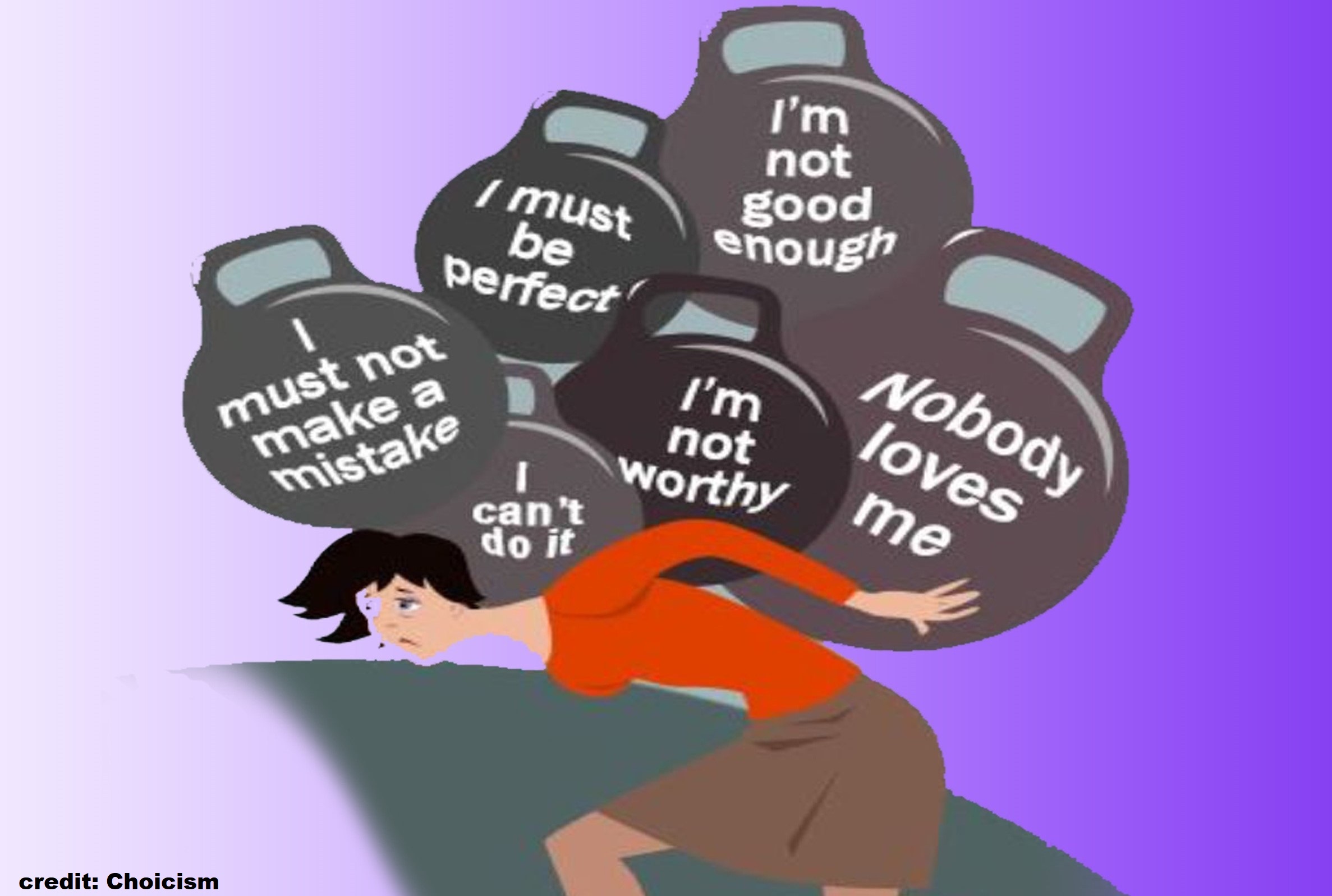
Lust, gluttony, greed, sloth, wrath, envy and pride are referred to in Christian teachings as the “seven deadly sins.” These, to the Roman Catholics, are the cardinal sins. If a person commits any of them, he is believed to be cut off from God’s grace.1
Actually, the Bible does not specifically mention the concept “seven deadly sins.” But in Galatians 5: 16-19, fifteen acts of the sinful nature are identified – sexual immorality, impurity, debauchery, idolatry, witchcraft, hatred, discord, jealousy, fits of rage, selfish ambition, dissensions, factions, envy, drunkenness, and orgies. Perhaps St. Gregory the Great, during his reign as Pope (590 – 640 AD), wanting to be concise, shortened that long list of capital vices.
All Christian faithful are being called upon to not commit those acts of the flesh. St Paul said that believers are free but he implored them not to use their freedom to indulge the flesh. That, definitely, is easier said than done.
I think St. Paul (who wrote the Galatians) and St. Gregory may have overlooked another human frailty that should have been added in the list of sins. There exists another spiritual infirmity which I believe should be considered equally harmful as any of the deadly sins. It’s called self-doubt.
My proposition (that self-doubt be classified also as sin) may not be considered seriously. Many might even say it’s absurd.
Is it?
Is self-doubt just an ordinary flaw in a person’s character? Is it really a bit too much to consider it a sin? Is it not a serious offense – something that when committed could ruin a person’s life?
Allow me to argue my assertion that self-doubt is a sin.
For the purpose of this essay, we will define self-doubt, strictly, as “the feeling of not having confidence in yourself or your abilities.”2 The DOUBT being discussed here does not refer to that philosophical function “to cast doubt.”3
The definition above (the one before the disambiguation) makes self-doubt sound harmless – not something immoral or demonic that would make the moralists and bible scholars (both past and present) look at it as a sin. That’s probably the reason no religious movement, Christianity included, classified such human inadequacy as a sin.
Self-doubt, however, is not as simple as it seems. This impotence of the human spirit has grave consequences not only to the person having it but to the family where he belongs and to the society where he lives. A person plagued by it will be less-productive or not productive at all and is definitely not going to contribute anything for his family and society.
In arguing that self-doubt is a sin it is important to review the nature of sin in the philosophical standpoint.
Sin is said to be a moral evil.4 This brings us to another question – what is evil? St. Thomas defines the word (evil) as a privation of form or order or due measure. Evil implies a deficiency in perfection.4
Self-doubt is clearly an imperfection. It indicates the absence of confidence which is considered essential for a person’s well-being and is a requirement in the pursuit of what Abraham Maslow refers to in Psychology as “self-actualization” or achieving one’s full potential. Sin is a diversion from the perceived ideal order of human living.5 A person doubting his capabilities veers away from becoming the best that he can be and reduces his chance of living life to the fullest.
It could be argued that there are lot of other negative human characters that may indicate imperfections. But none is as damaging to the person as self-doubt. Something is wrong with a person if he lacks confidence and has very low (or no) feeling of self-worth. These are conditions that may lead to failure and unhappiness.
In addition, philosophical or moral sin is a human act not in agreement with rational nature and right reason.5
It is an offense against reason, truth, and right conscience. 6 It is unreasonable to doubt one’s capabilities. It is a person’s moral obligation to believe in himself. It is not right to think one would fail even without really trying. He needs to have faith not only in God (if he happens to believe in one) but also in himself.
Allowing self-doubt to reign is depriving the self of discovering one’s potentials. When a person decides to doubt himself, he eradicates his ability to fulfill his goals and to achieve his dreams.
Failures are indeed impossible not to happen. But even if one fails in several attempts to succeed he should decide not to stop trying. There’s a long list of famous personalities (like Albert Einstein, Abraham Lincoln, J.K. Rowling, Bill Gates, Walt Disney and Henry Ford) who had their share of failures but never gave up.
Sin, also, wounds the nature of man.6
Thalk emphasizes that self-doubt destroys the heart, mind, body and soul. It is one of the major obstacles to living the life that people truly deserve. This unhealthy food for the soul drags down a person’s spirit, crushes his ambitions, and prevents him from achieving all that he can.7
Doubt impedes a person’s development. It is the biggest roadblock to self-actualization. Self-doubt prevents people from becoming the best they could be, from realizing their full potentials, and from achieving their dreams. Shakespeare stressed, “Our doubts are traitors, and make us lose the good we oft might win, by fearing to attempt.” Suzy Kassem added that doubt kills more dreams than failure ever did.
Some degree of self-doubt is generally held to be normal. It can be helpful in some cases, as it often leads to introspection and enhanced performance. But it may require medical help when it becomes debilitating, affects daily function, or impedes performance at work or school.8
There’s no immorality committed when one doubts himself. Why should it be then considered a sin?
This brings me to the last among my arguments to convince you that self-doubt is a sin.
A sin may either be a sin of commission or a sin of omission. Sins of commission are sins we commit by doing something we shouldn’t do and sins of omission are sins we commit by not doing something.9 The seven deadly sins are all sins of commission except sloth.
Sloth, which is excessive laziness or the failure to act and utilize one’s talents,10 is considered a sin of omission. I think self-doubt belongs to that category. If sloth made it to the list of the deadly sins, self-doubt should be there also.
“Self-doubt,” is just as damaging (perhaps more damaging) to a person than this sin called “sloth.” Actually, in some instances, a person’s failure to use his innate talents starts with his inability to believe what he is capable of thinking.
*****
In overcoming self-doubt, it is important that a person traces the root causes. He should know what factors trigger his self-doubts and learn how to overcome them. If it is lack of knowledge and skills then he must exert efforts to learn and acquire those that he perceives he lacks. There is a possibility that the ones causing him to doubt himself and his capabilities are people… sometimes his own friends. Then by all means avoid them. Equally important it that he must surround himself with people who bring the best in him.
It may be easier said than done but it is important that a person maintains a positive outlook and thinks that there is nothing he cannot achieve or do if he wills it.
———-
References:
- http://www.deadlysins.com
- http://www.macmillandictionary.com/dictionary/british/self-doubt
- http://rebirthofreason.com/Articles/Rowlands/Philosophy_as_Doubt.shtml
- http://www.newadvent.org/cathen/14004b.htm
- https://en.wikipedia.org
- http://www.vatican.va/archive/ccc_ccs/archive/cathecism/p3s1c1a8.htm
- http://www.huffingtonpost.com/dr-cynthia-thaik/self-doubt_b_2960936.html
- http://www.goodtherapy.org/learn-about-therapy/issues/self-doubt
- http://www.revelation.co/2015/07/21/sins-of-commission-vs-sins-of-ommission
- http://www.bibleinfo.com/en/questions/what-are-seven-deadly-sins
Human Rights Victimization and Self-esteem of University Students: Mediating Effect of Hope and Moderating Effect of Human Rights Awareness
 Abstract
This study focused on human rights victimization among university students and how it affects their self-esteem. It also examined the mediating effects of hope and the moderating effects of human rights awareness in the relationship between human rights victimization and self-esteem. 223 university students, chosen through purposive sampling, participated in the study. Human rights victimization did not significantly affect self-esteem (β = .6052, p>.05) and also had a statistically significant negative effect on the mediating variable – hope (β = -. 2413, p <.01). Hope, on the other hand, had a statistically significant positive effect on self-esteem (β = .5307, p<.001). Therefore, hope mediates the relationship between human rights victimization and self-esteem. The moderator – human rights awareness – had a statistically positive effect on self-esteem (β=.5683, p<.01), but the interaction variable (human right victimization x human rights awareness) had a statistically significant negative effect on self-esteem (β = -. 2479, p <.01) meaning human right awareness moderates the relationship between human rights victimization and self-esteem.
Full Text in PDF form:


SELFIE (Playing With Words)

“Language is a wine upon the lips.”
I am so drunk with words that I could not recall the one who said the foregoing beauty.
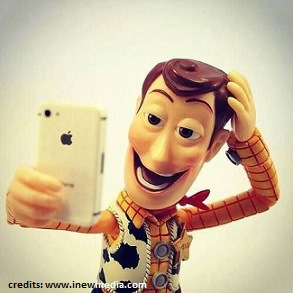
So, let’s just drink to SELFIE, till drunkenness do us part. Better yet, let’s play with the word SELFIE with wild abandon. Let’s take a shot, not of ourselves as what we do in SELFIE but let’s take a shot at the word SELFIE itself.
SELFIE can also be spelled as SELFY. But people are more familiar with the variant SELFIE.
FYI, the term SELFIE is not new at all. The word was minted by Jim Krause in 2005. The Wikipedia explains that “a SELFIE is a genre of self-portrait photograph, typically taken with a hand-held digital camera or camera phone.” Generally, self-portraiture dates back to ancient times.
Now, let’s frolic in the playground of language. Let’s play with the word SELFIE. Let’s see what derivatives can we squeeze out of it.
- SELFIENATIC – a person who loves to take his self-portrait photos
- SELFIEISM – the desire to take one’s self-portrait photos
- SELFIEDOM – the sense of satisfaction a person feels after taking self-portrait photos
- SELFIESTIC – describes an artistically-taken self-portrait photo
- SELFIEGENIC – looking attractive in selfies
- SELFIESTICATED – looking elegant in selfies
There are new fields of studies born out of SELFIE namely SELFIEGRAPHY and SELFIETHERAPY. The former is the art of taking self-portrait photos and the latter is the process of eradicating stress by taking self-portrait photos.
Now, if you try to convince other people to try SELFIGRAPHY then SELFINIZE them.
So, if you intend to join the SELFIENATICS, if suddenly you develop SEFIEISM then you will have to undergo SELFINIZATION…the process of initiating oneself into SELFIEGRAPHY.
If ever a person has never taken even just a single self-portrait photo, then he is SELFIELESS.
If a person looks negatively at SELFIE or they have fear of self-portrait photographs then they may be suffering from SELFIETY.
Those people who are courageous in taking self-portrait photos and have fun doing it can be said to have high SELFIESTEEM.
Neither the people SELFIETYING nor those who have high SELFIESTEEM deserve condemnation. As the saying goes…”To each his own.”
To SELFIE or not to SELFIE is a personal call. If there are people who desire not to take their self-portrait photographs, that is within the bounds of their personal freedom. Conversely, those people who are having fun taking self-portrait photos be allowed to express themselves in a manner they see fit. But citizens of SELFIELANDIA need to exercise discretion. They must bear in mind the existing ethical standards.
For the uninitiated, there is an 11th commandment: “Thou shall not commit SELFIETY.”
Come on! Take a SIP (self-inflicted photograph)! Check your SELFIESTEEM.
Citizens of SELFIELANDIA, who may also be referred to as SELFIETIANS, do not forget the 12th commandment: “Thous shall not rest until the whole world is SELFIENIZED..
_________
It takes two to tango
Only one to selfie
There is no place for two
The frames are just for me

Sources of the Images: blog.inonit.in, mobilephotographyblog.com