Adaptive Mindset
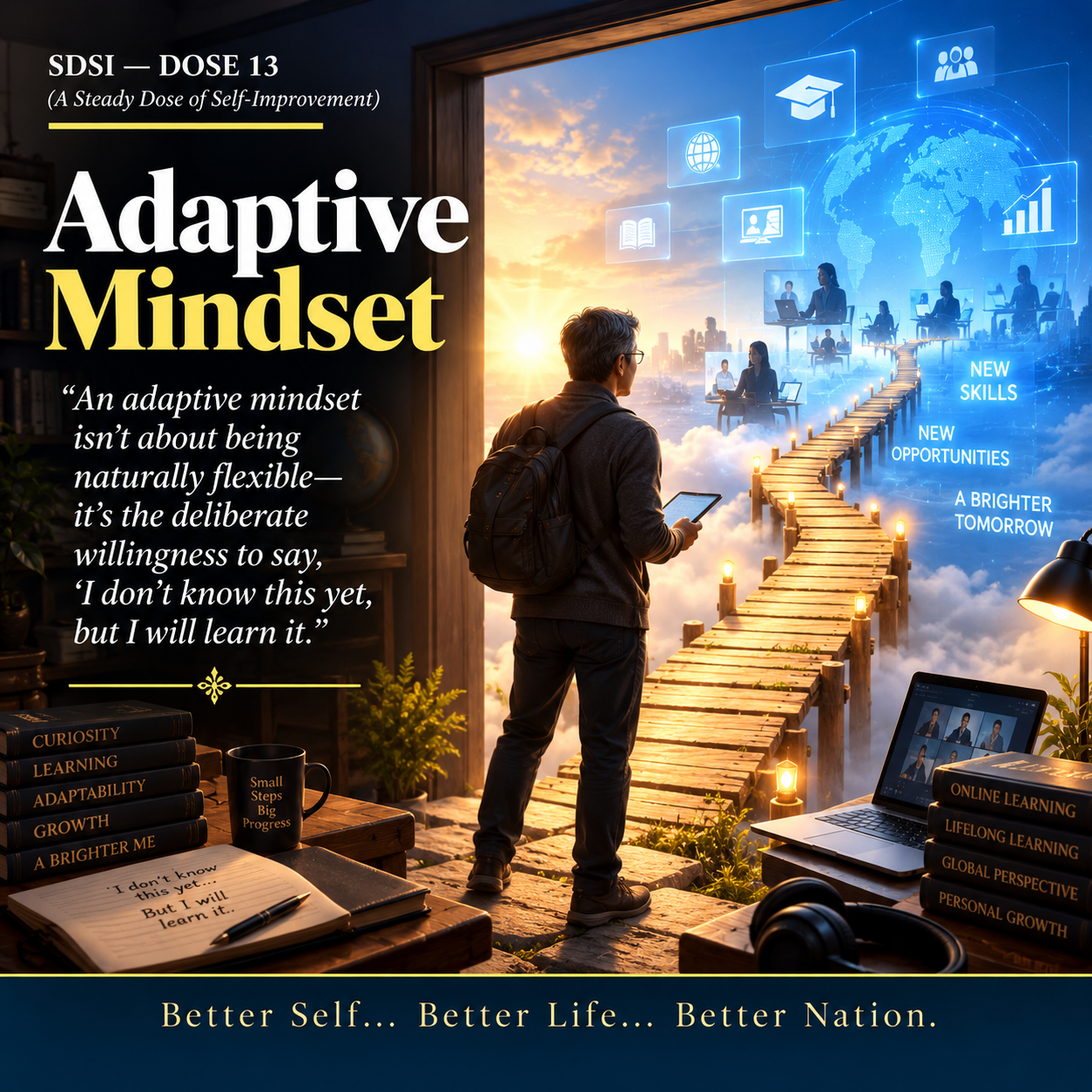
An adaptive mindset isn’t about being naturally flexible — it’s the deliberate willingness to say,
“I don’t know this yet, but I will learn it.”

When my university announced all classes were going online overnight, I had one problem: I’d never taught online in my life.
When my university announced, with almost no warning, that all classes would move online indefinitely, I was immediately aware of my limitation: I had never taught a single minute online in my career. I am not naturally tech-savvy. The shift felt like being asked to play an entirely different game with rules I did not know.
But I knew I had to adapt, or perish professionally. So I attended every training session offered. I learned the university’s E-Class platform. I mastered video conferencing software I’d never touched before. I began producing lecture videos for my students. Within weeks, I had not only adapted — I’d found new ways to engage students that I’d never explored in a traditional classroom.
Some of my colleagues could not make that same adjustment. Rather than continue struggling in an environment that had changed beyond their comfort, several chose to resign. The difference between us was not technical ability. It was mindset. The willingness to say: I do not know this yet — but I will learn it. That is an adaptive mindset in action.
Charles Darwin’s theory of adaptation offers the clearest parallel: species that adapt to changing conditions survive; those that cannot, perish. The same principle governs human beings in a rapidly changing world. Satya Nadella took over a Microsoft many considered to be losing its edge, and rather than defend the old way of doing things, replaced a culture of “know-it-alls” with a culture of “learn-it-alls” — growing the company’s value from $300 billion to over $2 trillion.
Your mindset is not fixed. The default responses you rely on were programmed over years by family, culture, and experience — and they can be reprogrammed with awareness and deliberate practice. Build self-awareness through daily reflection. Name your negative inclinations specifically, so they lose their power to operate invisibly. And seek out discomfort on purpose — an adaptive mindset is built in friction, not in comfort.
Pause and Reflect
What’s one skill you’ve been avoiding learning, telling yourself it’s simply “not who you are”?
One Step Forward
Name one negative reflex you have under pressure. Write down the adaptive response you’ll try the next time it happens.
Explored more fully in Part 2 — Section I — Chapter 6, “Proper Perspective,” of A Holistic Approach to Self-Improvement.
Better Self… Better Life… Better Nation.

Posted on August 26, 2026, in Adapative Mindset, Better Self... Better Life...Better Nation, Competence Framework, Habit Scheme, Holistic Self-improvement, Mindset, Personal Growth and Development, Self-Improvement, Value System and tagged Adaptive Mindset, Better Self... Better Life... Better Nation., Competence Framework, Habit Scheme, Holistic Self-improvement, Mindset, Personal Growth and Development, Self-Improvement, Value System. Bookmark the permalink. Leave a comment.



Leave a comment
Comments 0