Blog Archives
South Korea: In the Eyes of an Expatriate (3)
(Last of 3 parts)

I really tried hard to figure out what happened. What went wrong for my country and conversely, what did the South Koreans do correctly? To think that in the 1950s, while my country was soaking in the glory of being Asia’s second strongest economy, the Korean peninsula plunged into a devastating war.
I tried to probe deeper into this nation’s history to find the answer to the following questions: 1. How were the South Koreans able to slay the ghosts of a bitter colonial past?; 2. How did they survive the devastation wrought by the Korean war?; and 3. How did they triumph over internal political turmoil while at the same trying to ward off a belligerent neighbor in North Korea?
How were the South Koreans able to accomplish all of the aforementioned then eventually catapult themselves to their current lofty position in the global community?
Then I found out what the South Koreans did in 1998 at the height of the Asian financial crisis. They willingly donated their gold – jewelry (including their personal wedding rings), medals and trophies, good luck keys, and what have you. This they did to save their economy during that crisis. The collective weight of the gold they donated may not be that much. But more significant than the corresponding monetary value of their donation was the willingness of the South Koreans to make a personal sacrifice for their country. I call that nationalism. If it’s not then I don’t know what is. It is the same sense of nationalism that emboldened them to resist one military junta after another… to sacrifice their lives and limbs to lay the democratic foundations of this country which eventually became a fertile ground that nurtured the economic prosperity they are currently enjoying.
I also learned about the collectivist culture of these people. They think first of the general welfare over and above their personal interests. This I witnessed first-hand when I saw how the South Koreans willingly obeyed the restrictions set by their government during the early onslaught of Covid-19. There was no need for their leaders to implement a “hard lockdown,” the way other countries did, including mine. The citizens just strictly wore their masks, observe social distancing, and avoided leaving their homes unless it was necessary. They are willing to sacrifice for the greater good.
I think I found the answer to what enabled the South Koreans to attain prosperity and stability – the combination of their nationalism and collectivist culture. I may be wrong but I could not really see any other possible reasons for their success as a nation. There is nothing more potent of a mix for nation-building than the combination of the two. And if they keep using this formula, the future of this nation is secured.
Other expatriates living in this country may not see things here the way I am seeing them. To them the observations I made may not be a big deal. To me, given the situation in my country now, they are.
If only my countrymen would consider including the South Korean model of nationalism and collectivism among the things from this country that we allow ourselves to be influenced by. We should try to find out if we could also propel our own native land to greatness if we would try to emulate the way South Koreans profess their love for their country. We need to see if we could also make our country better if like them we would put the greater good over and above our personal interests.
We copied hook line and sinker (Or was it forced down our throats?) the socio-political and economic models of our colonizers and we are not getting desirable results. Obviously, our needle of success as a nation is barely moving. We have been trying to fit our colonizers’ square peg into our round hole. It’s not working. It’s time for us to rethink our strategies for nation building. Why don’t we try the South Korean model? Let’s see what will happen if we embrace, not only K-dramas, K-pop, and kimchi but also the values that brought the South Koreans to where they are now.
South Korea: In the Eyes of an Expatriate (2)
(2nd of 3 parts)

I started mingling with real Korean people – real men and women and not fictional characters. I dined with them, drank their wine and beer, ate their kimchi and their delicious dishes, and spoke (a little) of their language.
I witnessed their way of life and even adopted some parts of it. I saw what’s inside their houses, their theatres, their bars, restaurants, and coffee shops. I have entered their museums, strolled in their parks, and hiked in their mountains.
Through daily encounters with my Korean students, colleagues, and friends, I was also able to probe into their character. I confirmed that just like what I saw in their dramas, South Koreans fall in love, get angry, feel sad and happy, and suffer from anxiety and stress. In short, just like me or any average human being from any part of the world, they also ride the roller coaster of emotions. They do have strengths and weaknesses too. They are not faultless… like me. Anyway, nobody is. They also have fears and uncertainties. But just like me and anyone else, they have dreams and ambitions. They have plans and a vision of a good life in the future for themselves and their families.
I discovered more. I found out that their prosperity is not a myth. Those things I saw in Korean dramas and movies that indicate how progressive and modernized their country is are not fictitious. Their provinces, cities, and towns are effectively interconnected by impressive highway systems that how I wish we could also have in my country of origin. How I wish that our telecom companies could provide us with internet connectivity as fast as South Korea’s.
With everything that I have seen and experienced, I could not help but compare this country to mine. I could not help but be envious of the South Koreans for what they have accomplished as a nation. As I stayed here longer, my “How I wish!” list grew longer. How I wish that in my country, packages could be left in front of our doors, even for days, not fearing that somebody would steal them. How I wish we could also send to prison our politicians who would be found guilty of wrongdoings without fearing that when a political ally would become the next president they would be granted a pardon. How I wish we would take research as seriously and meticulously as the Koreans do.
Whatever metrics I used for the comparison, it was a mismatch with this country always ending up on top after all the comparative analyses I performed except for this – my country has a younger population where the median age is less than 26 years. For this country, it’s more than 40 years. I will no longer be citing other statistics like those of life expectancy, GDP, and international ranking of universities. South Korea’s numbers are far more superior to my country’s.
In addition, South Korean students perform better in Math and Science as compared to the youth of my country. If there is any consolation though, I and my countrymen scored higher in English proficiency.
But does it matter if we in our country are better at English? Does it make my country better than South Korea? The answer is obvious – NO. There is no direct correlation between a country’s English proficiency and its economic performance. If there is, then why does this country, as of 2021, rank as the world’s 10th biggest economy while mine barely made it to the list of newly-industrialized countries?
Don’t get me wrong, I am not putting my country down while I am seemingly extolling South Korea. I love the country where I was born and I am proud to be its citizen. I am just wondering how come this country has gone this far leaving my native land way behind in the race to prosperity and stability.
My desire to figure that out led me to read more about the history of this country. In the process, I discovered certain uncanny similarities between our historical experiences. Both South Korea and my native land are colonized nations and earned independence after the second world war. Both countries embraced the democratic form of government thereafter. Additionally, just like in my country, the development of democracy here in South Korea was interrupted by military takeovers, and what a coincidence that martial law in our countries was declared both in 1972. Was it also a coincidence that powerful military leaders in both countries were removed via popular revolt in the mid 1980s?
Unfortunately, the similarities in the historical development of this nation and mine stop there. We took different paths in building our nations from the ashes of colonization, the second world war, and military juntas.
South Korea: In the Eyes of an Expatriate (1)
(1st of 3 parts)
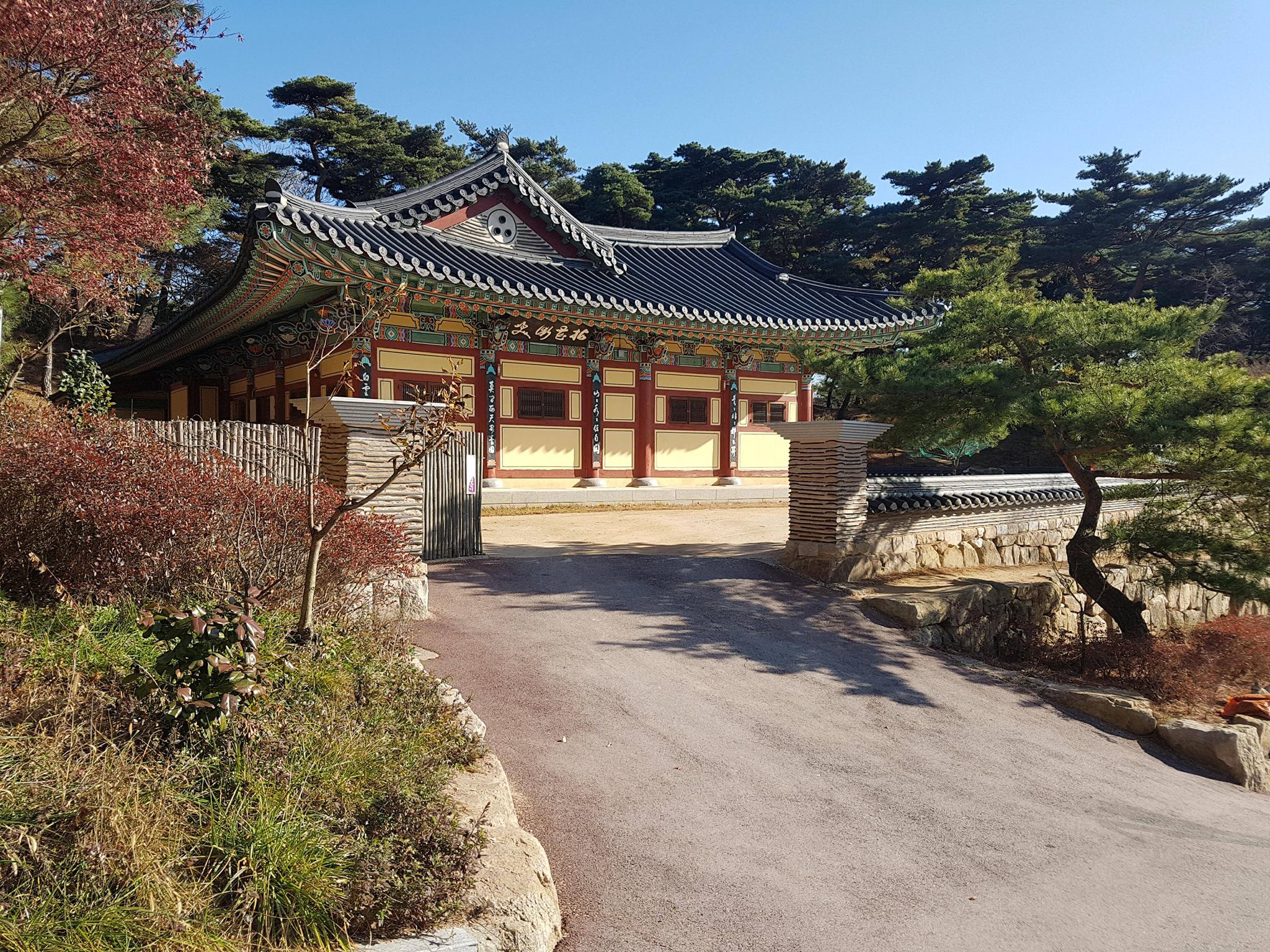
South Korea entered my consciousness through Hallyu – a term that when translated to English means Korean Wave. And yes, when that cultural wave reached our shores, South Korean dramas, movies, and music drowned the country’s airwaves. Local magazines and the entertainment sections of newspapers regularly featured K-pop artists and other Korean TV and movie personalities. Before long, other aspects of Korean culture – food, fashion, lifestyle, and what have you – started to deeply influence me and my countrymen.
Before the Korean Wave came, I knew not much about South Korea. I remember checking the encyclopedia for information about the Korean war when I took World History when I was a college student. It was only then that I found out that my country was one of those which sent troops to help this country to ward off the Communist invasion from north of its borders.
Just imagine how dreadful a picture of the war-torn Korean peninsula the things that I read created in my mind. It was horrible, to say the least. The death and destruction were too much to bear.
But before I graduated, I had another chance to check the encyclopedia for more information about South Korea when the country hosted the 1988 Summer Olympics. Because of the said sporting event, South Korea was all over the news. That triggered my curiosity thus I checked the encyclopedia to once again read something about the said nation.
I saw a country different from what those pages about the Korean war presented to me. I found out that the nation called “Land of the Morning Calm” rebounded from the horrors of the Korean war and eventually became very progressive. Then I wondered at that time and asked – “What did the South Koreans do that enabled them to, like the legendary Phoenix, rise from the ashes of a horrendous war at that time and even became only the second country in Asia to host the world’s biggest sporting event?”
As years passed, I learned more and more about South Korea, not only through traditional media but more from the Internet (which became more accessible than when I was in college). I got to see more and more Korean dramas. It made me, just like many of my countrymen, want to visit the country so bad. I wanted to visit the places in the country that I got to see only on TV programs and movies. I wanted to try soju and maekju and when the two are combined – somaek. I wanted to taste kimchi and eat Korean dishes prepared and served by Koreans. I wanted to try bibimbap, pyo haejangguk, and kalguksu served with plenty of banchan in a restaurant in South Korea, not in a Korean restaurant in my native land. I wanted to meet real Korean people. In short, I wanted to have an authentic Korean experience. I personally call that my “Korean dream.”
That urge became stronger when I enrolled in the program Teaching English to Speakers of Other Languages (TESOL). South Korea was mentioned by the program coordinator as one of the countries considered as premiere destination for ESL teachers. Thus, since teaching overseas is an option in the career path I set for myself, I thought that if I would teach abroad, why not in South Korea? My “Korea dream” suddenly expanded – I no longer just wanted to have an authentic Korean cultural experience but to live and work in this country.
Then I did what I had to do for that “Korean dream” to come true. I left no stone unturned.
My persistence and hard work eventually paid off. My wish was granted. I was given the opportunity to live that dream when a university hired me as a teacher. So, off to South Korea, I flew.
As soon as I exited Gimhae Airport, I started having that authentic Korean experience. The early spring weather giving me an icy cold welcome got it going.
As days and weeks passed, I gradually immersed myself into the country’s culture. I was no longer just watching the people of this land from the television set, the silver screen, and the World Wide Web. It’s no longer a Korean drama I was watching but it’s real Korean life I was experiencing… from reel to real. I got what I wanted.
Examining South Korea’s Rise to Global Prominence: The Role of Collectivism and Nationalism
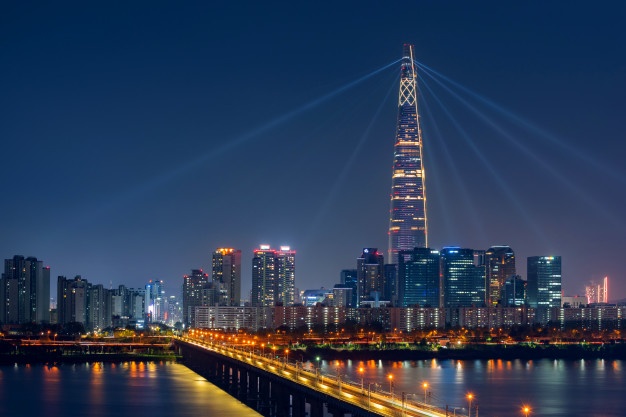
The way South Korea handled the COVID-19 pandemic has given the world a blueprint on how to effectively manage the health crisis. When the coronavirus started to wreak havoc and affected countries desperately sought for ways to battle the deadly contagion, this nation straddling the southern part of the Korean peninsula gave them hope. They were not disappointed. South Korea led the way and generously shared to the world what they have been doing to successfully contain the pathogen.
It was ironic that the most powerful countries in the world – the US, China, and some European nations – with all their wealth and advance technologies, were rendered helpless by the coronavirus especially during the early stages of the pandemic. That was the time when the world badly needed a leader to lead the fight against the deadly virus. South Korea courageously stepped up to the plate. Suddenly, the global spotlight focused on this nation and its people. Citizens of different countries from the different continents of the world seeking to restore tranquility back into their lives looked to the direction of the “land of the morning calm.”
The world is well aware of South Korea’s gradual rise to prominence. News about success spreads fast like a wildfire. It has been drawing more global attention amidst the current pandemic. This country’s economic success is well-documented. How it rebounded from the severity of the Asian financial crisis of 1997-98 to become one of the 15 top economies of the world today is by no means a small feat. How it has been dealing successfully with the coronavirus when the supposedly more powerful and more progressive nations continue to suffer from its onslaught is a fact that is hard to ignore. These achievements, altogether, have seemingly established South Korea as an emerging world leader.
How South Korea catapulted into its current lofty position in the global community is something to marvel at. It made many wonder how this nation survived despite being haunted by the ghosts of a bitter colonial past, ravaged by the destructive Korean war, hampered by the political turmoil of the ‘60s and ‘70s, and pestered almost endlessly by a belligerent neighbor in North Korea.
Perhaps, as important as learning the way the South Koreans successfully reined the coronavirus is understanding how the people of this nation emerged from the ashes of Japanese colonialism, the Korean war and the political uncertainties that followed, the Asian economic crisis, and the constant threats from north of the peninsula to become a prominent member of the community of nations that it is now. The essential question that must be answered is – “How did this nation, like the mythical phoenix, rise from the ashes?”
That question needs to be answered so the world will have a better understanding why the South Koreans are succeeding not only in containing the coronavirus but in their endeavors as a nation in general. Answering that question should not be construed as an effort to extol the virtues of these people but rather to determine what factors have contributed to their gradual rise to global prominence. The answers being sought would not only divulge their framework for success but also reveal more about their traits which will help other nationalities in fostering a better relationship with them.
Finding the answers to the said question would require more than just scrutinizing the political and economic policies implemented by the South Korean government. Not that it is inappropriate to attribute the success of a nation to the statutes and strategies formulated and executed by its leaders. But focusing on the said areas is like giving credit for the nation’s success only to the elected leaders forgetting about the ones who wrote their names (the leaders’) in the ballot, the ones who granted them the mandate to lead – the citizens.
When South Korea generously shared all the information they gathered and the systems they developed to battle the coronavirus, countries focused only on the protocols, methods, and whatever medical kits and equipment this nation provided. They credited South Korean authorities for a job well done. They forgot about one very important factor that made South Korea’s efforts to curb COVID-19 infections succeed – the cooperation of its citizens.
No matter how effective are the policies and guidelines the South Korean government would implement, they wouldn’t work without the cooperation of the people. No matter how great are the leaders of a country, it would be useless without the support of an unselfish citizenry willing to sacrifice for the collective good. There could be no stronger pillar for nation-building than the combination of good leadership and the collectivist mindset of its citizens.
The willingness of South Koreans to set aside personal motives for the best interest of the many is considered as one of their best traits. They are concerned with the welfare of their community as a whole. Theirs is a collectivist culture that make them think first of the general welfare over and above their personal interests. They put the collective good of their society over their individual rights.
As it has always been, the success of any national endeavor or even just simple community programs hinged on the willingness of the citizens to support their leaders and contribute whatever they could (and should) for the undertakings. Cooperation is very crucial most especially in dire situations such as during a pandemic. The only thing that was required of the South Koreans when the current health crisis was at its worst in this country was their cooperation. The world was surprised that despite the fact that the country was churning scary numbers of daily infections during the months of March and April (2020), it did not implement a “hard lockdown” the way other countries did. The citizens were asked to just strictly observe social distancing and not venture out of their homes unless it’s very necessary. Those things were not difficult for the South Koreans to do.
While citizens and their leaders in the Western world and other parts of the world were fiercely debating the efficiency of wearing face masks, the South Koreans religiously wore them not only to protect themselves but also in consideration of other people who might be infected in the event that they are just asymptomatic or already unknowingly carrying the virus. That’s the kind of mindset they have.
Wearing masks, maintaining personal hygiene, and social distancing are, for South Koreans, simple sacrifices. They made greater sacrifices in the past that would make following those health protocols set by their government pale in comparison and not really a big deal. Following such orders was nothing when compared to what the South Koreans did in early 1998 when they willingly donated their gold – wedding rings, jewelry, medals and trophies, gold luck keys and what have you – to save their economy that was then in trouble. More significant than the collective weight of the gold they donated and the corresponding monetary value was the willingness of the citizens of this nation to make personal sacrifices for their country’s sake.
That is more than just being collectivistic. That is another trait the South Koreans have that helped them gradually rise to global prominence. That’s the other “ism,” aside from “collectivism,” that has propelled their progress and development – “nationalism.”
It is not only the discomfort that wearing face masks creates and the loneliness that social distancing brings that they are willing to bear for the good of everybody. It is not only their material possession – gold – that they are willing to sacrifice for the sake of their country. Even their own lives and liberty. South Korea is enjoying a vibrant democracy now because of its citizens who bravely resisted for years one military junta after another. They did not cease fighting until the last vestiges of authoritarian rule were eliminated. Their martyrs sacrificed their lives and limbs to lay the democratic foundations of their society which became a fertile ground that nurtured their economic prosperity.
Undoubtedly, what allowed the South Koreans to overcome the trauma caused by the Japanese occupation and the Korean war was their strong sense of national pride. They did not allow those harrowing experiences to dampen their spirits as a nation and neither would they allow the ongoing COVID-19 crisis to hamper the progress and prosperity which they worked so hard to achieve.
South Korea’s brand of nationalism has been criticized for being more raced-based rather than state-based. But the performance of South Korea in the international arena is a clear indication that whatever doctrine of nationalism they have embraced is working for them as a nation.
Aside from their model of nationalism, critics have something to say also about collectivism in South Korea. They argued that this nation’s collectivistic culture is a hindrance to the productivity and creativity of their nationals.
Is that so?
Speaking of productivity – Apple’s competition for the title of top smartphone seller is Samsung. South Korea is one of the world’s leading exporters of, among other things, electrical and electronic machinery, equipment, and gadgets (including smartphones and computers).
What about creativity?
The Korean Wave (Hallyu), lest the world forget, is used in reference to the global popularity of South Korea’s cultural economy. The country exports not only electrical and electronics products but also pop culture – music, movies, and TV dramas.
So, how credible are the criticisms hurled against South Korean’s brand of collectivism and nationalism?
Here is the answer: South Korea is currently the 12th largest economy in the world – an indication that their versions of collectivism and nationalism are what exactly the South Koreans need to exorcise the demons of a bitter colonial past and the bloody Korean war and to overcome the political and economic crises that hit them. Their way of loving their country and putting the welfare of their society over personal interests is probably what led them to economic prosperity and why they are efficient in implementing measures to curb the spread of the dreaded coronavirus.
It’s hard to argue with success. Therefore, despite all the criticisms, the South Koreans should keep their collectivism and nationalism shine more brightly. They need to strengthen these traits but at the same time they should try to evaluate (and correct) if they have negative effects that may adversely affect them as a nation in the long run and their relationship with the rest of the world.
What should be considered as the two most important items in the list of products the South Koreans are exporting are not any of their electrical and electronics products… not their music and dramas… not even their much sought-after beauty products – but their brand of collectivism and nationalism. Citizens of any country can have them at no cost at all except that for anybody to acquire such traits they have to learn to be self-less – the way most South Koreans are. It’s about time that the world should realize that there is a virus deadlier than the COVID-19. Call it selfishness – putting personal interests over the common good.
References:
- Ahn, Diana D., “Individualism and Collectivism in a Korean Population” (2011). Scripps Senior Theses. Paper 107. http://scholarship.claremont.ed u/scripps_theses/107
- Kim, Kihwan, “The Korean Financial Crisis: Causes, Response and Lesson s”, The Conference Paper on Lessons from Recent Global Financial Crises, The Federal Reserve Bank of Chicago and The Bank for International Sett lements, 1999.
- Korean Ethnic Nationalism. https://en.wikipedia.org/wiki/Korean_ethnic_ nationalism
- Korean Wave. https://en.wikipedia.org/wiki/Korean_wave
- Pride of the People: South Korea and Korean Nationalism Seow Jing Yin Intern, ISIS Malaysia https:/isis.org.my/wp-content/uploads/2013/08/files
_IF_2013_IF8_IF8_12.pdf - South Korea – Hofstede Insights, https://www.hofstede-insights.com/coun
try/south-korea
Where Is It Safe?

Since I started working here in South Korea in 2013, friends and relatives back in the Philippines keep asking me if it is safe to work here. They questioned my decision of leaving a good position in a peaceful region in my country in favor of a teaching job in a foreign land that at any time might plunge into an armed conflict with its neighbor. They asked me if the better job opportunities I have here is worth the trouble that I could get myself into if the North Korean military decide to cross the 38th parallel line and invade the Southern part of the peninsula.
Well, I understand they are worried about me. I thanked them for their concern but I assured them that I can take care of myself. I know exactly what to do (and where to go) should hostilities between the countries resume. That’s the way we should say it – “resumption of hostilities” – because technically the two Koreas are still at war. The Korean Armistice Agreement signed in 1953 called only for the cessation of hostilities until a final peaceful settlement is agreed. That final peaceful settlement, unfortunately, remains elusive.
I told them that when I decided to work here I was well aware of what the situation is and what could happen. I am ready for that. But I argued at the same time that a full-scale armed conflict will not happen. I said that Kim Jong Un is not “completely insane” to use the North’s nukes to bomb any country. If he does so, it would give the USA and her Western allies, the reason to use the full might of their military, including nuclear weapons, against North Korea. And the result will be very catastrophic for them.
I also made my friends understand that they should not worry too much about the situation here because China, and perhaps even Russia, will do everything to prevent North Korea from going too far. Beijing knows too well that a nuclear conflict in the Korean peninsula will have devastating effects to them also. I added that Kim Jong Un, will just keep on testing the missiles, and might continue to develop a nuclear arsenal if they will not be convinced to discontinue it, only as a defensive posture. I insisted that that North Korea’s will continue doing what it has been doing for as long as the US military keeps its presence in South Korea.
They used the word provocation to describe Kim Jong Un’s acts. I replied by saying that it’s hard to determine who is provoking who pointing out that as far as I know the tension here gets extremely high during the months that US, South Korea and Japan conduct their annual military exercises. It is then that North Korea would behave in the way they have been doing as if trying to send a message across the DMZ that they are ready in case they get attacked.
They asked also if staying here is worth the risk? It is! It’s not because the pasture here is a lot greener than in the Philippines. Professionally and personally, I have made tremendous improvement since I came here. Being here in South Korea allowed me to pursue my other passion – writing. It gave me the opportunity to do research for presentation in international conferences and publication in international journals. I even had extra time to read and… go to the gym.
Then they averred. Still, it’s not safe!
My response was, “Where is it safe anyway?”
The question is – “Is there any place, any country in the world, where people can rest assured that they will survive the night and see the light of day?
Here is another question… “What’s the difference living in a country where an armed conflict might erupt anytime and in one where people who own automatic rifles might just decide to pull the trigger for no reason at all?”
If your country is safe… no conflict with any of its neighbors… no bomb might explode anytime… nobody might just spray you with bullets… no stranger might just suddenly stab you… no vehicle might just run you over… no drug addicts might steal from you and kill you afterward… and your politicians, policemen, and military are not apprentices of the devil… you’re so lucky. Or perhaps, you’re only dreaming… for such country doesn’t exist.
So, where is it safe?
Tell me if you know the answer.



 M.A.D. L I G A Y A