Category Archives: ESL South Korea
K-DREAM (Part 2)
(Second of 3 Parts)

My initial searches ended in disappointment. All the available positions I saw were open only to citizens of native English-speaking countries. Never in my wildest dreams did I imagine that such a policy exists. I never thought that “native-speakerism” was real. Why, in a world where only native English speakers would be allowed to teach the English language? I consider that policy illogical and downright discriminatory. If they imposed that policy because of accent, those who created and enforced it have seemingly forgotten that speaking is only one of the four language macro skills. The other three are reading, writing, and listening. An accent is not the be-all and end-all of English language education. Accent itself is only one of the many components of speaking.
Why most Asian universities hire native English speakers only to teach English is beyond my comprehension. But I did not lose hope. I kept the faith and clung to the belief that some universities in South Korea think Filipinos like me and other nationalities could teach English with the necessary qualifications and training. These universities understand that accent should not be the sole basis for hiring ESL teachers but should be language knowledge and pedagogical skills. It is also impossible that no university in South Korea knows that many South Koreans are studying (or have studied) English in my country. So, I kept searching for openings for ESL teachers.
It turned out that I was right. Some tertiary institutions in South Korea hire qualified ESL teachers from any country, particularly from the Philippines. My persistence eventually paid off. My wish was granted, and I was allowed to live my K-dream when a university hired me as a teacher.
So, off to South Korea, I flew in 2013.
As soon as I exited Gimhae Airport, I started having that authentic Korean experience that I dreamt of going through. The early spring weather giving me an icy cold welcome got it going. In a few minutes, while walking toward the bus that would bring us to Gyeongju city, I realized how insufficient my clothes were against the cold. That moment I fully understood the meaning of the phrasal verb bundle up. But the chilly breeze could not dislodge my excitement at the thought that my dream was coming to fruition. Even when homesickness started to creep in, I would remind myself that I came to South Korea to pursue my K-dream, a dream that was slowly becoming a reality.
As days and weeks passed, I gradually immersed myself in the country’s culture. I was no longer just watching the people of my host country on the TV, the silver screen, and the Internet. It’s no longer a Korean drama I was watching, but it’s real Korean life I was witnessing and actually experiencing… from reel to real. I got what I wanted.
I started mingling with real Korean people – men and women in flesh and blood, not fictional characters. I saw that, indeed, their skin is silky white, and they are taller, on average, than Filipinos. I became a friend to many of them. I talked and laughed with them. I dined with them, drank their wine and beer, ate their kimchi and delicious dishes, and started speaking (a little) of their language.
I witnessed their way of life and even adopted some parts of it. I saw what was inside their houses, churches, other religious temples, theatres, bars, restaurants, and coffee shops. I have entered their museums, watched cultural shows in their theatres, watched movies in their cinemas, strolled in their parks, worked out in their gyms, and hiked in their mountains.
I could also probe their character through daily encounters with my Korean students, colleagues, and friends. I confirmed that just like what I saw in their dramas, South Koreans fall in love, get angry, feel sad and happy, and suffer from anxiety and stress. In short, just like me or any average human being from any part of the world, they also ride the roller coaster of emotions.
They have strengths and weaknesses too, and they are not faultless… like me. Anyway, nobody is.
Like me and my fellow Filipinos, they get mad at corrupt politicians. Like us, they march to the streets and let their government, and sometimes their employers, hear their dissatisfaction and grievances. I noticed that the South Koreans, compared to Filipinos, protest more orderly and civilly.
Yes, they also have fears and uncertainties. Additionally, just like me and anyone else, they have dreams and ambitions too. They have plans and a vision of a good life in the future for themselves and their families. Just like normal humans, they fear death, sickness, and failure. Those who embrace religion among them pray and seek God’s love, grace, and mercy.
I thought my K-dream was already complete with all those experiences and discoveries. I was wrong.
As I lived and worked in South Korea longer, I discovered that their prosperity is not a myth. Those things I saw in Korean dramas and movies that indicate that their country is progressive and modernized are not figments of the imagination, and they are not just props in their films. Their provinces, cities, and towns are effectively interconnected by impressive highway systems that I wish we could also have in my country of origin. More and more items get included in my “wish list.” I want our telecom companies to provide Internet connectivity as fast as South Korea’s. We should be able also to download a movie in less than a minute or a little more.
With all these additional discoveries, I could not help but compare this country to mine. I could not help but envy the South Koreans for what they have accomplished as a nation. As I stayed here longer, my wish list grew longer. How I wish that in my country, packages could be left in front of our doors, even for days, not fearing that somebody would steal them. How I wish that we could also call the police to stop noisy neighbors who, even when it’s midnight already, would still sing their lungs out with the volume of their karaoke maxed. How I wish that politicians found by the law guilty of wrongdoings, particularly corruption and malversation of public funds, would no longer have the gall to run for reelection.
I realized that my K-dream still needed to be completed. It actually expanded. I dream that Filipinos will take research as seriously and meticulously as Koreans do one day. To them, research is a huge deal. Whatever advances in the different fields of science and technology they have achieved could be attributed to their obsession with research. Consequently, their electrical and electronic products, heavy equipment and machinery, passengers and cargo ships, and cars are sought after in the world market. The list of world-class products that they export is long. The reason for this is that they prioritize research. What about us in the Philippines? Where do we put research in the list of our priorities? Unfortunately, we don’t consider research as seriously as the South Koreans do. That’s the sad reality. I even remember one senator giving one particular department in our executive branch of the government a tongue-lashing during a senate hearing because that department allotted a lot of its budget for research purposes.
Whatever metrics I used for the comparison, it was a mismatch with South Korea always ending up on top after all the comparative analyses I performed except for this – my country has a younger population where the median age is less than 26 years, and for this country, it’s been more than 40 years. But overall, South Korea is much ahead of my native land. The superiority of this country will become more glaring should I cite other categories like life expectancy, GDP, and international ranking of universities.
As an academician, I turn green-eyed, seeing South Korea has at least five universities constantly landing among the top 100 in the world annually. Why can’t the universities in my country break into even just the top 400? I know the answer – research. One of the criteria used in determining the annual ranking of world universities is how often their faculty members publish in indexed journals. The lower the rank of a university, the lesser it prioritizes research. In addition, South Korean students perform better in Math and Science than my country’s youth.
If there is any consolation, Filipinos are more proficient in English than South Koreans. But does it matter if we are better at English? Does it make my country more prosperous? The answer is obvious – NO. No direct correlation exists between a country’s English proficiency and economic performance.
My country also has a lower suicide rate. But is that something that we Filipinos could crow about? We say that rarely do Filipinos commit suicide. But we do something worse than taking our own lives, and that is selling our votes during elections. By doing so, we don’t harm our bodies but our dreams and future as a nation. We put the destiny of our children and our country in the hands of wolves in sheep’s clothing or alligators wearing tuxedos. We unwittingly put the reins of our government in the hands of corrupt politicians, thereby killing, again, not ourselves but the possibility of having competent leaders who could lead our country to prosperity and greatness.
There were politicians in South Korea who, after being accused of engaging in corruption or any wrongdoing, committed suicide. Shame and disgrace were too much for them to bear, and this is never heard of in the Philippines. Instead of taking their own lives (or at least retiring from politics), you will find politicians accused (and found guilty) of stealing from the national coffers while running for reelection. And the wonder of wonders – they still win.

K-DREAM (Part 1)
(First of 3 Parts)

Korean motifs are slowly replacing American imprints in our culture as Filipinos. More and more of my compatriots say annyeonghaseyo instead of hello and gamsahamnida instead of thank you. Oppa has become a popular endearment for women calling their boyfriends or husbands and telling them saranghaeyo instead of “I love you.” We Filipinos are so enamored of K-pop and K-drama, which have greatly influenced our lives. The youngsters, in particular, embrace the music of their K-pop idols and dress the way they do.
In my country, especially in urban areas, restaurants offer samgyeopsal, bibimbap, Korean ramen, and other famous Korean dishes. Products made in South Korea are flooding our supermarkets and grocery stores. It is no longer surprising to find soju sold in sari-sari stores and shared by Filipinos when they dine and wine.
Should we be concerned? Are we losing our Filipino identity? We’re not. Our culture is just entering a new phase of development. Remember that culture is dynamic, never static. It evolves continuously.
It is common knowledge that Hallyu engendered the ongoing assimilation of Korean influences into our culture. This phenomenon depicts the popularity of South Korean pop culture, not only in our country but globally. Yes, we’re not the only ones obsessed with Korean cultural content. It was reported that by 2022, there were more or less 177 million Hallyu fans worldwide.
Hallyu is one of the 26 Korean words added to the Oxford English Dictionary. When translated to English, the word literally means Korean Wave. With the way that this cultural phenomenon struck the world, tsunami, instead of the word wave, would have been a better term. But tsunami is a Japanese word, and given the history of these countries, the word may not rhyme politically.
The gigantic waves of music, TV shows, and movies from the southern portion of the Korean peninsula reached our shores at the turn of the 21st century. Since then, our TV stations have regularly aired many Korean dramas dubbed in Filipino. Korean movies with English or Filipino subtitles are shown in Philippine movie theatres. Magazines and the entertainment sections of newspapers regularly featured K-pop artists and other Korean TV and movie personalities. Before we knew it, the Korean brand had already profoundly penetrated the Filipino consciousness.
Admittedly, I knew little about South Korea before the Korean Wave came. I remember checking the encyclopedia for information about the Korean War when I took World History in college. At that time, I was researching wars America fought for an article I wrote for our school paper, and the Korean War from 1950 to 1953 was one of them. Then, I discovered that our country sent troops to help South Koreans ward off the Communist invasion from north of its borders.
Without the help of the United Nations’ international forces, the Korean peninsula might have fallen under Communist rule. The thought that soldiers from my country helped in not allowing that to happen made me feel proud. Imagine this – had it been Kim Jong-un ruling the whole of Korea now (and his father and grandfather in the past), there would have been no Hallyu to talk about. Instead of K-pop and K-drama, the hot topics could have been K-missile and K-nuke.
Just imagine how dreadful a picture of the war-torn Korean peninsula the things I read about it created in my mind. It was horrible, to say the least. The narrative of the death and destruction was a clear indictment of the futility of war. Those three years were perhaps one of the darkest chapters in the history of South Korea. It was comparable to the three years that my country was under Japanese occupation during the Second World War, as well as the period between 1898 and 1901 when the Filipino revolutionaries helplessly fought a war against the much superior American forces who grabbed the Philippine archipelago from the Spaniards.
However, before completing my university education, I had another chance to read more about South Korea. That was when the country hosted the 1988 Summer Olympics. The sporting event put the land south of the 38th parallel line all over the news. It triggered my curiosity, prompting me to check not only the pages in the encyclopedia about the Korean War but also books written about the country, magazine articles featuring it, and the newspapers covering the Olympics at that time.
I saw a country different from what those pages about the Korean War created in my mind. I discovered that the nation called the “Land of the Morning Calm” rebounded from the horrors of the Korean War and eventually became very progressive. Then I wondered at that time and asked – “What did the South Koreans do that enabled them to, like the legendary Phoenix, rise from the ashes of a horrendous war and even become only the second country in Asia to host the world’s biggest summer sporting event?” Why could they afford to host such an event that would cost them millions and millions (if not billions) of dollars?
My perception of South Korea changed overnight from a country impoverished, war-stricken, and divided into modern and progressive. The pity I felt for the Koreans when they were ravaged by the war during the early 1950s was replaced by amazement and… envy.
As the years passed, I learned more and more about South Korea through traditional media and the Internet, which eventually became more accessible than when I was a university student. I got to hear more and more Korean music and see more and more Korean dramas.
I will never forget how in 2006, the Korean drama Jewel in The Palace would make me stop whatever I do at night to ensure I see all of it. I was so glued to it. Is it because of the story or the pretty face of Lee Young-ae, the actress who played the role of Jang Geum (the drama’s lead character)? I really don’t know. It may be the setting. I am a student of World History, and the story provides a glimpse of how life was in the Korean peninsula during the Chosun dynasty. The Koreanovelas “Stairway to Heaven,” “Lovers in Paris,” “Winter Sonata,” and “Baker King” were the ones that introduced me to contemporary life and society in South Korea. The first Korean movie I watched was “Please Teach Me English.” The supervisor of the Teaching English to Speakers of Other Languages (TESOL) certificate program, which I attended in 2009, recommended it.
These cultural imports from South Korea made me want to visit the country like many Filipinos. I wanted to visit the places in the country that I could only see on TV programs and movies. I wanted to visit Seoul and go to Gangnam and Myeongdong. I wanted to have a summer vacation on the island of Jeju. I wanted to try soju and maekju, and the combination of the two – somaek. I wanted to taste kimchi and eat Korean dishes prepared and served by Korean chefs. I wanted to try tteokbokki, pyo haejangguk, and kalguksu, together with plenty of banchan (side dishes) in a restaurant in South Korea, not in Korean restaurants or the mall’s food courts in my native land. I wanted to meet actual Korean people and mingle with them. Once, I even jokingly told a friend I wanted to have a Korean girlfriend. In short, I desired to have an authentic Korean experience. My K-dream – “Korean dream” – is taking shape and getting embedded in my consciousness.
That urge strengthened when I decided to take the TESOL certificate program. That was when I watched my first Korean movie, the one I previously mentioned – “Please Teach Me English.” South Korea was mentioned by the program coordinator as one of the countries considered the premiere destination for ESL teachers. The said movie gave me a glimpse of the state of English education in that country. There’s a scene in that movie where Young-ju, the lead character played by the actress Lee Na-young, could be seen eating a page of an English dictionary, believing that it would improve her vocabulary. That part of the movie embodies how much of a big deal it is to learn English for South Koreans.
Thus, since teaching abroad is an option in the career path I set for myself, should I have the opportunity to teach overseas, why not in South Korea? My K-dream suddenly evolved, and I no longer just wanted to have an authentic Korean cultural experience but to work there as an English teacher.
Then I did what I had to do for that dream to come true. I completed my training in TESOL, and I left no stone unturned. I searched the Internet for job openings for ESL teachers in South Korea. At that time, I was also suffering from job burnout. I got physically and emotionally exhausted from my job as a school administrator, and I wanted to return to being a plain teacher.
The Jokers In The Academe
(A Personal Essay)

I have been a teacher since Seoul hosted the Summer Olympics. It has been a long journey filled with ups and downs, joys and sorrows. I don’t regret anything I have undergone as a teacher, and I could say that I triumphed over all the difficulties and pains because I wouldn’t have lasted this long in the academe if not.
I worked in 8 schools in the Philippines, 6 as a full-timer and 2 as a part-timer. Here in South Korea, where I teach now, is my second university. I stayed a year in the first one, and now I’m on my way to completing my tenth year, where I transferred.
Return to the previous paragraph and count the academic institutions I worked in.
How many?
That’s two short of a dozen.
In those schools, I met different kinds of students, administrators, and – teachers… the best and the worst.
This essay deals with teachers I call “jokers in the academe.” But just to be clear – the majority of those I worked with are professionals who love and respect the profession of teaching. It was a pleasure working with them. The jokers I am referring to are the few rotten ones in a crate of apples.
My experience with the “jokers” taught me to have a great deal of patience. There were times when I lost that patience and locked horns with them. During my first few years here in South Korea, I tried to keep quiet for a couple of years, just watching these recipients of the fallacy that “if you’re good at English, you can be a teacher of English.” Yes, you need to be patient when encountering jokers among your colleagues. They aren’t funny at all. They are annoying. But in one meeting, my thread of patience snapped. I said enough is enough. I started telling colleagues who were unnecessarily noisy to shut up.
I am not saying I am a perfect teacher; far from it. I still have lots to improve. At least I have been trying my best to conform to the evolving professional standards for teachers.
Most importantly, I am not a joker. I would never be. As an expat teacher, I feel like being appraised not only as a teacher but as a citizen of my country. I don’t like to be the reason people ask – “Is this the kind of teacher Teacher Education Institutions in the Philippines produce?”
In this personal essay, I would play BATMAN and let me unmask the “JOKER.”
Who might these jokers be?
One of those that I classify as jokers is the “super dependents.”The “super dependents” are teachers who will not solve their problems. They expect their colleagues to do that for them. They are the ones who hate exerting extra effort to find a solution to whatever bugs them. Their sense of entitlement is so strong that they think it is the duty of people around them to help them escape a difficult situation.
What these jokers consider as problems are not problems to begin with.
For example – the school requires teachers to apply new technology in the classroom. That, for them, is a contentious issue. They would try to dip their hands deep into their bag of reasons to justify their non-compliance.
You would hear the lamest excuses like “My training as an educator did not include applying those technologies.”
Really!?
Another excuse, lame also, is “It’s labor-intensive.”
They want things to be given to them on a silver platter. They would never go the extra mile.
They are like square pegs in round holes. No explanation would make them buy the idea that being a 21st-century teacher teaching 21st-century learners would require learning 21st-century skills.
These jokers don’t understand that part of their responsibility as educators – if they really consider themselves educators – is to retool and retrain, if necessary, to cope with the demands of what has become a technology-driven pedagogy used by 21st-century teachers.
They should not subscribe to the idea that “old dogs can’t learn new tricks” because they are not dogs. They’re human beings who are supposed to be rational.
Are they?
Anyway, let’s talk about dogs.
They bark, right?
Some of the jokers in the academe are like dogs. They bark a lot.
I call them the “barkers.”
These jokers bark about their disagreement with school policies and what they perceive as incompetence among the “people upstairs.” They are the eternal fault-finders who see nothing but negative in the organization. They live to seek the “tiny black in an ocean of white.” For them, nothing is right. Everything is wrong.
They complain day and night, but not when they go to the ATM during payday.
Do they deserve their pay? Are they doing their job? Only they and their students could tell.
Yes, there are times when they have valid reasons to disagree. But what is frustrating is that they bark up the wrong tree. They don’t address their concerns to the right people at the right place and time. They grandstand during meetings wasting their colleagues’ precious time. They force them to listen to their misguided eloquence. Sometimes they also write long unsolicited e-mails where they express their grievances. They don’t understand that not everybody in the organization shares their opinion about the policies and their school administrators.
The funny thing is these jokers bark, but they don’t bite.
They do nothing about their complaints except bark about them. But when the administrators responsible for implementing the policies they disagree with are present in meetings, they are very quiet, silent in one corner of the room, wagging their tails.
These jokers curse the school and their administrators at every opportunity they have. They tell everybody that the school where they are is the worst place to be. Yet at the end of the school year, they (let me use these words again) wag their tails as they sign their names on the dotted lines for a contract extension.
See… they whine and whing at every opportunity about policies, imperfections of the organization, and what have you. Still, the following school year, I saw them again, and as usual, whining and whinging.
They say in broad daylight, “This organization sucks.” But they remain. Why? Is it because they have no other place to go? That’s just a guess. Another guess… they won’t be able to find another university that pays as much as where we are working now.
I may be wrong.
I call the next category of jokers “Don Quixotes.”
Don Quixote, in case you’ve forgotten (or have not heard or read about him), is a fictional character introduced to the world by the Spanish author Miguel de Cervantes through his epic novel, “The Ingenious Gentleman Don Quixote of La Mancha.”
The “Don Quixotes” are the ones who do not understand that when changes are implemented and policies get tweaked by employers, the employees should not take it personally. Changes in the workplace happen when they are due. It is something inevitable. It is frustrating when the jokers cannot or refuse to understand if the management wants to exercise their prerogatives; whether the people downstairs want it or not, they could and would.
When in one meeting, a colleague stood and gave a long speech against a policy our university was about to implement, I felt obliged to cordially beg him to stop his litany because whatever he was saying then would all be in vain. Additionally, I told him that he was just unnecessarily prolonging the meeting and wasting my time and that of those uninterested in what he was saying. I also advised him that if he wanted, he should set an appointment with the university officials and tell them about his protestations… or sue the university. That Don Quixote did not realize they could not force anybody to join their cause, especially those who consider changes necessary and inevitable. What they were trying to do at that time was force everybody in the room (and sometimes in group chats) to listen to (and read) their whinges and whines.
Expat teachers who think they could dissuade their employers who hired them from making the changes the former wants to implement are as delusional as Don Quixote. We could possibly do it in our own countries. But in a country where we are foreigners and work on a contractual basis, it’s a QUIXOTIC endeavor. It’s like “fighting the windmills.”
These “Don Quixotes” thought that their braggadocio was admirable. It is not. It’s irritating. What makes it more irritating is, just like the jokers called “barkers,” they kept accepting the extension of contracts the university offered them. They keep serving the institution whose policies they don’t find acceptable. Why? Can you guess? Why can’t they just keep quiet, do their work, and enjoy the “dough.”
The last category of jokers in my list are those who applied (and luckily got hired) as teachers, even if they are not “really” qualified and trained for the profession.
They are the ones I call the “pretenders.”
Yeah, they pretend to be teachers.
These jokers applied as teachers because there were no other jobs available, especially in the countries where they come from. Given their qualifications and capabilities, I doubt it very much if they will get hired as teachers in their own countries. They are very fortunate (and the students are unfortunate) that they hurdled interviews in Asian countries and were recommended for hiring. That’s why I do not like the “no teaching demo” approach to hiring teacher applicants.
Among these jokers are English teachers who thought they could be English teachers because they can speak the language. In one of my essays, I emphasized that it doesn’t mean that when you know something, you can already teach it. “If you know it, you can teach it” is a fallacy.
Knowing a subject matter is different from knowing how to teach it. The former is only one of the many requirements for the latter.
“Real teachers,” those not pretending to be one, know what it takes to be a teacher. Teaching is not parroting the contents of the book. It’s not delivering a monologue in front of the students.
Teachers must choose the best strategy to use in the class from various available strategies. They have to set objectives and test if those objectives are met. They need to differentiate the levels of their students and identify the corresponding techniques and activities suitable for those levels.
“Real teachers” know what philosophy would inform whatever they do and say in the class. They know which sociological, psychological, historical, and legal foundations they would base all their decisions on as teachers.
It means that a teacher’s job is so complicated that “not just anybody” should be allowed to teach. And when a school commits the mistake of hiring applicants who are not trained to be teachers, expect them to become the jokers in the academe.
In the academe, most of those who complain a lot – those who create a lot of trouble – are the ones who are not really trained to become teachers. These jokers are the ones who seemed to be lost in the wilderness, not knowing what to do and how to do things in the academe. They are the ones who would blame others when they encounter difficulties and can’t figure out how to deal with them.
The common trait among these jokers is that they want everything given to them on a silver platter. You need to explain to them in detail (and repetitively) how to perform tasks that teachers are supposedly trained to do. Sometimes they would even require their colleagues to do things for them. They would not bother learning how to do it.
Beware of the jokers in the academe. They’re not funny.
These jokers could be many or but a few in schools everywhere.
A voice within kept telling me not to mind the jokers in the academe. I did so, but not for long. It became too difficult for me to hold my horses when I heard the “non-performing” barkers whine and whing so persistently. It’s so difficult to just turn a blind eye (and a deaf ear) to what they are doing (and saying) all the time. I had to say my piece – through this personal essay.
What’s dangerous is that they are contagious. They contaminate the working environment. They have the ability to flip the organizational climate from positive to negative.
So, beware of the jokers. Avoid them like a plague.
These crying babies are not cute. Don’t babysit them.
On Filipinos Teaching English In South Korea

Filipino Educators in Korea (AFEK)
Most universities here in South Korea (and other Asian countries) prefer to recruit English teachers from countries where English is the native language. That is a matter of policy but it does not follow that the best English teachers are the ones coming from those countries… they could be somewhere else just waiting to be given an opportunity to prove their mettle in ESL teaching. And whether that policy reaped dividends and made the students in those countries better at English or ripped those countries of their precious dollars is an interesting topic for discourse.
There are a few tertiary institutions in this country employing teachers from the Philippines to teach English. These are the universities that believe that teaching English is not a monopoly of the teachers labeled as “native speakers” coming from the following countries: USA, UK, Canada, Australia, New Zealand, South Africa, and Ireland. I have also written an article about the Filipinos and their romance with the English language. I also discussed in the same article a little bit about the thesis that ACCENT is getting in the way of INTELLIGIBILITY and COMPREHENSIBILITY. I am planning to explore the topic further in future articles.
If the statistics gathered in 2013 by the Association of Filipino Professors in Korea (AFEK) is accurate then there are more or less 100 teachers from the Philippines in this part of the Korean peninsula. That could still be the same number as of 2022. Reportedly, there are more in elementary and secondary schools and academies (hagwon). This AFEK came to know when they launched in May, 2017 the program “Skills Enhancement for Filipino Teachers Teaching English in Korea.” Several of the attendees were Filipino women married to South Koreans and are employed as English teachers. The Philippine Embassy in Seoul, however, doesn’t have any official record that could give the exact number of Filipinos teaching in the basic education schools and academies here.
Filipino professors are not limited to teaching English subjects only. They are E-1 visa holders and are allowed to teach content subjects depending on their fields of specialization.
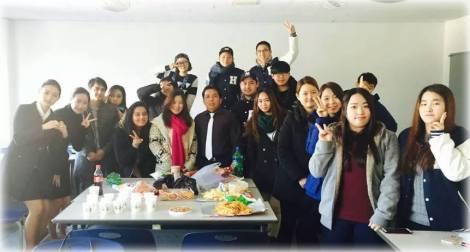
E-2 visa holders are allowed by the Ministry of Education here to teach strictly English subjects only. One advantage of hiring Filipino professors, because theirs is E-1 visa, is they can be asked to teach content subjects related to their fields especially if the curriculum requires that the content subjects should be taught in English. Currently, in the university where this writer is teaching, three teachers from the Philippines, aside from teaching English subjects, would once in a while be invited to teach content subjects in the university’s Graduate School or serve as advisers to foreign students writing their dissertation.
I wouldn’t say that Filipino professors in universities in South Korea are lucky to have been hired. Why? They have to go through the proverbial eye of the needle to have a chance of getting hired. They applied alongside teachers who are native speakers of English who have the upper hand, not because of their qualifications and pedagogical skills, but because of their geographical roots.
Most of the Filipino professors here are PhD degree holders. The minimum requirement FOR THEM is Masters. Surprisingly, some native speakers of English, are allowed to teach in universities here even if they don’t have Masters.
To the universities that opened the opportunity for Filipino professors and hired them, the applicants needed to prove that they are as equally capable as their counterparts from the native English-speaking regions of the world. When they got hired, it was because they are qualified and have proven that they have what it takes to be English teachers. It wasn’t luck.
Filipino teachers are trained in the Philippines to both know what to teach and know how to teach what they know.

Modesty aside, the Philippines has a very good education curriculum implemented through the Commission on Higher Education which closely monitors TEIs (Teacher Education Institutions) to ensure strict compliance. Thus, Education graduates from the Philippines can be relied upon not only in terms of the knowledge, skills, attitude, and values in their field of specialization but also in pedagogy and in research. Filipino teachers are good in both instruction and research.
One of the best features of “teacher training” in the Philippines is teachers are made to understand that the most important stakeholder in a school is the STUDENT, not the TEACHER. When they need to, Filipino teachers know how to adhere to the philosophy that the teaching-learning process should be student-centered.
One reason, if not the main and only reason, most universities in Asian countries (like South Korea, Japan and China) prefer to hire teachers from those seven countries is ACCENT.
The Filipinos are good at English with the said language being the official medium of instruction in the Philippines from kindergarten to college – even in graduate school. Filipinos, at an early age, write and speak English. They hear and read it everywhere. It is also the official language of communication in the Philippines. All business and government transactions are done in English. The country also has the 3rd largest group of English speakers in the world. Their accent is not bad. It’s neutral, to say the least. This is the reason why the Philippines is one of the leading countries for BPO. But notwithstanding all the aforementioned, still the said universities prefer native English speakers and do not include Filipino teachers in their lists of preferences.
But there are two things that would make hiring a Filipino teacher a wise investment – two things far more important than ACCENT… their PASSION for teaching and COMPASSION for the learners.
It is easy to learn to mimic somebody’s way of creating vowel and consonant sounds and diphthongs but it is hard for teachers to be passionate about the job and compassionate with the students…. especially if they are not really trained to be one and were only forced to accept the teaching job for lack of better options.
Why English Proficiency Matters

Key findings of the Education First – English Proficiency Index (EF EPI) have strengthened further the position of the English language as the world’s lingua franca. The world becoming increasingly globalized made it necessary that people from different parts of the world speak a common language. English emerged as that common language. There may be more native speakers of Mandarin and Spanish than English but people living in most countries from the world’s different continents have English as their second language. What contributed to this were the facts that the United Kingdom, where the original Anglo-Saxon language evolved into the modern English language that it is now, used to be a colonial power that ruled many parts of Asia, Africa, and South America and the rise of English speaking countries, particularly the United States, to political and economic prominence when the colonial period ended. But as Borzykowski1 asserted, “English is for everyone. The shift [to English] is not a throwback to colonialism or a play for cultural superiority.”
The EF EPI ranks countries (annually since 2011) by the average level of English language skills among those adults who volunteered to take the EF tests. Critics have dismissed the results of the EF EPI saying that they are not credible and reliable. They (the critics) cited methodical flaws and sampling bias as the primary reasons why they are questioning the results. But this initiative of the Education First, an international education company that specializes in language training, educational travel, academic degree programs, and cultural exchange, is more than just ranking the English proficiency of participating countries. What could be considered as a more important objective of the endeavor is finding out the correlation between English proficiency and several economic, political, and social factors.
The annual ranking can be ignored (by those who disagree with it) but the key findings Education First would present after conducting the surveys are difficult to disregard. The said findings explain why becoming proficient in the English language is a must.
As reported in EF EPI’s 2011 edition, recruiters and HR managers around the world disclosed in a survey that preference is accorded to candidates with English skills above the local average and receive salaries 30-50% higher than similarly-qualified candidates without English skills2. This means that employees prefer to hire applicants who are more proficient in English and that they receive better salaries. These findings are supported by several studies that have established the correlation between English proficiency and employability and income3,4,5 & 6.
Highlights of the findings of the 2012 edition of EF EPI include the following: “English is a key component of economic wellbeing, both nationally and individually. Better English proficiency goes hand in hand with higher incomes, more exports, an easier environment for doing business, and more innovation7.” The following year (2103), results pointed out that while those with proficient English earn more, people who are poor at English may be passed over for promotion8. This is how important and necessary English proficiency has become.
Key findings of the succeeding editions of the EF EPI (from 2013 to 2017) have consistently shown the same – “that there exist strong correlations between English proficiency and income, quality of life, ease of doing business, Internet usage, and years of schooling. The 2017 edition specifically cited that “countries with higher levels of English proficiency tend to have more service exports, better Internet access, and more investment in research and development than countries with lower English proficiency9.” The report added that such strong correlations have been consistent across the 2011 to 2017 editions of the EF EPI.
The last two editions of EF EPI (2018 and 2019) have presented more reasons why English proficiency should be taken seriously.
The 2018 edition of EF EPI revealed that more scientific journals are published in English and cited a report that close to sixty percent of all multinational organizations already operate in English10. This serves as a confirmation that English is indeed the leading language not only in business but also in education. Proficiency in the language then is required not only to catch up to the competition but also to gain access to information, particularly important research findings. Therefore, in order to become (and remain competitive) in the business world and in the academe, it is important to gain proficiency in what has become the academic and corporate language – English.
In addition, the latest (2019) EF EPI stated that “English is the principal language of international collaboration11.” It is by speaking a lingua franca that would allow a manager or an employee from a particular country to work with other managers and employees from other countries. This edition of the EF EPI asserted that “English-speaking teams are able to attract more diverse talent and access ideas from around the world12.” It also cited recent studies showing that “companies with managers from many countries earn more of their revenues from innovation than their less diverse competitors13.” The more diverse are the nationalities of managers and employees of a company the more innovations are possible. But collaboration among those who speak different native languages would only be possible if they speak a common second language. This is the reason that, as reported by Borzykowski, “a growing number of global firms are using English as their main language – even if they are based in Japan or France14.”
What has been consistently mentioned across all the editions of the EF EPI is not only how English proficiency correlates to certain economic factors and education but also to various measures of investment in research and development (R&D). The significance of R&D to any areas of human existence is something that does not require further elaboration.
All of the foregoing discussions about why English proficiency is important and how necessary it is are things that professionals in any field of endeavors and university students preparing for any career in the future should take into serious consideration. But it should be noted that there is no shortcut to gaining proficiency in English. The 2019 edition of EF EPI debunked the “quick and easy way of becoming proficient in English” which blog and vlog posts in the Internet are trying to impress upon people. “The reality is that an adult who does not speak English will need at least 600 hours of high-quality instruction and 600 hours of speaking practice to master English well enough for the average workplace15.” The required number of hours could be more, the report added, for people whose native language is very different from English.
A study on the relationship between time spent on learning English and proficiency in the language verified that the number of years studying English significantly predict English ability16. On the other hand, the lack of time to study the language is considered a barrier in attaining proficiency in the language17.
REFERENCES
- https://www.bbc.com/worklife/article/20170317-the-international-companies-using-only-english
- EF EPI 2011 – ef.com
- L. Blake, S. Mcleod, S. Verdon, F. Fuller, “The relationship between English proficiency and participation in higher education, employment and income” Int J Speech Lang Pathol., 20(3), 202-215, 2018.https://doi:10.1080/1754907.2016.1229031
- H. Ting, E. Marzuki, K.M. Chuah, J. Misieng, C.Jerome, “Employers’ views on the importance of English proficiency and communication skill for employability in Malaysia Indonesian Journal of Applied Linguis- tic, 7(2), 315-327, 2017. https://doi:dx.doi.org/10.17509/ijal.v7i2.8132.
- Zhen, “The effects of English proficiency on earnings of U.S. foreign-born Migrants: Does Gender matter?” Journal of Finance and Economics, 1(1), 2013. https://doi:10.12735/jfe.vlilp27
- Tam, K.W., Page, , “Effects of language proficiency on labor, social and health outcomes of immigrants in Australia” Economic, Analysis & Policy 2015, https://dx.doi.org/10.1016/j.eap.2016. 08.003
- EF EPI 2012 – ef.com
- EF EPI 2013 – ef.com
- EF EPI 2017 – ef.com
- EF EPI 2018 – ef.com
- EF EPI 2019 – ef.com
- EF EPI 2019 – ef.com
- EF EPI 2019 – ef.com
- https://www.bbc.com/worklife/article/20170317-the-international-companies-using-only-english
- EF EPI 2019 – ef.com
- Magno, “Korean Students’ Language Learning Strategies and Years of Studying English as Predictors of Proficiency in English” Teaching English to Speakers of Languages Journal, 2 (1): 39-61, 2008.https://doi. org/10.1111/j.1944-9720.1997.tb02343.x
- S. Ibrahim, M.A. Hassali, F. Saleem, H. Aljadhey, “Perceptions and barriers towards English language proficiency among pharmacy under- graduates at Universiti Sains, Malaysia” Pharmacy Education 13 (1), 151-156, 2013.https://doi:10.1016/j.sapharm.2014.07.098
The Difference in English Proficiency Between Tourism and Engineering Students of Two Asian Universities

The Difference in English Proficiency Between Tourism and Engineering Students of Two Asian Universities
Massuline Antonio D. Ligaya, Estrella F. Fajardo, Joung-Hyun Ham, and Seungjin Lee
International Journal of Recent Technology and Engineering (IJRTE), Vol. 8, Issue 2S6, July 2019, pp. 219–224
DOI: 10.35940/ijrte.B1041.0782S619
Research Summary
English proficiency has become increasingly important across academic disciplines and professions, particularly in fields whose graduates are expected to participate in an international workforce. Tourism is commonly associated with a strong need for English because practitioners routinely communicate with people from different linguistic backgrounds. Engineering, by contrast, may sometimes be perceived as less dependent on English communication. Yet engineers working in international and technology-oriented environments also need English for professional activities such as writing emails and reports, participating in meetings and teleconferences, and delivering presentations. Against this background, the study compared the English proficiency of Tourism and Engineering students from two Asian universities and examined selected factors associated with their proficiency.
The investigation focused on four groups: Tourism and Engineering students from University A and Tourism and Engineering students from University B. The study examined students’ age, number of years studying English, attitude toward learning English, motivation for learning English, and level of English proficiency. It also investigated whether these factors were significantly related to proficiency and whether the four groups differed significantly in their English performance.
Using a descriptive survey research design, the study involved 399 respondents: 97 Tourism and 99 Engineering students from University A, and 104 Tourism and 99 Engineering students from University B. The questionnaire contained three sections covering students’ profiles, their attitudes and motivation toward English, and an English proficiency test. The proficiency assessment covered five areas: vocabulary/grammar, correct grammatical form, answering questions, combining sentences, and word sequencing. Data were analyzed using means, correlation coefficients, one-way analysis of variance (ANOVA), and Tukey’s HSD post hoc procedure.
The descriptive findings revealed substantial differences between the universities. Students from University A had studied English considerably longer than those from University B. Engineering students from University A reported the longest average exposure at 13.51 years, followed closely by Tourism students from the same university at 13.38 years. By comparison, Tourism and Engineering students from University B averaged 9.82 and 9.97 years, respectively.
Attitudes toward English also varied. Tourism students from both universities and Engineering students from University A demonstrated positive attitudes toward learning English, whereas Engineering students from University B were classified as only moderately positive. All four groups were classified as moderately motivated, with relatively small differences in their motivation scores.
The clearest differences emerged in English proficiency. Both groups from University A were classified as proficient, while the Tourism and Engineering students from University B were classified as moderately proficient. Engineering students from University A obtained the highest overall proficiency mean (3.376), followed by Tourism students from University A (3.08). Tourism students from University B recorded the lowest mean (2.186), while Engineering students from University B obtained 2.232. Engineering students from University A also achieved the highest scores across all five tested areas.
Correlation analysis produced different patterns across the four groups. Among Engineering students from both universities, the number of years studying English was significantly associated with particular areas of English proficiency. Among Tourism students, age showed negative relationships with certain proficiency areas. Only among Tourism students from University B were attitude toward learning English and motivation for learning English positively correlated with English proficiency. These findings suggest that factors associated with proficiency differed according to student group rather than operating uniformly across all participants.
The comparison of the four groups produced a statistically significant overall difference, with the ANOVA yielding F = 62.77, p < .001. Tukey’s post hoc analysis showed that Engineering students from University A significantly outperformed all three other groups. Tourism students from University A also significantly outperformed both groups from University B. In contrast, the difference between Tourism and Engineering students within University B was not statistically significant.
Overall, the findings challenge the common assumption that Tourism students necessarily possess stronger English skills than Engineering students because of the communicative demands of the tourism profession. In this study, the highest-performing group consisted of Engineering students, while differences between the two universities were considerably larger than the Tourism–Engineering difference within University B. The results therefore suggest that academic discipline alone cannot adequately explain differences in English proficiency; learners’ educational context and previous exposure to English also warrant consideration.
Research Contribution
The study contributes to research on English proficiency across academic disciplines and Asian university contexts by directly comparing Tourism and Engineering students rather than assuming that the communicative demands of their future professions determine their language competence. Its findings question the stereotype that Tourism students should necessarily outperform Engineering students in English and highlight the possible importance of educational context and duration of English-language study. The study also demonstrates that relationships among age, motivation, attitude, English exposure, and proficiency may differ across groups, supporting more context-sensitive approaches to university language education.
Keywords: English proficiency, Tourism students, Engineering students, attitude toward English, motivation toward English, English-language exposure, Asian universities
Full Text
The full text of this publication is available upon request. Researchers, educators, students, and other interested readers who wish to obtain a copy may contact the author through this website or by email at madligaya@gmail.com.
Getting Through The First Day Of Class
(A Personal Essay)
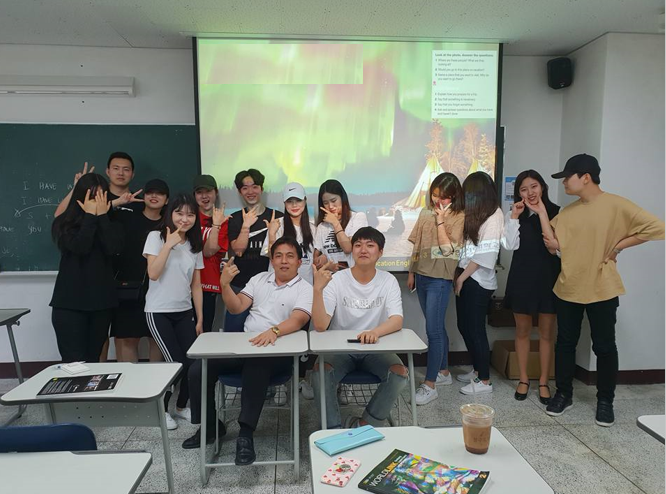 Each meeting with my students is important but it’s the first day that I consider very special – the most strategically important. It’s the day that I would attempt to accomplish one of the hardest things to do in education – to shatter the students’ image of the classroom as a prison cell, with them as prisoners and the teachers as nasty prison guards. It’s the day when I begin to lay the foundations of what every teacher should endeavor to forge between them and their students – a good rapport.
The entire semester is a long haul and I know that winning their hearts would make our journey together as enjoyable and productive as it could be. If I succeed in making them trust me during the first day, half-of-the battle is already won. Earning the trust of my Korean students is very important to me as an expat teacher teaching English. What makes that task of earning their trust not only necessary but also (doubly) challenging is the fact that I yes I am an ESL teacher with the proper qualifications and training but I am not from any of their preferred native English speaking countries.
There’s nothing very special about the way I conduct my first meeting with my new students here in South Korea. It’s just a bit unconventional.
My introduction would always include telling my students the nickname which I adopted with the intention of eliciting laughter whenever I deliver a talk – Tonitonipoponibananananapoponinomimayfofoni. (Inspired by Laura Branigan’s song entitled “Name Game.”) Amazingly, when I tell my students that and jokingly threaten them to memorize it if not they would fail in my subject, they would try very hard to repeat it after me and laugh at themselves if they wouldn’t be able to say it.
Then I would add, “Whoever could say my nickname correctly will get an A+.” I don’t mean it of course. Luckily, up until this time, no one among those who tried succeeded. It was me who would always succeed – in getting their attention.
From there, I would give them the necessary information about me as their teacher. The most significant of those information (as far as I am concerned) is the number of years I have been teaching. It currently stands at (a few months more than) 30 years. The point I wish to drive home for highlighting to my students how long I have been teaching is – I wouldn’t stay this long in the academe if I don’t love my job.
The next part of my first-day-of-class script would touch the boundaries of philosophy.
I would be delivering something like an“eve-of-battle” speech. The way they do it in movies.
I would ask my first question: “Why am I teacher?”
Puzzled, the students would grope for an answer.
I would give follow-up questions after that – Would you call a woman a mother without a son or a daughter? Are your mothers and fathers mothers and fathers without you as their children?
Amid their “aahs” and nods I would then say, “I am a teacher because of the students. My reason for being a teacher is each of you. Without you, I am just a person – not a teacher.”
That’s my way of telling my students that the most important stakeholder in a school are them. Schools exist because of them. School administrators and teachers have work because of them.
That’s my way of telling them that I exist (as a teacher) to serve their interests.
I would end that part with the following statement: “Thank you for having me as your teacher.”
After that I would show them a video clip from the movie “Collateral Beauty” – that part where Howard Inlet, the character played by Will Smith, delivered a speech in a gathering of his employees at the beginning of the movie.
- “What is your why? Why did you even get out of the bed this morning? Why did you eat what you ate? Why did you wear what you wore? Why did you come here?”
I would pause the video clip after each question and would ask them to give an answer.
Then I would ask them follow-up questions. (These were the only questions I asked when I was not yet using that movie clip.)

Why are you here in school?
Why do you want to finish your studies?
The last question I would ask – Why did you enroll in this class?
I never failed to ask the said questions because I want my students to understand that for them to succeed not only in their studies but in all their present and future endeavors, they need to set goals. They ought to know their whys. They must know the reasons why they do what they do, say what they say, and think what they think.
I would tell them also that the worst “why” to have for studying is to get A+ – that grades are not the be-all and end-all of schooling.
All of the foregoing would be finished in twenty to thirty minutes.
I would then ask the student to introduce themselves.
After all of the foregoing , I would proceed to the presentation of the course syllabus – explain the course objectives, give the topics to be discussed weekly, and tell them what activities will be done in the class and how are they going to be graded.
In explaining discipline in the class, I would simply ask this question – “Are you small children?” They would of course say “NO.” Then I would tell them this – “I therefore expect you not to speak and behave like small children.”
Then we proceed to the finale – presentation of course requirements.
It’s not surprising to see the students frown when they see the course requirements on the last page of the syllabus. That’s the time that I would deliver the last part of my “eve-of-battle” speech.
I would ask – “Is learning fun?”
As expected, majority would say “no.”
My next question would be – “Is work fun?”
Of course the students would say “no” again. And every time I would ask that, one or two would say “There were many times I heard my father complained about his job.”
Then I would go on and tell them the following:
“Nothing is to be given to you in a silver platter. You need to work hard to achieve your dreams. Studying and working would require effort – you have to exert mentally, emotionally and physically. But something could make studying and working fun – your attitude. Your attitude towards studying will be dictated by your whys. Your whys put together is your philosophy.”
I would spend another minute or two to explain something about “personal philosophy.” At the end I would tell them that each teacher has a personal teaching philosophy and mine is as follows:
“The classroom is my playground. The students are my playmates. The subject is our toy.”
How surprised they would be whenever I say that when I come to class I don’t work, I play. Work is hard. Play is fun.
As we end the first meeting I would tell them, “Come back next week and let’s play.”



 M.A.D. L I G A Y A