Blog Archives
Factors Affecting the Use of Computers for Instruction in South Korean Universities
A research paper published in a Scopus-indexed journal
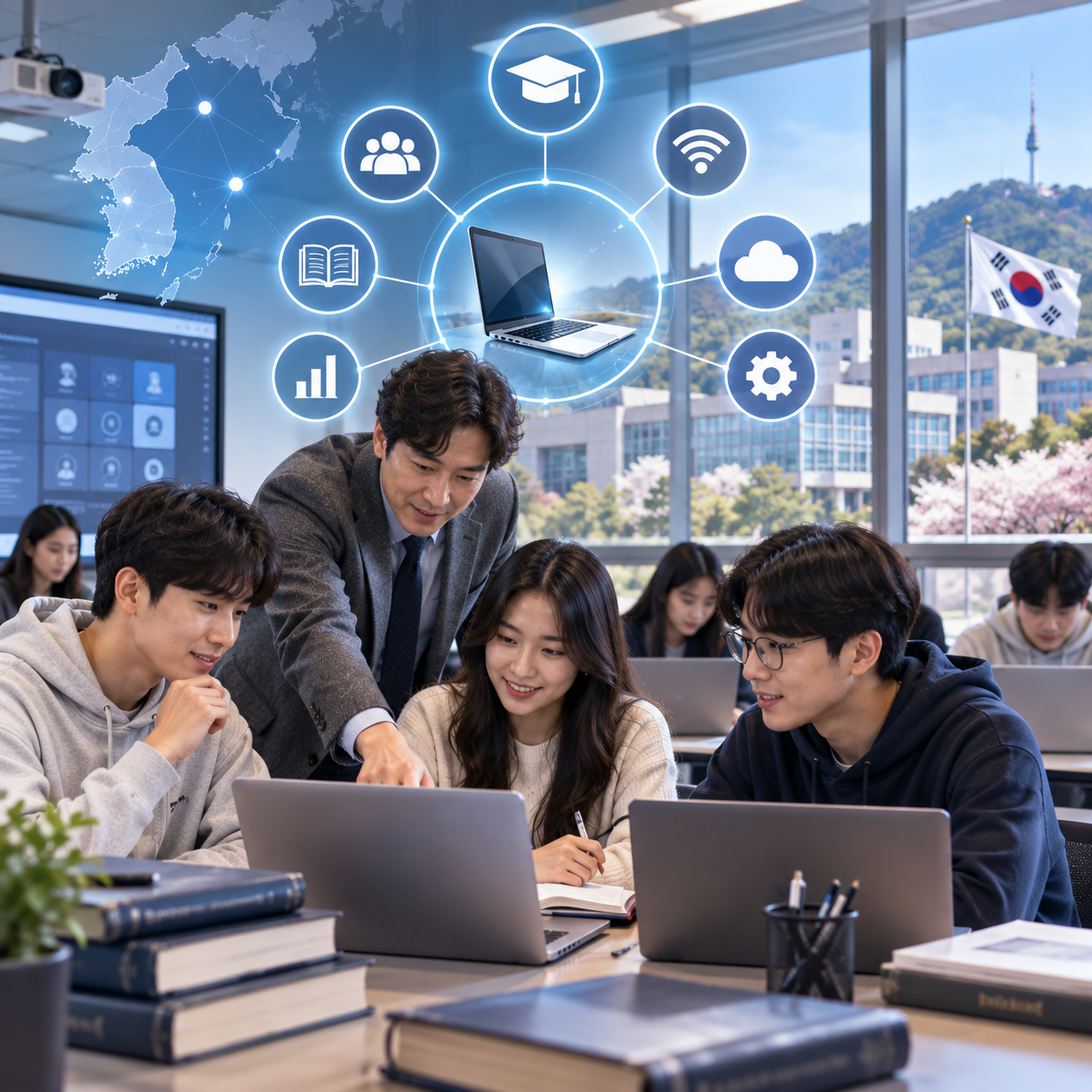
Factors Affecting the Use of Computers for Instruction in South Korean Universities
Massuline Antonio D. Ligaya, Joung-Hyun Ham, and Hyun-Jung Min
INFORMATION: An International Interdisciplinary Journal, Vol. 19, No. 6(B), 2016, pp. 2245–2256
Research Summary
The increasing integration of computer technology into education has transformed how teachers prepare lessons, deliver instruction, access information, and interact with students. Yet access to technology does not necessarily guarantee its use in the classroom. Teachers differ in how they perceive the pedagogical value of computers, how prepared they are to use them, and how they respond to changes introduced into educational institutions. This study examined these factors among foreign faculty members teaching at universities in South Korea.
Specifically, the study investigated whether teachers’ perceived value of computers for instruction influenced the extent to which they used computers in their classrooms. It also examined whether two factors—teachers’ readiness to use computers for classroom instruction and their attitudes toward school change—affected this relationship.
Using a descriptive survey design, the study involved 115 foreign faculty members from different South Korean universities. Data were collected using a five-part questionnaire adapted from previously developed instruments. The respondents’ educational attainment, completion of computer-related degrees, and level of computer proficiency were also considered. Descriptive statistics were used to characterize the respondents and major variables, while hierarchical regression analysis was employed to examine the relationships among the variables.
The findings showed that the teachers generally considered computers important for instruction and reported usually using them in their classrooms. They also regarded themselves as prepared to use computers and generally viewed changes in schools as beneficial. Interestingly, although 58.3% had not completed a computer-related degree, 61.7% classified themselves as proficient computer users and another 9.6% as advanced users. This suggested that computer competence was not necessarily dependent on formal computer-related education.
Regression analysis showed that teachers’ perceived value of computers significantly predicted the extent of their classroom computer use. After educational attainment, computer-related degree, and computer proficiency were controlled, adding perceived value increased the explained variance by 10.3%, with the resulting model accounting for 38.5% of the variance in computer use.
Teachers’ readiness to use computers for classroom instruction also made a significant additional contribution to the model, increasing explained variance by another 6.2%. In practical terms, teachers who recognized the pedagogical value of computers and felt prepared to use them were more likely to integrate the technology into their teaching. In contrast, teachers’ general attitudes toward school change did not make a statistically significant additional contribution to explaining computer use.
The findings underscore the importance of both belief and preparedness in technology integration. Providing schools with computers and other technological resources may be insufficient if teachers do not perceive their instructional value or lack adequate preparation to use them. The study therefore emphasized the role of training, familiarization, and sufficient adjustment time when institutions introduce new technologies into teaching.
Research Contribution
The study contributes to the literature on educational technology adoption by demonstrating that teachers’ use of computers for instruction is associated not only with technological competence but also with their perceptions of the technology’s pedagogical usefulness and their preparedness to employ it. Conducted before the massive shift toward technology-mediated education brought about by the COVID-19 pandemic, the study provides an early examination of factors that later became central to discussions of digital teaching readiness. Its findings support institutional approaches that combine technological provision with teacher preparation, professional development, and cultivation of the perceived instructional value of technology.
Keywords: computer-assisted instruction, educational technology, technology integration, teacher readiness, perceived value of computers, computer proficiency, South Korean universities
Full Text
The full text of this publication is available upon request. Researchers, educators, students, and other interested readers who wish to obtain a copy may contact the author through this website or by email at madligaya@gmail.com.