Blog Archives
Blessed in a Broken World
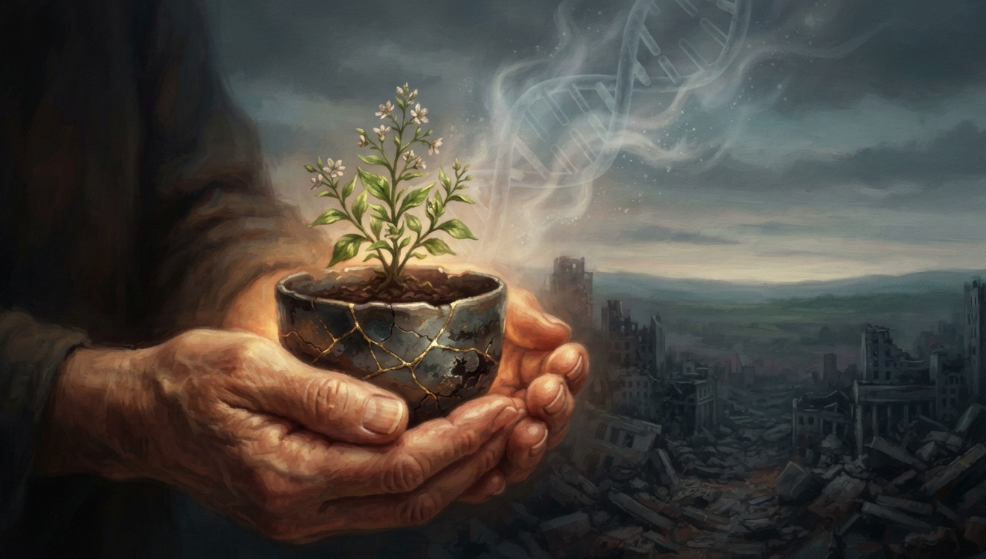
I am living a wonderful life. I have a very fulfilling career and good family and friends. Most importantly, my health is strong, and blessings and opportunities continue to flow abundantly into my life. I cannot thank God enough for all of them. In fact, I just had a wonderful dinner with a dear friend.
Life, by every measure, has been extraordinarily good to me.
Yet before you think I am simply indulging in an exercise in self-congratulation, let me tell you what has been bothering me.
What about my countrymen and the rest of humanity? What about my fellow Filipinos who struggle every day to make ends meet—families who cannot afford a decent meal, children whose futures are compromised by poverty, and ordinary people whose lives are made unnecessarily difficult by corruption, greed, and the selfish ambitions of those entrusted with public office?
What about the people of Ukraine, whose lives have been shattered by war? What about the Palestinians who have endured unimaginable suffering, the Israelis whose lives have been marked by violence and fear, and the countless peace-loving people across the Middle East who long for an end to bloodshed? What about the people of Sudan, Myanmar, and other conflict-stricken regions, where violence, oppression, and displacement have become part of everyday existence?
What about the millions of innocent people around the world who ask for nothing more than the opportunity to live peacefully, raise their families, and pursue their dreams? Can they, too, say they are living blessed lives? Can they look around and declare that this world is a wonderful place—or does it feel fundamentally broken?
I wish they could say the former. And that is precisely what troubles me.
Everything We Have Tried
For centuries, humanity has attempted to understand and overcome its own destructive tendencies to make this world whole. Philosophers have offered theories about morality, justice, and the ideal society. Religious leaders have preached love, forgiveness, and reconciliation. Educators have sought to cultivate enlightened minds, while governments have established laws and institutions to maintain order.
Yet violence persists. Jesus Christ taught us to love our enemies and turn the other cheek. Mahatma Gandhi demonstrated the power of nonviolent resistance. John Lennon invited humanity to imagine a world without divisions, and Michael Jackson challenged us to change the world by starting with the Man in the Mirror. Their messages have inspired millions.
And yet, here we are. Wars continue to devastate nations, political leaders continue to pursue power at enormous human cost, and innocent people suffer because of decisions made by individuals who never personally experience the consequences of their actions.
Of course, it would be unfair to say these movements have accomplished nothing. Nonviolent resistance has toppled oppressive regimes, humanitarian principles have shaped international law, and education has deepened our appreciation of human dignity. Still, the larger problem remains: Why, after thousands of years of civilization, have we not learned to live peacefully with one another?
Perhaps We Should Mess With the Genetic Code
In a moment of frustration, I found myself entertaining a rather outrageous thought: What if we could manipulate the human genetic code?
Yes, you read that correctly. After trying philosophy, religion, education, diplomacy, and legislation, perhaps it is time to consider something radical. What if scientists could identify the genes responsible for hatred, cruelty, excessive aggression, and the insatiable desire to dominate others—and edit them out before the next generation is born?
Imagine a generation of human beings with no inclination to wage wars of conquest, persecute others, or abuse power for personal gain. Imagine a world without leaders who exhibit the aggression, authoritarianism, or disregard for democratic restraints that critics associate with figures like Vladimir Putin, Kim Jong Un, or Donald Trump. Imagine children growing up in societies where compassion comes naturally, cooperation prevails over domination, and differences are settled through dialogue rather than violence.
Wouldn’t that be wonderful?
I realize I am venturing into territory that sounds more like science fiction than a practical solution. Yet when confronted with extreme problems that resist conventional answers, the mind cannot help entertaining extreme possibilities. So I asked myself: Why not rewrite the biological instructions that make human beings capable of such destruction?
Why Science Cannot Simply Erase Hatred
Unfortunately, the human genome does not work that way. There is no single gene responsible for hatred, cruelty, or violence. Human behavior is extraordinarily complex, emerging from interactions among thousands of genes, brain chemistry, hormones, upbringing, culture, and personal experience.
Even aggression, which has biological roots, is not inherently evil. The same instinct that drives someone to attack another person also fuels the courage to protect a child, resist a tyrant, or defend a community against oppression. Fear, likewise, can spark hostility, yet it also keeps us safe from danger. Behavioral tendencies are not controlled by isolated genetic switches that scientists can simply flip on or off.
While modern tools like CRISPR allow scientists to modify specific DNA sequences, altering a gene linked to behavior would not reliably erase complex social traits. The same genetic variations often serve multiple biological functions, and their expression depends heavily on environment. Even if we could dampen biological aggression, it would not eliminate prejudice, greed, or the pursuit of power—forces shaped largely by ideology, history, and human choice.
Then there is the ethical dilemma. Who would decide which traits should be eliminated? Who would distinguish undesirable aggression from legitimate resistance? Could an authoritarian government classify defiance, independence, or political dissent as genetic defects requiring correction? Worse still, what if such technology fell into the hands of the very people whose destructive tendencies we hoped to cure? We might end up engineering a society conditioned to obey rather than empowered to think, question, and choose. That would hardly heal our broken world.
For now, genetically eliminating humanity’s capacity for hatred remains scientifically unfeasible and ethically perilous. My proposed solution is no solution at all—yet the frustration that inspired it remains.
Perhaps the Problem Is Bigger Than the Individual
There is another realization that complicates my imagined solution. Suppose, for the sake of argument, that humanity could somehow produce a generation of naturally peaceful, empathetic individuals. Even then, would peace be guaranteed?
History suggests that human behavior is deeply shaped by the systems we inhabit. Scarcity, broken institutions, economic inequality, and unchecked political power can push even decent people toward fear, tribalism, and conflict. Until we also reform the structures that reward greed and division, changing human nature alone will never be enough.
Ultimately, being blessed in a broken world does not mean ignoring the pain around us, nor does it require rewriting our DNA. It requires refusing to let our blessings blind us to the work of healing what is broken right where we are—by speaking against injustice, supporting our neighbors, and choosing compassion even when cruelty seems easier.
If you’d like to fine-tune anything else, let me know:
- Whether you have your original ending from your first draft that you’d like woven into that final section.
- If you want to adjust the word count to meet a specific newspaper or magazine submission limit.
I can tailor the final polish to match your exact publication guidelines.
AI responses may include mistakes. Learn more